- +8618603825129
- [email protected]


Every week, our logistics team handles dozens of containers moving from China to the USA, and the one question that comes up more than any other is about insurance Incoterms 1. You spend months sourcing the perfect product, negotiating prices, and coordinating production — only to watch your entire investment sail across the Pacific with no real protection. The truth is, most shippers either skip cargo insurance entirely or buy the wrong type, and they only realize the mistake when a claim gets denied.
International cargo insurance comes in two main types: All Risks (ICC A), which covers nearly all physical loss or damage from external causes, and With Average (WPA/ICC B), which only covers partial losses from major perils. Premiums are calculated by multiplying 110% of your invoice value by the insurance rate, which typically ranges from 0.1% to 2% depending on cargo type and route.
In this guide, I will walk you through exactly how to choose the right coverage, calculate your premium accurately, and follow a step-by-step process to protect your shipments. Whether you are shipping electronics, furniture, or Amazon FBA inventory 2, the information below will save you money and headaches.
When we prepare shipments at our Zhengzhou warehouse, one of the first conversations we have with clients is about insurance type. Many sellers assume all cargo insurance is the same. It is not. Choosing the wrong coverage can leave you exposed to thousands of dollars in losses — losses that you thought were covered.
To choose between All Risks and With Average, consider your cargo value and fragility. All Risks (ICC A) covers theft, water damage, crushing, rough handling, and most external causes. With Average (WPA/ICC B) only covers partial losses from major accidents like sinking, fire, or collision — not everyday damage.
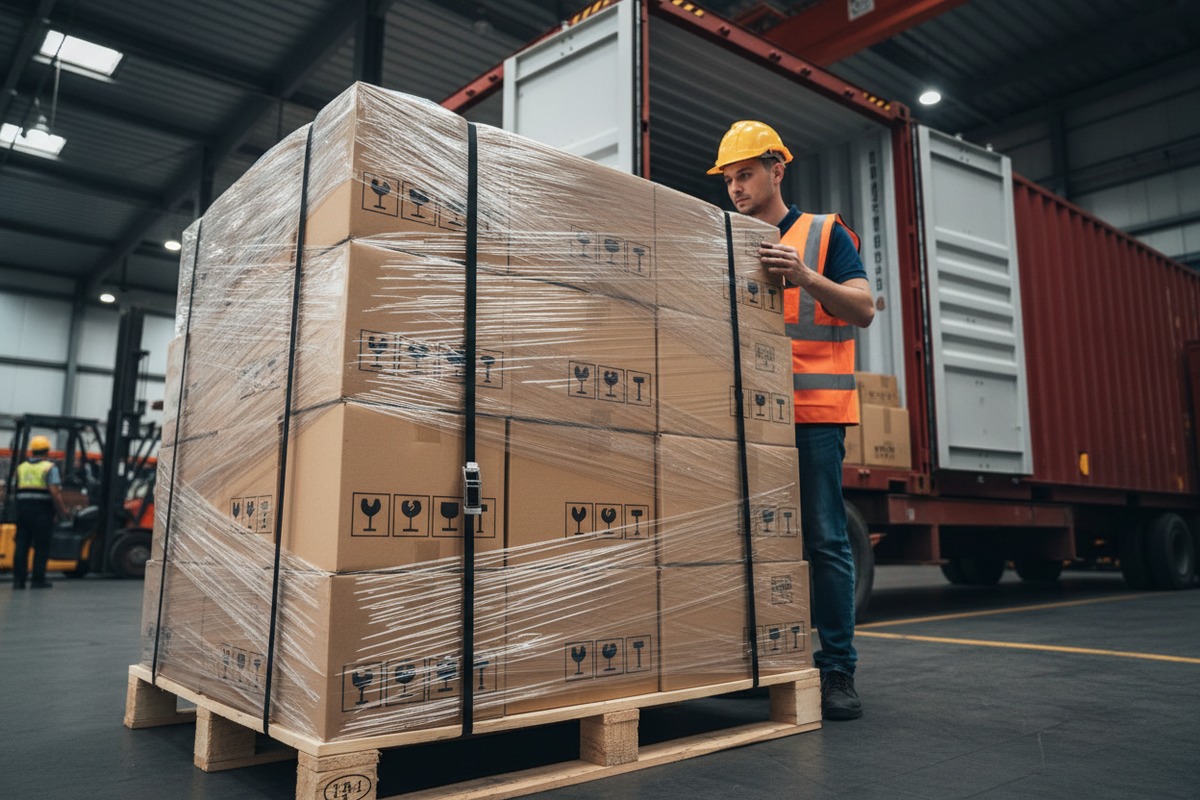
All Risks — also called ICC A — is the broadest cargo insurance available. It covers physical loss or damage from any external cause unless the policy specifically excludes it. This includes breakage, water damage, crushing, rain damage, fire, collision, tsunami, explosion, piracy, theft, and non-delivery.
The key word here is "unless excluded." All Risks does not mean literally everything. Standard exclusions still apply. These include inherent vice (the product deteriorating on its own), insufficient packaging, delays, war, and strikes. War and strikes coverage can be added with separate clauses.
With Average — or WPA, equivalent to ICC B — is more limited. With Average (WPA/ICC B) 3 It covers total loss and partial losses, but only from specific named perils. Think of it as covering the "big disasters": vessel sinking, fire on board, collision, stranding, and overturning during land transit.
What WPA does not cover is where most claims actually happen. It does not cover rain damage, crushing during handling, theft from the container, or individual package losses. For most China-to-USA shipments, these are the real risks.
| Aspect | All Risks (ICC A) 4 | With Average (WPA / ICC B) |
|---|---|---|
| Coverage scope | All physical loss/damage unless excluded | Partial loss only from named major perils |
| Theft & piracy | ✔ Covered | ✘ Not covered |
| Rain & water damage | ✔ Covered | ✘ Not covered (unless vessel sinks) |
| Crushing & rough handling | ✔ Covered | ✘ Not covered |
| Fire & explosion | ✔ Covered | ✔ Covered |
| Vessel sinking/collision | ✔ Covered | ✔ Covered |
| General Average | ✔ Covered | ✔ Covered |
| Premium cost | Higher (baseline) | 20–50% lower than All Risks |
| Best for | High-value, fragile, electronics, FBA goods | Bulk raw materials, low-value commodities |
From our experience shipping thousands of containers, I strongly recommend All Risks for almost every China-to-USA shipment. The price difference is small — often just a few hundred dollars more on a full container — but the protection difference is massive.
Choose With Average only if you are shipping very low-value bulk goods like raw materials, sand, or scrap metal, where minor damage does not affect the product's usability.
There is also a third option called FPA (Free from Particular Average), equivalent to ICC C. This is the most basic coverage. It only pays for total loss from major accidents. It does not cover partial damage at all. I rarely recommend FPA for any commercial shipment.
FPA only covers complete loss — your entire container must be destroyed, sunk, or burned for a claim to be valid. If half your boxes arrive water-damaged, FPA pays nothing. For any seller shipping finished goods, FPA is simply not enough.
Our team quotes insurance for clients daily, and I can tell you the most common mistake is underestimating the insured amount. If you get this number wrong, your claim payout will be reduced proportionally — even if the damage is legitimate.
To calculate your cargo insurance premium, multiply your invoice value by 110% to get the insured amount, then multiply that by the insurance rate. The 110% markup is an international convention covering expected profit. Rates typically range from 0.1% to 2%, depending on cargo type, route, and coverage level.
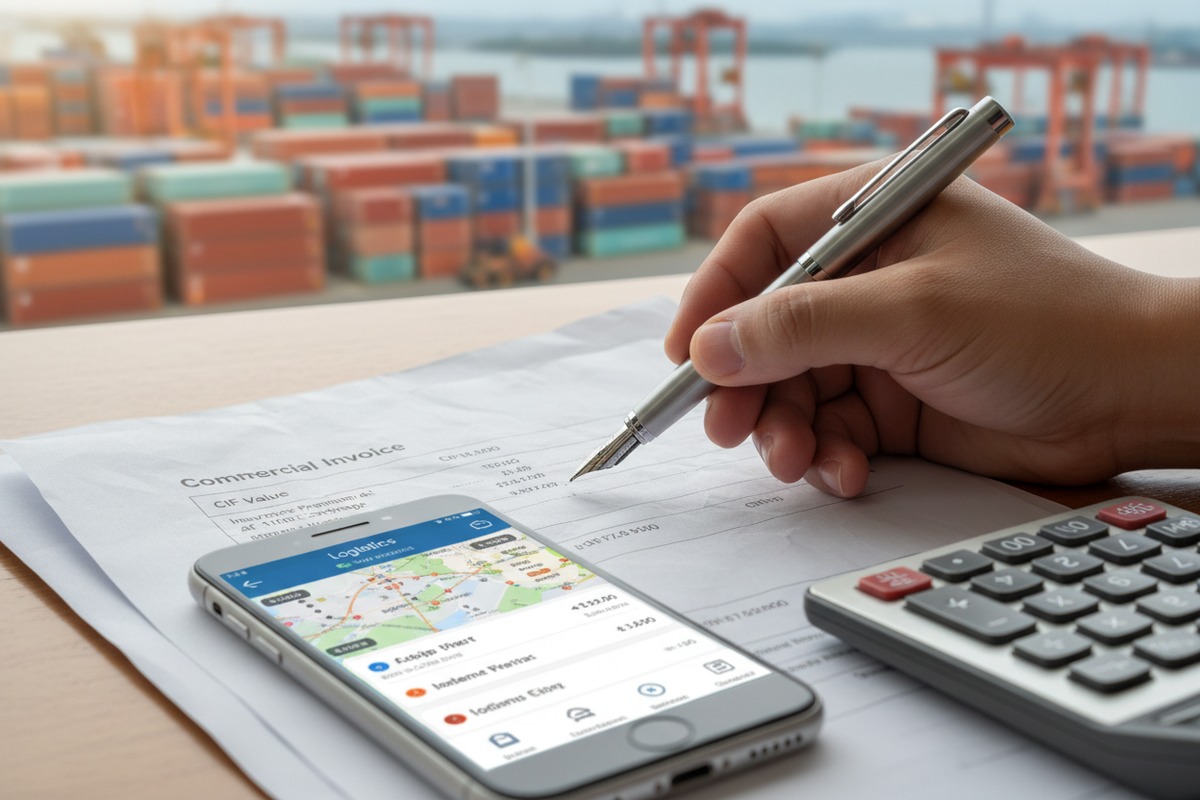
The formula is straightforward:
Insured Amount = Invoice Value × 110%
Premium = Insured Amount × Insurance Rate
The extra 10% on top of your invoice value is standard practice worldwide. It compensates for the anticipated profit you would have earned if the goods had arrived safely. This is built into international trade conventions like UCP 600 5 and Incoterms.
The rate is not fixed. It varies based on several factors. Here is what insurance companies look at:
| Factor | Impact on Rate | Example |
|---|---|---|
| Cargo type | High — fragile or high-value goods cost more | Electronics: 0.8–2%; textiles: 0.2–0.5% |
| Shipping route | Moderate — high-risk zones increase rates | Standard China–US West Coast: ~0.3%; Red Sea route: +20–50% surcharge |
| Coverage type | High — All Risks costs more than WPA | All Risks: baseline; WPA: 20–50% less |
| Packaging quality | Moderate — poor packaging may raise rates | Wooden crate vs. loose carton |
| Shipping volume | Moderate — annual policies get discounts | Annual open policy: 20–30% discount |
| Mode of transport | Moderate — ocean vs. air vs. multimodal | Ocean typically lower than air for same value |
Let me walk through two examples we see regularly.
Example 1: Electronics shipment, FCL, China to Los Angeles
Example 2: Furniture shipment, LCL, China to New York
For most shipments, the premium is a fraction of the cargo value. Compared to the risk of losing everything, it is one of the best investments you can make.
One mistake I see often: sellers use FOB value instead of CIF value. If your Incoterm is CIF, the invoice already includes cost, insurance, and freight. Use that number. If your Incoterm is FOB, you need to add estimated freight to get closer to the landed value before applying the 110% multiplier.
Another mistake: assuming the rate your friend got last year still applies. Rates change based on market conditions, claims history, and route risk. Always get a fresh quote from your insurer or freight forwarder.
When we onboard a new client at MBMLOG, we walk them through a clear process for cargo insurance. Buying insurance should not feel complicated, but skipping a step can mean your claim gets denied when you need it most.
To buy the right cargo insurance, follow these steps: assess your cargo value and fragility, choose All Risks or WPA coverage, select a provider through your freight forwarder or broker, calculate the premium based on 110% of invoice value, review policy terms and exclusions, and verify that your insurance certificate contains all required information.
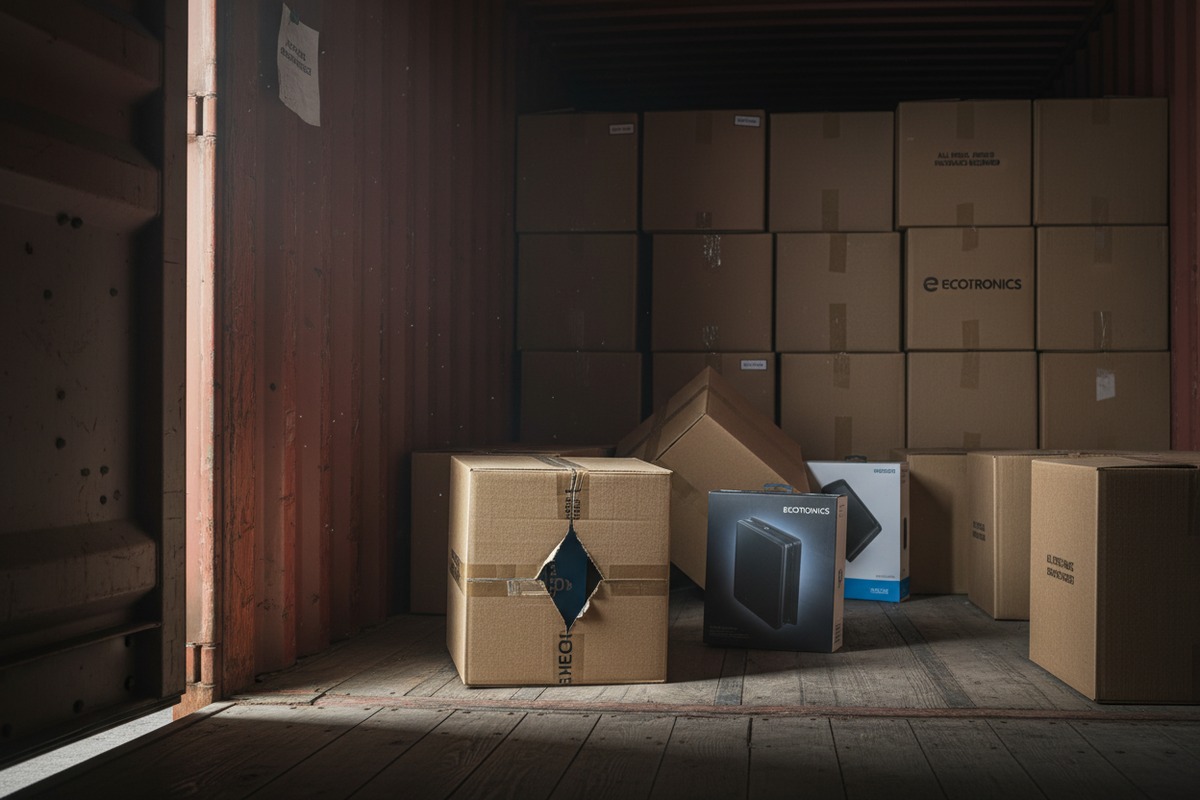
Start by answering these questions: What is the total invoice value? Is the cargo fragile, perishable, or high-value? What is the shipping route, and does it pass through high-risk zones? How is the cargo packaged?
For anything worth more than a few thousand dollars, insurance is worth the cost. For fragile goods, electronics, furniture, appliances, lighting fixtures, branded products, or anything heading to Amazon FBA warehouses, I recommend insurance without exception.
For 90% of commercial shipments from China to the USA, All Risks is the right choice. Choose WPA only for bulk, low-value commodities. Avoid FPA for finished goods entirely.
If your route passes through areas with political instability or piracy risk, add War and Strikes clauses 7 (WSRCC). Your insurer or freight forwarder can advise on this.
You have three main options: buy through your freight forwarder (simplest), use an insurance broker (best for large or complex shipments), or go directly to an insurer (least common for individual shipments).
For most Amazon sellers and e-commerce businesses, buying through your freight forwarder is the fastest and most convenient option. At MBMLOG, we handle this as part of our DDP service.
Use the formula from the previous section. Make sure the insured amount is 110% of your invoice value. Confirm the rate matches your cargo type and route. Ask about deductibles — some policies have a minimum claim amount.
This is the step most people skip, and it is the most important. Your insurance certificate must contain specific information, or your claim will be denied. Here is the checklist:
| Required Field | Description | Example |
|---|---|---|
| Insured (被保险人) | The party covered by the policy | David Smith / ABC Trading LLC |
| Invoice No. | Matches your commercial invoice | INV-2026-0415 |
| Vessel / Voyage | Ship name and voyage number | COSCO SHIPPING ARIES V.025E |
| Port of Loading | Where goods are loaded | Shanghai, China |
| Port of Discharge | Where goods are unloaded | Long Beach, USA |
| On Board Date | Date cargo was loaded on vessel | 2026-05-15 |
| Description of Goods | Packaging, quantity, product details | 500 cartons of LED desk lamps |
| Amount Insured | 110% of invoice value | USD 55,000 |
| Coverage Type | All Risks, WPA, or FPA | All Risks (ICC A) |
| Claims Settlement Location | Where claims are processed | Long Beach, USA |
If any of these fields are missing or incorrect, the insurance company can refuse your claim. Double-check every detail before your cargo ships.
Do not wait until damage happens to learn how claims work. Here is what you need to do if something goes wrong:
Even All Risks has exclusions. Your claim will be denied if:
Proper packaging is your first line of defense. Insurance is your second.
Our team ships hundreds of Amazon FBA orders every month, and we have seen firsthand what happens when sellers skip insurance or choose the wrong type. Amazon warehouses do not compensate you for damaged or lost goods that arrive in poor condition. The loss falls entirely on the seller.
All Risks is the best option for Amazon FBA inventory because FBA shipments face high risks of rough handling, package loss, and warehouse rejection. Amazon does not reimburse sellers for transit damage, and All Risks covers theft, crushing, water damage, and mishandling — the most common issues affecting FBA cargo.
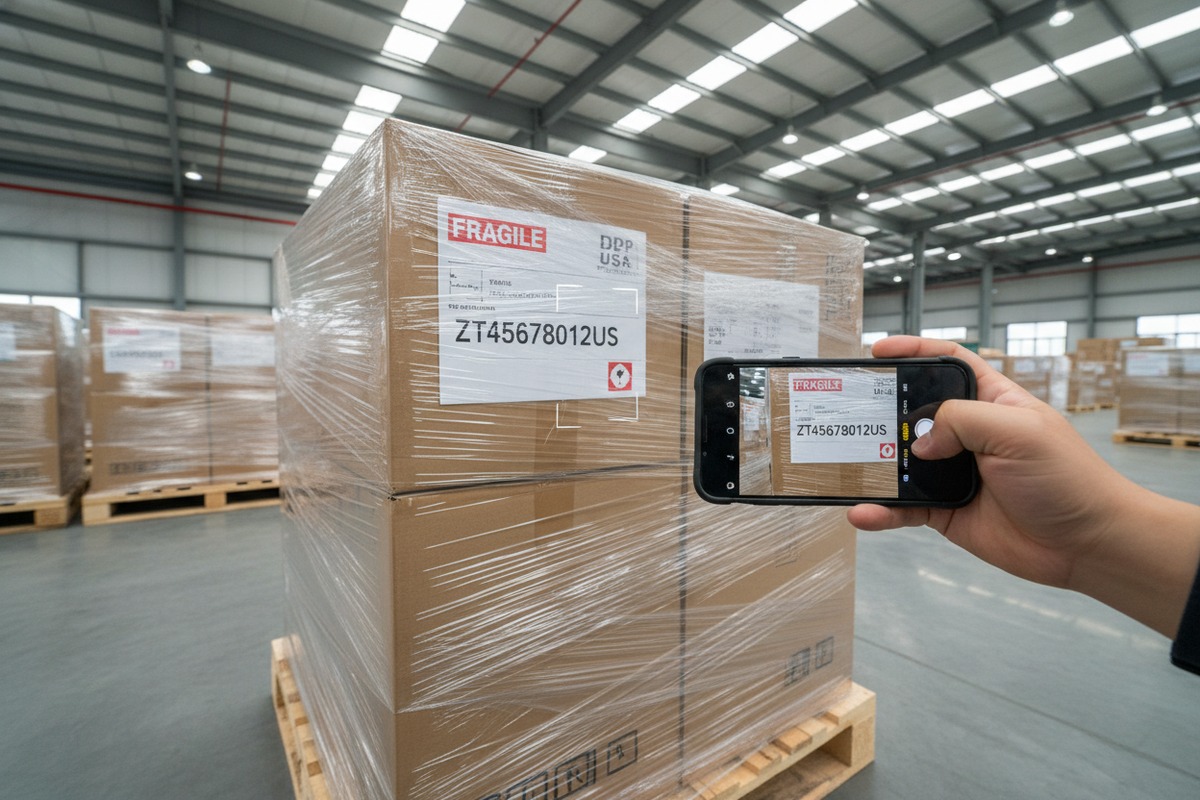
Amazon FBA shipments go through multiple touchpoints: your supplier's warehouse, our consolidation facility, trucking to the port, ocean transit, US customs, domestic trucking, and finally Amazon's receiving dock. At every handoff, there is a chance for damage, mishandling, or loss.
Amazon's receiving process is strict. If boxes arrive damaged, labels are unreadable, or carton counts do not match the shipment plan, Amazon may reject the entire delivery. With WPA or FPA insurance, none of these scenarios would be covered because they are not "major maritime perils."
Here are the most common problems we see with FBA shipments:
All of these are covered under All Risks. None of them are covered under WPA or FPA.
Let me put this in perspective. Say you ship $30,000 worth of electronics to Amazon FBA. The All Risks premium might be $400–$600. If even one pallet of product is water-damaged or lost — worth perhaps $5,000 — you have already lost more than 8x the cost of insurance.
Amazon will not reimburse you. Your carrier's liability is capped at roughly $500 per package under the Hague-Visby Rules 10 (SDR 666.67 per package), which is a fraction of your actual cargo value. Without All Risks insurance, you absorb the full loss.
Based on years of experience, here are the categories I always recommend insuring:
If you ship to Amazon FBA regularly — say once or twice a month — ask about an annual open policy. This gives you automatic coverage on every shipment without buying a new policy each time. Annual policies often come with a 20–30% discount on rates. They also simplify your operations because you do not need to coordinate insurance for each individual shipment.
For high-volume Amazon sellers, this is the most cost-effective approach. We help our MBMLOG clients set this up as part of their ongoing shipping arrangements.
Choosing the right international cargo insurance comes down to understanding your risks, your cargo value, and your coverage options. All Risks is the clear winner for most China-to-USA shipments, especially for Amazon FBA inventory. Calculate your premium using 110% of invoice value, verify every field on your insurance certificate, and always document damage immediately. If you need help selecting or purchasing cargo insurance for your next shipment, reach out to our team at MBMLOG — we handle this every day.
1. Replaced with an authoritative .gov source on Incoterms. ↩︎
2. Official Amazon page explaining the Fulfillment by Amazon service. ↩︎
3. Defines a more limited type of cargo insurance coverage under Institute Cargo Clauses. ↩︎
4. Replaced with a direct link to the Institute Cargo Clauses (A) document, which is highly authoritative. ↩︎
5. Official rules for documentary credits issued by the International Chamber of Commerce. ↩︎
6. Provides a comprehensive guide to international cargo insurance. ↩︎
7. Replaced with an authoritative source on war and strikes risks from the International Union of Marine Insurance (IUMI). ↩︎
8. Defines a crucial legal document used in international shipping. ↩︎
9. Describes a formal document required for cargo insurance claims. ↩︎
10. Details the international convention governing carrier liability in maritime transport. ↩︎