- +8618603825129
- [email protected]

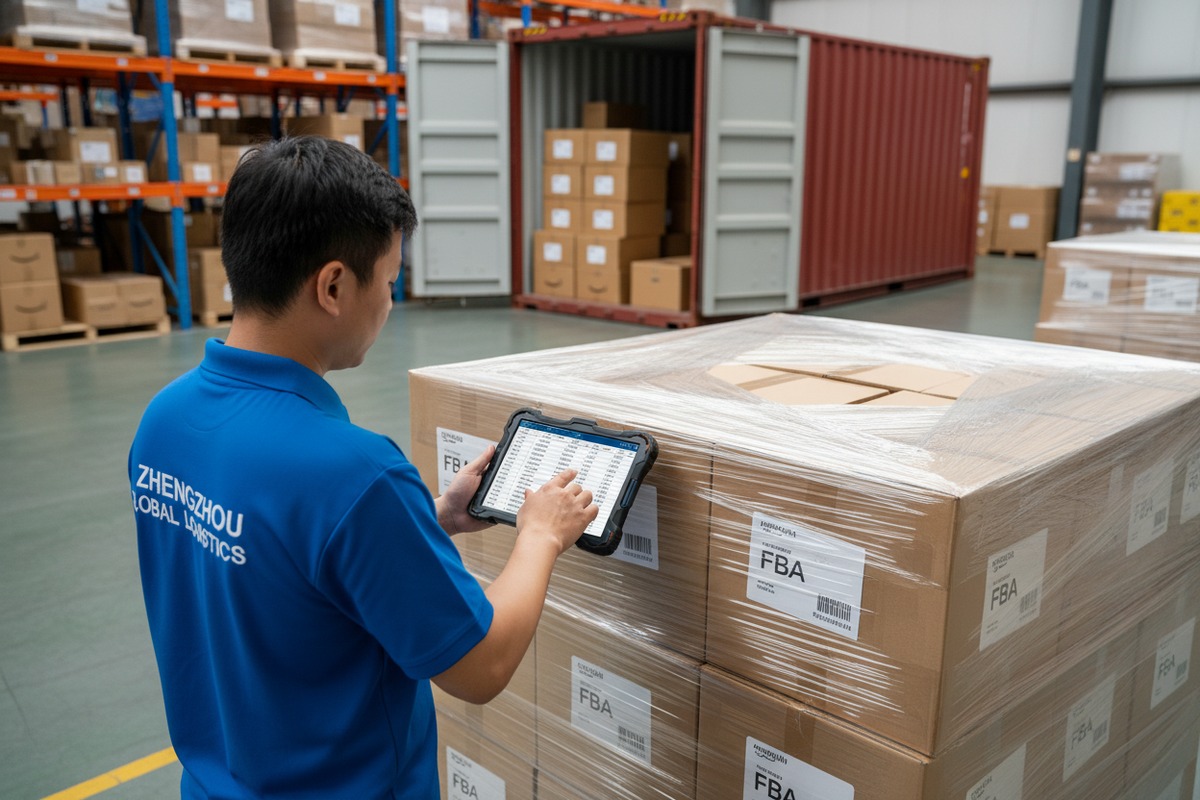
Every week, our logistics team in Zhengzhou handles dozens of FBA shipments bound for US warehouses Small Parcel Delivery 1. One wrong label, one missing document, and the entire pallet gets rejected at the door. That kind of mistake costs sellers weeks of lost sales and hundreds in extra fees.
Managing Amazon FBA inbound shipping requires preparing Amazon-specific documents like FBA shipment IDs, warehouse codes, and reference IDs, providing all customs clearance paperwork for DDP delivery, and strictly following Amazon's packaging and labeling standards to prevent rejection at the fulfillment center.
This guide breaks down every step of the process Less-Than-Container-Load 2. From choosing the right shipping method out of China to nailing your customs paperwork, packaging specs, and DDP cost structure, you will find clear answers below.
Over the past five years, our operations team has shipped thousands of pallets from our Zhengzhou consolidation warehouse to FBA centers across the US Full Container Load 3. The single biggest factor in a smooth delivery is not price. It is choosing the right shipping method for your cargo size and timeline Bill of Lading 4.
The most reliable shipping method depends on your cargo volume and urgency. For fewer than 10 boxes, use Small Parcel Delivery via express carriers. For 10 or more boxes, Less-Than-Container-Load sea freight offers the best balance of cost and reliability. Full Container Load suits high-volume sellers.
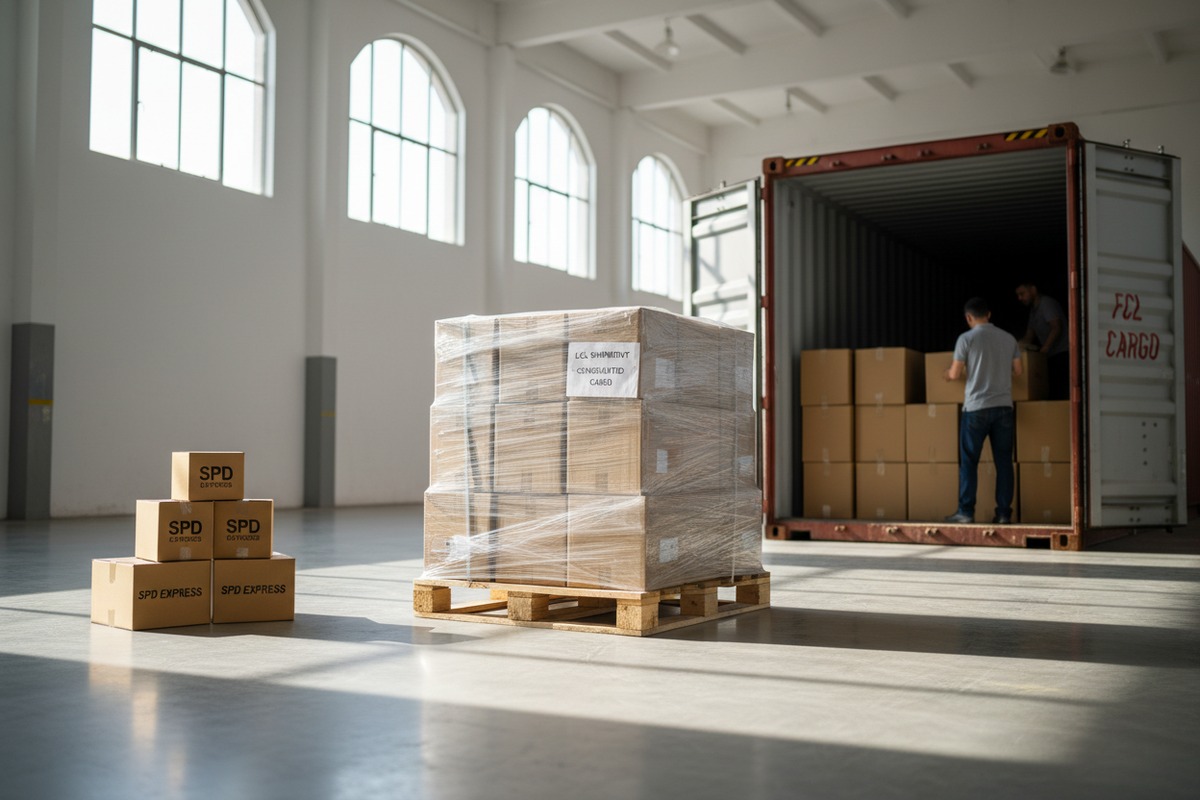
When we plan a shipment for a client, we start with three questions: How many boxes ISF Filing 5? How heavy? How soon do you need it on Amazon shelves? The answers point to one of three methods.
Small Parcel Delivery (SPD) works best for lightweight, low-volume shipments. You ship individual boxes through carriers like UPS, FedEx, or DHL. Each box must weigh under 50 lbs and measure under 25 inches per side. This method is simple but expensive per unit.
Less-Than-Container-Load (LCL) is the sweet spot for most Amazon sellers we work with. You share container space with other shippers. Transit time from China to the US West Coast runs 18–25 days door to door. It is significantly cheaper per kilogram than air express.
Full Container Load (FCL) makes sense when you have enough product to fill a 20-foot or 40-foot container. You get dedicated space, lower per-unit costs, and more control over timing.
| Factor | SPD (Express) | LCL (Sea) | FCL (Sea) |
|---|---|---|---|
| Best For | < 10 boxes, urgent | 10–200 boxes, regular | 200+ boxes, bulk |
| Transit Time (China to US) | 5–10 days | 18–25 days | 20–30 days |
| Cost Per KG | $6–$12 | $1.50–$3.50 | $0.80–$2.00 |
| Palletizing Required | No | Recommended | Yes |
| Customs Complexity | Low | Medium | Medium |
| Risk of Delay | Low | Medium | Low |
Before booking, our team confirms three things with every client. First, we verify the FBA warehouse destination code 6. Amazon assigns codes like LAX9, ONT8, or EWM5. Different warehouses have different receiving capabilities. Some accept only palletized freight. Others take small parcels.
Second, we check FBA storage capacity. If your account has limited inventory capacity, Amazon will reject the shipment at the door. We have seen sellers lose entire containers because they did not confirm available storage before shipping.
Third, we review the product category. Battery-powered products, oversized items, and hazardous materials each have carrier restrictions. Not every shipping method supports every product type.
For most of our US-bound Amazon sellers, LCL sea freight with DDP service delivers the best combination of cost savings and reliability. It avoids the high per-unit cost of express while keeping transit times predictable.
In our daily operations, we process customs clearance for FBA-bound cargo every single day. The paperwork for Amazon shipments is more complex than standard international freight. One missing document can hold your goods at the port for weeks.
A seamless DDP shipment to the USA requires a commercial invoice, packing list, bill of lading, ISF filing, HS codes, and an Importer of Record. Amazon FBA shipments additionally need the 12-digit FBA shipment ID, warehouse destination code, reference ID, and Amazon-compliant shipping labels.
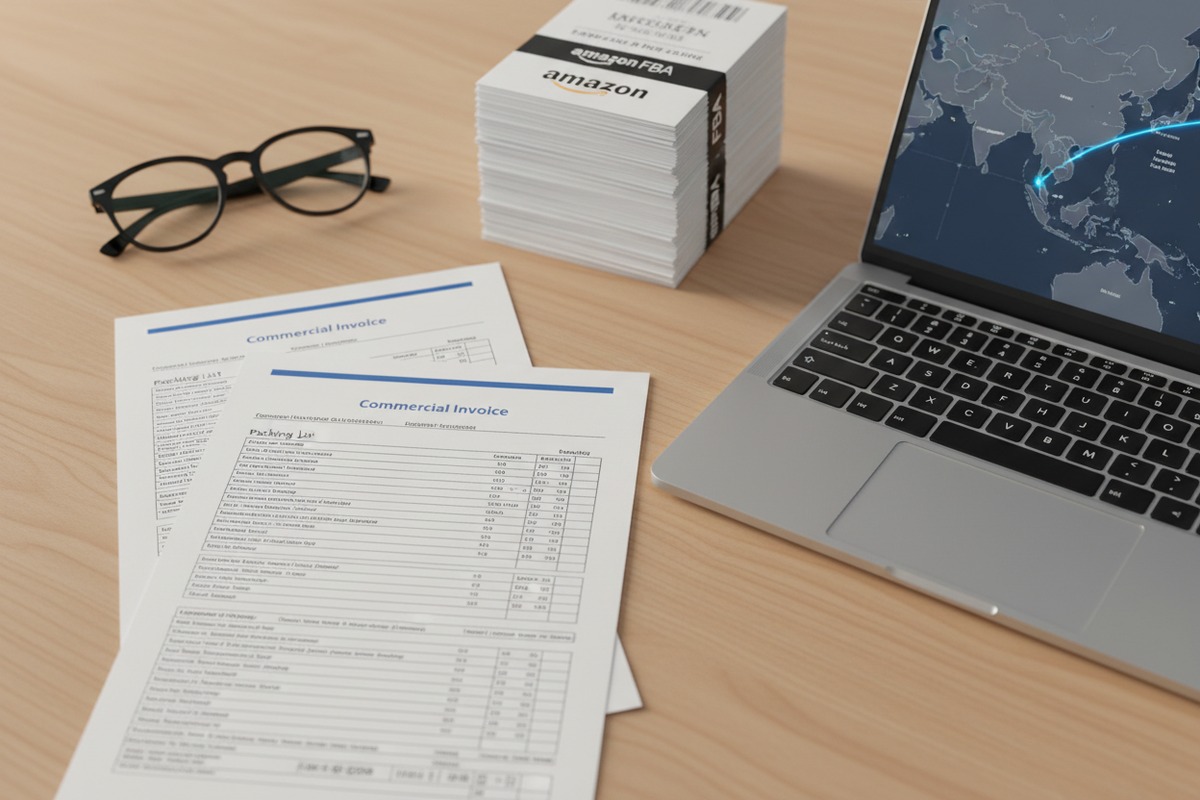
Every international shipment entering the United States needs a core set of documents. Our customs team prepares these for every DDP client:
This is where FBA shipments differ from regular freight. Amazon requires its own set of identifiers, and every single one must be accurate.
| Amazon Document | Description | What Happens If Wrong |
|---|---|---|
| FBA Shipment ID | 12-digit code from Seller Central | Entire shipment rejected at warehouse |
| Warehouse Code | Destination code (e.g., LAX9, ONT8) | Delivered to wrong location, returned |
| Reference ID | Unique reference for tracking | Cannot be matched to your account |
| Amazon Labels | FNSKU + Box ID labels | Units cannot be received or scanned |
| Delivery Address | Exact FBA warehouse address | Carrier cannot deliver |
Certain product categories trigger additional documentation requirements. US Customs and Amazon both enforce these strictly.
Battery and magnetic products need an MSDS (Material Safety Data Sheet), UN38.3 test report, battery letter, and FCC certification for US market entry. Without these, carriers refuse the cargo before it even leaves China.
Children's products including toys and baby items require a CPC (Children's Product Certificate) with CPSIA and ASTM test reports. Amazon and US Customs both check for this.
Cosmetics and food-contact items need FDA registration and compliance documentation. The FDA can issue an import alert and detain goods without proper filings.
Branded products require a brand authorization letter. Chinese customs and US Customs both verify this. Shipping branded goods without authorization is one of the fastest ways to get your shipment seized.
Wood packaging materials like pallets must carry an IPPC fumigation stamp. Non-compliant wood packaging gets quarantined at the US port.
Our team handles all of these documents as part of our DDP service. We verify every detail before cargo leaves our warehouse because corrections after shipping are expensive and slow.
Our warehouse staff repack and relabel hundreds of FBA-bound cartons every month. The most common reason? Sellers did not know Amazon's exact requirements until their first shipment got flagged with inbound defect fees. Getting it right the first time saves real money.
To comply with Amazon's inbound standards, use rigid six-sided boxes under 50 lbs and 25 inches per side, apply FNSKU barcodes to every unit, cover all old barcodes, add FBA Box ID labels to each carton, include at least 2 inches of padding, and match box contents exactly to your shipping plan.

Amazon is very specific about physical packaging. Here are the rules we follow for every shipment:
Every box must be a rigid, six-sided container. It must close completely flat on top. No irregular shapes. No bags as outer packaging.
Weight limit is 50 lbs per box. If a single item weighs more than 50 lbs, it must carry a "Team Lift" label (50–100 lbs) or "Mechanical Lift" label (over 100 lbs).
Each side of the box must not exceed 25 inches unless the box contains a single oversized item that is naturally longer.
Add at least 2 inches of cushioning or void fill around products inside each box. Loose items shift during transit and arrive damaged.
For palletized shipments, each pallet needs four FBA Pallet ID labels, one on each side. Pallets must be standard GMA-grade, 40 × 48 inches, in good condition with no broken boards.
Labeling errors are the number one cause of inbound defects we see. Here is what Amazon requires:
FNSKU barcodes must appear on every individual sellable unit. This is the barcode that links the product to your specific seller account. It must be scannable, printed clearly, and placed on a flat surface of the product packaging.
Cover all existing barcodes. If your product has a manufacturer UPC, EAN, or any other barcode, you must cover it with the FNSKU label or an opaque sticker. Two visible barcodes cause scanning confusion and mis-shelving.
FBA Box ID labels go on the outside of every carton. Each box in a shipment gets a unique label generated from your Seller Central shipping plan. Place it on a flat surface, not on a seam or tape line.
| Requirement | Standard | Common Mistake |
|---|---|---|
| Box Weight | ≤ 50 lbs | Overpacking boxes to save on carton count |
| Box Side Length | ≤ 25 inches | Using oversized boxes for small items |
| Cushioning | ≥ 2 inches padding | No void fill, products shift and break |
| FNSKU Barcode | On every sellable unit | Using manufacturer barcode instead |
| Old Barcode Coverage | Must be fully covered | Leaving UPC visible alongside FNSKU |
| Box ID Label | Unique per box, scannable | Reusing labels or poor print quality |
| Poly Bag Warning | Suffocation warning if bag > 5 inches | Missing warning label on bagged items |
| Expiration Dates | MM-DD-YYYY, ≥ 36pt font | Wrong format or too small to read |
| Bundle Labeling | "Sold as set" + "Do not separate" | Missing bundle labels, units separated |
Before any shipment leaves our warehouse, we run a final check. We confirm that FBA storage capacity is available in the seller's account. If capacity is exceeded, Amazon rejects the entire delivery. We also verify that no products are on Amazon's restricted or prohibited list. Selling restricted items results in account suspension, not just shipment rejection.
We scan every FNSKU barcode with a handheld scanner to make sure it reads correctly. A barcode that looks fine to the eye can still fail a scanner due to size, contrast, or damage. This five-second test prevents days of delays.
Finally, we photograph each pallet and box label before loading. This creates a record in case of any dispute with Amazon's receiving team about missing or damaged inventory.
When we first started offering FBA logistics, many of our clients came to us after a bad experience. Their previous freight forwarder quoted a low rate, then hit them with surprise duty bills, storage charges, and customs broker fees at the destination. It is a common and painful problem.
DDP (Delivered Duty Paid) is the best option for Amazon FBA sellers because it bundles all costs — freight, customs duties, import taxes, and destination delivery — into one upfront price. This eliminates surprise fees and ensures your goods reach the FBA warehouse without any payment required on arrival.

DDP stands for Delivered Duty Paid. Under this Incoterm, your logistics provider handles everything from pickup at the factory in China to final delivery at the Amazon FBA warehouse door in the US. That includes export customs, ocean or air freight, US import customs clearance, duty payment, and last-mile delivery.
This matters because Amazon does not clear customs. Amazon does not pay duties. Amazon does not solve problems at the destination port. If your shipment gets stuck at US Customs, Amazon is not going to help. It is entirely your responsibility. A DDP provider like us takes that burden off your shoulders.
Many sellers confuse DDP with other common shipping terms. Here is how they compare:
| Incoterm | Who Pays Duties? | Who Clears US Customs? | Who Delivers to FBA? | Risk of Hidden Fees |
|---|---|---|---|---|
| EXW (Ex Works) | Buyer | Buyer | Buyer | Very High |
| FOB (Free on Board) | Buyer | Buyer | Buyer | High |
| CIF (Cost, Insurance, Freight) | Buyer | Buyer | Buyer | Medium-High |
| DDP (Delivered Duty Paid) | Seller/Provider | Provider | Provider | Very Low |
With EXW or FOB, you receive the goods at a port or factory gate. After that, every cost is yours to figure out. Customs brokers charge separate fees. Duties are calculated after arrival and billed unexpectedly. Port storage fees accumulate if clearance takes too long. These hidden costs can add 15–30% to your total landed cost.
Our DDP quotes include every line item. Freight cost, fuel surcharge, customs brokerage, US import duty based on HS code and declared value, bond fees, and delivery to the specific FBA warehouse. When David — a typical Amazon seller we work with — receives our quote, that number is the final number. No invoice surprises 30 days later.
We calculate duties before the shipment leaves China using the correct HS codes 10 and current US tariff rates. If there is an anti-dumping duty or a Section 301 tariff on the product, we factor that in upfront. Sellers know their exact landed cost before they commit.
Here is a fact many new sellers do not realize: Amazon FBA shipments are effectively DDP by default. Amazon will not act as your Importer of Record. Amazon will not pay any duty or tax on your behalf. Amazon will not accept shipments that have not cleared customs. So if your goods arrive at a US port and nobody has arranged customs clearance and duty payment, those goods sit in a bonded warehouse, accumulating storage fees by the day.
Every FBA shipment from China needs someone to pay the duties and clear the goods before they reach the warehouse. That someone is either you, managing multiple vendors and processes, or your DDP logistics provider, handling it all as one service.
For sellers focused on growing their Amazon business rather than managing freight logistics, DDP is not just convenient. It is the only practical option that protects your margins and your inventory timeline.
Managing Amazon FBA inbound shipping from China demands precise documents, strict packaging compliance, and a reliable DDP partner. Get these right, and your inventory flows smoothly from factory floor to Amazon shelf every time.
1. Defines small parcel shipping and its characteristics in logistics. ↩︎
2. Explains LCL shipping, where cargo shares container space with other shippers. ↩︎
3. Defines FCL shipping, where a single shipper uses an entire container. ↩︎
4. Explains the legal document used in freight shipping as a contract and receipt. ↩︎
5. Official U.S. Customs and Border Protection requirements for Importer Security Filing. ↩︎
6. Official Amazon Seller Central page explaining FBA fulfillment centers and their identification codes. ↩︎
7. Provides an official overview of Amazon's Fulfillment by Amazon program. ↩︎
8. Official U.S. Customs and Border Protection requirements for commercial invoices. ↩︎
9. Defines a packing list and its importance in international shipping. ↩︎
10. Authoritative explanation of Harmonized System (HS) Codes from a government source. ↩︎