- +8618603825129
- [email protected]


Every week, our logistics team in Zhengzhou helps dozens of importers figure out whether their cargo fits a 20ft, 40ft, or 40HQ container 1 — and the wrong choice costs real money. ocean freight 2
Choosing the right shipping container size for ocean freight depends on three core variables: your cargo's total weight, its cubic volume, and any special handling needs. A 20ft container suits heavy, dense goods. A 40ft standard works for balanced loads. A 40ft or 45ft high cube is ideal for light, bulky cargo. Always compare your cargo's CBM and gross weight against the container's internal dimensions and payload limit before booking.
Below, we break down the most common container sizing questions we hear from Amazon sellers and importers shipping from China to the USA cubic volume 3. Each section gives you practical numbers, comparison tables, and decision logic you can use right away.
When we load containers at our partner warehouses in Shenzhen and Ningbo every day, we see the same mistake repeated: shippers pick the bigger box without checking weight limits first Less than Container Load 4.
A 20ft container is the right fit when your cargo is heavy and dense, such as hardware, tiles, or machinery. A 40ft container is better when your cargo is lighter and fills more volume, like furniture or household goods. Compare your total CBM and total weight against each container's capacity before you decide.
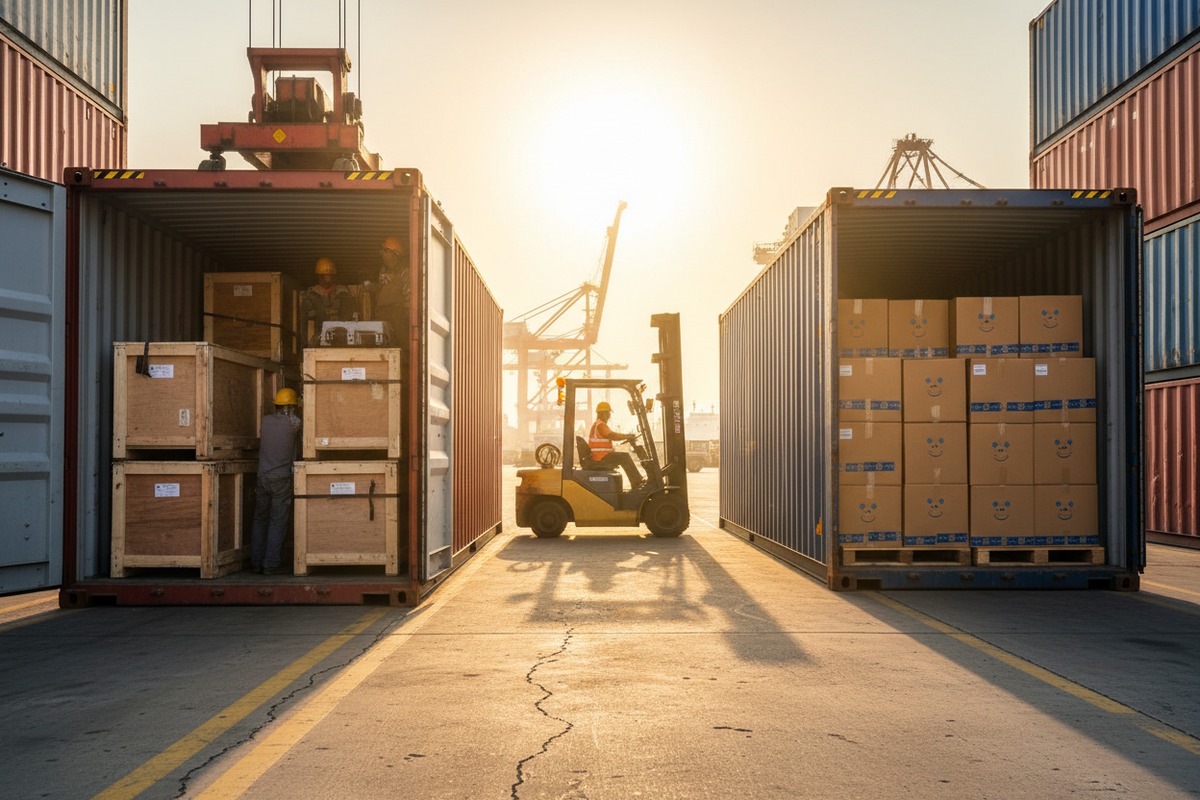
The decision between a 20ft and a 40ft container is not about which one is "bigger." It is about which one matches your cargo's density. Dense cargo — like metal parts, ceramic tiles, or stone — will hit the weight limit of a container long before it fills the space. Light cargo — like plastic bins, pillows, or clothing — will fill the space long before it reaches the weight limit.
Here is a practical way to think about it. If your cargo weighs more than 500 kg per cubic meter, you are dealing with dense freight. A 20ft container is almost always the better choice. If your cargo weighs less than 300 kg per cubic meter, a 40ft container will give you more value per dollar.
We load containers daily. These are the real-world numbers our operations team uses, not textbook figures.
| Specification | 20GP | 40GP | 40HQ | 45HQ |
|---|---|---|---|---|
| Internal Dimensions (L×W×H) | 5.898 × 2.352 × 2.385 m | 12.032 × 2.352 × 2.385 m | 12.032 × 2.352 × 2.69 m | 13.556 × 2.352 × 2.698 m |
| Total Internal Volume | 33.1 CBM | 67.5 CBM | 76.2 CBM | 86 CBM |
| Practical Loading Volume | ~28 CBM | ~58 CBM | ~68 CBM | ~78 CBM |
| Max Cargo Weight | ~18 tons | ~26 tons | ~26 tons | ~29 tons |
| Best For | Heavy, dense cargo | Mixed-weight cargo | Light, bulky cargo | Very light, high-volume cargo |
Notice the gap between total internal volume and practical loading volume. You always lose some space to door clearance, dunnage, and stacking inefficiency. Never plan your load based on the full internal volume.
A 20ft container works best for goods like hardware fittings, ceramic tiles, sheet materials, bagged commodities, and small machinery. These items are heavy relative to their size. If you tried to fill a 40ft container with ceramic tiles, you would hit the 26-ton weight limit at roughly 30-35 CBM — leaving more than half the container empty. That is wasted money.
One tip from our team: if your cargo is extremely heavy, you can apply to the shipping line for a "heavy-duty container" (重柜). These reinforced 20ft units can handle higher payloads. We regularly arrange this for clients shipping stone slabs and steel parts from China.
A 40ft standard container is ideal when your shipment volume sits between 30 and 58 CBM and the total weight stays under 26 tons. Common cargo types include furniture, household goods, luggage, and general merchandise. The cost difference between a 20ft and a 40ft is often surprisingly small — sometimes only 30-40% more — so the per-CBM cost of a 40ft is usually much lower.
Ask yourself two questions:
If the answer to question 1 is yes but question 2 is no, use a 20ft. If the answer to question 2 is yes and the weight is manageable, use a 40ft. If both answers are yes, you may need multiple containers — and that is where our team can help you optimize.
In our experience shipping from China to the US, we see a clear cost crossover point where LCL stops making sense — and many importers miss it, overpaying for months.
If your shipment volume consistently exceeds 10-15 CBM, switching from LCL (Less than Container Load) to FCL (Full Container Load) will almost always save you money. FCL also gives you faster transit times, fewer handling touchpoints, and lower risk of cargo damage compared to consolidated LCL shipments.
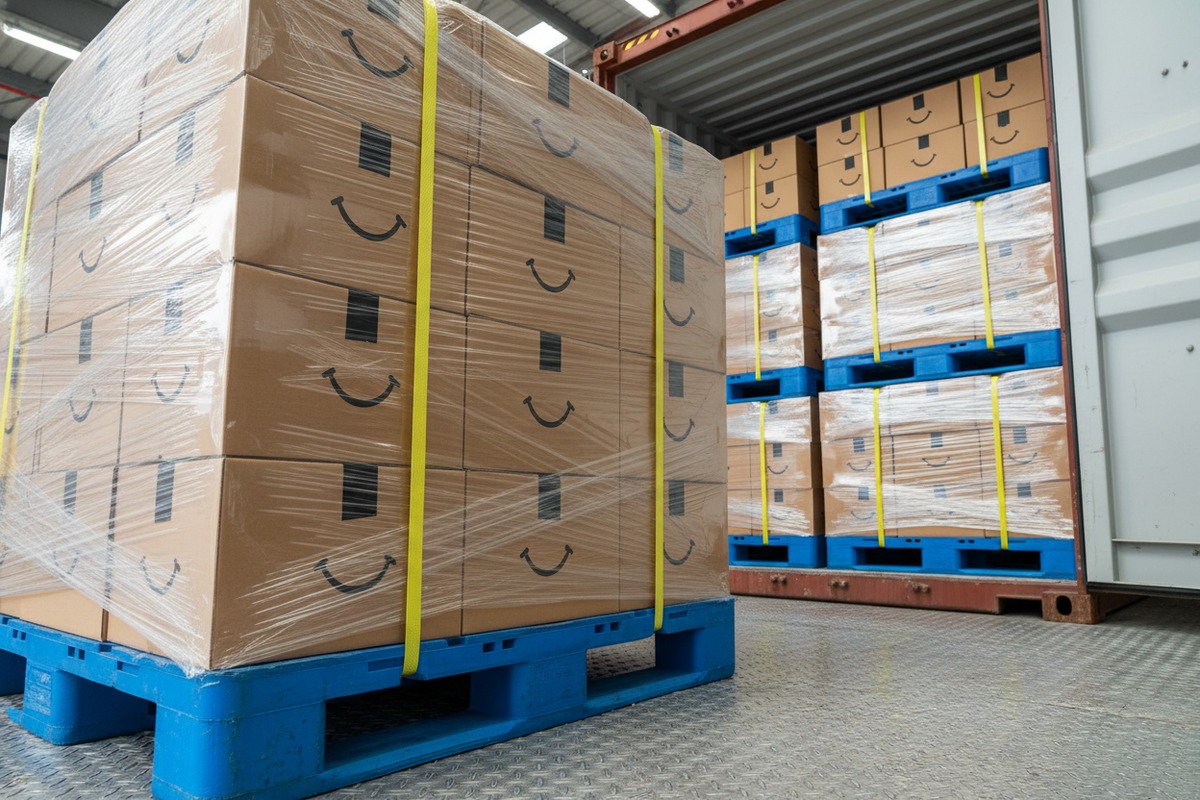
LCL and FCL have fundamentally different pricing models. LCL charges you per cubic meter (or per revenue ton, whichever is greater). FCL charges you a flat rate per container, regardless of how full it is.
At low volumes — say 2 to 5 CBM — LCL is clearly cheaper. You only pay for the space you use. But LCL also comes with extra fees: warehouse handling charges at origin, CFS (Container Freight Station) fees at destination, possible fumigation charges, and longer dwell times while the consolidator waits to fill a container.
As your volume grows, these per-CBM charges add up fast. Our team regularly runs cost comparisons for clients, and the breakeven point usually lands around 12-15 CBM for China-to-USA routes. Beyond that volume, an FCL 20ft container is almost always cheaper — and significantly faster.
Here is a simplified example based on recent rates from Shenzhen to Los Angeles:
| Factor | LCL (15 CBM) | FCL 20ft (28 CBM capacity) |
|---|---|---|
| Base Freight | $65/CBM × 15 = $975 | $1,800 flat |
| Origin CFS / Handling | $150 | $0 (loaded at warehouse) |
| Destination CFS / Handling | $250 | $0 |
| Documentation Fee | $80 | $80 |
| Approximate Total | $1,455 | $1,880 |
| Cost per CBM | $97/CBM | $67/CBM (if fully loaded) |
At 15 CBM, the FCL total is higher — but the per-CBM cost is already lower. And if you can fill even 20 CBM of that 20ft container, your effective rate drops to about $94/CBM, nearly matching LCL. At 25 CBM, FCL becomes dramatically cheaper.
FCL shipments typically arrive 5-10 days faster than LCL because there is no consolidation wait at origin and no deconsolidation delay at destination. Your cargo also stays in a sealed container 5 from door to door, which means fewer hands touching it and a much lower chance of damage, contamination, or mix-ups.
For Amazon sellers, this speed advantage can mean the difference between restocking on time and running out of inventory during a sales peak. We have seen clients lose their Amazon Buy Box because an LCL shipment sat at a CFS for an extra week.
LCL is still the right choice for small trial shipments, sample orders, or businesses just starting to import. If your volume is under 5 CBM, FCL would be overkill. But once you reach consistent monthly volumes above 10 CBM, run the numbers. Most of our clients who switch from LCL to FCL see savings of 15-30% on their freight costs.
Our team ships hundreds of containers to Amazon FBA warehouses 6 across the US every month, and container choice directly impacts whether your shipment clears Amazon's strict receiving requirements or gets rejected.
The container size you choose affects your Amazon FBA delivery in three ways: it determines how you palletize and label your cartons, whether your shipment meets Amazon's floor-loaded or palletized requirements, and how efficiently you can split inventory across multiple FBA warehouses. A 40HQ or 45HQ is often the best choice for FBA because most Amazon products are light and bulky.
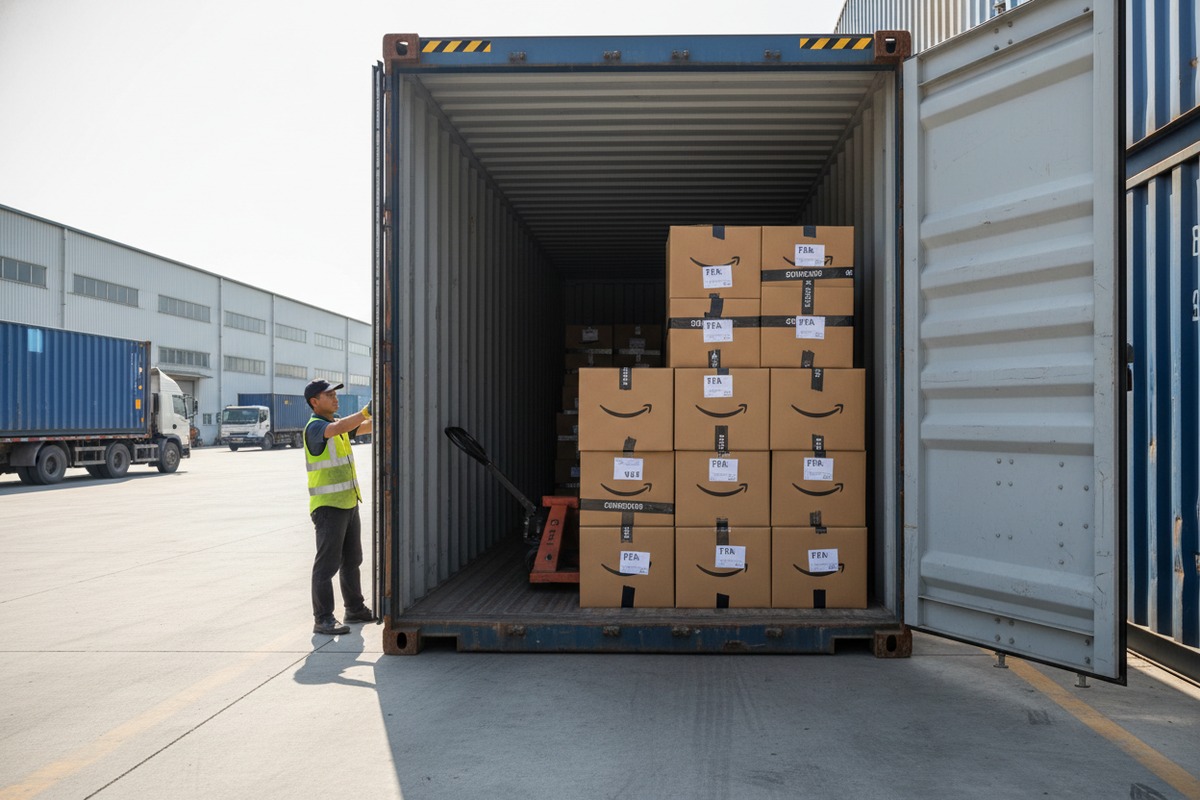
Amazon FBA products are overwhelmingly light, bulky consumer goods — clothing, toys, plastic products, household items, small furniture, and electronics accessories. These items have low density. They fill space fast but weigh relatively little. That makes 40HQ and 45HQ containers the natural fit.
A 40HQ gives you 68 CBM of practical loading space with the same 26-ton weight limit as a 40GP. The extra foot of height (2.69 m vs 2.385 m) lets you stack one more layer of standard cartons in many cases. For a typical FBA shipment of household goods, that extra layer can mean 15-20% more cartons per container.
A 45HQ goes even further: 78 CBM of practical loading capacity and 29 tons of payload. On US and European routes, 45HQ containers are heavily used for FBA shipments. In our experience, the 45HQ is the single most cost-effective container type for Amazon sellers shipping from China.
| Product Category | Recommended Container | Reason |
|---|---|---|
| Clothing, shoes, hats, textiles | 45HQ | Extremely light, high volume; 45HQ maximizes carton count |
| Toys, plastic products, storage bins | 45HQ or 40HQ | Bulky items benefit from extra height and length |
| Sponge, foam, mattresses, pillows | 45HQ | Ultra-light cargo; space is the only constraint |
| Furniture (flat-pack / knock-down) | 45HQ or 40HQ | Long, flat cartons fit well in extended-length containers |
| Electronics accessories, small gadgets | 40HQ or 40GP | Moderate density; 40HQ if volume is high |
| Hardware, tools, metal parts | 20GP | Dense and heavy; weight limit is the binding constraint |
| Mixed SKU general merchandise | 40HQ | Good balance of volume and weight for diverse product mixes |
Amazon FBA warehouses accept both palletized and floor-loaded containers, but the requirements differ by warehouse. Palletized shipments 7 must use standard 40×48 inch (GMA) pallets, with each pallet not exceeding 50 inches in height (including the pallet) and 1,500 lbs in weight.
Container choice affects how many pallets you can fit. A 20ft container holds roughly 10 standard pallets. A 40ft container holds about 20 pallets. A 45HQ can hold up to 24 pallets. If your FBA shipment plan splits your inventory across multiple Amazon fulfillment centers, you need to plan your palletization and container loading around those splits.
Floor-loaded containers — where cartons are stacked directly without pallets — maximize the usable space inside the container. This is common for lightweight goods shipped in a 40HQ or 45HQ. However, floor-loaded shipments require more labor to unload at Amazon's receiving dock, and some warehouses charge higher unloading fees for floor-loaded containers.
The 45HQ is the best-kept secret in Amazon FBA logistics. Its internal length of 13.556 meters lets you load longer items that would not fit in a 40ft container. Its 78 CBM practical capacity means you can consolidate more inventory in a single shipment, reducing per-unit shipping costs. And because FBA products are almost always "volume freight" rather than "weight freight," you rarely come close to the 29-ton weight limit.
On US-bound routes, the 45HQ is widely available and competitively priced. Many shipping lines offer it at only a small premium over a 40HQ. For Amazon sellers moving high-volume, lightweight products — think storage containers, foam products, apparel, paper-packaged daily goods — the 45HQ gives you the lowest cost per carton and the highest utilization rate.
We always recommend FBA sellers calculate their total CBM first. If it exceeds 60 CBM but stays under 78 CBM, a single 45HQ will almost certainly beat two 20ft containers on price, speed, and simplicity.
One of the biggest frustrations we hear from our US-based clients is getting hit with surprise customs charges after they thought shipping was already paid for.
Yes, you can get an all-in DDP (Delivered Duty Paid) quote that covers ocean freight, customs clearance, import duties, taxes, and last-mile delivery to your door or Amazon FBA warehouse. A reliable DDP quote eliminates unexpected charges by bundling every cost into one transparent price before your container ships.
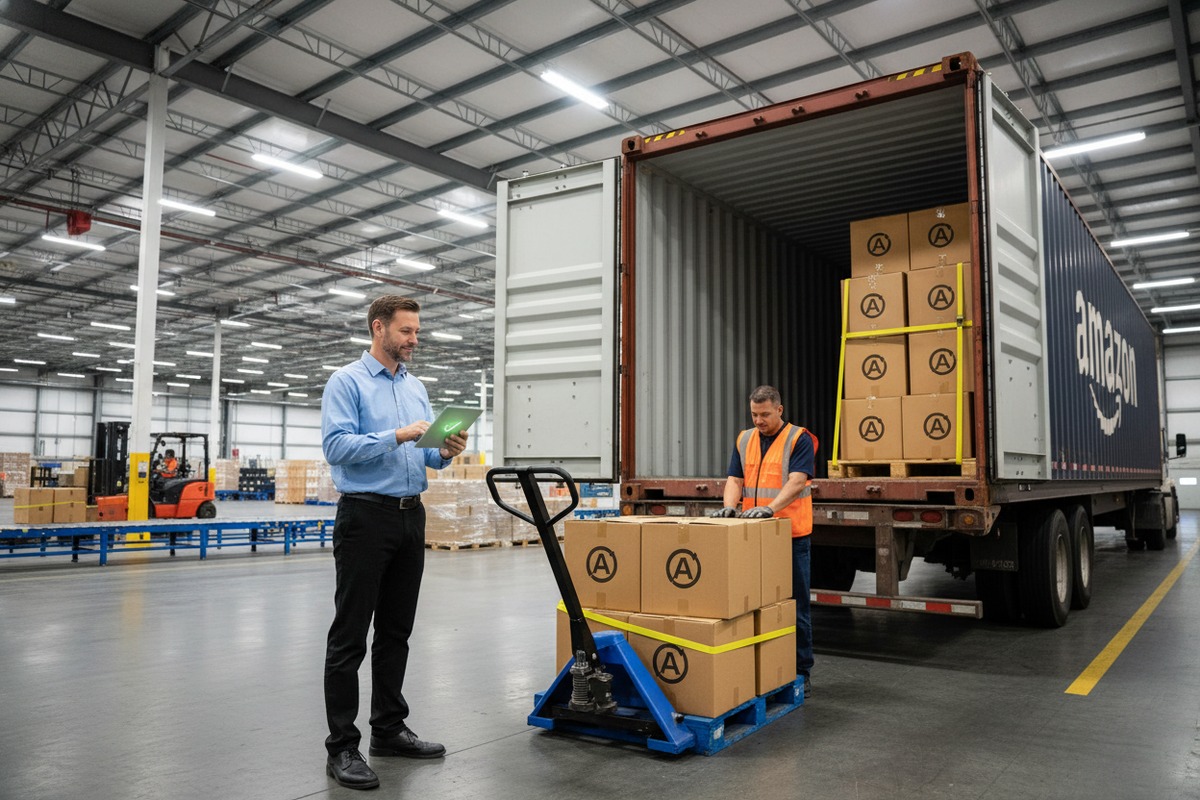
A genuine DDP quote should cover every cost from your supplier's warehouse in China to your warehouse or Amazon FBA facility in the United States. There should be zero surprise invoices after the container sails.
Here is what a complete DDP quote from our team typically includes:
When you ship FCL from China, the stakes are higher than with a small parcel. A single 40ft container of consumer goods might carry $50,000-$200,000 in product value. The import duties alone can range from 5% to 25% of that value, depending on the product category and any active tariff actions.
Without a DDP arrangement, you are responsible for figuring out every one of these charges yourself. Many importers underestimate duties, forget about harbor maintenance fees, or get blindsided by customs exam fees. A single customs delay can also trigger demurrage and detention charges — port storage fees that accumulate daily and can easily reach $150-$300 per day.
Not all DDP quotes are equal. Some providers hide exclusions in the fine print. Here is what to check:
Ask whether the quote includes customs exam fees. These are random inspections by US Customs and Border Protection. A good DDP provider will either include a buffer for these or clearly state how they are handled.
Confirm that duties are calculated on the correct HTS codes. If your DDP provider uses the wrong tariff classification, you could face underpayment penalties later.
Check whether the last-mile delivery includes liftgate service, appointment scheduling, or inside delivery if you need it. Amazon FBA deliveries require appointment scheduling, and missing an appointment can trigger redelivery charges.
Our Amazon FBA clients consistently tell us that DDP shipping is the single biggest stress reducer in their supply chain. When you know the total landed cost before the container leaves China, you can set your product prices accurately, maintain your margins, and avoid the cash flow surprises that derail small businesses.
We provide itemized DDP quotes that break down every line item so you understand exactly what you are paying for. If duties change because of new tariff actions, we update you before shipment — not after. That transparency is what separates a real DDP service from a provider who just adds a vague markup and hopes for the best.
If you are shipping regularly from China to the US, request a DDP quote for your next container. Compare it against your current CIF or FOB arrangement plus all the separate charges you pay. In our experience, most importers find that DDP is not only simpler but also comparable or lower in total cost — because logistics specialists like us negotiate better rates on port charges, trucking, and brokerage than individual shippers can get on their own.
Choosing the right container size comes down to matching your cargo's weight, volume, and handling needs to the container's real-world capacity — then locking in a transparent DDP quote so there are no surprises.
1. Provides an overview of standard ISO shipping container types and dimensions. ↩︎
2. Defines ocean freight as a key transportation method in supply chain management. ↩︎
3. Explains cubic volume as a fundamental measurement in shipping and how to calculate it. ↩︎
4. Explains LCL shipping as sharing container space with other shippers for smaller cargo volumes. ↩︎
5. ISO 17712 standard detailing mechanical security seal requirements for freight containers. ↩︎
6. Provides official Amazon Seller Central guidelines for shipping to FBA fulfillment centers. ↩︎
7. Describes palletized shipping as securing goods on pallets for improved handling and efficiency. ↩︎
8. WTO resources explaining international customs valuation and export declaration procedures. ↩︎
9. Official US International Trade Commission search tool for Harmonized Tariff Schedule codes. ↩︎
10. Defines DDP Incoterms where the seller assumes all responsibilities and costs for delivery. ↩︎