- +8618603825129
- [email protected]


Calculating the landed cost of an imported electric forklift trips up many buyers import VAT 1. At our Zhengzhou logistics office, we see importers approve a great factory quote, then watch freight, duty, and port fees quietly erase their margin. The fix is one complete calculation done before the order.
Landed cost of an imported electric forklift equals the factory invoice price plus international freight, marine insurance, customs duties, import taxes, brokerage and port fees, and inland delivery. Calculate CIF first, apply duty to CIF, apply tax to CIF plus duty, then add all destination charges.
That formula sounds simple. The hard part is knowing which numbers to plug in. Let me walk you through each cost layer, one at a time.
A distributor in Texas once sent me a spreadsheet with only two lines: forklift price and ocean freight. His real invoice at delivery had eleven lines. Our team now shares a full checklist with every quote we issue.
Include the forklift invoice price, ocean freight, marine insurance, customs duties, import VAT or sales tax, customs brokerage fees, terminal handling charges, and inland trucking to your warehouse. Add storage, documentation, and battery-related handling charges where they apply to get the true landed cost.
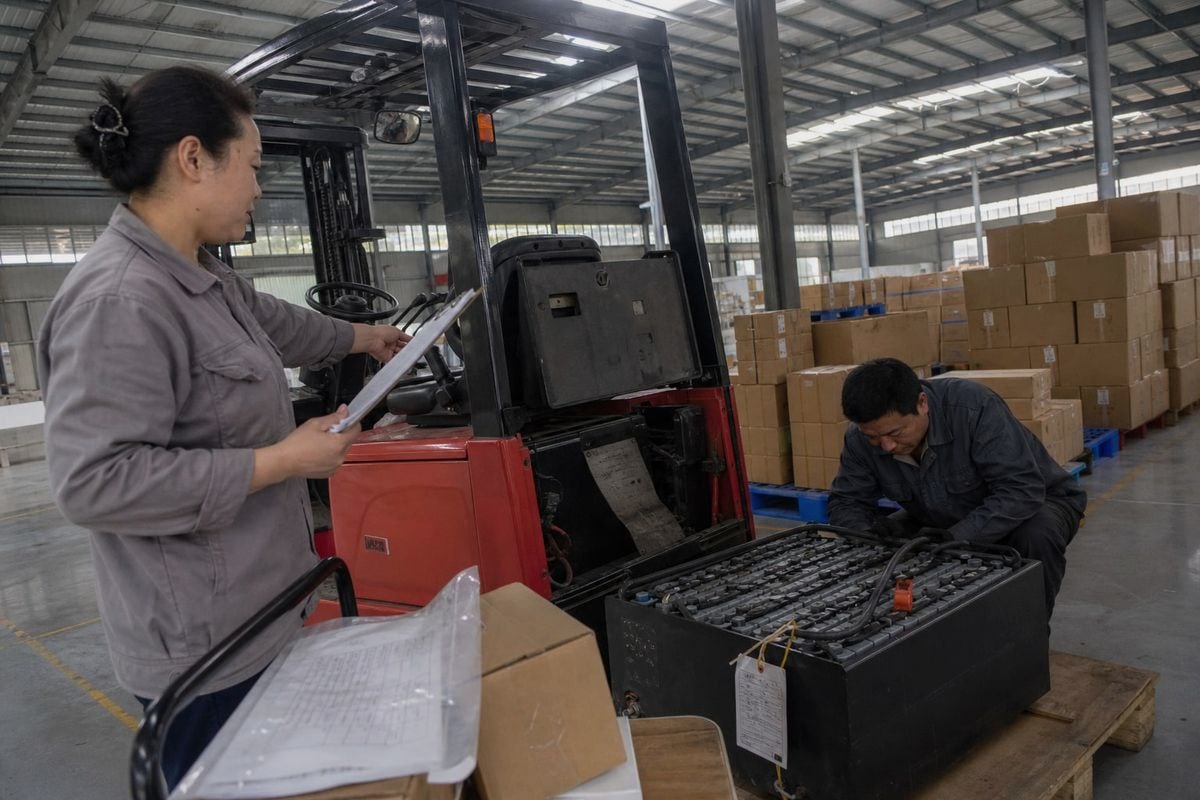
The core sequence works like this. First, take the supplier's invoice price. Second, add international freight from the Chinese port to your destination port. Third, add cargo insurance. Those three numbers give you the CIF value. Duty is usually calculated on that CIF value. Import tax is then usually calculated on CIF plus duty. Finally, you stack on the destination fees and inland delivery.
Here is the framework I give every buyer before they place an order.
| Cost Layer | What It Covers | Typical Basis |
|---|---|---|
| Product cost | Factory invoice for the forklift | Supplier quote (check Incoterms) |
| International freight | Ocean freight rates from China | Per container or per CBM |
| Marine insurance | Cargo damage or loss in transit | Percentage of cargo value |
| Customs duties | Import tariffs at destination | Duty rate × customs value |
| Import tax | Value Added Tax, GST, or sales tax | Tax rate × (CIF + duty) |
| Clearance fees | Customs brokerage fees, filing, bonds | Flat or per-entry fee |
| Port charges | Terminal handling charges, chassis, gate fees | Per container |
| Inland delivery | Inland drayage or flatbed trucking | Per mile or flat rate |
Assume one electric forklift bought FOB Shanghai at $12,000. Ocean freight is $2,200. Insurance is $100. CIF equals $14,300. With a 5% duty rate, duty is $715. With a 10% import tax, tax is (14,300 + 715) × 10% = $1,501.50. Add $350 for brokerage and documentation, $450 for terminal handling, and $600 for inland trucking. Total landed cost: roughly $17,916 — nearly 50% above the factory quote. If you ship multiple units, divide the total by the number of forklifts to get landed cost per machine.
One more distinction matters. A minimum landed cost covers only direct import costs. A fully loaded landed cost also adds financing, currency conversion, wire fees, and your internal receiving labor. For a capital purchase like a forklift, I recommend the fuller version, because it connects landed cost to total cost of ownership and payback period.
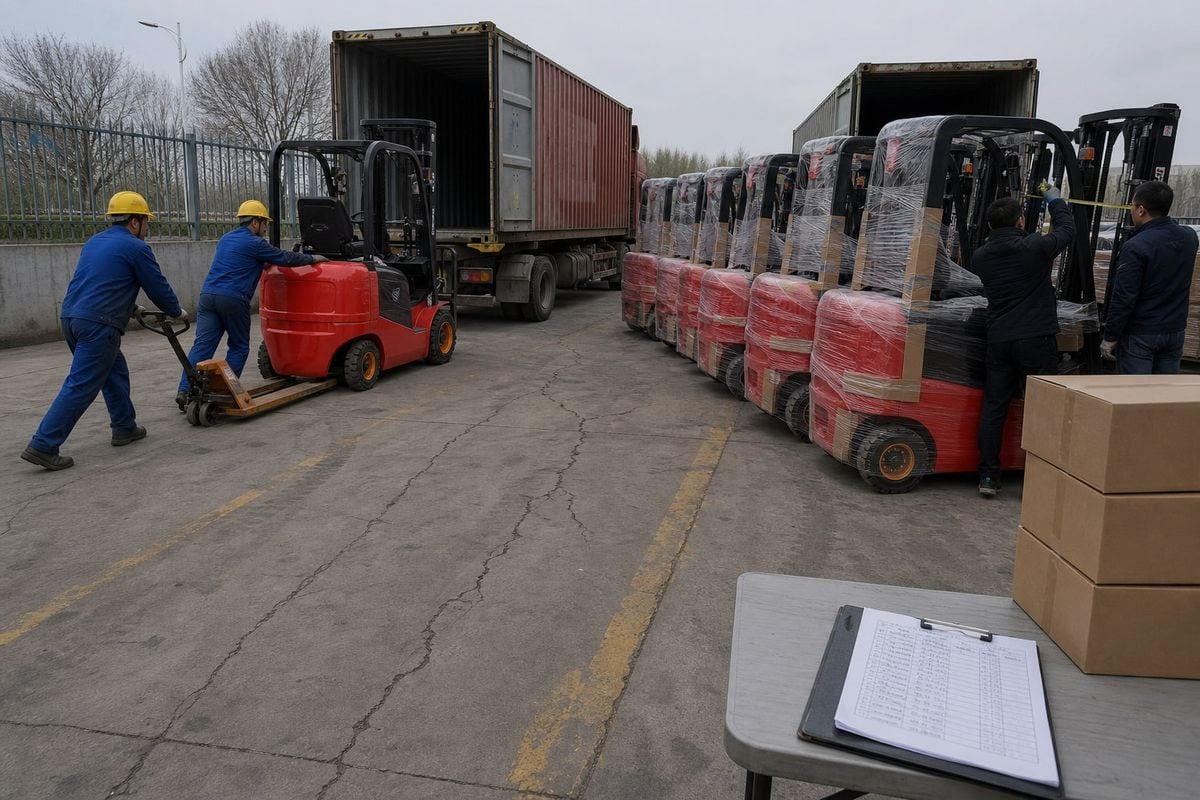
Container planning is a trade-off we weigh on almost every shipment. Booking a 40HQ for two forklifts wastes money. Squeezing four units plus batteries into a 20FT risks damage. The right loading plan changes the per-unit cost significantly.
Freight and container choices directly change per-unit landed cost. A full container spreads a fixed ocean freight cost across every forklift inside, so better container utilization lowers cost per machine. LCL suits single units, while FCL with consolidated spare parts usually wins for multi-unit orders.
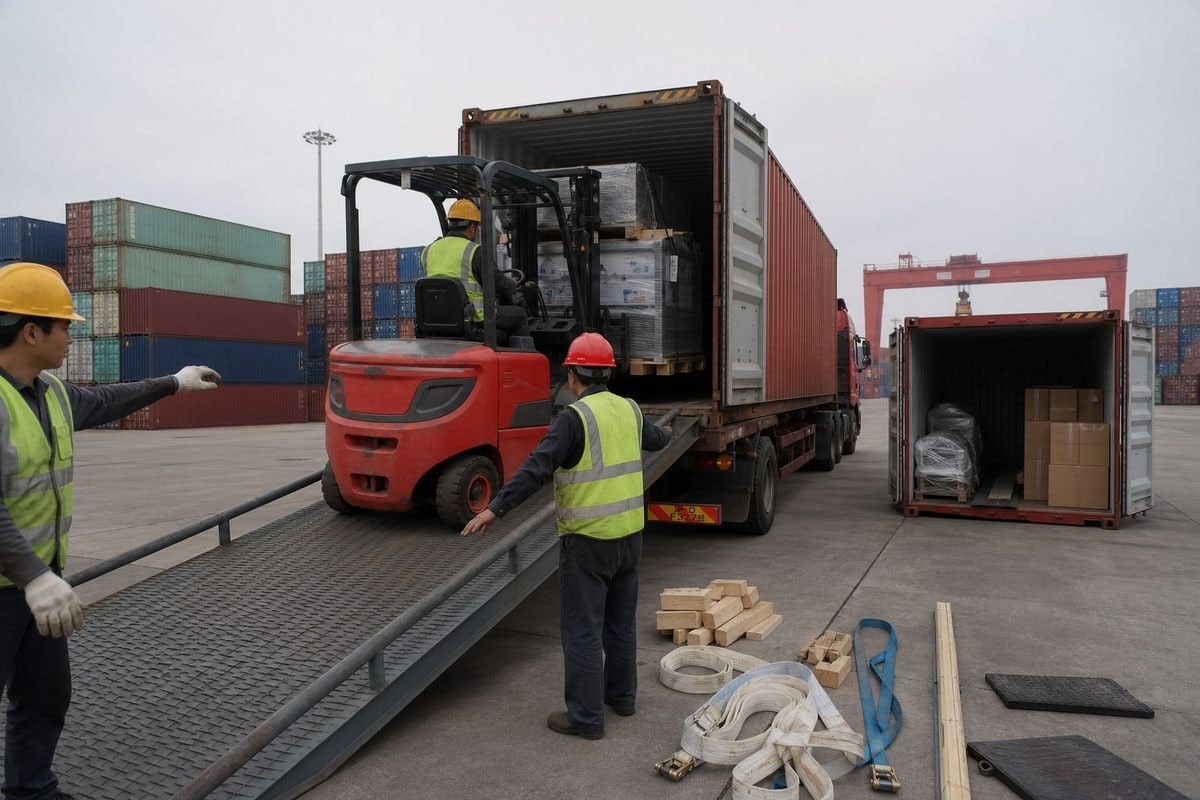
Ocean freight is one of the few landed-cost lines you can actively optimize. Because a forklift is bulky and heavy, freight and handling often take a bigger share of total landed cost than they would for smaller products. That makes container strategy a real profit lever, not a back-office detail.
| Option | Best For | Cost Behavior | Risk Notes |
|---|---|---|---|
| LCL consolidation | One forklift or partial loads | Charged by volume; higher per-CBM rate | More handling touchpoints |
| 20FT container | 1–2 compact forklifts | Fixed rate; heavy cargo fits weight limits well | Limited space for accessories |
| 40FT / 40HQ container | 3–4 forklifts plus parts | Lowest cost per unit when full | Requires careful weight distribution |
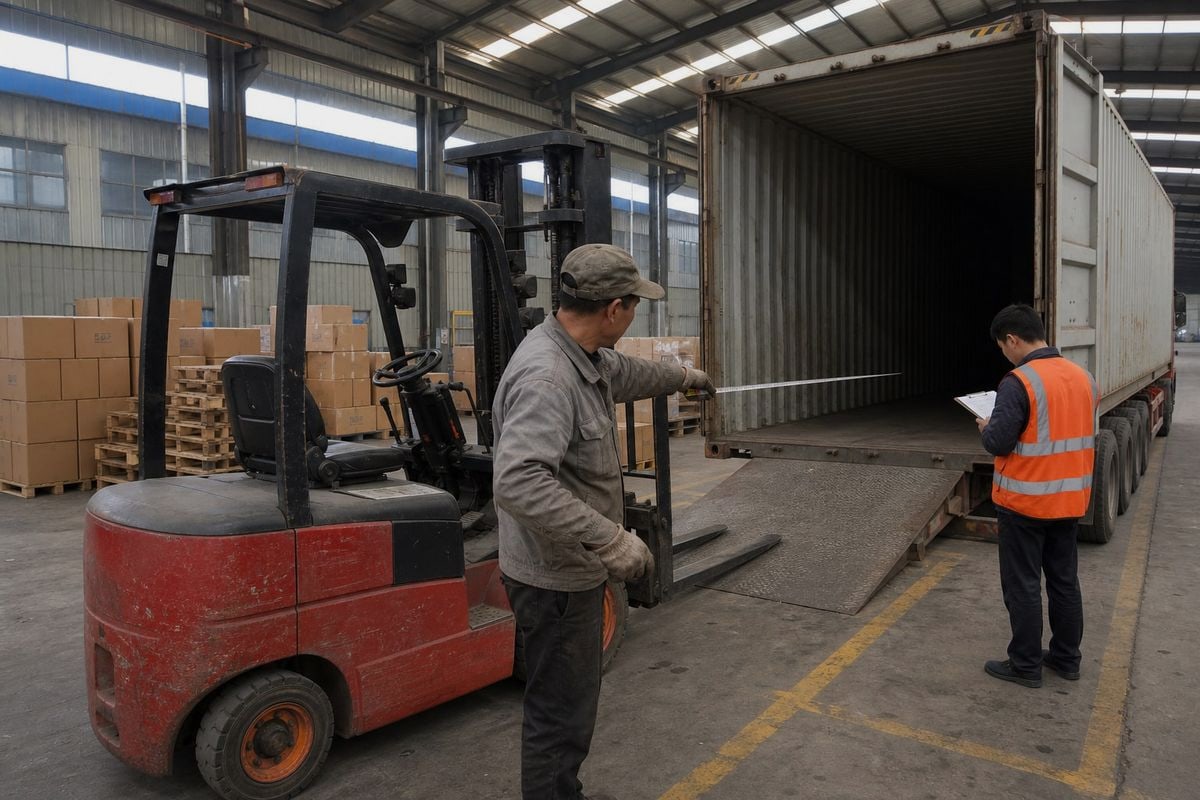
When we plan loading for clients, we look at mast height, counterweight length, service weight, and battery placement before recommending a container size. A forklift with a lowered mast often fits a standard container, but tall masts can force a 40HQ or open-top solution, which changes the freight math.
A simple example. Suppose a 40HQ costs $4,000 in ocean freight. Ship two forklifts and freight adds $2,000 per unit. Ship three forklifts plus chargers and spare parts in the leftover space, and freight drops to about $1,333 per unit — while the parts effectively ship free. This is why we push multi-supplier consolidation: forklifts from Factory A, batteries from Factory B, and chargers from Factory C can often share one container and one customs entry.
Incoterms decide where your freight responsibility begins. Under EXW, you pay for everything from the factory door, including China-side pickup and export declaration. Under FOB, the supplier covers costs to the vessel, and you take over from there. Under CIF, freight and insurance to your port are included, but destination charges, duties, and trucking are still yours. Under DDP, the forwarder manages the chain to your door. None of these terms remove costs — they only change which line items appear on which invoice, so always convert every quote to a full landed-cost basis before comparing suppliers.
Documentation checks are where our team earns its keep. Before any forklift container leaves China, we verify the HS code, battery specifications, and invoice values, because a classification error at destination costs far more than the time spent checking.
Electric forklifts are generally classified under HS Code 842710 for self-propelled electric trucks. Expect the base duty rate for your country, plus possible Section 301 tariffs of 25% or more on Chinese-made machinery entering the US, import VAT or sales tax, brokerage fees, and terminal handling charges.
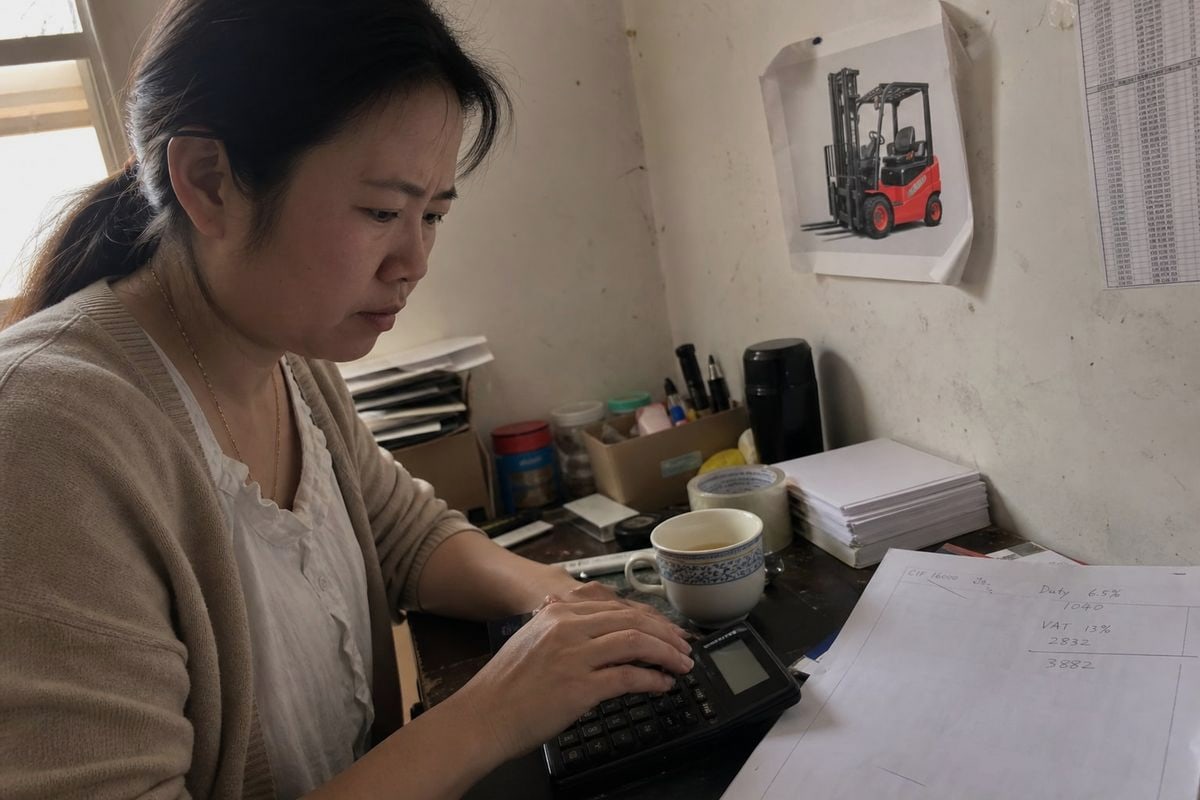
Everything starts with classification. HS Code 842710 2 covers self-propelled works trucks powered by an electric motor — which is exactly what a battery-powered counterbalance forklift is. Your duty rate hangs off this code, so confirm it in the importing country's own tariff schedule rather than relying on the supplier's paperwork. I have seen suppliers copy an old HS code from a diesel model, and that single digit changed the duty owed.
Duty is only part of the clearance bill. Terminal handling charges at the destination port, ISF filing 4 for US-bound cargo, customs bond costs, and possible examination fees all land on the importer. If customs selects your container for an exam, you pay the exam cost and any resulting storage. Used forklifts can face extra scrutiny too — some countries require inspection certificates, age limits, or cleanliness declarations for second-hand machinery, so confirm the rules if you are buying used stock.
One more nuance buyers raise with me: shouldn't duty be calculated the same way everywhere? It is not. Some countries assess duty on CIF, others on FOB value, and tax bases vary as well. Never assume one universal formula — build your calculation around the destination country's actual rules.
The most painful call I ever took came from an importer whose container sat at a US port for nine days over a battery documentation gap. The demurrage bill exceeded his brokerage, insurance, and trucking costs combined. Every hidden charge on my checklist comes from a real shipment like that one.
Avoid hidden charges by demanding an all-inclusive quote listing brokerage, terminal handling, and inland delivery, verifying lithium battery documentation before departure, clearing paperwork early to prevent demurrage, insuring the full replacement value, and budgeting for currency swings, rigging, and destination compliance costs.
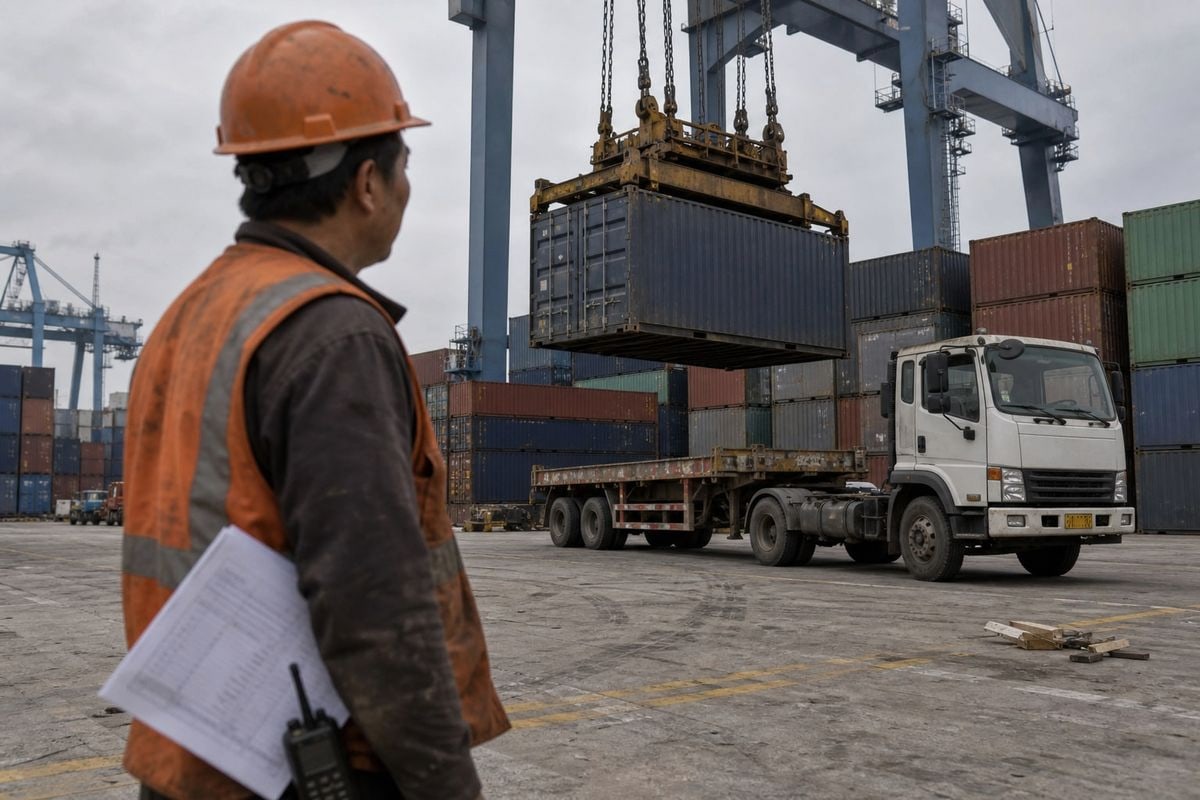
Hidden charges usually come from three sources: incomplete quotes, paperwork delays, and forklift-specific requirements nobody flagged. Each one is preventable if you know what to ask.
| Hidden Charge | Why It Appears | How to Prevent It |
|---|---|---|
| Demurrage and storage | Paperwork delays release at the port | Pre-check documents before vessel departure |
| Lithium battery surcharges | Class 9 Dangerous Goods 5 handling and documentation for large lithium-ion packs | Confirm battery specs and carrier acceptance before booking |
| Customs exam fees | Random or targeted inspections | Keep invoices, packing lists, and HS codes consistent |
| Unquoted destination fees | Low headline freight quotes excluding local charges | Request an itemized, all-in quotation |
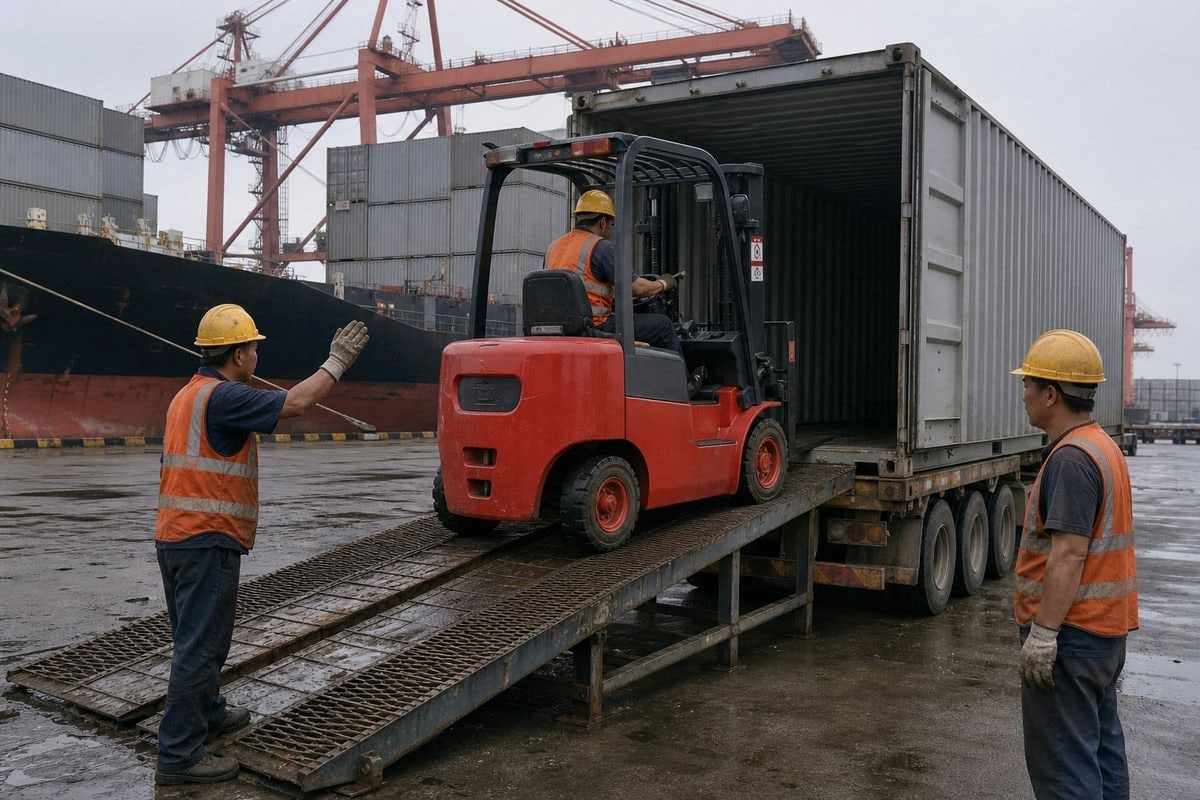
| Rigging and unloading | Forklifts need heavy-haul flatbeds or cranes at delivery | Plan the last-mile equipment in advance |
| Currency and wire fees | Exchange shifts between order and customs entry | A 5% rate swing can erase margin; consider forward contracts |
| Insurance gaps | Minimum premiums or deductibles on marine insurance | Insure full replacement value including the battery |
| EPR and recycling fees | EU battery producer responsibility rules | Confirm importer obligations for industrial batteries |
| Telematics regionalization | Local SIM cards and fleet software subscriptions | Ask the factory what is excluded from the base price |
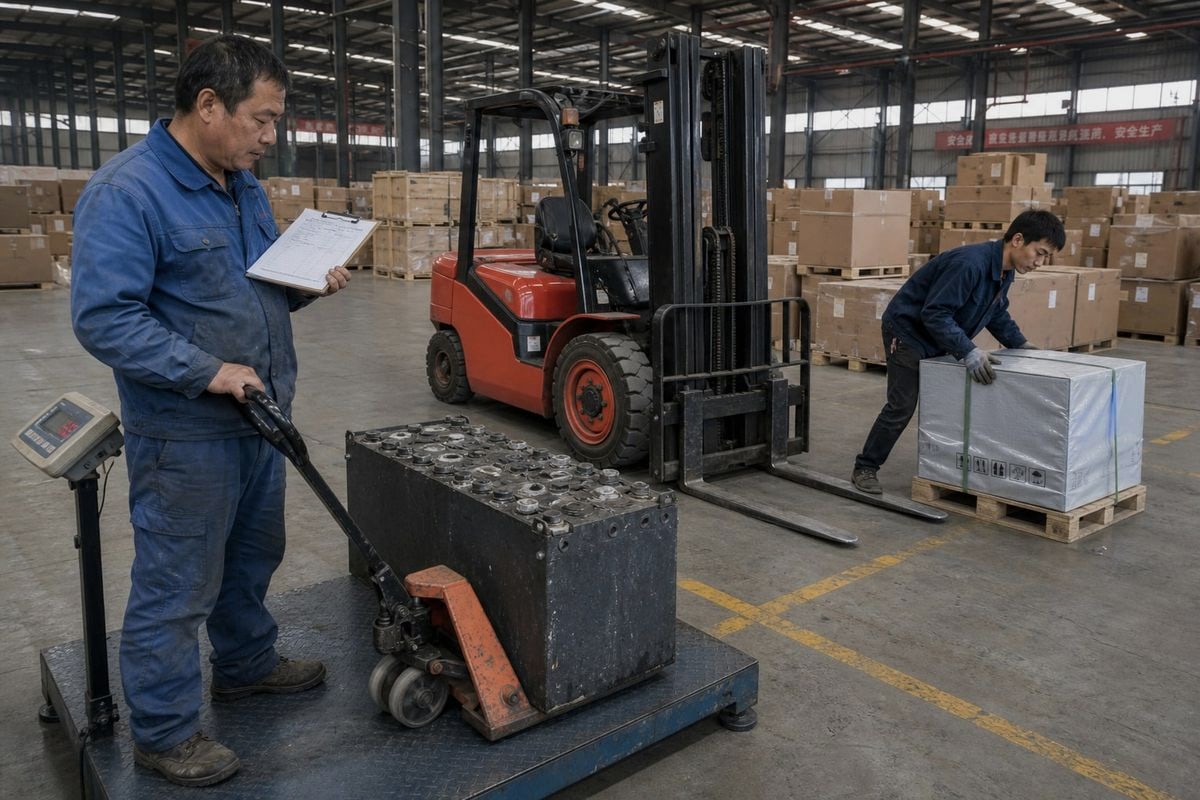
Lithium-ion forklift batteries are the most common source of surprise costs on the shipments we handle. Large-format lithium packs can trigger Class 9 Dangerous Goods classification, which means specific documentation, packaging standards, and carrier approval. If these are missing when the cargo reaches the port, the container gets held, and holds create storage and demurrage charges. Our process is to collect battery specifications, test summaries, and declarations from the factory before pickup, so acceptance issues surface weeks early rather than dockside. Lead-acid batteries avoid most DG paperwork but add serious weight, which affects container weight limits and inland drayage rates.
Finally, remember the destination side. Charging infrastructure, high-voltage station installation, and possible electrical upgrades sit outside the customs entry but inside your real project budget. If you are comparing an electric fleet against IC forklifts, fold these into your total cost of ownership alongside the landed cost itself.
Landed cost, not the factory quote, is your forklift's real price. Calculate CIF, duty, tax, and destination fees before ordering — and every shipment protects your margin.
1. European Commission authority on Value Added Tax application for goods imported into the European Union. ↩︎
2. Official USITC portal for verifying Harmonized Tariff Schedule codes and base duty rates for imported machinery. ↩︎
3. Official USTR landing page for Section 301 investigations, replacing the broken URL with the correct path structure. ↩︎
4. U.S. Customs and Border Protection guidance on mandatory security filings for ocean freight shipments. ↩︎
5. International Maritime Organization standards for the classification and transport of hazardous materials like lithium batteries. ↩︎