- +8618603825129
- [email protected]


Loading forklifts into containers looks simple until something goes wrong. At our loading warehouse in Zhengzhou, I have seen ramps slip, masts scrape door frames, and straps fail mid-ocean. One damaged forklift can wipe out an importer's entire margin on that unit. After coordinating hundreds of electric forklift shipments to the US and Europe, our team has turned container loading into a repeatable, low-risk process — and I want to walk you through exactly how it works.
Forklifts are driven into shipping containers under their own power using a rated container loading ramp, entered slowly along the centerline, positioned for balanced load weight distribution, then immobilized with at least four ratchet tie-down straps, wheel chocks, and wood blocking and bracing before ocean transit.
That is the short version. The details matter more. Below, I break down the driving technique, container sizing, securing methods, and multi-unit loading strategies we use every week.
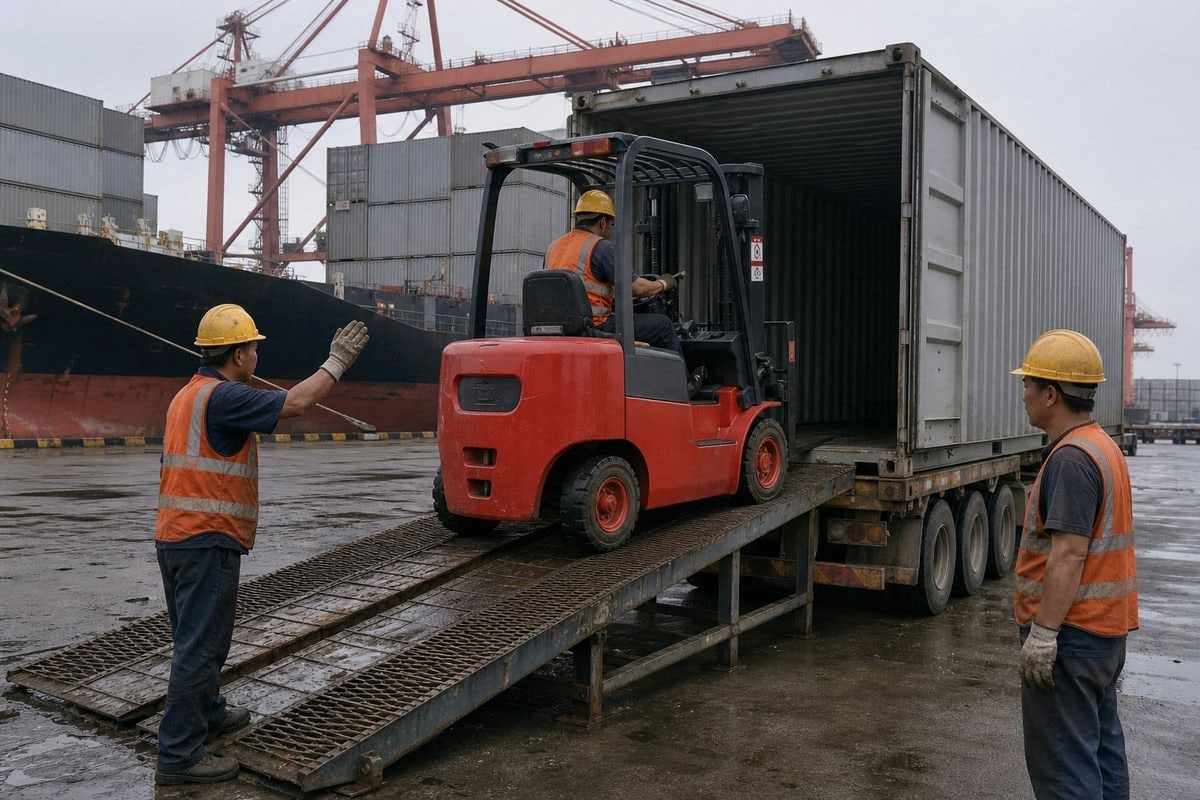
The scariest moment I ever witnessed at our yard was a ramp shifting sideways under a 3-ton forklift. Since then, our loading team follows a strict entry procedure with zero exceptions.
To safely drive a forklift into a container, place the container on firm level ground, bridge the height gap with a rated heavy-duty ramp or dock leveler, lower the mast fully, and drive in slowly along the container's centerline with a trained operator and a spotter.
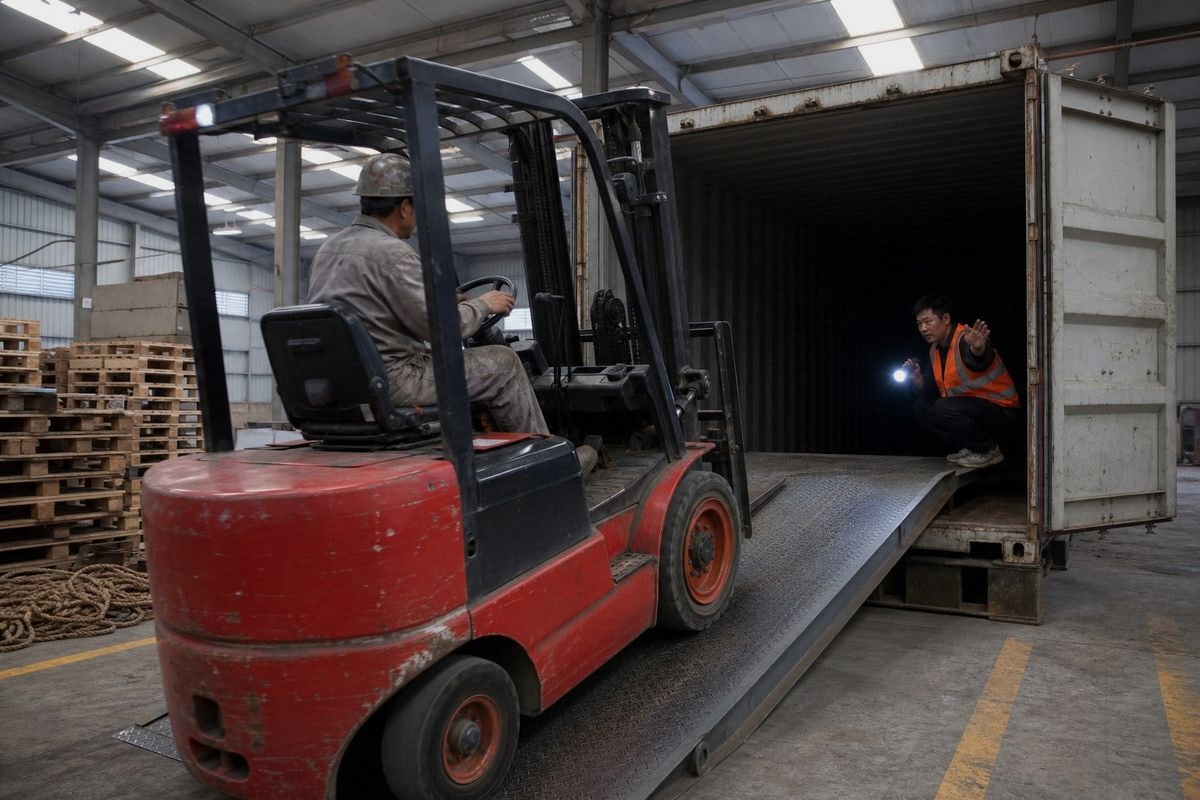
The entry itself takes less than a minute. The preparation takes far longer, and that is where most accidents are prevented. Let me break the process down the way we brief our warehouse crews in China before every forklift loading job.
Centerline travel matters more than most people realize. Driving along one wall concentrates wheel loads on one side of the floor structure and can crack the cross members. We train every operator to hold the middle line, consistent with OSHA safety standards for powered industrial truck operation.
A US distributor once sent me a purchase order before checking his forklift's mast height. The triple-stage mast would not clear a standard container door. We caught it two weeks before pickup — barely in time to arrange partial disassembly.
Most electric forklifts under 2.2 meters in overall height fit through standard 20FT and 40FT container doors. A 20FT container suits one to two counterbalance forklifts; a 40FT or 40HQ container fits three to five units depending on dimensions and weight.
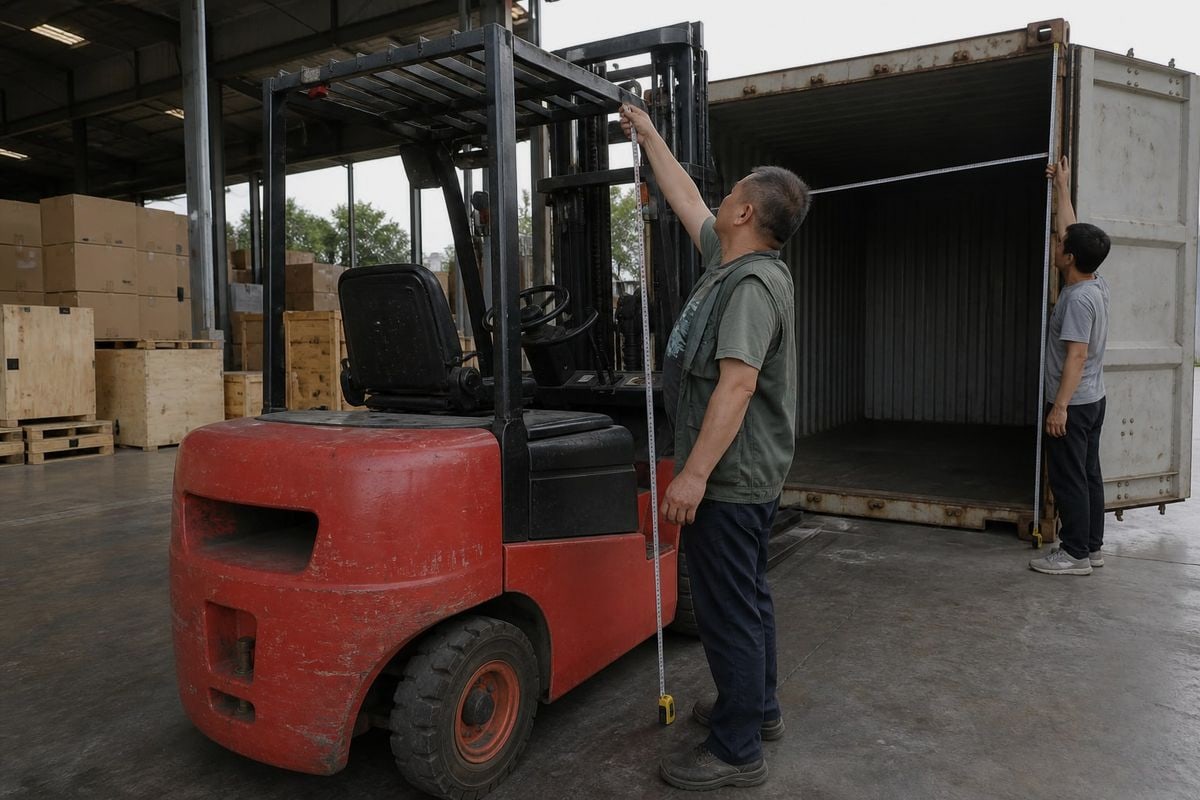
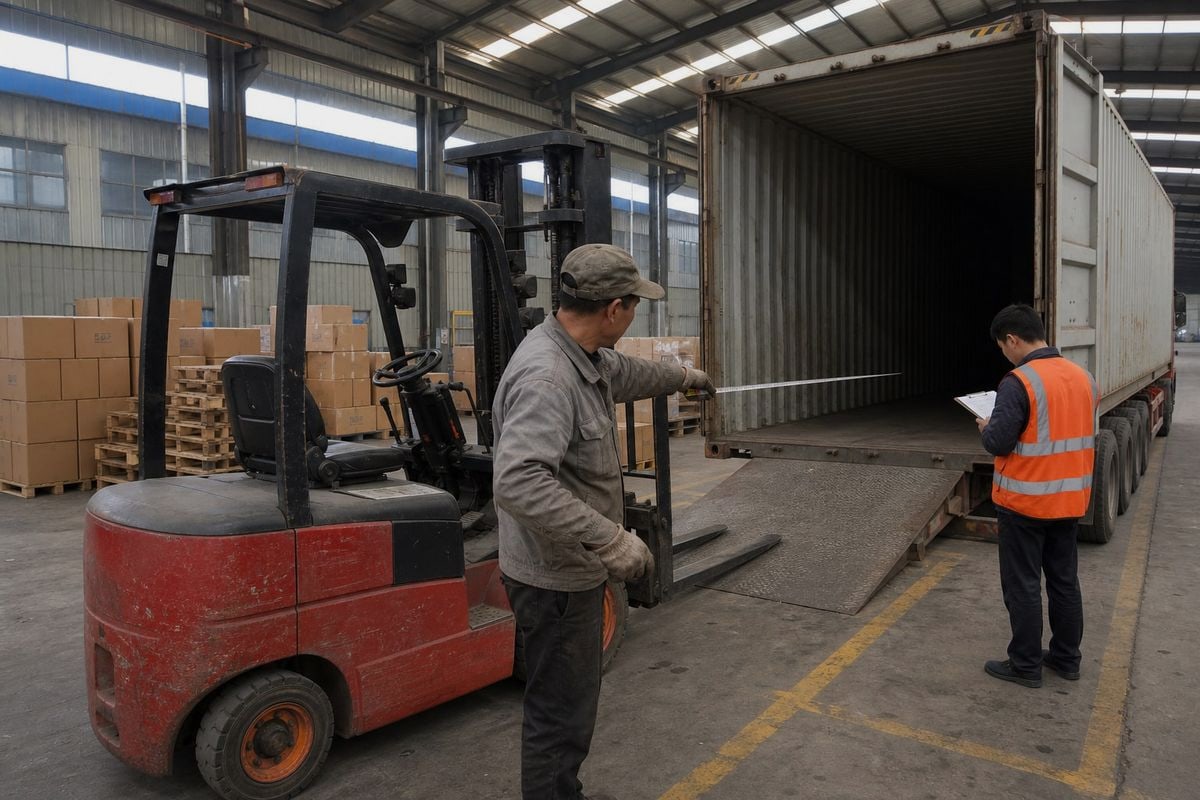
The real constraint is almost never container length. It is the door opening. An intermodal shipping container's doors are slightly smaller than its internal cross-section, so we always compare the forklift against the door, not the interior.
| Container Type | Door Opening (W × H) | Internal Length | Typical Forklift Fit |
|---|---|---|---|
| 20FT Standard | 2.34 m × 2.28 m | 5.9 m | 1–2 counterbalance forklifts |
| 40FT Standard | 2.34 m × 2.28 m | 12.03 m | 3–4 counterbalance forklifts |
| 40HQ High Cube | 2.34 m × 2.58 m | 12.03 m | 3–5 units, taller masts possible |
Notice that the 40HQ gives you roughly 30 extra centimeters of door height. For electric forklifts with taller overhead guards or full free-lift masts, that difference decides whether the unit rolls in whole or gets shipped with the mast removed and crated separately.
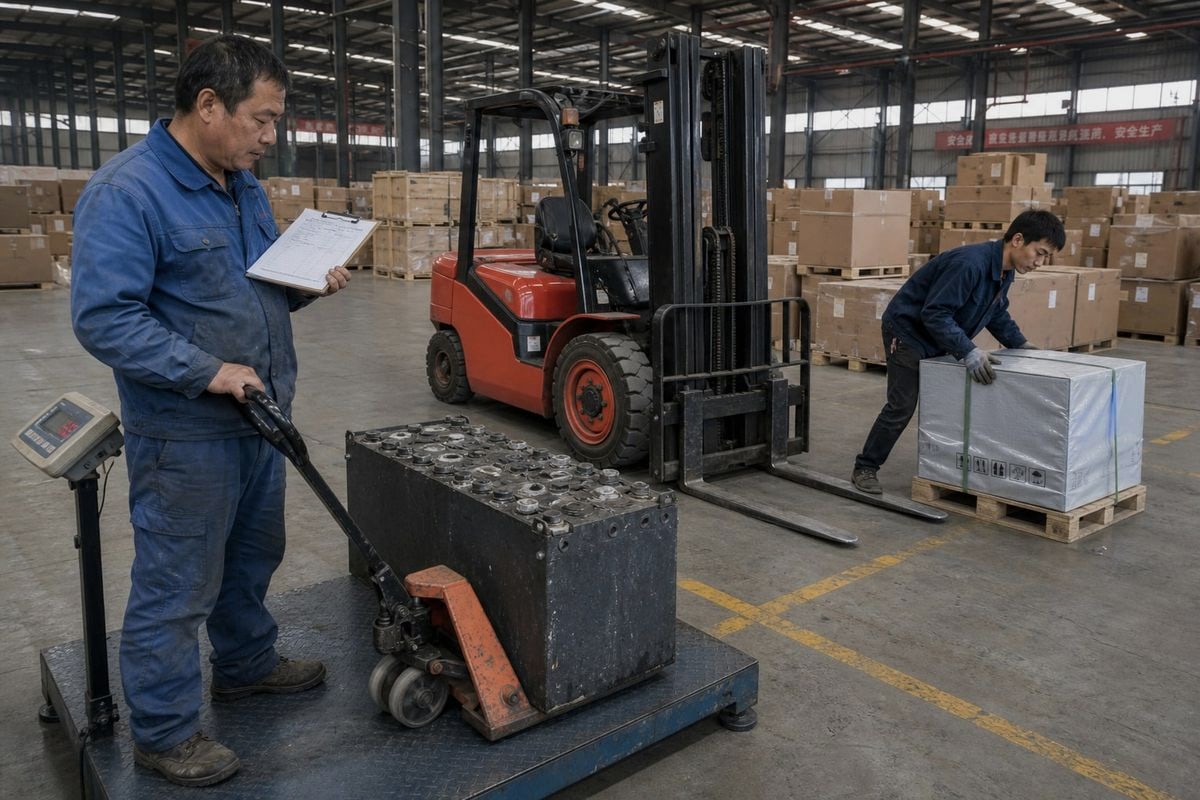
Before we book space, our team collects from the factory:
"Container spec" forklifts with triple-stage masts and low overhead guards are designed to work inside containers and clear the door easily. Standard warehouse models are less predictable. When a forklift is 5 centimeters too tall, the options are a 40HQ, mast removal, or a flat rack — and each option changes the freight cost. That is why we insist on verified dimensions, not brochure numbers, before choosing between a 20FT, 40FT, or 40HQ.
Here is a lesson our team learned early: driving the forklift in is only half the job. A container at sea rolls, pitches, and slams. An unsecured 3-ton machine becomes a battering ram.
Secure a forklift inside a container using at least four heavy-duty ratchet straps attached to the container's lashing points at roughly 45-degree angles, plus wheel chocks, wood blocking and bracing, and protective corner pads, with the mast lowered and the battery disconnected.

Ocean transit forces are stronger than most first-time importers expect. A vessel in heavy weather can generate lateral forces 3 that shift anything not properly restrained. Our securing standard exists because we have unloaded competitor-handled containers where forklifts arrived leaning against the wall with cracked counterweights.
| Securing Element | Purpose | Minimum Standard We Apply |
|---|---|---|
| Ratchet tie-down straps | Prevent forward, backward, and lateral shift | 4+ straps at ~45° to lashing points |
| Wheel chocks | Block wheel rotation and rolling | Chocks at front and rear of each axle |
| Wood blocking and bracing | Fill gaps and stop sliding | Timber nailed to floor around wheels |
| Corner pads | Protect paint and strap webbing | Pads at every strap contact edge |
| Plywood sheets | Spread point loads on the floor | Under wheels for heavy units |
Securing is not only about straps. Before loading, the forklift should be prepared for transport:
One buyer objection I hear often: "The forklift is heavy — it won't move on its own." That instinct is wrong. Weight does not equal stability. Heavy machines slide on smooth plywood floors when a ship rolls, and their momentum makes the resulting impact worse, not better. Blocking and bracing plus tensioned tie-down straps are non-negotiable in every container we supervise.
The most common question distributors ask me is a math question: how many units per box? Getting this right can cut the per-unit freight cost dramatically, and getting it wrong damages equipment.
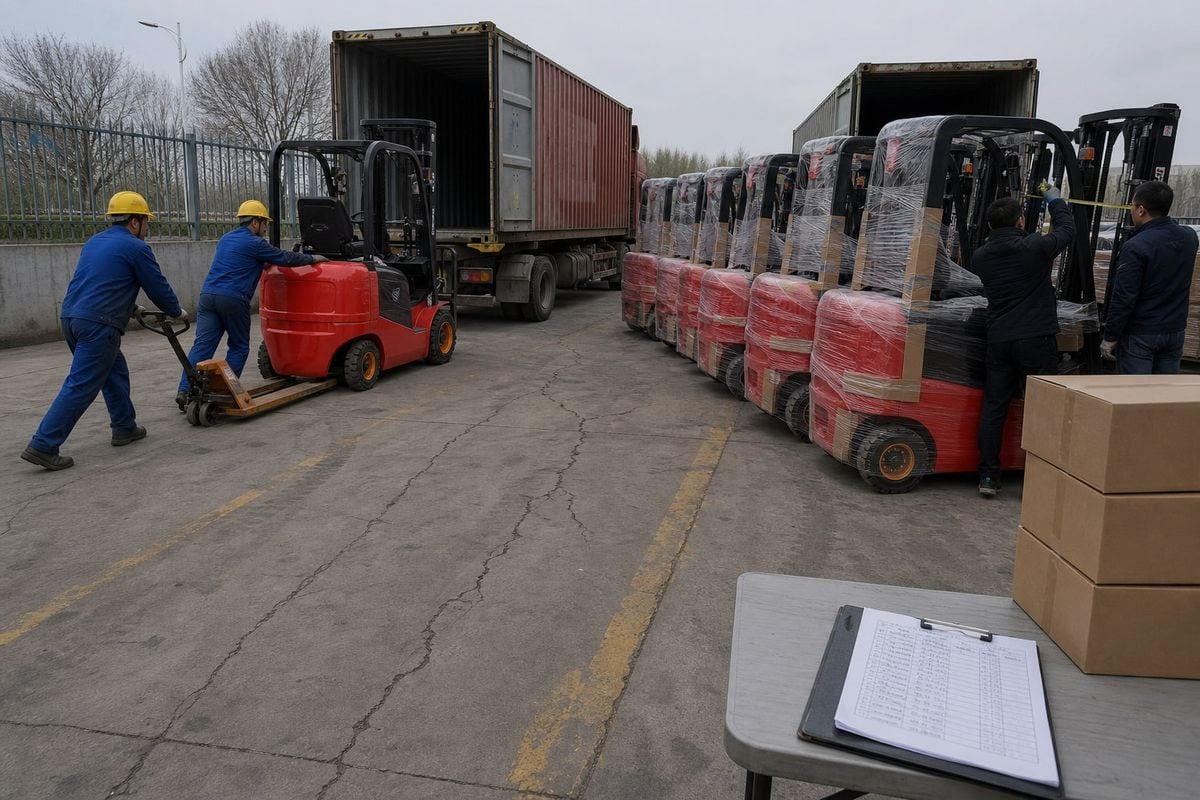
Yes, multiple forklifts can share one container. A 40FT or 40HQ container typically holds three to five compact electric forklifts when units are staggered, weight is distributed evenly along the floor, and each machine is individually chocked, blocked, and strapped.
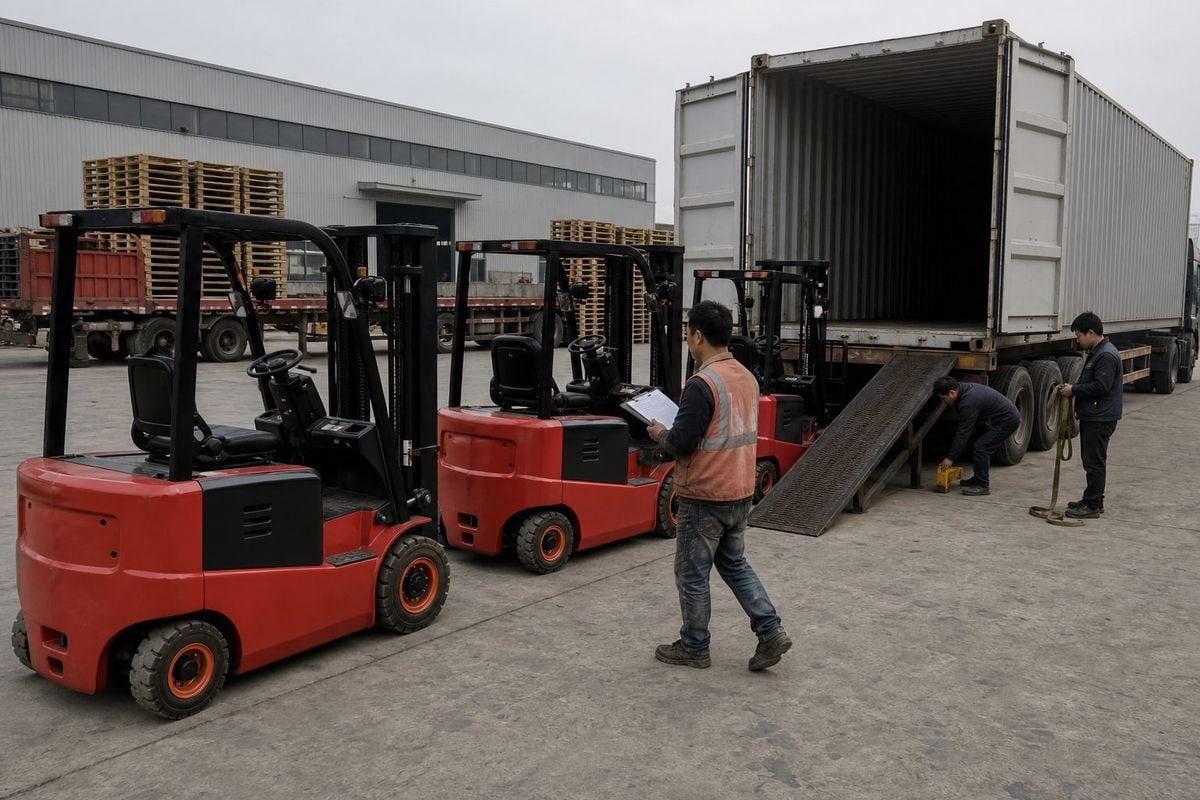
Multi-unit loading is where a freight forwarder earns its fee. The goal is maximum container utilization without compromising cargo safety or exceeding the container's payload and floor load capacity. Here is how we plan it.
Before anything rolls up the ramp, we build a loading diagram from verified dimensions and weights. Three constraints control the plan:
| Configuration | Container | What Fills Remaining Space |
|---|---|---|
| 1 forklift | 20FT | Spare parts, chargers, attachments |
| 2 forklifts | 20FT | Small parts cartons, batteries |
| 3–4 forklifts | 40FT | Chargers, forks, consolidated accessories |
| 4–5 compact units | 40HQ | Pallet trucks, stackers, spare parts |
The dead space between and above forklifts is valuable. We regularly consolidate cargo from multiple Chinese suppliers — forklifts from one factory, chargers from another, spare parts from a third — into the same container. That consolidation, done at our warehouse before loading, is often the single biggest saving in a shipment. It only works when every added item is itself secured, because loose cartons become projectiles in rough seas. Alternating units left and right of center, nose-to-tail, keeps the floor loading balanced and the doors clear for the final strapping pass.
Loading forklifts into containers safely comes down to four things: a rated ramp, verified dimensions, disciplined securing, and a smart loading plan.
Skip any one of them and you risk floor damage, customs delays, or a forklift arriving broken. Get all four right and container shipping becomes predictable and cost-efficient. If you are importing electric forklifts from China and want one team to handle factory pickup, container loading, securing, and door-to-door delivery, that is exactly the process our team manages every week — feel free to reach out and we will build a loading plan around your specific units.
1. Official safety guidelines for the use of loading ramps with powered industrial trucks. ↩︎
2. ISO standards govern the structural integrity and materials used in shipping container flooring. ↩︎
3. International Maritime Organization standards for securing cargo against lateral forces during ocean transit. ↩︎