
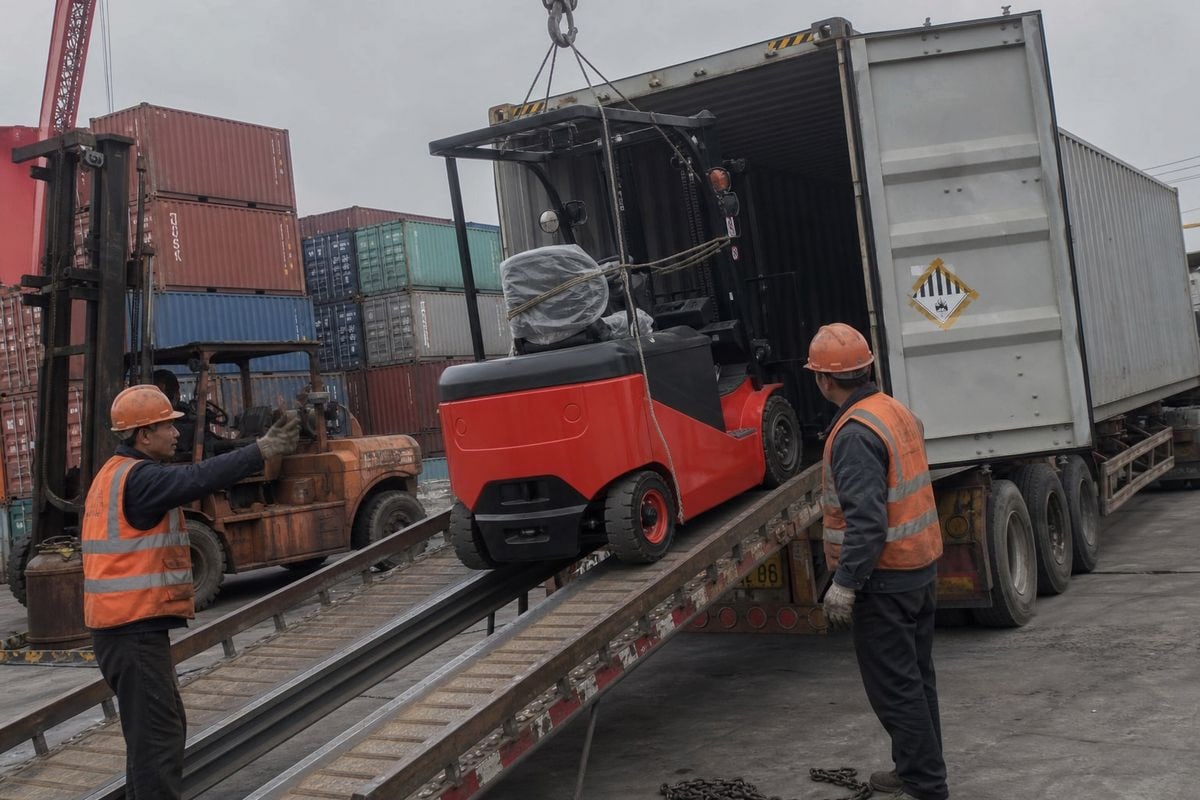
[Shipping electric forklifts from China to the UK](https://mbmlog.com/how-ship-electric-forklifts-china-2026-guide-to/) looks simple until the battery paperwork stalls. Our team in Zhengzhou coordinates these shipments weekly, and we see where buyers get stuck.
To ship electric forklifts from China to the UK, book FCL ocean freight to a major UK container port, prepare UN38.3 and SDS battery documents, declare the correct HS code with a GB EORI number, secure the forklift inside the container, then clear UK customs and pay duty and VAT.
That is the short version. The full process has more moving parts, and each one can cost you money if you skip it. Let me walk you through the four questions buyers ask us most often.
What Documents Do I Need to Ship an Electric Forklift from China to the UK?
A UK buyer once sent us a booking with a beautiful invoice and packing list, but no battery test summary. The carrier rejected the dangerous goods booking within a day. Our documentation team now checks battery papers before anything else.
You need a commercial invoice, packing list, bill of lading, certificate of origin, UN38.3 test summary, SDS/MSDS documentation for the battery, a GB-prefixed EORI number for UK customs clearance, and proof of UKCA or CE compliance for the forklift and its charger.
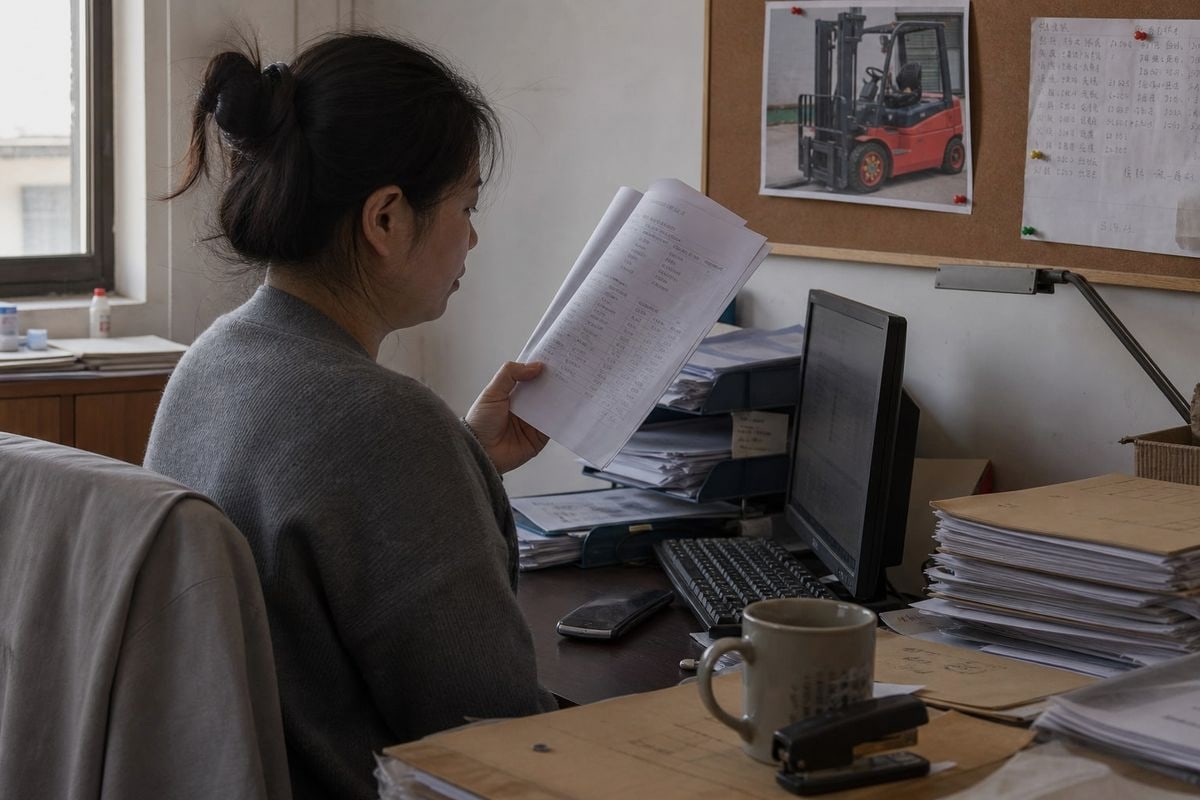
Documentation is where most delays start. In our experience arranging electric forklift shipments, the paperwork splits into three groups: commercial documents, battery documents, and UK compliance documents. Each group answers to a different authority, so missing one item can stop the whole shipment.
Commercial and Customs Documents
The commercial invoice and packing list must match exactly. The same model number, the same weight, the same quantity. UK customs runs on the Customs Declaration Service 1 (CDS), and your GB EORI number is mandatory to file an import declaration. Without it, your container sits at the port and demurrage charges start counting.
Battery and Dangerous Goods Documents
Electric forklifts are classified as Class 9 Dangerous Goods 2 under UN3171 because of their lithium-ion or lead-acid batteries. Carriers will not accept a DG booking without a UN38.3 3 certification summary and a full Safety Data Sheet from the Chinese manufacturer. We collect these from the factory before we even request a sailing schedule.
UK Product Compliance
Here is a point buyers often get wrong. A CE mark on a Chinese factory page does not automatically mean the machine is UK-ready. The UK now recognises UKCA marking 4, and while valid CE marking is still accepted for many goods, you should confirm the forklift and the charger both carry a genuine Declaration of Conformity with real certificate numbers, not just a logo on a brochure.
| Dokument | Issued By | Formål |
|---|---|---|
| Kommerciel faktura | Leverandør | Toldværdi erklæring |
| Pakkeliste | Leverandør | Cargo verification |
| Fragtbrev | Carrier / Forwarder | Proof of shipment and cargo release |
| Oprindelsescertifikat | Chinese authority | Origin declaration for duty |
| UN38.3 testoversigt | Batteriproducent | Lithium battery transport approval |
| SDS/MSDS | Batteriproducent | Hazard data for DG booking |
| UKCA / CE Declaration | Producent | UK product safety compliance |
| GB EORI-nummer | HMRC (buyer registers) | UK import customs clearance |
How Much Does It Cost to Ship an Electric Forklift from China to the UK?
The trade-off we discuss most with buyers is unit price versus landed cost. A cheap EXW quote from a factory means nothing until you add freight, duty, VAT, and UK port charges to it.
Shipping one electric forklift from China to the UK typically involves ocean freight for a 20ft or 40ft container, plus export handling, marine insurance, UK port fees, customs clearance, import duty based on HS code 8427.10, 20% import VAT, and final trucking to your site.
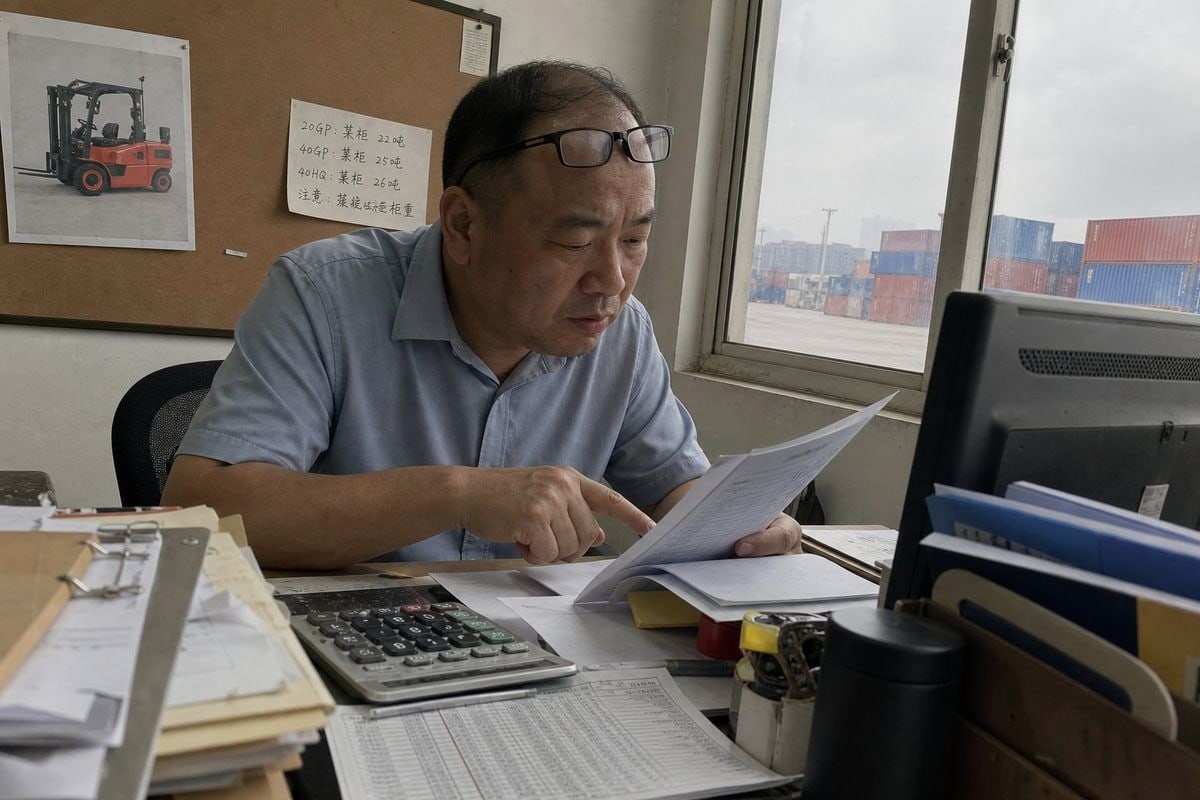
Landed cost is the number that actually matters to your margin. When we quote a forklift shipment, we break the cost into China-side charges, ocean freight, and UK-side charges, because buyers who only compare freight rates often get surprised at destination.
Hovedomkostningskomponenterne
A 20ft container can typically fit one 3-ton electric forklift, and FCL container shipping is usually the best value for one to four units. LCL consolidation can work for a single compact stacker or pallet truck, but loose loading raises the damage risk on heavy machinery, so we recommend it carefully.
| Omkostningskomponent | Where It Occurs | Noter |
|---|---|---|
| Factory pickup and trucking | Kina | Afhænger af fabrikkens beliggenhed |
| Export declaration | Kina | Handled by your freight forwarder |
| Ocean fragt (FCL) | China → UK | Rates change with market conditions |
| Maritime forsikring | Transit | Check lithium battery exclusions |
| UK port and handling fees | Storbritannien | Ofte udelukket fra billige tilbud |
| Toldbehandling | Storbritannien | Requires GB EORI and CDS filing |
| Importtold | Storbritannien | Based on exact HS classification |
| Importmoms | Storbritannien | 20% on customs value plus duty |
| Sluttaxa for levering | Storbritannien | Needs suitable unloading equipment |
Duty, VAT, and Cash Flow
Electric-powered forklift trucks usually fall under HS code 8427.10, but the exact duty rate depends on your precise classification, and you should also check for any active anti-dumping duties on Chinese machinery before ordering. Do not borrow duty figures from forklift parts, which carry different rates, and apply them to complete machines. For fleet buyers, a UK Duty Deferment Account (DDA) lets you delay paying duty and VAT until the following month, which noticeably improves cash flow on high-value orders.
FOB or DDP?
Buyers often ask if DDP is easier. It is simpler on paper, and we offer it. But DDP quotes can hide margin and VAT handling issues if the forwarder cuts corners. Experienced importers often prefer FOB for control. Our honest advice: DDP works well when the forwarder itemises every charge; FOB works well when you already have a UK customs broker you trust.
How Do I Handle Lithium Battery Shipping Requirements for My Forklift?
A lesson we learned early: never let a factory dispatch a lithium forklift before the battery state of charge is confirmed in writing. One rejected container taught us to build that check into every pre-shipment routine.
Handle lithium battery requirements by obtaining UN38.3 certification and MSDS documentation, booking the shipment as Class 9 Dangerous Goods, confirming the battery is charged to a maximum of 30% State of Charge, securing the battery for transit, and verifying insurance covers thermal runaway risk.
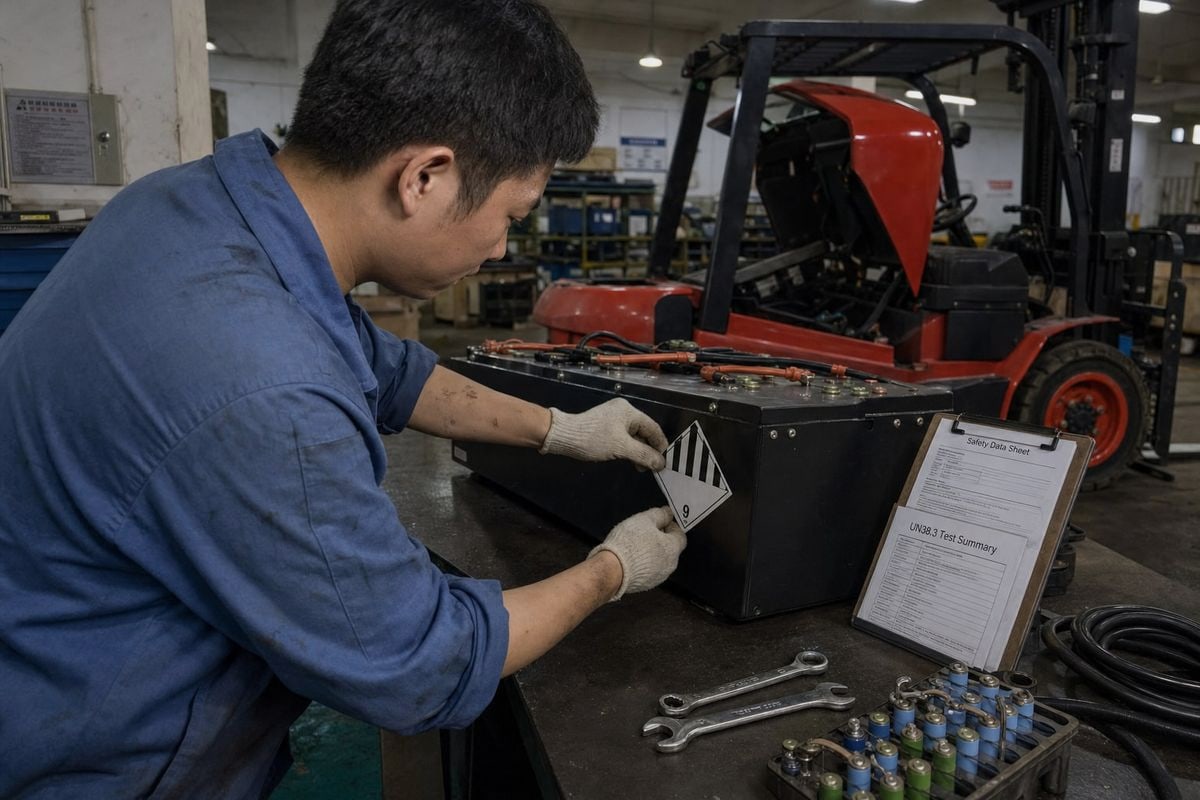
Lithium battery regulations are the single biggest difference between shipping an electric forklift and shipping a diesel one. Carriers have tightened enforcement, and a shipment that would have sailed unquestioned five years ago now needs a complete battery file before booking acceptance.
The Pre-Shipment Battery Checklist
We coordinate these steps with the factory before cargo moves:
- Collect the UN38.3 test summary for the exact battery model on the machine.
- Collect the SDS/MSDS documentation and check it matches the battery nameplate.
- Confirm the State of Charge. Most major shipping lines now strictly enforce a maximum 30% SoC for lithium batteries in transit, and the factory may need to adjust the Battery Management System settings before dispatch.
- Photograph the battery nameplate and terminals before sealing.
- Submit the DG booking with all documents and wait for carrier acceptance before trucking to port.
Insurance and Emerging Rules
Standard marine insurance policies increasingly contain exclusions or low sub-limits for fires that originate from high-capacity lithium packs. Specialized thermal runaway riders are becoming a practical necessity for lithium forklift shipments, so read the policy wording, not just the premium. Looking ahead, emerging Digital Battery Passport requirements in the UK and EU will soon ask importers for data on the battery's carbon footprint and recycled content at customs entry. Buyers who choose factories with traceable battery supply chains now will have an easier time later.
How Long Does It Take to Ship an Electric Forklift from China to the UK?
A distributor once told us his previous shipment arrived three weeks late because nobody had booked the DG slot early. His customer cancelled a warehouse installation. Timelines matter more than most freight comparisons admit.
Shipping an electric forklift from China to the UK typically takes 30 to 45 days by sea, including port-to-port ocean transit. Add roughly one to two weeks for factory pickup, DG booking approval, container loading, UK customs clearance, and final delivery to your site.
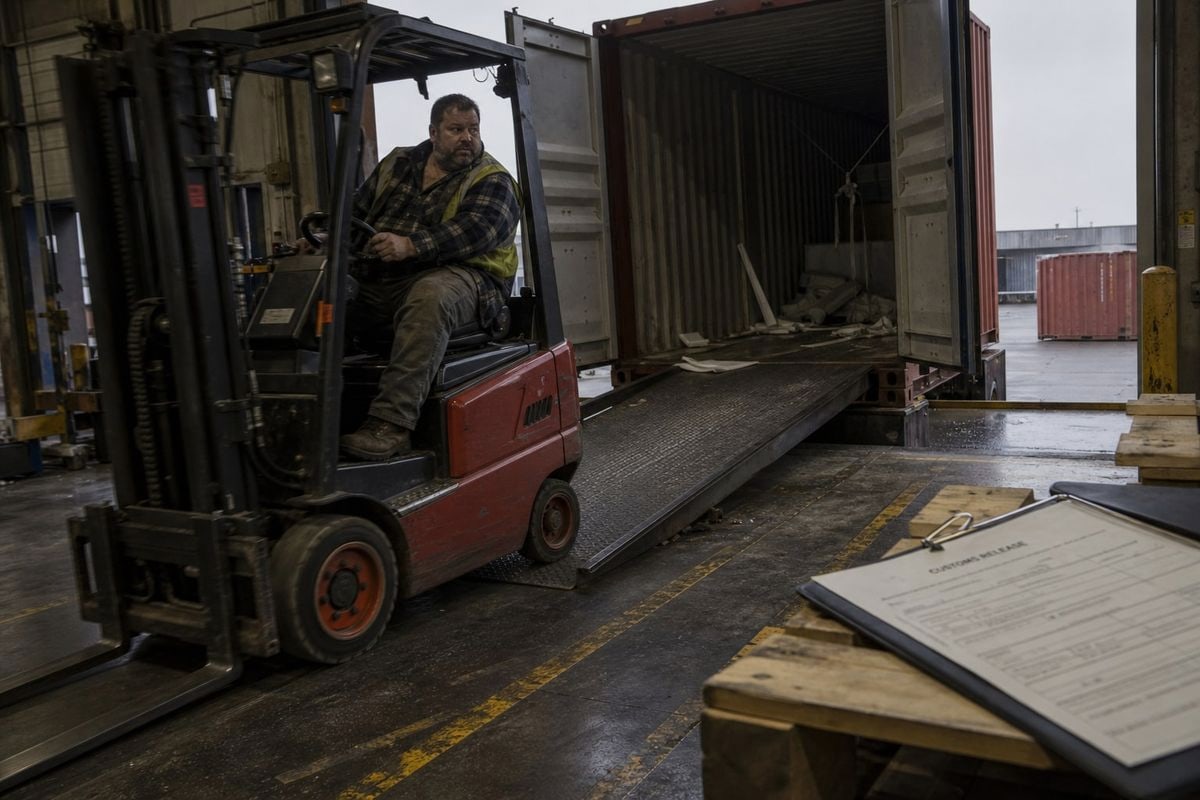
The 30–45 day ocean transit is only the middle of the journey. When we plan a shipment end to end, we map every stage, because delays cluster at the edges, not on the water.
A Realistic Stage-by-Stage Timeline
| Fase | Typisk Varighed | What Can Go Wrong |
|---|---|---|
| Factory production and readiness | Varies by order | Battery documents not prepared |
| Pickup and pre-shipment checks | 2–5 dage | SoC not confirmed, nameplate mismatch |
| DG booking acceptance | 3–7 days | Carrier rejects incomplete battery file |
| Container loading and securing | 1–2 dage | Poor blocking and bracing |
| Ocean transit to major UK ports | 30–45 days | Port congestion, vessel schedule changes |
| UK customs clearance | 1–5 days | Wrong HS code, missing EORI |
| Final trucking and unloading | 2–5 dage | No suitable unloading equipment on site |
Where Buyers Lose Time
Two stages cause most schedule slips. First, DG booking acceptance: carriers scrutinise lithium cargo, and one missing document restarts the clock. Second, customs clearance: an incorrect HS code or inconsistent invoice values triggers queries, and every day of delay risks storage and demurrage charges.
What About Air Freight or Ro-Ro?
Air freight is technically possible but rarely economical for a machine this heavy; we reserve it for urgent spare parts and chargers, not complete forklifts. Ro-Ro shipping suits oversized heavy-duty counterbalance models that exceed standard container dimensions, but for most warehouse-class electric forklifts, containerised sea freight with proper blocking, bracing, and lashing remains the safer and more common route to the UK.
Konklusion
Shipping electric forklifts from China to the UK is entirely manageable when battery documents, customs paperwork, loading, and landed-cost planning are handled early. Get those four things right, and the rest follows.
Fodnoter
1. Official UK government collection page for the Customs Declaration Service (CDS). ↩︎
2. Background on dangerous goods classification relevant to lithium battery forklift shipments. ↩︎
3. Explains the international lithium battery transport testing standard referenced repeatedly in the article. ↩︎
4. Official UK government guidance on UKCA compliance marking mentioned as a key requirement. ↩︎




