- +8618603825129
- [email protected]

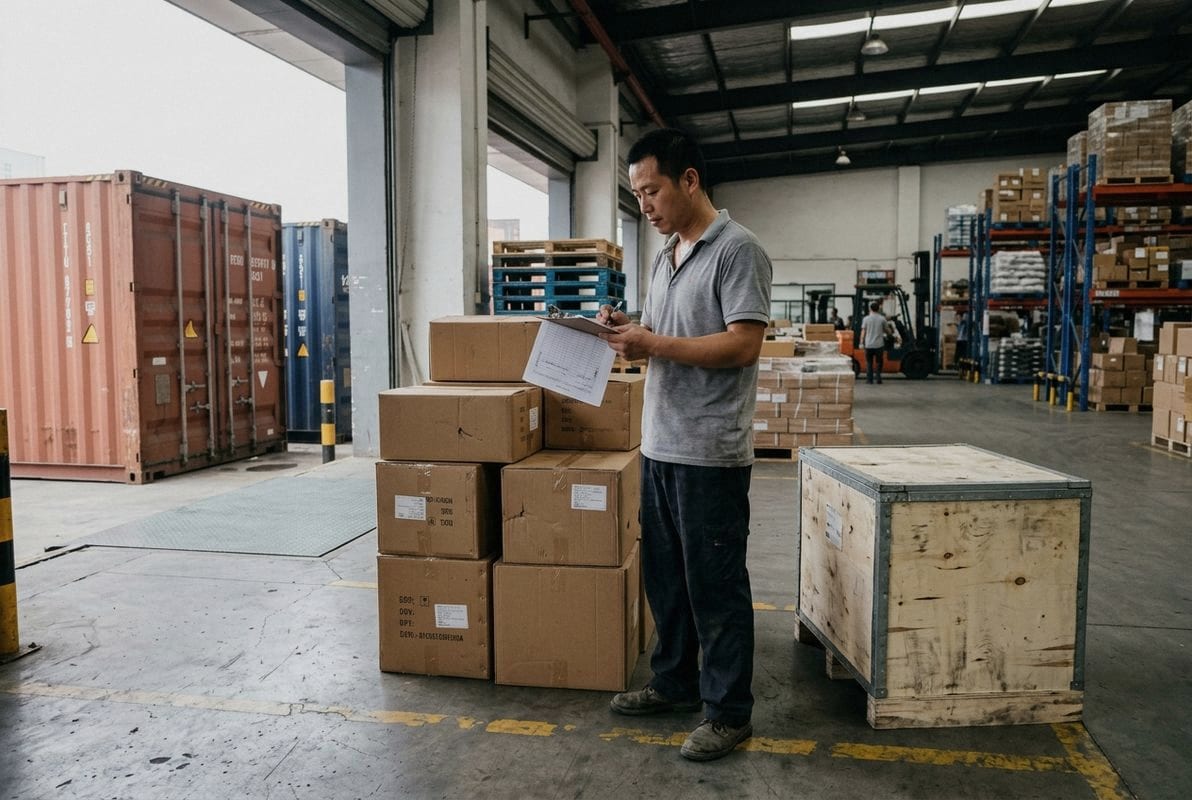
Every week, our logistics team in Zhengzhou fields the same question from sellers shipping to the US: wooden crates or cardboard boxes for international express shipping 1?
For international express shipping, cardboard boxes are the mainstream choice for lightweight, non-fragile goods due to lower weight and fewer customs hurdles. Wooden crates are essential for fragile, heavy, or high-value items but require ISPM 15 compliance and add significant cost from extra weight and potential surcharges.
The answer depends on what you ship, where it goes, and how much risk you can accept. Let me walk you through the key factors we evaluate every day when advising our clients.
One trade-off we weigh constantly when quoting DDP shipments 2 to the US is packaging weight versus cargo protection — and the cost gap between wooden crates and cardboard boxes surprises many first-time importers.
Choosing wooden crates over cardboard boxes increases your total shipping costs through heavier package weight, higher volumetric charges, ISPM 15 treatment fees around $50, and potential carrier surcharges for oversized or non-stackable packages. Cardboard boxes keep costs low but offer less protection.
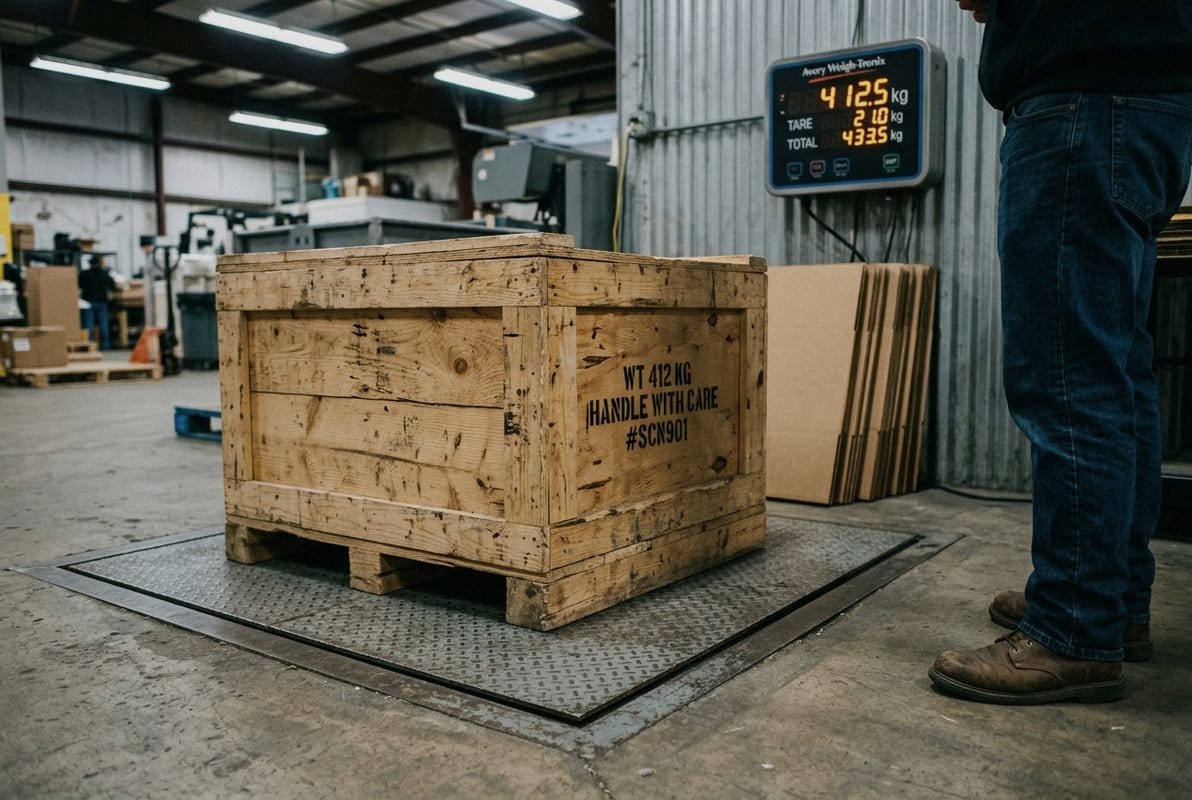
International express carriers like DHL, FedEx, and UPS charge by whichever is greater: actual weight or volumetrisches Gewicht 3. Wooden crates add substantial dead weight. A plywood crate for a 15 kg item might weigh 8–12 kg by itself. A double-wall corrugated box for the same item weighs under 2 kg. That difference alone can add $30–$80 in freight on a China-to-US express shipment.
Then there is the volume issue. Wooden crates have rigid walls that do not compress. They often push your shipment into a higher volumetric tier. Cardboard boxes, while also rigid when packed, are thinner-walled and waste less internal space.
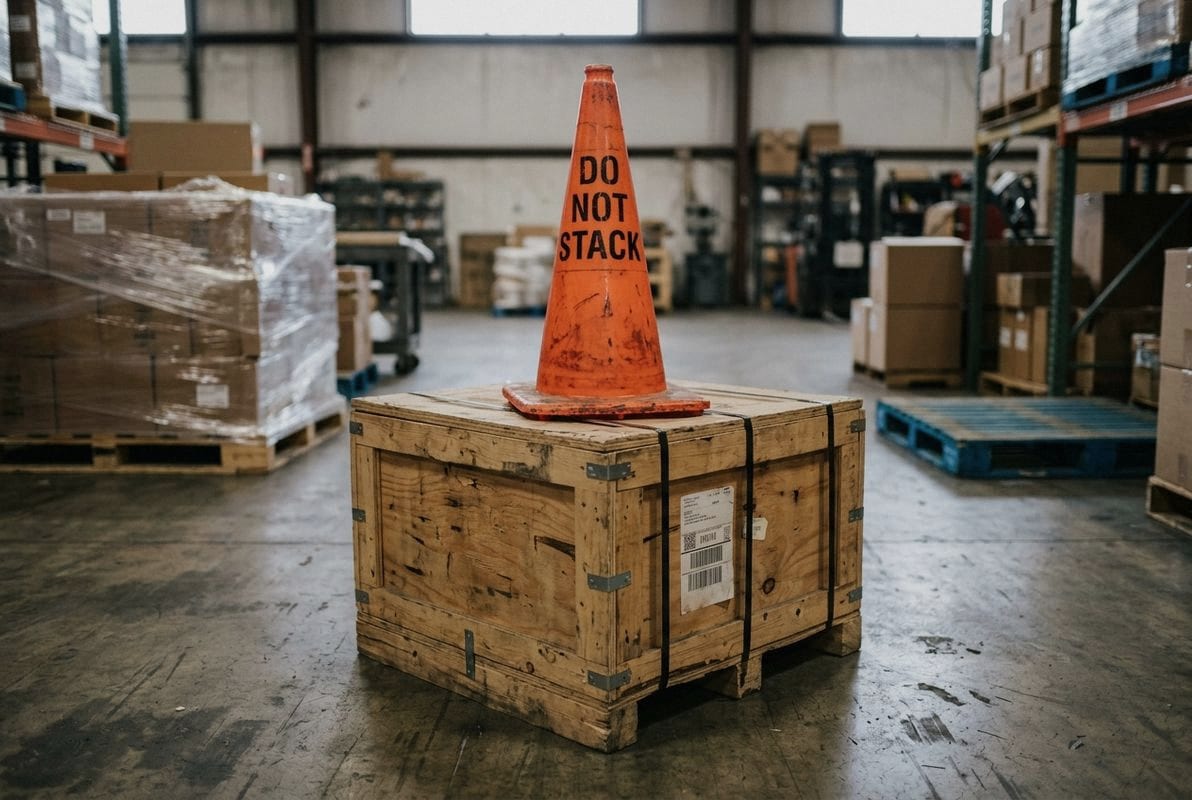
Here is where costs really escalate. I had a client — a Chinese factory shipping a small wooden crate to the US via express — who was told by the carrier that they would likely face a "no-stack" surcharge of over 3,000 RMB (roughly $420) plus a "difficult to handle" surcharge of over 200 RMB (about $30) because the wooden crate was classified as irregular packaging. The total surcharges far exceeded the value of the goods and the freight combined.
We solved this by slipping the wooden crate inside a standard cardboard box. The shipment went out smoothly with zero surcharges. That one simple fix saved the client hundreds of dollars.
| Cost Factor | Cardboard Box | Wooden Crate |
|---|---|---|
| Packaging material cost | Low ($1–$5 per box) | High ($15–$80+ per crate) |
| Package weight added | 0.5–2 kg | 5–15 kg+ |
| ISPM 15 compliance 4 | Nicht erforderlich | ~$50 per treatment batch |
| Carrier surcharges (no-stack, oversize) | Rare | Common for rigid/irregular shapes |
| Volumetric waste | Minimal | Moderate to high |
| Reusability | Single-use | Reusable over many cycles |
| Total cost for one-time express shipment | Lowest | Significantly higher |
Wooden crates make financial sense when the goods inside are worth far more than the packaging premium. If you are shipping precision instruments 5, glass chandeliers, or items valued over $10,000, the cost of a crate is trivial compared to a damage claim. But for everyday consumer goods, plastic parts, or fabric — cardboard boxes are the clear winner on cost.
For repeated shipments, some clients invest in reusable wooden crates that last hundreds of cycles. This flips the math. Over time, the per-shipment cost of a wooden crate drops below that of constantly buying new cardboard boxes. However, this mostly applies to ocean freight or recurring B2B routes, not one-off express shipments.
A lesson we learned early in our DDP operations is that damage claims on high-value goods can wipe out months of profit — and the packaging choice is almost always the deciding factor.
Wooden crates provide the safest protection for high-value products during international express shipping, offering superior crush resistance, shock absorption, and moisture protection. For fragile items like glass, ceramics, and precision instruments, wooden crates dramatically reduce damage rates compared to cardboard boxes.
Express shipments go through more handling touchpoints than consolidated ocean freight. Your package might be scanned, sorted, loaded, unloaded, and re-sorted five or more times before it reaches the buyer. Each touchpoint is a chance for drops, stacking pressure, or rough conveyor belt handling. Damage prevention starts with the right packaging materials.
Cardboard boxes — even triple-wall corrugated — have limits. They weaken when exposed to moisture. They can collapse under heavy stacking. A sharp object on a conveyor belt can puncture them. For lightweight, non-fragile goods like daily consumer products, accessories, fabrics, plastic parts, and small hardware, cardboard boxes work perfectly. But for shipping fragile items safely, heavy-duty packaging is non-negotiable.
| Protection Factor | Cardboard Box (5-layer corrugated) | Wooden Crate (plywood or solid wood) |
|---|---|---|
| Crush resistance | Moderate — fails under heavy stacking | High — withstands significant weight |
| Shock/drop protection | Low to moderate | Hoch |
| Moisture resistance | Low — weakens when wet | Moderate to high (when sealed) |
| Puncture resistance | Niedrig | Very high |
| Vibration damping | Niedrig | Moderate (better with foam inserts) |
| Suitability for items over 25 kg | Poor — boxes deform | Excellent |
| Suitability for irregular shapes | Limited | Excellent with custom bracing |
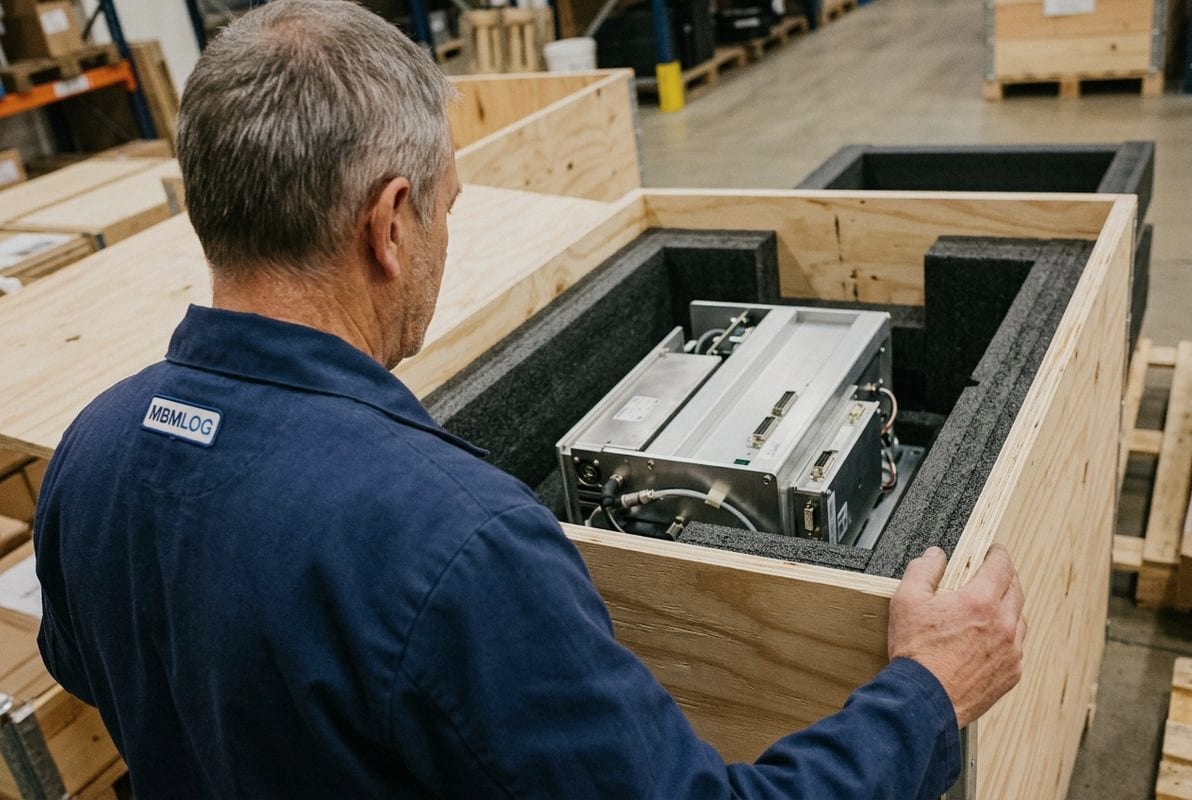
In practice, our team often recommends a hybrid solution. We wrap individual items in bubble wrap or EPE pearl cotton 6, place them in a cardboard inner box, and then nest everything inside a fumigation-exempt plywood crate. This gives you the best of both worlds: the cushioning of cardboard and foam inside, plus the structural armor of wood outside.
This approach also sidesteps ISPM 15 concerns. Plywood, fiberboard, and particleboard are engineered wood products 7 — not solid wood — so they generally do not require the IPPC fumigation stamp. You get crate-level protection without the quarantine risk.
Shipping insurance premiums can be lower when goods travel in robust wooden crates. Insurers assess risk based on packaging quality. If your $5,000 glass fixture ships in a standard cardboard box, expect higher premiums or even denied claims if damage occurs. A properly built wooden crate with internal bracing signals to insurers that you took reasonable precautions.
For items valued over $10,000, many freight specialists consider custom wooden crating mandatory — not optional. The cost of the crate is a fraction of the potential loss.
Even with a wooden crate, internal packing matters. Here are the rules we follow at our warehouse:
A buyer interaction that comes up at least twice a month involves Amazon sellers who want to ship inventory in wooden crates directly to FBA warehouses — and then discover that Amazon's receiving process is not designed for them. Amazon FBA warehouses 8
Amazon FBA warehouses strongly prefer standard cardboard boxes that meet their size, weight, and labeling requirements. Wooden crates are generally not accepted at FBA receiving docks. You must repack goods into compliant cardboard boxes before delivery, or your shipment risks rejection, delays, or additional fees.
Amazon FBA has strict packaging guidelines. Boxes must be standard six-sided corrugated cardboard. They must be scannable — meaning barcodes and FNSKU-Etiketten 9 must be on flat, smooth surfaces. Wooden crates with rough surfaces, metal staples, and irregular shapes cause problems at FBA receiving docks.
Amazon also enforces weight limits. Individual boxes typically should not exceed 50 lbs (about 23 kg). Oversized or overweight packages trigger extra handling fees or outright rejection. Wooden crates almost always exceed these limits when you factor in the crate weight itself.
Here is how we handle this for our Amazon seller clients:
This two-stage approach uses wooden crates for transit protection and cardboard boxes for FBA compliance. It adds a repacking step, but it prevents rejections and keeps your inventory flowing.
| Anforderung | Amazon FBA Standard |
|---|---|
| Box material | Six-sided corrugated cardboard |
| Max weight per box | 50 lbs (23 kg) |
| Max dimension (any side) | 25 inches (standard); varies by category |
| Kennzeichnung | FNSKU + shipment ID on scannable surface |
| Pallet type | GMA standard (48" × 40") |
| Pallet max height | 72 inches (including pallet) |
| Stretch wrap | Required for palletized shipments |
| Wooden crates accepted? | No — not standard receiving format |
Many new Amazon sellers try to ship wooden crates directly to FBA, thinking the extra protection justifies the choice. But Amazon's automated receiving systems rely on scanning, conveyor belts, and standardized stacking. A wooden crate jams the process. It cannot be scanned efficiently. It cannot be stacked uniformly. And Amazon may charge you for non-compliant packaging or refuse the shipment entirely.
Another mistake: using thin, single-wall cardboard to save money. Amazon requires sturdy boxes. We always recommend five-layer (double-wall corrugated) or thicker cartons. Seal with reinforced tape in a cross pattern — not just a single strip of clear tape. This prevents boxes from opening during the aggressive sorting process at FBA facilities.
Transit times matter here too. If your shipment is delayed because of a packaging rejection at FBA, you risk stockouts. For sellers who depend on steady inventory flow, a rejection can hurt Amazon rankings and sales.
During our customs clearance operations for DDP shipments into the US, we have seen firsthand how solid wood packaging triggers additional scrutiny — and costs — that many shippers do not anticipate.
Yes, solid wood crates can trigger extra customs inspections and fumigation fees. The US, EU, Canada, and Australia require all solid wood packaging to carry an IPPC/ISPM 15 stamp proving heat treatment or fumigation. Non-compliant wood packaging risks cargo detention, forced fumigation, return shipping, or fines.
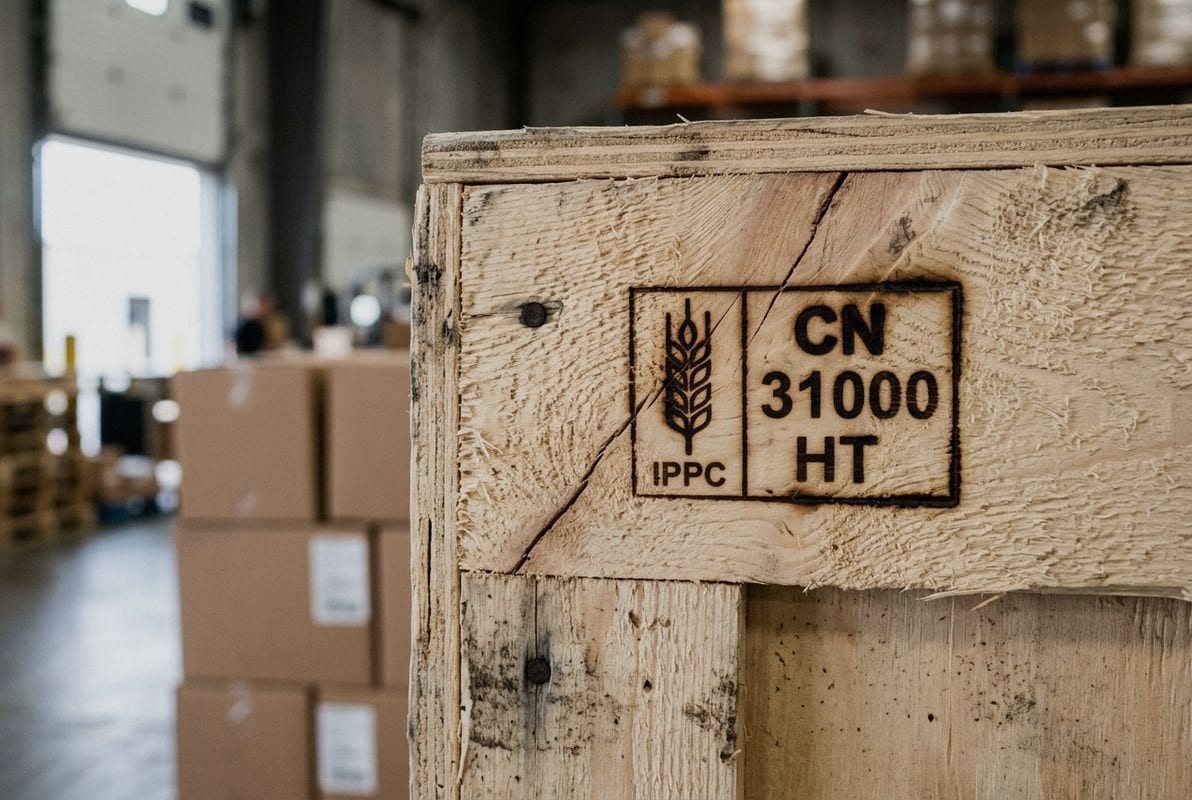
ISPM 15 is an international standard governed by the International Plant Protection Convention 10 (IPPC). It exists to prevent invasive pests from spreading through solid wood packaging materials. Any solid wood — including crates, pallets, and dunnage — used in international shipping must be heat-treated to a core temperature of 56°C for at least 30 minutes and stamped with the IPPC mark.
This applies to shipments entering the US, EU member states, Canada, Australia, and many other countries. If your wooden crate lacks the stamp, customs officers can:
For DDP shipments, these costs fall on the shipper — meaning you or your logistics provider absorb the expense. This is why we always verify wood packaging compliance before cargo leaves our warehouse in Zhengzhou.
Not all wood triggers the requirement. Here is the breakdown:
| Wood Type | ISPM 15 Required? | Anmerkungen |
|---|---|---|
| Solid wood (pine, oak, etc.) | Yes | Must be heat-treated and IPPC-stamped |
| Plywood | No | Engineered product, generally exempt |
| Fiberboard (MDF, HDF) | No | Engineered product, generally exempt |
| Particleboard / chipboard | No | Engineered product, generally exempt |
| OSB (oriented strand board) | No | Engineered product, generally exempt |
| Bamboo | No | Not classified as wood under ISPM 15 |
This is why we often recommend fumigation-exempt plywood crates or fiberboard crates for international express shipments. You get solid structural protection without the quarantine risk.
The ISPM 15 treatment itself costs around $50 per batch — a modest expense. The real financial pain comes from non-compliance. Port fumigation in the US can cost $200–$500 or more. Detention fees accumulate daily. If your shipment is returned, you pay round-trip freight. And if goods are perishable or time-sensitive, the delay alone can be devastating.
For express shipments via DHL, FedEx, or UPS, the carriers generally accept wooden crates. But they expect compliance. If a customs inspection flags non-compliant wood, the shipment stalls. The carrier will not process it until the issue is resolved. This can add days or even weeks to your transit times.
Postal-type shipping channels (like ePacket or China Post registered mail) tend to prefer cardboard boxes. Irregular wooden crates can cause delays in postal sorting facilities. Express carriers have more flexibility, but they still charge oversize or overweight handling fees for large wooden crates.
For most DDP shipments we manage from China to the US, cardboard boxes are the default. They clear customs faster. They face no shipping regulations related to wood quarantine. And they work smoothly through the express carrier network.
When wooden crates are necessary — for glass, ceramics, heavy machinery parts, or large aluminum fixtures — we use IPPC-stamped solid wood or, more often, exempt engineered wood. We always verify compliance before the shipment leaves China, so our clients never face surprise fees at the US border.
Choosing between wooden crates and cardboard boxes comes down to your product's fragility, value, and destination requirements. For most international express shipments, cardboard wins on cost and compliance — reserve wooden crates for high-value, fragile cargo. If you need help choosing the right cardboard boxes for international shipping, or understanding e-commerce outer packaging requirements for last-mile courier delivery, our team can guide you through the process.
1. Explains express shipping, its speed, and advantages in global logistics. ↩︎
2. Defines Delivered Duty Paid (DDP) shipping, outlining seller responsibilities and benefits for buyers. ↩︎
3. Details how volumetric weight is calculated and its impact on shipping costs by carriers. ↩︎
4. Explains ISPM 15 standard for wood packaging, its purpose, and compliance requirements for international trade. ↩︎
5. Highlights the sensitivity and specialized handling required for shipping precision instruments to prevent damage. ↩︎
6. Describes EPE pearl cotton as an environmentally friendly packaging material with excellent cushioning and shock absorption. ↩︎
7. Defines engineered wood products as composite materials manufactured from wood strands, particles, or veneers. ↩︎
8. Outlines Amazon FBA's strict packaging guidelines and preferences for standard cardboard boxes for receiving. ↩︎
9. Explains FNSKU labels, their purpose in Amazon FBA, and requirements for scannable barcodes. ↩︎
10. Introduces the IPPC as an intergovernmental treaty aimed at protecting global plant resources from pests. ↩︎