- +8618603825129
- [email protected]


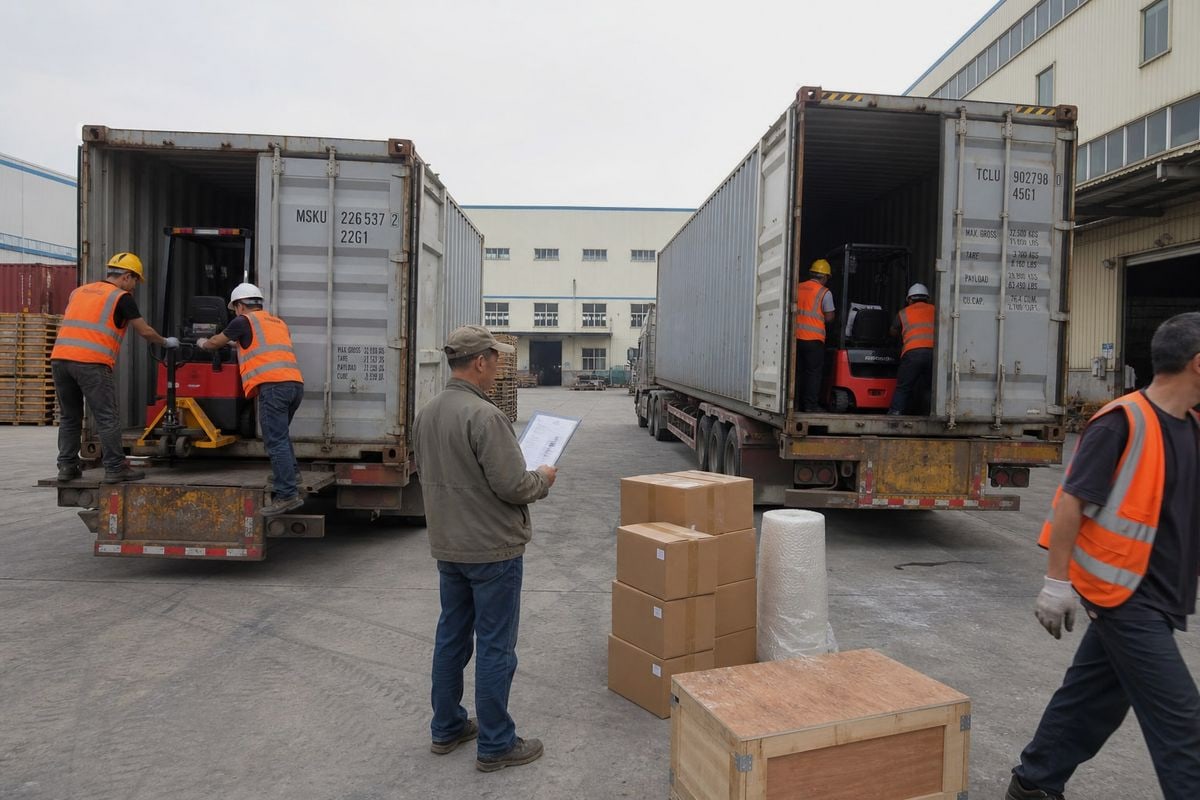
Every week, our team in Zhengzhou quotes the [cost to ship an electric forklift from China to the UK](https://mbmlog.com/?p=11523). Most buyers are shocked when the "cheap" quote doubles at destination. Hidden port fees, battery surcharges, and VAT can wreck your margin. Let me break down the real numbers so you can budget with confidence.
Shipping an electric forklift from China to the UK typically costs $1,800–$5,800 by sea freight, depending on container size and route. Add roughly $200–$400 for lithium battery handling, £500–£1,000 in UK port charges, plus 20% import VAT and duty on the CIF value.
That is the short answer. But the total landed cost depends on several moving parts. Below, I will walk through each cost driver, show you how to get an accurate quote, explain battery surcharges, and share proven ways to cut your bill.
Last month, we loaded three identical forklifts for two different UK buyers. One paid nearly 40% more per unit. The difference came down to container choice and timing, not the machines themselves.
The main cost factors are forklift size and weight, container choice (20ft, 40ft, or LCL), battery type, origin and destination ports, seasonal sea freight rates, insurance, port handling charges, and whether the quote is port-to-port or door-to-door.

The forklift itself matters less than how you move it. In our experience coordinating forklift exports from Chinese factories, the same 3-ton electric forklift can cost very different amounts to ship depending on the decisions made before it leaves the factory gate.
The FCL vs LCL decision is usually the biggest lever. A compact warehouse forklift may fit in a 20ft container. A larger unit, or a multi-unit order, pushes you into a 40ft or 40HQ. Current market ranges look like this:
| Versandart | Typischer Kostenbereich | Am besten für | Transitzeit |
|---|---|---|---|
| 20ft FCL | $2,295–$3,150 | 1–3 compact forklifts | 35–45 days |
| 40ft / 40HQ FCL | $4,095–$5,100 | 2–5 forklifts or large units | 35–45 days |
| LCL (pro CBM) | £40–£120 per CBM | Single small unit or parts | 40–50 days |
| Luftfracht | $3.5–$10+ per kg | Emergency parts only | 5-10 Tage |
A useful rule of thumb: once your shipment approaches 15 CBM, FCL usually becomes cheaper per cubic metre than LCL. LCL also adds more handling, which raises damage risk for heavy machinery.
Sea freight rates from Shanghai or Shenzhen to Felixstowe or Southampton move month to month. Rates in 2026 remain volatile, so treat any published number as a range, not a promise. There is also a hidden currency factor. You buy in CNY, pay freight in USD, and pay tax in GBP. Over a six-week shipping window, exchange rate swings can create a cost variance of up to 7%.
Some buyers ask us about Ro-Ro shipping. It works well for large fleets of wheeled machinery, but for one to five electric forklifts, containerized sea freight is almost always cheaper and offers better protection from weather and handling damage.
A UK dealer once forwarded me a competitor's quote that looked $800 cheaper than ours. When we listed everything it excluded — destination handling, Zollabfertigung 1 fees, battery documentation — his "cheap" option was actually the expensive one.
To get an accurate quote, provide your forwarder with the forklift's exact dimensions, weight, battery type, quantity, pickup address, and destination. Then request an itemized quotation separating ocean freight, origin charges, battery fees, UK port charges, customs clearance, duty, VAT, and final delivery.

The single biggest quoting mistake I see is comparing numbers that cover different scopes. One quote is port-to-port. Another is door-to-door. They are not the same product, so they should not have the same price.
Before we can price a shipment accurately, we ask suppliers for six things: forklift dimensions with the mast lowered, gross weight, battery chemistry and capacity, quantity, factory location, and the final UK delivery address. Missing any one of these forces the forwarder to guess, and guesses become surcharges later.
Incoterms FOB CIF DDP terms decide which costs sit on whose side of the table. Many buyers compare a supplier's CIF price against a forwarder's FOB-based quote and reach the wrong conclusion.
| Incoterm | Supplier Covers | You Cover | Risk of Hidden Cost |
|---|---|---|---|
| FOB | Factory to loaded vessel | Ocean freight, insurance, UK charges, delivery | Low — you control freight |
| CIF | Freight and basic insurance to UK port | UK port fees, clearance, duty, VAT, trucking | Medium — destination fees often inflated |
| DDP | Everything to your door, taxes included | Nothing extra (in theory) | Low if the forwarder is transparent |
Here is a worked example for one 3-ton electric forklift with an FOB price of $8,000–$15,000. Ocean freight in a 40HQ runs roughly $1,500–$4,000. Marine cargo insurance adds 0.2%–0.5% of cargo value. UK Customs Duty is calculated on the CIF value under commodity code 8427101000 2, then 20% VAT applies on top. Then add £500–£1,000 in local port charges 3 and inland trucking. Shipping is significant, but it is rarely the dominant share of total cost — taxes and destination fees often exceed the ocean freight line itself.
Also remember transit time. Port-to-port from Shanghai or Shenzhen to Felixstowe typically takes 35 to 45 days, excluding customs clearance. Build that into your project schedule.
Battery paperwork is where we spend the most pre-shipment effort. We once had to delay a booking by a week because a factory could not produce a valid UN38.3 test report 4 — catching that before the port saved the buyer serious storage fees.
Yes. Lithium battery forklifts are classified as Class 9 Dangerous Goods, which triggers a battery surcharge of roughly $200–$400, mandatory documentation such as MSDS and UN38.3 reports, IMO declarations, carrier review, and a 30% state-of-charge requirement during transit.
Lithium battery regulations are the part of forklift shipping that most general freight forwarders underestimate. A lead-acid forklift ships as ordinary machinery. A lithium-ion forklift ships as dangerous goods, and that changes cost, paperwork, and booking difficulty.
Carriers will not accept a lithium battery forklift without a complete document package. In our process, we collect and verify these before the cargo leaves the factory:
If any document is missing or inconsistent, the carrier can reject the booking or the container can be held at origin. Fixing paperwork after cargo reaches the port is far more expensive than fixing it beforehand.
Lithium forklifts should ship at roughly 30% state of charge. This reduces fire risk in transit, but it creates a downstream requirement many buyers miss: the battery risks deep discharge during a 35–45 day voyage, so the forklift needs prompt, proper charging on arrival to protect the cells. We remind UK buyers to have compatible charging arranged before the container lands.
Expect the lithium configuration to add $200–$400 or more in DG handling and documentation fees, depending on the carrier and route. Some carriers also restrict stowage positions for Class 9 cargo, which can limit vessel choice during peak season. None of this makes lithium forklifts impractical to ship — it just means you should budget the surcharge and verify battery classification early, before you confirm your purchase order.
The best cost-saving call I ever made for a client was simple: he was about to book two 20ft containers for four forklifts from two different factories. We consolidated everything into one 40HQ at our warehouse and cut his freight bill by nearly a third.
Reduce costs by consolidating multiple forklifts into one container, choosing the right container size, shipping masts lowered or detached, filling dead space with spare parts, confirming battery documents early, booking outside peak season, and demanding fully itemized quotes to compare fairly.

Freight forwarder services differ enormously in how much money they can save you, because most savings happen at the planning stage, not the booking stage. Here is where the real money hides.
Per-unit shipping cost drops sharply as container utilization improves. One forklift alone in a 40HQ pays for the whole box. Three forklifts split the same cost three ways. If you buy forklifts from Factory A, batteries from Factory B, and chargers from Factory C, multi-supplier consolidation at a China warehouse lets everything travel together in one container.
| Szenario | Container | Approx. Freight | Cost Per Forklift |
|---|---|---|---|
| 1 compact forklift | LCL (~10 CBM) | £400–£1,200 | £400–£1,200 |
| 1 × 3-ton forklift | 20ft FCL | $2,295–$3,150 | $2,295–$3,150 |
| 3 forklifts + parts | 40HQ FCL | $4,095–$5,100 | ~$1,365–$1,700 |
Always ask each forwarder to separate ocean freight, origin charges, DG fees, port handling charges, customs clearance fees, import duties and VAT, and inland delivery. Only then can you compare like with like. The cheapest headline number often hides the most expensive arrival.
Budget $1,800–$5,800 for sea freight, then add battery fees, port charges, duty, and 20% VAT. Plan the full landed cost early — I am happy to help you calculate it.
1. Official UK government guidance on the process and requirements for import customs declarations. ↩︎
2. Official UK trade tariff classification for self-propelled electric trucks and forklifts. ↩︎
3. Authoritative body representing the UK port industry and its operational standards. ↩︎
4. UN body responsible for the global standards of transporting dangerous goods. ↩︎