- +8618603825129
- [email protected]


Shipping forklift spare parts and batteries together sounds simple until a carrier rejects your booking. I have watched buyers lose weeks at Chinese ports because one battery was misdeclared. At our consolidation warehouse in Zhengzhou, we solve this problem before cargo ever reaches the terminal.
You can ship forklift spare parts and batteries together in one shipment if the battery is correctly classified, terminals are insulated, packaging meets dangerous goods regulations, and documents like UN38.3 and SDS are complete. Parts and batteries usually travel on the same pallet but in separate, protected packages.
The battery drives the whole shipment. Get the battery right, and the parts follow easily. Get it wrong, and everything stops. Let me walk you through how we handle this every week.
A distributor in Texas once asked me to squeeze two lithium batteries into a crate of forks and controllers. We said no, and I want to explain why that answer protected his cargo.
Ship lithium forklift batteries as UN3480 lithium ion batteries in UN-specification packaging with insulated terminals, then place spare parts in separate packages within the same container or on the same pallet. Never mix loose metal parts and batteries inside one box, because contact can cause short circuits and fire.
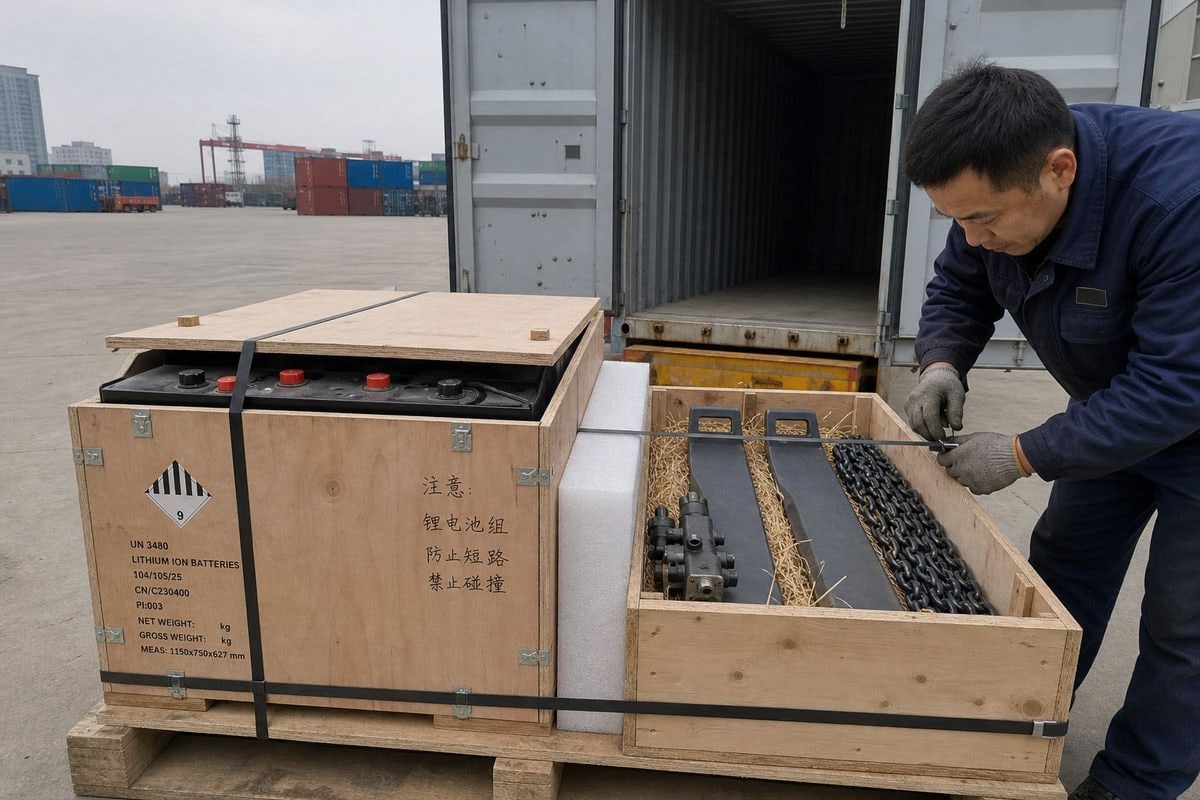
The most important thing to understand is that "together" does not mean "in the same box." In our container loading operations, we use three safe consolidation models. Each one keeps the battery isolated while still letting you share one container and one freight bill.
| Model | How It Works | Am besten für |
|---|---|---|
| Separate packages, same pallet | Battery in its own UN-spec box, parts crated beside it, both strapped to one pallet | LCL shipments and mixed spare parts orders |
| Overpack consolidation | Battery and parts packed separately, then enclosed in one outer overpack with proper marks | Air freight and small consolidated loads |
| Battery installed in equipment | Battery mounted in the forklift, spare parts crated separately in the same container | Full forklift plus parts shipments |
IATA describes an "all packed in one" option and an overpack option for lithium-ion powered vehicles 1 with spare batteries. We apply the same logic to forklift cargo. The classification matters too. A loose lithium battery ships as UN3480 lithium ion batteries. A battery packed with or installed in equipment falls under UN3481. These are different entries with different packing instructions, so we always confirm the configuration before booking.
Physical protection is just as critical as classification. Exposed terminals must be covered with non-conductive caps or insulating tape. Batteries must be braced so they cannot shift, get crushed, or contact metal spare parts like forks, chains, or brackets. We add non-conductive dunnage between battery packages and any metallic parts as an extra buffer. Some carriers also restrict combining certain batteries in one package at all, so DHL-style "everything in one carton" thinking fails fast. Our team checks IMDG code compliance for ocean moves and IATA dangerous goods regulations for air moves before we accept the cargo, because heavy equipment logistics only works when the battery plan is fixed first.
Incomplete paperwork is the single biggest reason mixed shipments stall at Chinese ports. Our documentation team reviews every battery file before we let a container gate in, because fixing papers after arrival costs far more.
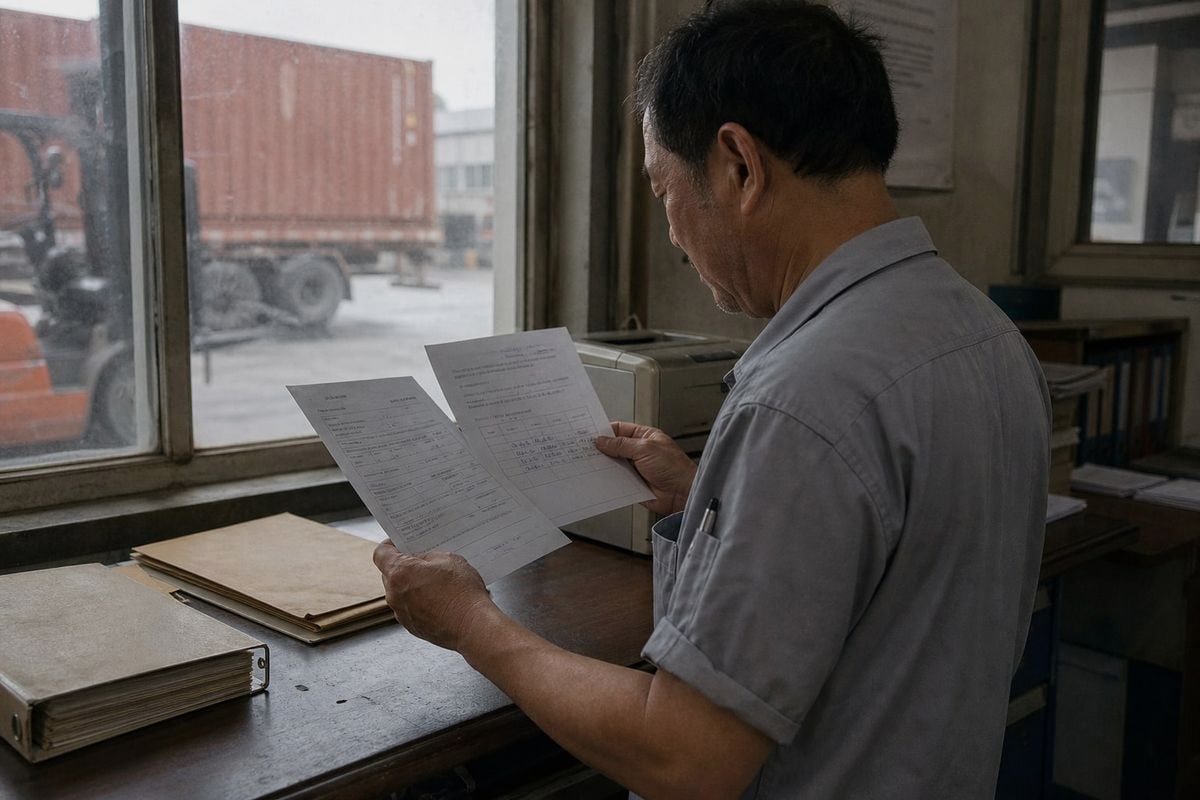
You need a UN38.3 test summary and a Safety Data Sheet for lithium batteries, a commercial invoice and packing list covering all parts, a dangerous goods declaration where required, and a bill of lading with a 24-hour emergency contact. Product photos, weights, and dimensions support correct classification.

Hazardous materials documentation splits into two groups: papers that prove the battery is safe, and papers that clear the whole shipment through export and import. Missing either group creates delays.
Die UN38.3 test summary proves the lithium battery passed transport safety testing. Without it, most carriers will not accept the booking at all. The Material Safety Data Sheet, now usually called an SDS, describes the battery chemistry, hazards, and emergency response steps. For lead-acid batteries, lead-acid battery shipping requirements call for an SDS showing whether the battery is wet, spillable, or non-spillable, because that changes the UN number and packing rules. Wet lead-acid batteries ship as UN2794.
| Dokumentieren | Covers | Why It Matters |
|---|---|---|
| Handelsrechnung 2 | Batteries and all spare parts | Customs valuation and duty calculation |
| Packliste 3 | Package-level contents | Shows what is in each box for inspection |
| Dangerous goods declaration | Battery packages | Required for regulated battery classes |
| Konnossement | Whole consolidated shipment | Must reference the hazmat declaration and emergency contact |
| UN38.3 test summary | Lithium batteries only | Carrier acceptance requirement |
| SDS / MSDS | All battery types | Classification and emergency response |
Before we quote any battery shipment, we ask suppliers for photos, exact dimensions, gross weight, quantity, battery chemistry, watt-hour rating, and whether the battery ships alone, packed with equipment, or installed. These inputs determine the classification, and the classification determines the paperwork. When one shipment holds cargo from several suppliers, we also make sure every invoice and packing list matches the consolidated bill of lading. Inconsistent supplier paperwork is a quiet killer of customs clearance timelines, and it is entirely preventable with a pre-shipment document check.
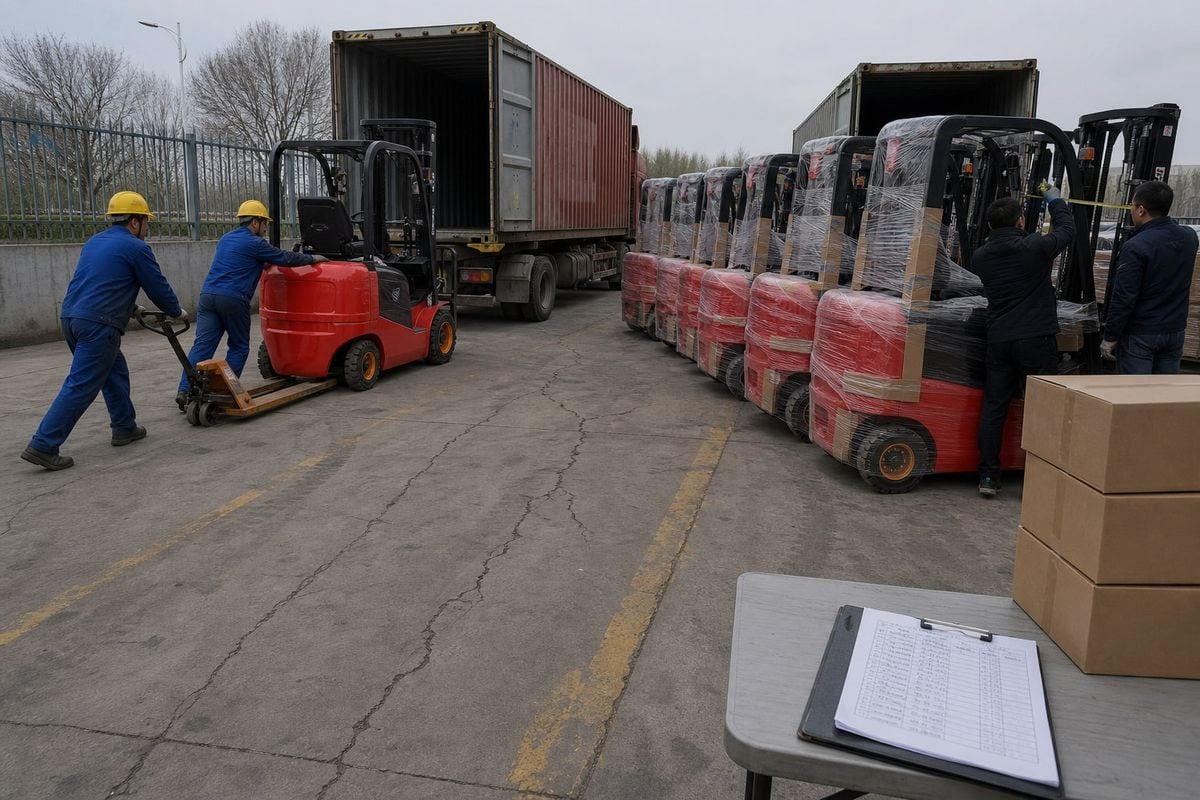
Last year we consolidated cargo for a US dealer buying forklifts from one factory, batteries from a second, and chargers plus tires from a third. One container, one bill of lading, one customs entry. That is exactly what multi-supplier consolidation should look like.
Yes, you can consolidate forklift parts and batteries from multiple Chinese suppliers into one container. A forwarder collects cargo at a consolidation warehouse, verifies battery documents from each supplier, packs and labels battery items separately, and loads everything as one palletized freight shipment under a single bill of lading.
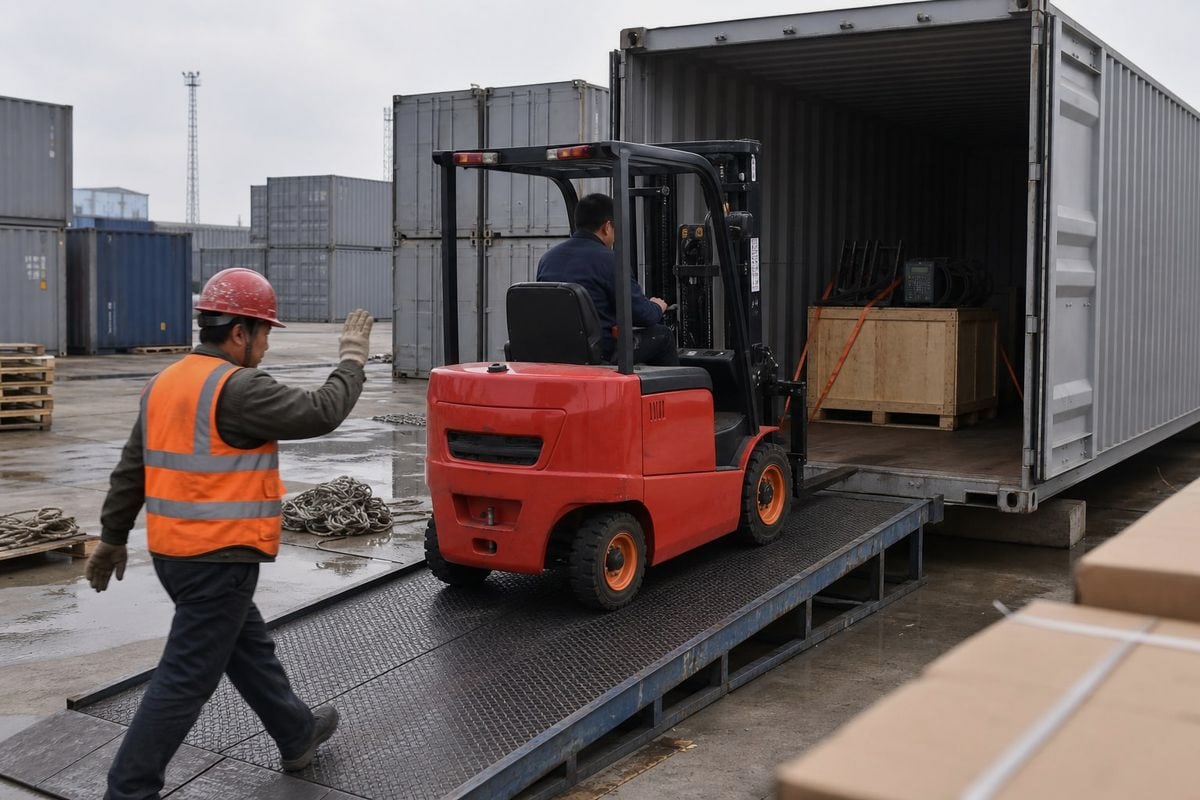
Consolidation saves real money, but it adds one hard rule: the strictest cargo sets the standard for the whole load. If one supplier sends a lithium battery, the entire shipment becomes a battery shipment for booking purposes. Here is the workflow we run at our Zhengzhou warehouse.
The buyer objection I hear most is this: "My parts supplier ships fine on his own, so consolidation just adds a middleman." I understand the concern, but separate shipments mean separate freight charges, separate customs entries, and separate delivery appointments. Worse, the parts supplier usually knows nothing about the battery supplier's paperwork. When the two loads meet at destination, mismatched documents create exactly the delays consolidation avoids. One coordinated load with verified freight class for machinery parts and a single hazmat plan is cheaper and safer. Density-based rating also helps here: a well-planned mixed pallet of dense batteries and lighter parts can earn a better weighted freight class than two awkward standalone shipments.
Ocean containers get rough handling, and I have opened enough of them to know that packing quality decides whether a battery arrives sellable. Our loading team follows a fixed sequence for every battery-plus-parts container we stuff.
Pack batteries upright in UN-specification packaging such as 4G fiberboard boxes or braced crates, insulate all terminals, and strap them low on pallets. Crate spare parts separately, add non-conductive dunnage between batteries and metal parts, and block and brace everything to prevent shifting, crushing, and electrolyte spills.
Good industrial battery packaging does three jobs at once. It stops short circuits, it stops movement, and it contains any leak. Miss one job and the other two will not save the cargo.
| Battery Type | UN Number | Key Packing Rule |
|---|---|---|
| Lithium-ion (loose) | UN3480 | UN-spec packaging, terminals insulated, state of charge limits for air |
| Lithium-ion (with/in equipment) | UN3481 | Secured in equipment, terminals protected, no loose contact with parts |
| Wet lead-acid | UN2794 | Strictly upright, acid-resistant packaging, electrolyte spill containment |
| Non-spillable lead-acid | UN2800 | Terminals protected, secured against shifting, lighter requirements |
For lead-acid units, upright orientation is non-negotiable. We strap batteries to pallets with the terminals up, use bracing so nothing can tip, and add absorbent electrolyte spill containment material where the chemistry requires it. For lithium units, crush protection matters most. A shifting parts crate that dents a lithium casing is a fire risk, not just a damage claim.
Spare parts need their own discipline. Forks, masts, and counterweight components are heavy and sharp-edged. We crate them or band them to skids, then position them so no metal edge faces a battery package. Between the two zones we insert plywood or fire-resistant dunnage as a buffer that goes beyond the minimum rules. Before closing the container, we model the load plan so the center of gravity stays low and centered, since batteries are often the densest items aboard. For high-value loads, some clients add small data loggers to record impacts and temperature in transit, which gives useful evidence if a claim ever arises. Palletized freight shipping with proper blocking beats floor-loading loose boxes every single time for this cargo.
Shipping forklift spare parts and batteries together works when classification comes first. Verify the battery, complete the documents, pack items separately, and consolidate smartly — then one container carries everything safely.
1. IATA standards for shipping lithium-ion powered vehicles and associated battery components. ↩︎
2. Official US government guidance on the requirements for a commercial invoice in international trade. ↩︎
3. CBP overview of essential import documentation, including the packing list and bill of lading. ↩︎
4. Regulatory requirements for UN-specification packaging when transporting hazardous battery materials. ↩︎