
- +8618603825129
- [email protected]


Direct shipping and transshipment for forklift imports create very different outcomes. I have watched buyers lose weeks and money at hub ports. Our team in Zhengzhou plans routes to prevent exactly that.
Direct shipping moves forklift imports on one vessel from origin to destination, giving faster transit, fewer handling risks, and better schedule certainty. Transshipment routes cargo through a hub port, usually cutting ocean freight cost but adding dwell time, extra lifts, and delay risk.
Both routing options have a real place in forklift logistics. The right choice depends on your budget, your deadline, and your destination port. Let me break down each factor so you can decide with confidence.
A distributor in Texas once asked me why my direct-route quote was higher than a competitor's transshipment quote. When we compared landed cost, my route was actually cheaper.
Transshipment typically saves 10–20% on base ocean freight rates compared with direct shipping, because carriers leverage high-volume hub-and-spoke networks. However, extra dwell time, storage exposure, and delay-related costs often erase those savings for high-value cargo like forklifts.
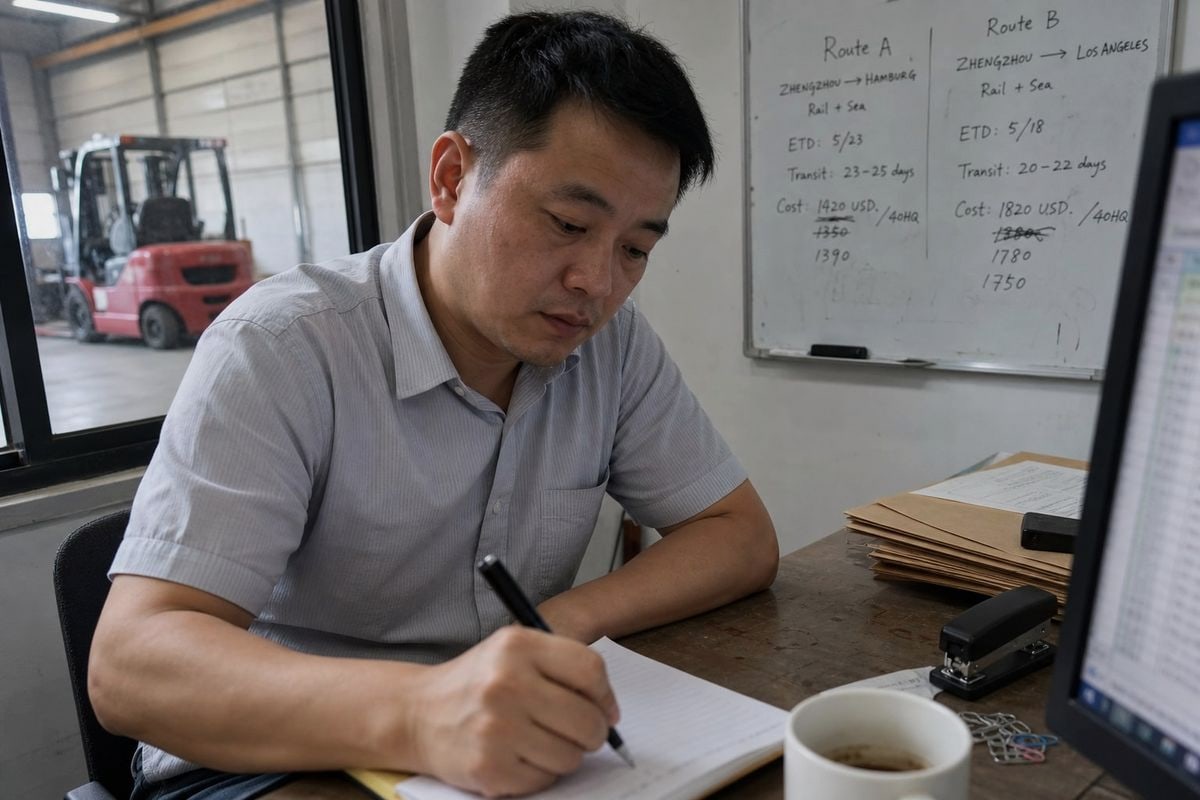
The headline freight rate is only one line in your landed-cost calculation. In our freight forwarding services 1, we always show forklift importers the full picture before they choose a route. A cheap quote that ignores downstream costs is not a saving. It is a deferred expense.
Transshipment is cheaper for a structural reason. Carriers consolidate cargo at mega-hubs like Singapore, Busan, or Colombo. They fill huge vessels on high-volume shipping lanes, then feed smaller vessels to secondary ports. That density lowers the cost per container. Direct services on major lanes, like China to the US West Coast, carry a premium because they offer convenience and speed.
Forklifts are capital equipment, not throwaway goods. Every extra day in transit is a day of inventory holding cost. Every delay at a congested hub can trigger storage charges, missed delivery slots, or demurrage at the port of discharge. I have seen a modest freight saving disappear after one week of hub congestion.
| Cost Factor | Envío directo | Transshipment |
|---|---|---|
| Base ocean freight | Higher | Often 10–20% lower |
| Inventory holding cost | Lower (shorter transit) | Higher (longer transit) |
| Delay/demurrage exposure | Lower | Higher at congested hubs |
| Insurance considerations | Standard | May cost more due to extra handling |
| Total landed cost | Often competitive | Cheaper only if schedule slack exists |
My advice is simple. Compare total landed cost, including import duties and taxes 2 and time-related costs, not just the freight rate. For a dealer building non-urgent inventory, transshipment savings are real. For a forklift tied to a warehouse opening, direct usually wins on all-in cost.
Timing is the trade-off I discuss most with buyers. When we book electric forklift containers out of Chinese ports, the schedule question comes up before price on almost every urgent order.
Direct shipping is usually 5–14 days faster than transshipment for electric forklifts. Transshipment adds hub dwell time of 2–7 days for unloading, waiting, and reloading, plus schedule uncertainty if the connecting vessel is delayed or the hub port is congested.
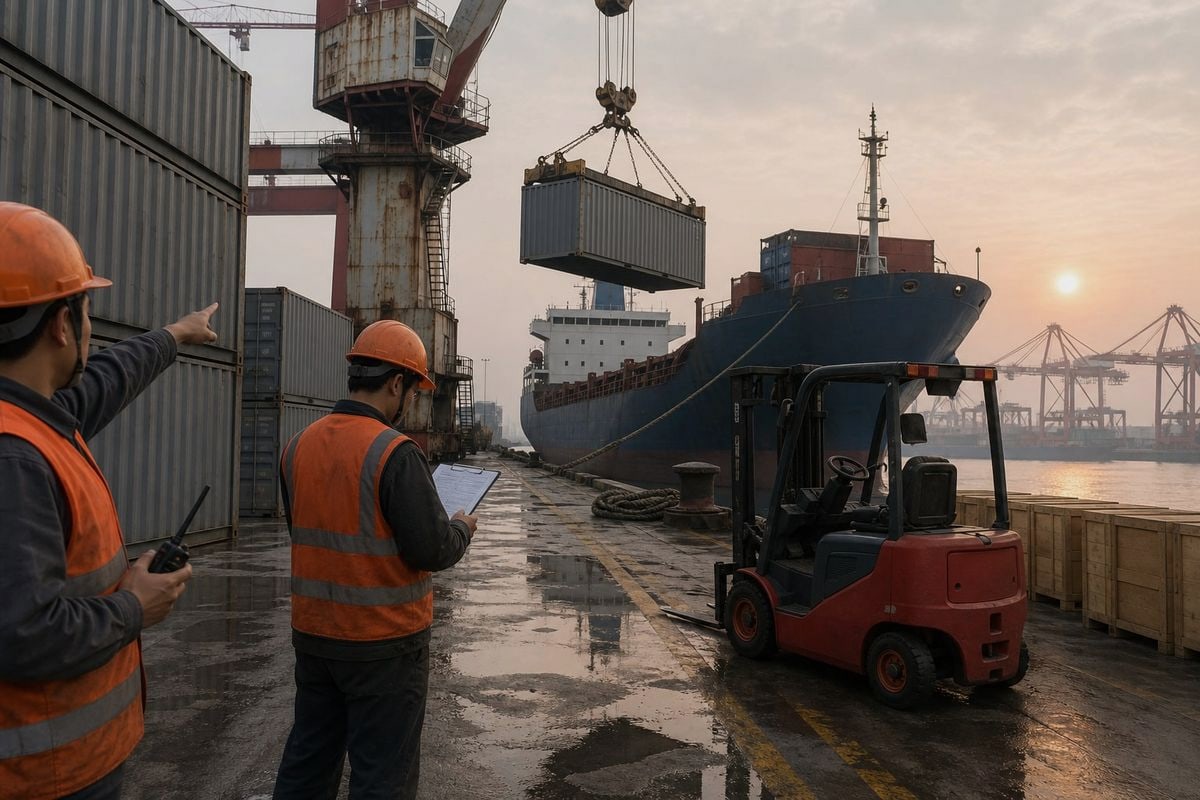
Transit time optimization matters more for forklifts than for ordinary palletized goods. A forklift usually has a job waiting for it. A rental contract. A warehouse launch. A customer who already paid a deposit. Late arrival creates idle labor and unhappy end customers, and those costs land on the importer, not the carrier.
The mechanics are straightforward. Your container arrives at a hub port. It gets discharged, staged in the yard, and waits for the connecting vessel. Then it is loaded again and sails onward. Each step consumes time. When the hub runs smoothly, the added time is a few days. When the hub is congested, delays become unpredictable, because your cargo is now subject to conditions at three ports instead of two.
There is a second, less obvious difference. Direct schedules are easier to predict. Transshipment schedules depend on a connection being made. If your container misses the feeder vessel, you wait for the next sailing, which may be a week away. Supply chain lead times built on transshipment need buffer days built in.
To be fair, transshipment has one scheduling advantage that importers should not ignore. Major hubs offer more frequent departures and alternative routings. If a primary lane is blocked or fully booked, a hub network can reroute your forklift when a direct service cannot. We use that flexibility during peak season when direct space is tight.
| Timing Factor | Envío directo | Transshipment |
|---|---|---|
| Typical time difference | Baseline | +5 to 14 days |
| Hub dwell time | None | 2–7 days on average |
| Schedule predictability | Alta | Moderate to low |
| Departure frequency | Fixed weekly services | More routing alternatives |
| Ports affecting your cargo | Origin + destination | Origin + hub + destination |
My rule of thumb for forklift buyers: if your delivery window has less than two weeks of slack, book direct. If you have a month of flexibility, transshipment becomes a reasonable option.
Cargo condition on arrival is where I have learned the hardest lessons in this business. Our loading teams photograph every forklift before the container doors close, because handling risk is real and measurable.
Direct shipping offers better cargo safety for forklift shipments. The equipment is handled only at initial loading and final unloading. Transshipment adds extra crane lifts, yard moves, and restows at the hub, which increases the chance of impact damage, cosmetic scratches, or securing failures.
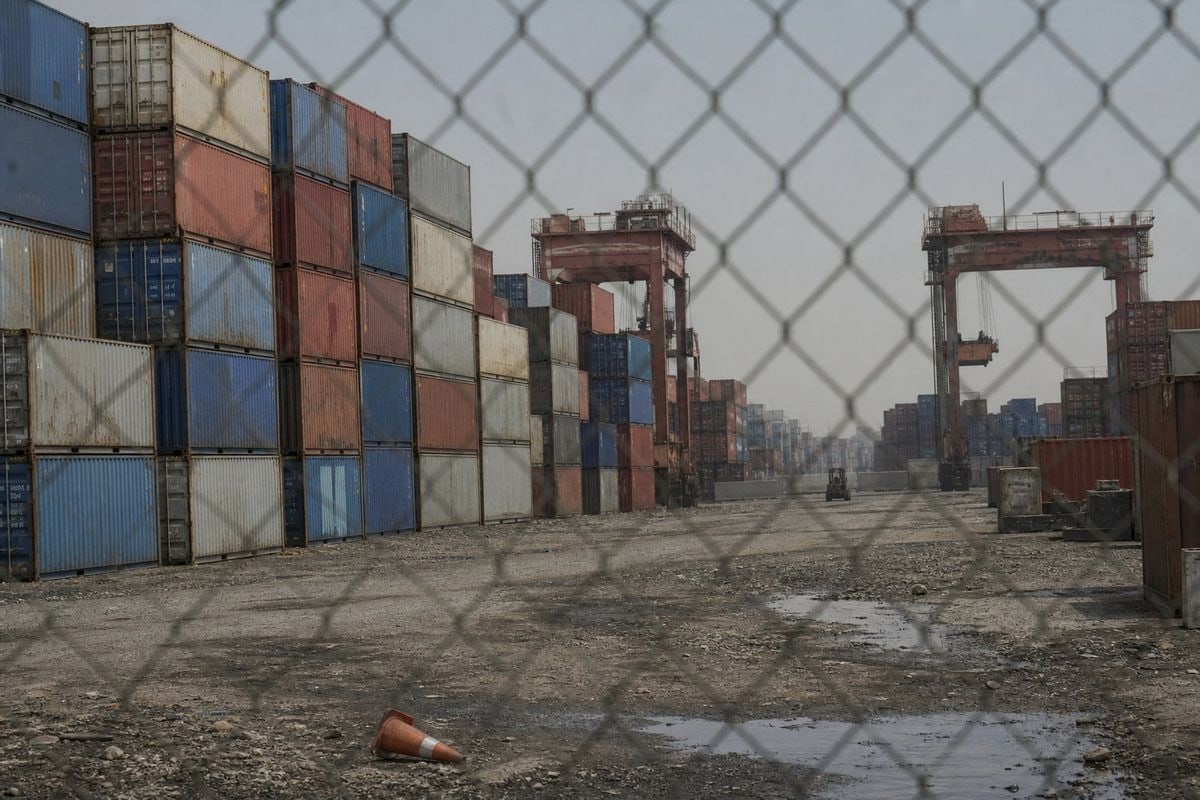
Forklifts are heavy, top-loaded machines with exposed masts, hydraulic lift chains, and painted counterweights. Cosmetic damage hurts resale value even when the machine still runs. That is why cargo handling risks deserve as much attention as price when you compare routes.
Think of every lift as a small probability of a problem. In a direct sailing, your container is lifted at the origin terminal and at the port of discharge. That is it. In a transshipment chain, add at least two more crane moves at the hub, plus yard handling and possible restows. More touchpoints mean more exposure to shocks, tilts, and human error. It also means more parties involved if something goes wrong, which complicates insurance claims.
The industry is responding to this reality. Shock-sensing IoT telematics devices are increasingly attached to transshipped forklift containers. They record impact events 3 with timestamps, which gives insurers granular data to assign responsibility across multiple handlers. If you choose a transshipment route for expensive units, this kind of monitoring is worth requesting.
Route choice matters, but loading quality matters just as much. In our experience shipping material handling equipment logistics out of China, most transit damage traces back to poor securing, not the route itself. We coordinate with factories on the following steps:
A well-secured forklift can survive a transshipment chain. A poorly secured one can be damaged even on a direct sailing. Do both things right: pick the lower-risk route when value is high, and never compromise on container loading and cargo securing.
Battery cargo taught me to read carrier rules line by line. One shipment we handled years ago got flagged at a hub because the battery documentation met origin rules but not the hub authority's storage requirements. We now pre-check every port on the routing.
Choose direct shipping for lithium battery forklifts whenever possible. Lithium-ion regulations vary by port authority, and transshipment hubs may impose stricter dangerous goods storage rules, causing holds or rejections mid-route. Direct sailings involve fewer jurisdictions, fewer inspections, and lower regulatory risk.

Lithium battery forklifts are the fastest-growing segment we ship from China, and they carry a regulatory layer that ordinary diesel units do not. The battery classification, state of charge, packaging, and documentation must satisfy every authority that touches the cargo. On a direct route, that means two ports. On a transshipment route, that means three or more, and the hub is the one you control least.
A transshipment hub stores your container in its yard, sometimes for days. Dangerous goods storage capacity at hubs is limited and rule-bound. If the hub authority classifies your battery cargo differently, or if DG yard space is full, your container can be held, segregated, or refused for the connecting vessel. These conflicts happen mid-journey, where you have the least leverage and the fewest options. A direct sailing removes that entire failure point.
| Escenario | Recommended Routing | Reason |
|---|---|---|
| Urgent lithium forklift order to a major US port | Direct | Fewer DG jurisdictions, faster arrival |
| Non-urgent lead-acid units, flexible schedule | Transshipment acceptable | Lower regulatory complexity, cost savings hold |
| Destination lacks direct sailings | Best available transshipment chain | Compare hub DG reputations, not just price |
| Premium lithium units with attachments | Direct | Minimize handling and regulatory exposure |
| Dealer inventory build with 30+ days of slack | Either | Let total landed cost decide |
Whatever route you choose, the customs clearance process 4 for battery forklifts depends on clean paperwork: UN38.3 test summaries, correct DG declarations, accurate battery specifications, and consistent HS codes. We verify these documents before cargo leaves the factory, because fixing them at a foreign port is slow and expensive. Some importers also explore Free Trade Zone hubs where minor assembly or battery installation can legally reclassify the HS code and reduce final import duties, but that strategy needs expert structuring and adds handling steps, so weigh it carefully.
One more note on alternatives. Roll-on/roll-off shipping is sometimes suggested for wheeled equipment, but for battery forklifts, containerized direct service 5 usually gives better protection and simpler DG handling. Direct routing also produces a lower carbon footprint per unit than multi-leg transshipment, which increasingly matters for importers with ESG reporting commitments.
Route choice quietly decides your landed cost, delivery date, and cargo condition. Match the route to your priority, verify battery paperwork early, and let total cost guide you, not the headline rate.
1. Authoritative trade association representing the global liner shipping industry and providing freight standards. ↩︎
2. Official government source for international trade regulations, duty rates, and import compliance requirements. ↩︎
3. UN agency responsible for shipping safety and the international standards for cargo securing. ↩︎
4. U.S. government resource providing comprehensive guides on international trade and customs procedures. ↩︎
5. UN body providing analysis and standards for global maritime transport and logistics efficiency. ↩︎



