- +8618603825129
- [email protected]


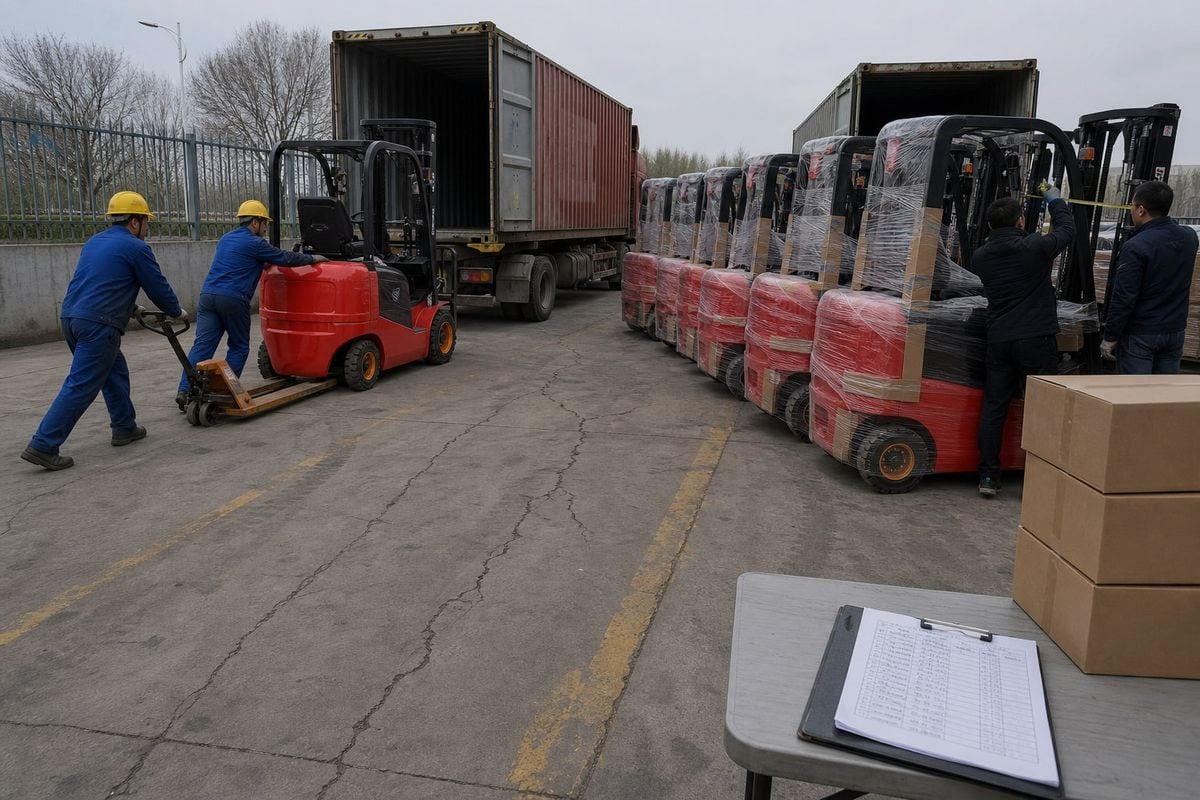
Destination charges quietly reshape international forklift shipping costs landed cost of an electric forklift 1. On our loading docks in Zhengzhou, I have watched attractive ocean quotes collapse once [arrival-side fees](https://mbmlog.com/?p=11847) appeared on the final invoice.
Destination charges affect international forklift shipping costs by adding terminal handling, customs clearance, drayage, release fees, and possible demurrage after the ocean rate. These arrival-side fees often total $800–$2,200 per container, sometimes 20–40% of total logistics expenses.
That gap between the quoted rate and the real landed cost is where most forklift importers lose money. Let me break down exactly where these fees come from and how to control them.
Last quarter, a US dealer sent me a competitor's quote that looked $600 cheaper than ours. When we listed the arrival fees line by line, his "cheap" option cost more.
When importing forklifts from China, expect destination terminal handling charges, customs brokerage fees, delivery order and documentation fees, drayage services, chassis rental, and possible demurrage or port storage fees. Combined, these arrival-side charges commonly run $800–$2,000+ per 20-foot container in the United States.
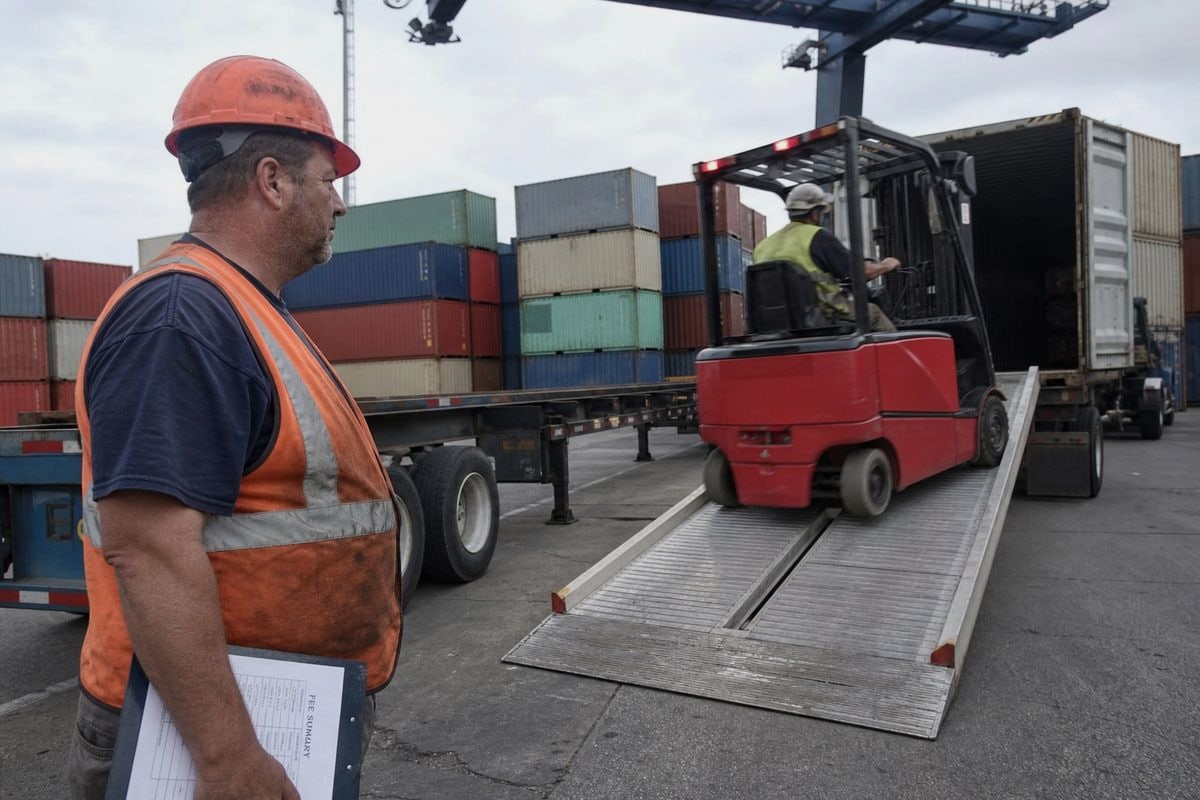
Destination charges are every fee that appears after your forklift arrives at the destination port but before it reaches your warehouse. They exist because someone has to unload the container, file the import entry, release the cargo, and truck it inland. None of that is included in a pure ocean freight rate.
Here is the typical arrival-side stack we see on China-to-US forklift shipments:
| Destination Charge | Qué cubre | Typical Range (US) |
|---|---|---|
| Terminal Handling Charges (DTHC) | Unloading, sorting, terminal moves | $150–$500 per container |
| Tasas de despacho de aduanas 2 | Entry filing, bond, release paperwork | $125–$350 per entry |
| Delivery Order / Documentation | Bill of Lading release, admin processing | $50–$150 |
| Drayage Services | Port-to-warehouse trucking | $300–$800+ |
| Chassis Rental | Equipment to move the container | $30–$60 per day |
| Demurrage / Port Storage Fees | Delays past free time | $75–$300+ per day |
Add import duties and taxes on top, calculated from the forklift's HS code. Note that classification matters here: customs treats new and used machinery differently, and the duty outcome can shift if the classification is wrong.
One more point I always flag for electric forklift buyers. Some destination terminals now apply hazardous goods handling fees for large lithium-ion battery systems 3, because safety protocols for lithium cargo are stricter than for ordinary machinery. We verify battery specifications before booking so this surcharge never arrives as a surprise.
A buyer in Texas once called me in a panic. His previous forwarder had let a container sit six days past free time, and the demurrage bill nearly wiped out his margin on two forklifts.
Avoid unexpected arrival fees by requesting an all-inclusive DDP or DAP quote, submitting complete documents before vessel arrival, confirming HS codes and battery paperwork early, scheduling drayage in advance, and picking up cargo within the carrier's free-time window to prevent demurrage and detention.
Most surprise fees at the port are not random. They come from three preventable failures: incomplete paperwork, slow pickup, and poor communication between the parties handling your cargo. I will walk through each one.
On our door-to-door shipments, we manage all five steps under one file. That single-point coordination is usually why our customers stop seeing surprise invoices.
Early in my forwarding career, I learned a hard lesson about quotes: the cheapest number on paper often wins the booking and loses the customer. Structure explains why.
Freight quotes exclude destination handling and customs costs because Incoterms split responsibility between seller and buyer, carriers bill arrival fees locally, and some forwarders quote only ocean freight to appear cheaper. A port-to-port rate legally ends at the destination terminal, not your warehouse.
The quoting problem starts with Incoterms. Under FOB, the Chinese factory covers origin costs, the ocean freight is negotiated separately, and everything after the destination port rail is your responsibility. Under CIF, marine cargo insurance 4 and freight are included, but destination handling, customs brokerage fees, and drayage still are not. Only DDP puts nearly the entire stack, including import duties and taxes, on one invoice.
| Quote Type | Covers Ocean Freight | Covers Destination Handling | Covers Customs & Duties | Covers Final Delivery |
|---|---|---|---|---|
| Port-to-Port (FOB basis) | Sí | No | No | No |
| CIF | Yes (plus insurance) | No | No | No |
| DAP | Sí | Sí | Clearance often, duties no | Sí |
| DDP | Sí | Sí | Sí | Sí |
There is also a structural billing reason. Destination terminal handling charges are set by the arrival terminal, customs brokerage fees are set by the local broker, and drayage rates are set by regional truckers. A forwarder quoting months in advance cannot always fix those numbers, especially where local handling fees are pegged to the exchange rate at vessel arrival rather than the booking date. Currency adjustment factors in volatile markets can move the final invoice.
But here is the objection I raise with every buyer: uncertainty is not an excuse for silence. A serious forwarder should still estimate the full arrival stack and state clearly what is excluded. When we quote forklift shipments, we list destination items line by line even when the customer only asked for an ocean rate. Comparing quotes without that breakdown is comparing incomplete numbers.
Whenever we plan container loading for electric forklifts, I run the landed-cost math with the customer first, because arrival fees change which shipping method actually wins.
Destination charges typically add 10–30% to the landed cost of an electric forklift, with destination handling alone running $150–$500 and full arrival-side costs reaching $800–$2,200 per container. Smaller LCL shipments feel the impact hardest because fixed fees spread across less cargo.
Landed cost is the full amount you pay to get a forklift from the factory floor in China to your warehouse floor. The stack has five layers: origin charges, ocean freight, destination charges, inland delivery, and import duties and taxes. Destination charges are the layer buyers most often underestimate.
Electric forklifts amplify every arrival-side cost driver. They are heavy, which raises terminal handling complexity and drayage pricing. High-capacity units may exceed standard road weight limits, requiring specialized flatbed trailers or heavy-haul permits for the last mile. Lithium battery systems can trigger extra handling protocols at some terminals. And routes using roll-on roll-off shipping or flat racks still face port discharge, clearance, and inland trucking regardless of the transport mode.
Shipment structure changes the burden too:
| Shipment Context | Why Destination Charges Hit Harder |
|---|---|
| LCL or partial load | Fixed fees of $150–$350 spread across less cargo, raising per-unit cost |
| One forklift in a 20FT container | Full container fees carried by a single machine |
| Multiple forklifts in a 40HQ | Arrival fees divide across units, lowering per-forklift impact |
| Congested port destination | Demurrage and port storage fees can exceed base handling |
| Remote inland delivery | Drayage becomes one of the largest single line items |
This is why heavy equipment logistics rewards consolidation. When we combine forklifts, batteries, chargers, and spare parts from multiple suppliers into one well-loaded container, the fixed destination fees divide across more value. One more emerging factor worth budgeting: some major hubs now apply green port surcharges to older internal combustion forklifts that fail Tier 4 or Stage V emission standards, which gives electric models a quiet cost advantage at arrival.
Destination charges often decide whether a forklift import stays profitable. Demand a full landed-cost breakdown, prepare paperwork early, consolidate loads, and let one team manage arrival-side coordination.
1. Provides a comprehensive definition of landed cost, which is critical for calculating the total expense of imported machinery. ↩︎
2. Official US Customs and Border Protection resource explaining the role and regulation of customs brokers in international trade. ↩︎
3. The International Maritime Organization (IMO) sets safety standards for shipping dangerous goods, including large lithium-ion battery systems. ↩︎
4. The International Chamber of Commerce (ICC) is the official authority for Incoterms rules governing marine cargo insurance requirements. ↩︎