- +8618603825129
- [email protected]


Electric forklift shipping costs surprise many buyers. I see it weekly at our Zhengzhou logistics office: a great factory price, then a freight quote that wrecks the whole budget.
Electric forklift shipping costs are determined by unit weight and dimensions, distance and mileage, transport mode, container size, lithium battery compliance requirements, fuel surcharges, and destination services such as liftgate delivery. Battery-powered forklifts often carry Class 9 dangerous goods fees that standard cargo avoids.
Each of these cost drivers can be managed. In this article, I will break them down one by one, using real numbers from shipments we handle every month.
A US dealer once asked me why his competitor paid half his per-unit freight. The answer was simple: the competitor filled a 40HQ. He shipped one forklift in a 20-footer.
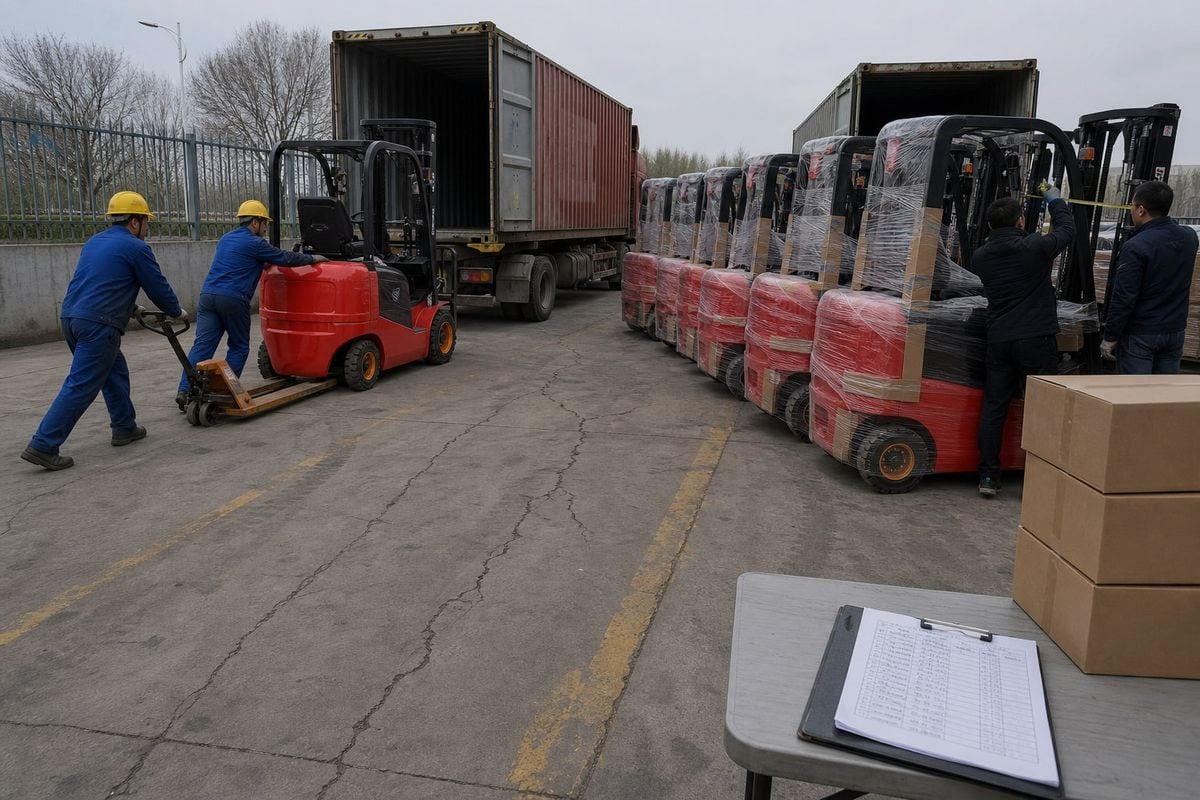
Container size directly changes your per-unit cost. A 20-foot container costs roughly USD 1,200–3,800 in ocean freight and fits one or two compact forklifts, while a 40-foot or 40HQ costs USD 1,800–5,800 but spreads that cost across three to five units.
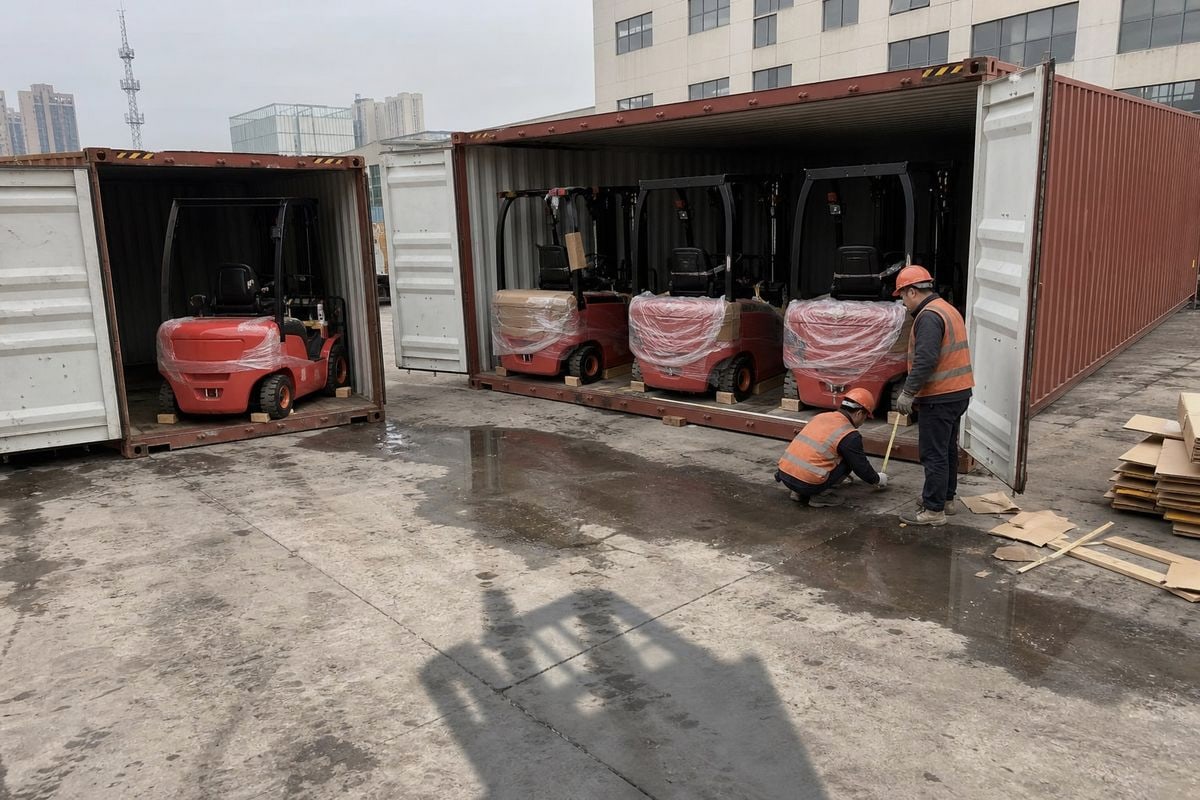
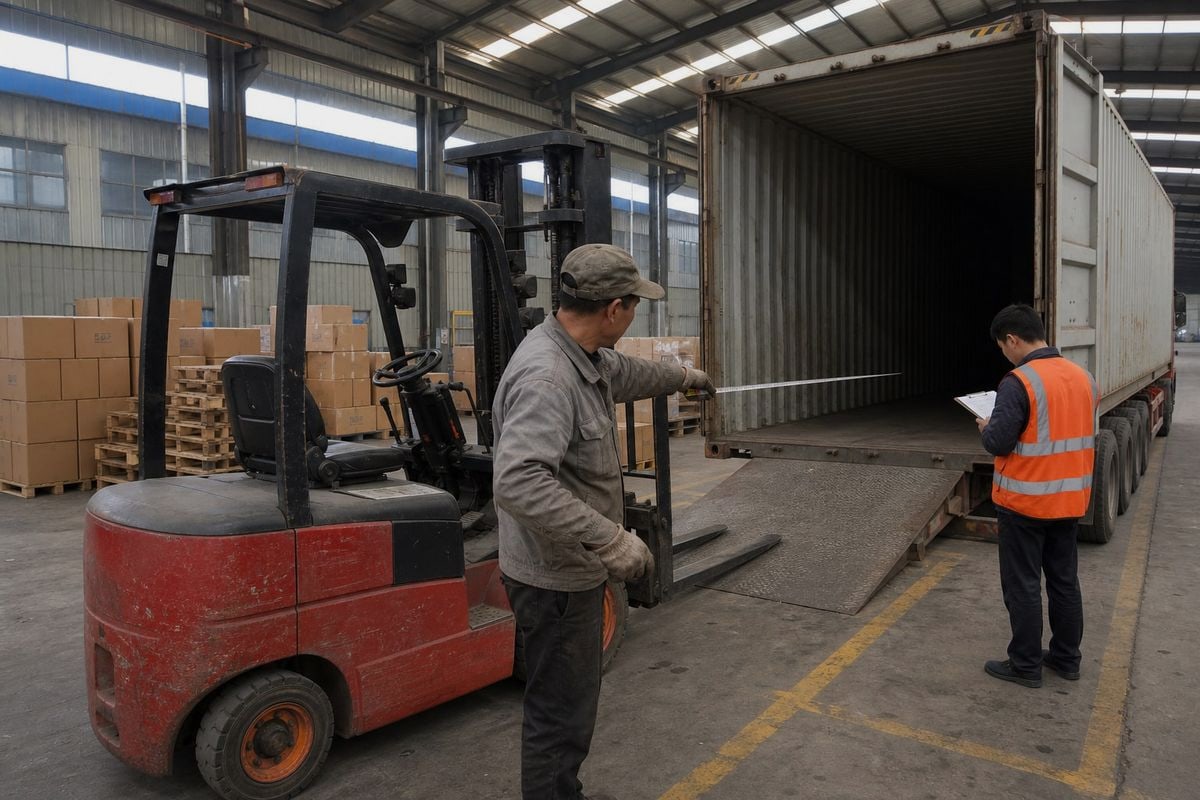
The math here matters more than almost any other decision you make. Ocean freight is priced per container, not per forklift. So the more machines you fit safely inside one box, the lower your coût au débarquement per unit becomes. When we plan container loading for our customers, we always start by collecting exact dimensions: overall length with forks, mast height in the lowered position, width, and service weight including the battery.
| Container | Ocean Freight (Est.) | Typical Capacity | Meilleur pour |
|---|---|---|---|
| 20FT | USD 1,200–3,800 | 1–2 compact units | Single machine orders |
| 40FT | USD 1,800–5,800 | 3–4 medium units | Small fleet orders |
| 40HQ | USD 1,800–5,800 | 3–5 units plus parts | Fleet plus accessories |
| LCL | Priced per CBM | 1 unit shared space | Very small, non-urgent cargo |
A container is only economical if you use its space. Forklift masts create awkward vertical shapes. Counterweights concentrate weight at one end. Our team builds a loading plan before booking, so weight distribution stays safe and cargo securing points are confirmed. We also fill dead space with chargers, spare parts, and forklift batteries where regulations allow. That free space is money you already paid for.
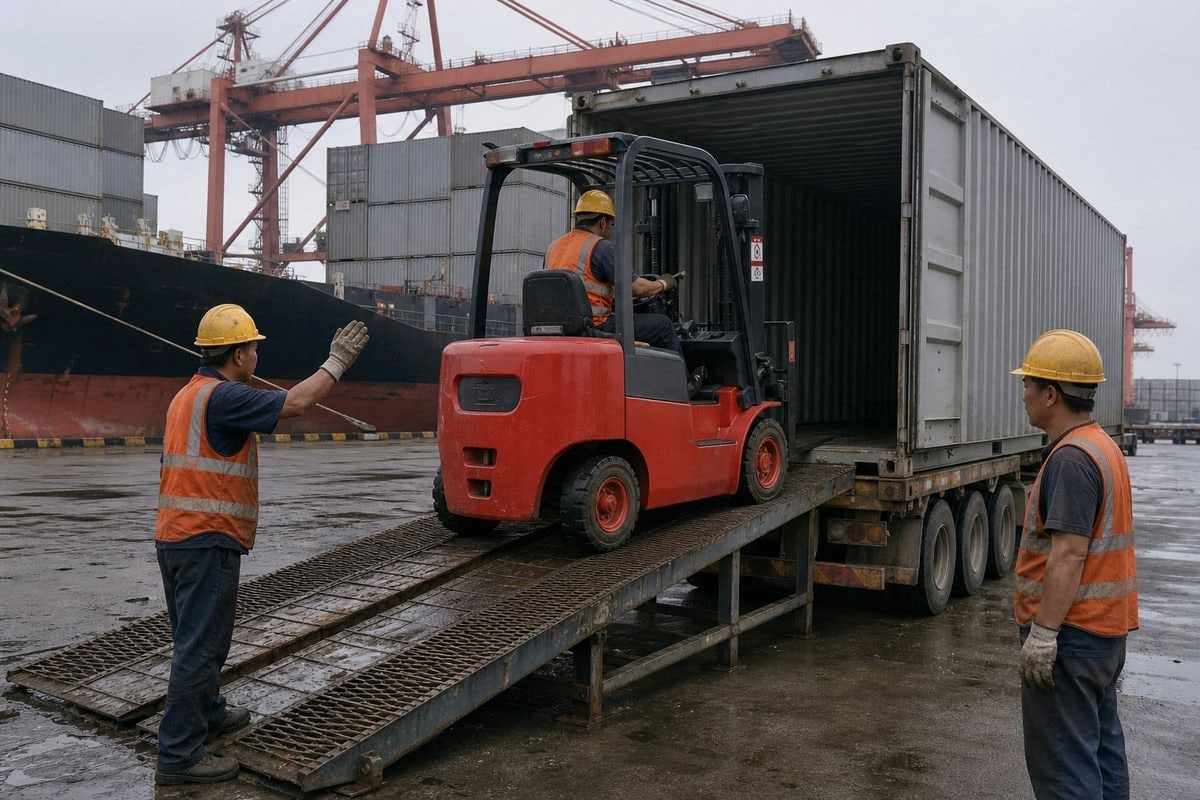
One more point. Very tall masts or wide chassis may not fit standard doors at all. In those cases, flatbed trailer transport to port and open-top or flat-rack equipment may be needed, which raises cost significantly. Confirm dimensions before the factory finishes production, not after.
Last year we had a container held at origin because a factory listed the wrong battery specification on the packing documents. That single paperwork error taught the buyer why lithium cargo needs extra care.
Lithium battery forklifts cost more to ship because carriers classify them as Class 9 dangerous goods, triggering DG surcharges of roughly USD 200–400 per booking, extra documentation, battery State of Charge compliance checks, restricted carrier acceptance, and certified handling requirements that standard cargo never faces.
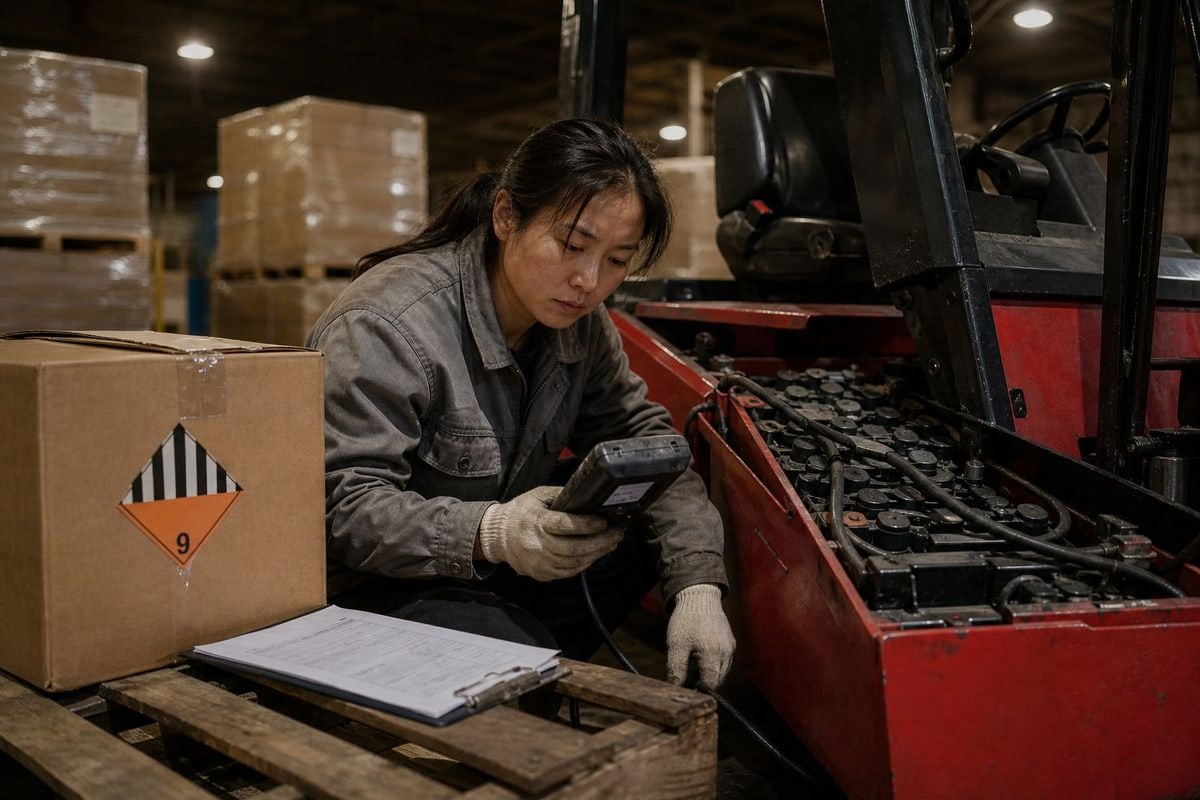
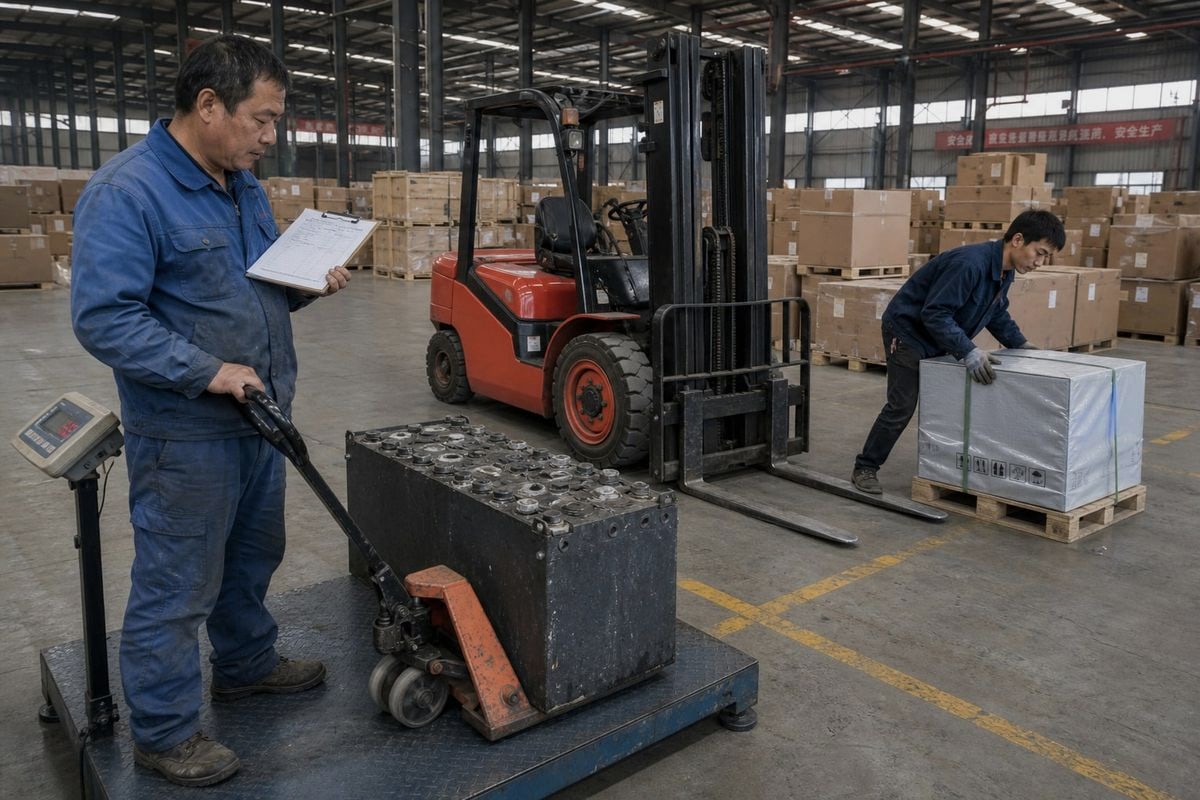
The battery is the single biggest difference between shipping an electric forklift and shipping ordinary machinery. Lead-acid units create some handling concerns, mostly around acid spill risk and battery weight considerations during loading. But lithium-ion units enter a different regulatory world entirely.
Lithium batteries fall under Class 9 dangerous goods rules 1 for sea transport. In our experience coordinating these bookings from China, that classification affects four things:
| Cost Item | Standard Forklift Cargo | Lithium Battery Forklift |
|---|---|---|
| DG surcharge | None | USD 200–400 per booking |
| Documentation | Standard export docs | DG declaration + battery reports |
| Carrier options | Wide | Restricted, book earlier |
| Manipulation | Normal | Certified DG procedures |
We always verify battery specifications with the factory before cargo leaves the workshop. Fixing a battery document at the factory costs nothing. Fixing it at the port costs storage fees, rebooking fees, and weeks of delay.
Early in my forwarding career, I learned that the cheapest quote on paper is often the most expensive shipment in reality. The missing charges always show up later, at the worst possible time.
Beyond base ocean freight, expect China inland pickup of USD 200–800, fuel surcharges tied to diesel prices, destination port handling, customs brokerage, import duties, cargo insurance at 0.2–0.5% of cargo value, liftgate or residential delivery fees, and possible demurrage or storage charges.

A base freight quote covers the ocean leg. Everything before and after that leg still costs money, and this is where quotes from different forwarders become impossible to compare unless you ask the right questions.
| Fee Category | Typical Range or Basis | When It Hits |
|---|---|---|
| China factory pickup | USD 200–800 | Before export |
| Fuel surcharges | Fluctuates with diesel prices | Both inland legs |
| Destination port handling | Varies by port | On arrival |
| Customs brokerage 3 & duties | Based on HS code and value | During clearance |
| Marine cargo insurance | 0.2–0.5% of cargo value | Optional but recommended |
| Liftgate delivery | Extra fee per stop | Livraison finale |
| Demurrage/storage | Daily charges | Only if delayed |
On the US side, the final trucking leg carries its own variables. Loading dock requirements matter a lot. A commercial warehouse with a dock can unload a forklift quickly. A residential address or a site without a dock needs liftgate delivery or even rigging services, and both add cost. As a comparison point, ground transport of a 5,000–10,000 lb forklift over 500 miles typically runs USD 800–1,500, while air freight for urgent compact cargo can hit USD 2,000–5,000. Freight class and NMFC codes also affect LTL shipping rates if you move spare parts separately from the machines. Oversized load permits can apply for very large units moving by flatbed.
My advice is simple. Ask for a DDP or all-in quote that names every charge from factory floor to your warehouse door. When we quote door-to-door, we list each line item so buyers can calculate landed cost before they confirm the purchase order, not after the container lands.
The trade-off we weigh most often for buyers is this: wait a few extra days to consolidate cargo from several factories, or ship each purchase separately and pay for half-empty space. Consolidation almost always wins.
Yes. Consolidating forklifts, batteries, chargers, and spare parts from multiple Chinese suppliers into one container eliminates duplicate pickup fees, documentation charges, and customs entries, while filling unused container space. This can meaningfully cut per-unit shipping cost compared to separate LCL shipments.
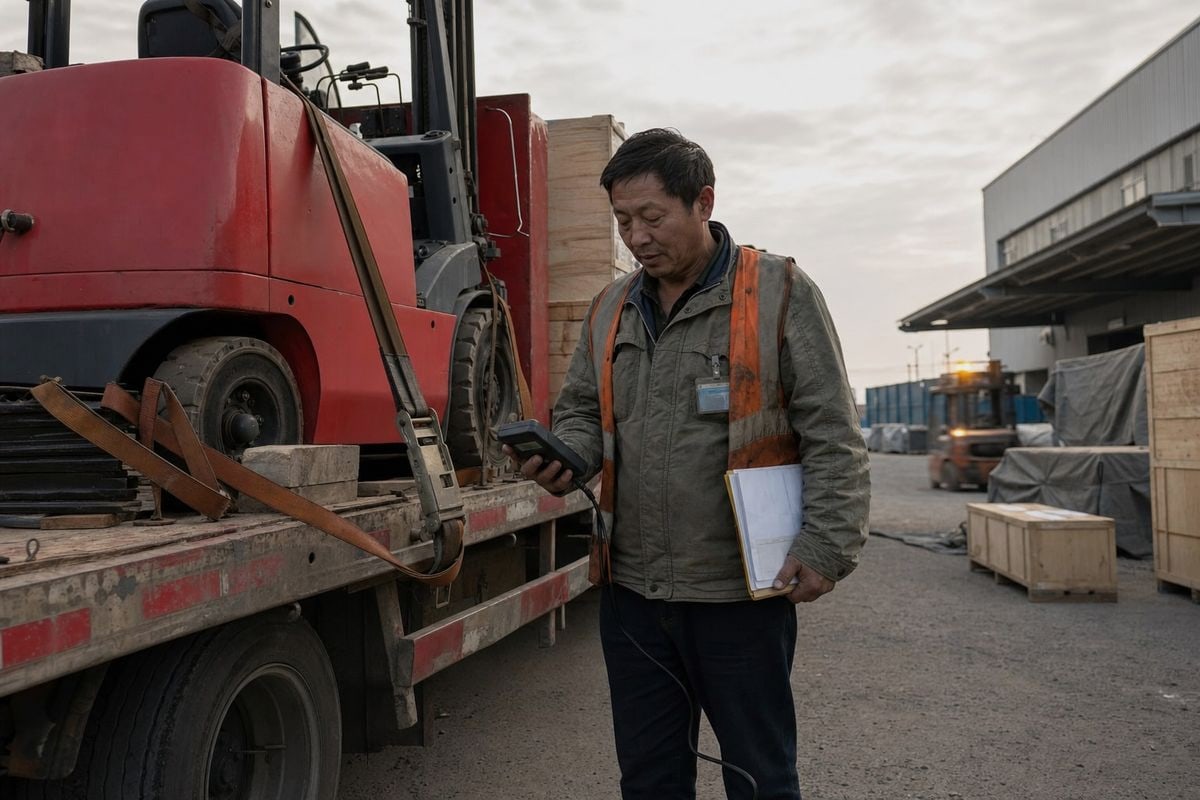
Many of our US customers buy the way David does: forklifts from Factory A, lithium batteries from Factory B, chargers from Factory C, and attachments or spare parts from two more suppliers. Shipped separately, each order pays its own inland trucking, its own export declaration, its own destination handling, and its own customs clearance. Those duplicated fixed costs add up fast.
Here is the process we run from our Zhengzhou base:
The savings are structural, not magical. One consolidated 40HQ replaces three or four small shipments. You pay one set of port charges instead of four. You clear customs once instead of four times. And the spare parts that would have paid volumetric LCL rates ride free in space you already purchased. The one caution I give buyers: consolidation only works when suppliers hit their production dates. We chase those dates directly with each factory, in Chinese, in their time zone, so a late charger order does not strand three finished forklifts in a warehouse.
Electric forklift shipping costs come down to container choice, battery compliance, hidden fees, and consolidation strategy. Control those four levers, and your landed cost becomes predictable instead of painful.
1. Official government safety regulations for the classification and transport of lithium batteries. ↩︎
2. The international authority on maritime safety and the IMDG Code for dangerous goods documentation. ↩︎
3. Authoritative government resource explaining the requirements for customs clearance and importing commercial goods. ↩︎