- +8618603825129
- [email protected]

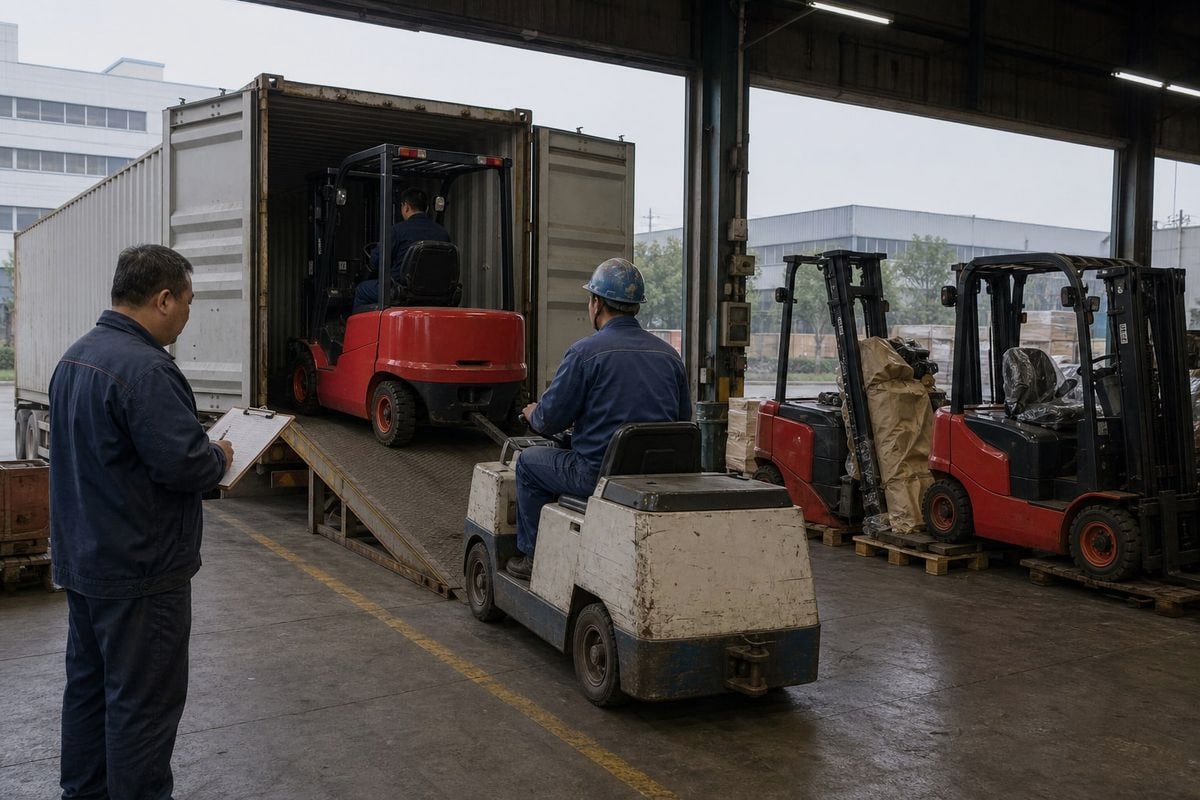
Guessing how many electric forklifts fit in a 40HQ container can wreck your landed cost. One wasted container slot means thousands of dollars lost. Our loading team in Zhengzhou solves this puzzle every week for [importers](https://mbmlog.com/?p=11621).
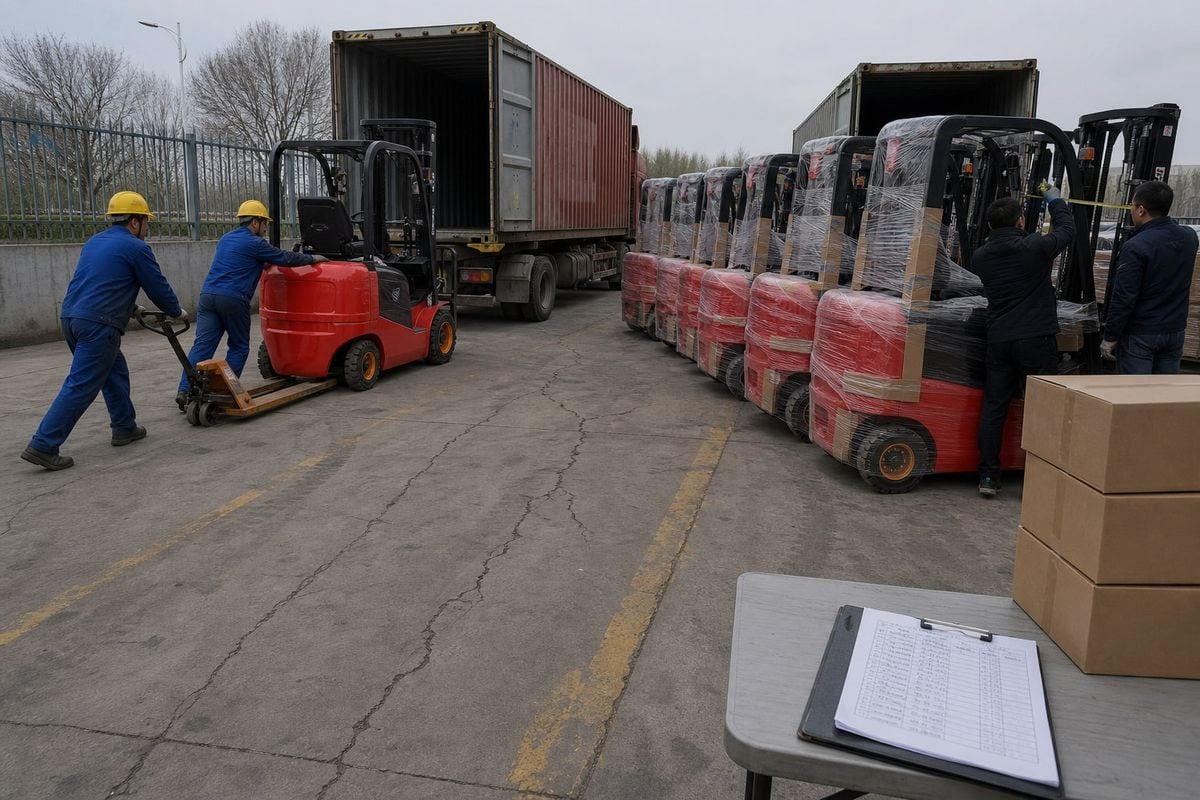
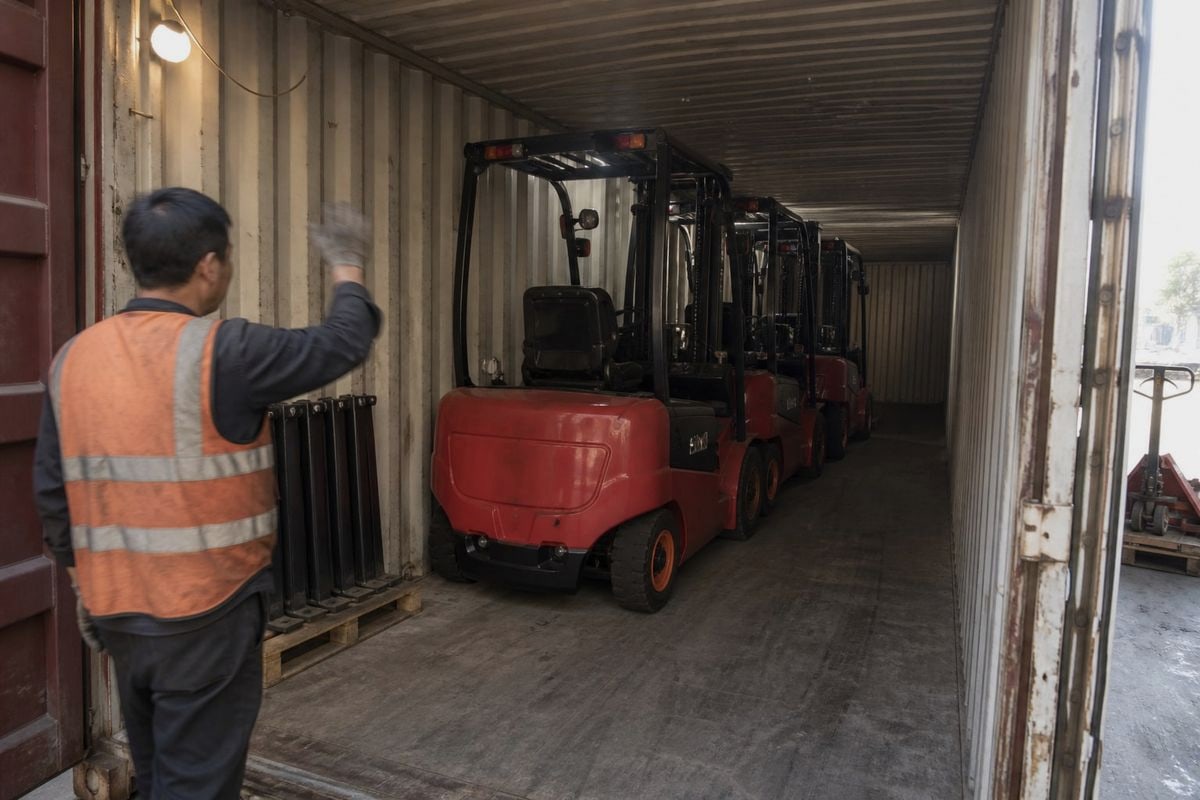
A 40HQ container typically fits 3 to 4 fully assembled 2.0–2.5 ton electric forklifts, or 6 to 7 units when shipped Semi-Knocked Down (SKD). Compact electric pallet trucks can reach 15–25 units, while large 3-ton reach trucks may fit only 2 per container.
The exact number depends on your forklift model, mast height, and loading method. Below, I break down each factor so you can plan your shipment with confidence.
Last year, a US dealer sent us photos of forklifts that arrived scratched and shifted after using a cheap forwarder. Our container loading plans are designed to prevent exactly that outcome.
Without risking transit damage, a 40HQ container safely holds 3–4 assembled 2.0–2.5 ton electric counterbalance forklifts, or 6–7 SKD units with masts detached. Each unit must be lashed to floor rings with heavy-duty straps and secured with timber blocking and bracing.
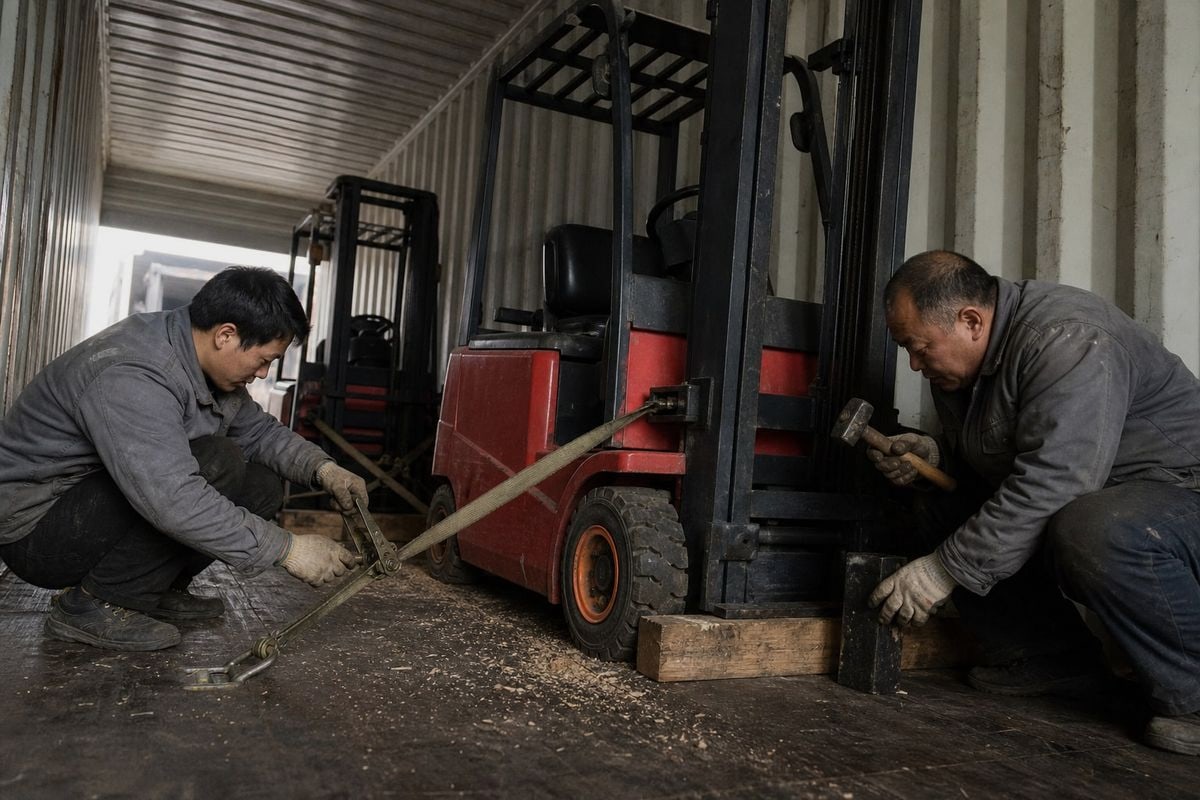
The number of forklifts you can load and the number you can load safely are two different things. I have seen suppliers squeeze extra units into a container by skipping proper securing. That gamble rarely pays off. During a Pacific crossing, a container can pitch and roll for weeks. An unsecured 3,000 kg forklift becomes a battering ram.
Here is what we typically achieve in a 40HQ when cargo safety comes first:
| Equipment Type | Assembled | SKD / Disassembled Shipping |
|---|---|---|
| 2.0–2.5 ton electric counterbalance forklift | 3–4 units | 6–7 units |
| Compact electric pallet trucks | 15–25 units | 25+ units |
| Electric stackers | 8–12 units | 12–16 units |
| 3-ton reach / multi-directional trucks | 2 units | 3–4 units |
Lashing and securing are not optional extras. Every forklift we load gets strapped to the container's floor lashing rings. Timber blocking and bracing goes between units and against the container walls to stop any forward or lateral shift. Wheels are chocked. Forks are lowered flat or removed.
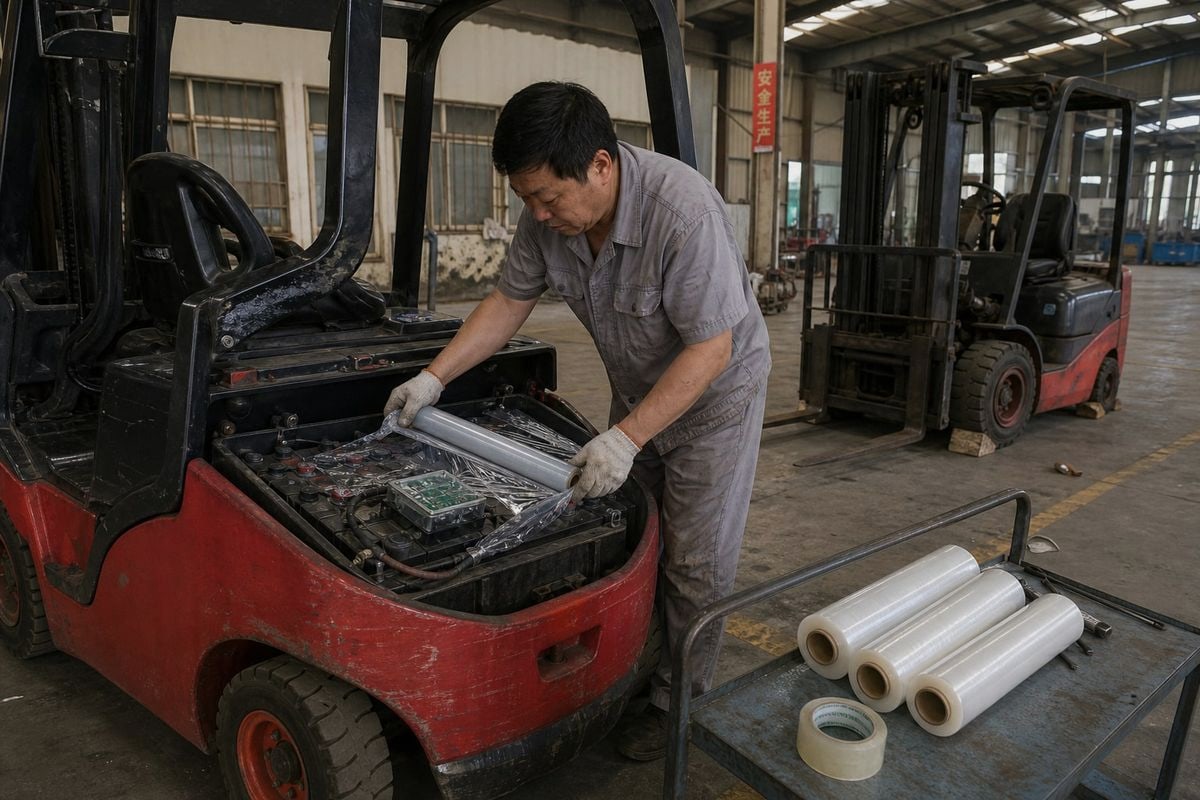
There is one more risk many buyers overlook: humidity. Sea transit exposes electronics to weeks of moist salt air. We recommend Vapor Corrosion Inhibitor 1 (VCI) shrink-wrapping over the PCB controllers and battery terminals. Without it, a forklift can arrive looking perfect but fail to power on. Repairing corroded electronics at destination costs far more than the wrapping does.
Whenever a buyer asks me for a freight quote, my first three questions are always the same: What are the shipping dimensions? What is the mast height? Assembled or SKD?
Five factors determine 40HQ capacity: overall shipping dimensions, collapsed mast height versus the 2.58m door opening, chassis width versus the 2.35m internal width, total weight against the 28.6-ton payload, and whether the supplier ships units assembled or Semi-Knocked Down.
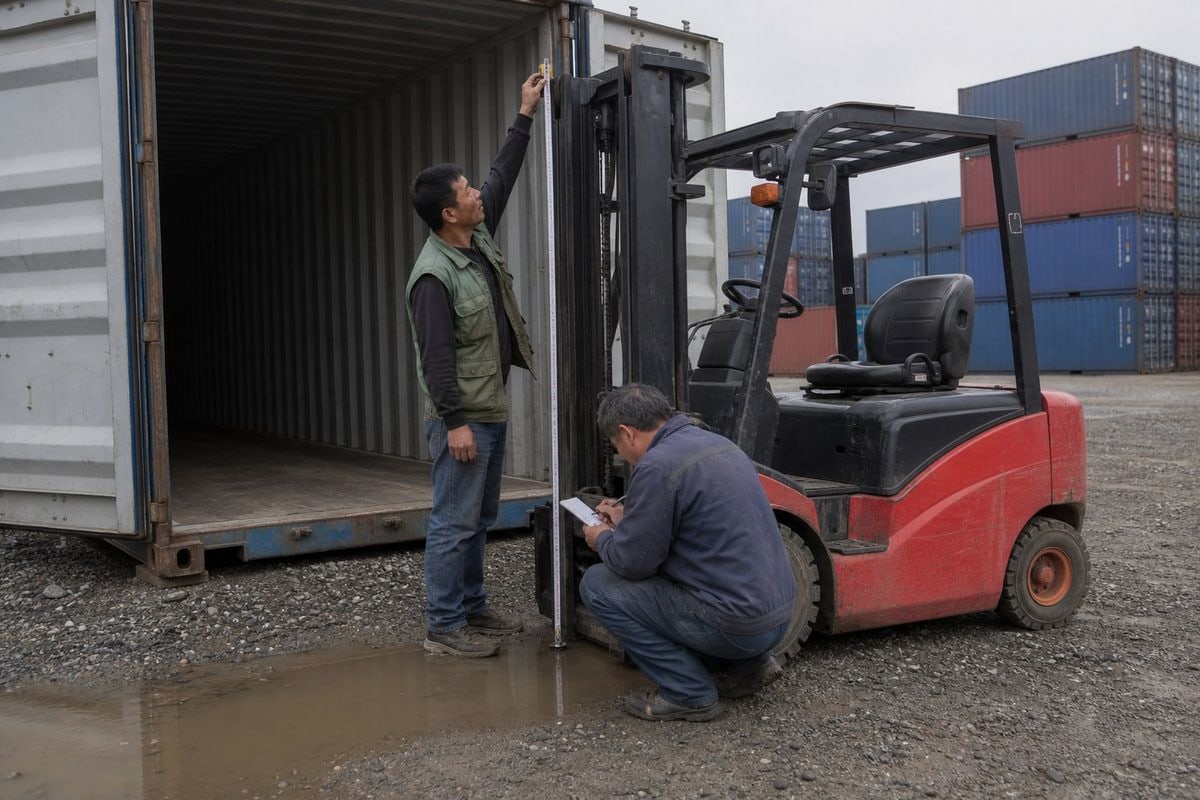
Most buyers assume weight is the limit. In practice, it almost never is. A 40HQ offers roughly 28.6 tons of payload capacity, but forklifts "cube out" the container long before they "weigh out" it. Four assembled 2.5-ton electric forklifts weigh around 16 tons combined. You run out of usable floor space first.
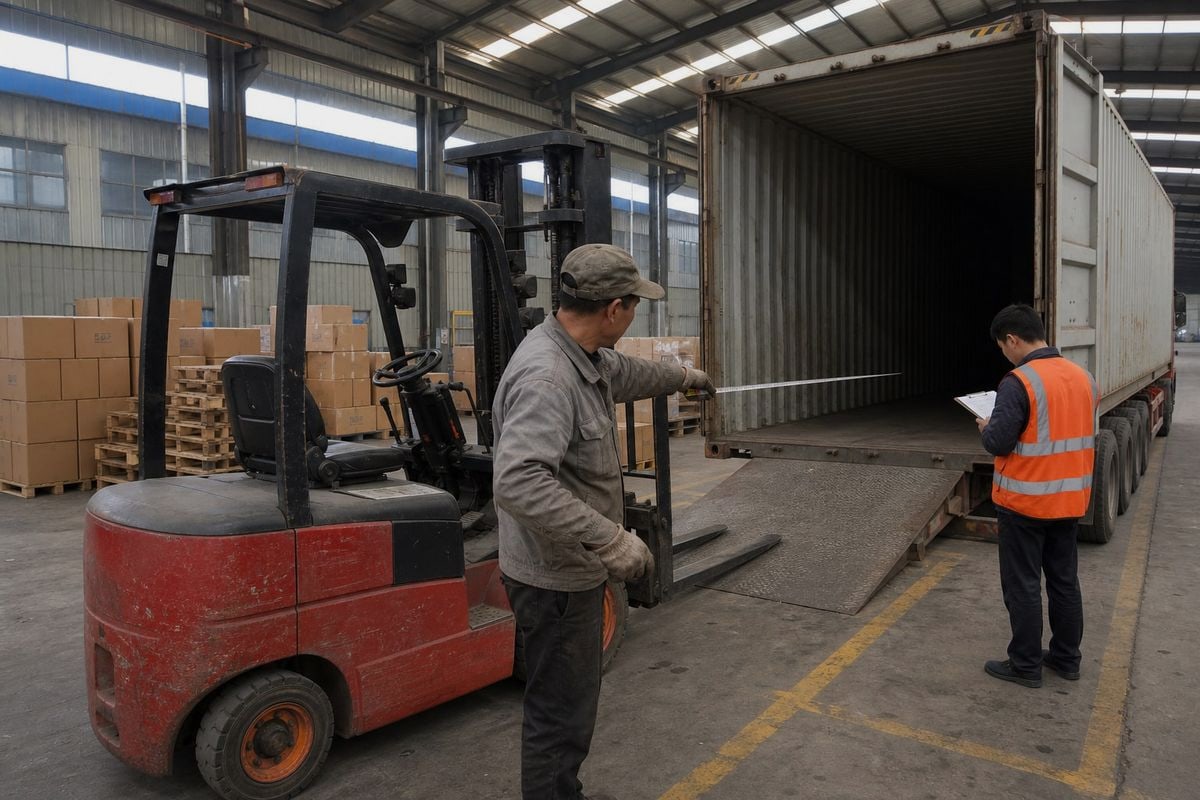
The 40HQ door opening 2 height is approximately 2.58 meters. Any forklift with a collapsed mast height above that simply cannot roll in. Many standard duplex masts collapse to around 2.0–2.2 meters, which works. Triplex masts and full free-lift masts often exceed the limit. In those cases, we arrange for the mast to be detached and shipped alongside the chassis.
Les internal width 3 of a 40HQ is about 2.35 meters. A typical 2-ton electric forklift chassis measures 1.1–1.2 meters wide. Two units side by side need 2.2–2.4 meters plus clearance for blocking and bracing. It does not fit. So forklifts load in a single line, which is why floor length becomes the binding constraint.
There is a technique we use often: interlocking placement. By alternating the direction of every other forklift and removing the forks, the counterweight of one unit nests beside the mast area of the next. This can recover up to 15% of wasted floor space — sometimes enough to fit one additional unit.
| Constraint | 40HQ Specification | Typical 2-ton Electric Forklift |
|---|---|---|
| Door opening height | ~2.58 m | Collapsed mast: 2.0–2.2 m (duplex) |
| Internal width | ~2.35 m | Chassis width: 1.1–1.2 m |
| Payload capacity | ~28.6 tons | ~3.0–4.0 tons per unit |
| Internal length | ~12.03 m | Length with forks: 3.0–3.5 m |
One trade-off comes up in almost every booking we handle: the 40HQ often costs nearly the same as a standard 40FT, yet gives you roughly 30 cm of extra height.
Choose a 40HQ for shipping electric forklifts. It offers about 2.69m internal height versus 2.39m in a standard 40FT, at nearly identical ocean freight costs. The extra 30cm allows taller collapsed masts to enter assembled, avoiding disassembly labor and reassembly risk.
For a quick decision, here is how the two containers compare for material handling equipment:
| Fonctionnalité | 40FT (40GP) | 40HQ (High Cube) |
|---|---|---|
| Internal height | ~2.39 m | ~2.69 m |
| Door opening height | ~2.28 m | ~2.58 m |
| Internal length | ~12.03 m | ~12.03 m |
| Internal width | ~2.35 m | ~2.35 m |
| Payload capacity | ~28.7 tons | ~28.6 tons |
| Meilleur pour | Low-profile pallet trucks, stackers | Counterbalance forklifts with masts |
Notice that the floor dimensions are identical. The 40HQ does not let you load more forklifts across or along the floor. What it changes is which forklifts can enter at all.
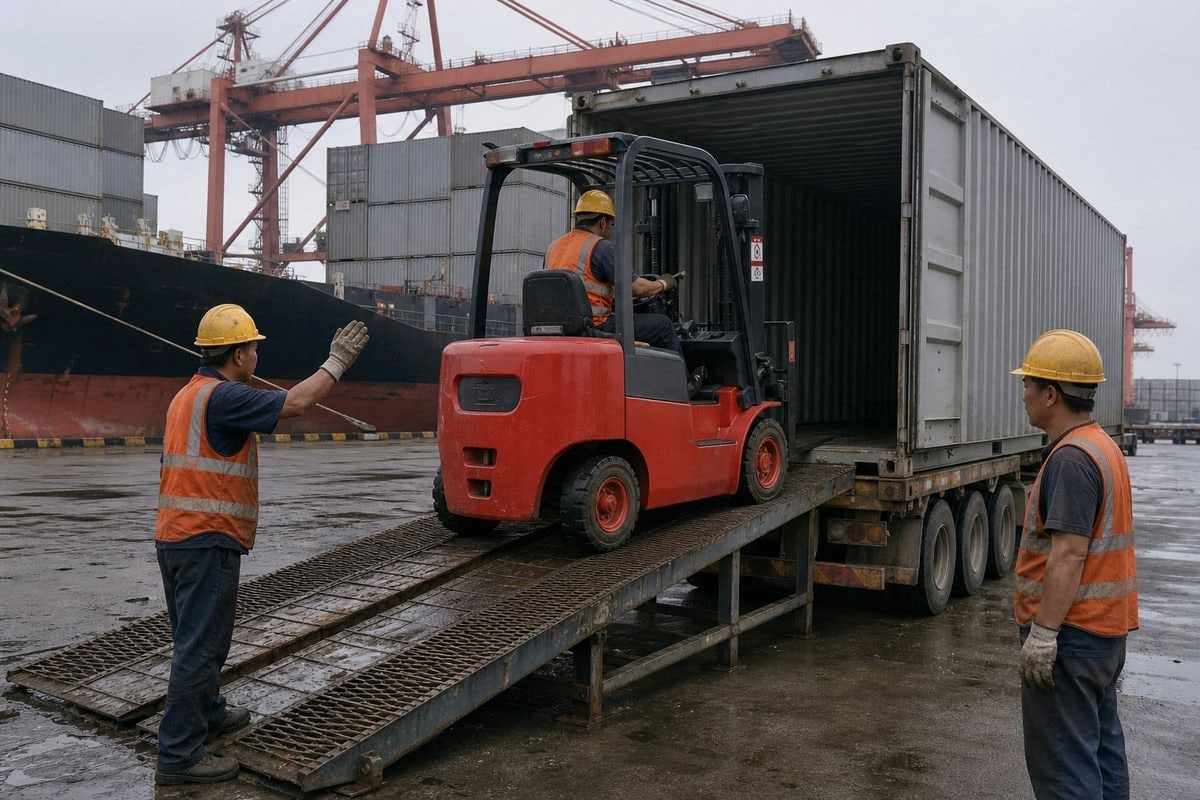
A standard 40FT has a door opening of roughly 2.28 meters. Many electric counterbalance forklifts have collapsed mast heights of 2.1–2.3 meters. That leaves almost no clearance in a 40GP — sometimes none at all. The 40HQ door opening of about 2.58 meters gives comfortable clearance for most duplex masts, plus room for ramp angles during driving or towing the unit inside.
If your entire order is low-profile equipment — electric pallet trucks, walkie stackers, or SKD chassis with masts removed — a 40GP works fine. In some port pairs during tight seasons, 40GP availability is better, and the rate can be slightly lower. But for mixed loads or assembled counterbalance units, I book the 40HQ almost every time. The small rate difference is cheap insurance against a forklift stuck at the container door on loading day. In our experience shipping from Chinese factories to the US, the reassembly labor saved at destination alone justifies the high cube.
A distributor once asked us to consolidate forklifts from one factory, lithium batteries from a second, and chargers from a third — into one container. We do this kind of multi-supplier consolidation regularly.
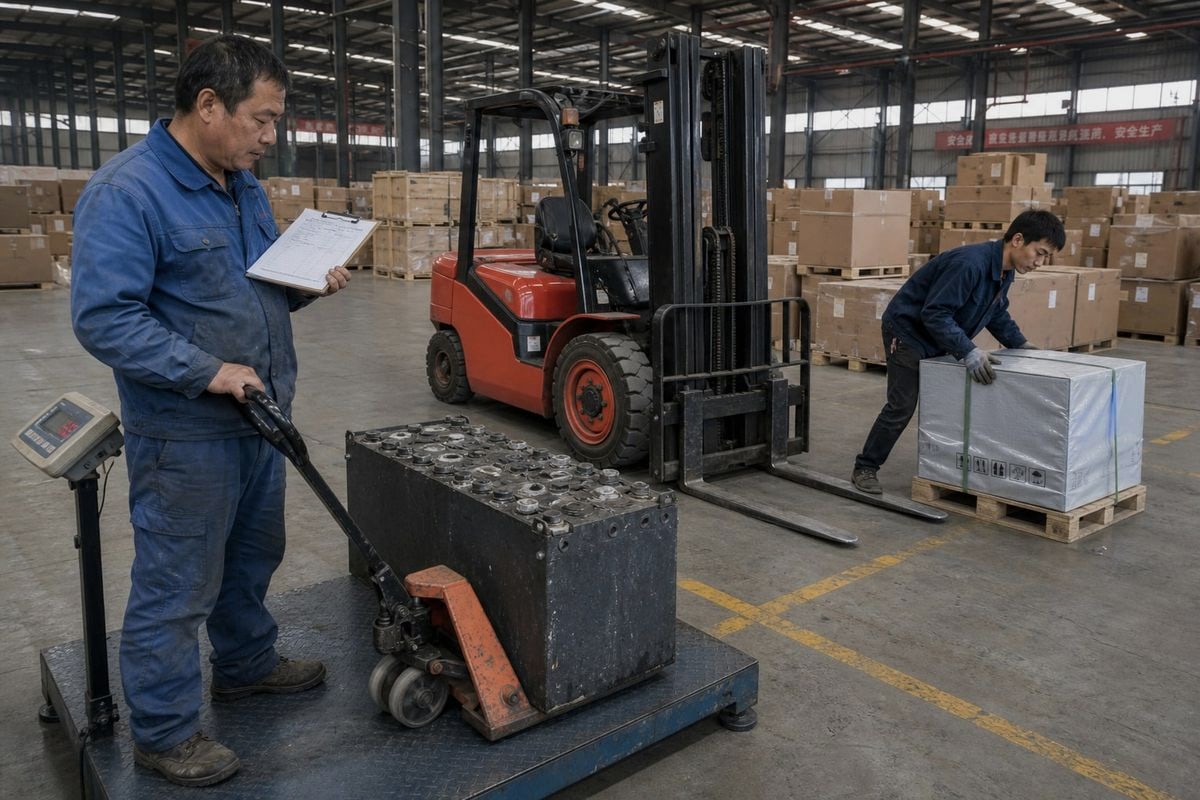
Yes, forklift batteries and chargers can ship in the same 40HQ container as the forklifts. Lithium batteries require UN38.3 test documentation and Class 9 dangerous goods declaration, while chargers and lead-acid batteries in sealed condition face simpler requirements. Proper crating and securing are mandatory.
Batteries are where inexperienced forwarders get importers into trouble. The rules differ by battery chemistry and by whether the battery ships installed or separately, so let me walk through the practical picture we manage for clients every month.
Lithium-ion batteries installed in equipment, or shipped separately, generally fall under Class 9 dangerous goods 4 for ocean freight. That means the carrier needs proper declaration, UN38.3 test summaries, and compliant packaging before booking is accepted. Miss a document and the container sits at the port while storage charges climb.
There is a useful side benefit to lithium, though. Lithium-ion models are often 15–20% lighter than lead-acid versions. That reduces total container weight and lowers the risk of exceeding axle load limits — roughly 12,000 lbs per wheel matters when the loaded container travels by truck at destination.
One strategy we sometimes recommend: ship the batteries in separate, specialized crates rather than installed. This can simplify the hazardous materials documentation for the forklift chassis itself, and it allows more flexible positioning of the non-hazardous components inside the container. Chargers, forks, spare parts, and attachments then fill the gaps above and between chassis units — palletized, strapped, and braced so nothing rests against battery casings.
Done right, consolidation cuts your ocean freight costs per unit significantly. Done wrong, it triggers port holds. The difference is preparation before the cargo ever reaches the terminal.
A 40HQ fits 3–4 assembled electric forklifts or 6–7 SKD units. Verify mast height, dimensions, and battery documents early — then loading, securing, and consolidation protect your landed cost.
1. Technical explanation of VCI technology used to protect electronics from salt air during transit. ↩︎
2. Authoritative source providing standardized ISO dimensions for 40HQ container door openings. ↩︎
3. Authoritative container specifications from a global carrier to verify 40HQ internal dimensions. ↩︎
4. Official government guidance on shipping lithium batteries as hazardous materials for ocean transport. ↩︎