- +8618603825129
- [email protected]

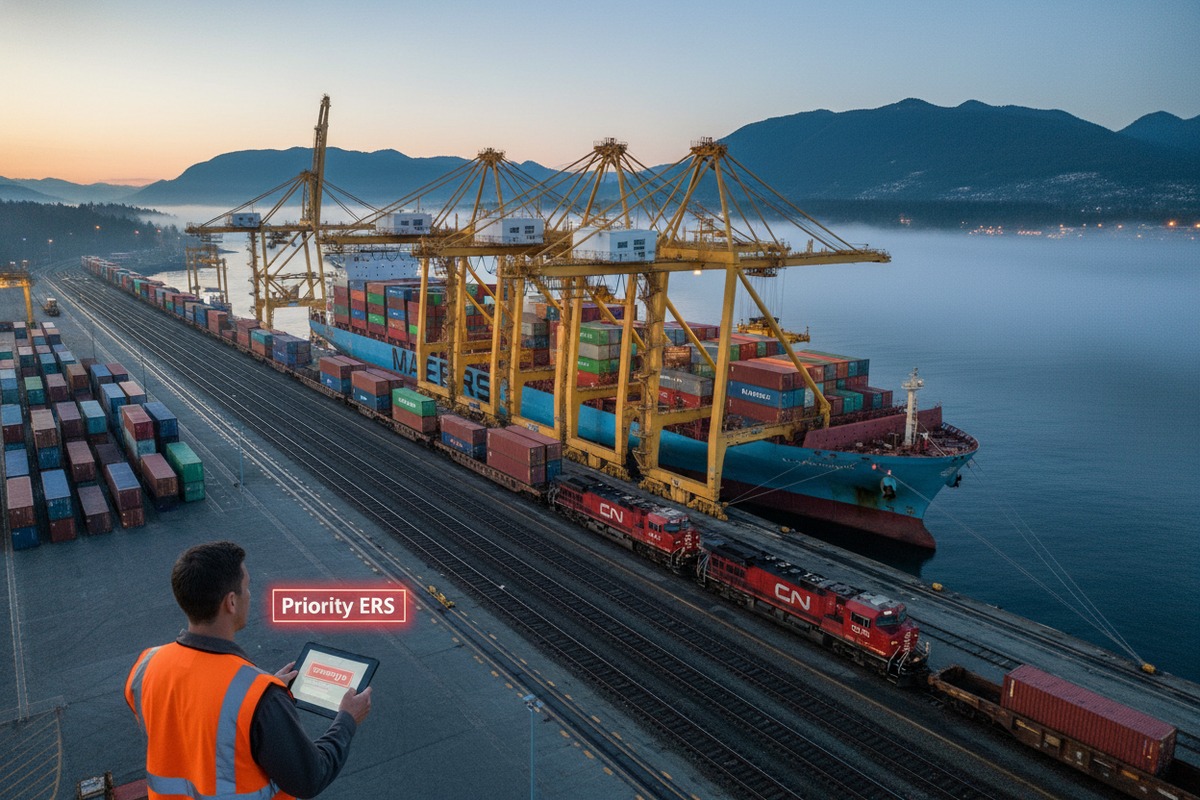
Every peak season, our warehouse team watches helplessly as containers sit at Canadian ports 1 for weeks, bleeding storage fees and killing delivery promises.
To access expedited rail services from Canadian ports, request Expedited Rail Service (ERS) through your steamship line at least 72 hours before vessel arrival. ERS is available at Vancouver, Prince Rupert, Halifax, and Montreal, costing $225–$450 per container, and cuts port dwell time from 7–20 days down to 3–5 days.
This guide walks you through the exact steps, costs, and timing to secure priority rail loading intermodal rail 2. We cover every major Canadian port, real rate benchmarks, Amazon FBA considerations, and how to avoid hidden customs fees with DDP shipping 3 through Canadian rail corridors.
When our operations team first started routing shipments through Canadian ports, we assumed all rail services were priced the same. That mistake cost us thousands in unnecessary surcharges and wasted transit days.
The most competitive expedited rail rates come from comparing ERS fees across ports, booking early, and working with a logistics provider who has direct steamship line relationships. Vancouver Deltaport offers the lowest ERS at $275/container, while Halifax charges $225/container—both significantly cheaper than Centerm's $450/container.
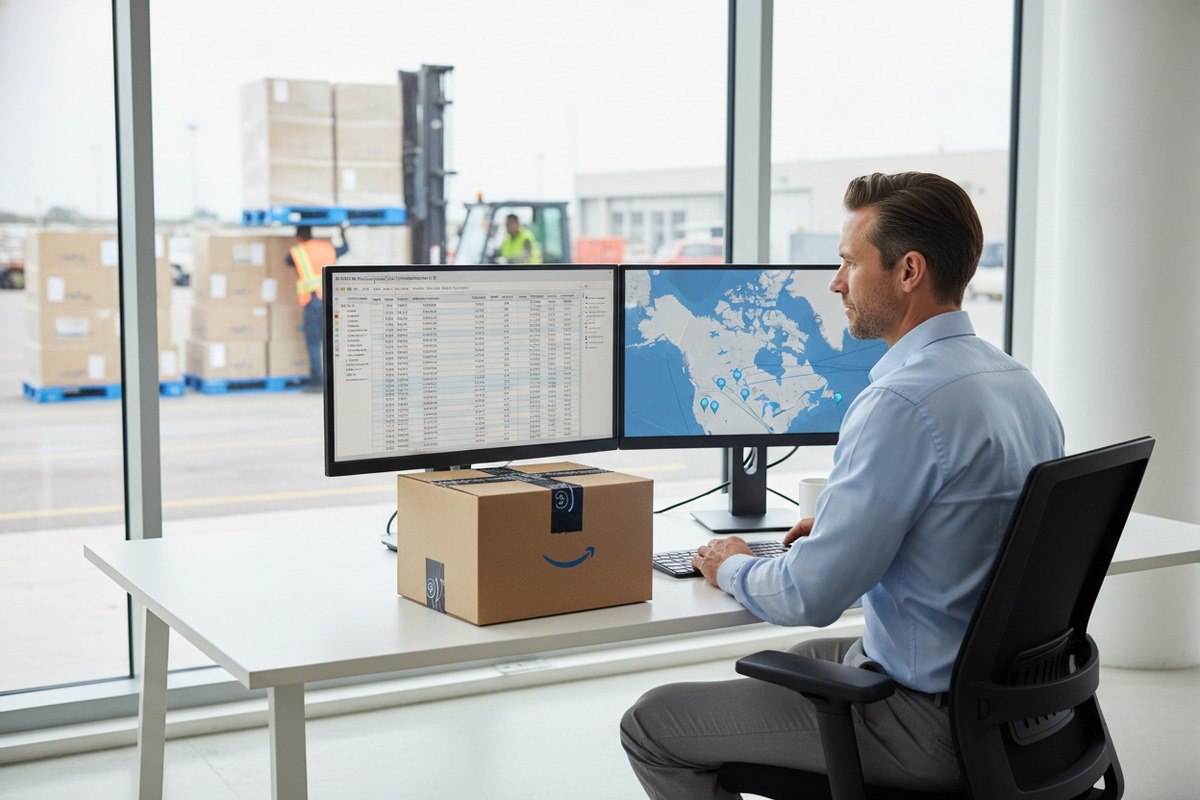
ERS stands for Expedited Rail Service. It is a paid priority service at major Canadian ports. Expedited Rail Service (ERS) 4 When your container arrives by ocean vessel, it normally waits in a queue to get loaded onto a CN or CP rail car. Without ERS, that wait can be 7 to 20 days. With ERS, your container gets loaded within 3 to 5 days. The service only speeds up the port-to-rail segment. It does not change the actual rail transit time once your container is on the train.
Think of it this way. ERS is like buying a fast pass at a theme park. You still ride the same rollercoaster. You just skip the line to get on it.
Here is a breakdown of current ERS fees across Canadian ports. These rates are in USD and reflect 2026 pricing.
| Port / Terminal | ERS Fee per Container (USD) | BL Fee (USD) | Best For |
|---|---|---|---|
| Vancouver – Deltaport | $275 | $125 | General cargo to all inland hubs |
| Vancouver – Centerm | $450 | $125 | Only Montreal/Toronto routes |
| Halifax | $225 | $125 | East Coast cargo to Ontario/Quebec |
| Prince Rupert | $330 | $125 | Asia-origin cargo to Midwest/Prairies |
| Montreal | Varies by carrier | $125 | Eastern Canada and US Northeast |
Start by choosing your port based on your inland destination. If your cargo is heading to Toronto, Vancouver Deltaport at $275 is far cheaper than Centerm at $450. If your goods originate from Asia and need to reach Chicago or Minneapolis, Prince Rupert often offers faster overall transit despite its slightly higher ERS fee.
Next, submit your ERS request early. The cutoff is 48 to 72 hours before vessel arrival. Requests are handled first come, first served. Late requests often get denied, especially during peak season from August through November.
Work with a freight forwarder or logistics provider who has volume agreements with CN and CP rail. Bulk commitments can sometimes unlock discounted ERS rates or guaranteed allocation slots. Our team at MBMLOG negotiates these allocations quarterly so our clients avoid last-minute scrambles.
One important note: ERS does not apply to refrigerated containers. CN and CP railways exclude reefer containers from ERS because cold chain cargo requires specialized plug-in yards, dedicated rail cars, and temperature-controlled handling. If you ship perishables, plan for standard rail timelines and budget extra dwell days.
During off-peak months like January through April, standard rail queues at most Canadian ports shrink to 5 to 7 days. In those windows, paying for ERS may not save enough time to justify the cost. Monitor port congestion reports weekly and only activate ERS when dwell times exceed your tolerance.
Our logistics planners spend hours every week optimizing transit routes from Vancouver into the US. The difference between a well-planned route and a default one can be 10 days or more.
The fastest way to move containers from Vancouver to US inland hubs is to combine ERS priority loading at Deltaport with CN or CP intermodal rail to cross-border ramps in Chicago, Memphis, or Detroit. This approach delivers containers in 10–15 total days versus 20–30 days on standard rail without ERS.
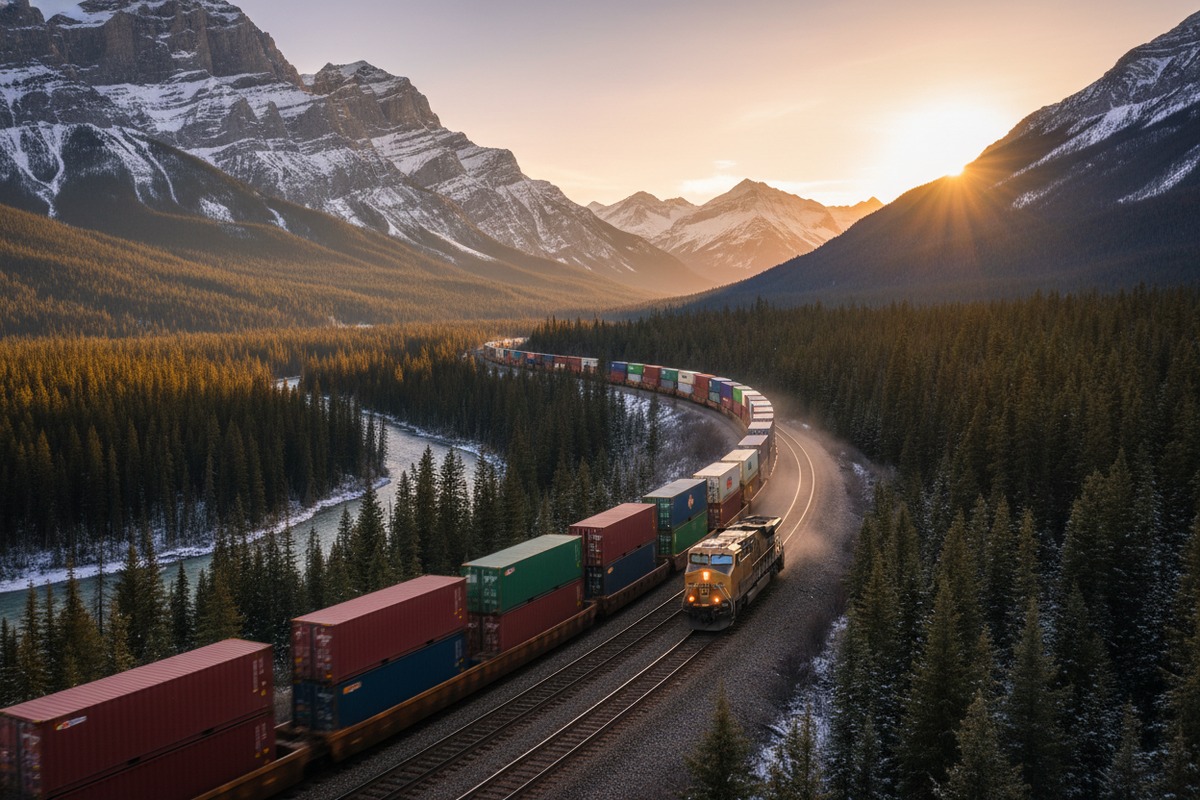
Understanding total transit time means breaking it into three segments: port dwell, rail in-transit, and last-mile drayage 6. Here is a realistic breakdown for the most common US destinations from Vancouver.
| Destination | Port Dwell (with ERS) | Rail In-Transit | Last-Mile Drayage | Total Transit |
|---|---|---|---|---|
| Toronto | 3–5 days | 7–10 days | 1–2 days | 11–17 days |
| Chicago | 3–5 days | 5–7 days | 1–2 days | 9–14 days |
| Memphis | 3–5 days | 7–9 days | 1–2 days | 11–16 days |
| Detroit | 3–5 days | 6–8 days | 1–2 days | 10–15 days |
| Minneapolis | 3–5 days | 5–7 days | 1–2 days | 9–14 days |
Without ERS, add 7 to 15 extra days to the port dwell column. That turns a 12-day Chicago run into a potential 27-day ordeal.
Both CN and CP operate extensive intermodal networks from Vancouver. CN offers strong connectivity to Chicago, Memphis, and the US Midwest through its central corridor. CP (now CPKC after the Kansas City Southern merger) provides excellent routing into Detroit, Minneapolis, and increasingly into Mexico-bound corridors.
For US-bound cargo, ask your logistics provider which railroad serves your destination ramp most directly. A direct single-line haul is almost always faster than an interchange between two railroads.
Do not overlook Prince Rupert. This port sits 500 miles north of Vancouver and handles fewer vessels. That means less congestion and faster terminal turns. CN operates a dedicated intermodal facility there. Containers often clear the port faster even without ERS. For cargo heading to Edmonton, Calgary, Chicago, or Memphis, Prince Rupert plus ERS can shave 1 to 3 days off total transit compared to Vancouver.
When rail crosses from Canada into the US, your shipment clears US Customs 7 at the border or at the inland destination ramp. Pre-clear your customs documentation before the container reaches the border. An Importer Security Filing (ISF) 8 should be submitted at least 24 hours before the vessel departs the origin port. Work with a customs broker who understands both Canadian and US requirements. Delays at the border can erase every hour you saved with ERS.
Our team handles this dual-country clearance daily. We file ISF, coordinate with US Customs and Border Protection, and ensure all HTS codes 9 and duty calculations are locked in before the container ever touches Canadian soil.
We ship hundreds of Amazon FBA containers through Canadian rail corridors every month. The number one reason FBA inventory gets stuck is not the rail itself. It is paperwork errors and missed cutoff windows.
To prevent Amazon FBA delays during Canadian rail transfers, submit your ERS request 72 hours early, pre-clear US customs before the vessel arrives, ensure all FBA labeling meets Amazon's requirements before the container ships, and choose a logistics provider experienced in FBA-compliant delivery to Amazon fulfillment centers.
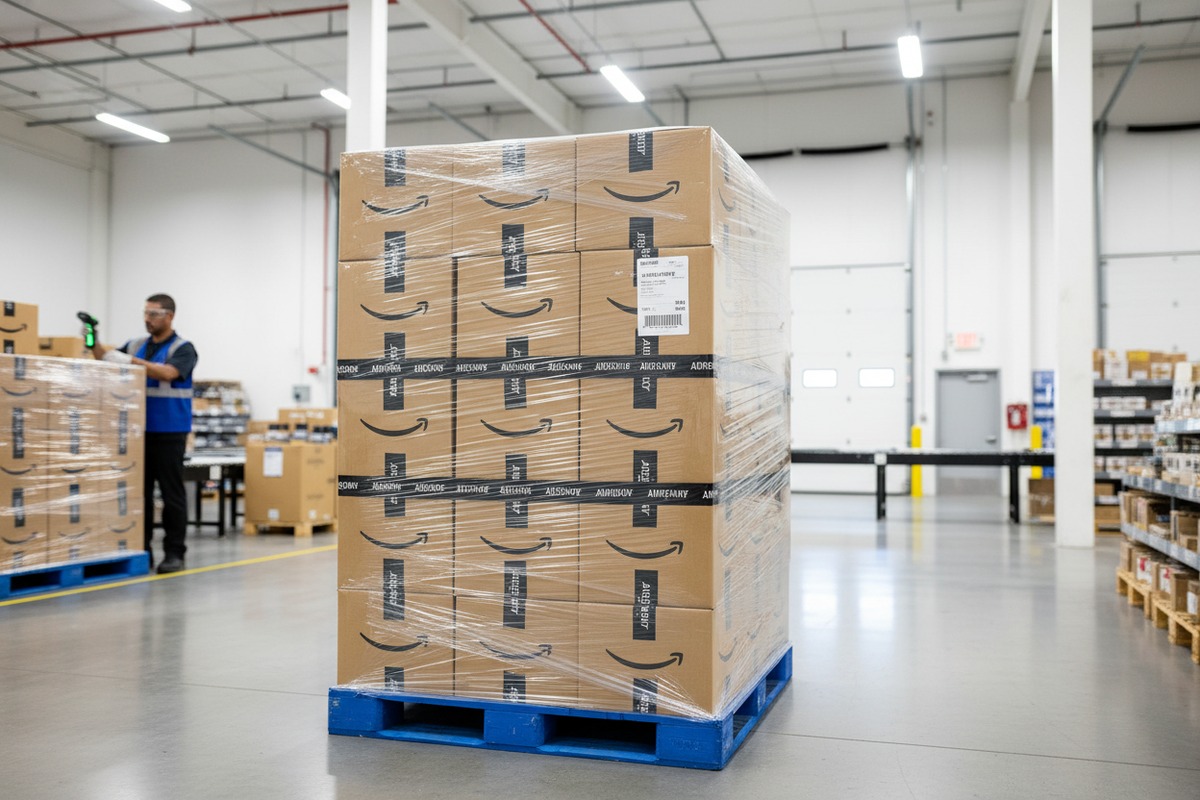
Amazon FBA warehouses 10 operate on strict receiving windows. If your container arrives outside the scheduled delivery appointment, Amazon may refuse it, charge penalties, or delay check-in by days. Every day your inventory sits unprocessed is a day you lose sales and risk stockouts that tank your product ranking.
Rail transit from Canada adds complexity because your cargo crosses an international border. That means two sets of customs requirements, potential inspection holds, and variable rail transit times that make precise appointment booking difficult.
Follow this sequence to protect your FBA inventory:
| Delay Cause | Frequency | Solution |
|---|---|---|
| Late ERS request (denied) | High during peak season | Submit request 72+ hours early |
| Customs hold at US border | Medium | Pre-file ISF and entry; use experienced broker |
| Wrong FBA labels on cartons | Medium | Verify labels before shipment leaves origin |
| Missed Amazon delivery appointment | High | Book appointment after rail ramp departure confirmed |
| Railcar shortage / weather delay | Low to Medium | Build 3–5 day buffer into inventory planning |
| Container damage in transit | Low | Use proper load bracing and dunnage |
The smartest Amazon sellers we work with build a 5 to 7 day buffer into their reorder calculations when using Canadian rail. This buffer accounts for occasional ERS denials, winter weather slowdowns, and border inspection delays. It is far cheaper to carry a few extra days of safety stock than to lose your Buy Box because of a stockout.
During Q4 peak season, increase that buffer to 10 to 14 days. Canadian ports get congested. Rail networks stretch thin. ERS helps, but it cannot override systemic capacity constraints.
Our clients come to us frustrated. They tried managing Canadian rail logistics on their own and got hit with unexpected duty reassessments, terminal storage charges, and broker fees nobody mentioned upfront.
The best DDP logistics providers for Canadian rail shipping offer all-inclusive pricing that covers ocean freight, ERS fees, rail transport, customs duties, taxes, and last-mile delivery. Look for providers with direct steamship line partnerships, licensed customs brokerage in both Canada and the US, and proven experience handling cross-border intermodal DDP shipments.
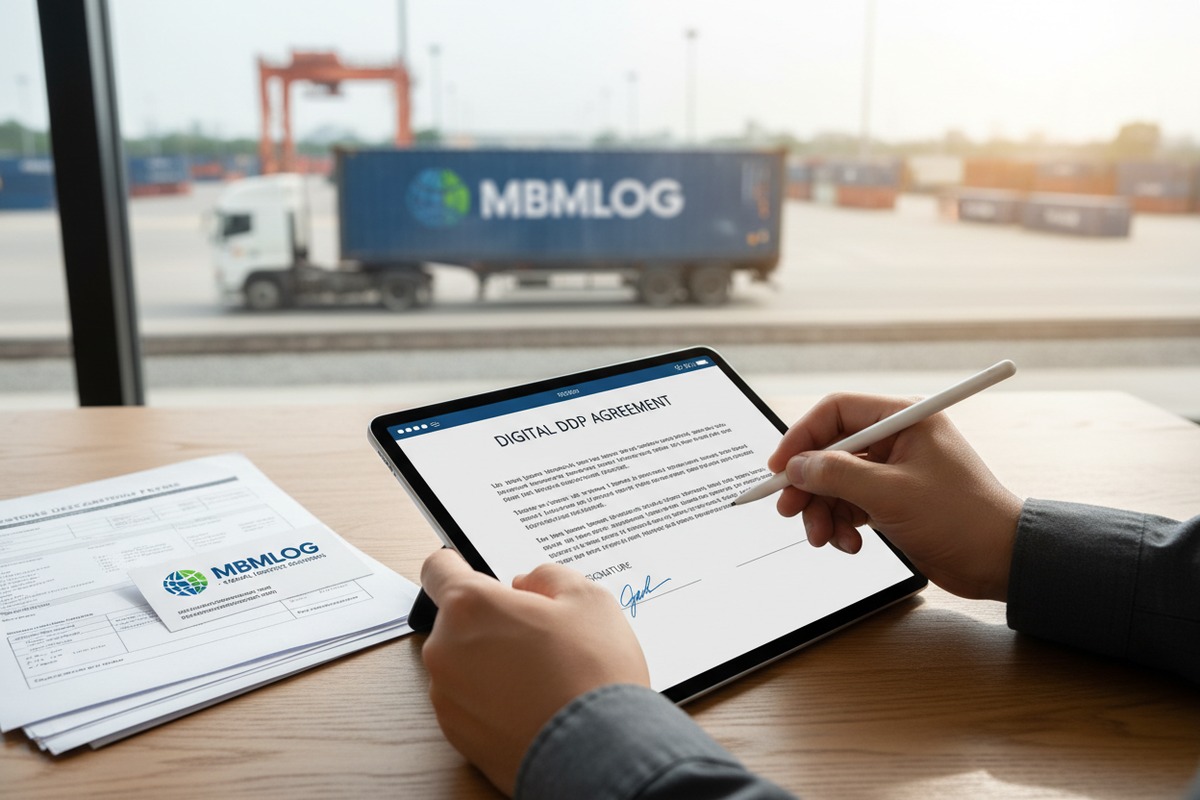
DDP stands for Delivered Duty Paid. Under DDP terms, the seller or their logistics provider handles everything: origin pickup, ocean freight, port handling, ERS fees, rail transport, customs clearance in both Canada and the US, duties, taxes, and final delivery to your door or Amazon warehouse. You pay one price. No surprises.
But here is the problem. Many freight forwarders advertise DDP but exclude certain charges in the fine print. Common hidden fees include:
A true DDP provider absorbs or transparently quotes all of these upfront.
Ask these five questions before signing with any provider:
When your goods originate in China, your logistics chain starts at the factory. A provider based in China with strong US customs and carrier partnerships can control the shipment from origin to destination. They coordinate the export clearance in China, the ocean booking, the ERS request at the Canadian port, the rail segment, the US import clearance, and the final delivery.
At MBMLOG, this is exactly what we do. Our team in Zhengzhou coordinates with our customs broker network in the US to ensure every DDP shipment through Canadian rail is fully pre-cleared, correctly classified, and delivered without hidden fees. We handle Vancouver, Prince Rupert, Halifax, and Montreal routings daily.
Beware of providers who quote unusually low DDP rates. They often recover margin through add-on charges after your cargo is already in transit. Also watch for providers who cannot clearly explain their customs classification process. Wrong HTS codes lead to duty reassessments that can cost thousands of dollars and delay your goods for weeks.
A transparent provider will give you a line-item breakdown of every charge before you book. That breakdown should include ocean freight, origin charges, destination terminal handling, ERS fee, rail rate, customs duties, taxes, brokerage fees, and drayage to final destination.
Expedited Rail Service at Canadian ports is a practical, cost-effective way to move cargo inland faster. Plan early, book ERS before cutoffs, pre-clear customs, and choose a transparent DDP provider to keep your supply chain on track.
1. Provides an overview of major Canadian ports and their significance in trade. ↩︎
2. Clarifies the concept of intermodal rail transport and its role in logistics. ↩︎
3. Explains the Incoterm Delivered Duty Paid (DDP) and its responsibilities. ↩︎
4. Defines Expedited Rail Service (ERS) and its operational details at Canadian ports. ↩︎
5. Replaced with an authoritative Wikipedia page defining 'Shipping line', which is synonymous with 'steamship line' in modern context. ↩︎
6. Defines last-mile drayage and its importance in the supply chain. ↩︎
7. Official website for U.S. Customs and Border Protection, detailing import/export regulations. ↩︎
8. Provides official guidance on Importer Security Filing requirements from CBP. ↩︎
9. Defines Harmonized Tariff Schedule (HTS) codes and their importance in customs. ↩︎
10. Official Amazon resource explaining FBA fulfillment centers and their operations. ↩︎