- +8618603825129
- [email protected]


Every week, our operations team coordinates shipments that must clear customs twice — once at origin and once in China — and even small documentation errors can hold cargo for weeks.
Managing double customs clearance for global imports to China requires coordinating export clearance at origin and import clearance through both Chinese Customs and CIQ authorities. You must ensure accurate HS codes, compliant labeling, complete documentation, and a reliable logistics partner experienced in China's dual-authority inspection system to avoid costly delays and penalties.
This guide breaks down each step of the process. We will cover how to navigate the dual clearance workflow, meet China's strict product requirements, estimate your true DDP costs, and choose a logistics partner 1 who can actually deliver results. Let's dig in.
When our team first began handling reverse-flow shipments into China, the complexity of coordinating two separate customs declarations caught many clients off guard. The process is not just paperwork — it is a synchronized operation across borders.
Double customs clearance means your freight forwarder handles both the export declaration in the origin country and the import declaration in China. The import side involves two parallel authorities — Chinese Customs for tariffs and documentation, and CIQ for product safety and quality inspection — both of which must approve your goods before release.
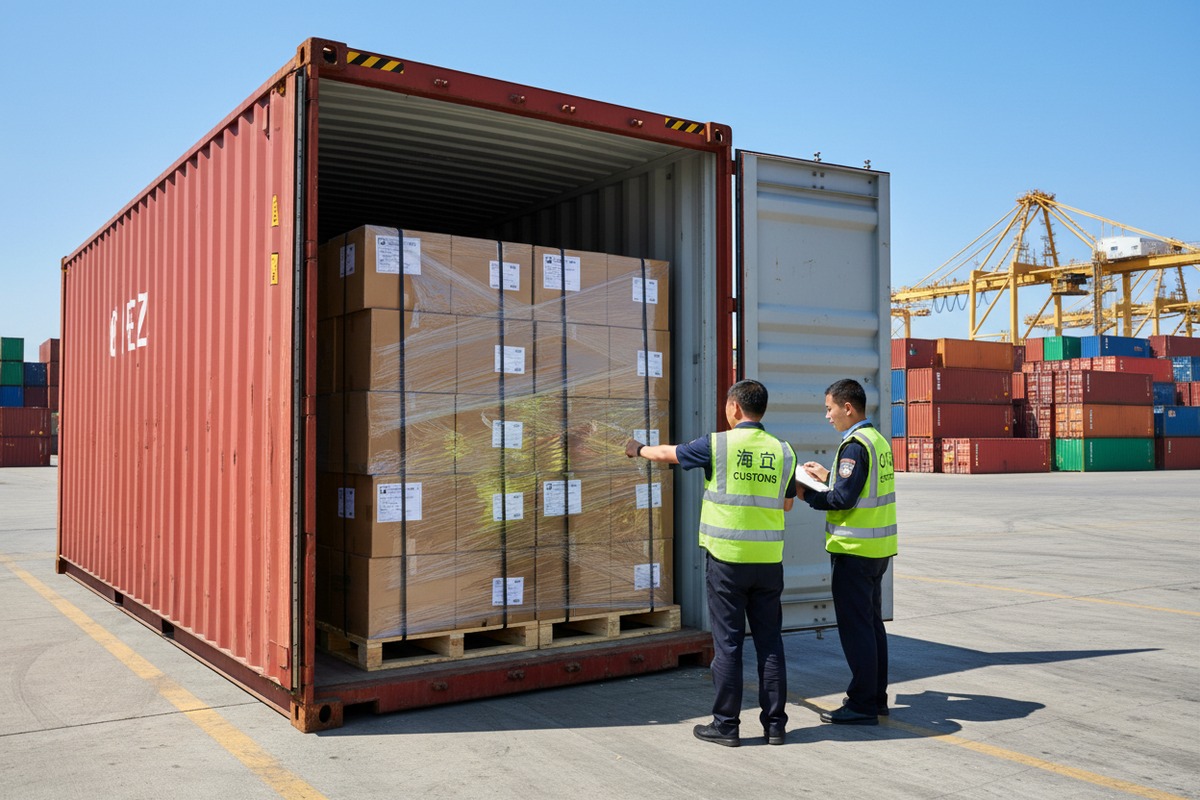
Double clearance is not a single event. It is two distinct regulatory checkpoints that your shipment must pass through. The first stage happens at the port of export. Your goods need an export declaration form, commercial invoice, packing list, and any required export licenses. The second stage happens when goods arrive at a Chinese port. Here, you face both Chinese Customs and CIQ 2 simultaneously.
Chinese Customs reviews your commercial documents, verifies HS code 3s, and calculates duties and VAT. CIQ inspects the goods themselves — checking for safety compliance, quarantine issues, and whether the products meet Chinese national standards. Both must give approval before your cargo is released.
| Stage | Required Documents | Authority |
|---|---|---|
| Export (Origin Country) | Export declaration, commercial invoice, packing list, bill of lading, export license (if applicable) | Origin country customs |
| Import (China - Customs) | Import declaration, commercial invoice, packing list, bill of lading, insurance policy, sales contract | General Administration of Customs of China (GACC) |
| Import (China - CIQ) | Inspection certificates, CCC certificate (if applicable), product test reports, labeling samples | China Inspection and Quarantine (CIQ) |
Some companies qualify for advance declaration in China. This means submitting your import documents before the goods physically arrive at port, or within three days of arrival in a customs surveillance zone. In our experience, advance declarations can shave two to five business days off your total clearance time. This is especially valuable during peak shipping seasons when port congestion adds unpredictable delays.
Not all shipments are equal in the eyes of customs. Normal goods — general merchandise with complete documentation — typically clear without issues. Sensitive goods are a different story. Products like cosmetics, batteries, liquids, food items, and branded goods require special clearance channels. Our clearance success rate for normal and standard sensitive goods exceeds 99%. For special cargo categories, we develop a pre-shipment clearance plan to ensure smooth passage through both authorities.
The key takeaway: do not assume a single logistics provider can handle all product types equally. Ask specifically about their track record with your product category.
Our compliance team has seen shipments worth tens of thousands of dollars stuck at Chinese ports simply because a label was in the wrong language or a certification was missing. Meeting China's product requirements is not optional — it is a legal gate you must pass.
Products entering China must comply with China Compulsory Certification (CCC) requirements, Guobiao (GB) national standards, and Chinese-language labeling regulations. Many categories — including electronics, toys, automotive parts, and food — require pre-import certification. Labels must include product name, origin country, specifications, and importer details in simplified Chinese.
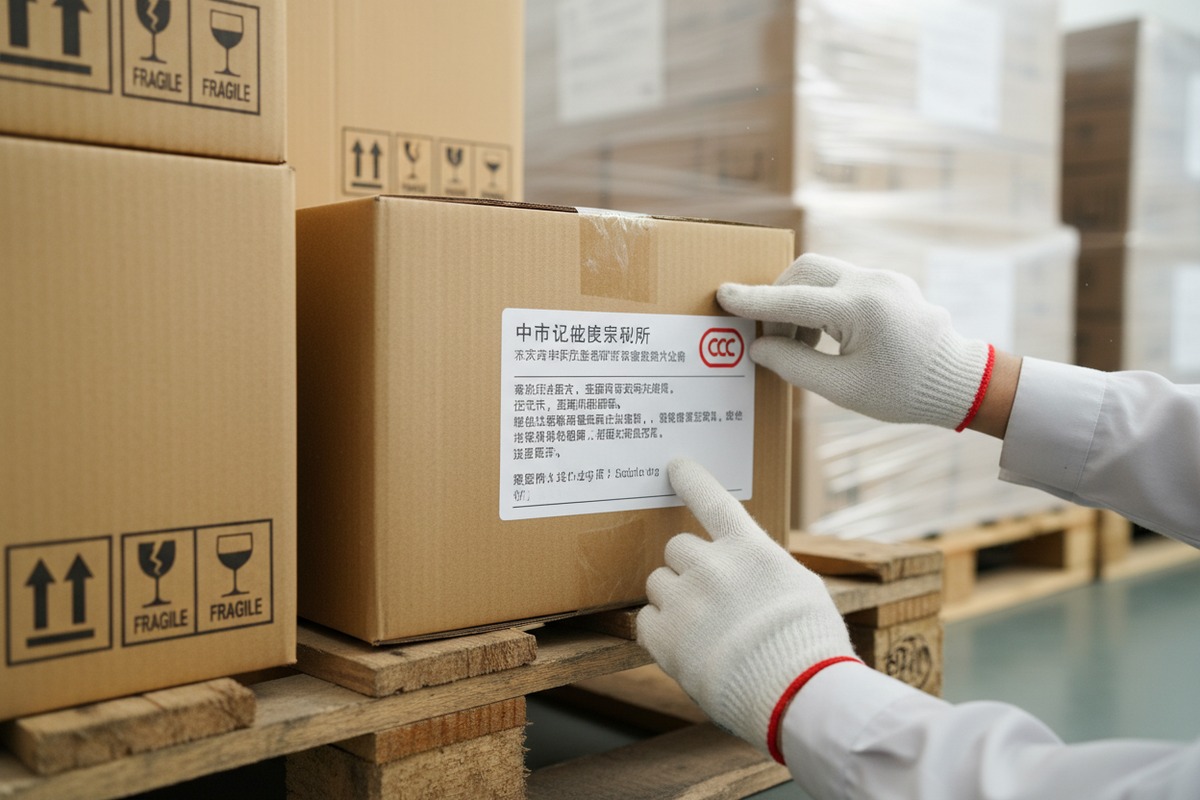
The China Compulsory Certification system 5 — commonly called CCC or 3C — applies to a wide range of product categories. If your product falls under the CCC catalogue, you cannot legally import it without this certificate. The certification process involves factory audits, product testing at designated Chinese labs, and ongoing compliance checks.
Common product categories requiring CCC include:
China's GB standards 6 are legally binding and frequently differ from ISO, EN, or ANSI standards used in other markets. A product that meets European CE requirements may still fail Chinese GB testing. Before shipping, you should compare your product's existing certifications against the applicable GB standards. In many cases, third-party testing in China is required.
| Product Category | Key Labeling Requirements | Language |
|---|---|---|
| General Consumer Goods | Product name, origin country, importer name/address, specifications | Simplified Chinese |
| Food & Beverages | Ingredients, nutritional info, production date, shelf life, storage conditions | Simplified Chinese |
| Cosmetics | NMPA registration number, ingredients (INCI + Chinese), usage instructions, warnings | Simplified Chinese |
| Electronics | CCC mark, rated voltage/power, model number, manufacturer info | Simplified Chinese |
| Textiles & Apparel | Fiber content, care instructions (GB/T 8685 symbols), safety category, size | Simplified Chinese |
We always recommend verifying product compliance before goods leave the origin country. Engaging a third-party inspection service to check labeling, documentation, and physical product standards before export is far cheaper than dealing with a customs hold or forced return shipment in China. A typical pre-shipment inspection costs a fraction of the fees, storage charges, and potential fines you would face at a Chinese port.
Your HS code determines everything — duty rates, inspection requirements, and even whether your product needs a license. A wrong HS code can trigger additional inspections, higher tariffs, or outright rejection. We have seen clients save thousands of dollars simply by working with an experienced customs broker to verify their HS classification before shipping.
When we quote DDP shipments for clients importing into China, one of the most common frustrations they share is being blindsided by fees their previous logistics provider never mentioned. Accurate cost estimation is not guesswork — it requires a systematic breakdown.
To estimate total DDP costs for China imports, add together freight charges, customs duties (based on HS code and product value), VAT (typically 13%), customs brokerage fees, CIQ inspection fees, last-mile delivery, and a 10% contingency buffer. Using a tax-inclusive double clearance service bundles these into one transparent quote, eliminating surprise charges.
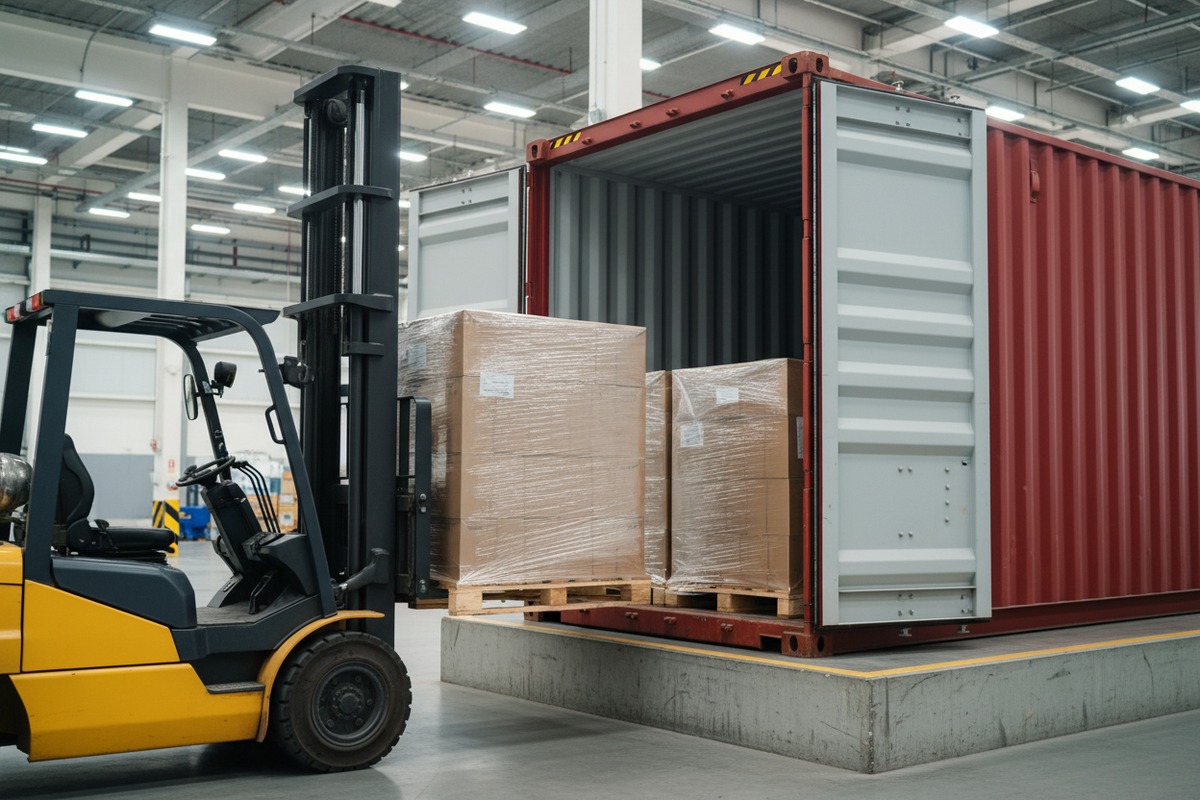
DDP — Delivered Duty Paid 7 — means the shipper bears all costs and risks until goods reach the buyer's door. For China imports, this includes more layers than most people realize. Here is a complete breakdown:
| Cost Component | Description | Typical Range |
|---|---|---|
| International Freight | Air, sea, or rail transport from origin to Chinese port | Varies by mode and volume |
| Customs Duty | Based on HS code, product value, and origin country | 0%–50% of CIF value |
| VAT (Value-Added Tax 8) | Applied on (CIF value + duty amount) | 13% (standard rate) |
| Customs Brokerage Fee | Agent fee for filing import declaration | $75–$200 per entry |
| CIQ Inspection Fee | Fee for quality/safety inspection (if required) | $50–$300 per shipment |
| Last-Mile Delivery | Transport from Chinese port to final destination | Varies by distance |
| Warehouse Handling | Unloading, sorting, palletizing at destination | $30–$100 per CBM |
| Currency Conversion | Exchange rate spread if not paying in RMB | 1%–3% markup |
| Contingency Buffer | Unexpected inspections, port delays, storage | 10% of total estimate |
There is an important distinction between basic double clearance and tax-inclusive double clearance. With basic double clearance, the recipient pays duties and VAT upon arrival. With tax-inclusive (DDP-style) double clearance, all taxes and fees are bundled into the freight quote upfront. The tax-inclusive model costs slightly more, but it eliminates the risk of unexpected charges and simplifies your budgeting.
China has signed trade agreements with multiple countries and regions, including ASEAN, Australia, New Zealand, South Korea, and others under the Regional Comprehensive Economic Partnership (RCEP). If your goods originate from a country with a preferential trade agreement 9, you may qualify for reduced duty rates. Always verify whether a Certificate of Origin from the exporting country can lower your tariff.
If you are paying suppliers or logistics providers in a currency other than Chinese yuan, the exchange rate spread can add up. Using a multicurrency account to pay directly in RMB eliminates double conversion fees and reduces the padding that suppliers often build into foreign-currency invoices. Even a 2% savings on currency conversion adds up quickly on high-value shipments.
We always tell clients to add a 10% contingency buffer to their estimated landed cost. Port delays, random customs inspections, temporary storage fees, and documentation corrections all cost money. The 10% rule keeps you from budget overruns and ensures you can absorb minor surprises without disrupting your business.
Over years of managing complex clearance operations at our Zhengzhou hub, we have watched clients cycle through multiple freight forwarders before finding one that actually delivers consistent results. The wrong partner does not just cost money — it costs time, inventory, and customer trust.
To find a reliable logistics partner for China imports, evaluate their track record with your specific product category, verify their relationships with both Chinese Customs and CIQ, ask for references from similar importers, confirm they offer tax-inclusive DDP options, and test their communication responsiveness before committing to large shipments.
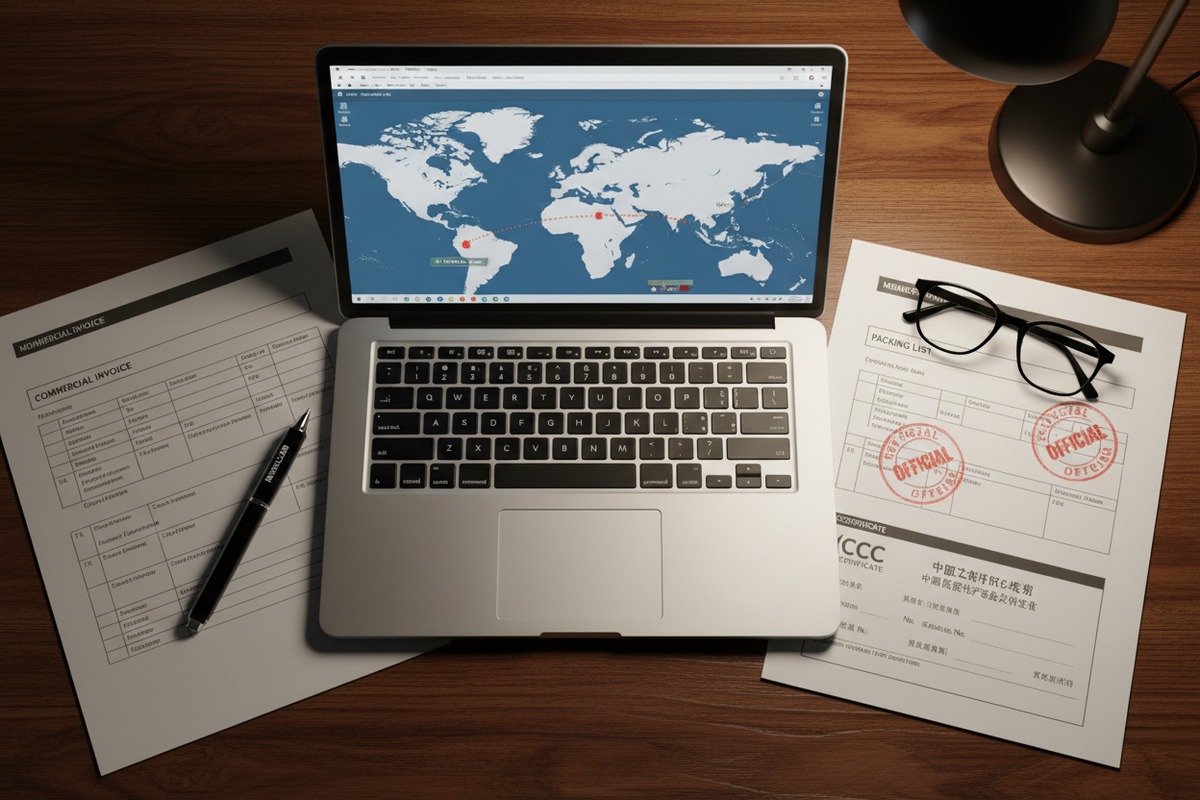
Not every freight forwarder can handle every product type. A provider that excels at shipping general merchandise may fail completely with batteries, cosmetics, or food products. Ask directly: "Have you cleared my exact product category through Chinese customs in the last six months?" Request case studies or references. If they hesitate, move on.
A reliable partner has established relationships with customs brokers at major Chinese ports. They know which ports are faster for certain product types. They understand which documentation triggers red flags and how to avoid unnecessary inspections. At our operation, we handle destination port clearance for imports into China with a clearance success rate exceeding 99% for normal and standard sensitive goods. For special cargo, we develop clearance strategies in advance.
Here are the questions that separate serious providers from unreliable ones:
Be cautious of providers who give vague pricing, refuse to discuss sensitive goods handling, or cannot explain the difference between Customs and CIQ requirements. If a forwarder guarantees 100% clearance for all product types with no caveats, that is a red flag. Honest providers will tell you upfront which products carry higher risk and what mitigation steps they take.
Before committing your entire supply chain to a new partner, send a small test shipment. Evaluate their communication speed, documentation accuracy, clearance timeline, and how they handle any issues that arise. One successful test shipment tells you more than a dozen sales presentations.
Modern logistics partners use digital compliance platforms for document validation, shipment tracking, and risk assessment. Ask whether your potential partner offers real-time tracking, automated document checks, and proactive alerts. These tools reduce human error and give you visibility into your shipment's status at every stage.
The best logistics relationships are long-term. A partner who knows your product line, your documentation patterns, and your seasonal shipping volumes can anticipate problems before they happen. They can pre-position clearance strategies for new product launches. They become an extension of your supply chain team rather than just a service vendor.
Managing double customs clearance and product compliance for China imports demands accurate documentation, proper certifications, transparent cost planning, and a logistics partner with proven expertise in China's dual-authority system.
1. Offers an expert guide on key considerations for selecting a reliable logistics provider. ↩︎
2. Explains the functions of China Customs and the integration of CIQ into GACC. ↩︎
3. Official definition of the Harmonized System for classifying goods in international trade. ↩︎
4. Explains the process of customs clearance at both origin and destination ports. ↩︎
5. Describes China's mandatory safety and quality certification mark for various products. ↩︎
6. Provides official information on China's national standards, including their mandatory nature. ↩︎
7. Defines the Incoterm DDP, outlining the seller's maximum responsibilities in shipping. ↩︎
8. Authoritative government source detailing China's import tariffs and Value-Added Tax. ↩︎
9. Authoritative government source detailing China's trade agreements. ↩︎