- +8618603825129
- [email protected]

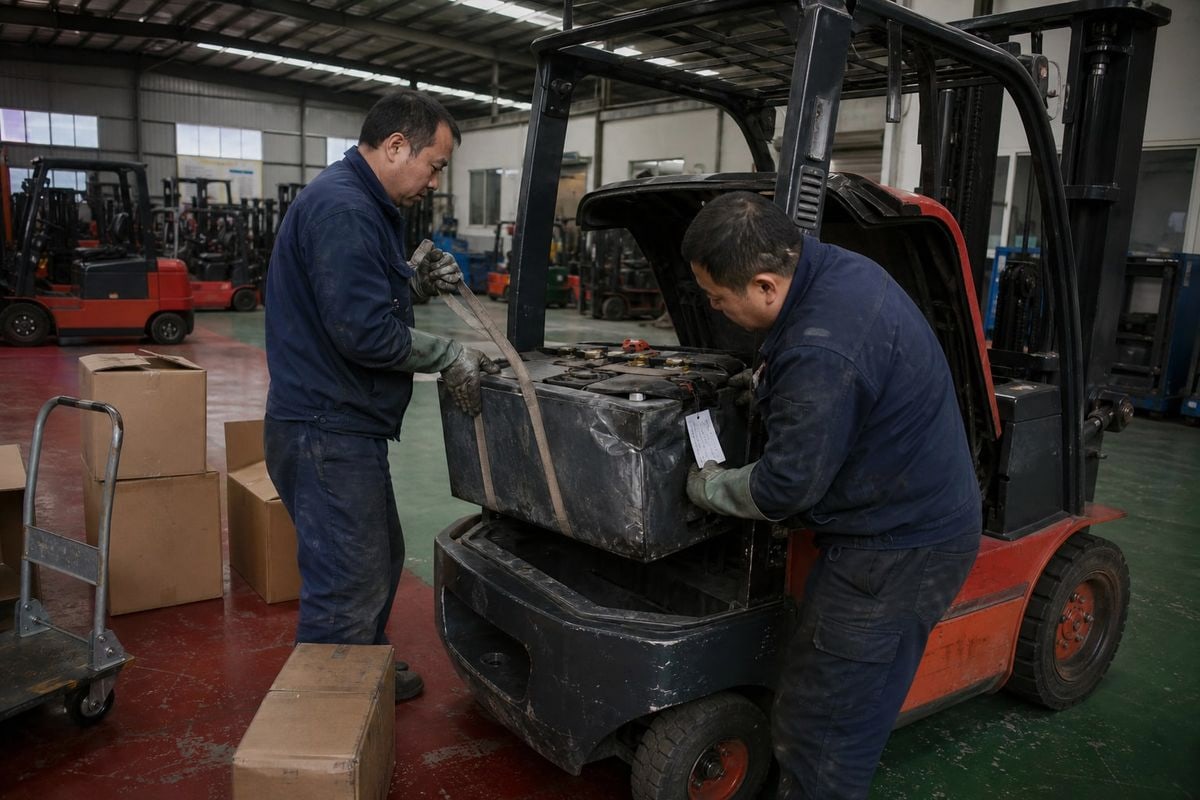
Last month, a client asked me to ship a forklift with a damaged lithium battery from Zhengzhou to Houston dangerous goods documentation 1. One wrong move here can strand your cargo at port — or worse, start a fire at sea. Our team at MBMLOG has handled enough lithium battery cargo to know exactly where the traps are.
Yes, you can sometimes ship a forklift with a damaged lithium battery, but only under strict hazardous-materials procedures. Air transport is generally forbidden. The damaged battery usually must be removed, packed in UN-rated containers, labeled as Damaged/Defective, and shipped by ground or ocean with carrier approval.
That short answer hides a lot of detail. The rules change by transport mode, by carrier, and by how badly the battery is damaged. Let me walk you through what actually happens when this cargo lands on my desk.
A buyer once told me his damaged forklift battery "looked fine, just a small dent." That dent turned his shipment from ordinary freight into regulated dangerous goods overnight.
**Damaged lithium batteries are regulated as Class 9 hazardous materials. Under U.S. DOT rules, 49 CFR 173.185 applies stricter provisions to Damaged, Defective, or Recalled (DDR) batteries. Air transport is prohibited under IATA rules, while ground and ocean shipment require special permits or case-by-case carrier approval.
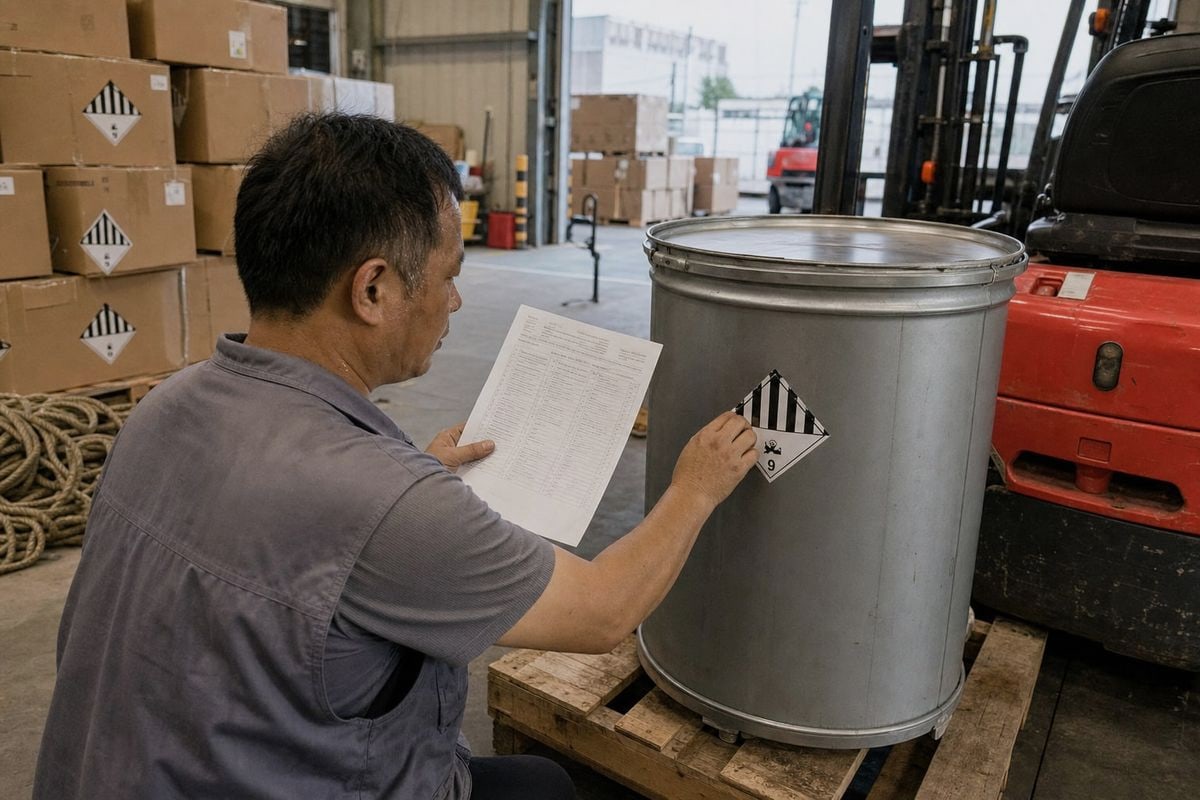
The first thing I explain to clients is that regulators do not care much about the forklift chassis. They care about the battery. A lithium battery in normal condition 2 already falls under UN3481 shipping regulations when it is packed with or contained in equipment. Once that battery is damaged, it enters a stricter category with its own rulebook.
Il DDR classification covers more than obvious wrecks. In my experience coordinating battery cargo from Chinese factories, any of these triggers the stricter rules:
Here is the important nuance: a battery can be classified as defective even when it shows no visible damage. If the manufacturer has flagged the cell type, it is DDR regardless of appearance.
| Transport Mode | Governing Rules | DDR Battery Status |
|---|---|---|
| Air | IATA Dangerous Goods Regulations | Forbidden, regardless of state of charge |
| Ground (U.S.) | DOT / PHMSA, 49 CFR 173.185 | Possible under special permit DOT-SP pathways |
| Ocean | IMDG Code + carrier policy | Possible case by case with carrier approval |
PHMSA compliance guidelines make one point very clear: the thermal runaway risk 3 of a damaged cell is unpredictable. A compromised battery can ignite hours or days after the initial damage. That is why the law treats DDR batteries as a separate, more dangerous species — and why some carriers, like DHL, refuse them entirely no matter what the law technically allows.
There is a trade-off I weigh on every one of these jobs: leave the battery in the forklift and risk carrier rejection, or remove it and add handling steps. We almost always remove it.
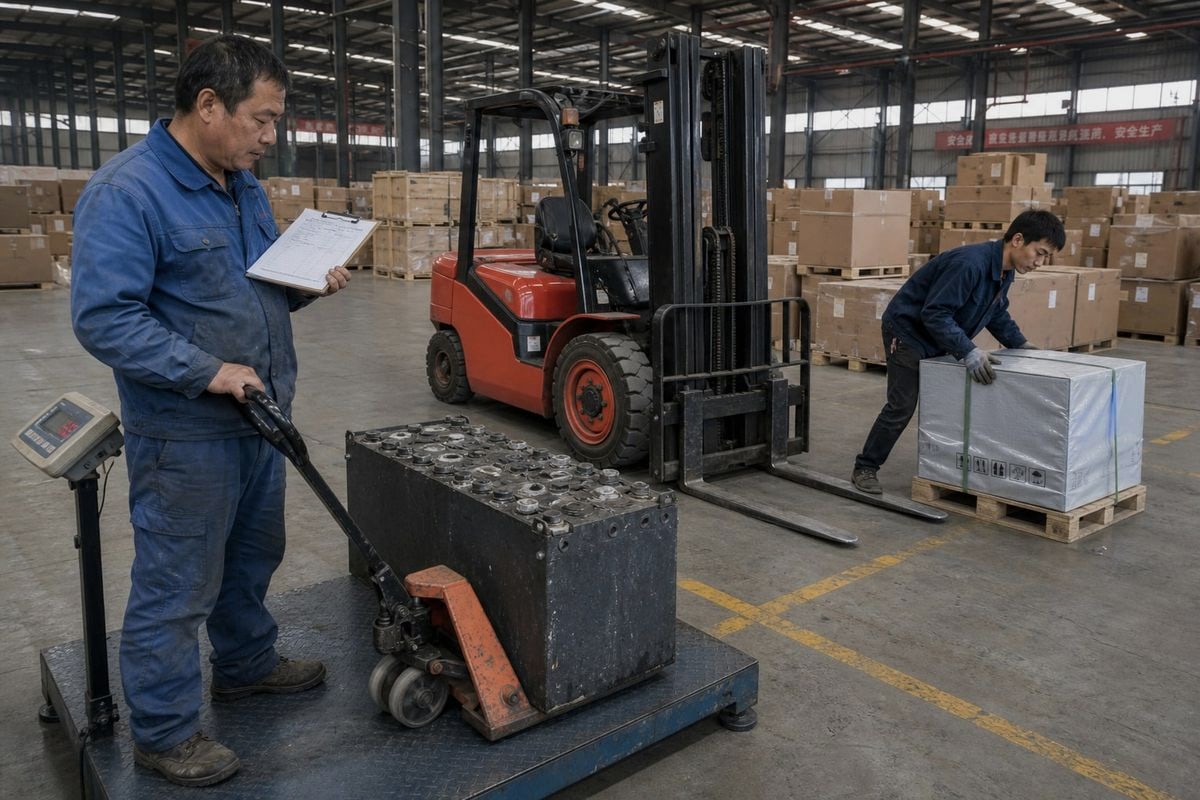
Remove the damaged battery from the forklift chassis, reduce state of charge below 30%, and pack it individually in non-metallic inner packaging with non-combustible cushioning inside a UN-rated Packing Group I container marked "Damaged/Defective Lithium Ion Batteries." Ship the forklift separately as standard machinery.
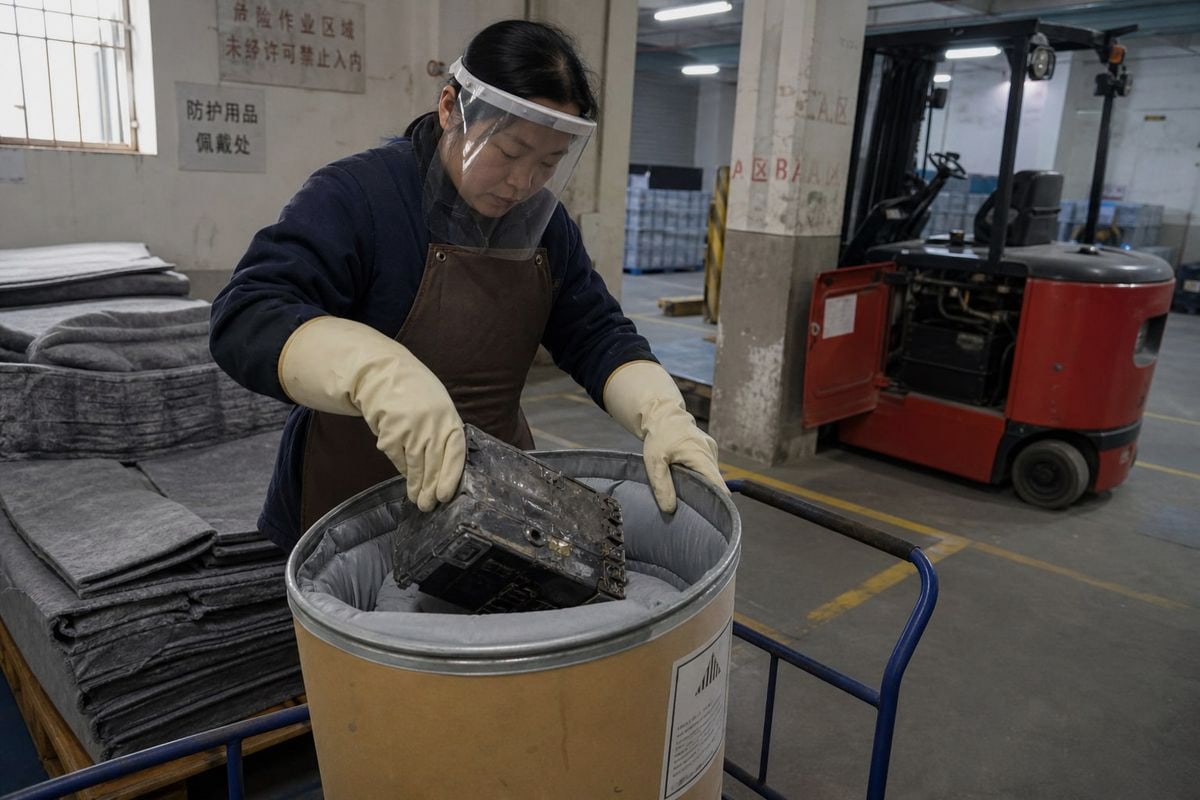
Modern carrier safety protocols favor physical removal of the battery from the vehicle. The reasoning is practical: a steel forklift frame obstructs fire-suppression efforts if the pack ignites in transit. Once the battery is out, the forklift itself becomes ordinary heavy machinery, which is cargo we load into containers every week.
| Requisiti | Standard Battery (UN3481) | DDR Battery |
|---|---|---|
| Outer packaging | UN-certified, standard level | UN-rated, Packing Group I performance |
| Inner packaging | Short-circuit protection | Individual non-metallic, leak-proof enclosure |
| Cushioning | Standard | Non-combustible, non-conductive (e.g., vermiculite) |
| Marking | Lithium battery mark | "Damaged/Defective Lithium Ion Batteries" text |
| State of charge | ≤30% for certain air shipments | ≤30% recommended; air banned regardless |
When we coordinate this from the China side, we verify every step with photos before the cargo leaves the supplier's warehouse. Fixing a packaging error at origin costs hours. Fixing it at a U.S. port costs weeks.
I learned this lesson early in our lithium battery cargo work: clients budget for the forklift's freight, then get surprised when the damaged battery doubles the logistics line item.
Yes, a damaged lithium battery significantly increases shipping costs. Expect freight carrier hazmat surcharges, specialized Packing Group I packaging costs, dangerous goods documentation fees, possible DOT special permit expenses, and longer transit via ground or ocean instead of air. Total logistics costs can rise substantially versus standard forklift freight.
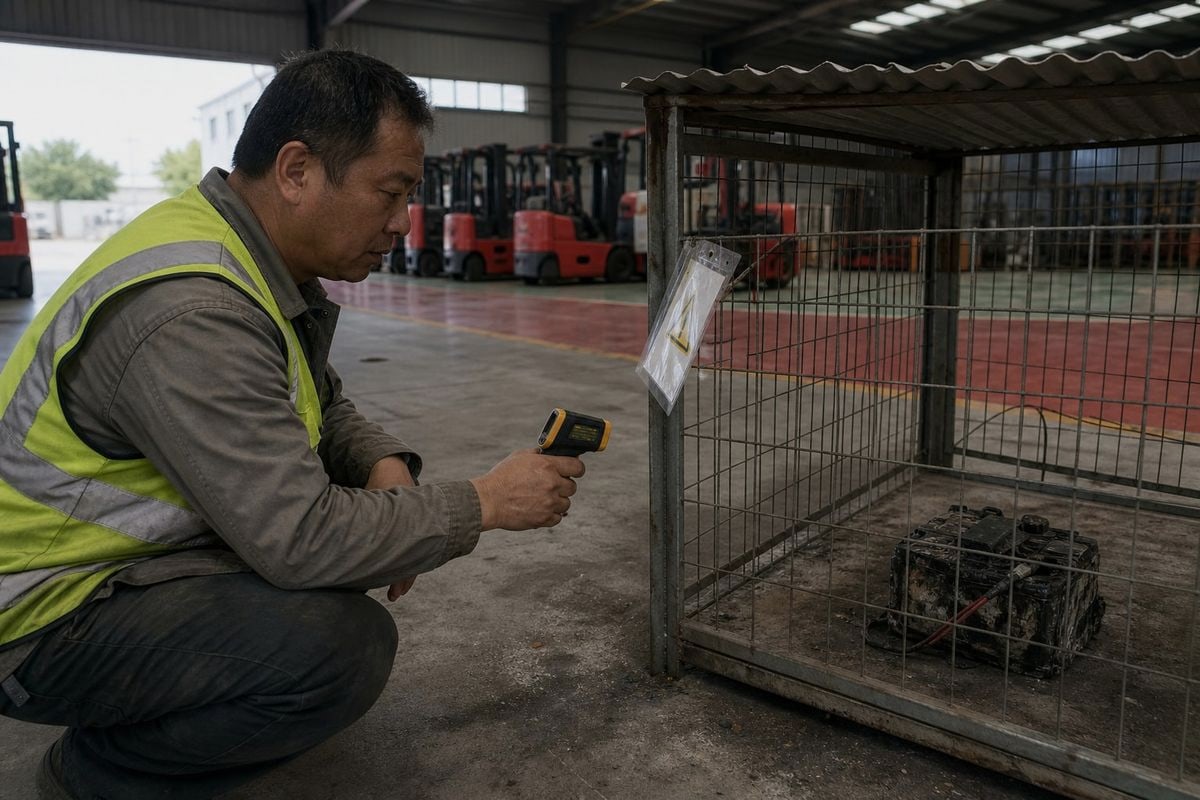
Let me break the cost picture down honestly, because vague warnings do not help you budget. The extra spend comes from five distinct sources, and each one is avoidable only in part.
| Cost Driver | Why It Exists | Can You Reduce It? |
|---|---|---|
| Hazmat surcharges | Carriers price the thermal runaway risk into DDR freight | Partly, by comparing carriers who accept DDR cargo |
| Packing Group I packaging | UN-rated drums, vermiculite, leak-proof liners | No — this is a legal floor |
| DG documentation and declarations | Class 9 hazardous materials paperwork and 24-hour emergency contact | Partly, with an experienced forwarder |
| Special permit DOT-SP fees | Ground transport of DDR batteries may need permit-based programs | Depends on route and carrier program |
| Slower routing | Air is banned; ocean or ground adds transit time and inventory cost | No — plan around it |
The biggest cost risk is not the surcharge. It is rejection. If a carrier discovers an undeclared damaged battery, they can refuse the container, fine the shipper, and leave the cargo sitting in storage while you scramble. Port storage and demurrage on a heavy forklift add up fast. I have seen buyers spend more on a rejected shipment's cleanup than the battery was ever worth.
Here is the frank advice I give clients: run the math on shipping the forklift without the damaged pack. Sometimes the smart move is to use lithium battery disposal services 4 or a certified recycler at origin, ship the forklift as clean machinery, and source a new battery. A "Certified Recovery" logistics partner can also provide a legal Transfer of Liability at pickup, which shields you from environmental or accident litigation tied to that battery later. For a heavily damaged pack on an older forklift, disposal plus replacement often wins on both cost and risk.
A U.S. distributor recently called us in a panic: his supplier had dropped a battery pack during loading, and his container was booked for the following week. Here is how we handled it.
Yes. MBMLOG coordinates forklift shipments from China involving lithium battery complications. We assess the battery's condition, arrange compliant separation and packaging, verify carrier acceptance before booking, manage dangerous goods documentation, and ship the forklift by ocean freight with door-to-door delivery to the United States and Europe.

Our team is based in Zhengzhou, and shipping electric forklifts from Chinese factories to overseas buyers is our core business. That matters for damaged-battery situations, because the problem almost always needs to be solved on the China side — before the cargo reaches the port, not after.
In that distributor's case, we followed our standard sequence:
Most delays we see in lithium battery cargo start with a factory that does not know the export rules. Because we speak directly with suppliers, truckers, ports, and carriers in China, we catch classification and packaging problems while they are still cheap to fix. Whether you are shipping one forklift or consolidating equipment from five suppliers into a single container, we manage the process end to end. If you are facing this exact situation, email me at [email protected] with photos of the battery, and I will tell you honestly whether it can move — and how.
A forklift with a damaged lithium battery can ship — but only with removal, DDR packaging, and carrier approval. Get expert help before booking, not after rejection.
1. International Maritime Organization standards for the safe transport of dangerous goods by sea. ↩︎
2. Global trade association for airlines setting the standards for air transport of dangerous goods. ↩︎
3. Official US DOT agency regulating the transport of hazardous materials including lithium batteries. ↩︎
4. US Environmental Protection Agency guidance on the safe disposal and recycling of lithium-ion batteries. ↩︎