- +8618603825129
- [email protected]


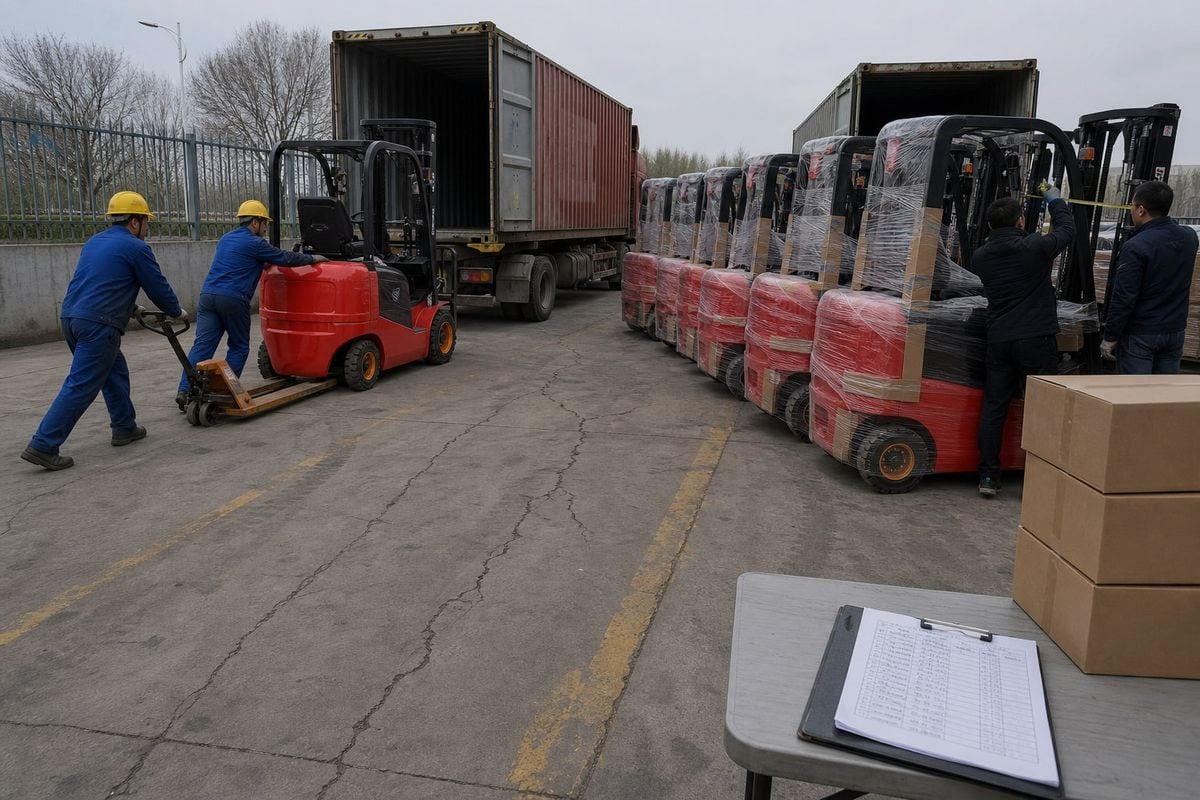
Forklift size and weight quietly decide your international shipping costs. At our Zhengzhou consolidation warehouse, I have watched two similar-looking forklifts produce wildly different freight bills — one shipped cheaply, one drained the buyer's margin.
Forklift size and weight affect international shipping costs by determining container fit, freight class, handling method, and surcharges. Compact forklifts under 2.28m tall ship cheaply in standard containers, while oversized or heavy units require flat rack, RoRo, or breakbulk service, adding permits, heavy-lift fees, and specialized handling costs.
Let me break down exactly how each factor changes your quote. I will use real container dimensions, real thresholds, and real cost ranges from shipments we handle every week.
Last month, a US dealer sent me two spec sheets. Same forklift model on paper, but one weighed 900 kg more due to a larger counterweight. That difference changed his whole loading plan.
Forklift weight changes container freight cost per unit by limiting how many machines fit under the container payload limit, raising terminal handling and inland trucking costs, and triggering overweight surcharges. Heavier units mean fewer forklifts per container, which raises the effective freight cost per machine.
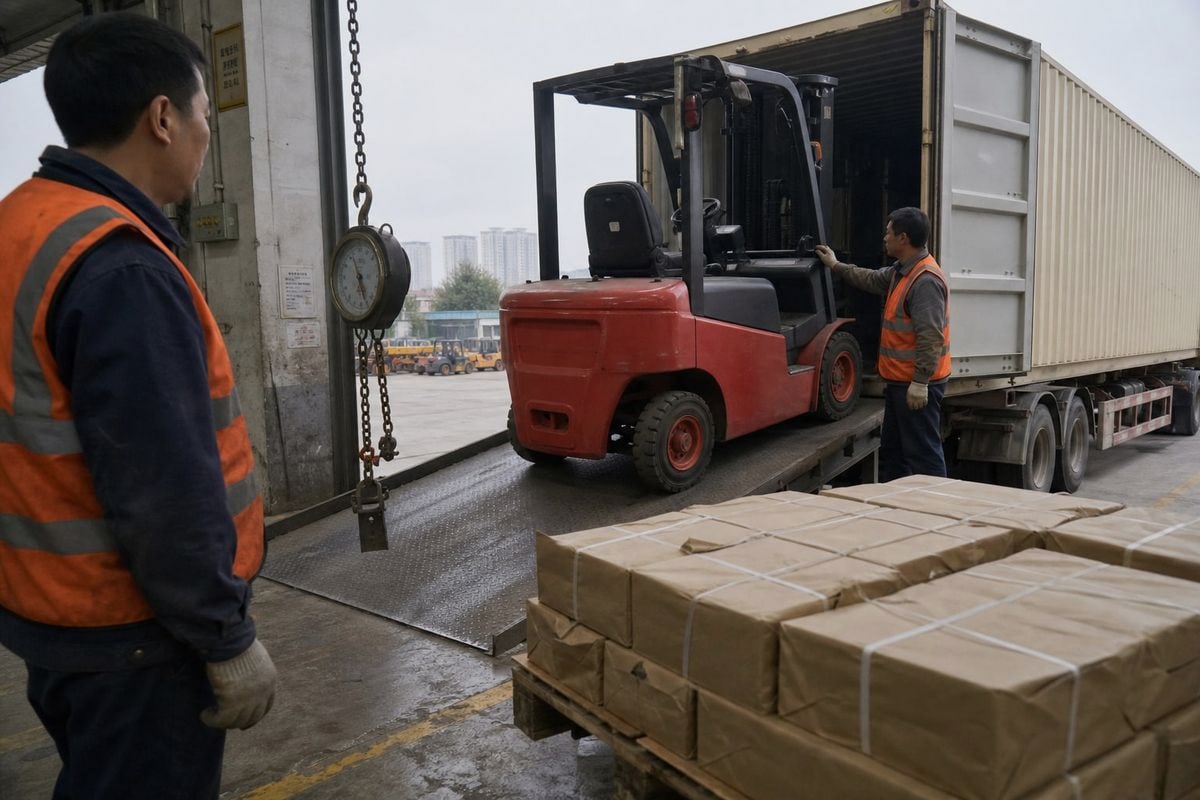
Ocean freight for a container is mostly a flat price for the box. So the real question is not "what does the container cost?" It is "how many forklifts can I safely and legally put inside it?" Weight is usually the limiting factor before space is, because forklifts are dense cargo. A compact 2.5-tonne counterbalance forklift weighs roughly 3,500 kg gross with packaging. That density is exactly why FCL ocean freight is almost always the right method for commercial volumes — you pay for the box, and weight-to-volume ratio works in your favor compared to lighter, bulkier goods that get penalized on dimensional weight.
But weight bites back in three places.
A 20FT container typically carries around 21,000–24,000 kg of payload depending on the carrier and route. Three forklifts at 3,500 kg each is easy. Three units at 8,000 kg each is not — you hit the weight ceiling with half the floor still empty. When that happens, your cost per unit jumps because the container price stays the same while the unit count drops.
In our experience shipping to the United States, the destination side is where weight surprises buyers. US road rules limit total truck weight, so a heavily loaded container may need special routing or a triaxle chassis. Units exceeding 45,000 lbs on their own often require multi-axle lowboy trailers and overweight permits 1 for the last mile from the port. Permit fees on road routes can run from $200 to $800 per state on some corridors.
Dense machinery lands in a heavier freight class for any LCL or domestic LTL leg, and higher freight class means higher base rates. Terminal cranes also charge more for heavy lifts — some port authorities apply heavy-lift surcharges for single units above 20 metric tons.
| Forklift Gross Weight | Typical Units per 20FT | Effective Cost Impact |
|---|---|---|
| 2,000–3,500 kg (compact electric) | 2–3 units | Lowest cost per unit |
| 3,500–6,000 kg (standard counterbalance) | 2 units | Moderate; payload still comfortable |
| 6,000–10,000 kg (heavy-duty) | 1–2 units | Payload limit approached; check chassis rules |
| 10,000+ kg (high lifting capacity) | 1 unit | Highest cost per unit; possible heavy-lift fees |
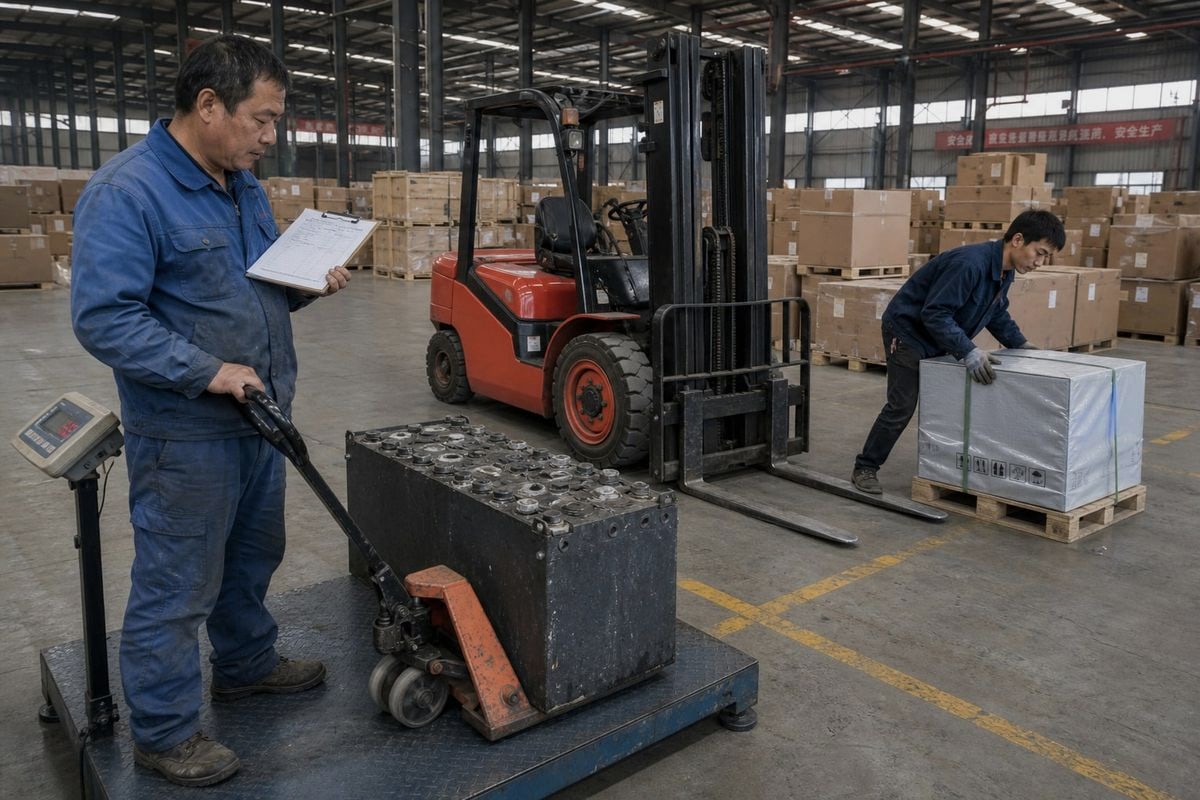
Before we book any shipment, I ask the factory for the verified gross weight including the battery, because lithium packs alone can add several hundred kilograms. A wrong weight declaration can also cause VGM problems at the port and delay the vessel booking.
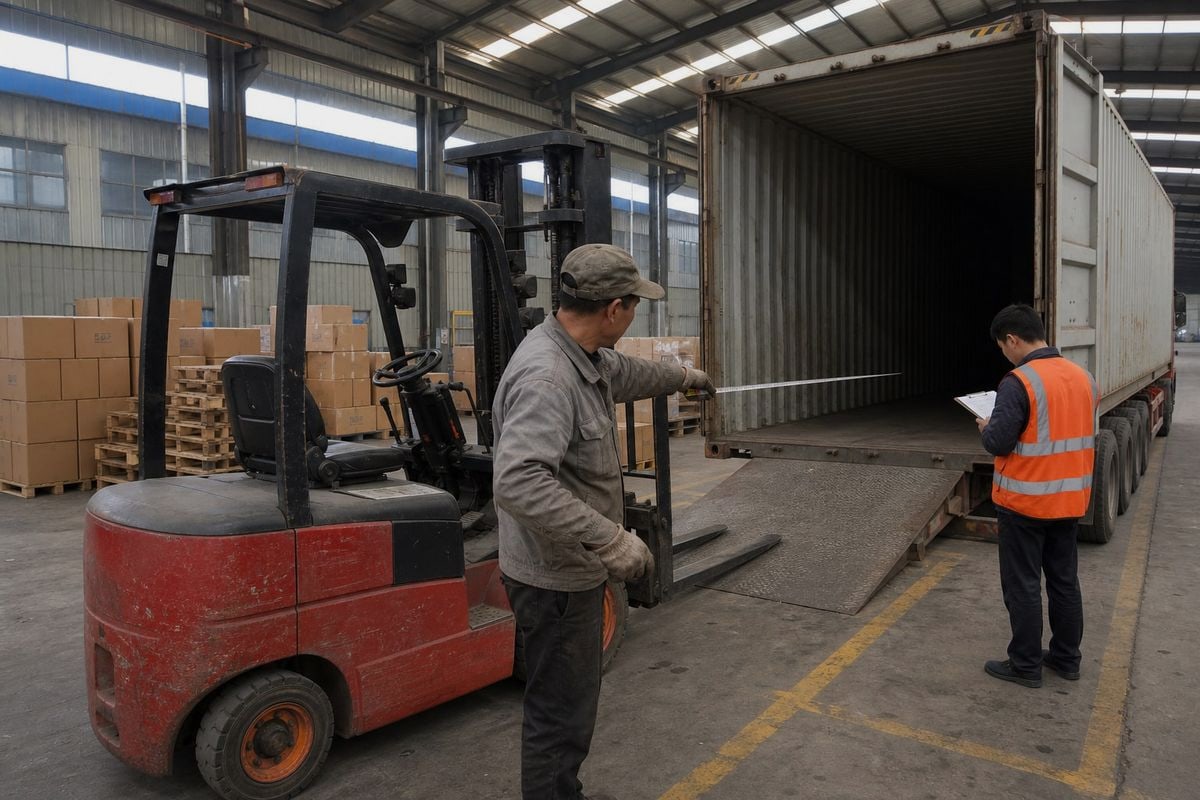
When we walk a loading plan through with a factory, the first number I check is not weight — it is collapsed mast height. That single dimension decides the container.
Forklifts under 2.28m tall (mast lowered), 2.3m wide, and 5.8m long fit a 20FT container. A 40FT holds two to four compact units end to end, while a 40HQ adds roughly 30cm of height for taller masts. Machines exceeding these limits need flat rack or RoRo shipping.
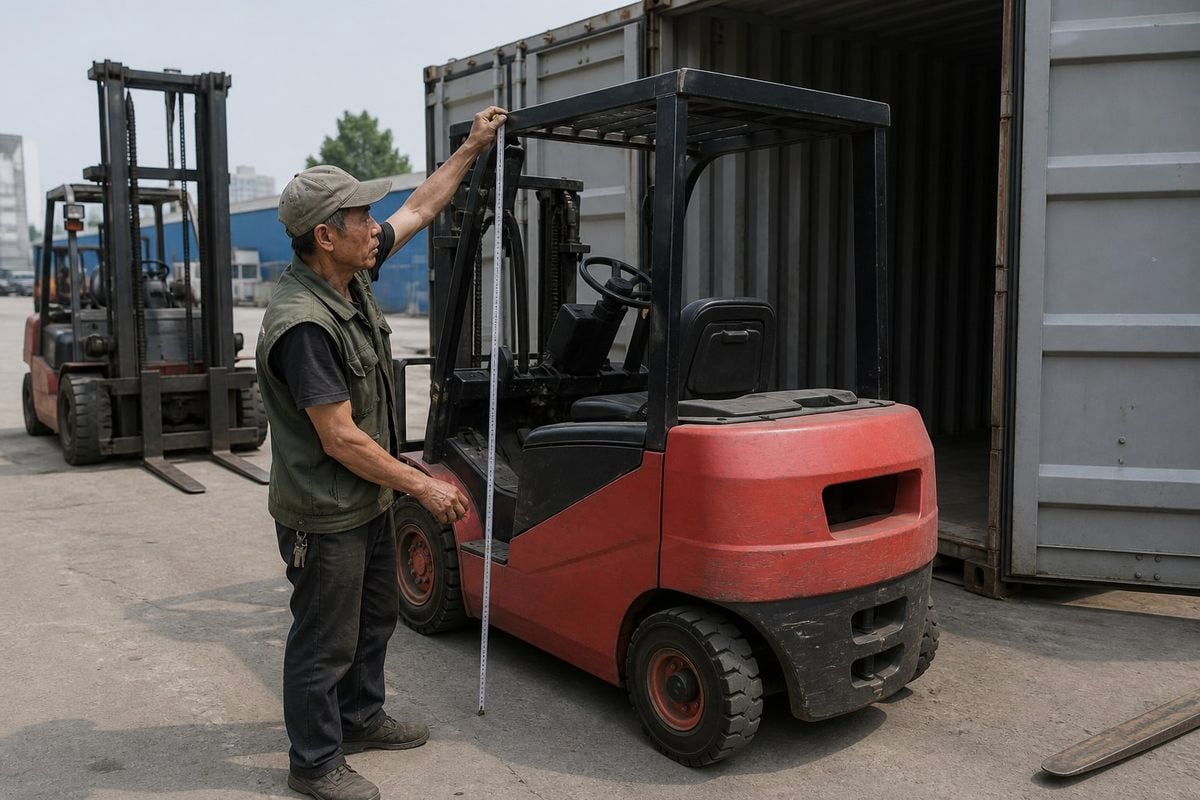
Here are the working interior dimensions I quote to buyers every day:
| Container | Interior Length | Interior Width | Altezza della porta | Typical Payload |
|---|---|---|---|---|
| 20FT | ~5.89 m | ~2.35 m | ~2.28 m | ~21,000–24,000 kg |
| 40FT | ~12.03 m | ~2.35 m | ~2.28 m | ~26,000 kg |
| 40HQ | ~12.03 m | ~2.35 m | ~2.58 m | ~26,000 kg |
The door height is the hard limit, not the interior height. A forklift must roll or be pushed through the door opening, so I always ask factories for the overall height with the mast fully lowered and the overhead guard included. Many buyers forget the overhead guard — the black protective frame above the seat — and it is often the tallest point on a compact electric forklift.
A 1.5–2.5 tonne compact electric forklift, the kind with a lowered height around 2.0–2.1m, fits comfortably in any standard container. Two or three of these typically load into a 20FT. For a 40FT or 40HQ, we regularly load four compact units plus chargers and spare parts in the remaining space.
Reach trucks and three-wheel electrics are usually container-friendly too. The trouble starts with high-mast units 2, container masts over 2.3m collapsed, or wide-frame machines. SERP data confirms the industry rule of thumb: anything exceeding roughly 7.5 feet in height or width starts triggering out-of-gauge treatment, which pushes you toward a flat rack container or open-top box with OOG surcharges.
Strategic disassembly is a legitimate cost-saving tactic. Removing the mast or the counterweight can bring an out-of-gauge machine 3 back inside standard container limits. We coordinate this with factories before pickup — the mast ships lying flat beside the chassis, and the buyer's technician reinstalls it on arrival. This adds labor at both ends, but it usually costs far less than flat rack or breakbulk cargo rates. As a reference from actual China export pricing, a 20FT container of electric forklifts runs roughly $1,200 to $3,800 in ocean freight, while a 40FT or 40HQ runs $1,800 to $5,800 depending on the route and season.
A distributor in Texas once asked me why his container arrived "half air." His previous forwarder had loaded two forklifts and shipped 40% of the cube empty. That empty space was money he had already paid for.
Yes. Consolidating forklifts with batteries, chargers, and spare parts fills the unused cube in a container you have already paid for, lowering the effective freight cost per item. Multi-supplier consolidation at a China warehouse also replaces several small shipments with one full container load.
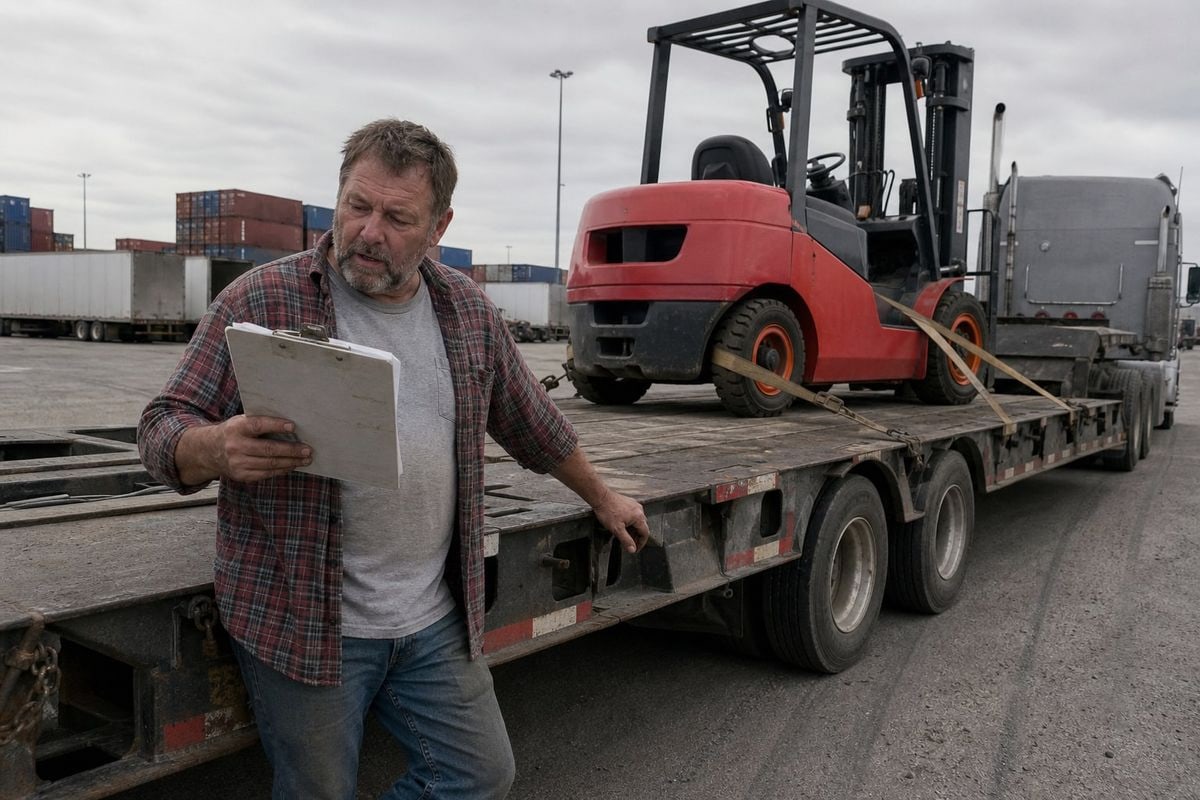
Because forklifts are dense but oddly shaped, a loaded container almost always has leftover space — above the forks, beside the mast, behind the counterweight. Our loading team in China treats that space as free freight. Forwarders now even use load-optimization software to nest components across shipments and maximize cube utilization, and the logic is simple: the container price is fixed, so every extra carton you fit lowers the average cost per item.
Many of our US customers buy forklifts from Factory A, batteries from Factory B, and chargers from Factory C. Shipping each purchase separately means paying three sets of pickup, documentation, and port handling fees. Instead, we pick up from each supplier, hold the cargo at our consolidation warehouse, and load everything into one FCL container. One export declaration, one bill of lading, one customs entry at destination. Under DDP Incoterms, we can also fold customs duties and taxes into a single landed-cost quote, so the buyer sees the true per-unit cost before ordering.
Two cautions from experience. First, never let loose cartons sit unsecured near a forklift — a shifting 3,500 kg machine will crush anything in its path, so we block, brace, and lash the machines before filling gaps. Second, weight still rules: if the forklifts already approach the payload limit, adding heavy batteries can push the container into overweight territory at destination, and the trucking surcharge can erase the consolidation savings.
The hardest quote I ever had to deliver was for a 12-tonne high-mast unit. The machine cost less than the buyer expected — the shipping cost nearly double what he had budgeted. He almost walked away until we mapped every fee line by line.
Yes. Oversized or heavy forklifts require flat rack containers, RoRo shipping, or breakbulk cargo handling instead of standard containers. Extra fees include out-of-gauge surcharges, heavy-lift crane charges for units over 20 metric tons, overweight road permits, and higher securement and insurance costs.
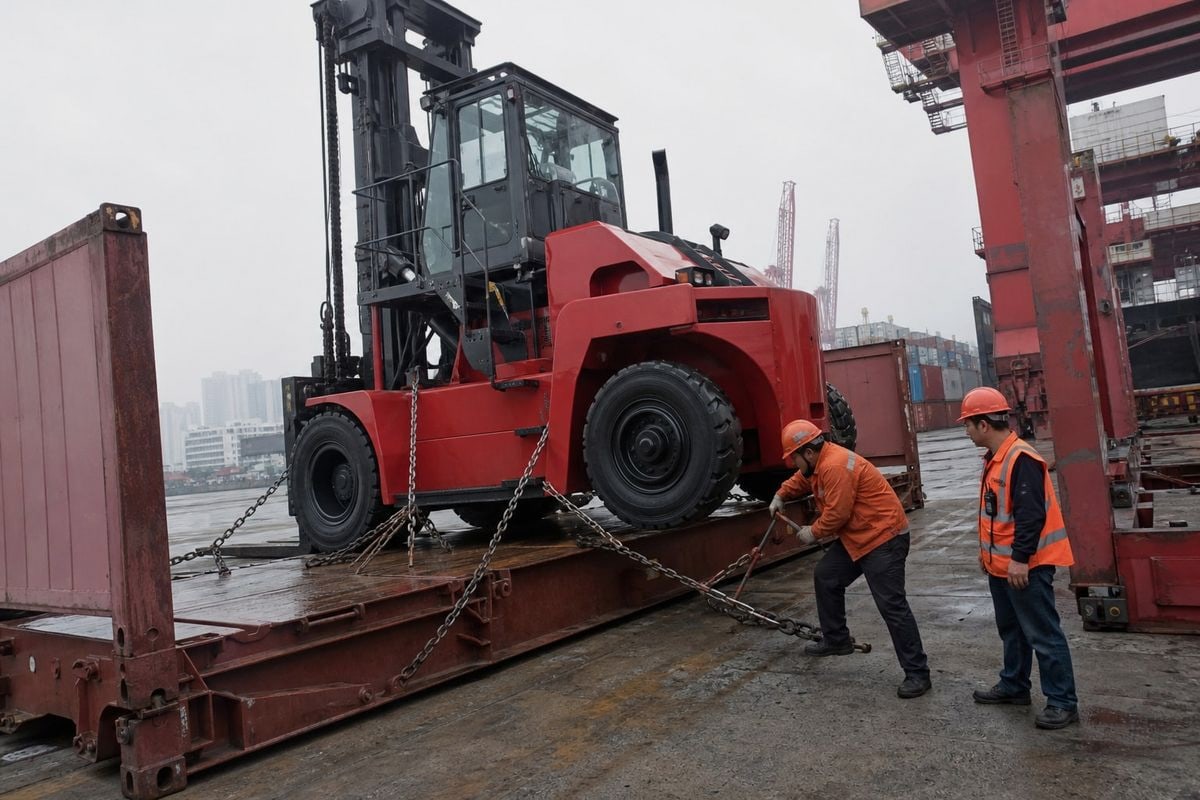
Once a forklift no longer fits through a container door, the entire shipping method changes — and this is the single biggest cost jump in forklift logistics. You are no longer paying for a slot in a standardized system. You are paying for people, cranes, and equipment to handle your machine individually.
| Metodo | Come funziona | Cost Position | Il migliore per |
|---|---|---|---|
| Flat rack container | Machine secured on an open-sided platform, may protrude | Moderate–high, plus OOG surcharge | Units slightly over standard dimensions |
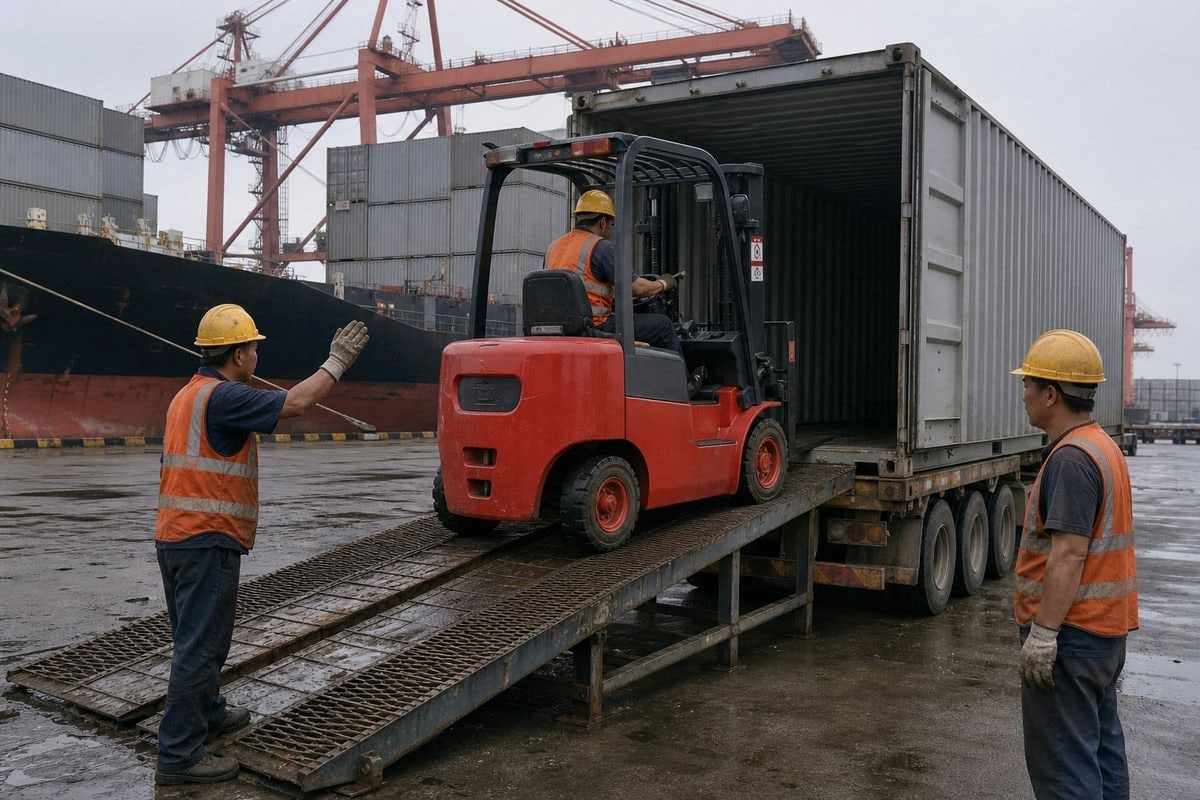
| RoRo shipping | Self-propelled machine driven onto the vessel | Usually cheapest OOG option | Running machines on RoRo routes |
| Breakbulk cargo | Craned aboard as loose heavy cargo | Typically most expensive | Very large or non-running units |
RoRo shipping prices by lane meters — the deck footprint the machine occupies — so length and width often matter more than actual weight. That can favor a heavy but compact forklift. The catch is route availability: RoRo vessels 4 serve fewer ports than container ships, and the machine must be drivable. Breakbulk gives maximum flexibility but at the highest handling cost; for comparable equipment like telehandlers, ocean freight runs roughly $1,500 to $8,000 depending on size and method, with RoRo generally cheaper than breakbulk.
The extra charges pile up in layers. Heavy-lift surcharges apply at many ports for single units above 20 metric tons, covering specialized shore cranes and reinforced pier infrastructure. Oversize surcharges range from $100 to over $1,000, and road permit fees run from $50 to $1,500+ per route segment. On the US side, tall or wide loads need step-deck or lowboy trailers, which can add $0.25 to $0.40 per mile over standard flatbed rates, on top of fuel surcharges that scale with the heavier equipment. Cargo insurance, often quoted at 1% to 3% of machine value, also rises because handling risk is higher.
Electric forklifts add one more layer regardless of size. Lithium battery units fall under IMDG dangerous goods rules 5, which means UN38.3 test documentation, DG declarations, compliant packaging and labeling, and a DG surcharge that typically runs $200 to $400 per shipment. We verify battery specifications with the factory before booking, because a carrier rejecting undeclared batteries at the port creates delays far more expensive than the surcharge itself. Emerging carbon frameworks like the EU ETS are also starting to tie ocean freight pricing to fuel burn and cargo weight, so heavy machinery into Europe may see gradual cost pressure from that direction too.
Forklift size and weight decide container fit, shipping method, and surcharges. Verify dimensions and gross weight early, consolidate smartly, and one coordinated China-side partner keeps landed costs predictable.
1. Official US government resource for international trade regulations and compliance requirements. ↩︎
2. Authoritative source for standard container dimensions and height constraints. ↩︎
3. Technical definition of cargo that exceeds the standard dimensions of a shipping container. ↩︎
4. Detailed explanation of the roll-on/roll-off method for transporting wheeled machinery. ↩︎
5. Official maritime safety standards for transporting hazardous materials like forklift batteries. ↩︎