- +8618603825129
- [email protected]

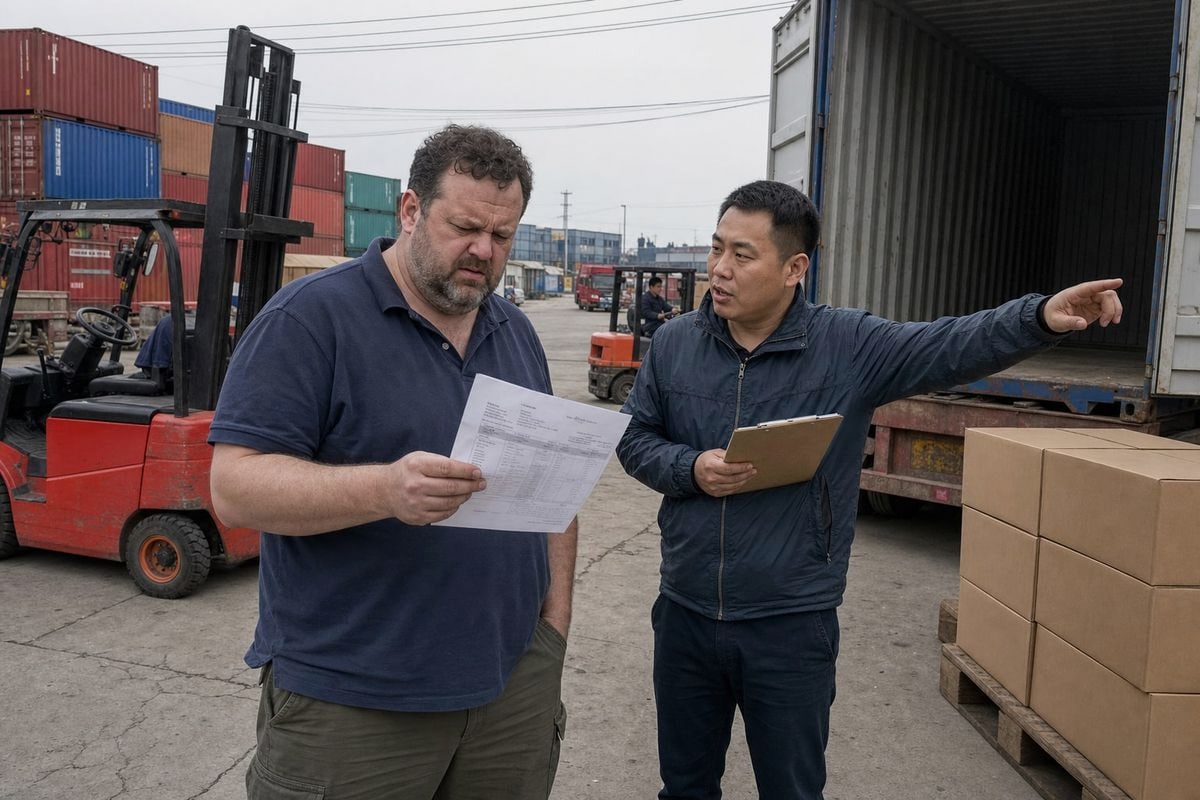
Forklift shipping costs from China can quietly destroy your margin. I have watched buyers at our Zhengzhou loading docks discover this the hard way — after the invoice arrived.
To reduce forklift shipping costs from China, ship by sea instead of air, switch to FCL above 13–15 CBM, disassemble masts to fit more units per container, consolidate multiple suppliers, buy FOB instead of CIF, book during the March–May slack season, and audit your HS Code 8427 classification.
Those are the headlines. But each method has conditions, trade-offs, and traps. Below, I break down all ten ways in detail, using real numbers from the shipments we handle every week.
Last spring, a US dealer sent me two quotes for the same route. The gap was almost 40%. The difference was not luck — it was timing, Incoterms, and carrier access.
Lower ocean freight by booking during the March–May slack season, avoiding Peak Season Surcharges, buying on FOB terms instead of CIF, comparing at least 3–4 forwarder quotes, and working with a China-based freight forwarder who holds local contract rates with carriers.
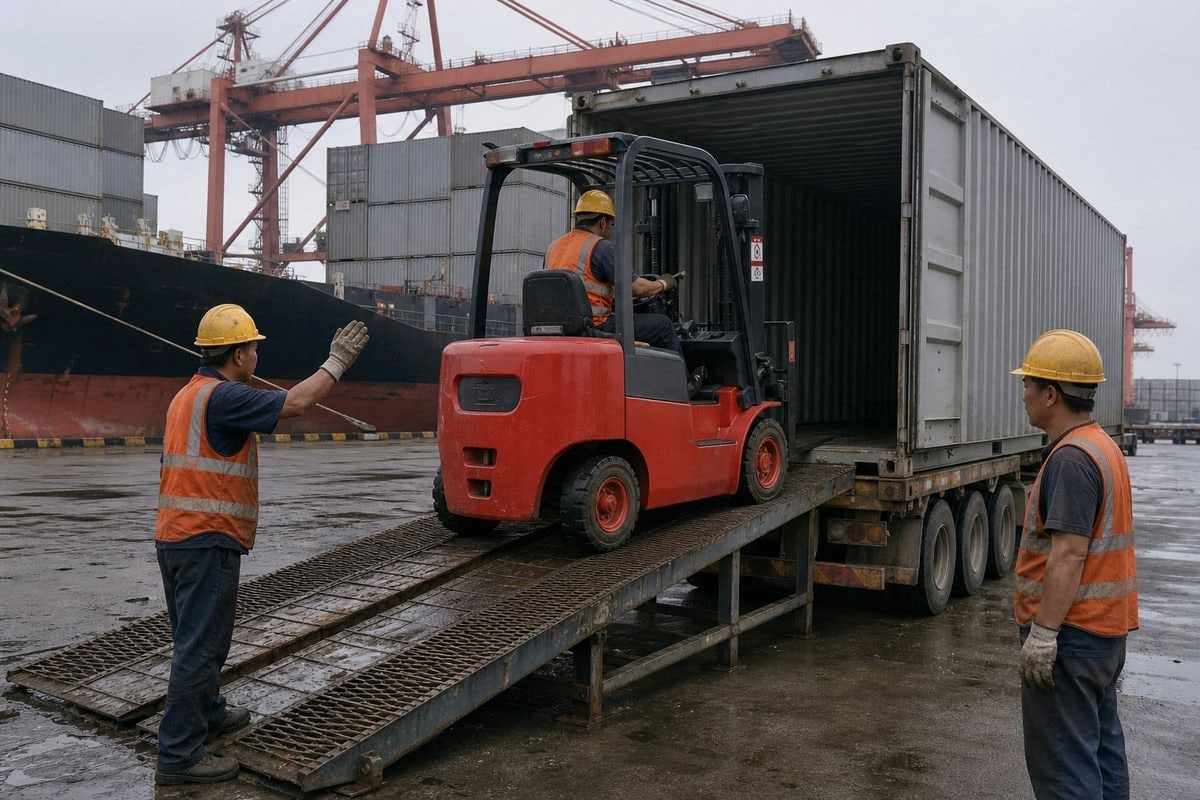
Ocean freight is the biggest single line on most forklift shipping invoices, so it deserves the most attention. In our experience exporting electric forklifts to the United States, five levers move the number the most.
Base rates on the China–US trade lane 1 swing with the season. The slack season, typically March through May, offers the lowest base rates. From the second half of the year onward, carriers apply Peak Season Surcharges (PSS) that can add hundreds of dollars per container. If your inventory plan allows it, book early and ship in the off-peak window.
Sotto Incoterms 2020 2, CIF means your supplier controls the carrier choice. Some suppliers use cheap agents at origin who recover their margin through inflated arrival fees at the port of discharge. Buying FOB puts carrier selection in your hands — or your forwarder's hands. We see this switch alone save buyers real money on destination charges.
| Shipping method | Il migliore per | Cost level | Note |
|---|---|---|---|
| FCL container | 2+ forklifts | Low per unit | Predictable, secure |
| LCL consolidation | Single small unit | Moderato | Per-CBM destination fees add up |
| Ro-Ro shipping method | Drivable, oversized units | Moderato | Limited port pairs |
| Flat rack container | Overheight/overwidth masts | Alto | For units that cannot fit standard containers |
| Breakbulk cargo | Very large fleets or huge machines | Varies | Slow, handling-intensive |
| Trasporto aereo | Urgent spare parts only | Very high | Never economical for whole forklifts |
Finally, always collect 3–4 competing quotes for the same route and service level. A freight forwarder China-side can often access local-to-local contract rates and negotiate origin handling directly with terminal operators — savings a destination-based broker simply cannot reach.
The trade-off I weigh on every loading plan is density versus safety. Squeeze in one more unit and the per-forklift cost drops — but only if weight and securing still work.
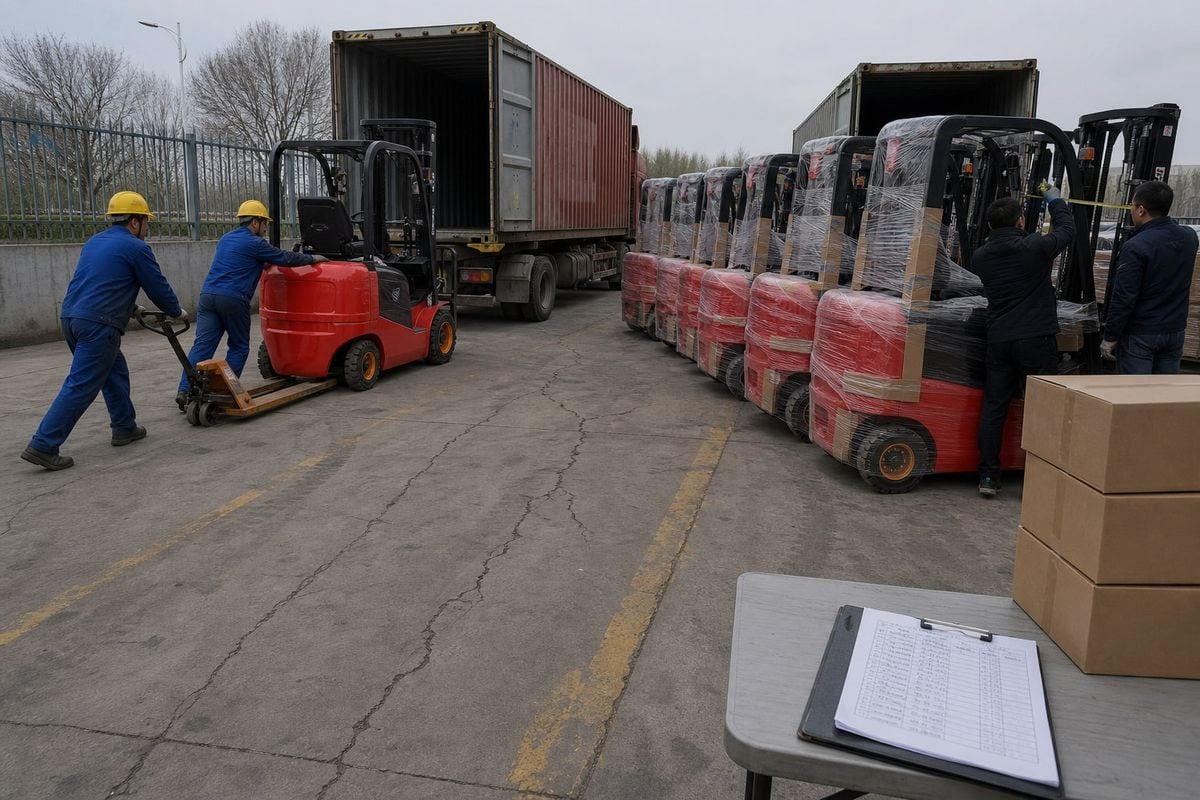
A 20FT container typically holds 2–3 compact electric forklifts, a 40FT holds 4–5, and a 40HC holds 5–6 when masts and overhead guards are disassembled. Fitting one extra unit without triggering overweight charges directly cuts your per-forklift shipping cost.
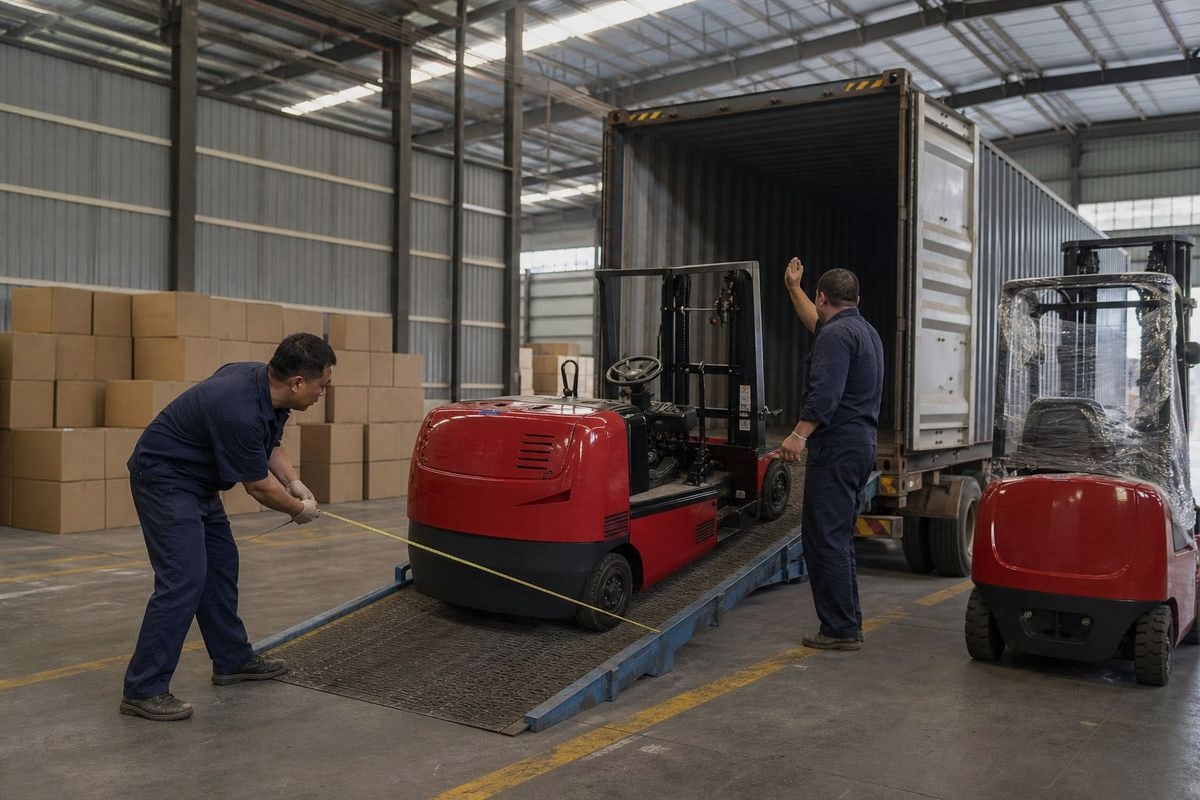
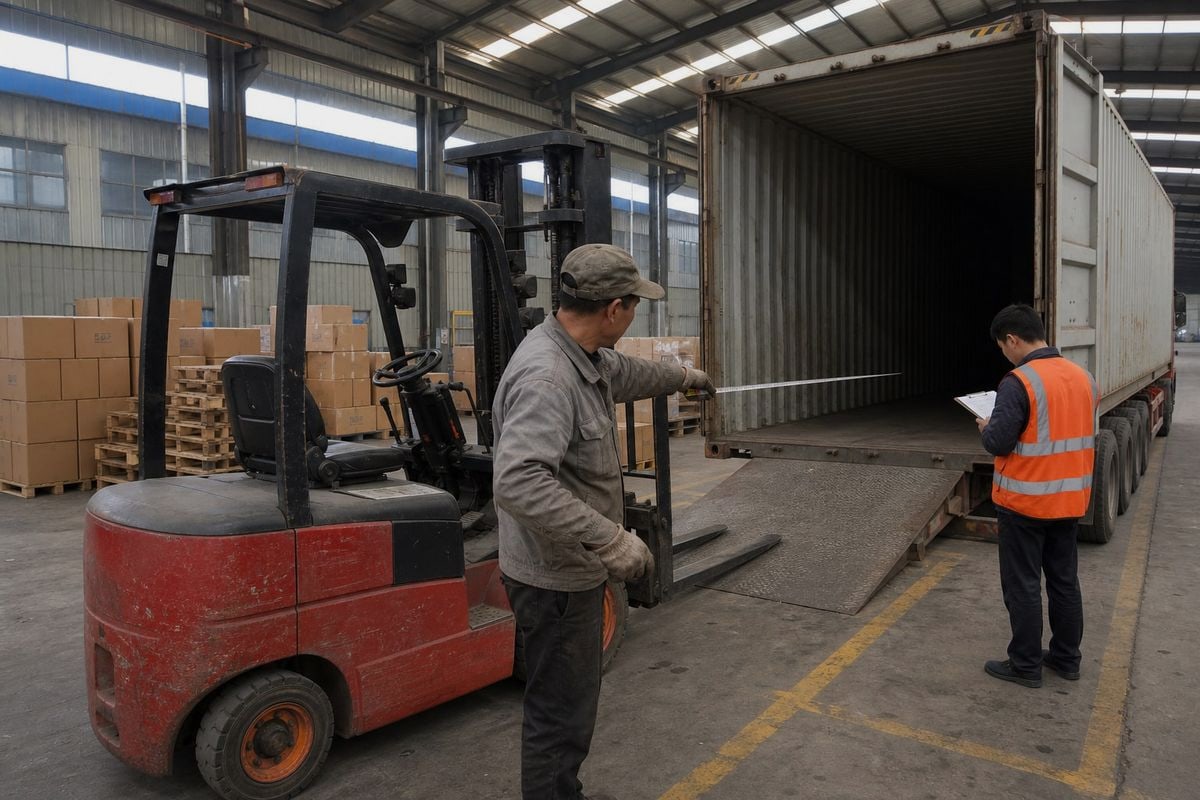
Container loading optimization is where forklift shipping differs most from ordinary cargo. Forklifts are heavy, tall, and awkwardly shaped. Here is how we plan a load at our consolidation warehouse.
| Container | Typical capacity (compact 1.5–2T electric forklifts) | Watch out for |
|---|---|---|
| 20FT | 2–3 units | Payload limit reached before floor space |
| 40FT | 4–5 units | Weight distribution across axles |
| 40HC | 5–6 units (masts disassembled) | Height clearance for assembled masts |
These are ranges, not promises. A 2.5-ton counterbalance forklift with a full battery weighs far more than a compact pallet stacker. Weight, not floor space, often limits a 20FT load.
Ask the factory to remove masts and overhead guards before loading. A disassembled forklift sits much lower, which opens up a 40HC for tighter placement or partial stacking of components. We coordinate this directly with suppliers, including how the mast is crated and how hydraulic connections are protected.
Adding one extra forklift lowers your cost per unit — but only if it does not trigger a second container, an overweight charge, dangerous-goods treatment, or a more expensive delivery method at destination. That is the calculation to run before booking, not after. We check dimensions, unit weight, battery type, and gross container weight against carrier limits first. Aggressive packing that risks cargo damage is false economy; a shifted 2-ton machine can crush everything around it. Density and securing must be planned together, with proper blocking, bracing, and lashing at the loading stage.
A dealer I work with once bought forklifts from one factory, lithium batteries from another, and chargers from a third — and nearly booked three separate LCL shipments. We stopped him just in time.
Yes. Consolidating forklifts, batteries, chargers, and spare parts from multiple Chinese suppliers into one container eliminates repeated handling fees, documentation charges, and per-CBM LCL costs. Once your combined volume passes 13–15 CBM, one FCL container beats separate LCL shipments.
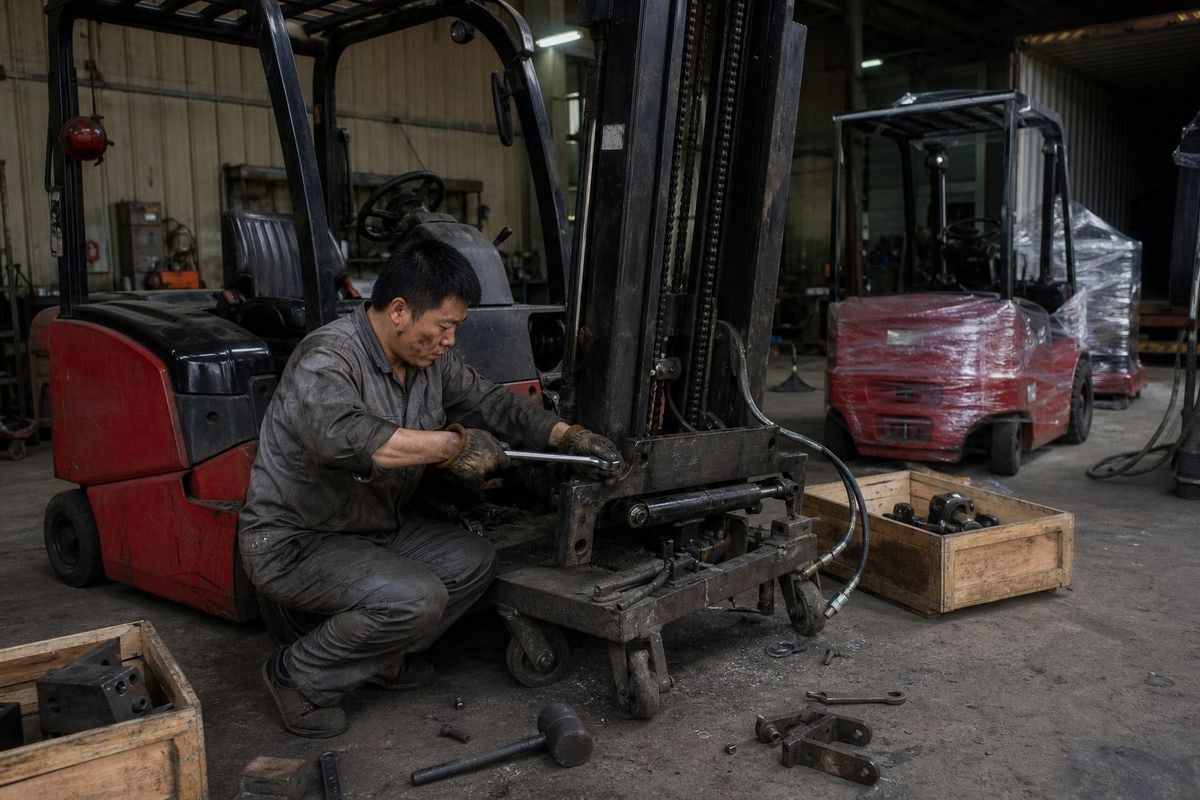
Multi-supplier consolidation is one of the least-used savings levers, mainly because buyers assume each factory must ship its own goods. It does not have to work that way.
Every LCL shipment carries its own documentation fees, origin handling, and — the real killer — per-CBM destination handling and warehouse de-consolidation charges at the port of discharge. Three small shipments mean paying those fees three times. In the FCL vs LCL shipping comparison, the crossover point sits around 13–15 cubic meters. Beyond that, a full container is almost always cheaper, even if part of it rides empty.
Filling unused container space with spare parts is effectively free freight for those parts. Some buyers also explore a CKD (Completely Knocked Down) strategy, shipping units as machinery parts rather than finished vehicles, which can fall into lower duty brackets — though this needs careful classification review first.
The honest trade-off: consolidation adds coordination time. If Factory B runs two weeks late, the whole container waits. When a customer's project deadline is tight, we sometimes recommend splitting the shipment and accepting higher freight. Cheaper is not always better if it costs you a delivery date.
The lesson that shaped how we quote today came from a buyer who received a "great" freight rate elsewhere — then paid nearly as much again in surprise arrival charges.
Watch for destination handling fees, customs clearance fees, import duties and taxes from HS code misclassification, Class 9 hazardous surcharges on lithium batteries, demurrage, chassis fees, and residential delivery charges. Always demand a fully itemized landed-cost quotation before booking.
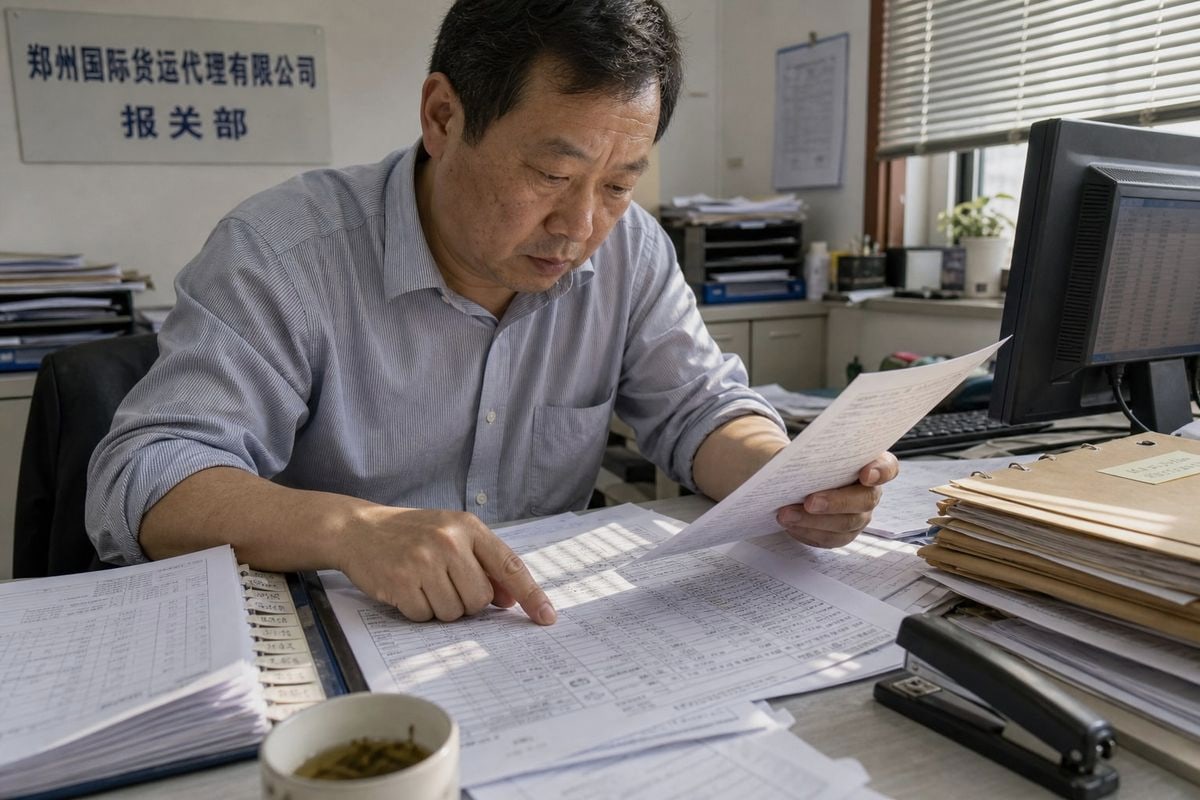
The cheapest headline quote is often the most expensive shipment. Here is the full landed-cost picture we walk buyers through before any booking.
| Cost stage | Common charges | Often hidden? |
|---|---|---|
| Origin | Factory pickup, export declaration, loading, origin terminal handling | Sometimes |
| Ocean | Base freight, PSS, fuel surcharges | Rarely |
| Assicurazione | Marine cargo insurance premium | Often skipped, not hidden |
| Porto di destinazione | Terminal handling, de-consolidation, chassis, pier pass, demurrage | Frequently |
| Dogana | Customs clearance fees, import duties and taxes, bond fees | Frequently |
| Final mile | Inland trucking, liftgate or crane unloading, reassembly | Almost always |
Forklifts generally fall under HS Code 8427 3, but a professional tariff audit is worth the effort. Misclassification can push your equipment into a higher-duty category or trigger unnecessary anti-dumping surcharges. We check classifications and documentation before departure, because fixing them at the destination port means storage charges piling up daily.
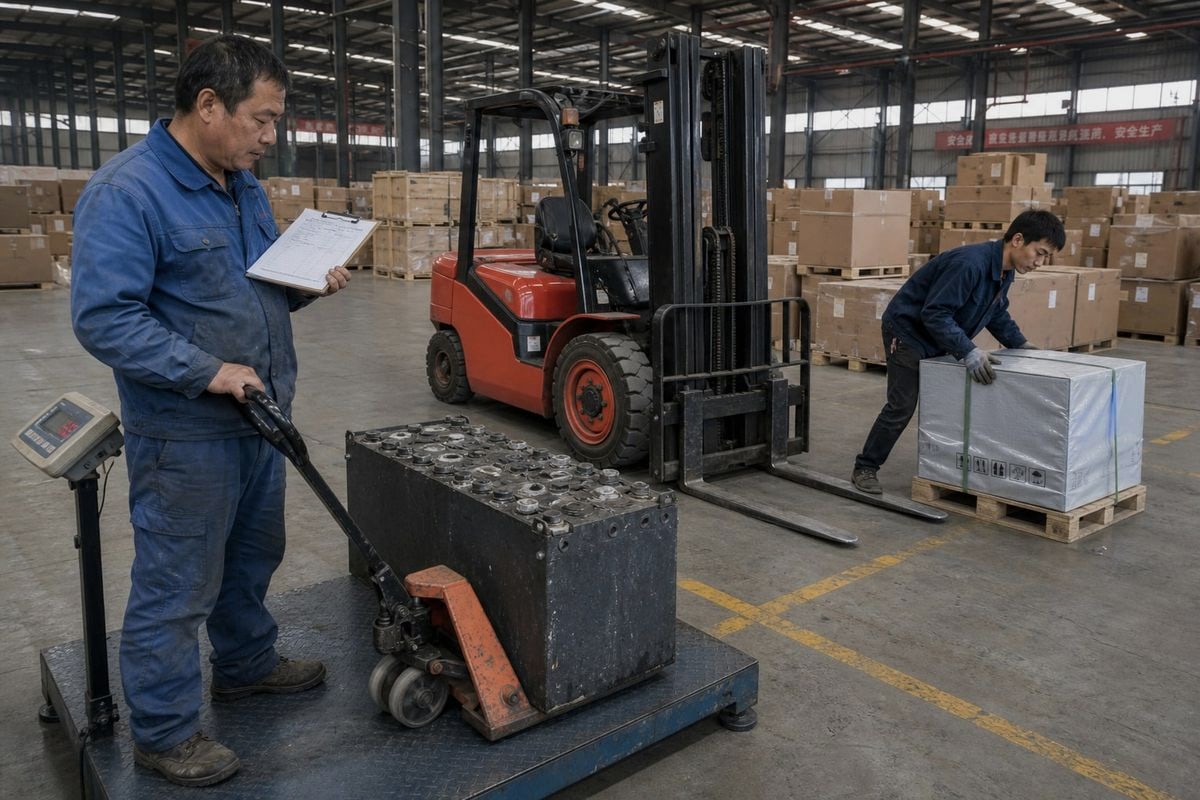
Lithium batteries deserve their own line item. Battery-powered forklifts can attract Class 9 hazardous material 4 surcharges and stricter carrier acceptance rules. Some importers ship the forklift dry and source batteries at destination, which removes the hazmat surcharge and cuts weight-based freight. Whether that math works depends on local battery pricing — we run both scenarios for customers.
Never accept a single "to port" number. Ask for an itemized quote covering every stage above, and compare quotes line by line. Ghost fees and accessorial overcharges are common in heavy-equipment logistics precisely because handling is complex; some larger importers now use freight-audit software to flag them automatically. Marine cargo insurance, meanwhile, is one fee you should pay — a damaged forklift costs far more than the premium.
Reducing forklift shipping costs from China comes down to planning before booking: right mode, tight container loading, smart consolidation, off-peak timing, and full landed-cost transparency at every stage.
1. The Federal Maritime Commission is the authoritative body regulating oceanborne transportation on U.S. trade lanes. ↩︎
2. Official ICC resource defining the international commercial terms used for global trade and shipping. ↩︎
3. Official U.S. Harmonized Tariff Schedule used to classify forklifts and determine applicable import duties. ↩︎
4. U.S. Department of Transportation regulations for shipping lithium batteries, classified as Class 9 hazardous materials. ↩︎