- +8618603825129
- [email protected]

Buyers often ask our Zhengzhou team how to ship forklifts by RoRo. Get it wrong, and port rejections, storage fees, and battery compliance problems pile up fast. Here is the fix.
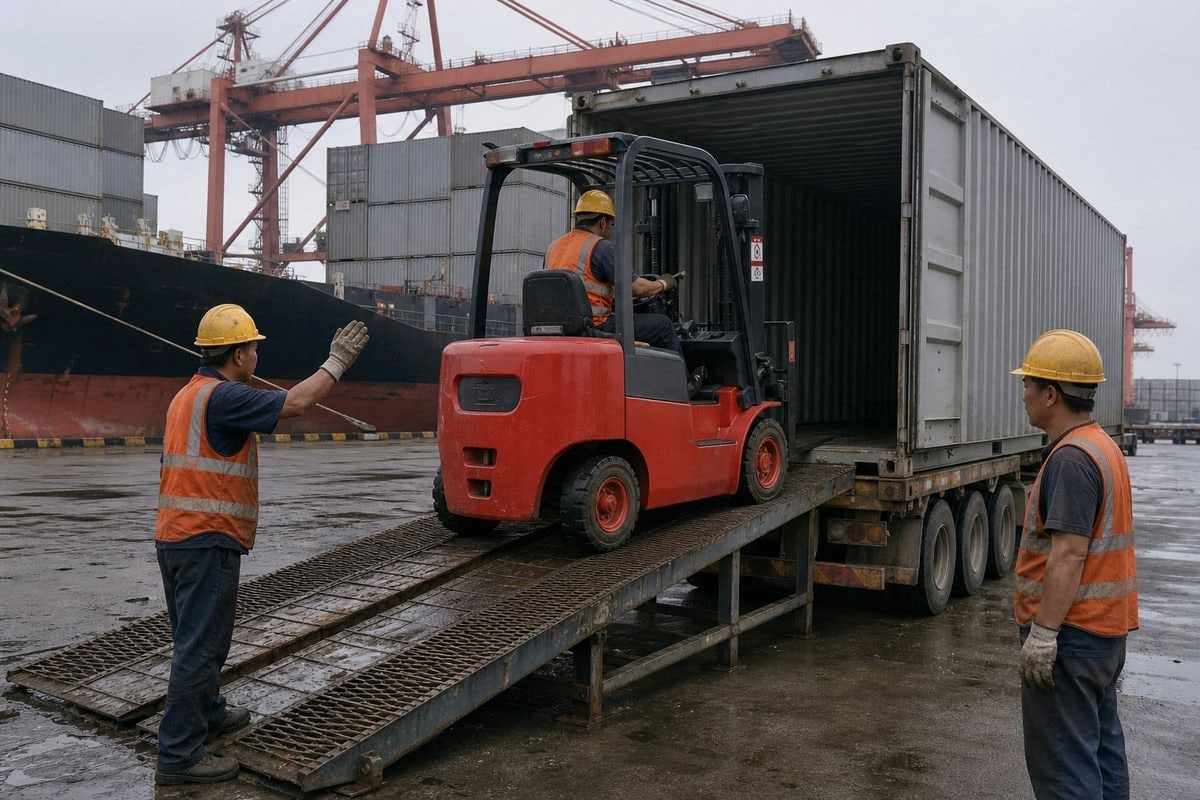
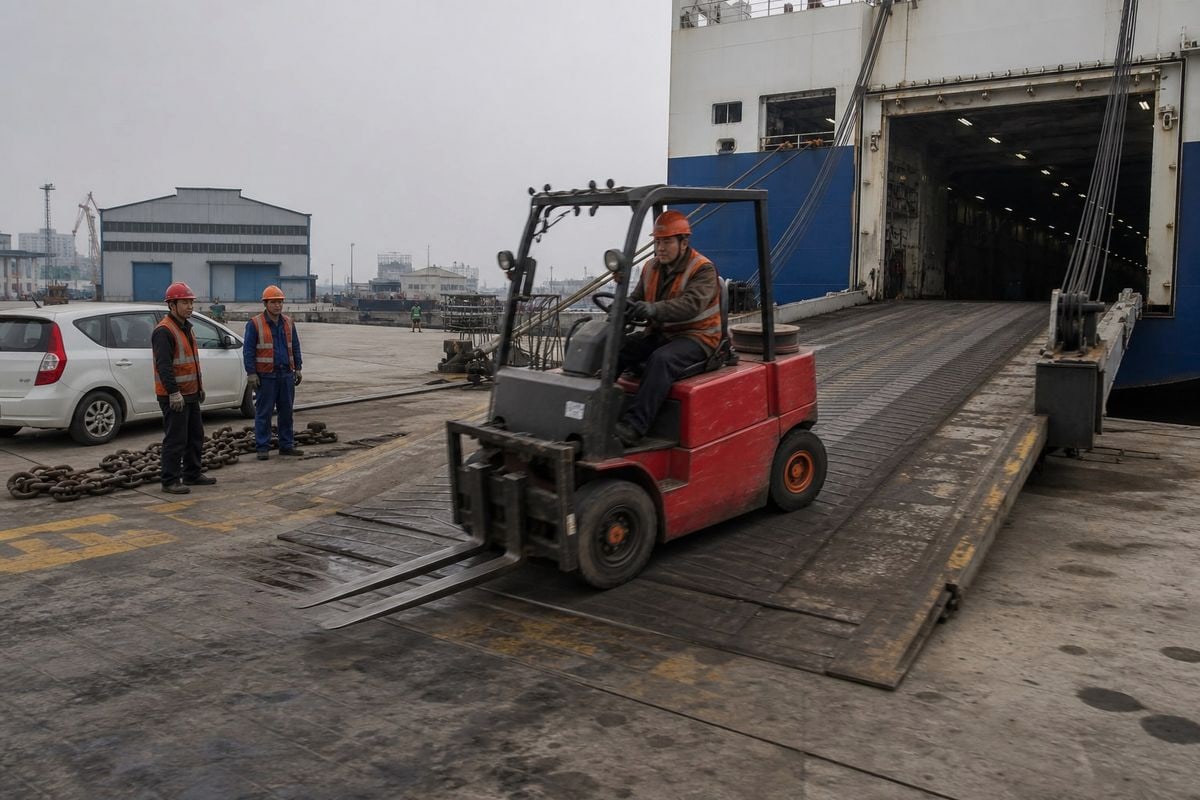
To ship forklifts by RoRo, you deliver an operational forklift to a RoRo terminal, where stevedores drive it up the vessel ramp and lash it to the deck with chains. You need a Bill of Lading, commercial invoice, low fuel or battery charge, and a clean, working machine.
That is the short version. The details matter more. Below, I break down which forklifts qualify, what it costs, which papers you need, and how to prepare batteries.
A distributor in Houston once asked me to book three dead-battery forklifts on a RoRo vessel. The carrier refused all three. That call taught him what "roll-on" really means.
RoRo accepts self-propelled, fully operational forklifts, including diesel, LPG, and electric models with working steering and brakes. Large counterbalance trucks, reach trucks, and telehandler-class machines all qualify. Non-running units are usually rejected unless the carrier approves towing or MAFI trailer handling in advance.
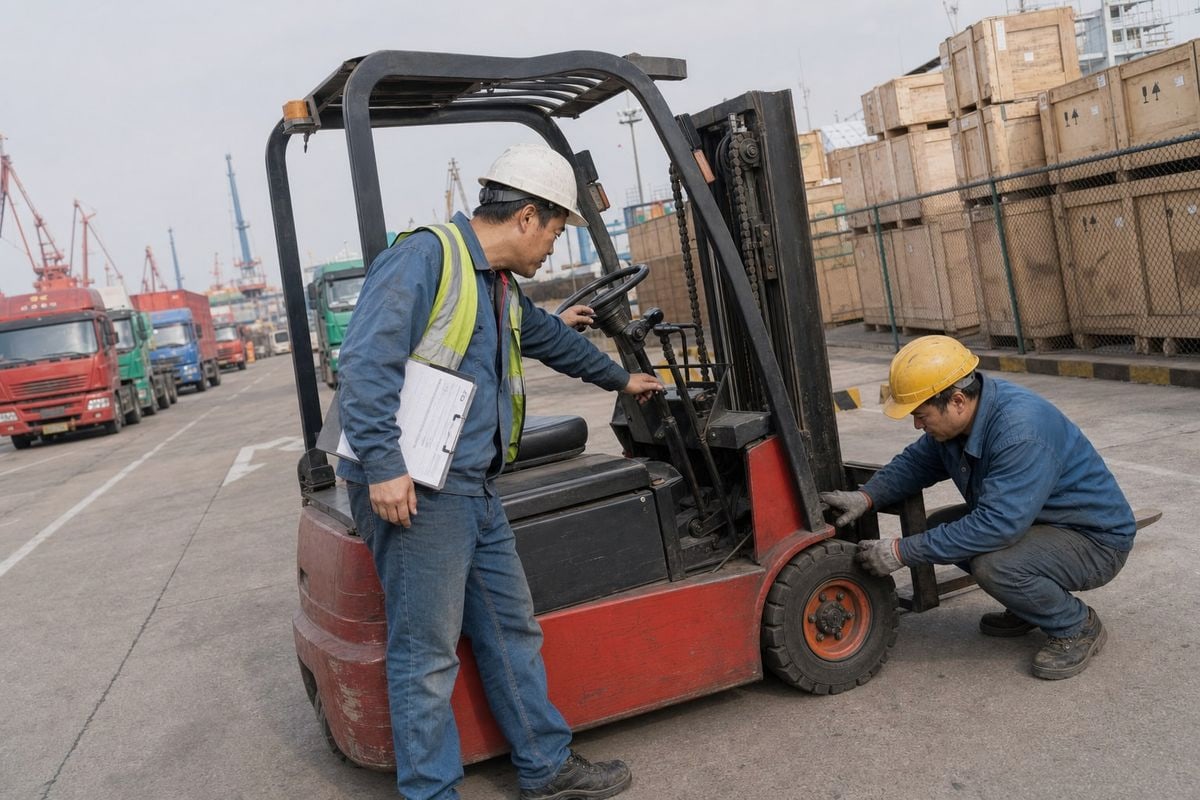
RoRo stands for roll-on/roll-off. The vessel is built for wheeled cargo, so the core rule is simple: if the forklift cannot drive up a ramp safely, it does not belong on the booking. Port stevedores drive the unit themselves, so functional steering and braking systems are non-negotiable. In our ocean freight logistics 1 work, carriers verify operability at gate-in, not at booking. A machine that fails at the terminal creates immediate storage charges.
| Forklift Type | RoRo Suitability | Note |
|---|---|---|
| Diesel counterbalance | Excellent | Fuel must be at or below one-quarter tank |
| LPG forklift | Good | Tanks often must be emptied or removed |
| Electric lead-acid | Good | Battery secured, terminals protected |
| Lithium-ion electric | Good with conditions | State of Charge below 30% is often required |
| Non-running unit | Poor | Only with carrier approval and MAFI trailers or towing |
| Oversized high-mast unit | Good | Classified as high and heavy cargo |
Forklifts travel alongside excavators and telehandlers in the "high and heavy" category, so oversized cargo handling is routine at RoRo terminals. One helpful nuance: under IMDG Code 2 Special Provision 961, forklifts with combustion engines are generally not treated as hazardous cargo on RoRo vessels. That simplifies booking, but it does not erase fuel and battery rules. When a unit truly cannot run, we usually recommend container shipping or a MAFI trailer arrangement instead, because static cargo changes both handling and pricing.
Quoting RoRo always involves a trade-off I explain to every client: measure the machine precisely, or pay for air you are not using. Volume drives the bill.
RoRo forklift shipping from China is priced mainly by volume in Cubic Meters (CBM), calculated from exact length, width, and height. Total cost combines the CBM ocean rate, terminal handling, documentation fees, customs charges, and inland trucking, so route, dimensions, and mast height drive the final price.
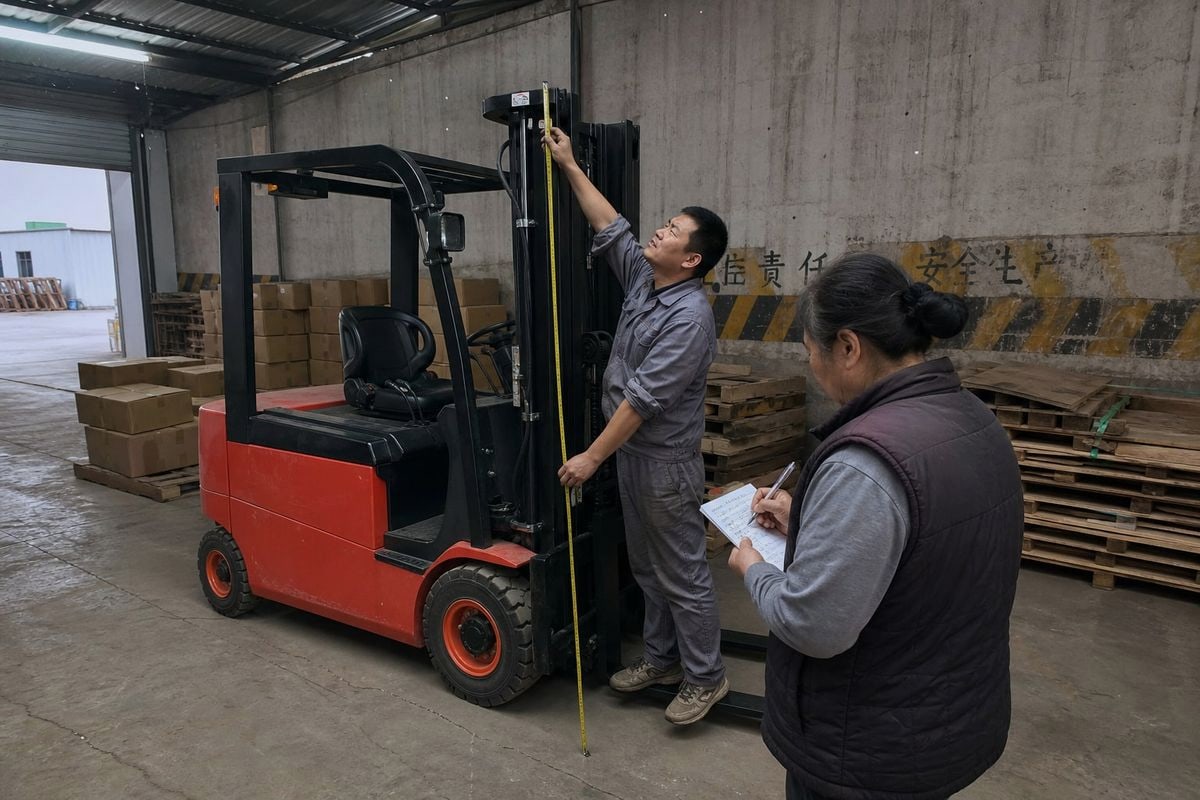
Weight matters less than most buyers expect. Carriers calculate the base freight from CBM, so a tall mast can cost more than a heavy counterweight. This is where preparation directly saves money. Retracting or partially disassembling the mast to stay below the common high-and-heavy thresholds, often 2.5 or 4 meters, can significantly reduce CBM-based surcharges. We check mast specs with the factory before quoting, because a 30-centimeter reduction sometimes moves the unit into a cheaper rate band.
| Cost Factor | Why It Matters |
|---|---|
| CBM (L × W × H) | The base freight rate multiplies against total volume |
| Port pair | Origin and destination ports set the lane rate |
| Mast height | Crossing the 2.5 m or 4 m threshold triggers surcharges |
| Operational condition | Non-runners need special handling at higher cost |
| Terminal and port fees | Charged at both origin and port of discharge |
| Trasporto interno | Factory-to-port trucking in China adds to landed cost |
| Season and capacity | Peak sailings tighten space and raise rates |
I never quote a single universal number, because a compact electric stacker and a 5-ton diesel truck sit in completely different brackets. What I do tell buyers is to budget beyond ocean freight. Destination handling, customs duties, and delivery from the port of discharge frequently surprise first-time importers. A transparent freight forwarder services quote should itemize every leg, so you can compare true landed cost, not just the headline rate. That is how our clients avoid the "cheap quote, expensive arrival" trap.
Early in our export work, one missing Power of Attorney held a client's forklift at the terminal for nine days. Since then, we audit every file before the truck leaves the factory.
You need a commercial invoice or original bill of sale, packing list, Bill of Lading, and export customs declaration. Many destinations also require a certificate of origin, a lien-free title, and a Power of Attorney if a third-party logistics provider handles clearance for you.
Paperwork problems delay more shipments than vessel schedules do. The vessel booking can be perfect, but if the customs clearance documentation 3 is inconsistent, the machine sits at the port of discharge while storage fees accumulate daily. In our process, we cross-check the invoice, packing list, and Bill of Lading against each other before departure. The model number, serial number, weight, and declared value must match on every page. One mismatched digit invites an inspection.
| Documento | Scopo | Who Prepares It |
|---|---|---|
| Commercial invoice / bill of sale | Proves value and ownership for customs | Seller or factory |
| Elenco degli imballaggi | Details dimensions, weight, and accessories | Seller with forwarder review |
| Polizza di carico | Contract of carriage and cargo receipt | Carrier via forwarder |
| Export customs declaration | Clears the forklift out of China | Forwarder or customs agent |
| Certificato di origine | Supports duty treatment at destination | Chamber of commerce or agent |
| Lien-free title | Confirms no outstanding claims on the unit | Seller |
| Power of Attorney | Authorizes a broker to clear on your behalf | Buyer |
Two more points from experience. First, confirm destination-country import requirements before the vessel sails, because international shipping regulations differ sharply between the US, the EU, and other markets. Second, buy marine cargo insurance and ask about a Mechanical Breakdown rider. Standard maritime policies often exclude internal damage caused by aggressive driving during port handling, and that gap only becomes visible after a claim is denied.
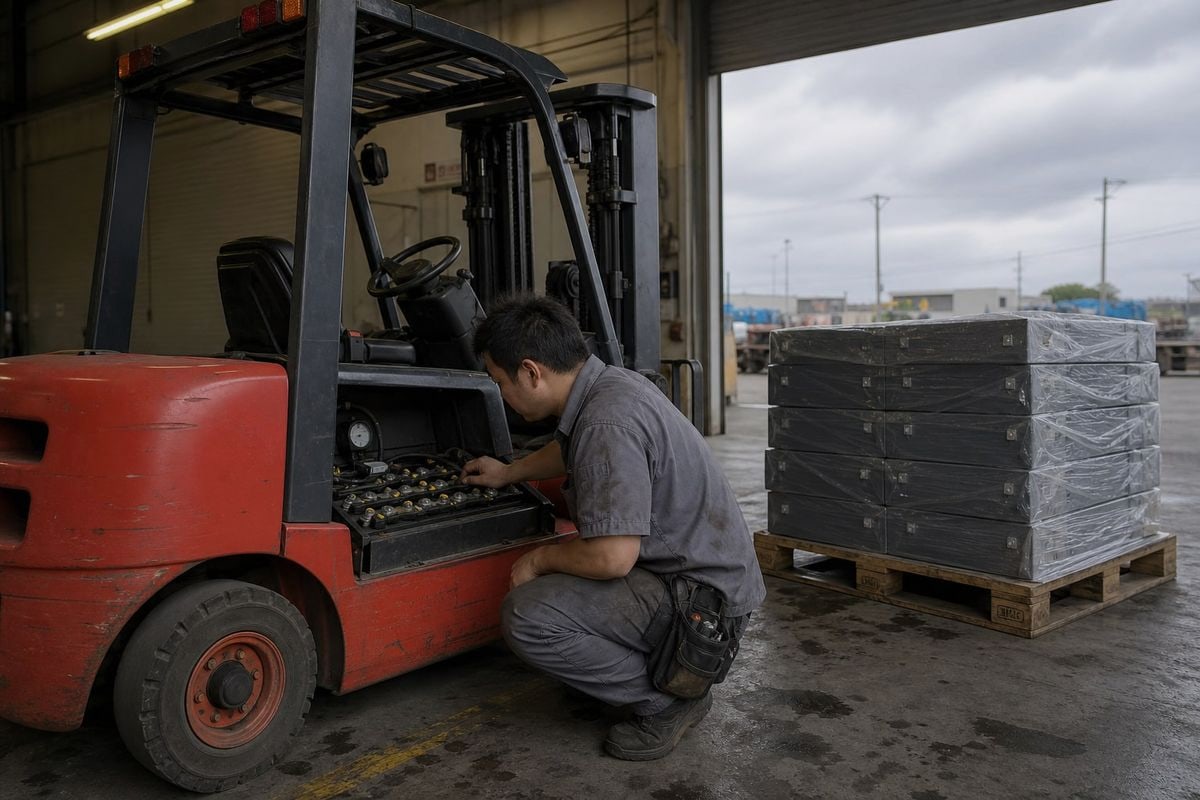
Battery prep is where I see the most avoidable mistakes. Coordinating lithium battery cargo from Chinese factories daily, our team treats charge state and documentation as the first checkpoint, not the last.
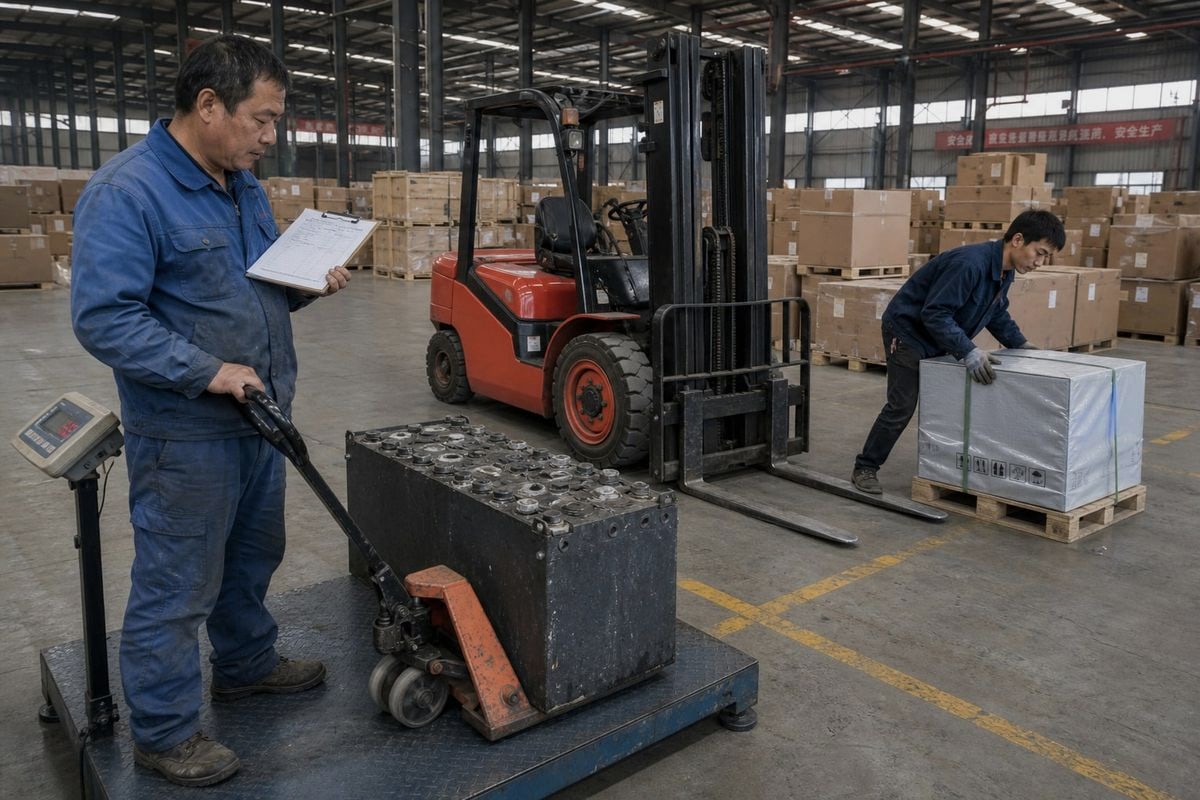
Discharge lithium-ion batteries to a State of Charge below 30% to reduce thermal runaway risk, then disconnect and insulate the terminals. Secure the battery against movement, protect exposed components from salt air, and confirm the carrier's specific battery acceptance rules before delivering to the terminal.

The 30% SoC threshold exists for a clear reason. Maritime safety codes increasingly target thermal runaway 4, and a low-charge lithium pack carries far less energy if a cell fails inside an enclosed vessel deck. But here is the tension buyers raise with me: the forklift still has to drive up the ramp under its own power. So you cannot discharge it to zero. Our answer is to discharge to a controlled low level, verify the reading, and coordinate with the terminal so the unit gates in with enough charge to move but stays within the carrier's limit. Every shipping line publishes its own acceptance rules, so we confirm them per booking rather than assuming one universal standard.
These steps sound small, but each one blocks a specific failure mode in heavy machinery transport. Salt air pits chrome. Loose forks shift under lashing chains. Dirty tires fail quarantine. Preparation is cheaper than any of those outcomes.
Shipping forklifts by RoRo rewards preparation. Ship an operational, clean, low-charge machine with matching documents, and your equipment rolls off on schedule. Skip a step, and delays get expensive.
1. WCO page covering international trade facilitation and logistics standards. ↩︎
2. Official IMO page explaining the code for transporting dangerous goods by sea. ↩︎
3. Official US Customs guide on the requirements for importing and exporting goods. ↩︎
4. IMO resources regarding the safety and regulation of shipping lithium batteries. ↩︎