
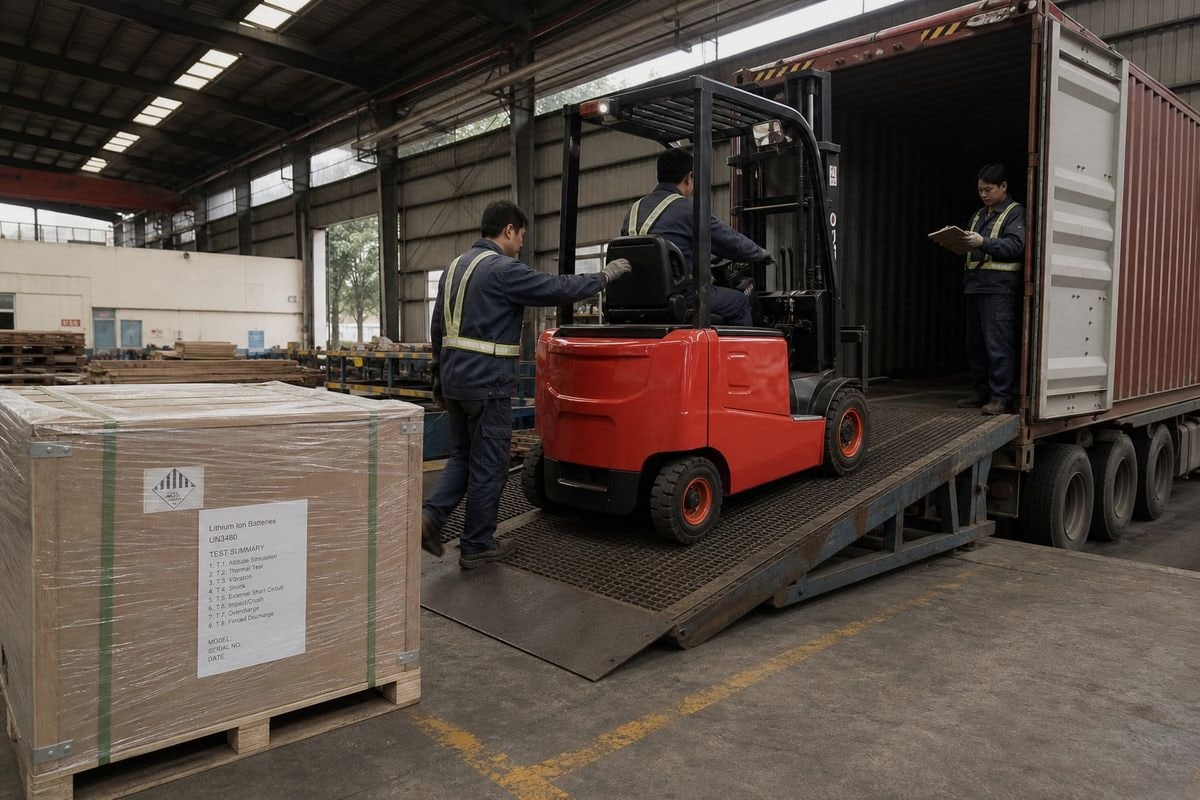
Every week, our team in Zhengzhou books containers to [ship electric forklifts from China to Mexico](https://mbmlog.com/how-ship-electric-forklifts-china-2026-guide-to/). Many buyers lose money on this route. Battery paperwork gets rejected. Containers sit at the Port of Manzanillo 1 racking up storage fees. HS codes get flagged. One missed document can turn a good forklift deal into a costly headache. The good news? Every one of these problems is preventable with the right preparation before your cargo ever leaves the factory.
To ship electric forklifts from China to Mexico, book FCL ocean freight to Manzanillo or Lázaro Cárdenas, prepare UN38.3 and MSDS documents for lithium batteries, classify under HS Code 8427.10, secure NOM compliance, and clear customs with a licensed Mexican broker. Transit takes 25–40 days.
That is the short answer. Now let me walk you through the costs, documents, container choices, and battery rules step by step.
How much does it cost to ship an electric forklift from China to Mexico?
A buyer in Monterrey once emailed me a competitor's quote that looked cheap. It excluded destination charges, battery handling, and inland trucking. His real landed cost nearly doubled.
Shipping one electric forklift from China to Mexico typically costs $1,500–$4,500 by sea, depending on container type, port pair, and battery classification. Total landed cost adds Mexican import duties, 16% VAT, customs brokerage, port handling, and inland trucking to your warehouse.

There is no single fixed price for this route. Anyone who gives you one flat number without asking about your forklift specs is guessing. In our experience quoting forklift shipments every week, the final cost depends on the forklift's dimensions, gross weight, battery type, and how many units you ship per container.
I principali componenti di costo
Here is how I break down a typical quotation for Mexican buyers:
| Componente di costo | Cosa lo determina | Typical Share of Landed Cost |
|---|---|---|
| Forklift purchase price | Model, capacity, battery type | 60–75% |
| trasporto marittimo | Container size, season, port pair | 8–15% |
| DG/battery surcharges | Lithium-ion classification (UN3481) | 2–5% |
| Mexican port charges | Terminal handling, storage | 2-4% |
| Customs brokerage | Broker fees, pedimento processing | 1–3% |
| Import duties (IGI) + 16% VAT | HS code, certificate of origin | 10–20% |
| Trasporto interno | Distance from port to warehouse | 3-8% |
Why cost per unit drops with volume
Container utilization matters more than the base freight rate. A 40ft High Cube costs roughly the same whether you load two forklifts or four. So the freight cost per forklift can fall sharply when you fill the box. We often help buyers fill leftover space with chargers, spare parts, or batteries from other suppliers through multi-supplier consolidation.
Ways to reduce your landed cost
- Ship 2–4 units per 40HQ instead of one unit per 20ft container.
- Request a certificate of origin to check for preferential duty treatment.
- Confirm all destination charges in writing before booking.
- If your company qualifies, the IMMEX program can defer the 16% VAT and general import duties for export-oriented production. Strategic bonded warehouses (Recinto Fiscalizado Estratégico) can even allow up to 60 months of tax-deferred storage for large fleets.
Ask your freight forwarder for a full door-to-door breakdown. If a quote looks unusually low, something is missing from it.
What documents do I need for customs clearance when importing forklifts into Mexico?
Document errors cause more forklift delays than storms or port congestion combined. I learned this early in my forwarding career, when a single missing battery test report held a container at port for eleven days.
Importing electric forklifts into Mexico requires a commercial invoice, packing list, bill of lading, certificate of origin, UN38.3 test summary, MSDS documentation, IMDG declaration for lithium batteries, correct HS code classification (8427.10), applicable NOM certification, and a pedimento filed by a licensed Mexican customs broker.
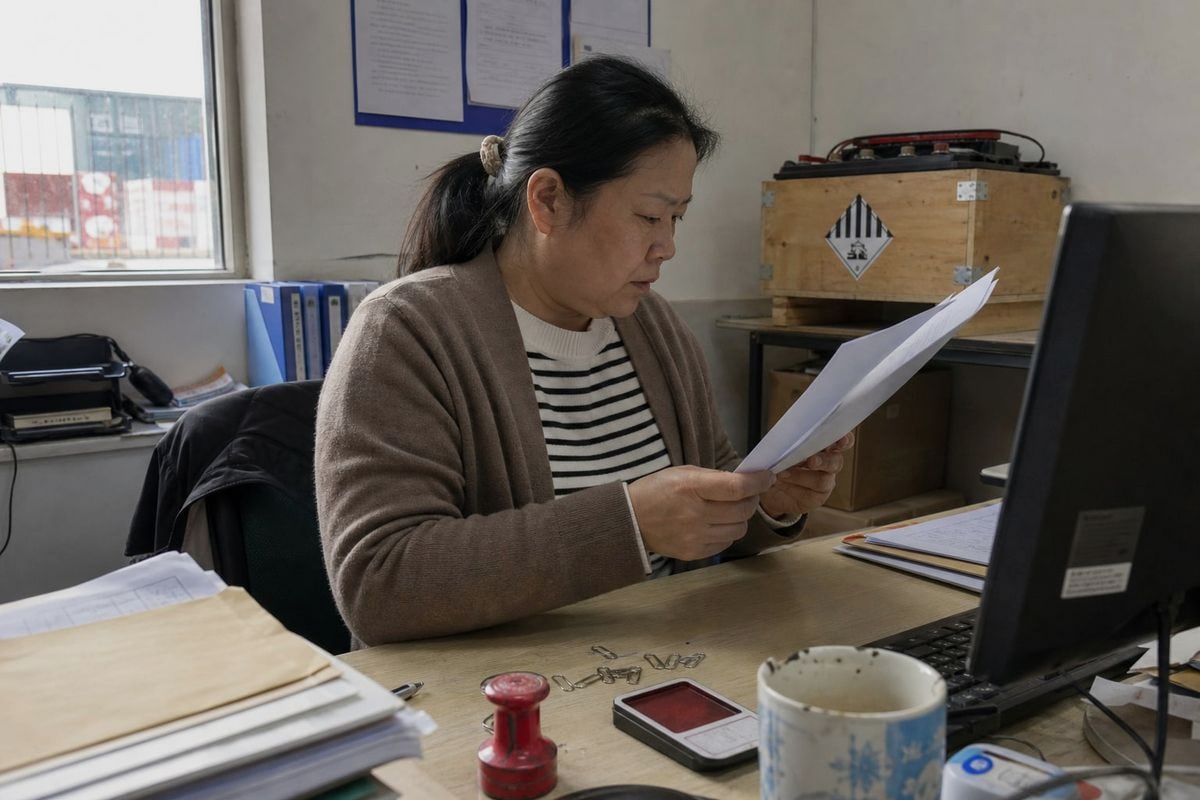
Customs clearance in Mexico is strict, and battery-powered industrial equipment gets extra scrutiny. Our documentation team reviews every file before the vessel departs China, because fixing paperwork after arrival is slow and expensive.
The core document stack
| Documento | Rilasciato da | Why Mexican Customs Needs It |
|---|---|---|
| Fattura commerciale | Forklift supplier | Declares transaction value for duty calculation |
| Elenco degli imballaggi | Forklift supplier | Confirms weights, dimensions, quantities |
| Polizza di carico | Carrier / forwarder | Proves ownership and shipment terms |
| Certificato di origine | Supplier / chamber | Determines duty rate and trade preferences |
| riepilogo del test UN38.3 | Produttore di batterie | Proves lithium battery passed transport safety tests |
| MSDS/SDS | Produttore di batterie | Details battery chemistry and hazard handling |
| IMDG DG declaration | Shipper / forwarder | Required when the battery is classified as dangerous goods |
| Pedimento de importación | Mexican customs broker | The official Mexican import entry document |
Get the HS code right
Electric motor-powered forklifts typically fall under HS Code 8427.10. The exact tariff line 2 can shift based on lifting capacity and rider type, and the wrong code changes your duty rate and triggers inspections. We always confirm the classification with the Mexican broker before the vessel sails.
NOM certification matters
Mexico enforces Official Standards 3 (NOM) on electrical equipment. Depending on the forklift and charger, NOM-001-SCFI or NOM-019-SCFI may apply to certify electrical safety before clearance. Confirm this with your broker early, because NOM compliance cannot be arranged after the container arrives.
Tempistica
Clearance usually takes a few business days. Inspections or missing paperwork extend it. Our rule: the complete document set should be verified at least one week before vessel arrival.
Should I choose FCL or LCL for shipping my electric forklift to Mexico?
Container choice is a trade-off I weigh on almost every forklift booking: pay for a full box you may not fill, or share space and accept handling risk.
Choose FCL for shipping electric forklifts to Mexico in almost all cases. A 40ft High Cube holds 2–4 counterbalance units with better protection, lower per-unit cost, and no co-loading risk. LCL only suits small pallet trucks, chargers, batteries, or spare parts shipments.
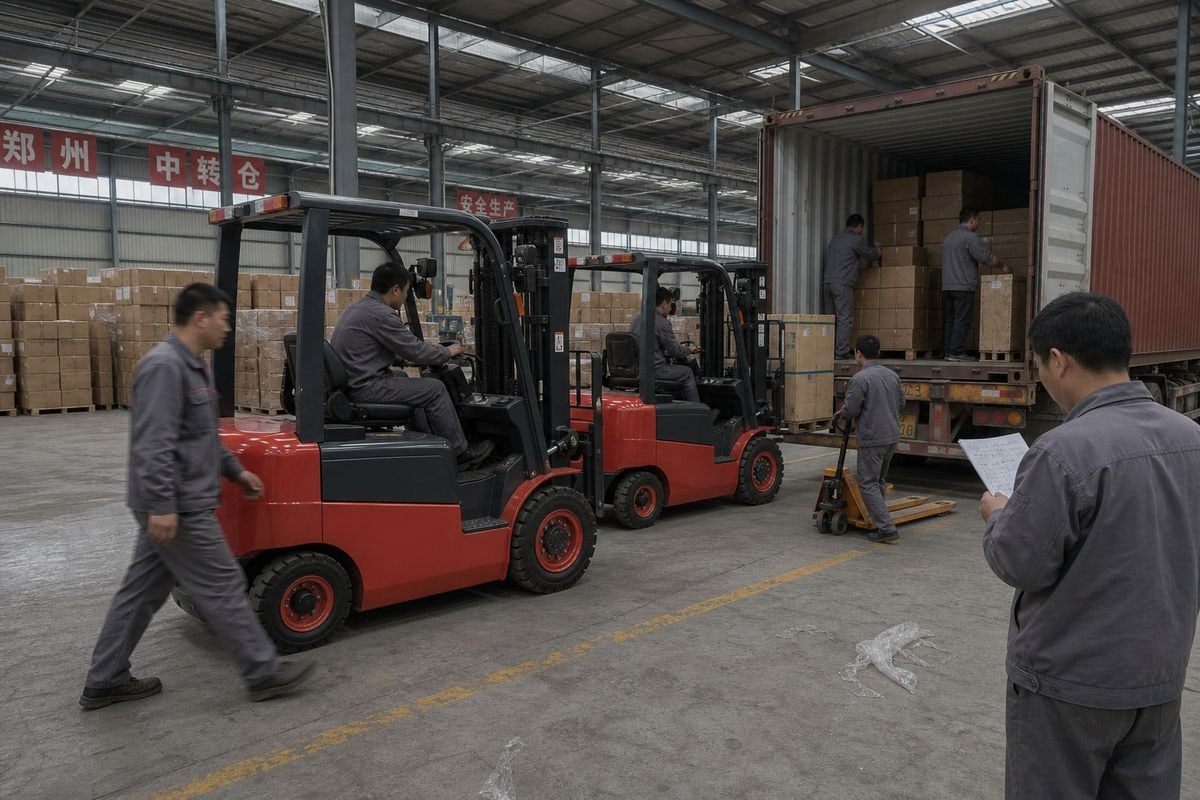
Let me compare the options directly, because this decision shapes your cost, transit reliability, and damage risk.
| Metodo | Il migliore per | Pro | Contro |
|---|---|---|---|
| FCL (20ft / 40ft / 40HQ) | 1–4+ complete forklifts | Full control, best protection, lowest cost per unit at volume | You pay for the whole container |
| Consolidamento LCL | Chargers, batteries, spare parts | Pay only for space used | Extra handling, co-loader delays, DG restrictions |
| Ro-Ro shipping | Very large, drivable machinery | No container needed | Limited China–Mexico route availability, exposure risk |
| Flat rack container | Oversized heavy-duty models | Handles over-height/over-width units | Higher cost, weather exposure, extra lashing |
| Trasporto aereo | Urgent small parts only | 3–7 days transit | Uneconomical for full forklifts; lithium battery limits |
Why FCL usually wins
A standard 2–3 ton electric counterbalance forklift is heavy, high-value cargo. Inside your own container, it is loaded once, secured once, and untouched until Mexico. With LCL, cargo passes through consolidation warehouses and shares space with unknown freight. For a machine worth thousands of dollars with a lithium battery on board, that extra handling is a risk I rarely recommend taking. Many consolidators also refuse dangerous goods entirely, which rules out LCL for most lithium-ion forklifts anyway.
Matching container to shipment
- One compact forklift: a 20ft container works, but check the per-unit math first.
- Two to four standard units: a 40HQ is usually the most cost-effective choice. The extra height helps when the mast is tilted rather than removed.
- Oversized heavy-duty models: a flat rack container or Ro-Ro shipping may be the only option, though direct Ro-Ro sailings from China to Mexico are limited.
Loading is part of the decision
Counterbalance forklifts often need the mast removed or tilted and the overhead guard folded or detached to fit through container doors. The machine must then be secured with chains, tensioners, and dunnage, with weight distributed evenly across the floor. We coordinate loading with the factory and photograph every stage, and we always confirm who handles reassembly at destination before the container ships.
How do I safely ship lithium battery forklifts from China to Mexico?
A distributor once asked me why his booking was rejected three times by different carriers. The answer was simple: his supplier never provided the UN38.3 test summary, so no carrier would accept the cargo.
Lithium battery forklifts ship as Class 9 Dangerous Goods (UN3481). Safe shipping requires a UN38.3 test summary, MSDS documentation, an IMDG dangerous goods declaration, proper Class 9 labeling, secure state-of-charge and terminal protection, and early DG booking with a carrier that accepts battery cargo.
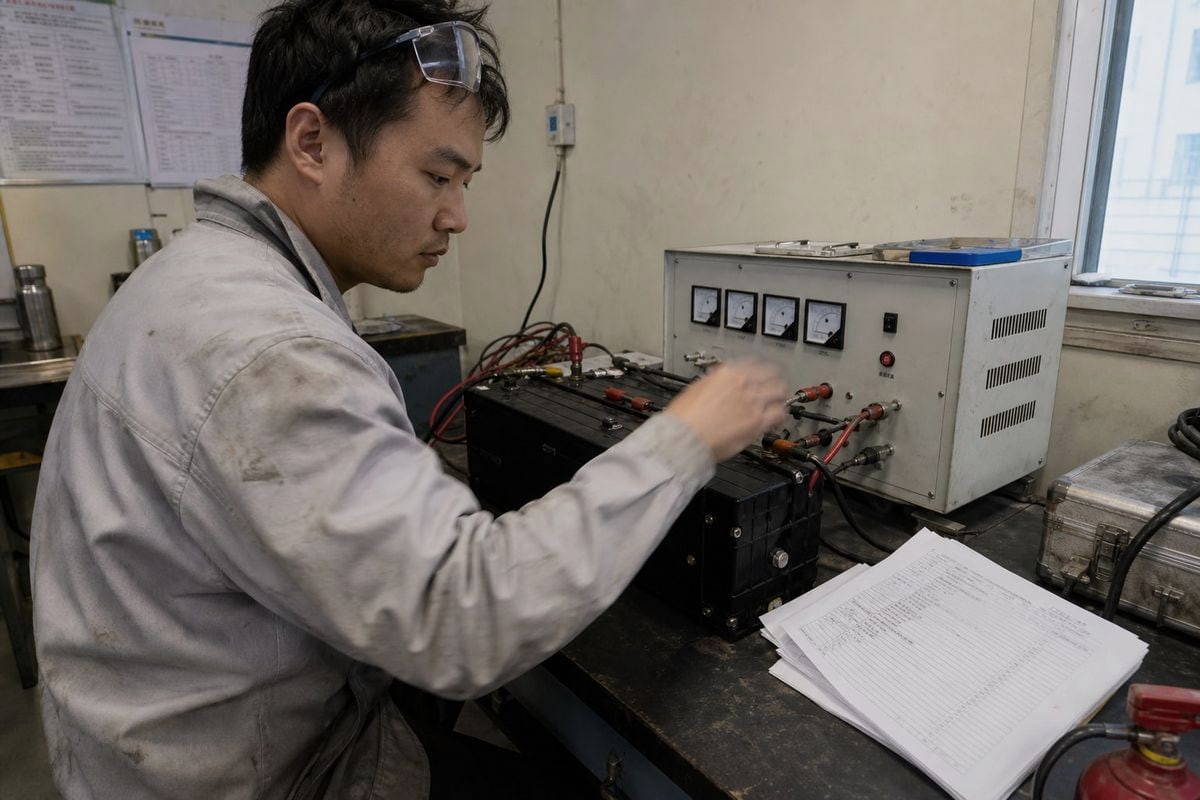
Battery compliance is the single biggest risk area on this route. Lithium-ion battery regulations 4 under the IMDG Code are strict, and carriers have become more cautious, not less. Here is the process we follow on every lithium forklift shipment.
Confirm the battery chemistry first
Not all electric forklifts carry lithium batteries. Lead-acid units face far fewer restrictions. Lithium-ion units trigger the full dangerous goods process. Some suppliers now also offer sodium-ion battery forklifts (UN3551), an emerging option with a lower hazardous risk profile that may reduce insurance premiums. Always get the exact battery specification in writing from the factory before requesting freight quotes.
The compliance steps in order
- Collect the UN38.3 test summary and MSDS documentation from the battery maker.
- Verify the battery is installed in the equipment, which affects the UN3481 packing instruction applied.
- Submit the DG booking to the carrier early. DG approval takes longer than standard bookings, sometimes a week or more.
- Apply Class 9 hazard labels and correct marks on the unit and container.
- Reduce the state of charge where required, protect terminals, and disconnect the battery per carrier instructions.
- Prepare the IMDG dangerous goods declaration signed by the shipper.
- Load and secure the forklift so the battery cannot shift or suffer impact during the 25–40 day trans-Pacific transit.
Monitoring during transit
Some shippers now place IoT-enabled thermal runaway sensors inside containers to track battery temperature and stability across the long ocean crossing. For high-value fleets heading to the Port of Manzanillo or Lázaro Cárdenas, this extra visibility is worth discussing with your freight forwarder, along with proper cargo insurance that explicitly covers battery-powered equipment.
DDP or FOB for battery cargo?
FOB gives experienced importers control and freight transparency after loading at the Chinese port. But for lithium forklifts, DDP shipping terms 5 can make sense if you lack a Mexican DG-experienced broker, because one party then owns compliance from factory to warehouse. Either way, choose a partner who handles battery cargo routinely, not occasionally.
Conclusione
Shipping electric forklifts from China to Mexico rewards preparation. Confirm battery specs, verify documents early, choose FCL wisely, and work with a forwarder who knows this cargo. Get those right, and your forklifts arrive on time and on budget.
Note a piè di pagina
1. Official website for Mexico's primary Pacific port, a key entry point for Chinese forklift shipments. ↩︎
2. The World Customs Organization manages the Harmonized System which determines the specific tariff line for imported goods. ↩︎
3. The Mexican government's official portal provides regulatory details on NOM standards required for importing electrical equipment. ↩︎
4. The IMO establishes the global safety regulations for transporting lithium-ion batteries and other dangerous goods by sea. ↩︎
5. The International Chamber of Commerce (ICC) maintains the official Incoterms rules used in international trade contracts. ↩︎




