

Shipping electric pallet trucks from China looks simple until a battery document gets rejected. I have watched containers sit at port for weeks. Our team at MBMLOG prevents exactly that.
To ship electric pallet trucks from China, confirm the battery type, obtain UN38.3 and MSDS documentation, book FCL sea freight with dangerous goods acceptance if lithium batteries are installed, secure the units inside the container, and clear customs using the correct HS code, typically 8427.10.
That is the short answer. The details matter more. Below, I break down costs, documents, container choices, and customs strategy so your shipment arrives on time and undamaged.
How Much Does It Cost to Ship Electric Pallet Trucks from China?
Last quarter, a US dealer asked me why his "cheap" freight quote doubled at destination. Our quotation team sees this weekly. The factory price is never the full story.
Shipping electric pallet trucks from China typically costs $1,500–$4,500 for a 20FT container and $2,500–$6,500 for a 40FT container, depending on route, season, and battery classification. Add import duties, destination handling, trucking, and insurance to calculate the true landed cost per unit.

Freight rates change monthly, so treat any number as a snapshot. What stays constant is the structure of the cost. In our experience arranging electric forklift and pallet truck shipments from Chinese factories to the United States and Europe, the ocean freight itself is often only 40–60% of the total logistics bill. The rest hides in pickup, documentation, destination charges, and taxes.
The Main Cost Drivers
Size and weight matter, but battery classification matters more. A lithium-powered pallet truck 1 classified as dangerous goods can carry a DG surcharge and may need a special booking. Route and season also swing prices. Peak season rates from China to the US West Coast can jump sharply compared to slack months.
Here is how I break down a typical door-to-door shipment for our customers:
| Componente de custo | Who Usually Pays (FOB) | Typical Share of Total |
|---|---|---|
| Factory pickup and inland trucking in China | Supplier or forwarder | 5-10% |
| Export declaration and origin handling | Supplier or forwarder | 3-8% |
| Ocean freight (port to port) | Comprador | 40–60% |
| DG surcharge for lithium battery cargo | Comprador | 5-10% |
| Destination port charges and handling | Comprador | 8–15% |
| Taxas e impostos de importação | Comprador | Varies by country |
| Final delivery trucking | Comprador | 5-12% |
| Seguro de carga | Comprador | 1–3% |
Landed Cost, Not Freight Cost
I always tell buyers to calculate the full landed cost before confirming a purchase order. A pallet truck that saves you $200 at the factory but adds $400 in freight inefficiency is a bad deal. Container utilization is the biggest lever here. If you can fit eight walkie pallet trucks plus spare parts and chargers into one 20FT container instead of shipping five units with wasted space, your per-unit logistics cost drops dramatically. We run this loading calculation for customers before they even sign with the factory.
Also budget time as a cost. Port-to-port sea freight commonly takes 18–40 days, and the full door-to-door process, including inland transport and the customs clearance process, often runs 4–10 weeks.
What Documents Do I Need to Ship Electric Pallet Trucks with Lithium Batteries?
A customer once sent us a UN38.3 report that named a different battery model than the one installed. The carrier rejected the booking. We caught it before the cargo left the factory.
You need a commercial invoice, packing list, bill of lading, UN38.3 test report, MSDS matching the exact battery model, and a dangerous goods declaration for the DG booking. Most lithium-powered pallet trucks ship as Class 9 dangerous goods under UN3171.

Documentation is where most first-time importers stumble. Missing or mismatched battery paperwork is the single most common reason we see bookings rejected or containers held. Some suppliers present shipping as a simple checklist, and buyers assume the freight movement is the hard part. In practice, moving the box is easy. Battery compliance and paperwork coordination are the hard part. I raise this objection with every new customer because a low freight quote means nothing if the vessel will not accept your cargo.
The Standard Document Set
Every shipment needs the commercial invoice, packing list, and bill of lading or air waybill. A certificate of origin may reduce your duty rate under trade agreements. Cargo insurance documents protect you against loss.
The Battery Document Set
Lithium battery pallet trucks trigger dangerous goods shipping rules. Here is what carriers and customs expect:
| Documento | Finalidade | Common Failure Point |
|---|---|---|
| Certificação UN38.3 | Prova que a bateria passou nos testes de segurança para transporte | Report covers a different battery model or capacity |
| MSDS documentation | Describes battery chemistry and hazards | Outdated version or mismatch with installed battery |
| Declaração de mercadorias perigosas | Required for the DG booking under UN3171 | Filed late, missing carrier acceptance |
| Folha de especificações da bateria | Confirms voltage, capacity, and watt-hours | Supplier provides generic spec, not unit-specific data |
Destination Certifications
Lithium-ion battery regulations are only half the compliance picture. European imports require a CE Declaration of Conformity and compliance with the Machinery Directive 2006/42/EC. North American units must meet ANSI/ASME B56.1 2 safety standards. We verify these with the factory before pickup, because discovering a missing CE declaration after arrival in Rotterdam is an expensive lesson.
One more update worth knowing: to align with the 2026 IMDG safety updates, batteries should be shipped at roughly 30% state of charge. This minimizes thermal runaway risk while preventing deep-discharge damage during a long sea transit.
Should I Choose FCL or LCL for My Electric Pallet Truck Shipment?
Container planning is where our loading team earns its keep. Before quoting, we always ask for exact dimensions, unit weight, and battery type, because those three numbers decide the whole plan.
Choose FCL for most electric pallet truck shipments. Their high weight-to-volume ratio makes LCL consolidation difficult and often expensive, and many consolidators refuse lithium battery cargo. LCL only makes sense for a single compact walkie unit with cooperative DG handling.

Remessas FCL e LCL serve different situations, so let me compare them honestly. Full Container Load is the standard method for pallet trucks and forklifts. Less than Container Load looks attractive for small orders, but the math and the battery rules usually push buyers back to FCL.
| Fator | FCL | LCL |
|---|---|---|
| Melhor para | 3+ units, or units plus parts and chargers | One very small walkie unit |
| Lithium battery acceptance | Manageable with a DG booking | Many consolidators refuse Class 9 cargo |
| Cost per unit | Lower when the container is well utilized | High due to weight-based charges |
| Damage risk | Lower; you control the loading | Higher; shared handling and mixed cargo |
| Transit predictability | Better | Extra consolidation and deconsolidation time |
Why Weight Kills the LCL Case
LCL pricing charges by weight or volume, whichever is greater. A pallet truck packs a lot of steel and battery into a small footprint, so you pay heavy-cargo rates without gaining any consolidation benefit. Add the dangerous goods restriction, and most LCL consolidators simply decline the booking.
Making FCL Pay for Itself
The smarter move is filling the container. We regularly consolidate cargo from multiple suppliers for one customer: pallet trucks from Factory A, chargers from Factory B, spare parts from Factory C. Everything meets at our warehouse, gets loaded into one container, and ships under one bill of lading. This multi-supplier consolidation turns a "too small for FCL" order into an efficient full container.
Securing the Load
However you ship, physical securing is critical. Units must be lashed with heavy-duty nylon straps and blocked with wooden chocks to prevent shifting, which can cause battery damage or container imbalance. Each truck should sit on a skid or pallet, wrapped against moisture, with corrosion protection applied. If wooden crates or dunnage are used, the wood must be ISPM 15 3 compliant, or customs can reject the entire shipment. For high-value loads, some of our customers now request smart container tracking, using IoT sensors to monitor real-time battery temperature and humidity throughout the voyage.
How Can I Avoid Customs Delays When Importing Electric Pallet Trucks from China?
Being based in Zhengzhou gives us a practical edge here. We clear many machinery shipments through inland dry ports before cargo ever reaches the coast, and it changes the timeline.
Avoid customs delays by classifying the cargo correctly under HS Code 8427.10, matching all battery documents to the installed battery, confirming destination certifications like CE or ANSI/ASME B56.1 before departure, and pre-checking the invoice, packing list, and DG declaration for consistency.
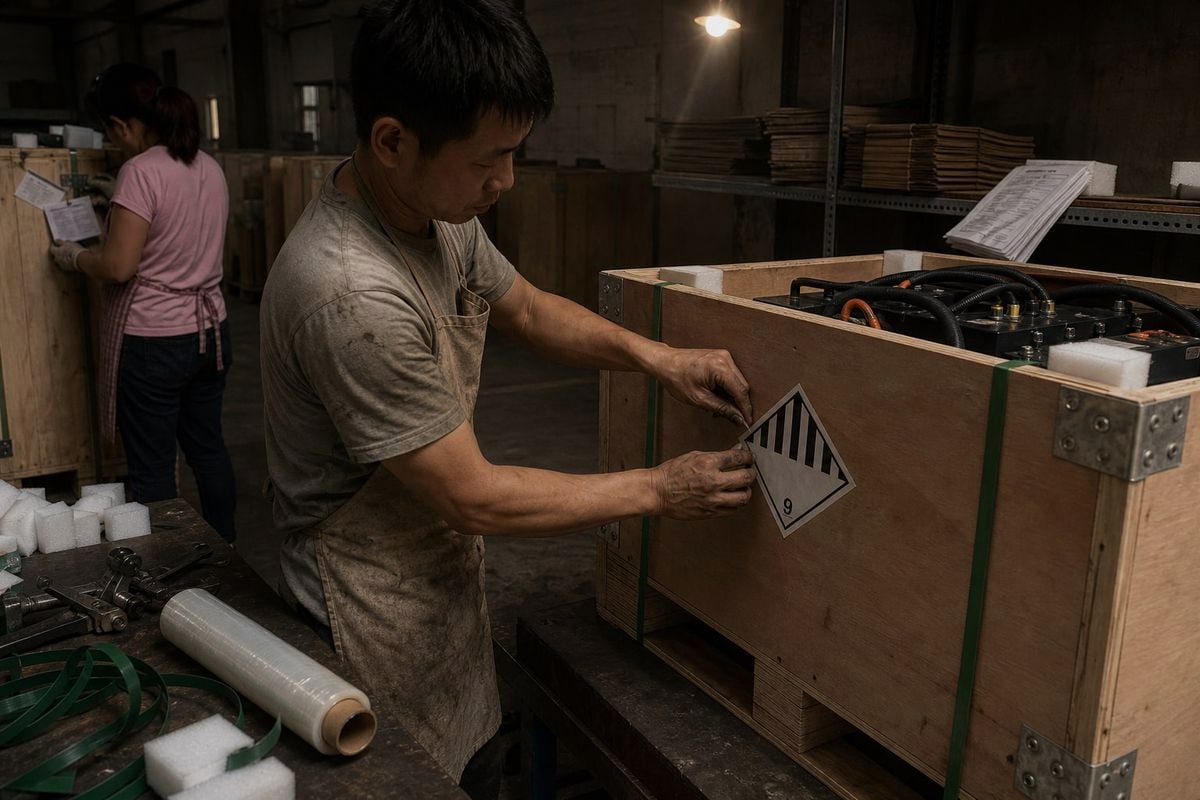
Customs delays are rarely random. In almost every held shipment I have handled, the cause traces back to a document inconsistency that could have been caught in China. So my advice is simple: fix problems before the vessel sails, not after it arrives.
Get the HS Code Right First
Correct HS code classification drives duty accuracy. Most electric pallet trucks fall under HS Code 8427.10 4: rider-type trucks typically classify under 8427.10.10, while walkie-type electric trucks fall under 8427.10.90. A wrong code can mean overpaid duty, underpaid duty with penalties, or a physical inspection. We verify the code against the actual machine configuration, not just the supplier's description.
A Pre-Departure Checklist That Works
Here is the sequence we run for every electric pallet truck shipment:
- Confirm the model, load capacity, battery type, and charger voltage with the factory.
- Verify the HS code and destination import requirements, including import duties and taxes.
- Collect UN38.3, MSDS, and battery spec sheets, and check they match the installed battery.
- Confirm CE Declaration of Conformity for Europe or ANSI/ASME B56.1 compliance for North America.
- Cross-check the commercial invoice, packing list, and bill of lading for identical descriptions, values, and weights.
- Secure DG booking approval from the carrier before cargo moves.
- Complete export declaration, then monitor destination clearance proactively.
Use Inland Dry Ports and the Right Incoterms
Importers can use dry port customs clearance in inland Chinese cities like Zhengzhou or Hefei to lock in export tax rebates and bypass coastal port congestion. On the destination side, your Incoterms determine who manages clearance. Under FOB or CIF, you or your broker handle import formalities. Under DDP shipping terms 5, your freight forwarder China side manages duties, taxes, and delivery, which suits first-time importers who lack a local broker. Experienced buyers sometimes object that DDP reduces cost transparency, and that is a fair point. Our answer is a line-item quotation, so DDP convenience does not hide the numbers. Finally, review your cargo insurance. Standard policies often exclude fires from high-capacity lithium-ion cells, so a thermal runaway rider is increasingly worth the small premium.
Conclusão
Shipping electric pallet trucks from China succeeds on preparation: correct battery documents, FCL loading, accurate HS codes, and pre-checked paperwork. Get those right, and delivery becomes predictable.
Notas de Rodapé
1. UNECE provides the regulatory framework for transporting dangerous goods, including lithium-powered vehicles. ↩︎
2. ANSI oversees the creation and use of safety standards for industrial trucks in North America. ↩︎
3. IPPC establishes the international standards for phytosanitary measures regarding wood packaging in global trade. ↩︎
4. The WCO manages the Harmonized System nomenclature used for classifying goods like pallet trucks. ↩︎
5. The ICC defines the Incoterms rules that govern cost and responsibility in international shipping. ↩︎




