

Moisture damage when shipping forklifts is a problem our loading teams in China see far too often. A forklift leaves the factory glossy and new, then arrives overseas with rusty forks, corroded terminals, and an angry buyer. That corrosion started quietly inside the container, weeks before anyone opened the doors. The good news? Every one of those failures is preventable with the right system.
To prevent moisture damage when shipping forklifts, clean and fully dry the machine, wrap it in VCI or vapor-barrier packaging, place calculated calcium chloride or silica gel desiccants inside, verify container seals and dry floors before loading, and use humidity indicators to confirm protection worked.
Moisture protection is not one product. It is a layered system. Below, I break down each layer so your next forklift shipment arrives dry, rust-free, and ready to sell.
What packaging methods protect my forklifts from moisture during ocean transit?
One shipment taught our team a hard lesson years ago: a client's electric forklifts were wrapped in plain plastic film, and they still arrived with surface rust on the mast channels. Plain wrap traps moisture. It does not block it.
The best packaging for forklifts in ocean transit combines VCI shrink wrap or vapor-barrier film around the machine, kiln-dried pallets or skids underneath, protective covers on forks and mast rails, and sealed bags with desiccants for removed components like batteries and chargers.
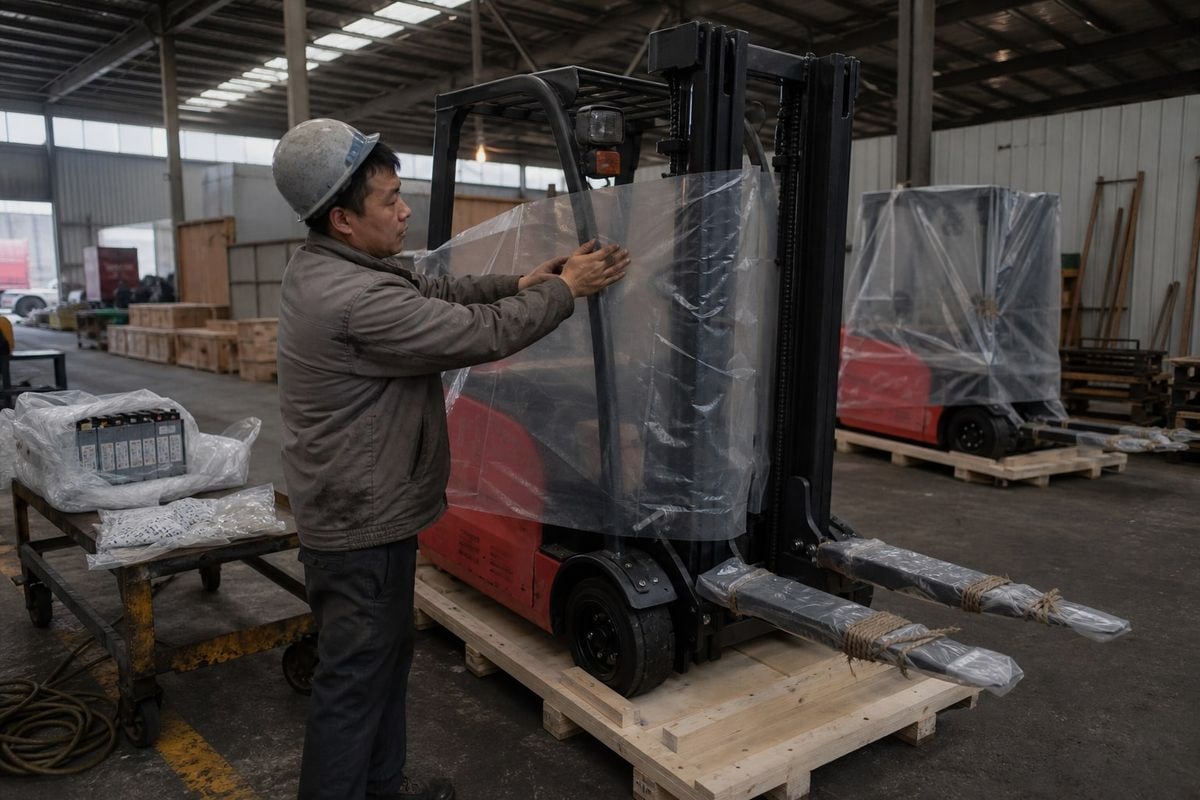
Ocean transit is the harshest moisture environment a forklift will ever face. Salt air, temperature swings, and long transit times all work against bare metal. So the packaging has to do three jobs at once. It must block liquid water, slow vapor transfer, and actively protect metal surfaces.
Why VCI materials outperform ordinary plastic
Volatile Corrosion Inhibitors (VCI) release molecules that bond to metal surfaces and block the chemical reaction that causes rust. When we coordinate industrial shrink wrapping 1 for forklift shipments, we always recommend VCI shrink wrap 2 over standard film. Ordinary plastic only stops splashes. VCI film creates a protective molecular layer on the steel underneath it. That difference matters on a 30-day sea voyage.
For exposed mechanical parts, temporary anti-corrosion coatings or protective waxes add another layer. Forks, lift chains, and hydraulic cylinder rods are the usual victims of transit rust, so they deserve extra attention. Hydraulic system protection is simple here: cap open fittings and coat exposed rod surfaces before wrapping.
Match the packaging method to the shipment
| Packaging Method | En İyisi İçin | Protection Level | Göreli Maliyet |
|---|---|---|---|
| Standard plastic film | Short domestic moves | Düşük | Düşük |
| VCI shrink wrap | Full forklifts in ocean freight containers | Yüksek | Orta |
| Heat-sealed vapor barrier bags | Batteries, controllers, spare parts | Çok yüksek | Orta |
| Custom kiln-dried wooden crates | Partially disassembled units | Yüksek | Yüksek |
| Anti-corrosion wax + VCI combined | Forks, chains, cylinder rods | Çok yüksek | Orta |
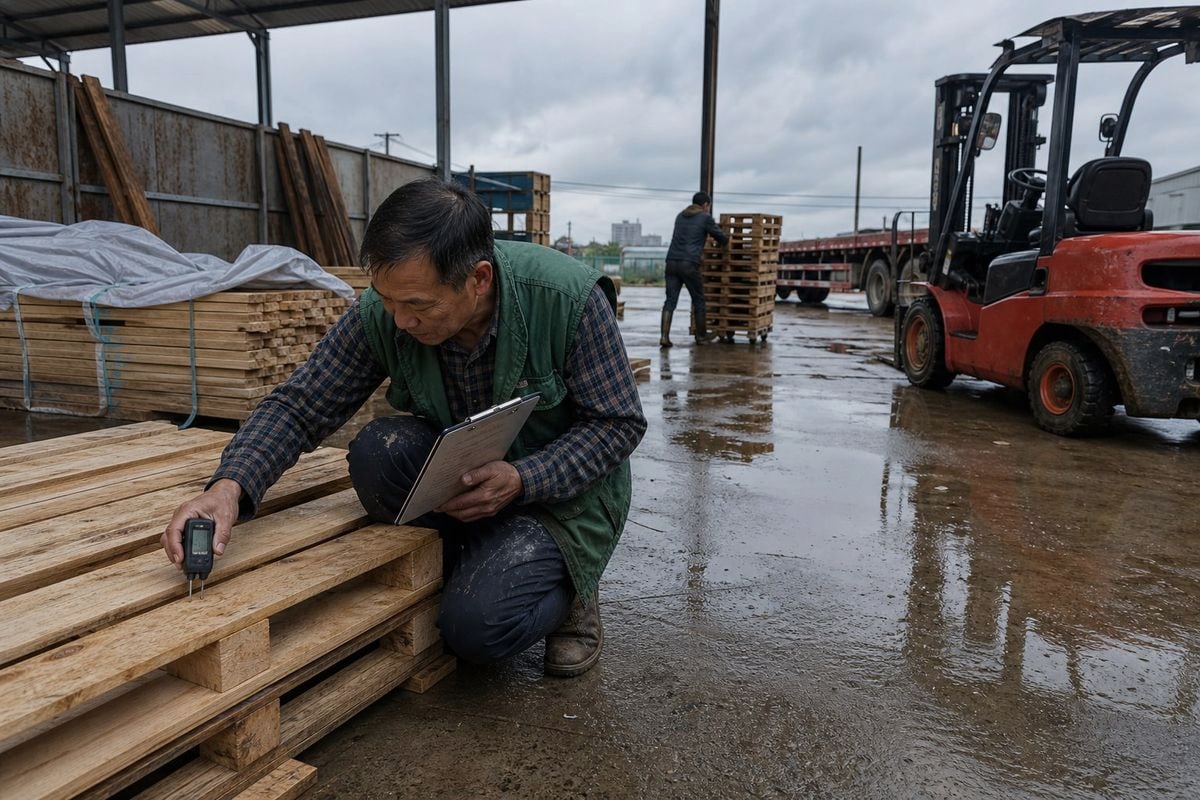
One more rule we enforce at loading: never use green or damp timber. Fresh-cut pallets can hold enough water to fog an entire container. Kiln-dried wood with floor humidity around 15–18% or lower is the standard we ask suppliers to meet.
How can I prevent rust and corrosion on electric forklift components during shipping?
A US forklift dealer once asked me why his lityum pil forkliftini içeren bir konteynerimiz vardı. 3 arrived with corroded charging ports while the painted bodies looked perfect. The answer was simple: electrical components corrode faster than painted steel, and they were left unprotected.
Prevent rust and corrosion on electric forklift components by drying the machine completely, treating electrical terminals with dielectric grease, sealing controllers and connectors in vapor-barrier bags with silica gel, applying rust inhibitors to bare metal, and capping hydraulic fittings before wrapping.
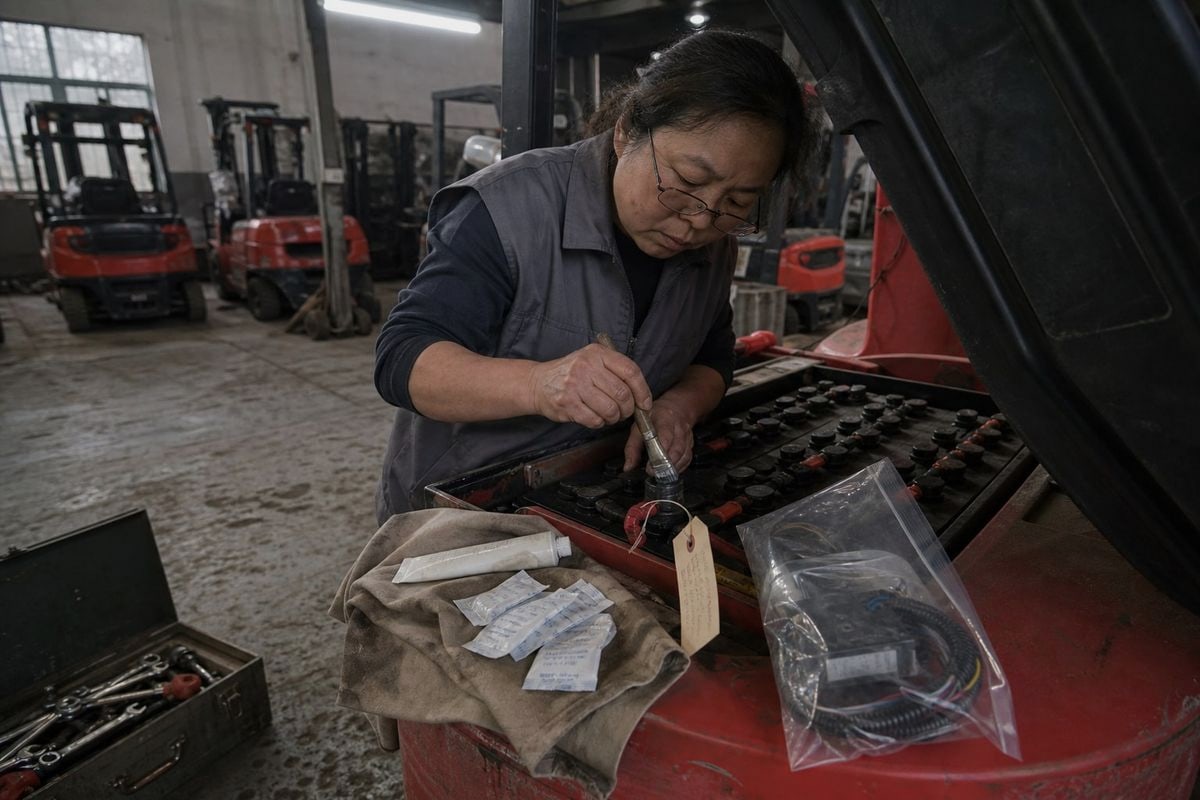
Electric forklifts carry more corrosion-sensitive parts than diesel units. Battery terminals, control boards, wiring harnesses, connectors, and charging ports all react badly to humid sea air. Corrosion prevention for these components has to start before the forklift is wrapped, not after.
Start with a completely dry machine
This step gets skipped more than any other. A forklift that was washed at the factory, or moved through rain during pickup, carries surface moisture into the packaging. Once sealed, that moisture has nowhere to go. It condenses on cold steel and starts rust within days. Our loading checklist requires the machine to be clean, dry, and at ambient temperature before any wrap goes on. Sealing a warm, damp machine is the fastest way to grow corrosion inside perfect-looking packaging.
Protect components by priority
- Battery terminals and connectors. Apply dielectric grease to terminals and plug contacts. This blocks micro-corrosion on the contact surfaces that cause electrical faults later.
- Controllers and displays. Seal sensitive electronics in heat-sealed vapor-barrier bags with desiccant silica gel inside. A dry micro-environment below 40% relative humidity effectively stops corrosion on metal contacts.
- Forks, chains, and mast rails. Coat with rust inhibitors or protective wax. These bare-steel surfaces rust first and are the most visible damage on arrival.
- Hydraulic fittings and cylinder rods. Cap open ports and coat exposed chrome. Moisture entering hydraulic lines can cause internal damage that no visual inspection will catch.
- Painted panels. Cover edges and contact points where straps or dunnage touch the paint, since chipped paint becomes a rust starting point.
İçin lityum pil forkliftini içeren bir konteynerimiz vardı., we also confirm the battery state of charge and documentation before departure, because battery handling and moisture protection have to be planned together, not separately.
Do I need desiccants or humidity control when shipping forklifts in containers?
Cost is the trade-off buyers always raise with us here. Desiccants add a small line to the invoice, so importers sometimes ask if they can skip them. On a 30-to-40-day ocean route, my answer is always the same: no.
Yes, desiccants are essential for container forklift shipments. Ocean routes cross multiple climate zones, and daily temperature swings create condensation inside sealed containers. Properly sized calcium chloride or silica gel desiccants absorb this trapped moisture and keep humidity below corrosion-triggering levels throughout transit.
The objection I hear is that a well-sealed container should not need desiccants. That logic fails because the moisture is already inside when the doors close. Humid dock air, wood pallets, and the cargo itself all release water vapor. A sealed container simply traps it. Desiccants are the only layer that removes moisture rather than just blocking it.
Choosing the right desiccant type
Not all desiccants perform the same job. Silica gel works well inside small sealed bags for parts and electronics. For the container itself, industrial calcium chloride desiccants 4 are the stronger choice because they can absorb roughly 200–300% of their own weight in moisture. That capacity matters on long China-to-US routes where humidity keeps rising for weeks.
| Desiccant Type | Absorption Capacity | Best Application | Typical Placement |
|---|---|---|---|
| Silica gel packets | ~30–40% of own weight | Sealed bags, electronics, spare parts | Inside vapor-barrier bags |
| Calcium chloride poles | ~200–300% of own weight | Full ocean freight containers | Hung on container wall lashing rings |
| Clay desiccants | ~25–30% of own weight | Budget general cargo | Inside crates |
| Container blankets | Farklılık gösterir | Ceiling condensation control | Under container roof |
Size the desiccants to the shipment
A generic handful of packets is not a strategy. We calculate desiccant quantity based on container volume 5, transit duration, route climate, and how much wood dunnage is inside. A 40HQ container crossing the Pacific in summer needs significantly more absorption capacity than a short intra-Asia run. Then we add humidity indicator cards near the cargo. Those cards cost almost nothing, but they tell you and your insurer whether the drying strategy actually worked. For high-value shipments, a small data logger recording temperature and humidity across the whole voyage is worth every dollar if a claim ever arises.
How does container type and sealing affect moisture protection for my forklift shipment?
Before any forklift shipment leaves China, our team runs a container inspection that many forwarders skip. We learned its value the hard way: one aging container with a pinhole roof leak once soaked a crate of spare parts, and a five-minute light test would have caught it.
Container condition directly determines moisture risk. A sound container needs intact door seals, no light leaks through walls or roof, dry floorboards below 18% moisture, and functioning vents. Damaged seals or wet floors let water in and feed internal condensation throughout the voyage.

Standard ocean freight containers are steel boxes that heat up and cool down fast. When warm, humid air inside meets a cold steel ceiling at night, water condenses and drips onto the cargo. Shippers call this container rain, and it is the real enemy on long routes. Rain during loading is visible. Container rain happens silently, night after night, for the entire voyage.
The pre-loading inspection that prevents most problems
Our checklist is short and strict. First, we close the doors from inside and look for daylight. Any light leak is a water leak. Second, we check the rubber door gaskets for cracks and compression damage. Third, we test the wooden floorboards with a moisture meter and reject anything reading above roughly 15–18% humidity. Fourth, we confirm the floor is clean and dry, with no residue from previous cargo. A container that fails any check gets swapped before loading, not patched after.
Container and loading choices that reduce condensation
| Faktör | Higher Moisture Risk | Lower Moisture Risk |
|---|---|---|
| Container age | Old, corroded, patched units | Recent-build, inspected units |
| Floor condition | Damp or stained floorboards | Dry boards under 18% humidity |
| Loading weather | Rainy, humid loading day | Dry conditions, covered loading bay |
| Load density | Loose load with large air gaps | Tight, secured load reducing air movement |
| Elevation | Forklift sitting directly on floor | Raised on dry skids above floor level |
| Rota | Tropical, multi-climate crossing | Short, stable-climate route |
Elevating the forklift on raised skids keeps it clear of any water pooling on the floor. Container liners or thermal barriers under the roof intercept dripping condensation before it reaches painted surfaces. Some buyers ask about ventilation versus full sealing, and the honest answer is that both have a place: container-level airflow decisions depend on route and climate, but sensitive forklift components should always keep their localized barrier protection and desiccants regardless. For extremely sensitive electronics or precision attachments, climate-controlled shipping or nitrogen-purged packaging exists, but for standard electric forklifts, a sound container plus layered protection covers the risk at a fraction of the cost. In heavy machinery logistics, disciplined basics beat expensive exceptions almost every time.
Sonuç
Moisture damage when shipping forklifts is a system failure, not bad luck. Dry the machine, use VCI barriers, size your desiccants, inspect the container, and document everything. Layer by layer, your forklifts arrive rust-free.
Dipnotlar
1. Official U.S. resource for international trade logistics and industrial export standards. ↩︎
2. Technical background on VCI technology used for industrial metal protection during shipping. ↩︎
3. U.S. government authority providing safety regulations for the international transport of lithium batteries. ↩︎
4. Scientific properties of calcium chloride as a high-capacity desiccant for industrial moisture control. ↩︎
5. The International Maritime Organization sets global standards for safe and efficient international shipping practices. ↩︎




