- +8618603825129
- [email protected]

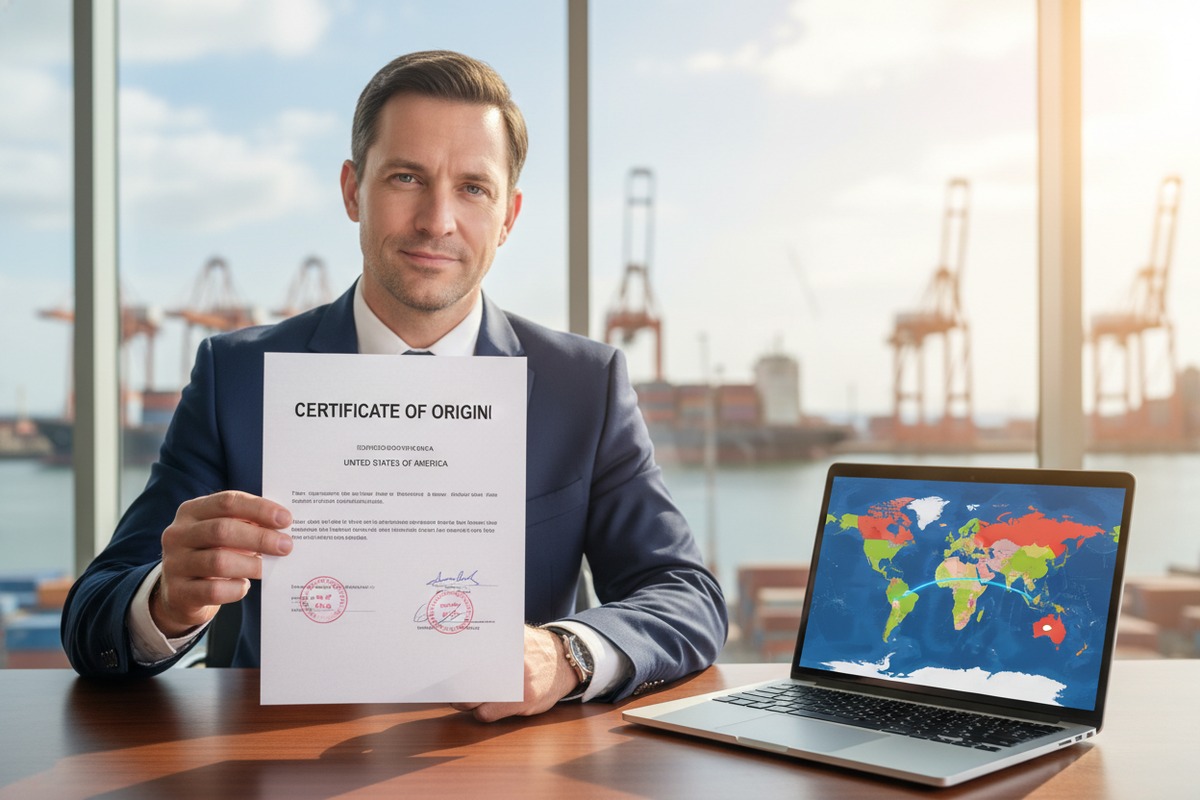
Every week, our logistics team handles hundreds of shipments from China to the US, and missing paperwork is the number one reason goods get stuck at customs customs authorities 1. One document keeps causing the most confusion: the Certificate of Origin 2. It seems simple, but getting it wrong can cost you thousands in unexpected duties, weeks of delay, and even seized cargo.
A Certificate of Origin is an official trade document that certifies the country where goods were manufactured or substantially transformed. It helps customs authorities determine applicable duties and taxes, supports faster clearance, and can unlock reduced or zero tariffs under qualifying trade agreements, directly benefiting your bottom line.
In this guide, we break down exactly what a Certificate of Origin is, when you need one, and how it can save your business real money. Whether you sell on Amazon FBA or import bulk containers, this document matters more than most sellers realize. Let us walk through the key questions.
When we prepare export documents at our Zhengzhou warehouse, the first question our team asks is whether the destination country or buyer needs a Certificate of Origin. Many Amazon sellers shipping from China to the US skip this step and end up paying more than they should — or worse, facing customs holds that throw off their entire inventory schedule.
Your China to USA shipment generally requires a Certificate of Origin when US customs requests proof of origin, when your product faces anti-dumping duties, when a letter of credit demands it, or when you want to claim any applicable tariff benefits. Not every shipment needs one, but many do.
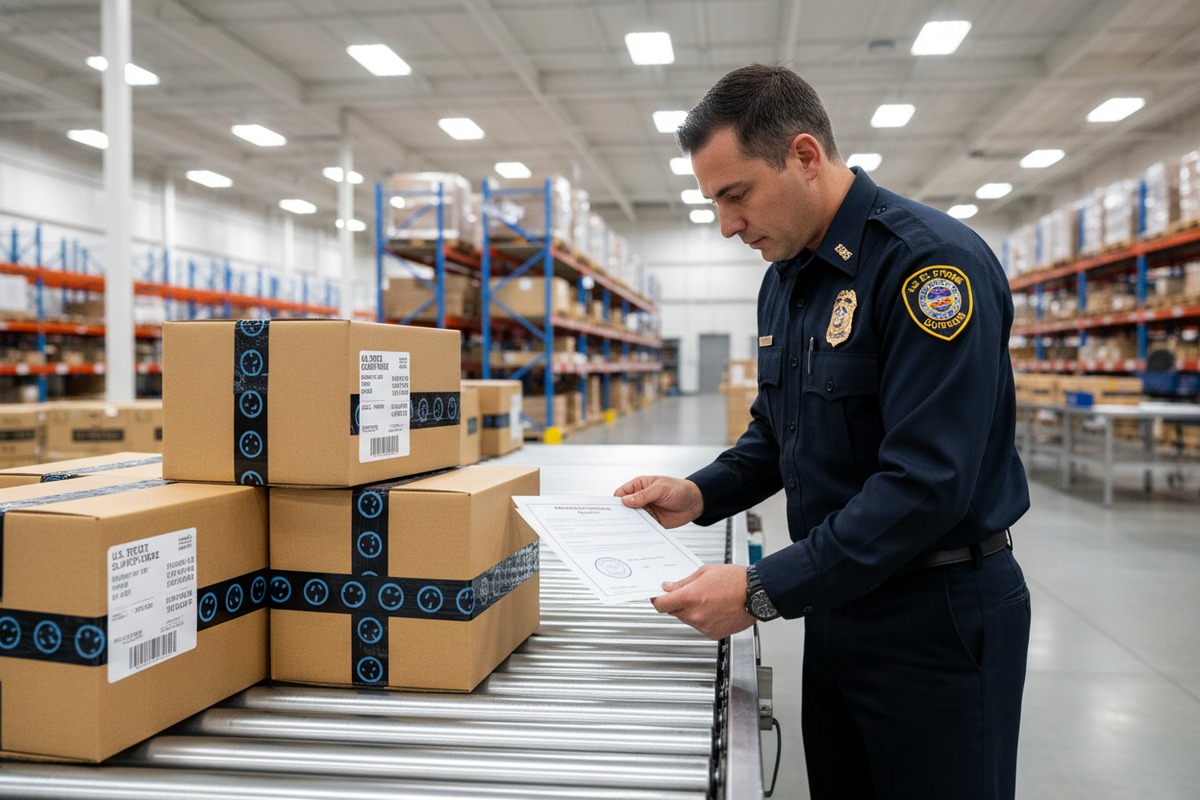
US Customs and Border Protection (CBP) can request origin documentation for any imported shipment. In practice, this happens most often when your product falls under a Harmonized System (HS) code 3 that is subject to special duties, anti-dumping investigations, or trade remedy measures. For example, certain steel products, furniture, and electronics from China face additional scrutiny. If CBP cannot verify where the goods were made, they may hold your shipment, apply the highest possible duty rate, or even deny entry.
Our operations team has seen cases where Amazon sellers lost two to three weeks of selling time simply because they did not have a Certificate of Origin ready. That delay meant stockouts, lost rankings, and extra warehouse storage fees.
Not every shipment needs a CO, but here are the most common triggers:
| Scenario | CO Required? | Why |
|---|---|---|
| Product subject to anti-dumping duties 4 | Yes | CBP needs to verify country of origin to apply correct duty rate |
| Buyer's letter of credit requires it | Yes | Bank will not release payment without the document |
| Shipment value exceeds $2,500 | Often | Formal entry requires more documentation, CO may be requested |
| Product under Section 301 tariffs 5 | Yes | Origin determines whether additional tariffs apply |
| Low-value shipment with no special duties | Usually no | Informal entry may not require a CO, but it is still good practice |
Start by identifying your product's HS code. Then check the US International Trade Commission's Harmonized Tariff Schedule to see if any special duties or trade remedies apply to goods from China under that code. If your product is on the Section 301 list, a CO will almost certainly be needed. You can also ask your customs broker directly — at MBMLOG, our US-side customs partners review every shipment before it arrives to flag any missing documents.
If you use DDP shipping 6, your logistics provider should handle this check for you. But if you are managing customs yourself, do not assume you are safe without a CO. It is a small document that prevents big problems.
Ask yourself these questions before each shipment:
If you answer "yes" to any of these, get a Certificate of Origin before the goods leave China.
Our team processes DDP shipments daily, and one of the most common questions we hear from Amazon sellers is whether they are overpaying on duties. The answer is often yes — and the Certificate of Origin is one of the most overlooked tools for fixing that. Many importers treat it as routine paperwork when it can actually be a real money-saver.
A Certificate of Origin can lower your import duties and taxes when your goods qualify under a preferential trade agreement. The right type of CO proves eligibility for reduced or zero tariff rates, potentially saving you thousands of dollars per shipment depending on product value and the applicable agreement.

This is the most important distinction. There are two categories of Certificates of Origin, and only one of them can reduce your duties.
| Type | Purpose | Tariff Benefit | Common Use Case |
|---|---|---|---|
| Non-Preferential CO (General CO) | Confirms country of origin | No duty reduction | Shipments to countries without a trade agreement, general customs compliance |
| Preferential CO (e.g., RCEP, Form A, Form E) | Proves eligibility under a trade agreement | Reduced or zero duties | Shipments between trade agreement member countries |
A non-preferential CO — the most common type, often just called a "CO" — is issued by China's Council for the Promotion of International Trade (CCPIT) or by customs. It simply states where the goods were made. It does not reduce any duties. It is used for compliance, anti-dumping verification, and customs statistics.
A preferential CO is the one that saves you money. It is tied to a specific trade agreement and proves your goods meet the rules of origin required by that agreement. preferential trade agreement 7
Here is a breakdown of the main preferential certificates Chinese exporters can apply for:
| Certificate | Applicable Trade Agreement | Member Countries | Key Benefit |
|---|---|---|---|
| RCEP CO | Regional Comprehensive Economic Partnership 8 | China, Japan, South Korea, Australia, New Zealand, and 10 ASEAN nations (15 total) | Reduced or zero tariffs among member nations |
| Form A | Generalized System of Preferences 9 (GSP) | EU, Japan, Canada, Norway, Switzerland, and others | Duty reduction for developing-country exports to developed nations |
| Form E | China-ASEAN Free Trade Agreement | 10 ASEAN countries | Preferential tariffs for China-to-ASEAN exports |
| Form F | China-Chile FTA | Chile | Reduced duties on qualifying goods exported to Chile |
| Form B | Asia-Pacific Trade Agreement | South Korea, India, Bangladesh, Sri Lanka, Laos, Mongolia | Tariff preferences among member nations |
Here is where I need to be honest with you. As of now, there is no free trade agreement between China and the United States. That means there is no preferential CO that directly reduces US import duties on Chinese goods. A standard non-preferential CO will not lower your duty rate for US-bound shipments.
However, the CO still plays a critical role in your cost structure:
If you also sell in markets covered by RCEP, ASEAN, or GSP countries, the savings can be significant. We have seen clients cut their landed costs by 5% to 15% simply by applying for the correct preferential CO before shipping. The key is to compare tariff rates under different agreements. For example, when exporting to an ASEAN country, you should compare the duty rates under Form E versus RCEP and choose the certificate that gives the lowest rate.
The bottom line: a CO will not magically erase your US duties on Chinese goods, but it is still essential for compliance, and it can deliver real savings on shipments to other markets.
When we coordinate FBA shipments for our clients, the Certificate of Origin is one of the first documents on our preparation checklist. But many Amazon sellers do not know how to request one, or they assume the supplier will automatically include it. That assumption leads to last-minute scrambles, delayed shipments, and avoidable stress during peak season.
To get a Certificate of Origin for your Amazon FBA business, ask your Chinese supplier to apply through CCPIT or local customs. Provide your supplier with the commercial invoice, packing list, and HS codes. The supplier submits the application, and the CO is typically issued within one to three business days.
Here is how the process works in practice. Most Chinese manufacturers and trading companies are familiar with CO applications, but you need to make sure the request is clear and timely.
Step 1: Confirm you need a CO. Check with your customs broker or logistics provider whether your specific product and destination require one. For US-bound Amazon FBA shipments, you will typically need a non-preferential CO if the product falls under anti-dumping orders or Section 301 tariffs.
Step 2: Provide your supplier with the right information. Your supplier needs accurate details to fill out the application. This includes the commercial invoice number, product description, HS code, quantity, weight, and the consignee name and address.
Step 3: Your supplier applies to CCPIT or local customs. In China, the two main issuing bodies are CCPIT (China Council for the Promotion of International Trade) and the local customs office. CCPIT is the most common route for non-preferential COs. The application is usually done online through CCPIT's single-window platform.
Step 4: Review and collection. Once approved, the CO can be printed or issued electronically. Make sure your supplier sends you a copy and includes the original with your shipping documents.
A standard Chinese CO includes the following details:
Many FBA sellers run into problems not because the CO is hard to get, but because small errors cause customs to reject it. Here are the most frequent mistakes:
Request the CO at the same time you confirm your purchase order. Do not wait until the goods are ready to ship. Build it into your standard procurement checklist. If you use a DDP logistics provider like MBMLOG, your provider can coordinate the CO application directly with the supplier or handle it in-house, saving you time and reducing the risk of errors.
Also, keep digital copies of every CO. US customs can request origin documentation retroactively, and having organized records protects you from penalties down the line.
Our DDP service means we handle everything from your supplier's door to your Amazon warehouse — including customs clearance on both ends. And in our experience, a missing or incorrect Certificate of Origin is one of the fastest ways to turn a smooth DDP shipment into a costly headache. When you pay for DDP, you expect no surprises. The CO is what helps us deliver on that promise.
A Certificate of Origin is essential for DDP shipping because it provides customs authorities with verified proof of where goods were manufactured. This proof determines the correct duty rate, prevents clearance delays, avoids penalties for incorrect origin declarations, and ensures your all-inclusive DDP price remains accurate and predictable.
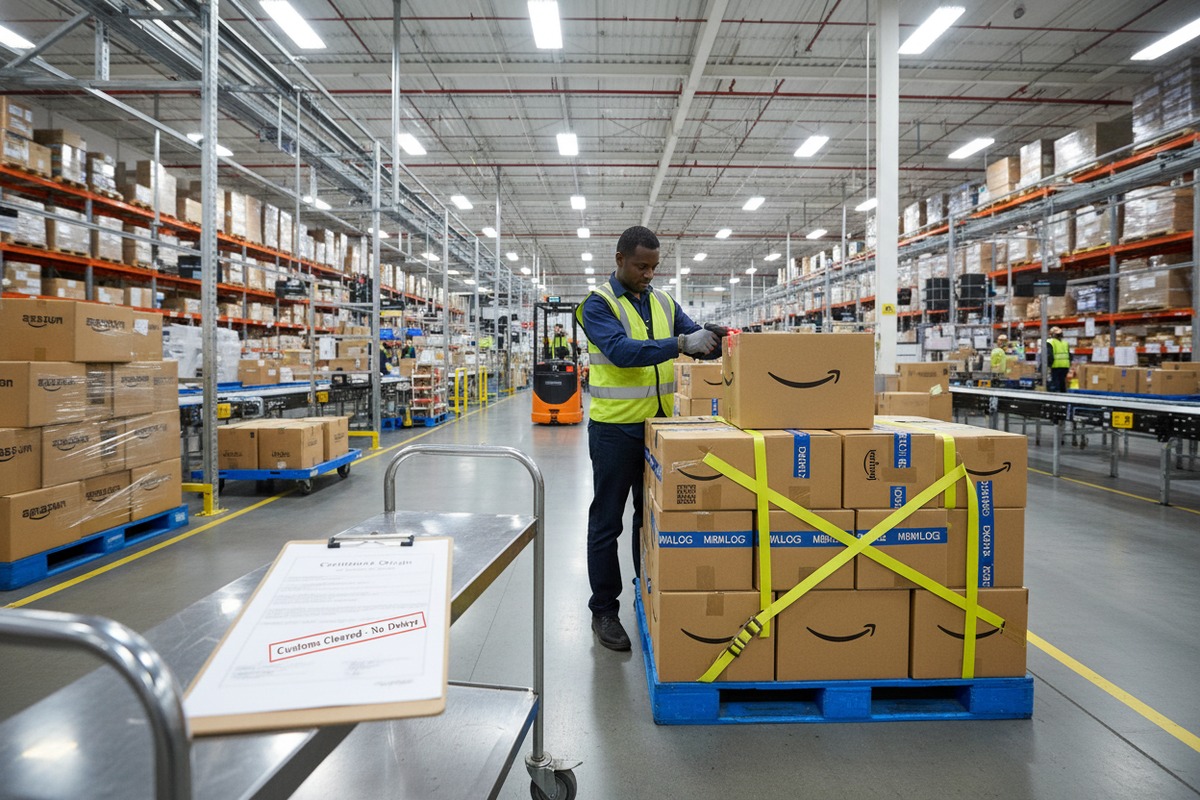
In a DDP (Delivered Duty Paid) arrangement, the shipper — not the buyer — is responsible for all costs including import duties, taxes, and customs clearance. That means the logistics provider must know the exact duty rate before quoting a price. The CO is the document that confirms the origin, which directly affects the duty calculation.
Without a valid CO, customs may apply a default or higher duty rate. That difference comes out of either the logistics provider's margin or gets passed back to you as an unexpected surcharge. Neither outcome is acceptable in a professional DDP service.
Here is what we have seen go wrong in real shipments:
Beyond duties, the CO supports broader trade compliance. US customs uses origin data to enforce trade embargoes, sanctions, and import restrictions. For example, certain goods from specific origins may be banned or require special licenses. The CO provides a clear, verifiable record that your goods come from a legitimate and permitted source.
For DDP shipments, this compliance layer is critical. As the party responsible for clearance, the logistics provider assumes the legal risk. A reliable CO reduces that risk and protects both the provider and the buyer.
Even when a CO is not strictly mandatory, having one in your document set is a best practice for DDP shipping. It speeds up clearance because customs officers have all the information they need upfront. It supports accurate duty calculations so your DDP price holds firm. And it creates a paper trail that protects you in the event of an audit.
At MBMLOG, we include CO verification as a standard part of our DDP process. Our team checks the document against the commercial invoice, packing list, and bill of lading before the shipment leaves China. That way, there are no surprises at the US port.
Consider a shipment worth $50,000 with a normal duty rate of 7.5%. That is $3,750 in duties. If the CO is missing and customs applies a penalty rate of 25% (common for Section 301 products without proper documentation), the duty jumps to $12,500. That is an $8,750 difference on a single shipment. For Amazon sellers moving inventory regularly, these numbers add up fast.
The CO costs very little to obtain — usually under $50 — and takes one to three days. Compared to the financial risk of not having one, it is one of the highest-return investments in your supply chain.
A Certificate of Origin is a small document with outsized impact on your shipping costs, customs clearance speed, and trade compliance. Whether you sell on Amazon FBA or import containers, getting the CO right protects your margins and keeps your supply chain running smoothly.
1. Explains the functions and responsibilities of customs authorities in international trade. ↩︎
2. Replaced with a working link from the International Chamber of Commerce (ICC), an authoritative source for international trade documents. ↩︎
3. Defines HS codes and explains their use in classifying goods for international trade. ↩︎
4. Replaced with an official link from the European Commission, providing an authoritative definition of anti-dumping duties. ↩︎
5. Explains Section 301 of the Trade Act of 1974 and its use in addressing unfair trade practices. ↩︎
6. Defines Delivered Duty Paid (DDP) Incoterm and outlines seller's responsibilities. ↩︎
7. Explains preferential trade agreements as blocs offering reduced tariffs to members. ↩︎
8. Provides an overview of the RCEP agreement, its objectives, and member countries. ↩︎
9. Describes the U.S. GSP program, offering duty-free treatment to developing countries. ↩︎
10. Provides an overview of various trade agreements the U.S. participates in. ↩︎