- +8618603825129
- [email protected]

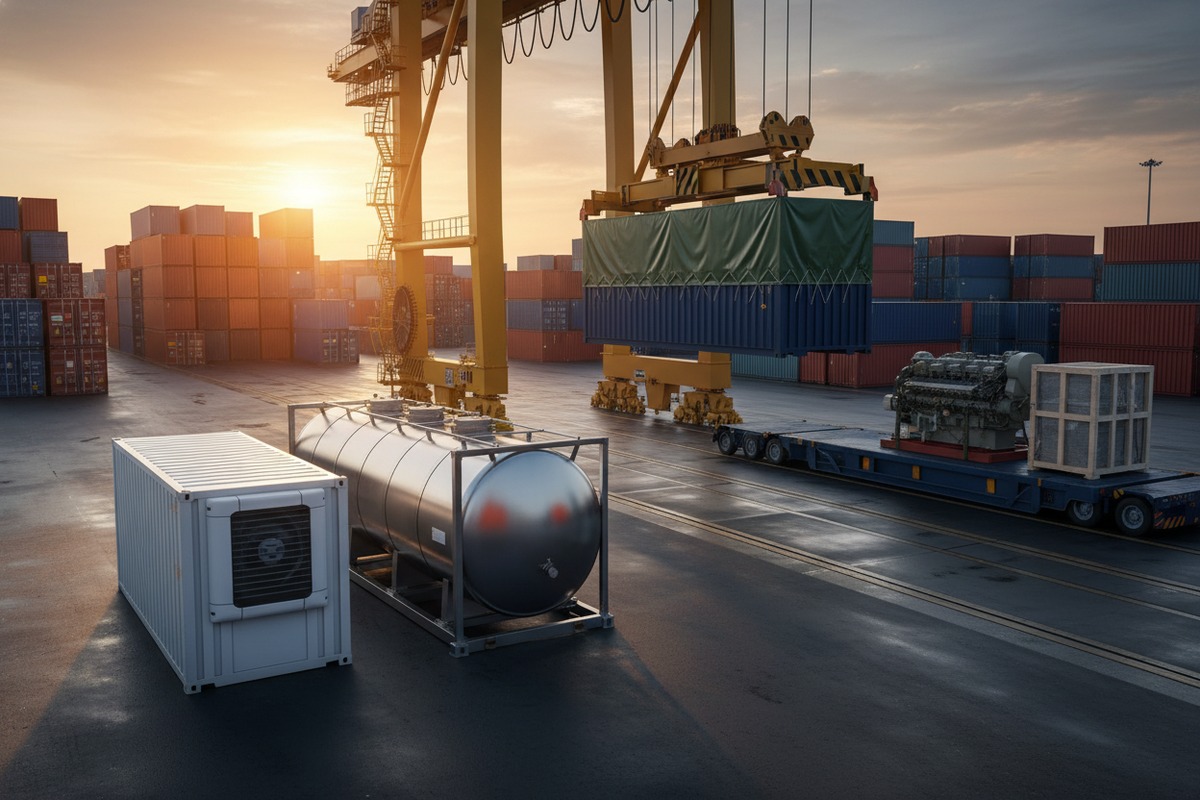
Every week, our logistics team in Zhengzhou handles shipments that simply will not fit inside a standard dry container 1. Oversized machinery, frozen seafood, drums of industrial chemicals — these goods each demand a different solution, and picking the wrong container can mean damaged cargo, costly delays, or rejected shipments at the port.
The most common types of special containers include open-top containers for over-height cargo, flat-rack containers for oversized and heavy loads, refrigerated (reefer) containers for temperature-sensitive goods, and ISO tank containers for liquid bulk cargo. Each type solves a specific shipping challenge that standard dry containers cannot handle.
In this guide, we break down each special container type, explain what cargo it carries best, and share practical tips so you can match your shipment to the right container every time refrigerated (reefer) containers 2. Whether you are an Amazon seller importing large products or a business moving industrial equipment 3 from China to the US, this article will help you make the right choice.
We ship heavy machinery 4 and industrial equipment from Chinese factories to US ports almost every day. One of the most common questions our clients ask is whether their oversized cargo needs an open-top container or a flat-rack container. The wrong choice can lead to loading failures, safety risks, and unexpected surcharges at the terminal.
If your cargo is taller than a standard container but fits within the container's width, use an open-top container. If your cargo is wider, longer, or irregularly shaped and cannot fit inside any enclosed box, use a flat-rack container. The decision depends on your cargo's dimensions and how it must be loaded.
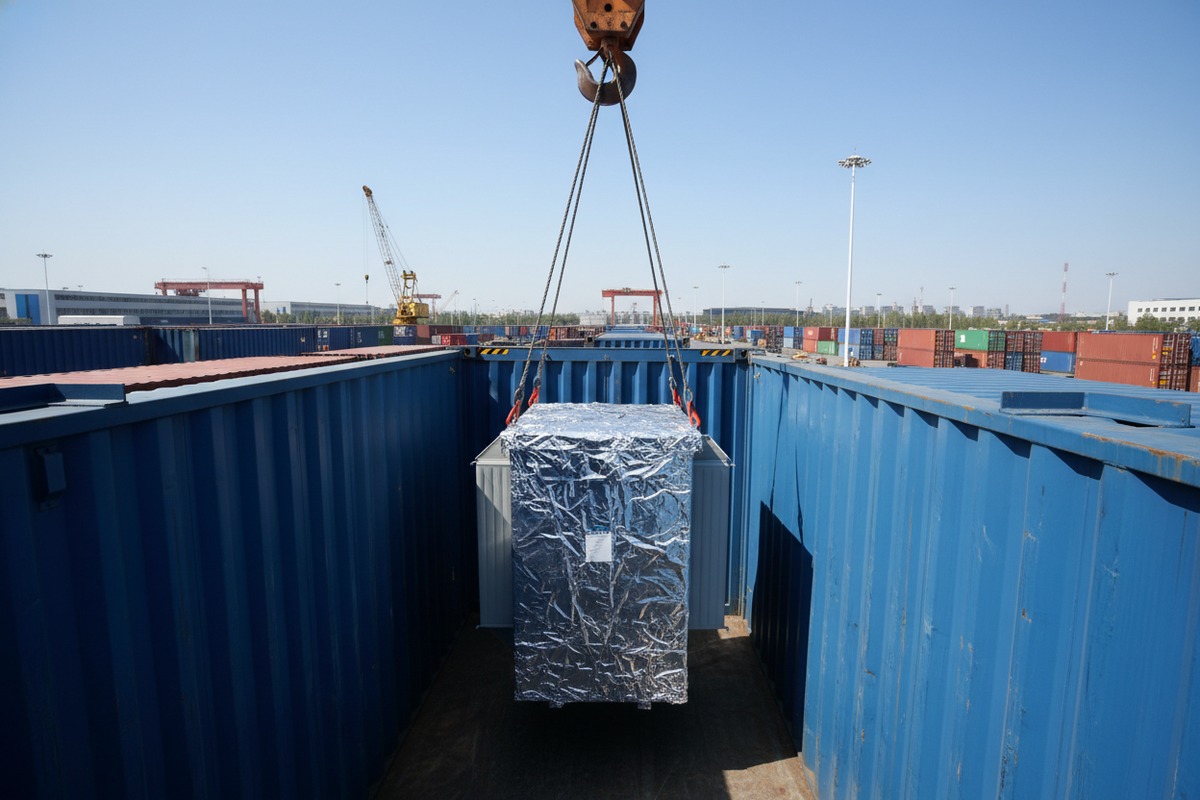
Open-top containers 5 come in two standard sizes: 20OT and 40OT. The key feature is a removable top. Instead of a fixed steel roof, these containers have a detachable tarpaulin cover 6 or a movable steel roof beam. Cargo is loaded from the top using a crane or overhead gantry.
This design is perfect for goods that are too tall to slide through the container doors. Think large molds, transformers, steel beams, timber logs, plate glass, and large pipe fittings. It also works well for very heavy items that cannot be pushed into the container horizontally. If the only way to load your cargo is to lift it straight down into the box, an open-top container is your answer.
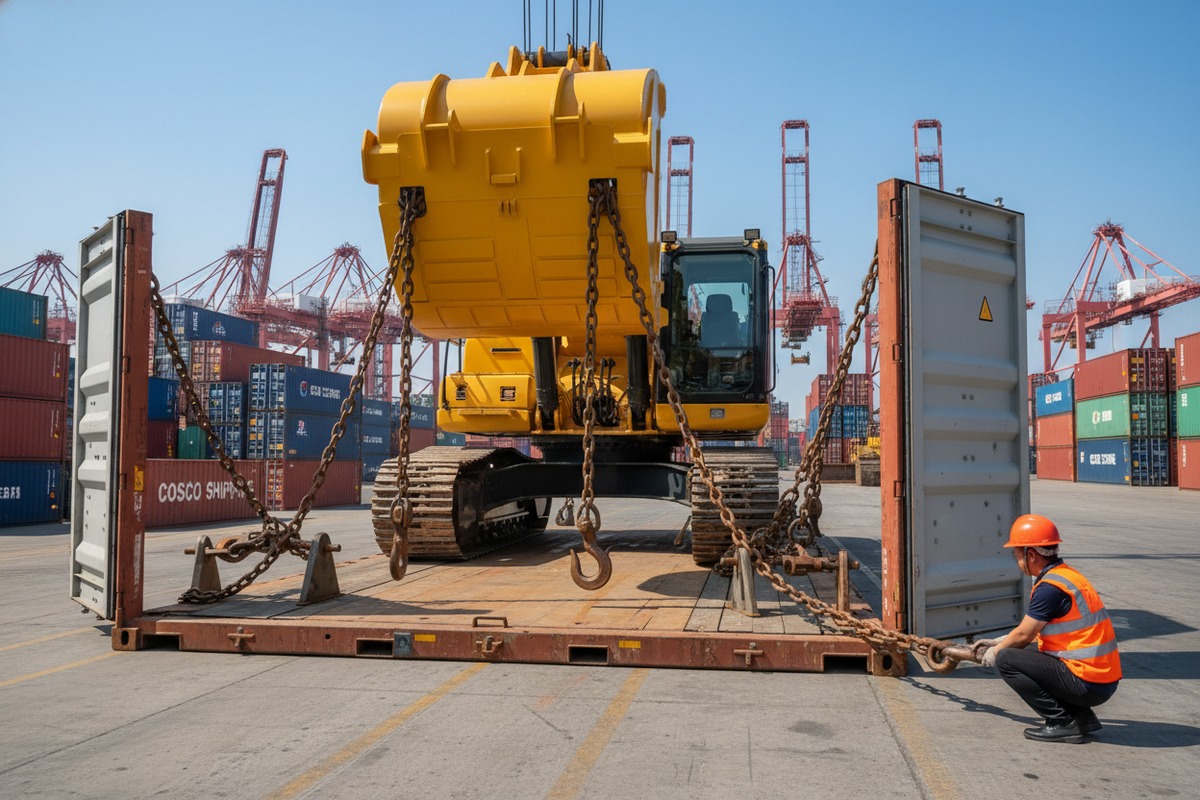
Flat-rack containers 7 also come in 20FR and 40FR sizes. They have a strong steel floor and two end walls, but no side walls and no roof. Some flat racks have collapsible ends 8, which makes them easier to store and reposition when empty.
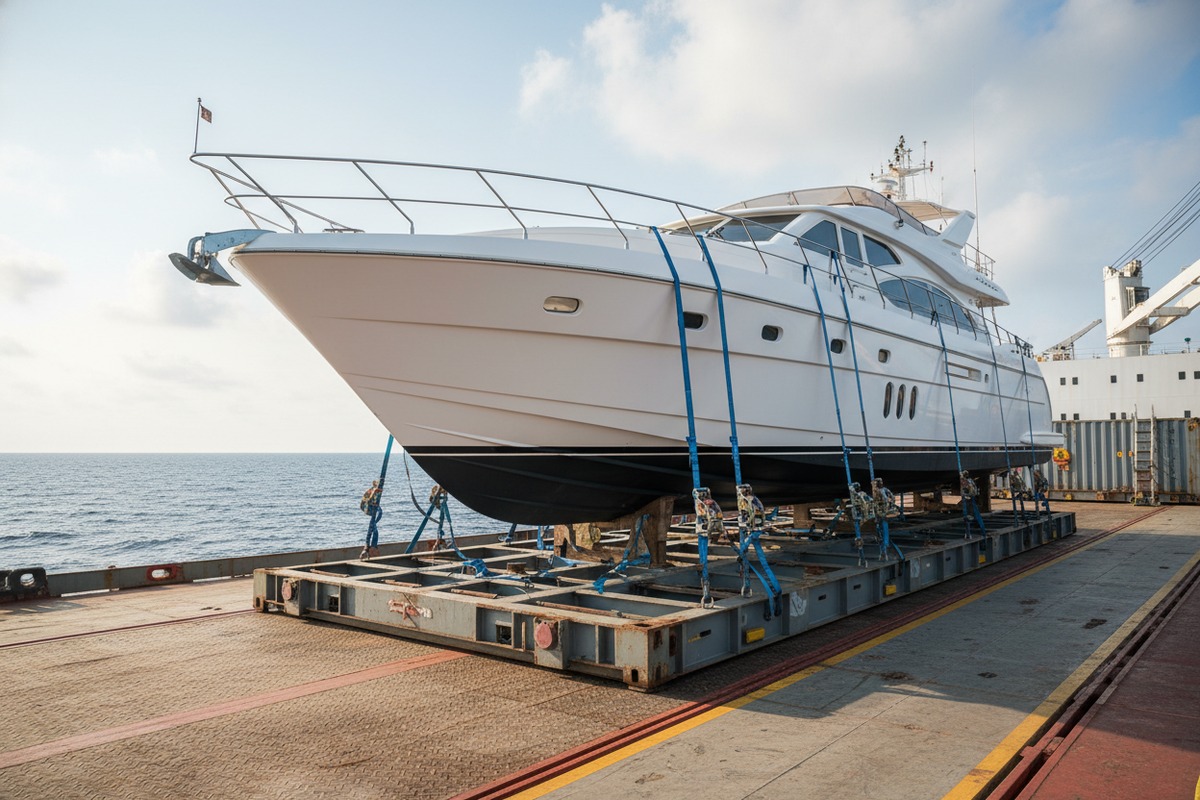
Because flat racks are open from the sides and top, you can load cargo from multiple directions. This makes them ideal for items that are too wide, too long, or too awkwardly shaped for any enclosed container. Common examples include excavators, bulldozers, yachts, large steel structures, and prefabricated building components. Flat racks are also the go-to choice for bare cargo like stone slabs or steel coils that do not need external packaging.
| Feature | Open-Top Container (OT) | Flat-Rack Container (FR) |
|---|---|---|
| Standard Sizes | 20OT, 40OT | 20FR, 40FR |
| Roof | Removable tarp or steel beam | No roof |
| Side Walls | Yes, enclosed sides | No side walls |
| Loading Direction | Top only (crane) | Top, sides, and ends |
| Best For | Over-height cargo that fits within container width | Over-width, over-length, or irregular cargo |
| Typical Cargo | Machinery, molds, transformers, glass, large pipes | Engineering vehicles, yachts, steel structures, stone |
| Weather Protection | Moderate (tarp covers top) | Minimal (open on all sides) |
Ask yourself three questions. First, is my cargo only too tall, or is it also too wide? If it is just too tall, an open-top container usually works. Second, can my cargo be lifted straight down into a box? If yes, open-top is fine. If the cargo must be rolled, driven, or slid in from the side, you need a flat rack. Third, does my cargo need any weather protection during transit? Open tops offer more protection than flat racks because the sides are still enclosed.
In our experience handling project cargo shipments from China to the US, many clients initially request a flat rack when an open-top would be cheaper and more protective. Always check exact dimensions with your logistics provider before booking.
Our cold-chain logistics 9 team manages hundreds of refrigerated shipments each year — everything from frozen shrimp heading to US supermarkets to pharmaceutical products that must stay within a narrow temperature band. Getting the container type wrong for temperature-sensitive goods is not just expensive. It can destroy your entire shipment.
Refrigerated (reefer) containers are the best choice for shipping temperature-sensitive goods from China. Available in 20RF and 40RF sizes, reefer containers have built-in cooling and heating systems that maintain precise temperatures throughout transit, protecting perishable food, pharmaceuticals, chemicals, and other sensitive cargo.
A reefer container has an integrated refrigeration unit built into one end. This unit connects to the ship's power supply during ocean transit and to a generator or shore power at the port. You can set the temperature anywhere from about -30°C to +30°C, depending on the unit. Some modern reefers also control humidity and airflow.
The container walls are insulated with high-density foam. This insulation, combined with the active cooling or heating system, keeps the internal temperature stable even when the outside temperature fluctuates. The result is a reliable, controlled environment for your cargo from door to door.
Reefers handle a wide range of temperature-sensitive goods. Here are the most common categories we see on our China-to-US routes:
Not every temperature-sensitive shipment needs a reefer. Insulated containers — sometimes called thermal containers — have thick insulated walls but no active refrigeration unit. They slow down temperature changes but do not actively cool or heat.
| Feature | Reefer Container (RF) | Insulated Container |
|---|---|---|
| Active Temperature Control | Yes (cooling and heating) | No |
| Temperature Range | Approximately -30°C to +30°C | Depends on external conditions |
| Power Required | Yes (ship power, generator, or shore power) | No |
| Cost | Higher (equipment + power fees) | Lower |
| Best For | Perishable food, pharma, strict temp requirements | Goods that tolerate mild temp variation |
| Typical Cargo | Frozen seafood, vaccines, chocolate | Wine, certain chemicals, non-critical shipments |
If your goods only need to avoid extreme heat — for example, wine or certain industrial adhesives — an insulated container might be enough and will save you money. But if you are shipping frozen seafood or vaccines that need a precise temperature throughout a 20-day ocean voyage, always use a reefer.
Pre-cool your cargo before loading. A reefer container is designed to maintain temperature, not to cool down warm goods. If you load warm cargo, the unit will struggle, and you risk temperature excursions.
Always confirm the power supply chain. Your reefer needs power at every stage: at the factory, on the truck, at the port, on the vessel, and at the destination. A gap in power can compromise your entire shipment. When we arrange reefer shipments for our clients, we verify power availability at every handoff point.
Request a pre-trip inspection (PTI) for the container. This test confirms that the refrigeration unit is functioning properly before your cargo is loaded. It is a standard step, but you should always confirm it was done.
We regularly coordinate tank container shipments for clients who need to move liquid chemicals, food-grade oils, and other bulk liquids from China to the United States. Liquid cargo presents unique risks — leaks, contamination, and chemical reactions — that standard containers simply cannot manage. The question is not whether you can use tank containers. The question is whether they are the right fit for your specific liquid.
Yes, ISO tank containers are specifically designed to transport liquid bulk cargo safely and efficiently. They feature a cylindrical stainless steel tank mounted inside a standard 20-foot frame, suitable for chemicals, food-grade liquids, oils, alcohols, and even hazardous liquid cargo, with built-in safety features for leak prevention and pressure control.
An ISO tank container consists of a pressure-rated cylindrical tank — usually made from stainless steel — mounted inside a standard 20-foot ISO frame. This frame means the tank can be handled, stacked, and transported exactly like a regular shipping container. It fits on trucks, rail cars, and container ships without special equipment.
Most ISO tanks hold between 21,000 and 26,000 liters of liquid. They have top-mounted manholes for filling, bottom discharge valves for unloading, and pressure relief systems for safety. Some tanks are lined or coated internally for specific chemical compatibility.
Tank containers handle a broad range of liquid goods. Here are the main categories:
Many shippers still move liquids in drums or intermediate bulk containers (IBCs) loaded inside standard dry containers. Tank containers offer several advantages over this approach.
| Factor | Drums/IBCs in Dry Container | ISO Tank Container |
|---|---|---|
| Capacity | Limited by drum count and stacking | 21,000–26,000 liters in one unit |
| Loading/Unloading | Manual handling, time-consuming | Pump fill and discharge, fast |
| Leak Risk | Higher (multiple seals and connections) | Lower (single sealed vessel) |
| Contamination Risk | Higher (drum damage, mixed lots) | Lower (dedicated, cleaned tank) |
| Cost per Liter | Higher for large volumes | Lower for large volumes |
| Cleaning | Replace or clean many drums | Clean one tank between shipments |
| Hazmat Compliance | Complex (each drum must be labeled) | Simpler (one certified container) |
For large volumes of liquid — typically above 14,000 liters — a tank container is almost always more cost-effective, safer, and easier to handle than individual drums. The single-vessel design dramatically reduces the number of potential leak points.
Tank containers are built to strict international standards. They undergo regular pressure testing, visual inspections, and certification renewals. If you are shipping hazardous liquids, the tank must carry the correct UN certification and be approved for the specific class of dangerous goods.
Before each shipment, the tank should be cleaned and inspected. Residue from a previous load can contaminate your cargo or cause a chemical reaction. When we arrange tank container shipments, we always verify the cleaning certificate and confirm that the tank's lining is compatible with the cargo being loaded.
One important note: not all liquids can share the same tank, even after cleaning. Some chemicals require dedicated tanks that are never used for other products. Always discuss your cargo specifications with your logistics provider before booking.
Over the years, our team has seen too many shipments arrive damaged because the shipper chose a container based on cost alone, without considering the cargo's actual needs. A cracked marble slab loaded into the wrong container. Frozen goods that thawed mid-ocean because the reefer was not pre-inspected. Machinery that shifted during transit on an unsecured flat rack. These problems are preventable.
To choose the right special container, start by identifying your cargo's specific challenge — whether it is size, weight, temperature sensitivity, liquid form, or loading method. Match that challenge to the container type designed to solve it, and always confirm dimensions, weight limits, and handling requirements with your logistics provider before booking.
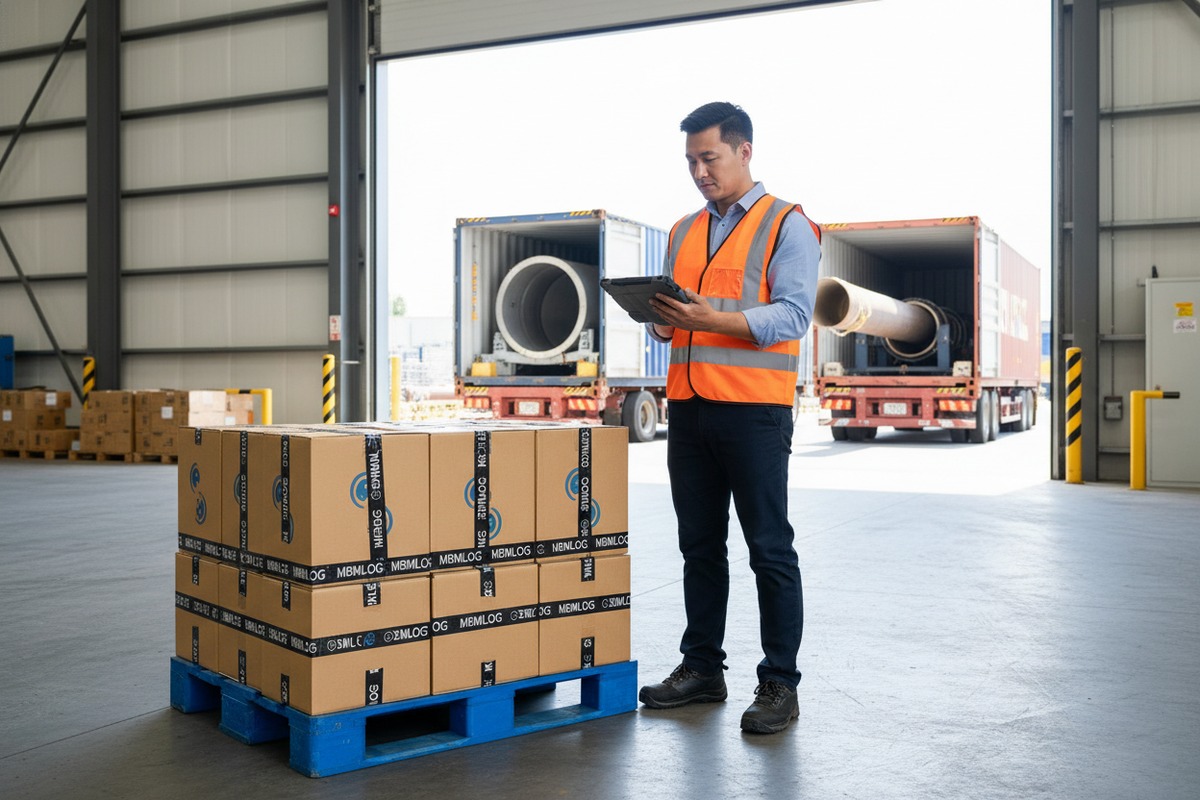
Every special container exists to solve a specific problem. Before you look at container options, clearly define what makes your cargo non-standard. Ask these questions:
Your answers will point you to the right container type.
Here is a quick decision guide based on the most common cargo challenges:
| Cargo Challenge | Recommended Container | Why |
|---|---|---|
| Over-height but standard width | Open-Top (OT) | Top-loading with crane, sides remain enclosed |
| Over-width, over-length, or irregular | Flat-Rack (FR) | Open sides allow multi-direction loading |
| Requires freezing or precise cooling | Reefer (RF) | Active temperature control from -30°C to +30°C |
| Sensitive to heat but not freezing | Insulated Container | Passive thermal protection, lower cost than reefer |
| Bulk liquid (chemical, food-grade, hazmat) | ISO Tank | Single sealed vessel, pump fill/discharge |
| Heavy, dense bulk material (coal, scrap) | Half-Height Container | Lower walls make loading dense cargo easier |
| Needs fast loading from both ends | Tunnel / Double-Door | Doors on both ends for drive-through access |
| Needs wide side access for mixed loads | Side-Open Container | Full-length side opening for staged loading |
| Bulky but not heavy | High-Cube Container | Extra height over standard dry container |
Once you have identified the container type, confirm three critical details with your logistics provider:
Internal dimensions. Measure your cargo carefully and compare against the container's internal length, width, and height. Leave clearance for lashing, dunnage, and airflow if needed.
Weight limits. Every container has a maximum payload. Flat racks and open-tops can handle heavy cargo, but you still need to verify that the container, the truck chassis, and the vessel slot can all support the weight.
Availability and routing. Special containers are not as widely available as standard dry containers. Reefers need power at every point. Tank containers may need to be repositioned. Flat racks and open-tops often have surcharges and limited slot availability on certain routes. Book early, especially during peak shipping seasons.
Think beyond the ocean leg. Your cargo needs to be loaded at the factory, trucked to the port, handled at the terminal, loaded onto the vessel, unloaded at the destination port, and delivered to the final address. At each step, the container type affects what equipment is needed and what can go wrong.
For example, a flat rack with an oversized excavator needs a low-bed trailer and route permits for oversize loads on the road. A reefer needs genset power on the truck if the trailer does not have its own power unit. An ISO tank needs a compatible chassis and a facility that can handle pump discharge.
When we plan shipments for our clients at MBMLOG, we map the entire door-to-door journey and flag any special handling requirements at each stage. This prevents surprises and keeps your cargo safe from origin to destination.
Do not assume a standard dry container will work "just this once" for slightly oversized cargo. Forcing oversized goods into a standard box causes damage and safety hazards. Do not skip the pre-trip inspection on reefers. Do not load liquids in drums when the volume justifies a tank container. And do not book a special container without confirming that your destination port and inland carrier can handle it.
Choosing the right special container is not about memorizing a list of container types. It is about understanding your cargo's specific needs and matching them to the container that solves that exact problem. If you need help selecting the right container for your next shipment from China, our team at MBMLOG is ready to guide you through every step.
1. Explains standard dry containers in contrast to reefers. ↩︎
2. Detailed explanation of reefer containers and their function. ↩︎
3. FedEx logistics options for industrial equipment with secure transportation. ↩︎
4. Specialized transport services for heavy machinery and industrial equipment. ↩︎
5. Authoritative source detailing open-top container purpose and uses. ↩︎
6. Details on tarps for open-top containers, including materials and protection. ↩︎
7. Provides comprehensive information on flat-rack containers and their uses. ↩︎
8. Describes collapsible-end flat racks for oversized cargo and storage efficiency. ↩︎
9. Definition and importance of temperature-controlled supply chain for perishable goods. ↩︎
10. Guide to ISO tank container shipping, capacity, and uses. ↩︎