- +8618603825129
- [email protected]

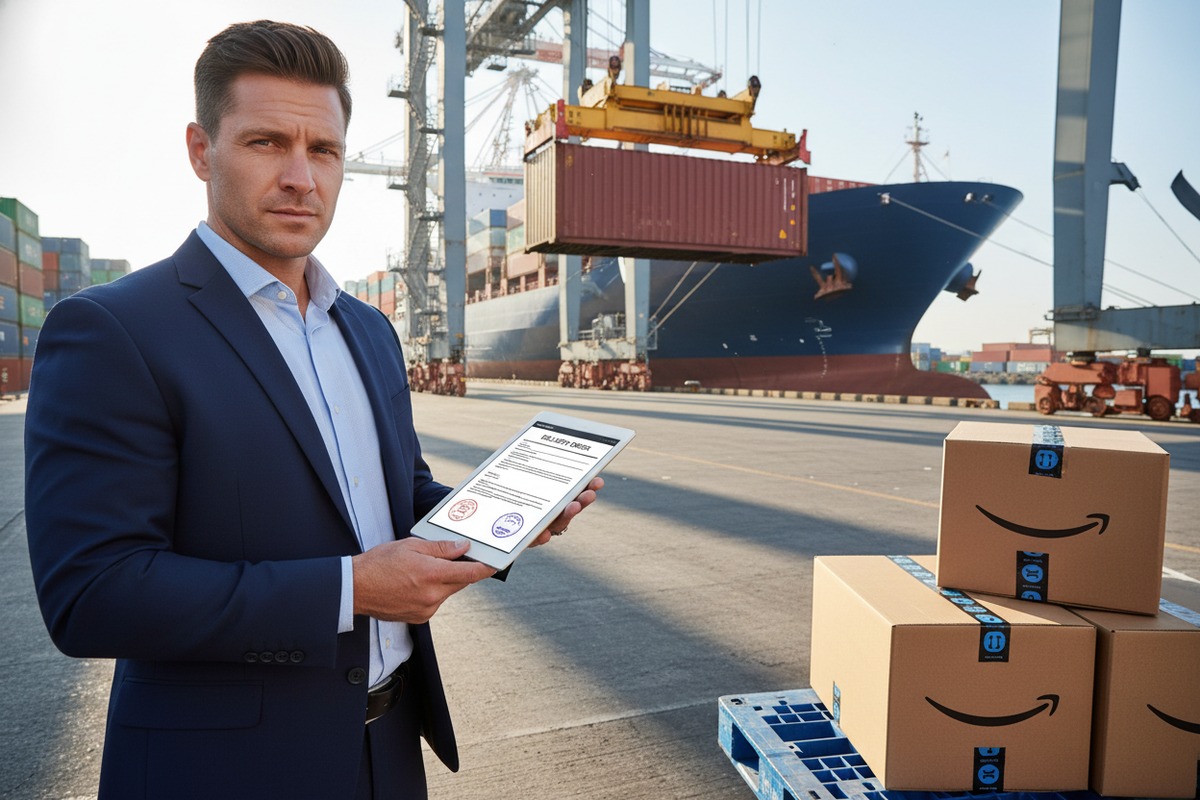
Every week, our logistics team helps importers retrieve cargo stuck at US ports — often because the delivery order process was misunderstood or overlooked entirely.
A Delivery Order (D/O) is a release document issued by a carrier, freight forwarder, or their agent that authorizes the consignee to collect imported cargo from a port, terminal, or warehouse. The D/O fee is a carrier or forwarder charge — separate from customs duties and taxes — and is typically paid by the consignee or their agent at the destination port.
Below, we break down how the D/O process works, who really pays the fees, and how to avoid costly delays — especially if you ship to Amazon FBA warehouses in the United States.
When we coordinate shipments from our Zhengzhou warehouse to US ports, one question comes up more than any other: why can't the consignee just show the bill of lading 1 and pick up the cargo Delivery Order (D/O) 2?
A delivery order is the specific authorization document that allows the consignee or their agent to physically collect goods from a terminal or warehouse. It is required because the bill of lading alone is a title document, not a pickup permit — the port or warehouse will only release cargo upon presentation of a valid D/O.
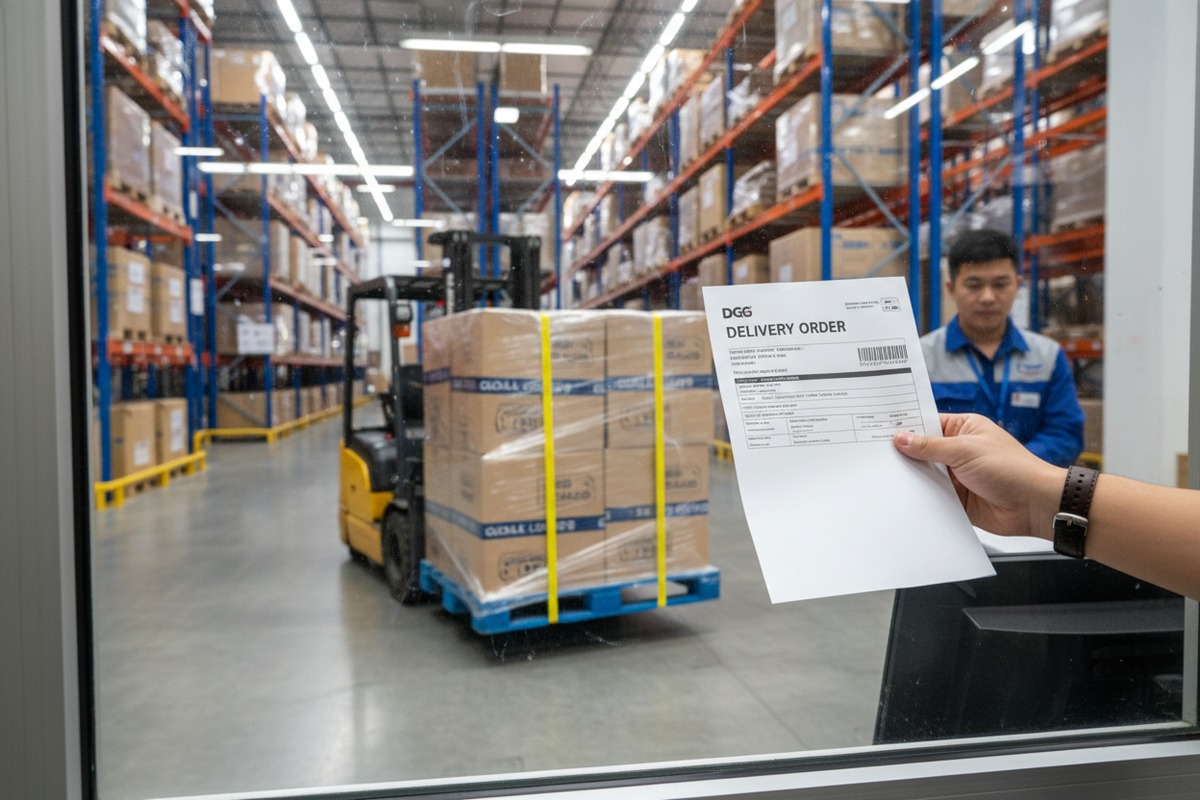
Many importers confuse the bill of lading (B/L) with the delivery order customs duties and taxes 3. They serve different purposes. The B/L is a contract of carriage 4 and a document of title. Think of it as proof that you own the goods. The D/O, on the other hand, is the actual key that unlocks the warehouse door. Without a D/O, the terminal operator will not hand over your container or cargo — no matter how many bills of lading you wave.
In our day-to-day operations, we see this confusion cause real delays. A client once waited five extra days at the Port of Los Angeles because they assumed the B/L was enough. It was not. They needed to exchange the B/L for a D/O at the carrier's local agent office first.
The D/O can be issued by several parties depending on the shipping arrangement:
Here is a simplified overview of the typical D/O process:
| Step | Action | Who Does It |
|---|---|---|
| 1 | Cargo arrives at destination port | Carrier |
| 2 | Arrival notice is sent to consignee or agent | Carrier or forwarder |
| 3 | Consignee surrenders original B/L or provides telex release proof | Consignee or customs broker |
| 4 | Outstanding freight and local charges are verified and paid | Consignee or agent |
| 5 | D/O fee is paid | Consignee or agent |
| 6 | D/O is issued | Carrier, forwarder, or agent |
| 7 | Customs clearance proceeds and cargo is released | Customs broker |
The key takeaway: the D/O sits between document verification and physical cargo release. It is the bridge that connects your paperwork to your product.
The D/O fee covers the carrier's or forwarder's cost for processing the release, verifying documents, coordinating with the terminal, and issuing the authorization. It is not a government charge. It is a service fee. In many US ports, D/O fees typically range from $50 to $150 per shipment, though this varies by carrier and port.
Yes. For FCL shipments, the D/O is usually issued by the ocean carrier or their agent. For LCL shipments, the consolidator or NVOCC typically issues the D/O because they control the cargo at the Container Freight Station (CFS). LCL shipments may also involve additional deconsolidation fees on top of the D/O charge.
Our DDP (Delivered Duty Paid) 5 service from China to the US is designed to remove exactly this kind of confusion — but the answer still depends on what your contract covers.
Under DDP Incoterms, the seller is responsible for all costs including import duties, taxes, and destination charges until goods reach the agreed delivery point. This typically means the D/O fee is covered by the seller or their logistics provider. However, importers should always confirm that the D/O fee is explicitly included in the DDP quote.
The question of "who pays" is almost always answered by the Incoterms 6 agreed in the sales contract. Here is how common Incoterms affect D/O fee responsibility:
| Incoterm | D/O Fee Paid By | Import Duty Paid By | Customs Clearance Handled By |
|---|---|---|---|
| EXW (Ex Works) | Buyer / Consignee | Buyer | Buyer |
| FOB (Free on Board) | Buyer / Consignee | Buyer | Buyer |
| CIF (Cost, Insurance, Freight) | Buyer / Consignee | Buyer | Buyer |
| DAP (Delivered at Place) | Buyer / Consignee | Buyer | Buyer |
| DDP (Delivered Duty Paid) | Seller / Seller's Agent | Seller | Seller |
Notice that under most Incoterms, the D/O fee falls on the buyer. DDP is the exception where the seller takes on virtually all destination costs.
When we quote DDP pricing to our clients, we include the D/O fee, customs brokerage, import duties, and last-mile delivery. That is the whole point of DDP: one price, no surprises. But not every logistics provider defines DDP the same way. Some providers quote "DDP" but exclude certain destination charges like the D/O fee, terminal handling, or chassis fees. Always ask for a detailed breakdown.
This is where many importers get tripped up. They see a charge labeled "D/O fee" and assume it is a government tax. It is not. Here is a clear comparison:
| Charge Type | Charged By | Purpose | Typical Amount (US) |
|---|---|---|---|
| D/O Fee | Carrier / Forwarder / Agent | Document release processing | $50 – $150 |
| Import Duty | US Customs (CBP) | Tax on imported goods based on HTS code | Varies by product |
| Merchandise Processing Fee (MPF) 7 | US Customs (CBP) | Processing fee for formal entries | 0.3464% of value |
| Harbor Maintenance Fee (HMF) 8 | US Customs (CBP) | Port infrastructure funding | 0.125% of value |
| Import Tax / Sales Tax | State or federal authority | Consumption tax (if applicable) | Varies by state |
| Customs Broker Fee | Licensed customs broker | Professional service for filing entries | $150 – $400+ |
These are all separate line items. The D/O fee is a private-sector charge for document handling. Duties and taxes are government-imposed charges. Knowing the difference prevents confusion and helps you budget accurately.
If you discover your DDP provider excluded the D/O fee, you have two options. First, negotiate to have it added to the DDP quote. Second, pay it directly at the destination through your customs broker. Either way, the fee must be paid before cargo is released. At MBMLOG, we include it in every DDP quote because we believe transparency is non-negotiable.
When we ship goods to Amazon FBA warehouses across the US, timing is everything. A single day of delay at the port can cascade into missed delivery appointments and lost sales.
The delivery order process directly impacts your Amazon FBA timeline because cargo cannot clear customs or be transported to an FBA warehouse until the D/O is issued. Delays in obtaining the D/O — due to missing documents, unpaid charges, or slow carrier processing — can add 2 to 5 business days to your overall transit time, risking stockouts and demurrage fees.
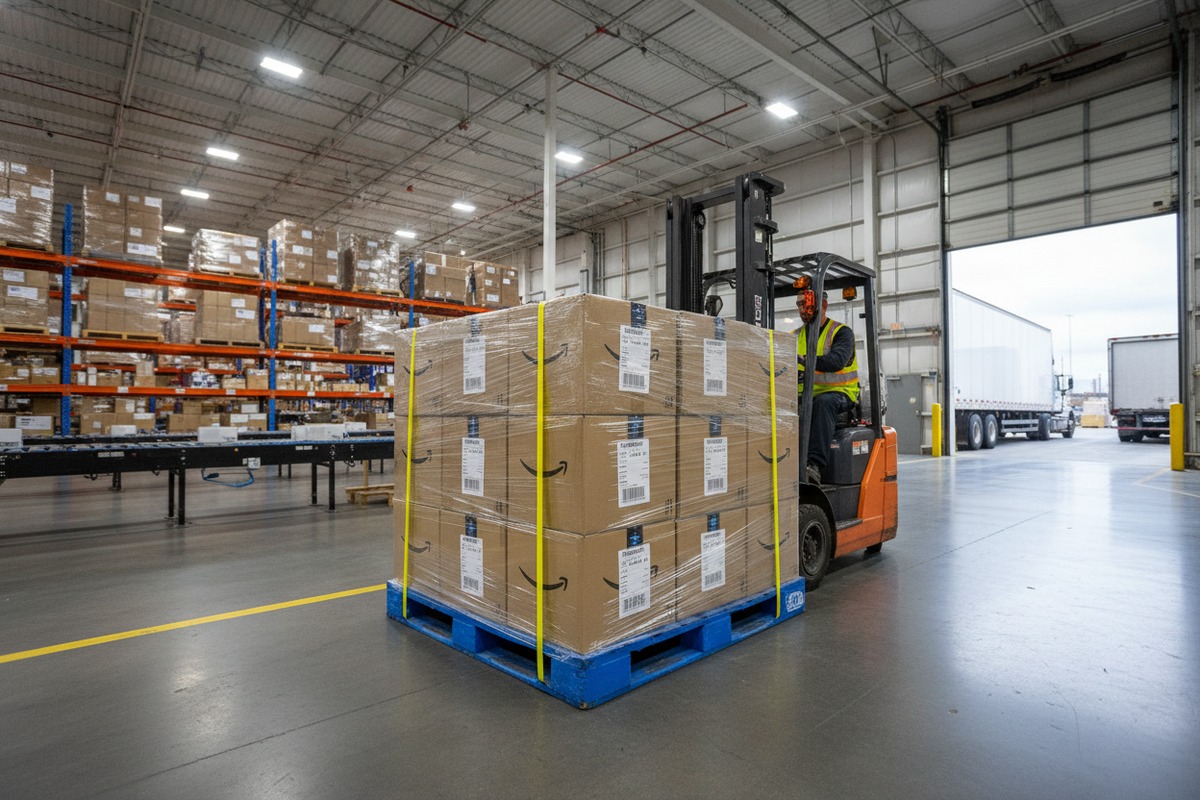
Amazon FBA sellers operate on tight inventory cycles. If your product runs out of stock, your listing drops in search rankings. Recovering those rankings can take weeks. So every day your cargo sits at the port waiting for a D/O is a day closer to a potential stockout.
Here is a typical timeline breakdown for a China-to-US FBA shipment:
| Phase | Duration | Notes |
|---|---|---|
| Factory to port (China) | 1–3 days | Trucking or rail |
| Ocean transit | 14–22 days | Depends on route and port |
| Arrival and D/O issuance | 1–3 days | Assumes documents are ready |
| Customs clearance | 1–3 days | Can be longer with inspections |
| Drayage to FBA warehouse | 1–5 days | Depends on warehouse location |
| Amazon receiving and check-in | 2–7 days | Amazon's own processing time |
| Total | 20–43 days | D/O delays extend this significantly |
From our experience managing hundreds of FBA shipments per month, here are the most common reasons a D/O gets delayed:
We recommend several best practices to our Amazon seller clients:
Use telex release or sea waybill instead of original B/L whenever possible. This eliminates the need to physically transport documents across the ocean. Ensure all freight charges are prepaid so there are no payment holds at destination. Verify that the consignee name on all documents matches exactly. Work with a customs broker who is already familiar with your carrier's D/O process.
More carriers are adopting electronic delivery orders (e-D/O or EDO). This is a significant improvement for FBA sellers. Instead of physically visiting the carrier's office or waiting for paper documents, the D/O is issued digitally and shared with the terminal and customs broker electronically. This can shave 1–2 days off the release process. However, not all carriers offer EDO at every port, so check availability with your logistics provider.
In our years of managing US-bound shipments, we have seen delivery order delays trigger a chain reaction of costs — demurrage, detention, storage, and even missed Amazon delivery windows.
If your delivery order is delayed during US customs clearance, you should immediately contact your customs broker and freight forwarder to identify the cause, confirm that all required documents are submitted, verify that outstanding carrier charges are paid, and request expedited processing or an electronic D/O if available. Proactive communication is the fastest way to resolve D/O holds.
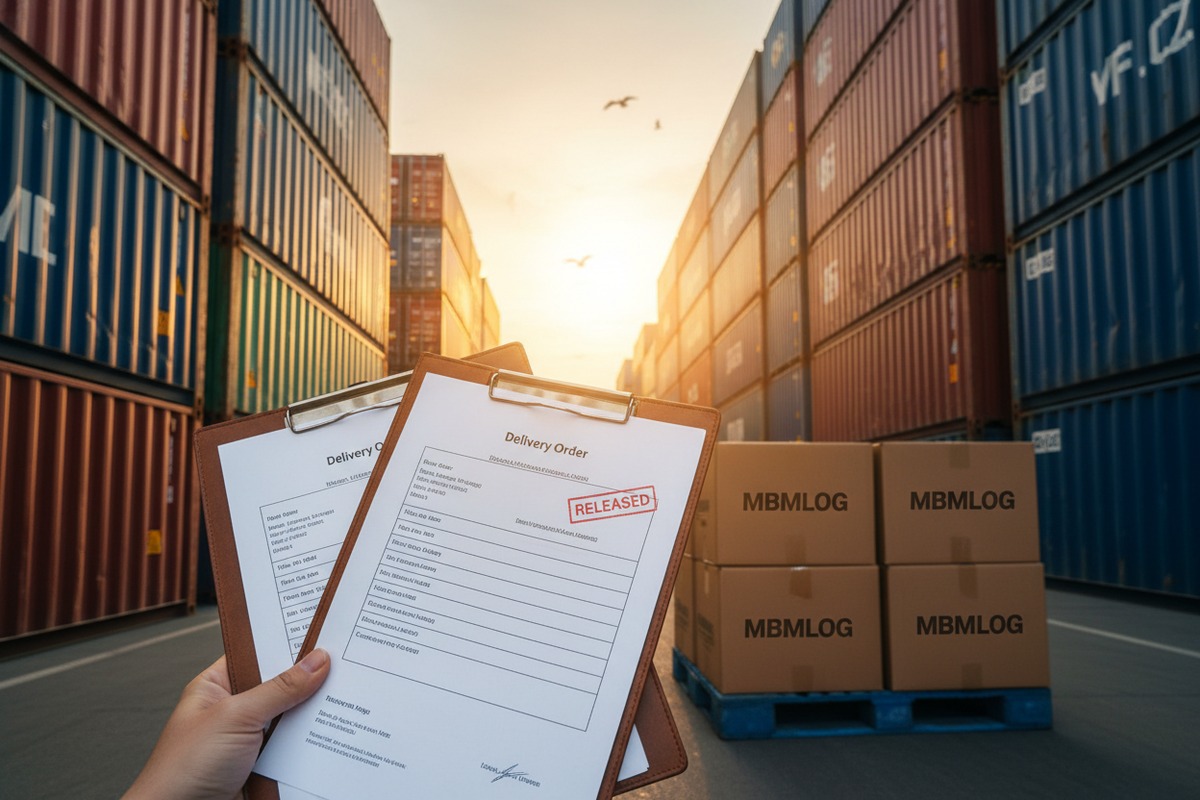
The first thing to do is find out exactly why the D/O has not been issued. Common causes include:
Your customs broker is usually the best person to diagnose this. They interact with both the carrier's agent and US Customs and Border Protection (CBP) 9 daily.
If the delay is caused by missing or incorrect documents, act fast. Request a telex release confirmation from the shipper if original B/Ls are lost or delayed. Provide a letter of indemnity if the carrier requires one. Correct any consignee name mismatches by submitting an amendment request to the carrier — though this can take time, so accuracy upfront is critical.
Carriers will not release the D/O if there are unpaid freight or local charges. Ask your forwarder or broker for a full list of charges due. Pay them immediately. Even a small unpaid balance can hold up the entire release.
If the carrier offers electronic delivery orders at your port, ask your broker to request one. EDOs bypass the need for physical document exchange and can be processed in hours rather than days. More US ports are accepting EDOs, and this trend is accelerating.
While you are resolving the D/O delay, keep a close eye on your demurrage and detention free time. Most carriers offer 3–5 free days at the terminal after vessel discharge. After that, daily charges apply — and they add up quickly.
Sometimes the D/O delay is not the carrier's fault at all. CBP may place a hold on your shipment for inspection, document review, or compliance checks. In this case, the D/O may already be issued, but the cargo cannot move until customs releases it. Your broker should be filing any required documentation with CBP and requesting release as soon as the hold condition is satisfied.
Based on our operational experience, here are the top preventive measures:
At MBMLOG, we assign a dedicated coordinator to every shipment specifically to monitor the D/O status and intervene the moment any delay appears. Prevention is always cheaper than recovery.
The delivery order is a small document with outsized impact on your import timeline and costs. Understanding what it is, who pays for it, and how to avoid delays puts you in control of your supply chain.
1. Defines the bill of lading as a legal contract and receipt. ↩︎
2. Defines delivery order and its importance in shipping. ↩︎
3. Explains the definition and types of import duties and taxes. ↩︎
4. Explains the legal agreement between carrier and shipper. ↩︎
5. Details the responsibilities under DDP Incoterms. ↩︎
6. Provides official information on international commercial terms. ↩︎
7. Explains a specific fee charged by US Customs. ↩︎
8. Provides details on the Harbor Maintenance Fee. ↩︎
9. Official source for US Customs and Border Protection. ↩︎
10. Describes the role of a freight forwarder in logistics. ↩︎