- +8618603825129
- [email protected]

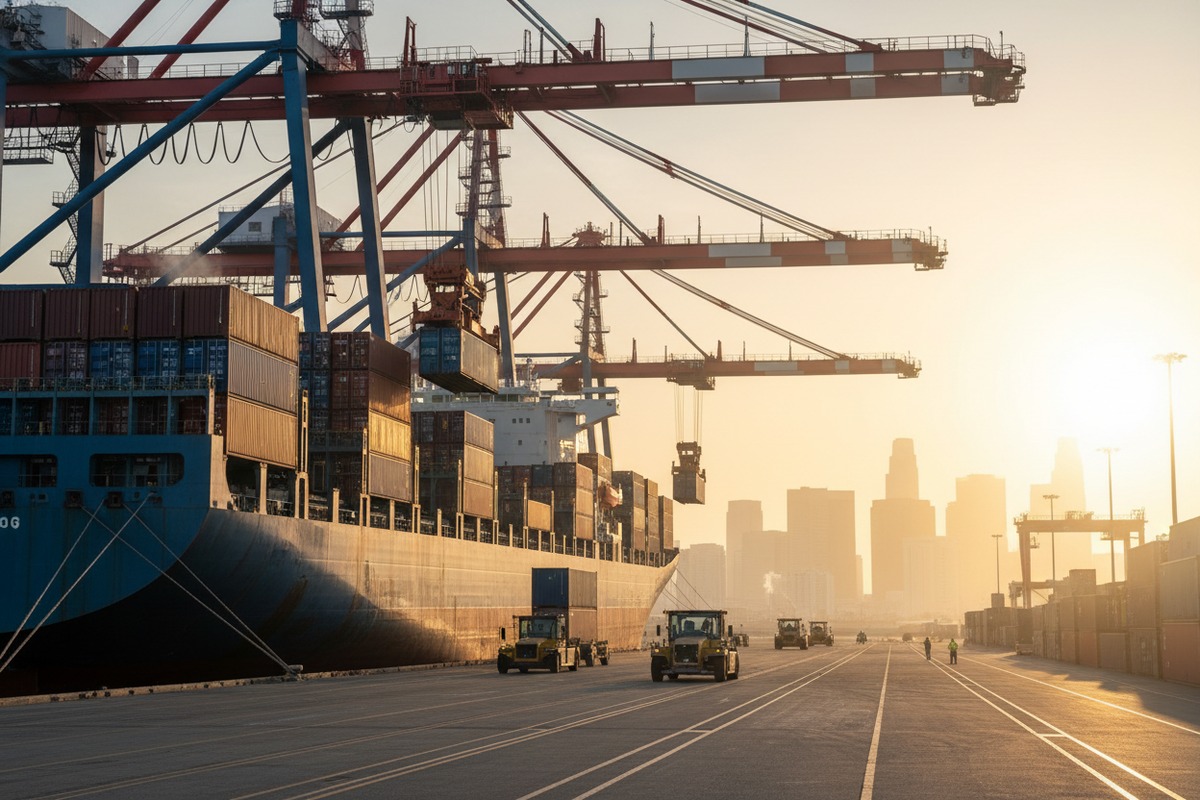
Every week, our logistics team in Zhengzhou processes hundreds of FCL shipments 1 bound for the US — and DDC questions come up constantly.
Destination Delivery Charge (DDC) is a carrier-specific fee covering the costs of unloading a container from the vessel, handling it through the destination terminal, drayage within the port, and gate-out processing. It is typically paid by the consignee unless the shipper agrees to prepay under DDP or similar trade terms.
DDC shows up as a separate line item on nearly every ocean freight invoice 2 for US-bound cargo. Yet many importers still confuse it with THC, customs fees, or last-mile delivery. Let me walk you through exactly what DDC covers, what it does not, and who actually foots the bill — so you never get blindsided by unexpected charges again.
When we quote DDP rates from our Zhengzhou warehouse to US destinations, clients often ask whether DDC is baked into that number or charged separately FOB (Free On Board) 3.
To verify if DDC is included in your DDP rate, ask your freight forwarder for an itemized cost breakdown. A genuine DDP quote should bundle ocean freight, DDC, customs clearance, duties, taxes, and inland delivery into one all-inclusive price with no hidden destination-side surcharges.

DDP stands for Delivered Duty Paid 4. In theory, every cost from origin to your door is included. In practice, not all providers define "all-inclusive" the same way. Some freight forwarders advertise a DDP rate but quietly exclude DDC, expecting the consignee to pay it at the destination terminal. This creates surprise invoices — sometimes $300 to $500 per container — that hit your account weeks after the shipment arrives.
The simplest way to avoid this is to request a written, line-by-line cost breakdown before booking. itemized cost breakdown 5 A trustworthy DDP provider will show you each component.
| Cost Component | Included in True DDP? | Common Hidden-Cost Risk |
|---|---|---|
| Origin pickup & warehouse handling | Yes | Low |
| Export customs clearance 6 | Yes | Low |
| Ocean freight (base rate) | Yes | Low |
| DDC (Destination Delivery Charge) | Yes | High — often excluded silently |
| US customs clearance & bond | Yes | Medium |
| Import duties & taxes | Yes | Medium |
| Inland trucking to final address | Yes | Medium |
| Demurrage & detention | Usually excluded | High |
In our experience handling China-to-USA DDP shipments daily, we always prepay DDC on behalf of the client and include it in the quoted price. This way, there is zero ambiguity. The number you see is the number you pay. Period.
If your current provider cannot give you a clear, itemized quote, consider switching to one that can. A few minutes of verification now can save you hundreds of dollars and weeks of frustration later.
Our operations team tracks every port-side cost line by line, so when a client asks what DDC really pays for, we can give a precise answer instead of a vague one.
DDC covers the crane lift-off of your container from the vessel, terminal drayage (short-haul movement within the port), gate fees, and basic terminal handling and short-term stacking. It does not cover customs clearance, import duties, demurrage, detention, delivery to your warehouse, or the D/O (Delivery Order) fee.
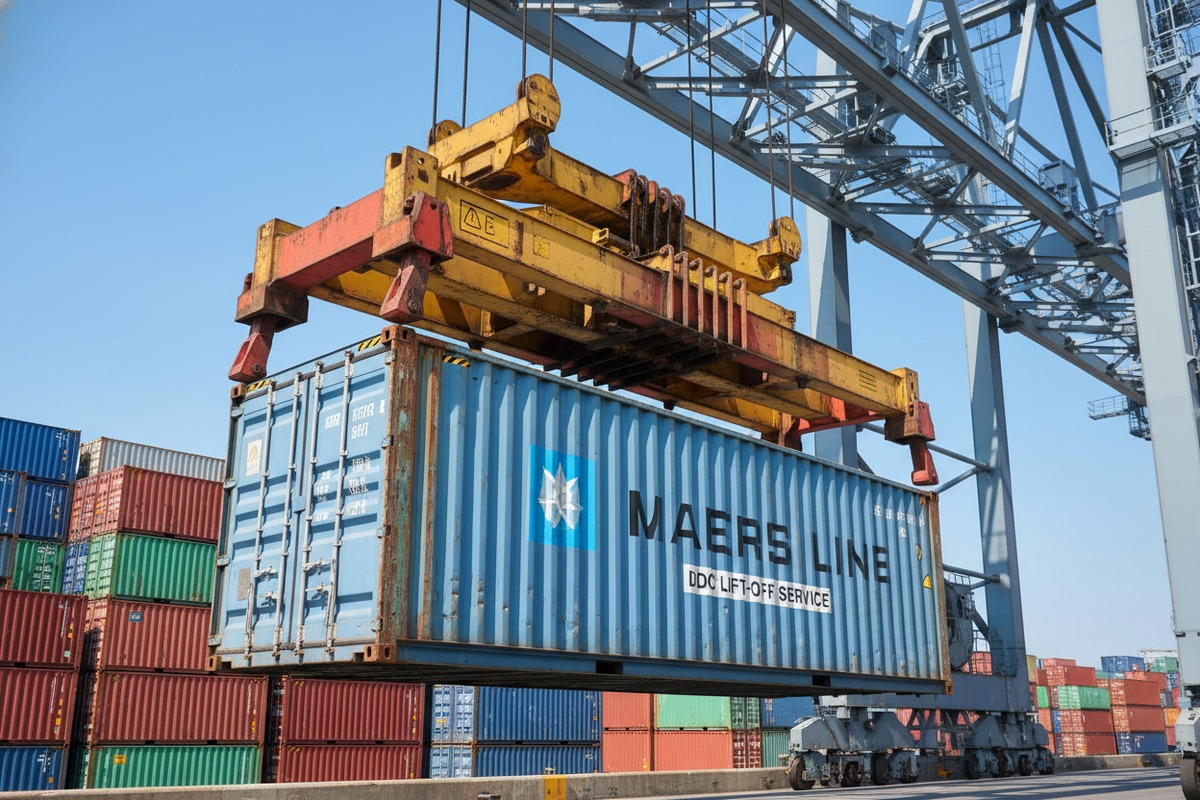
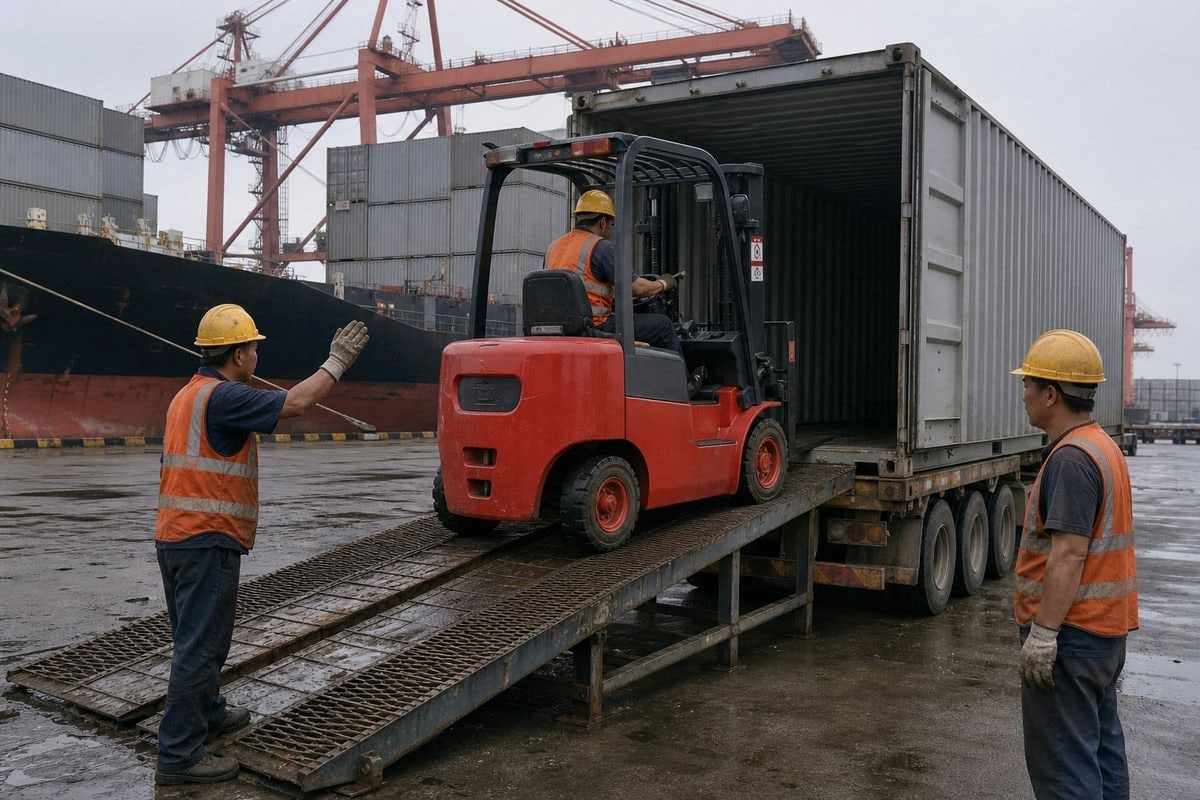
Let's look at what happens physically after your container ship docks at a US port like Los Angeles, Long Beach, or New York/New Jersey.
Step 1: Lift-Off (Crane Discharge). A gantry crane removes your container from the vessel and places it onto a chassis or into the terminal yard. This single lift is one of the most expensive operations at any port.
Step 2: Terminal Drayage. The container is moved — usually by a yard tractor — from the quayside to a storage stack or designated pickup area within the terminal. This short-haul movement is called drayage or short-haulage.
Step 3: Stacking and Storage. Your container is placed in a stack within the container yard. Basic short-term storage (often the first few free days) is included in DDC. Extended storage beyond the free period triggers separate demurrage charges 7.
Step 4: Gate-Out Processing. When a trucker arrives to pick up your container, the terminal processes the gate-out — verifying documentation, checking seals, and releasing the container. Gate fees cover this administrative and physical process.
This is where confusion often starts. Many importers assume DDC is a catch-all destination fee. It is not.
| Service | Covered by DDC? | Billed Separately As |
|---|---|---|
| Crane lift-off from vessel | ✅ Yes | — |
| Terminal drayage (within port) | ✅ Yes | — |
| Gate-out fee | ✅ Yes | — |
| Basic terminal stacking | ✅ Yes | — |
| Customs clearance | ❌ No | Customs brokerage fee |
| Import duties & taxes | ❌ No | Duty / tax payment |
| D/O (Delivery Order) fee | ❌ No | Carrier document fee |
| Demurrage (excess storage) | ❌ No | Per-diem demurrage |
| Detention (late container return) | ❌ No | Per-diem detention |
| Inland delivery to warehouse | ❌ No | Trucking / drayage fee |
No. Terminal Handling Charge (THC) 8 is a broader term used globally, and it exists at both origin and destination. DDC is specifically a destination-side charge most commonly seen in US and Canada trade lanes. Think of it this way: DDC includes some THC-type activities, but it is a bundled, carrier-specific fee — not identical to THC. In many Asian ports, you pay THC at origin. At the US port, you pay DDC at destination. They overlap in concept but differ in scope and billing.
DDC is almost always charged as a flat rate per container type, not per weight or volume.
| Container Type | Typical DDC Range (USD) |
|---|---|
| 20GP | $150 – $350 |
| 40GP / 40HQ | $250 – $500 |
| 45HQ | $300 – $550 |
These are indicative ranges. Actual amounts depend on the carrier, specific port, and current tariff schedules. Rates change, so always confirm with your forwarder before booking.
Our team handles this exact question almost every day — a US-based Amazon seller buys FOB Shenzhen and then wonders who is on the hook for DDC at Long Beach.
Who pays DDC depends on your Incoterms. Under FOB, CFR, or CIF, the buyer (consignee) typically pays DDC at the destination port. Under DDP or DDU, the seller (shipper) usually prepays or absorbs DDC. Ultimately, DDC responsibility is determined by whatever the buyer and seller agree to in the shipping contract.
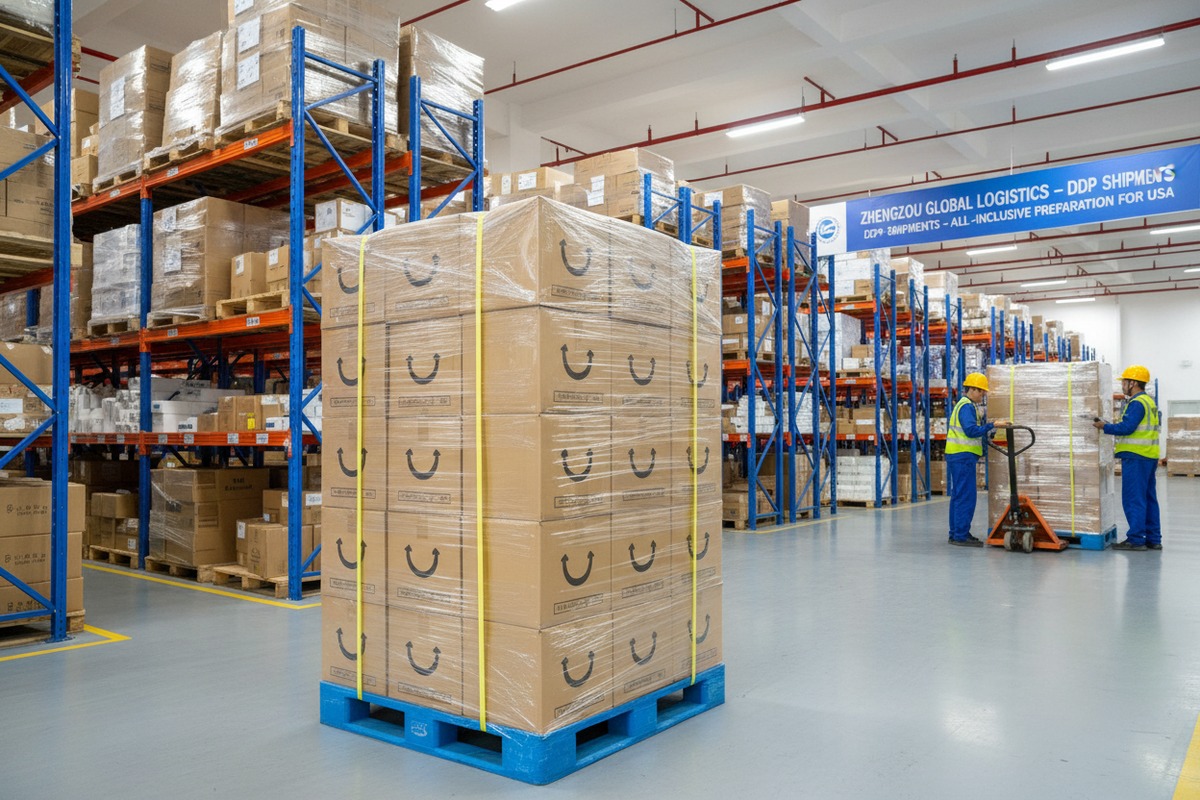
Incoterms 9 define where the seller's responsibility ends and the buyer's begins. DDC sits firmly on the destination side of the logistics chain, so it naturally falls to the buyer in most standard trade terms. Here is how it works in practice:
FOB (Free On Board): The seller delivers goods onto the vessel at the origin port. Everything after that — including ocean freight, DDC, customs, and delivery — is the buyer's cost. DDC is clearly the buyer's responsibility.
CFR (Cost and Freight): The seller pays for ocean freight to the destination port, but risk transfers at the origin port. DDC is a destination charge, so it is still the buyer's responsibility in most CFR contracts.
CIF (Cost, Insurance, and Freight): Similar to CFR but with insurance added. DDC remains a destination charge paid by the buyer.
DDU (Delivered Duty Unpaid): The seller handles everything up to the destination — including DDC — but excludes customs duties and taxes. DDC is the seller's cost.
DDP (Delivered Duty Paid): The seller covers all costs, including DDC, customs, duties, taxes, and delivery. DDC is fully the seller's responsibility.
DDC can be billed in two ways:
When we arrange DDP shipments for our clients, we always prepay DDC. This means the Amazon seller in the US does not receive any surprise bills from the carrier or terminal. The entire process is handled before the goods even arrive.
Most Amazon sellers source products on FOB terms from Chinese suppliers. In that case, you — the buyer — are responsible for DDC. If you work with a freight forwarder who offers DDP service, they should prepay DDC and include it in your quoted price. If you are arranging freight yourself on FOB terms, expect DDC to appear on your destination-side invoice from the carrier or their agent.
Yes, but with limits. DDC is a carrier tariff charge, so individual shipment negotiation is rare. However, high-volume shippers who move dozens of containers per month can sometimes negotiate slightly lower DDC rates as part of a service contract with the carrier. For most small-to-medium importers, the better strategy is to compare DDC rates across different carriers and choose the one that offers the best overall value.
When we ship FBA inventory for Amazon sellers across the US, one of the most common budgeting mistakes we see is ignoring DDC in the landed cost 10 calculation.
DDC directly increases your total landed cost by adding $150 to $500+ per container on top of ocean freight, customs duties, and inland delivery. For Amazon FBA sellers, failing to account for DDC can distort per-unit cost calculations, erode profit margins, and create budget shortfalls that only surface after the shipment arrives.
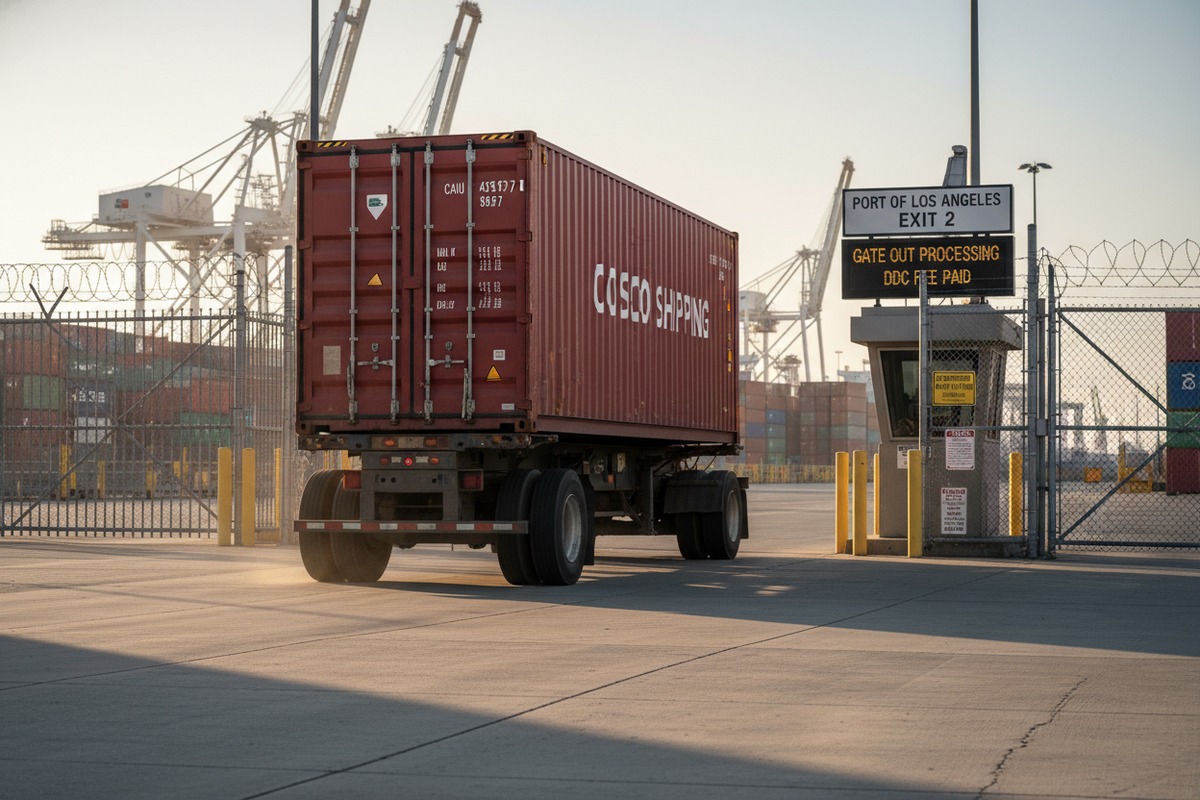
Landed cost is the total price of getting a product from the factory floor in China to the Amazon FBA warehouse shelf in the US. It includes product cost, packaging, inland transport in China, export clearance, ocean freight, DDC, US customs clearance, duties, taxes, and final delivery to the FBA facility.
DDC is just one line item, but ignoring it throws off your entire per-unit calculation. For a 40HQ container carrying 2,000 units, a $400 DDC adds $0.20 per unit. That sounds small, but multiply it across ten shipments a year and it is $4,000 you did not plan for.
Here is a realistic cost breakdown for a full 40HQ container shipped from Shenzhen to an Amazon FBA warehouse in California.
| Cost Component | Estimated Cost (USD) | % of Total |
|---|---|---|
| Product cost (factory) | $12,000 | 60.0% |
| China inland transport + export clearance | $350 | 1.8% |
| Ocean freight (Shenzhen to LA) | $3,500 | 17.5% |
| DDC | $400 | 2.0% |
| US customs brokerage | $150 | 0.8% |
| Import duties (e.g., 7.5%) | $900 | 4.5% |
| Inland trucking (LA port to FBA warehouse) | $800 | 4.0% |
| Amazon FBA prep & labeling | $500 | 2.5% |
| ISF filing + bond | $150 | 0.8% |
| Miscellaneous (chassis, fuel surcharge) | $250 | 1.3% |
| Total Landed Cost | $20,000 | 100% |
In this example, DDC represents about 2% of total landed cost. That percentage varies based on the value of your goods. For lower-value, high-volume products, DDC's share of landed cost can climb to 5% or more.
Get an all-in DDP quote. The easiest way to control DDC impact is to use a DDP shipping service that bundles everything. When we quote DDP for Amazon FBA clients, DDC, customs, duties, and delivery to the FBA warehouse are all included in one number. No surprises.
Calculate per-unit shipping cost before ordering. Divide your total expected landed cost by the number of units in the container. If DDC pushes your per-unit cost above your target margin threshold, you may need to adjust pricing or order volume.
Compare ports. DDC rates differ by port. Los Angeles, Long Beach, New York, and Savannah all have different terminal operators and fee structures. Sometimes routing through a less congested port saves enough on DDC and other fees to offset a slightly longer transit time.
The bottom line: DDC is small relative to product cost but significant enough to affect profit margins on competitive Amazon listings. Build it into every landed cost calculation from day one.
DDC is a small but important destination-side fee. Know what it covers, confirm who pays it, and always get an itemized breakdown before you book.
1. Explains the concept of Full Container Load shipments in international trade. ↩︎
2. Details the typical charges found on an ocean freight invoice. ↩︎
3. Explains the responsibilities of buyers and sellers under FOB Incoterms. ↩︎
4. Provides a comprehensive explanation of the DDP Incoterm. ↩︎
5. Explains the importance of a detailed cost breakdown in shipping. ↩︎
6. Explains the process and importance of customs clearance in international shipping. ↩︎
7. Defines demurrage fees incurred when containers exceed free time. ↩︎
8. Explains the purpose and application of Terminal Handling Charges in shipping. ↩︎
9. Provides an official overview of Incoterms rules for international trade. ↩︎
10. Explains the concept of landed cost in supply chain management. ↩︎