- +8618603825129
- [email protected]

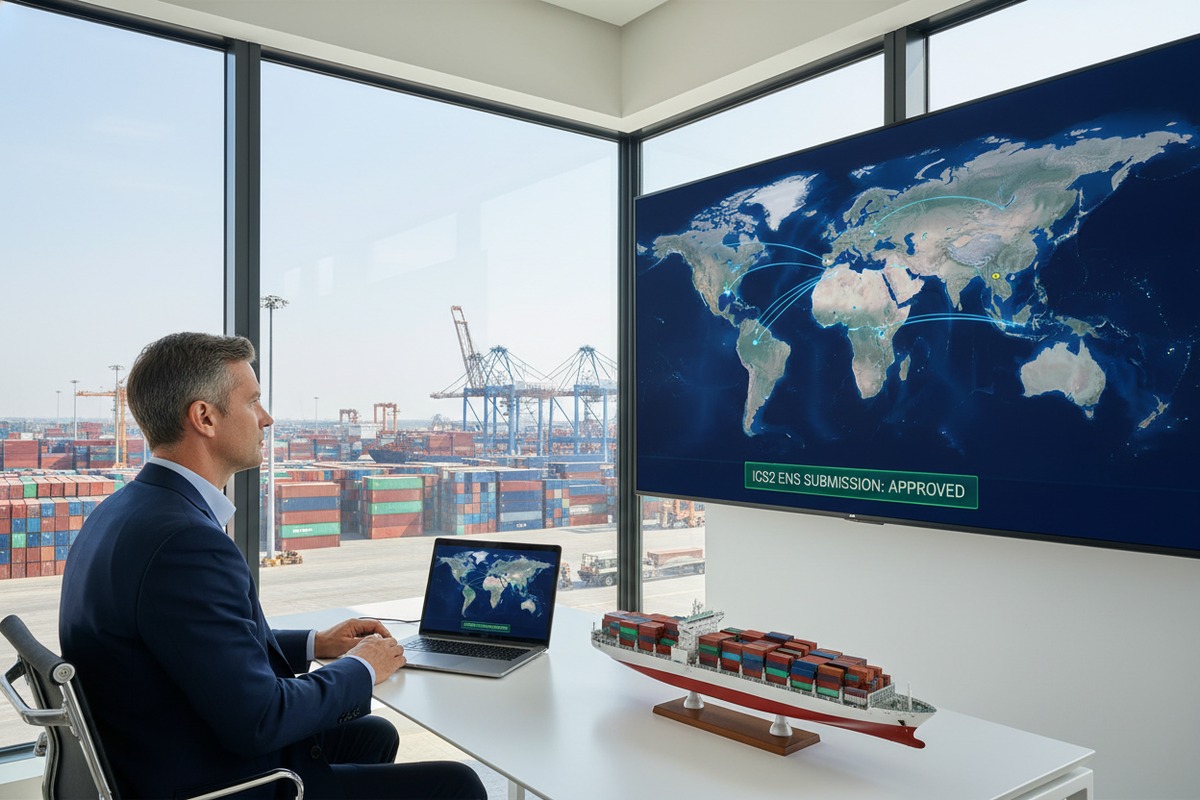
Every week, our logistics team in Zhengzhou handles dozens of shipments bound for European ports — and since ICS2 rolled out, the rules changed fast.
ICS2 (Import Control System 2) is the EU's mandatory advance cargo security screening program. All goods entering or transiting the EU by air, ocean, road, or rail must be pre-declared through an Entry Summary Declaration (ENS). There is no official EU government filing fee, but carriers and forwarders typically charge commercial service fees for handling the submission.
Below, we break down exactly how ICS2 affects your shipments, what data you need, who pays what, and how to stay compliant without delays or fines.
When we coordinate container bookings from China to Rotterdam or Hamburg, the pre-departure workflow now includes a mandatory data submission step that did not exist under the old system.
ICS2 requires carriers and freight forwarders to submit detailed Entry Summary Declaration (ENS) data before goods are loaded or arrive in the EU. This means shippers must provide accurate cargo information earlier in the supply chain, changing booking timelines, documentation workflows, and cut-off deadlines for every EU-bound shipment.
The old Import Control System 1 (ICS1) collected basic safety and security data, but it was limited. ICS2 expanded the data set significantly. Now, customs authorities want granular details — a 6-digit HS code 2, full shipper and consignee addresses, package counts, gross weights, and clear goods descriptions. Vague terms like "general merchandise" or "consumer goods" are no longer accepted.
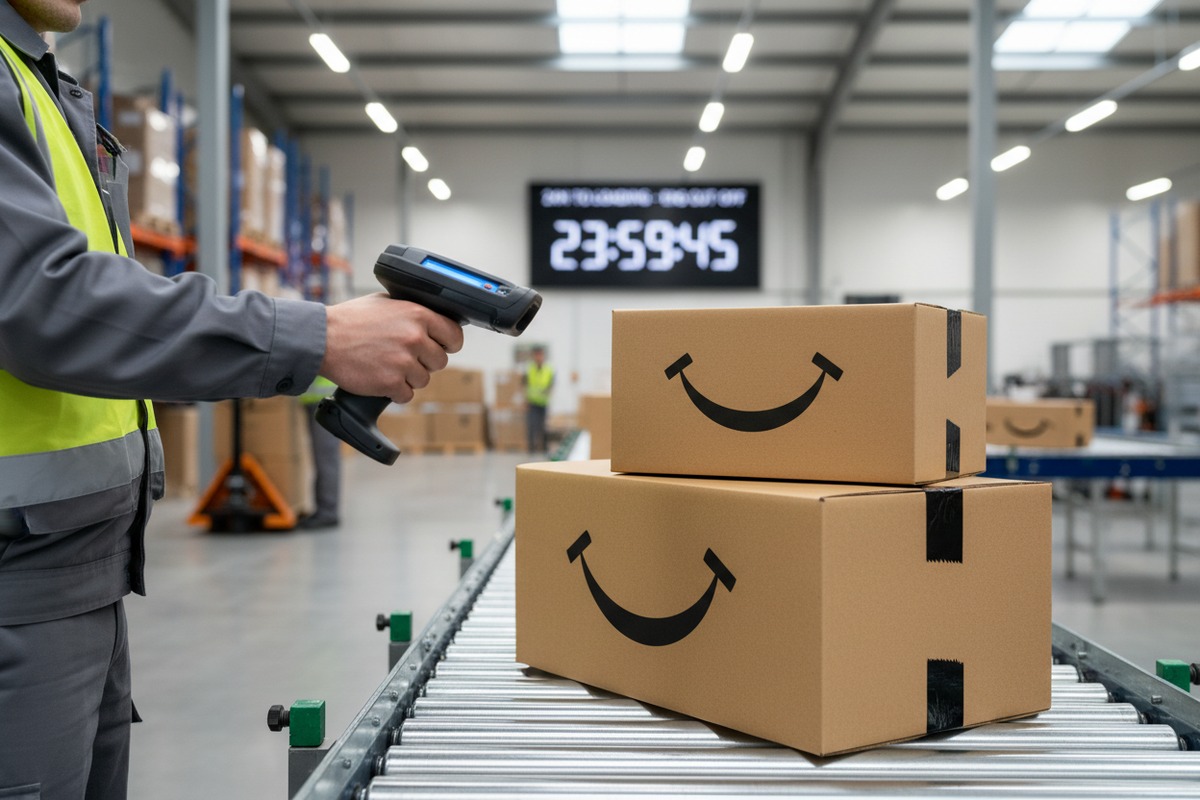
For our ocean freight clients shipping FCL or LCL to the EU, the biggest change is the filing deadline. Under ICS2, ocean containers must have their ENS submitted at least 24 hours before loading at the port of origin. That is a hard cut-off. Miss it, and the container does not get on the vessel.
Before ICS2, many shippers could finalize cargo details close to the vessel departure. Now, you need complete and accurate data much earlier. Here is a comparison:
| Aspect | Before ICS2 | After ICS2 |
|---|---|---|
| Data submission deadline | At or near vessel departure | 24 hours before loading (ocean) |
| Goods description | General terms accepted | Specific, detailed descriptions required |
| HS code requirement | Often optional or 4-digit | 6-digit HS code mandatory |
| Consignee EORI | Not always required | Required for EU-established entities |
| Amendment flexibility | Relatively easy post-submission | Costly and restricted after cut-off |
ICS2 does not only affect ocean freight. It covers air, rail, and road shipments too. The rollout happened in phases. Air cargo was brought in first, then ocean and rail followed. By early 2026, all transport modes are covered across most EU member states.
For our Amazon FBA clients who sometimes use air express to restock fast-moving SKUs in European fulfillment centers, this means the express carrier (DHL, FedEx, UPS) now handles the ICS2 filing on your behalf. But you still need to provide them with complete data. If the data is wrong or missing, the carrier cannot file, and your parcel sits in a warehouse.
The practical effect is simple: start your documentation earlier, keep your product data clean, and communicate with your logistics provider well before the cut-off.
Our operations team gets this question daily from clients shipping DDP to Europe — they want to know if this is optional or a hard rule.
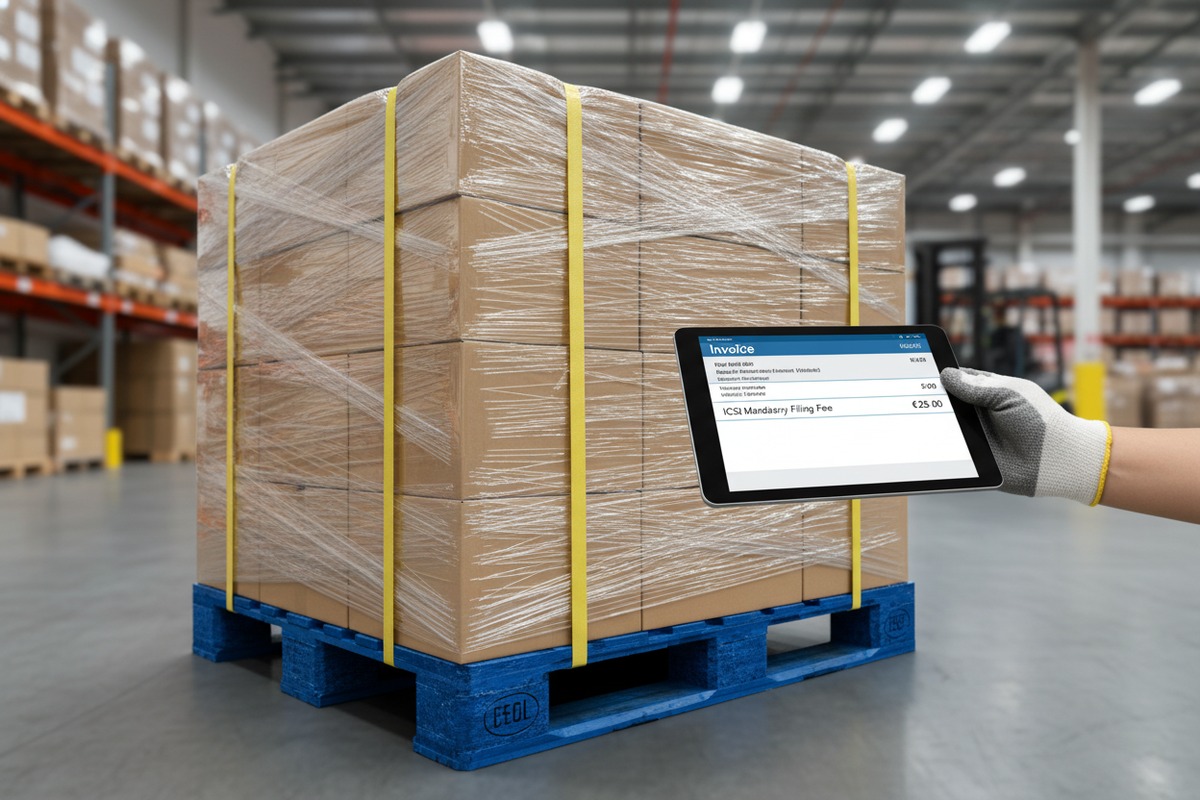
Yes, the advance ENS filing is mandatory for all goods entering or transiting the EU. There is no official EU government fee for the ICS2 filing itself. However, carriers and freight forwarders charge commercial service fees — typically USD 30–35 per bill of lading for ocean freight — to cover the administrative cost of preparing and submitting the declaration.
The European Commission is clear: all economic operators bringing goods to or transiting through the EU must declare safety and security data 3 via ICS2. This is not a recommendation. It is a legal requirement. It applies whether your cargo's final destination is Germany, whether it is transiting through a Belgian port on its way to Switzerland, or whether it is a single parcel or a full container.
There is no minimum value threshold either. Whether you are shipping a $5 sample or a $50,000 pallet of electronics, the ENS must be filed.
ICS2 itself does not come with a government tax or filing fee. The European Commission does not charge shippers or carriers a per-declaration fee. But that does not mean the process is free. Carriers, shipping lines, and freight forwarders invest in systems, staff, and software to handle these filings. They pass those costs along as service fees.
Here is what we typically see in the market:
| Fee Type | Typical Cost | Notes |
|---|---|---|
| Ocean freight ICS2 filing fee | USD 30–35 / bill of lading | Charged by the carrier or forwarder |
| Air freight ICS2 filing fee | Usually waived | Bundled into existing air waybill processing |
| Post-cut-off amendment fee | USD 40–60 / amendment | Charged when data changes after ENS submission |
| Late data submission surcharge | USD 30–50 / bill of lading | Applies when documentation arrives within 24 hours of cut-off |
| Non-compliance penalty (EU customs) | EUR 500–5,000 / shipment | For missed, late, or inaccurate filings |
This is where it gets practical. Under FOB (Free on Board) terms 4, the shipper — typically the Chinese supplier or exporter — is responsible for costs up to the point the goods are loaded on the vessel. Since the ICS2 filing happens before loading, the filing fee is considered a China-side origin cost. So under FOB, the seller usually pays.
Under CIF or CFR terms 5, the seller covers freight and often rolls the ICS2 fee into the overall ocean freight charge. The buyer may not see it as a separate line item, but it is built into the price.
For our DDP clients, we include ICS2 filing as part of our all-inclusive service. There are no surprises. The filing fee is bundled into the total door-to-door cost we quote.
When we prepare shipment documents for our clients, we now request a much more detailed data package than we did two years ago — and missing even one field can block the entire filing.
To comply with ICS2, you must provide the shipper's full name and address, the consignee's full name, address, and EORI number (if EU-established), a 6-digit HS code, a precise goods description, the number of packages, gross weight, and additional transport-specific information. All data must be accurate and submitted before the filing deadline.
The Entry Summary Declaration is your ticket to getting goods through EU customs without delays. Entry Summary Declaration (ENS) 6 Every field matters. Here is a breakdown of the key data elements:
| Data Field | Description | Example |
|---|---|---|
| Shipper name and address | Full legal name and physical address of the sender | Zhengzhou MBMLOG Co., Ltd., 88 Logistics Road, Zhengzhou, China |
| Consignee name and address | Full legal name and physical address of the EU receiver | ABC GmbH, Musterstraße 12, 10115 Berlin, Germany |
| Consignee EORI number 7 | Economic Operators Registration and Identification number | DE123456789012345 |
| HS code (6-digit minimum) | Harmonized System code for goods classification | 940360 (wooden furniture) |
| Goods description | Clear, specific text describing the cargo | "Flat-pack wooden bookshelves, unassembled, pine wood" |
| Number of packages | Total count of individual packages | 120 cartons |
| Gross weight | Total weight including packaging, in kilograms | 2,400 kg |
| Container number | For ocean FCL shipments | MSCU1234567 |
| Bill of lading / AWB number | Transport document reference | MAEU123456789 |
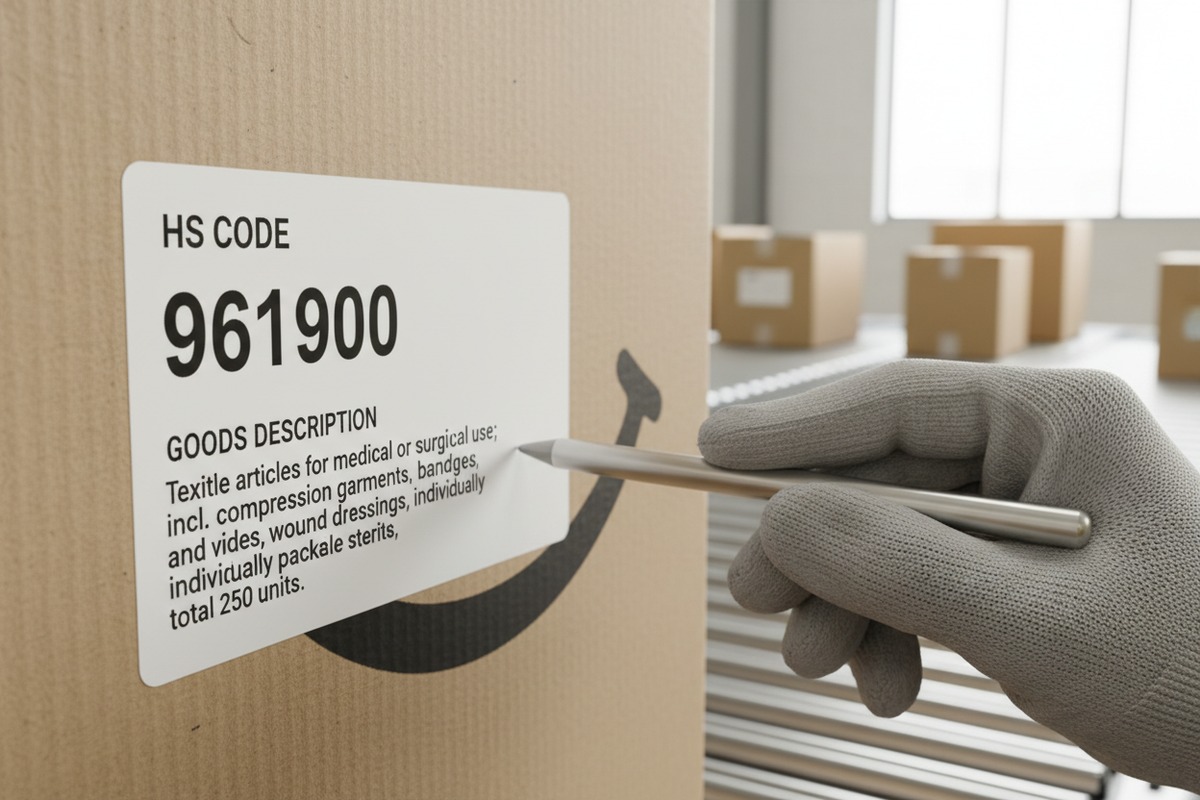
One of the most common problems we see is shippers providing lazy goods descriptions. Under the old system, you could sometimes get away with "household items" or "electronics." Under ICS2, that will trigger a rejection or a "do not load" instruction.
EU customs authorities 8 use the ENS data for automated risk screening. The algorithm needs specific language to classify risk. A description like "plastic items" tells the system nothing. A description like "injection-molded ABS plastic phone cases, assorted colors, retail packaging" tells the system exactly what it needs.
Our advice to clients is always the same: describe your goods as if the customs officer has never seen your product. Be specific about the material, the function, and the form.
The EORI number is a frequent pain point, especially for e-commerce sellers. If your EU consignee is an established business entity, they must have an EORI number, and it must be included in the ENS. Without it, the filing is incomplete.
For Amazon FBA shipments to EU warehouses, Amazon's EORI number is typically used. But if you are shipping to your own EU warehouse or a third-party fulfillment center, you need the consignee's EORI. Many smaller businesses do not realize they need one until their shipment is already in transit. Get this sorted before you book.
A wrong HS code does not just cause customs delays — it can trigger additional inspections, higher duties, or even fines. We always recommend double-checking your HS codes against the EU's TARIC database 9. The first 6 digits must match the Harmonized System. The EU may require additional digits for tariff classification, but for ICS2 purposes, the 6-digit code is the minimum.
If you are unsure about your HS codes, ask your freight forwarder or customs broker. We help our clients verify codes before filing to prevent downstream problems.
In the first month after ICS2 enforcement tightened for ocean freight, our team saw a spike in amendment requests — most caused by clients sending us incomplete packing lists at the last minute.
To avoid ICS2-related delays and penalties, submit complete and accurate ENS data well before the filing deadline, verify HS codes and EORI numbers in advance, maintain clean master data for all products, and work with a logistics partner experienced in EU customs compliance. Proactive preparation eliminates the most common causes of holds and fines.
Getting ICS2 wrong is expensive. EU customs authorities can issue fines ranging from EUR 500 to EUR 5,000 per shipment for missed, late, or inaccurate filings. But the fines are only part of the story. The real damage comes from operational disruption.
A "do not load" instruction means your container sits at the origin port. You miss your vessel. You pay storage fees. Your inventory does not arrive on time. For Amazon sellers, this can mean stockouts, lost Buy Box eligibility, and a hit to your seller ranking that takes weeks to recover from.
Then there are amendment fees. If you need to change data after the ENS is filed, carriers charge USD 40–60 per amendment. If you submit your documentation within 24 hours of the filing cut-off, expect a late submission surcharge of USD 30–50 on top of the standard filing fee.
Here is the process we follow at MBMLOG to keep our clients' EU shipments clean:
1. Collect data early. We request complete packing lists, commercial invoices, and HS codes at least 3 days before the vessel booking cut-off. This gives us time to review and correct errors.
2. Validate EORI numbers. We check every consignee EORI against the European Commission's EORI validation tool before filing. Invalid or expired numbers are the number one cause of ENS rejections we see.
3. Use precise goods descriptions. We train our clients on what "precise" means. Material, function, form, and intended use — all in plain language.
4. Cross-check HS codes. We verify codes against the TARIC database. If a product is new or unusual, we consult with our customs broker partners in the destination country.
5. File early. We aim to submit the ENS at least 48 hours before loading, not 24. The extra buffer gives us time to handle any system errors or data queries from customs.
Here are the top errors we encounter and practical fixes:
ICS2 is not a one-time hurdle. It is the new normal for EU trade. Businesses that invest in clean product master data, reliable logistics partnerships, and early documentation workflows will find that compliance becomes routine. The EU has signaled that "trusted traders 10" — those with strong compliance records — may eventually benefit from streamlined processes and fewer inspections. Getting ICS2 right now positions your business for those advantages later.
We also see AI-powered validation tools entering the market. These tools can automatically check HS codes, flag vague descriptions, and validate EORI numbers before the ENS is submitted. If you ship to the EU regularly, investing in or working with a forwarder who uses these tools is worth considering.
ICS2 is here to stay. The filing is mandatory, the data requirements are strict, and the penalties for non-compliance are real — but with early preparation and the right logistics partner, staying compliant is straightforward.
`
1. Official EU source explaining ICS2, the successor to ICS1. ↩︎
2. Official European Commission page detailing the Harmonized System (HS). ↩︎
3. Official EU source explaining the requirement for safety and security data in ICS2. ↩︎
4. Official International Chamber of Commerce (ICC) page for Incoterms 2020, which includes FOB. ↩︎
5. Official International Chamber of Commerce (ICC) page for Incoterms 2020, which includes CIF and CFR. ↩︎
6. Official European Commission page detailing customs clearance documents, including a section on Entry Summary Declarations (ENS). ↩︎
7. Official EU source stating EORI number is needed to connect to ICS2. ↩︎
8. Official European Commission Directorate-General for Taxation and Customs Union page. ↩︎
9. Official European Commission page for the TARIC database. ↩︎
10. U.S. government site explaining AEO status and its benefits for trusted traders in the EU. ↩︎