- +8618603825129
- [email protected]

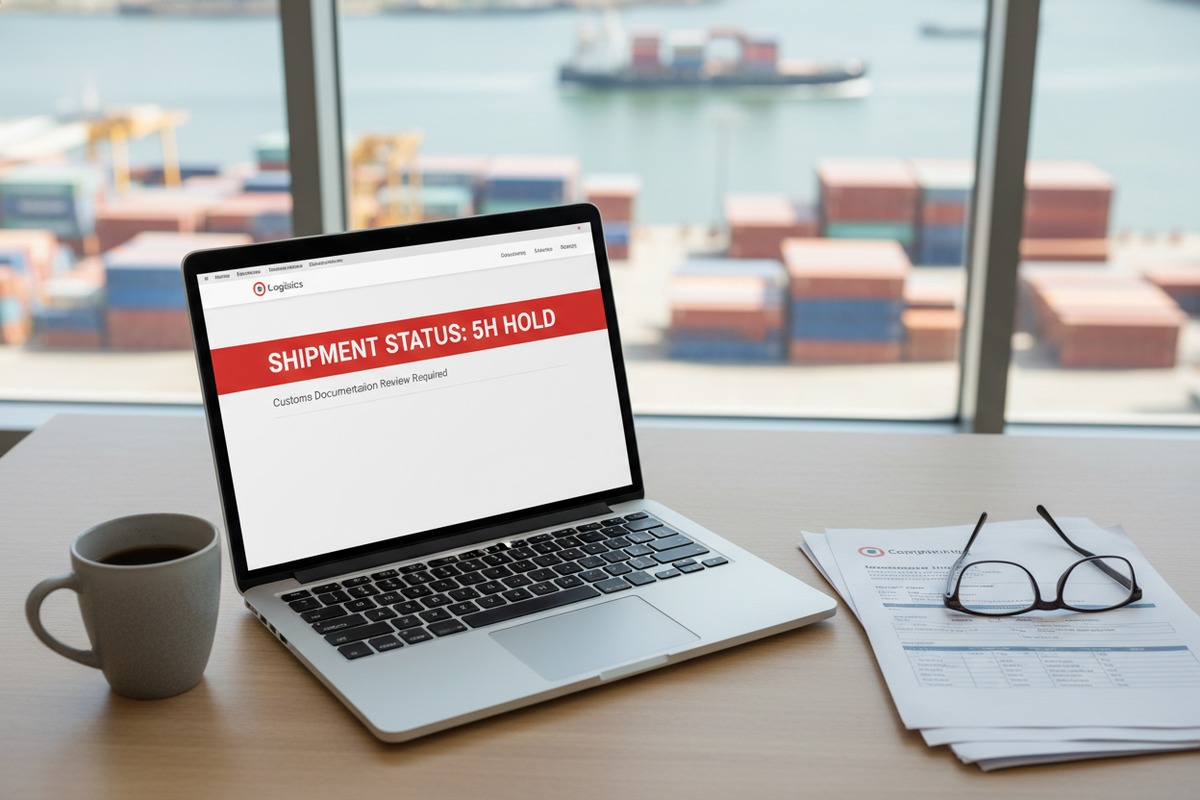
Every week, our logistics team fields calls from panicked sellers whose cargo is stuck at a US port with a mysterious 5H hold status importer-of-record credentials 1. US 5H customs inspections 2
The most effective solutions for US 5H customs inspections combine accurate pre-shipment documentation, verified importer-of-record credentials, a valid customs bond, and a rapid broker-response plan. Prevention through data consistency beats reactive fixes every time, saving sellers from costly storage fees and missed delivery windows.
In the sections below, we break down exactly how to prevent a 5H hold, what to do if your shipment gets flagged, how it impacts your Amazon FBA operations, and why a specialized DDP forwarder 3 can be your strongest line of defense.
When we prepare export documents at our Zhengzhou consolidation warehouse, even a single mismatched quantity between the commercial invoice 4 and the packing list can trigger a CBP flag.
You can optimize your paperwork by ensuring exact consistency across your commercial invoice, packing list, bill of lading, and manifest. Use specific product descriptions with materials and model numbers, declare accurate values, and verify HS codes before shipment. Pre-shipment document audits catch the errors that trigger 5H holds.

The 5H hold is essentially an entry-processing hold imposed by US Customs and Border Protection 5. CBP's automated systems scan incoming shipment data for red flags. When they find one, your cargo sits in limbo. The good news is that most 5H holds are triggered by preventable paperwork errors. Here is how to get your documents right before your container ever leaves the port of origin.
The number one trigger for a 5H hold is a mismatch between documents. Your commercial invoice says 500 units. Your packing list says 480. That gap alone can freeze your shipment. Every number, every product description, every weight figure must align perfectly across all documents. We run a triple-check system at our warehouse. The packing team counts. The documentation team verifies. A supervisor cross-references. This simple process has cut our clients' hold rates dramatically.
Vague descriptions like "electronics" or "household goods" are magnets for inspection. CBP wants to see exactly what is in the box. Write "Bluetooth wireless earbuds, model BT-200, ABS plastic housing, lithium battery 300mAh" instead of "earphones." The more specific you are, the less reason CBP has to look deeper.
Under-declaring the value of goods to reduce duties is one of the fastest ways to get flagged. CBP compares your declared value against market data, historical import records, and even transaction evidence like payment receipts. If your numbers look low, they will hold the shipment and ask questions. Always declare the real transaction value.
| Document | Key Fields to Verify | Common Error |
|---|---|---|
| Commercial Invoice | Product description, quantity, unit price, total value, HS code | Vague descriptions, rounded values |
| Packing List | Carton count, dimensions, gross/net weight per carton | Weight mismatch with invoice |
| Bill of Lading | Consignee name, notify party, container number, seal number | Consignee name spelled differently |
| Manifest (AMS) | Shipper, consignee, description, weight, piece count | Description does not match invoice |
An incorrect HS code can trigger both a hold and a penalty. Each product has a specific tariff classification. If you classify a regulated item under the wrong code, CBP's system will flag the inconsistency. HS codes 6 Work with your customs broker to confirm the correct HS code before you ship. Do not guess. Do not copy codes from a previous shipment without verifying they still apply.
The cheapest way to avoid a 5H hold is to catch errors before your goods leave China. At our facility, we review every document set against a standardized checklist before we release cargo to the carrier. This audit takes hours. Resolving a 5H hold takes days or weeks. The math is simple.
Our operations team has guided hundreds of shipments through 5H holds, and the single biggest factor in a fast resolution is how quickly you respond with the right documents.
If your shipment gets flagged for a 5H exam, your best options are to immediately contact your customs broker, submit a complete and consistent set of supporting documents within 24 hours, monitor daily for CBP requests, and have a contingency plan for storage fees or cargo return if clearance stalls.

A 5H hold does not automatically mean your goods will be physically inspected. In many cases, CBP is simply reviewing your documents more closely. But the clock starts ticking the moment your cargo is held. Storage fees accumulate daily. Your delivery window shrinks. Here is a step-by-step playbook for the first 72 hours after a 5H hold appears.
The moment you see a 5H status on your shipment tracking, contact your customs broker. Do not wait. Prepare a complete compliance file that includes your commercial invoice, packing list, purchase contract, payment records, bill of lading, and any product-specific certifications. If you are shipping electronics, have your FCC certificates ready. For children's products, have CPC and CPSIA documentation. For wood packaging, have your ISPM 15 fumigation certificate 7.
Your broker should submit all requested documents to CBP promptly. After submission, monitor for additional requests daily. CBP may come back with follow-up questions or ask for more evidence. Respond the same day if possible. Every day of delay is a day of storage fees.
If CBP has not released your shipment within 48 to 72 hours, ask your broker for a realistic assessment. Is there a specific issue they have identified? Can it be resolved with additional documentation? If the hold looks like it will extend significantly, you need to weigh your options.
| Scenario | Recommended Action | Cost Impact |
|---|---|---|
| Documents accepted, hold lifted | Proceed with delivery | Minimal — a few days of storage |
| CBP requests additional documents | Submit within 24 hours, monitor daily | Moderate — extended storage fees |
| Hold extends beyond 7 days with no resolution | Evaluate return or re-export options | High — daily storage plus potential return shipping |
| Physical inspection ordered | Cooperate fully, provide all certifications | High — exam fees plus extended delay |
The sellers who handle 5H holds best are the ones who planned for them before they shipped. This means building buffer time into your delivery schedule, purchasing cargo insurance 8 that covers delay-related costs, and having a pre-assembled compliance file ready to send at a moment's notice. We advise all our clients to keep a digital folder with every document related to each shipment, organized and accessible 24 hours a day. When a hold hits, you do not want to be searching through emails for a purchase contract.
Sometimes a shipment cannot be cleared. Maybe the product lacks a required certification that cannot be obtained quickly. Maybe the valuation discrepancy is too large to explain. In those cases, it is better to arrange a prompt return or re-export before storage fees consume the value of the goods. We have seen clients lose thousands of dollars by waiting too long to make this decision.
We ship to Amazon FBA warehouses 9 across the US every week, and we have seen firsthand how a single 5H hold can cascade into stockouts, lost Buy Box placement, and budget overruns that take months to recover from.
A 5H inspection can delay your Amazon FBA inventory by one to three weeks, trigger daily port storage fees of $75 to $300 or more, cause stockouts that tank your product rankings, and force emergency air freight restocking that can double or triple your original shipping budget.
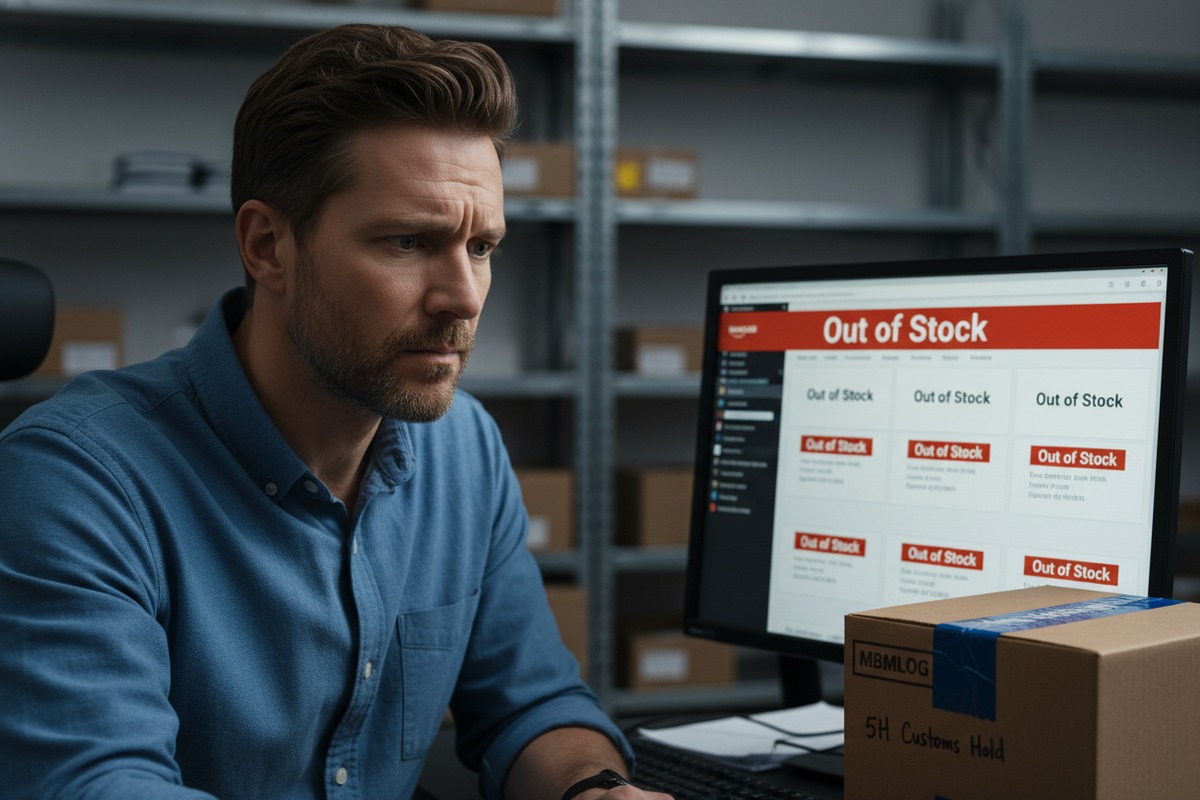
For Amazon sellers, time is inventory. Every day your goods sit at a port instead of sitting on an FBA shelf is a day you are not making sales. And the financial damage goes beyond just the storage fees at the port. Let us break down the real cost of a 5H hold for an Amazon FBA business.
Port storage fees vary by port, but they add up fast. At major US ports like Los Angeles or Long Beach, container storage fees can start at around $75 per day and escalate after the first few free days. If your hold lasts two weeks, you could be looking at over $1,000 in storage alone. Add potential demurrage charges from the shipping line for keeping their container, and costs climb further.
But the bigger cost is often invisible. If your FBA inventory hits zero, Amazon suppresses your listing. Your organic ranking drops. Your competitors capture your customers. Rebuilding that ranking after a stockout can take weeks of aggressive PPC spending and lower pricing. We have seen sellers estimate the true cost of a two-week stockout at five to ten times the actual storage fees.
Smart sellers build customs risk into their shipping budgets. Here is a framework we recommend to our clients.
| Budget Line Item | Standard Budget | 5H Risk-Adjusted Budget |
|---|---|---|
| Ocean freight (per CBM) | $45–$80 | $45–$80 |
| Customs clearance fees | $150–$300 | $150–$300 |
| Port storage contingency | $0 | $300–$1,500 |
| Emergency air freight buffer | $0 | $1,000–$5,000 |
| Cargo insurance (delay coverage) | Optional | Recommended |
| Total additional risk buffer | $0 | $1,300–$6,800 |
The most practical defense against a 5H-related stockout is to maintain a safety stock buffer. We advise Amazon sellers to keep at least 14 to 21 days of extra inventory at FBA warehouses beyond their normal reorder cycle. Yes, this means higher FBA storage fees. But those fees are predictable and manageable. A surprise 5H hold is not.
Another tactic we use for high-volume clients is shipment staggering. Instead of sending one large container every two months, send smaller shipments more frequently. If one shipment gets held, the others still arrive on time. Your inventory never drops to zero. This approach costs slightly more in per-unit shipping, but it dramatically reduces the risk of a total stockout from a single hold event.
Do not wait for your freight forwarder to call you with bad news. Use real-time tracking tools and check your shipment status daily once it arrives at a US port. The earlier you spot a 5H hold, the faster you can activate your response plan. At MBMLOG, we provide clients with proactive status updates specifically so they can make inventory decisions before a delay becomes a crisis.
Our team processes hundreds of DDP shipments from China to US Amazon warehouses every month, and we have built our entire operation around preventing exactly the kind of problems that cause 5H holds.
A specialized DDP forwarder handles your customs bond, importer-of-record setup, document preparation, HS code classification, and broker coordination as a single integrated service. This eliminates the gaps between separate providers where errors and miscommunication create the document inconsistencies that trigger 5H inspections.
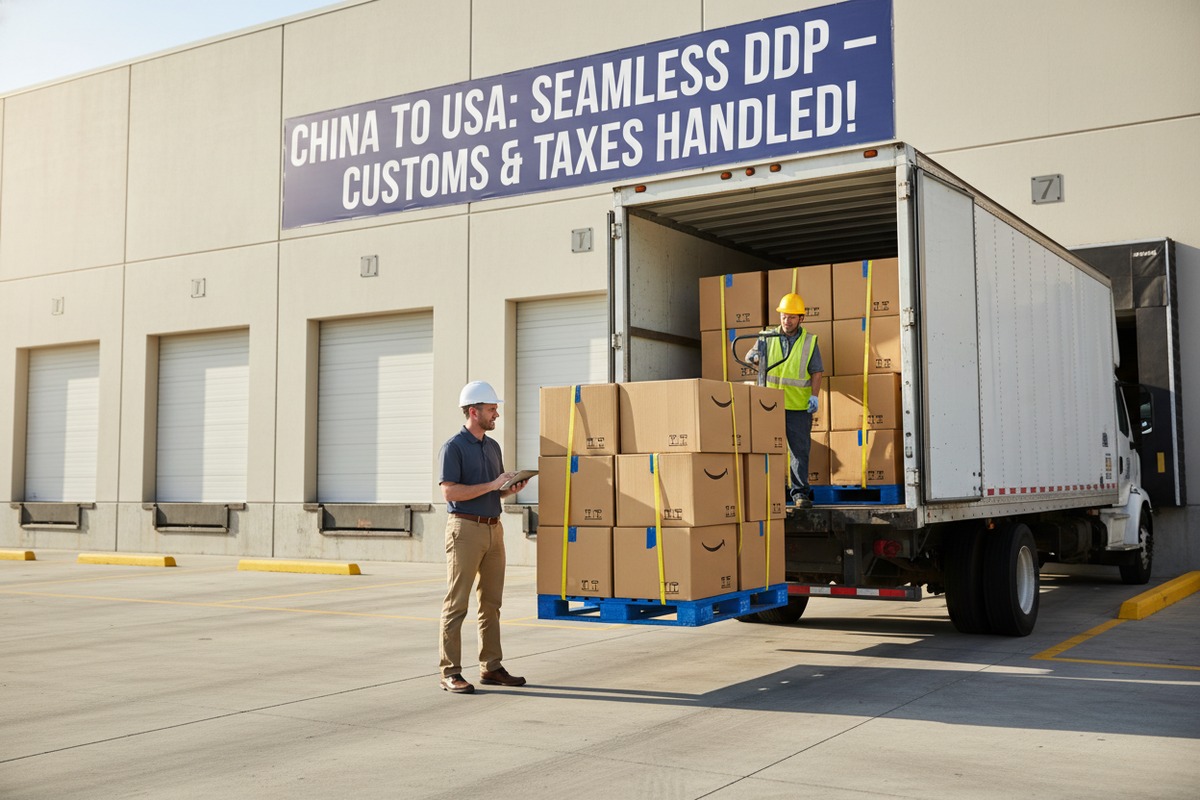
For cross-border e-commerce sellers, especially those selling on Amazon, TikTok Shop, or independent websites, customs clearance is uniquely complicated. The goods have no actual buyer before they are sold. The cargo ownership stays with the seller throughout the shipping process. And the selling entity is often a Chinese company with no physical US presence. This is exactly the profile that CBP scrutinizes most closely. Here is why a specialized DDP forwarder changes the equation.
For traditional trade, the US buyer or importer handles clearance. The seller stays out of it. The importer contacts a customs broker, purchases a bond, signs a Power of Attorney, and clears the goods. Simple.
But for e-commerce sellers shipping to their own FBA warehouse, there is no US buyer at the point of import. The seller is the importer. If you are a Chinese company, you need a US customs bond 10 in your name. You need a signed POA with a licensed customs broker. And you need CBP to see you as a legitimate, traceable importer. A DDP forwarder handles all of this. We help our clients apply for a US annual bond, which is valid for one year from purchase and covers up to $50,000 in shipment value. For higher volumes, we arrange custom bond amounts. The bond typically takes three to seven business days to process and must be completed before your goods are loaded into the container.
When you use separate providers for freight, customs brokerage, and last-mile delivery, you create handoff points. Each handoff is a place where information can get lost, changed, or mistyped. The freight forwarder uses one product description. The customs broker enters a slightly different one. The manifest shows a third variation. CBP's system catches the inconsistency, and you get a 5H hold.
A DDP forwarder controls the entire chain. We write the commercial invoice. We prepare the packing list. We file the entry. We manage the broker. One team, one set of data, zero handoff errors. This is not a luxury. For e-commerce shipments where the margin for error is already thin, it is a necessity.
A competent DDP forwarder does more than move boxes. Here is what you should expect from the service.
The cost of a DDP service is higher than basic FOB or CIF shipping. But when you factor in the cost of a single 5H hold, the math shifts. Storage fees, emergency re-shipping, lost Amazon sales, and broker emergency fees can easily exceed $5,000 for one delayed shipment. A DDP forwarder prevents most of those scenarios by building compliance into every step of the process. You pay for prevention upfront. You save on crisis management downstream.
We always tell our clients: customs clearance is not just about the cargo. CBP is also evaluating whether the importer is real, whether the transaction is genuine, and whether the documentation tells a consistent story. A DDP forwarder makes sure that story is airtight before your goods ever leave the warehouse.
Preventing a US 5H customs hold comes down to accurate documents, verified importer credentials, a valid bond, and a fast response plan backed by an experienced DDP logistics partner.
1. Defines importer of record and outlines responsibilities for US imports. ↩︎
2. Replaced with a relevant article from Kisun Shipping that explains 5H inspections and prevention. ↩︎
3. Replaced with an article from ARDI Logistics that explains DDP shipping and the role of a logistics provider/forwarder. ↩︎
4. Replaced with an authoritative U.S. Customs and Border Protection (CBP) page detailing commercial invoice requirements. ↩︎
5. Official website for the primary US agency responsible for customs and border security. ↩︎
6. Explains Harmonized System (HS) codes for classifying traded products internationally. ↩︎
7. Official standard for regulating wood packaging material in international trade to prevent pest spread. ↩︎
8. Replaced with a working page from Chubb, the original source, explaining worldwide ocean cargo insurance. ↩︎
9. Amazon's official shipping and routing requirements for FBA fulfillment centers. ↩︎
10. Official CBP guidance on obtaining a customs bond for importing goods into the US. ↩︎