
- +8618603825129
- [email protected]


Every week, our logistics team in Zhengzhou processes hundreds of shipments bound for Amazon FBA warehouses 1 across the United States. One problem keeps coming back: sellers lose money because they don't understand how UPS calculates billable weight. They pack boxes too light, too heavy, or too large — and the shipping bill punishes them every time.
UPS billable weight is the greater of actual weight, dimensional weight, or the minimum billable weight threshold. For cross-border e-commerce shipments from China to the USA, you calculate dimensional weight by multiplying length × width × height in centimeters and dividing by 5,000. Optimizing box sizes within carrier weight brackets saves significant shipping costs.
In this guide, I'll walk you through every step of the UPS billable weight 2 calculation. I'll share the exact weight brackets we recommend to our clients, explain how dimensional weight 3 works for international shipments, and give you practical box-sizing strategies that can cut your shipping costs immediately. Let's get into it.
When we first started helping Amazon sellers ship from our Zhengzhou warehouse to the US, dimensional weight was the number one source of billing confusion. Sellers would weigh their boxes, see a low number, and then get shocked by the invoice.
To calculate UPS dimensional weight for China to USA shipments, multiply your box's length × width × height in centimeters, then divide by 5,000. Round up any fraction to the next half kilogram. UPS bills whichever is greater: the actual weight, the dimensional weight, or the applicable minimum billable weight.

The dimensional weight formula for international UPS shipments 4 is straightforward:
Dimensional Weight (kg) = (Length cm × Width cm × Height cm) ÷ 5,000
This is different from the US domestic formula 5, which uses 139 cubic inches as the divisor. For cross-border shipments from China to the USA, you must use the 5,000 cubic centimeter divisor. Many sellers make the mistake of using the domestic divisor, which gives a lower dimensional weight and leads to inaccurate cost estimates.
Let me show you a real example. Say you have a box that measures 50 cm × 40 cm × 30 cm, and the actual weight is 8 kg.
You're paying for 12 kg even though the box only weighs 8 kg. That extra 4 kg is pure waste.
| Shipment Type | Divisor | Unit | Typical Use Case |
|---|---|---|---|
| UPS International (Metric) | 5,000 | Cubic cm / kg | China to USA cross-border |
| UPS Domestic US | 139 | Cubic inches / lb | Within the United States |
| USPS Domestic 6 (over 1 cu ft) | 194 | Cubic inches / lb | US domestic parcels |
| General Air Freight 7 | 6,000 | Cubic cm / kg | Commercial air cargo |
A smaller divisor means a higher dimensional weight. UPS uses 5,000 for international shipments, while USPS uses 194 cubic inches domestically (which is more generous). This is why the same box can cost very different amounts depending on which carrier you use and which route it travels.
From our experience shipping thousands of parcels to US destinations each month, we always calculate both actual and dimensional weight before quoting a price. We've seen cases where a seller's 5 kg box gets billed at 15 kg because the box dimensions were too large for the product inside.
This process seems simple, but small measurement errors add up fast across hundreds of shipments. That's why our warehouse team uses calibrated scales 8 and standardized measuring tools for every single package.
In our daily operations, we've found that the single biggest lever for reducing shipping costs is box size optimization. It sounds obvious, but most sellers don't do it well.
To optimize box sizes, keep each package within the 12 kg to 21 kg actual weight range for UPS DDP delivery, minimize empty space inside the box, avoid exceeding 48 inches in length or 30 inches in width, and match your carton dimensions as closely as possible to your product dimensions to reduce dimensional weight.

Here's a key insight from our years of handling UPS DDP shipments from China to the USA: the minimum billable weight per single piece for UPS last-mile delivery via our dual-clearance service is 12 kg. Each individual carton should not exceed 21 kg, because packages over that threshold may trigger overweight surcharges.
This means if your box weighs only 6 kg, you're still paying for 12 kg. You're wasting money on 6 kg of "phantom weight." And if your box weighs 25 kg, you may face extra fees that make it more expensive per kilogram than splitting into two boxes.
We always advise our clients to pack their products so each carton falls between 12 kg and 21 kg. We also confirm packaging methods and weights with the shipper before dispatch, so we can offer the most cost-effective shipping plan.
Strategy 1: Right-size your boxes. Don't use a 60 cm × 50 cm × 40 cm box for a product that fits in 40 cm × 30 cm × 25 cm. The dimensional weight difference is enormous.
Strategy 2: Consolidate small items. If you sell lightweight items like phone cases or accessories, combine multiple units into one carton to reach the 12 kg minimum. Shipping ten 1 kg boxes means paying for 120 kg of billable weight (10 × 12 kg minimum). Packing them into one 10 kg box means paying for only 12 kg.
Strategy 3: Avoid surcharge trigger dimensions. UPS applies a minimum billable weight surcharge to packages that exceed these thresholds:
| Dimension Threshold | Limit | Consequence |
|---|---|---|
| Length | 48 inches (122 cm) | Minimum 40 lb billable weight |
| Width | 30 inches (76 cm) | Minimum 40 lb billable weight |
| Length + Girth | 105 inches (267 cm) | Minimum 40 lb billable weight |
| Length + Girth | 130 inches (330 cm) | 90 lb minimum + large package surcharge |
| Length alone | 96 inches (244 cm) | 90 lb minimum + large package surcharge |
Let me show you a real comparison we ran for a client selling kitchen gadgets:
| Packing Method | Number of Boxes | Actual Weight per Box | Billable Weight per Box | Total Billable Weight |
|---|---|---|---|---|
| Individual packing | 10 | 3 kg | 12 kg (minimum) | 120 kg |
| Consolidated (2 items per box) | 5 | 6 kg | 12 kg (minimum) | 60 kg |
| Consolidated (4 items per box) | 3 | 12 kg | 12 kg | 36 kg |
| Consolidated (6 items per box) | 2 | 18 kg | 18 kg | 36 kg |
The difference between 120 kg and 36 kg of billable weight is massive. This one change can reduce shipping costs by 70% for lightweight products.
Reducing box size doesn't mean compromising product safety. Use form-fitting inserts, air pillows only where needed, and avoid excessive void fill. Every centimeter of empty space inside your box costs money. Our team frequently helps clients redesign their inner packaging to eliminate wasted space while maintaining protection during transit.
For high-volume sellers, consider using packaging optimization software 9 that recommends the ideal box size based on product dimensions. Even a simple spreadsheet that calculates dimensional weight for your standard box sizes can help your team make better packing decisions every day.
When we prepare Amazon FBA shipments at our consolidation warehouse, the number one question sellers ask is: "Why is my billable weight so much higher than my actual weight?" The answer almost always comes down to minimum billable weight rules.
For Amazon FBA inventory shipped via UPS DDP from China to the USA, the minimum billable weight per individual carton is typically 12 kg. Each carton should stay under 21 kg to avoid overweight surcharges. Pallet shipments have separate minimums: 68 kg for single pallets and 71 kg for multiple pallets.
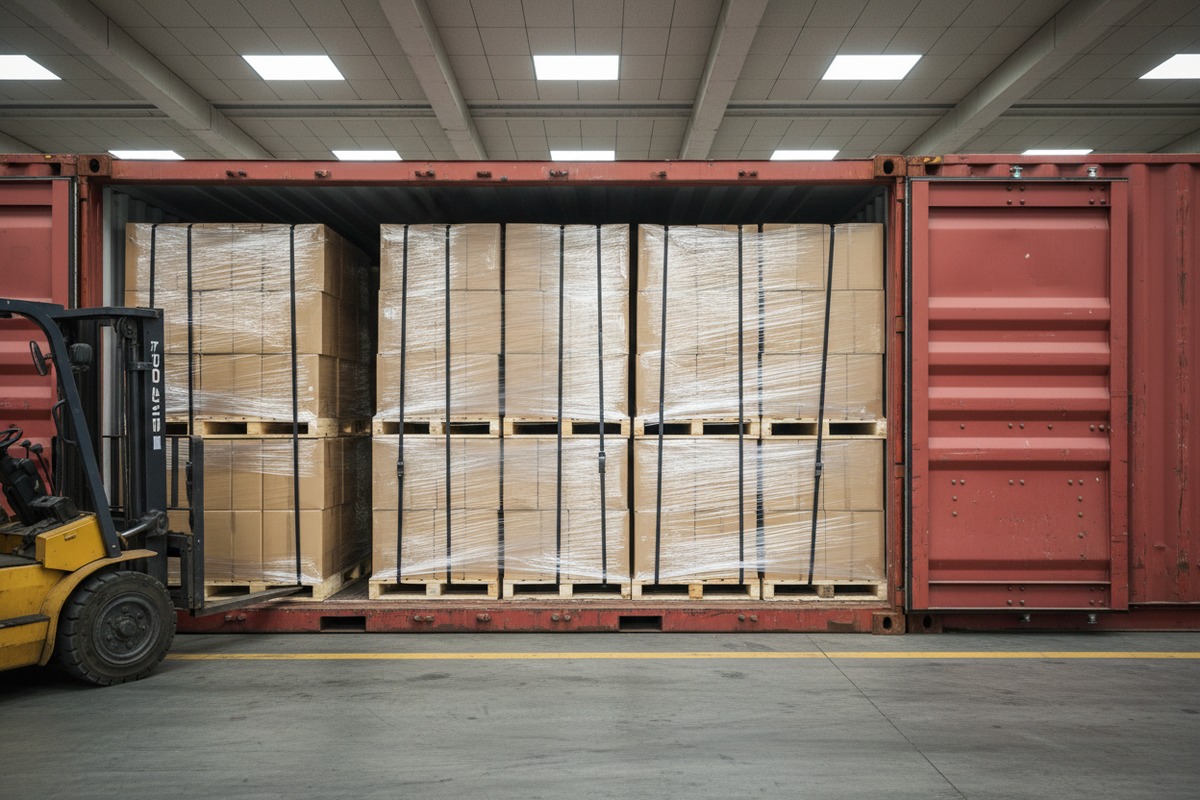
UPS applies different minimum billable weight thresholds depending on the shipment type and package characteristics. Here's how it breaks down for FBA sellers:
Individual Cartons: For our dual-clearance UPS delivery service, each carton has a 12 kg minimum billable weight. If your carton weighs 5 kg and its dimensional weight is 8 kg, you still pay for 12 kg. The minimum overrides both actual and dimensional weight.
Oversized Packages: If any single dimension of your package exceeds certain thresholds (48 inches in length, 30 inches in width, or 105 inches in length plus girth), UPS applies a minimum billable weight of 40 pounds (approximately 18.1 kg). This is separate from our service-level minimums and can stack with other surcharges.
Large Packages: Packages exceeding 130 inches in combined length plus girth, or 96 inches in length alone, face a 90-pound (approximately 40.8 kg) minimum billable weight plus an additional large package surcharge.
Pallet Shipments: Single-pallet shipments carry a 68 kg minimum, while multi-pallet shipments require a 71 kg minimum per pallet.
Amazon has its own packaging requirements that interact with UPS billing rules. FBA requires:
These Amazon limits align well with our recommended 12–21 kg range. If you pack each FBA carton to weigh between 12 and 21 kg, you satisfy both Amazon's requirements and UPS's cost-optimization sweet spot.
If you sell lightweight products — like silicone kitchen tools, phone accessories, or fabric items — you face a challenge. Each unit might weigh only 100–300 grams. Shipping individual units in separate cartons would be absurdly expensive due to the 12 kg minimum.
The solution is simple: pack multiple units per carton. If each unit weighs 200 grams, pack 60 units per carton to reach 12 kg. If each unit weighs 500 grams, pack 24–40 units per carton.
We work with our FBA seller clients to find the exact number of units per carton that hits the sweet spot. This requires balancing:
Many sellers coming to us for the first time are making one of these errors:
Our team always confirms the packaging method and weight with the shipper before dispatch. We calculate the optimal number of units per carton and provide a clear cost breakdown so there are no surprises.
Our logistics coordinators make this comparison hundreds of times each day. It's the most fundamental calculation in international shipping, yet many sellers still guess instead of calculating.
Your shipment will be billed by volume (dimensional weight) if the dimensional weight exceeds the actual weight. Calculate dimensional weight by dividing the cubic volume in centimeters by 5,000. Compare this to the actual weight and the minimum billable weight threshold. UPS always charges the highest of the three values.

UPS doesn't just compare two numbers. It compares three:
The highest number wins. Always. There are no exceptions.
Here's a simple way to think about which weight applies:
Let's walk through a complete example with a real product scenario.
Product: A set of LED strip lights
Box dimensions: 45 cm × 25 cm × 20 cm
Actual weight: 2.5 kg
Step 1: Calculate dimensional weight
Step 2: Compare all three values
Step 3: The billable weight is 12 kg — the minimum threshold wins.
Now let's try a different product.
Product: Cast iron cookware set
Box dimensions: 40 cm × 35 cm × 30 cm
Actual weight: 18 kg
Step 1: Calculate dimensional weight
Step 2: Compare
Step 3: The billable weight is 18 kg — actual weight wins.
There's a simple way to know in advance which weight will apply. The "break-even" density for the 5,000 divisor is:
1 kg per 5,000 cubic cm = 1 kg per 5 liters
If your product's density is above this threshold, actual weight will dominate. If it's below, dimensional weight takes over. And if both are below the minimum threshold, the minimum applies.
For most e-commerce products, the density falls below this break-even point. That means most cross-border e-commerce 10 shipments are billed by dimensional weight or minimum billable weight — not actual weight.
When actual weight and dimensional weight are very close, even small changes in packaging can flip which one dominates. In these cases, we recommend:
Even saving 2–3 cm on each dimension can shift the billable weight from dimensional to actual, saving money across large shipments.
We provide our clients with a simple calculator that takes box dimensions and actual weight as inputs, then instantly shows the billable weight and estimated cost. This helps sellers make informed decisions before they even pack their products. Many shipping software platforms now include similar features, and we encourage every seller to use them before finalizing their packaging strategy.
Understanding UPS billable weight is essential for any cross-border e-commerce business shipping from China to the USA. Pack smart, stay within the 12–21 kg range, and always calculate dimensional weight before shipping.
1. Provides official information on shipping and routing inventory to Amazon FBA. ↩︎
2. Explains how UPS determines the billable weight for packages. ↩︎
3. Provides a comprehensive explanation of dimensional weight in shipping. ↩︎
4. Details the various international shipping services offered by UPS. ↩︎
5. Explains the calculation of dimensional weight for UPS domestic shipments. ↩︎
6. Official USPS page explaining dimensional weight for domestic mail and shipping services. ↩︎
7. Explains the dimensional weight calculation commonly used in general air freight. ↩︎
8. Highlights the importance of calibration for accuracy in measurements and quality control. ↩︎
9. Discusses software solutions used in supply chain management, including packaging aspects. ↩︎
10. Authoritative .gov source providing a definition for cross-border e-commerce. ↩︎