
- +8618603825129
- [email protected]
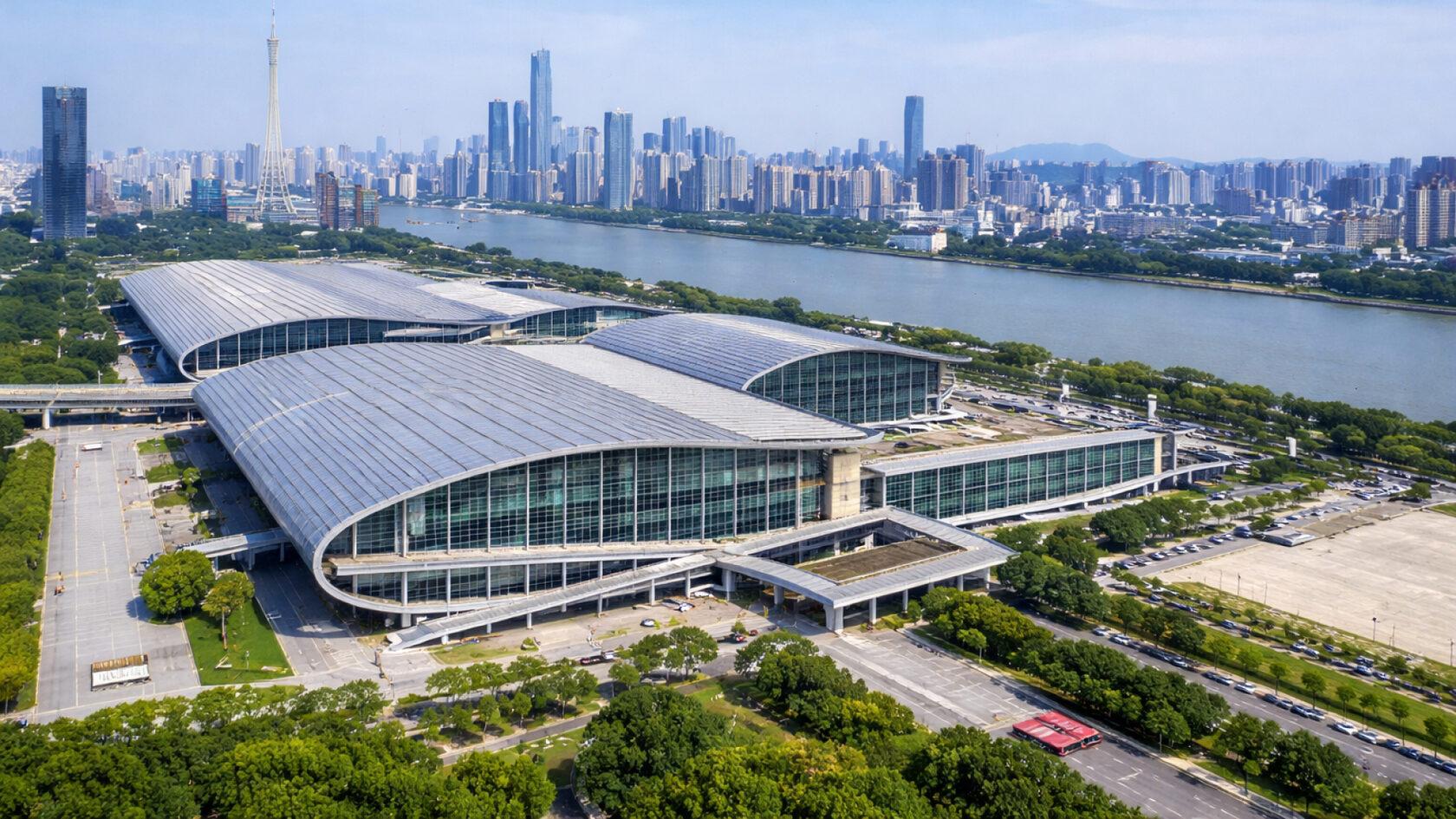
The 140th Canton Fair is taking place in Guangzhou, China, from October 15 to November 4, 2026, across three exhibition phases. For international importers, wholesalers, distributors, and business owners, it offers an opportunity to discover Chinese manufacturers, compare products, negotiate with suppliers, and build long-term sourcing relationships.
But attending the Canton Fair is only one part of a successful import strategy.
How do you identify trustworthy manufacturers among thousands of exhibitors? What should you ask before placing an order? How can you collect products from multiple factories, inspect shipments, and arrange delivery to your warehouse overseas?
This guide covers the complete journey—from planning your Canton Fair visit to organizing international shipping after your purchases.
Whether you're importing into the United States, European Union, United Kingdom, Canada, Australia, or the Middle East, you'll find practical advice to help you make more informed sourcing and shipping decisions.
The Canton Fair, officially known as the China Import and Export Fair, is one of China's most established international trade exhibitions.
Held in Guangzhou, it brings together manufacturers, suppliers, and business buyers across a broad range of industries.
| Item | Details |
|---|---|
| Official Event | 140th China Import and Export Fair |
| Event Name | Canton Fair Autumn 2026 |
| Location | Canton Fair Complex, Guangzhou, China |
| Phase 1 | October 15–19, 2026 |
| Phase 2 | October 23–27, 2026 |
| Phase 3 | October 31–November 4, 2026 |
| Exhibition Hours | 9:30 AM–6:00 PM |
| Address | No. 382, Yuejiang Zhong Road, Haizhu District, Guangzhou |
| Official Website | https://www.cantonfair.org.cn/en-US |
| Buyer Registration | https://buyer.cantonfair.org.cn |
The three phases cover different product categories. Buyers should choose the phase that matches their sourcing requirements rather than booking travel for arbitrary dates.
Important: The exhibition closes between phases for venue preparation. October 20–22 and October 28–30 are not regular exhibition days.
One of the most important decisions before visiting Canton Fair is choosing the correct exhibition phase.
Each phase focuses on different industries.
Phase 1 is particularly relevant to buyers sourcing industrial and technology-related products.
Major product categories include:
Best suited for: Industrial distributors, machinery importers, electronics wholesalers, hardware retailers, and companies sourcing manufacturing equipment.
Shipping consideration: Heavy machinery and large industrial equipment can require specialized loading, lifting, and transport arrangements. Batteries, chemicals, and certain electronic products may also require additional transport documentation or dangerous-goods checks.
Before confirming an order, ask suppliers for packed dimensions, gross weight, technical specifications, and applicable safety documentation.
Phase 2 is especially useful for businesses sourcing furniture, home improvement products, and consumer household goods.
Major product categories include:
Best suited for: Furniture importers, homeware distributors, building-material buyers, interior design businesses, and retail chains.
Shipping consideration: Products such as furniture, glassware, ceramics, and bathroom fixtures may be bulky, fragile, or both.
Packaging quality is therefore as important as product quality.
Buyers should discuss export cartons, protective materials, palletization, moisture protection, and handling requirements before production begins.
For buyers ordering from several suppliers, consolidating goods at a warehouse in China can simplify shipment coordination.
Phase 3 primarily serves buyers of lifestyle, fashion, health, and everyday consumer products.
Major product categories include:
Best suited for: Fashion retailers, consumer-goods importers, e-commerce businesses, wholesalers, and lifestyle brands.
Shipping consideration: Products such as toys, cosmetics, medical devices, food, and certain personal care products may face specific import restrictions, testing requirements, labeling rules, or regulatory approvals.
Confirm the destination country's requirements before ordering—not after the goods are ready to ship.
If you import industrial machinery or electronic products, start with Phase 1.
For furniture, household products, and construction materials, Phase 2 is usually the most relevant.
For clothing, toys, bags, textiles, and lifestyle products, prioritize Phase 3.
If your purchasing requirements cover multiple categories, attending more than one phase may be worthwhile.
Use the Canton Fair's official exhibitor and product search tools to identify relevant companies and confirm their exhibition locations.
Overseas buyers should prepare their registration and identification documents before arriving at the exhibition.
The official Canton Fair Buyer Service System allows eligible participants to complete pre-registration and access buyer-related services.
Go to:
https://buyer.cantonfair.org.cn
Follow the instructions to create or access your buyer account.
Enter your information accurately and ensure it matches your identity documents.
Provide the requested personal and business information.
Depending on your registration status, you may need to submit identity details and supporting information.
Complete the registration process before traveling whenever possible.
The Overseas Buyer Badge is used to access the exhibition.
According to the official 2026 badge guide, new Overseas Buyer Badge applications, replacements, and renewals are free of charge.
Buyers holding a valid Overseas Buyer Badge from a previous session may continue using it, subject to verification and current eligibility requirements.
However, badges originally issued on the basis of certain older work-visa arrangements are no longer valid.
Check the official eligibility rules before traveling.
The official badge guidance identifies the following documents for applicable overseas buyers:
Additional requirements may apply depending on citizenship, residency status, and the type of badge requested.
Use the official badge collection instructions to find an authorized registration location.
Registration locations and service hours can differ. Verify the currently operating offices before going there.
Official resources:
Entry requirements depend on your passport, nationality, travel purpose, planned length of stay, and the immigration rules in effect when you travel.
Some visitors may qualify for applicable visa-free entry arrangements, while others require a visa before departure.
If you need a visa, check whether an official Canton Fair invitation letter can support your application.
An invitation letter does not guarantee visa approval.
Always verify the latest requirements through a Chinese embassy, consulate, or official immigration authority.
Guangzhou is a major transportation and commercial center in southern China.
It offers international air connections, high-speed railway services, hotels, metro lines, and connections to nearby manufacturing cities.
Guangzhou Baiyun International Airport is a major gateway for overseas visitors.
Depending on where you are traveling from, you may find direct or connecting flights to Guangzhou.
Other travelers may choose to enter through Hong Kong or another Chinese city before continuing to Guangzhou.
Compare the total journey, including border crossing requirements, luggage transfers, and onward transportation.
The Canton Fair Complex is located in Guangzhou's Pazhou exhibition district.
Useful transport options include:
Metro: Guangzhou Metro serves the exhibition area. Pazhou Station and Xingangdong Station are commonly used for access to different parts of the complex. Confirm your exhibition hall and the current station exits before traveling.
Taxi or ride-hailing: These are convenient when carrying luggage or traveling with colleagues. Traffic may be heavy around the venue during exhibition hours.
Hotel shuttle services: Some hotels may offer exhibition-related transportation. Availability should be confirmed with the hotel.
Choosing the right hotel can save considerable travel time.
Consider these areas:
| Area | Main Advantage | Consideration |
|---|---|---|
| Pazhou | Near the exhibition complex | Hotels may be expensive during the fair |
| Zhujiang New Town | Business hotels and restaurants | Requires a commute |
| Haizhu District | Various accommodation options | Travel time depends on location |
| Tianhe District | Business facilities and shopping | Can be farther from the exhibition |
Book accommodation as early as practical, especially if you need to visit multiple exhibition days.
Before arriving in China:
For a first-time visitor, these preparations can make the trip significantly more productive.
A successful visit begins before you enter the exhibition hall.
Walking from booth to booth without a purchasing plan can result in collecting hundreds of catalogs without identifying the right suppliers.
Use the following preparation process.
Prepare a clear list for each product you intend to purchase.
Include:
For example, rather than simply writing "office chairs," specify the chair type, frame material, upholstery, weight capacity, packaging dimensions, and required destination-market compliance.
Clear requirements make supplier quotations more comparable.
Use the official exhibitor directory and product search features to identify companies that match your sourcing requirements.
Shortlist suppliers based on product category, manufacturing capabilities, and the information available.
Contact potential suppliers in advance and ask whether they will attend the relevant phase.
Where practical, arrange appointments.
Ask every shortlisted supplier a consistent set of questions:
The final question is especially useful when buying from multiple suppliers.
It can help you avoid unnecessary changes to shipping arrangements after production.
Group suppliers by product category and exhibition hall.
Leave time for walking between halls, supplier discussions, samples, and unexpected opportunities.
Record booth numbers and supplier contact details immediately.
At the end of each day, organize your notes and identify which suppliers deserve further evaluation.
Meeting a supplier at Canton Fair can be a valuable starting point, but exhibition participation should not be treated as a guarantee of product quality or reliability.
A professional sourcing process involves both commercial evaluation and verification.
Manufacturers typically own or operate production facilities, although they may outsource certain processes.
Trading companies source goods from one or more manufacturers and may provide useful services such as product coordination, customization, and export support.
Neither business model is automatically better.
A manufacturer may offer stronger control over production and technical customization. A capable trading company may be useful when you need several related products or smaller quantities.
The important question is whether the company can meet your product, quality, communication, and delivery requirements.
Ask for the supplier's registered company name and business license.
Where appropriate, confirm the registration details through relevant Chinese corporate information channels.
Ensure the company named on the purchase agreement and payment instructions matches the business relationship you have verified.
Be particularly cautious about unexpected changes to bank account information.
Samples help you evaluate product quality before committing to a larger order.
For customized products, request an approved pre-production sample and clearly define the specifications against which bulk production will be assessed.
A good sample should not automatically be treated as evidence that every production batch will meet the same standard.
Ask whether the supplier has previously exported similar products to your destination market.
Discuss documentation, product labeling, packaging, testing, and destination-specific compliance.
A supplier experienced in one market may not necessarily understand another market's requirements.
For significant orders, consider arranging a factory audit or independent inspection.
A factory audit can assess operational capabilities and business practices.
A pre-shipment inspection can check selected products against agreed specifications before they leave the factory.
The inspection scope, sampling method, acceptance criteria, and limitations should be agreed in advance.
Practical tip: Never rely only on verbal promises. Record technical requirements, packaging details, quantities, tolerances, and delivery responsibilities in the purchase agreement.
Two suppliers may offer similar unit prices but very different overall import costs.
Before comparing quotations, understand what each price actually includes.
MOQ stands for Minimum Order Quantity.
A supplier may require a particular order quantity because of production setup costs, raw-material purchasing requirements, or packaging arrangements.
Ask whether the MOQ applies to each product, model, color, or total purchase order.
If you cannot meet the standard MOQ, explore whether the supplier offers existing stock, sample orders, or mixed-product arrangements.
Incoterms are standardized international trade rules that clarify certain responsibilities between buyers and sellers.
Five commonly encountered terms include:
| Term | General Meaning | Important Consideration |
|---|---|---|
| EXW | Ex Works | Buyer takes on substantial transport responsibilities from the agreed point |
| FOB | Free on Board | Seller delivers goods on board the vessel at the agreed shipment port |
| CIF | Cost, Insurance and Freight | Seller arranges freight and specified insurance to the named destination port |
| DAP | Delivered at Place | Seller arranges delivery to the named place; buyer generally handles import clearance and duties |
| DDP | Delivered Duty Paid | Seller assumes extensive delivery obligations, including import clearance and applicable duties under the agreed term |
These are simplified explanations. The named place, transport mode, formal Incoterms® 2020 rules, and actual contract terms matter.
For example, FOB and CIF are intended for sea and inland waterway transport, while other terms may be appropriate for multiple transport modes.
Not necessarily.
DDP can simplify the commercial arrangement for some buyers, but it requires the responsible party to be legally able to meet the relevant import obligations.
Certain countries impose importer-of-record, tax registration, product licensing, or other requirements.
A forwarder may be able to arrange services within a DDP transaction without automatically becoming the legal importer.
Before accepting a DDP quotation, clarify:
Do not assume that a low-cost DDP quotation includes every possible charge.
Many international buyers do not purchase everything from a single factory.
For example, a homeware importer might purchase furniture from one supplier, lighting from another, and decorative products from several additional factories.
Without a coordinated logistics plan, the buyer may have to manage different pickup dates, warehouses, transport arrangements, and shipping documents.
Cargo consolidation provides a way to coordinate these separate orders and prepare them for international transportation.
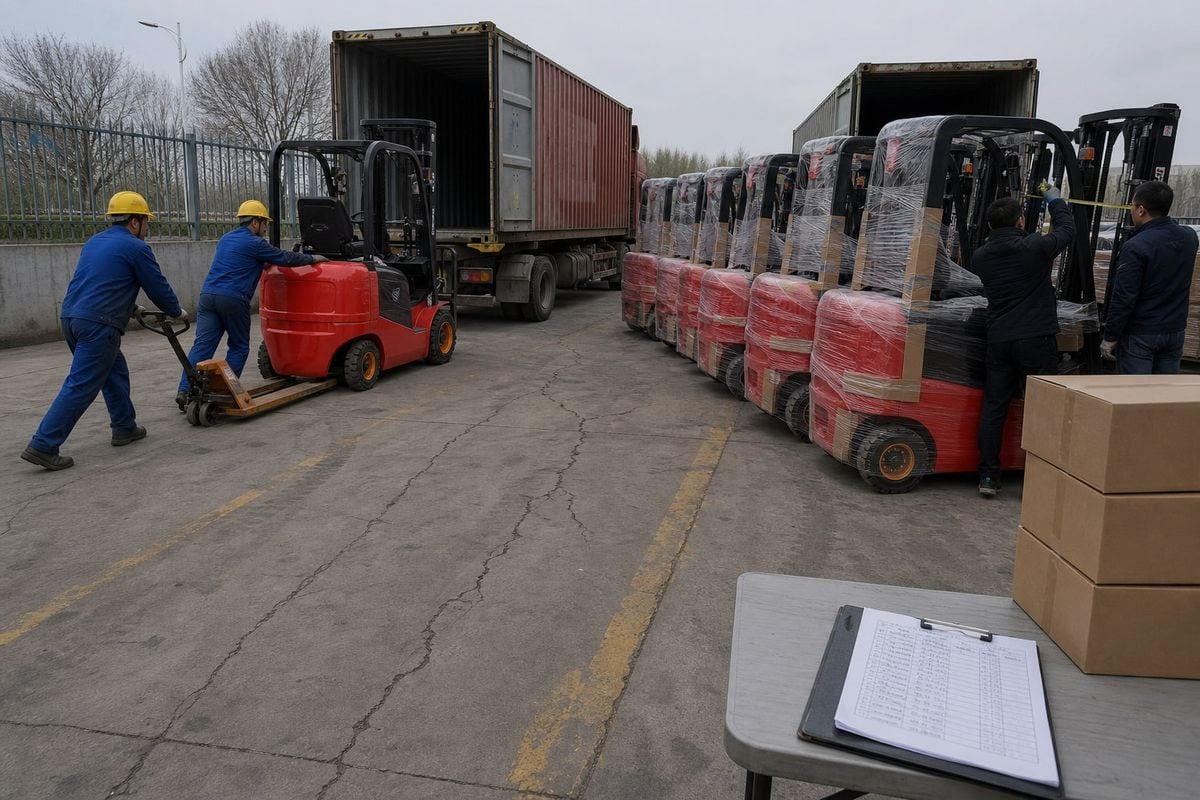
Multi-supplier consolidation involves collecting goods from different suppliers and bringing them together at a suitable location before shipment.
Depending on cargo characteristics and shipment volume, the goods may be prepared for consolidated LCL shipping or loaded together into a full container.
The objective is to simplify cargo coordination and potentially reduce avoidable handling and logistics costs.
However, consolidation does not automatically reduce the total cost of every shipment. Storage charges, additional inland transportation, handling costs, and delivery schedules must also be considered.
Ask each supplier to provide:
Accurate information is essential for planning collection and warehouse space.
Your freight forwarder can help coordinate pickup arrangements based on the agreed scope of service.
Depending on supplier terms, the factory may deliver directly to the warehouse, or a vehicle may be arranged to collect the goods.
Confirm which party is responsible for inland pickup costs.
If suppliers are located in different cities, the collection plan should account for distances and readiness dates.
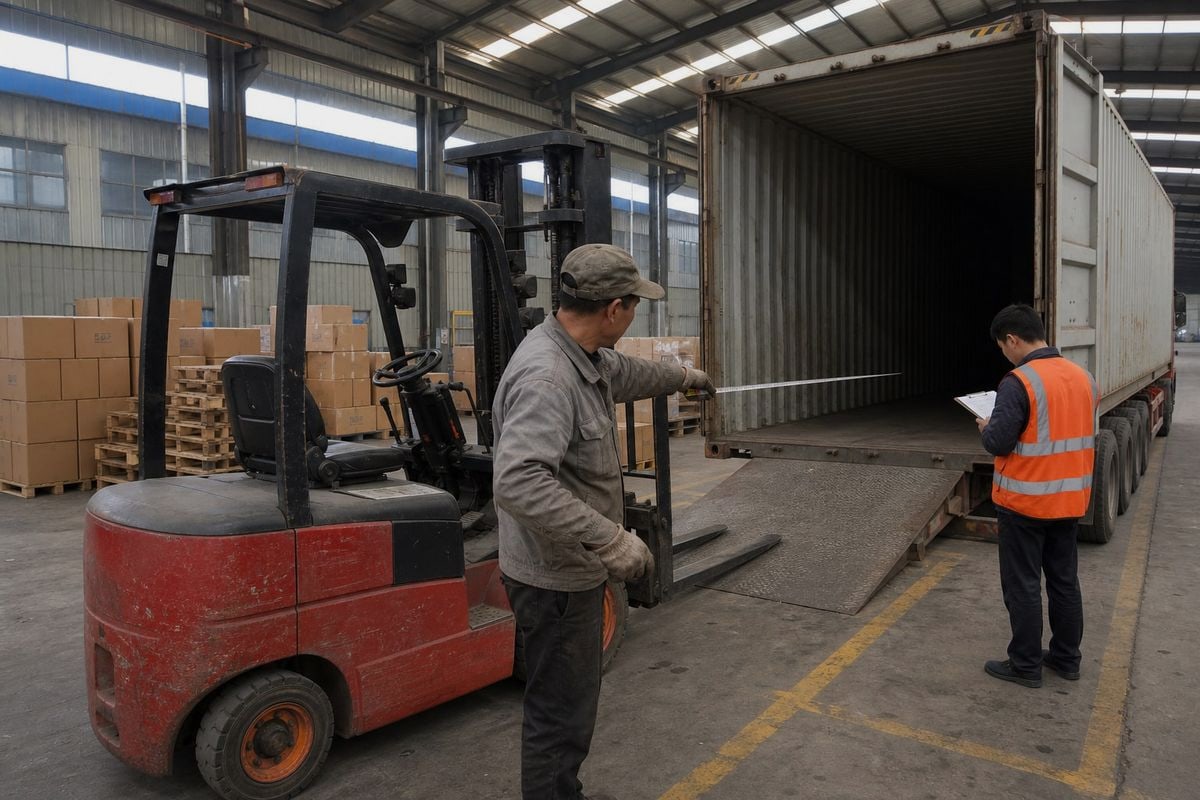
Once cargo arrives, warehouse personnel can perform the agreed receiving procedures.
These may include:
A warehouse receipt check is not the same as a complete product quality inspection.
If product-level inspection is required, define that service separately.
Depending on the agreed service scope, additional work may be required before export.
Examples include:
Fragile products, irregularly shaped goods, and heavy items may require special protection.
After the cargo is ready, the logistics team can evaluate whether the goods are more suitable for FCL or LCL transport.
Factors include total volume, weight, cargo compatibility, destination, delivery requirements, and cost.
For example, heavy machinery may not be suitable for consolidation with fragile furniture or glassware.
Hazardous and regulated cargo may require separate handling.
The necessary documents depend on the products, exporters, shipment arrangement, and destination country.
Common documents include commercial invoices, packing lists, and transport documentation.
Where multiple suppliers are involved, the parties must also confirm how exporter details, commercial declarations, and customs information will be prepared.
How MBM Logistics can help
MBM Logistics offers China warehousing, multi-supplier cargo consolidation, cargo inspection and packaging support, and international freight forwarding services.
If you purchase from several Canton Fair suppliers, MBM can review your suppliers' locations, cargo-ready dates, product characteristics, and delivery requirements to help plan a suitable shipping arrangement.
Need to combine orders from different Chinese factories?
Contact MBM Logistics to discuss your cargo consolidation requirements before your suppliers finish production.
Once your suppliers confirm that the goods are ready, the next step is choosing the appropriate transportation method.
Your decision should reflect shipment volume, total cost, delivery urgency, product characteristics, and destination requirements.
FCL shipping is commonly used when a shipment justifies booking an entire container.
It may be suitable for:
Common container types include 20-foot general-purpose, 40-foot general-purpose, and 40-foot high-cube containers.
Actual usable capacity depends on weight limits, cargo dimensions, packing method, and container specifications.
Advantages: Greater control over container loading and less reliance on multiple cargo owners sharing the same container.
Considerations: FCL is not automatically the cheapest option for smaller shipments. Container loading, origin charges, destination handling, and delivery costs must be evaluated.
LCL shipping allows multiple shipments to share container space.
It is often suitable for smaller commercial orders that do not require a full container.
LCL freight commonly involves calculations based on chargeable weight or measurement, together with applicable minimum charges and handling fees.
Advantages: Buyers do not need to fill an entire container.
Considerations: Cargo may go through additional consolidation and deconsolidation handling, and destination charges can significantly affect the total cost.
Compare the complete origin-to-destination quotation rather than looking only at the ocean freight rate.
Air freight may be appropriate for urgent orders, high-value goods, smaller commercial shipments, or products with time-sensitive demand.
It generally costs more than ocean freight for comparable cargo but may substantially reduce the main international transit time.
Air freight charges often depend on chargeable weight, which considers both actual weight and volumetric weight.
Delivery time also depends on cargo acceptance, airline schedules, customs clearance, and final transportation.
DAP and DDP describe contractual delivery obligations rather than transport modes.
Either may involve combinations of ocean freight, air freight, trucking, and other logistics services.
For importers, the main questions are:
For certain goods and destinations, MBM Logistics can assess suitable DAP or DDP shipping arrangements.
The final solution depends on the destination country's rules, the product classification, and the parties legally responsible for importation.
| Factor | FCL | LCL | Air Freight |
|---|---|---|---|
| Typical Cargo | Large-volume shipments | Smaller commercial shipments | Urgent or time-sensitive shipments |
| Cost Structure | Container and related charges | Weight/measurement and handling charges | Chargeable weight and handling charges |
| Transit | Ocean transport | Ocean transport plus consolidation handling | Faster main transport in many cases |
| Key Advantage | Container loading control | No need to fill a container | Speed |
| Main Consideration | Utilization and destination costs | Additional handling and local charges | Higher freight expense |
There is no universally best choice.
Request a shipment-specific comparison based on your actual cargo.
Import procedures and shipping arrangements vary by destination.
Understanding these differences early helps buyers avoid documentation problems and unexpected charges.
US importers should pay close attention to customs classification, duties, product compliance, and importer-of-record obligations.
Depending on the product, additional government agency requirements may apply.
Duty rates and trade measures can change, so buyers should verify the rules applicable to the product and import date.
For ocean shipments, certain advance cargo reporting requirements also apply.
Use official US Customs and Border Protection resources for current guidance.
EU importers should review applicable customs duties, import VAT, product safety rules, and relevant documentation.
EORI registration and product-specific regulatory requirements may apply.
For certain products, CE marking or other conformity procedures may be necessary.
Not every product requires CE marking, and CE marking is not a universal import approval.
Requirements should be evaluated by product and destination market.
The United Kingdom has customs and import tax arrangements distinct from those of the European Union.
Importers may need an appropriate EORI number and should verify applicable VAT, duties, and product requirements.
Do not assume that documentation accepted for entry into one EU country automatically meets UK requirements.
Canadian importers should review customs classification, applicable duties and taxes, import registration arrangements, and any product-specific restrictions.
Certain goods may require additional certifications or documentation.
Australia has important biosecurity and import compliance requirements.
Wood packaging, plant-based materials, food-related goods, and other regulated products can require additional attention.
Buyers should verify applicable biosecurity rules before instructing suppliers on packaging.
The Middle East includes multiple markets with different customs systems and regulatory requirements.
For example, importing into the United Arab Emirates and importing into Saudi Arabia may involve different product conformity, registration, customs, and tax procedures.
For some product categories, approvals or certificates may be required before shipment.
Specify the exact destination country and product details when requesting a quotation.
Important: Regulations, tariffs, tax rates, and import procedures can change. Consult official customs agencies or qualified import professionals before committing to a shipment.
Poor documentation is a common source of avoidable international shipping problems.
To reduce this risk, confirm the required documents and the responsible parties before the cargo leaves the supplier.
The commercial invoice typically identifies the seller, buyer, goods, declared values, and other relevant transaction details.
It should accurately reflect the goods and commercial arrangement.
The packing list describes the shipment's packaging and contents.
It commonly includes carton quantities, package dimensions, gross and net weights, and related cargo information.
Ocean shipments commonly use a bill of lading or other applicable sea transport documentation.
Air shipments use an air waybill.
The exact document type depends on the transportation arrangement.
The Harmonized System provides a basis for classifying goods internationally.
Destination countries may apply additional national tariff subdivisions.
Correct classification is essential because it affects customs declarations, duty calculations, and potentially applicable product controls.
Do not choose a classification simply because it results in a lower duty rate.
Depending on the product and destination, additional documents may include:
Confirm these requirements before the shipping date.
Incorrect cargo descriptions, undervaluation, missing documentation, and unsupported product classifications can lead to inspections, delays, penalties, or other consequences.
Work with your supplier and logistics provider to prepare consistent, accurate documentation.
Shipping costs depend on much more than the distance between China and the destination.
The actual price can vary according to shipment volume, weight, product type, transport method, origin city, destination, carrier capacity, and services included.
For this reason, a meaningful quotation should be based on real cargo information.
1. Pickup and inland transportation
The cost of collecting cargo from suppliers or moving it to a warehouse or export facility.
2. Warehouse and consolidation services
Applicable receiving, storage, handling, inspection, labeling, repacking, and loading charges.
3. Export handling and documentation
Charges related to export preparation and applicable customs formalities.
4. International freight
Ocean or air transportation charges based on the selected service and chargeable cargo.
5. Destination handling
Port, terminal, consolidation, or other local charges that apply at the destination.
6. Duties and taxes
Import duties, VAT, GST, or other applicable charges depending on the goods and destination.
7. Final delivery
Transportation from the destination facility to the agreed warehouse or delivery address.
8. Other potential costs
Insurance, special handling, customs examinations, storage, demurrage, detention, or other costs where applicable.
Your landed cost should account for all relevant expenses required to bring the goods to their intended destination.
A practical calculation is:
Total Landed Cost = Product Cost + Additional Origin Costs + International Freight + Import Duties and Taxes + Destination Charges + Final Delivery + Other Applicable Costs
Some charges may already be included under the supplier's agreed Incoterms or in the forwarder's quotation.
Avoid counting the same charge twice.
Provide the following information:
| Required Information | Example |
|---|---|
| Cargo Origin | Guangzhou, China |
| Destination | Los Angeles, United States |
| Product Type | Furniture and Home Accessories |
| Total Cartons | 120 |
| Gross Weight | 3,200 kg |
| Total Volume | 18 CBM |
| Number of Suppliers | 4 |
| Cargo Ready Date | To Be Confirmed |
| Preferred Service | LCL / FCL / DAP / DDP |
The figures above are illustrative shipment details, not an actual MBM customer case or freight quotation.
If you are unsure about the total volume or weight, ask each supplier for preliminary packing details.
An experienced freight forwarding team can then help identify the missing information required for a quotation.
Get a Shipping Quote from MBM Logistics
Send your cargo details and delivery address to MBM Logistics to discuss suitable transport options and an itemized quotation.
Website: https://mbmlog.com/
The end of your exhibition visit is not necessarily the beginning of international transportation.
Most suppliers still need to confirm purchase orders, arrange materials, manufacture products, and prepare export packaging.
A structured post-fair process can make the following weeks much easier.
Compare products, quotations, capabilities, and communication quality.
Do not choose a supplier based on price alone.
Finalize quantities, product specifications, quality requirements, packaging, payment milestones, and production deadlines.
Ensure the parties agree on the commercial terms.
Contact your freight forwarder early.
Provide supplier locations, estimated cargo volumes, target shipping dates, and the final destination.
Early coordination helps identify possible consolidation requirements and documentation issues.
Where appropriate, arrange a pre-shipment inspection according to agreed sampling and acceptance requirements.
Resolve significant quality issues before authorizing dispatch.
Coordinate goods arriving from different factories.
Check that the shipment quantities and references match the available documents.
Complete any agreed packing or labeling work.
Select the shipping mode, confirm the transport terms, review documentation, and approve the shipment arrangement.
Make sure the responsible importer has the necessary registration, customs documentation, and authorizations.
Follow the shipment through international transport, clearance, and final delivery.
A clear division of responsibilities between the buyer, seller, freight forwarder, and customs professionals helps reduce misunderstandings.
The 140th Canton Fair takes place in three phases: October 15–19, October 23–27, and October 31–November 4, 2026.
It is held at the Canton Fair Complex in Pazhou, Haizhu District, Guangzhou, China.
Yes. Eligible overseas buyers can attend by following the official buyer registration and badge procedures.
According to the official 2026 guidance, eligible new Overseas Buyer Badge applications, replacements, and renewals are free.
Separate fees or requirements may apply to accompanying personnel and other badge categories.
You may plan to attend multiple phases, subject to applicable entry and badge requirements.
Remember that the exhibition closes between phases.
You can negotiate purchasing arrangements with exhibitors. Whether a supplier accepts immediate orders, samples, small quantities, or on-site payment depends on that supplier.
Many commercial transactions require further confirmation after the exhibition.
Yes, subject to cargo compatibility, documentation, delivery schedules, and the selected freight arrangement.
A logistics provider may coordinate collection, warehousing, and consolidation of suitable goods from different factories.
MBM offers multi-supplier cargo consolidation and related logistics support in China.
Pickup arrangements depend on the suppliers' locations, shipment characteristics, and the agreed service scope.
LCL is often useful for smaller shipments, while FCL may be more suitable for larger consolidated orders.
The best choice depends on cargo volume, weight, destination charges, timing, and total cost.
Depending on the destination and applicable arrangements, door-to-door transportation may be available.
The final delivery address, customs responsibilities, and applicable commercial terms must be confirmed in the quotation.
Under the DDP Incoterms rule, the seller assumes the relevant import clearance and duty obligations.
However, the contractual arrangement must be legally workable, and the precise service scope should be reviewed carefully.
Confirm all applicable charges, importer responsibilities, exclusions, and destination requirements before accepting a quotation.
Transit times depend on the origin, destination, service type, carrier schedules, customs processing, and final delivery arrangements.
Ocean freight, air freight, and door-to-door services have different timelines.
For planning purposes, request a route-specific estimate based on your shipment details and cargo-ready date.
Yes, especially if you're purchasing bulky products, regulated goods, or products from several factories.
Early consultation can help identify transport limitations, packaging concerns, documentation requirements, and potential landed-cost issues.
Finding the right supplier is an important milestone. Getting the purchased goods delivered in an organized and compliant manner is the next challenge.
MBM Logistics provides freight forwarding and China-based logistics services for international buyers importing goods from Chinese suppliers.
Our service capabilities include:
Multi-Supplier Cargo Consolidation
Coordinate suitable shipments from multiple Chinese suppliers and prepare them for international transportation.
China Warehousing
Support cargo receiving, storage, and preparation before export through our China warehousing operations.
Cargo Inspection and Packaging Support
Arrange agreed cargo checks and packaging-related services according to the shipment's requirements.
FCL and LCL Ocean Freight
Evaluate full-container and shared-container arrangements based on cargo specifications and shipment requirements.
Air Freight
Explore air transportation options for time-sensitive commercial goods.
DAP and DDP Shipping Arrangements
Review eligible shipment routes and destination-country requirements to determine suitable delivery and customs arrangements.
If you've found suitable products at the exhibition, you don't need to wait until every supplier finishes production before planning transportation.
Share your supplier locations, estimated cargo quantities, destination country, and expected ready dates with our team.
We can help you assess collection, consolidation, warehousing, and international freight requirements.
Plan Your Canton Fair Shipment with MBM Logistics
Visit https://mbmlog.com/ to contact our logistics team and request a shipment-specific consultation.
Before traveling:
During the fair:
After the fair:
The Canton Fair offers overseas buyers an opportunity to connect with manufacturers and discover products across a wide range of industries.
However, successful importing requires more than choosing suppliers and negotiating favorable prices.
Product quality, documentation, cargo preparation, shipping arrangements, customs compliance, and delivery coordination all influence the final outcome.
By preparing your sourcing plan, evaluating suppliers carefully, and discussing logistics early, you can make better purchasing decisions and reduce avoidable complications.
Whether you're sourcing from one factory or multiple suppliers across China, MBM Logistics can help you explore suitable warehousing, consolidation, and international shipping arrangements.
Make your Canton Fair purchases easier to manage—from Chinese suppliers to your destination.
Contact MBM Logistics: https://mbmlog.com/

Hi, I’m the author of this post, and I have been in this field for more than 10 years. If you want to shipping cargo from china , feel free to ask me any questions.
Our Friendly English-Speaking Expert Will get back to you in 6 hours.
سيقوم خبيرنا الودود الذي يتحدث الإنجليزية بالرد عليك خلال 6 ساعات.