- +8618603825129
- [email protected]

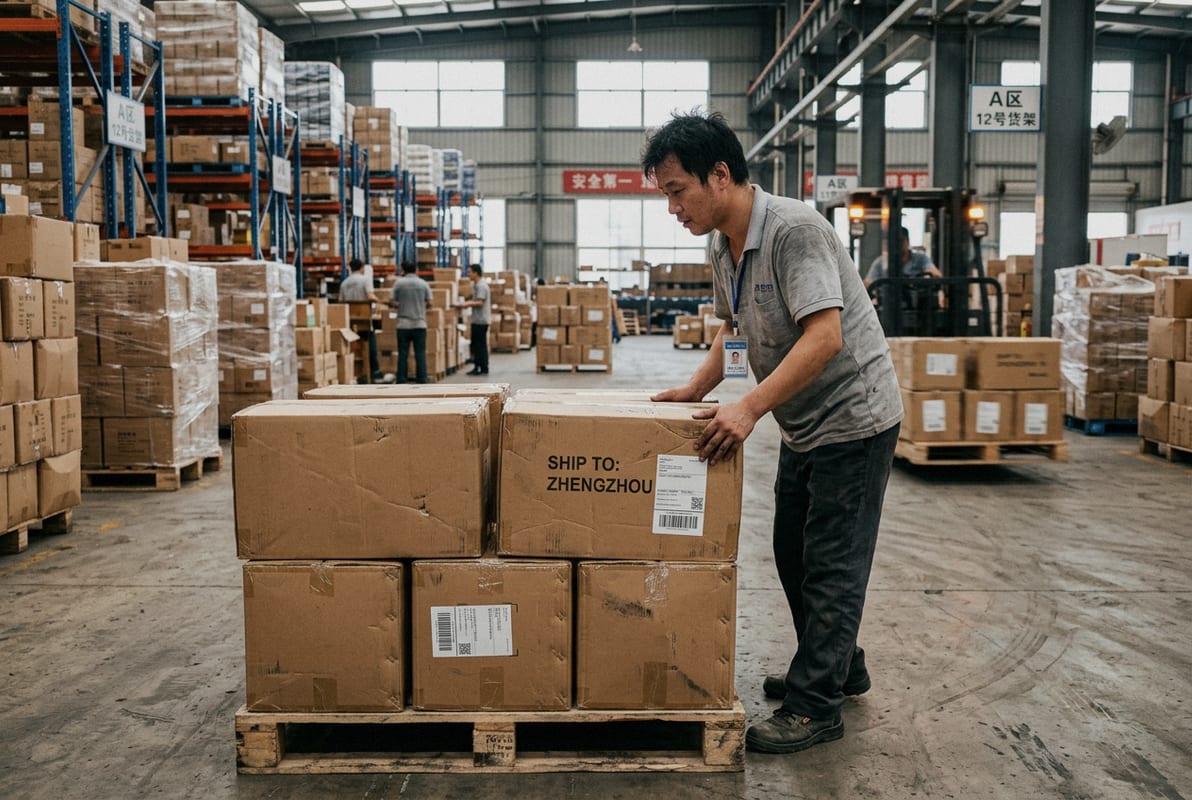
Every week, our warehouse team in Zhengzhou sees the same costly mistake — crushed goods that left China in the wrong boxes. The journey from factory floor to Amazon FBA warehouse is brutal. Vibration, humidity, stacking pressure, and rough handling at every port can destroy products packed in flimsy cardboard. The frustration of a damaged shipment is real, and the financial loss stings even more.
To choose the right cardboard boxes for international shipping, select double-wall corrugated boxes rated for your cargo weight, match box size to your product dimensions with 2 inches of cushioning space, and ensure compliance with destination country regulations and Amazon FBA requirements to minimize damage and cost.
This guide breaks down every factor you need to consider — from box wall thickness to moisture resistance to DDP cost optimization. Let's walk through it step by step.
A client once sent us photos of their goods after arrival in Los Angeles — every third box was caved in. They had used thin 3-layer boxes for 22 kg products shipped by sea. That single mistake cost them thousands in damaged inventory and delayed Amazon listings.
Your cardboard boxes are strong enough for international shipping when they use 5-layer (double-wall) corrugated fiberboard with a burst strength rated above the actual weight of the contents, and when they can withstand stacking, moisture, and repeated handling across 20+ days of transit.
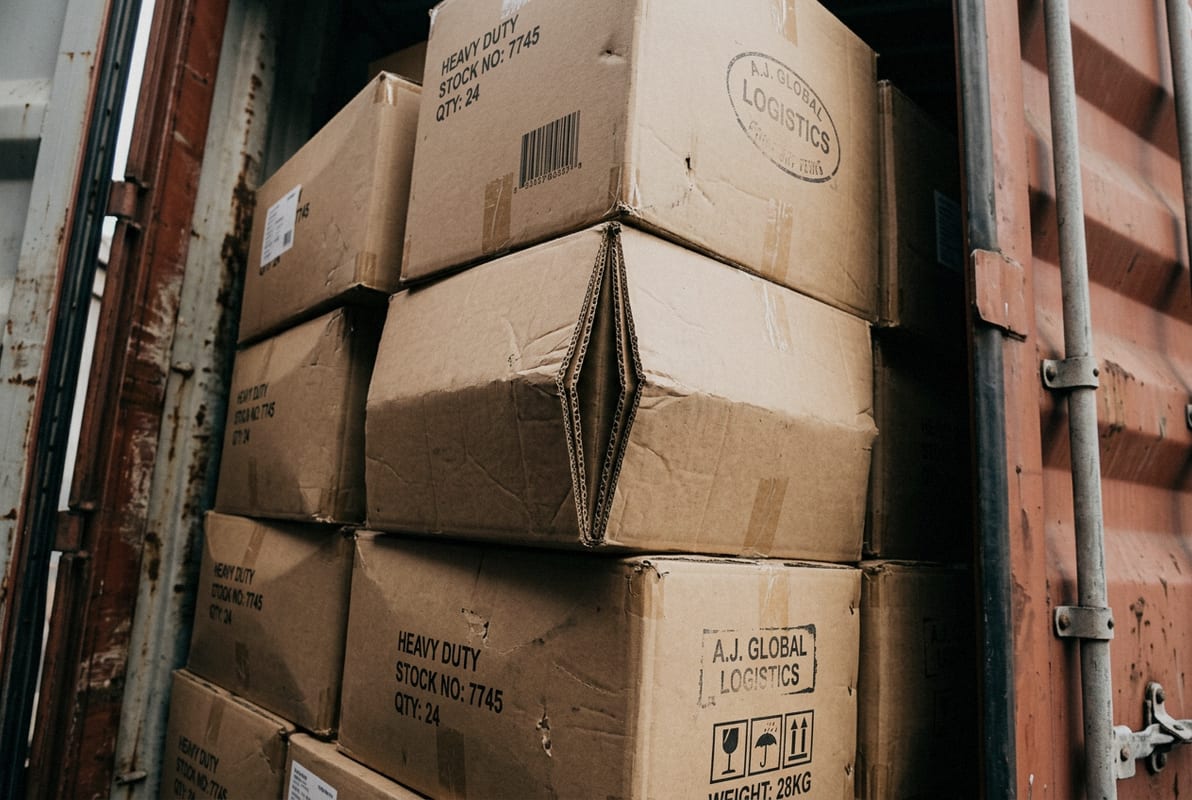
The strength of a cardboard box depends on its wall construction, the quality of the corrugated fiberboard, and the flute profile used. Let me explain how each factor works.
A 3-layer box (single-wall) has one corrugated flute sandwiched between two flat liner boards. A 5-layer box (double-wall) has two corrugated flutes separated by a flat liner in the middle, plus two outer liners. The difference in crush resistance is significant.
| Feature | 3-Layer (Single-Wall) | 5-Layer (Double-Wall) |
|---|---|---|
| Structure | 1 flute + 2 liners | 2 flutes + 3 liners |
| Weight Capacity | Up to 15 kg per box | 20–30+ kg per box |
| Burst Strength | 8–12 kg/cm² | 14–20+ kg/cm² |
| Best For | Light goods, samples, air freight packaging | Heavy goods, sea freight, Amazon FBA |
| Cost | Lower | Moderate |
| Stacking Resistance | Low | High |
When we advise clients shipping from China to the United States, the rule is simple. If the single box weighs under 15 kg and the goods are not fragile, a 3-layer box can work for express or air freight packaging. But for anything heavier, bulkier, or traveling by ocean freight, we always recommend 5-layer double-wall corrugated boxes 1.
Two tests measure box strength. The Mullen Burst Test 2 measures how much pressure a box wall can take before it punctures. The Edge Crush Test (ECT) 3 measures how much top-to-bottom compression force a box can handle before it collapses.
For international shipping, both matter. Burst strength protects against forklifts and rough handling. ECT protects against stacking inside a container. A 200-pound-test box is the minimum standard for most international shipments. For heavy-duty shipping boxes carrying 20 kg or more, look for ECT ratings of 44 or higher.
Ocean freight containers can experience extreme humidity swings. Corrugated cardboard absorbs moisture, and when it does, it loses up to 50% of its stacking strength. This is why moisture-resistant packaging matters for sea freight. Ask your box supplier about wax-coated or water-resistant liners. At our consolidation warehouse, we also recommend silica gel desiccant packets 4 inside containers to control humidity.
One client learned this the hard way. Their electronics arrived in Houston with soggy boxes and water stains on the product packaging. Since then, we always flag moisture-resistant packaging as a must for ocean freight requirements.
David, one of our regular Amazon seller clients, had an entire pallet rejected at an FBA warehouse in California. The boxes were 2 cm over Amazon's maximum size limit. He lost a week of selling time and paid extra for repackaging. That experience taught us to double-check every FBA shipment against Amazon's latest requirements.
To stay compliant with Amazon FBA rules, use standard-size boxes no larger than 25 × 25 × 25 inches (63.5 cm per side) and weighing no more than 50 lbs (23 kg) per box, with clear FNSKU labels on each unit and shipping labels on the outside of every carton.
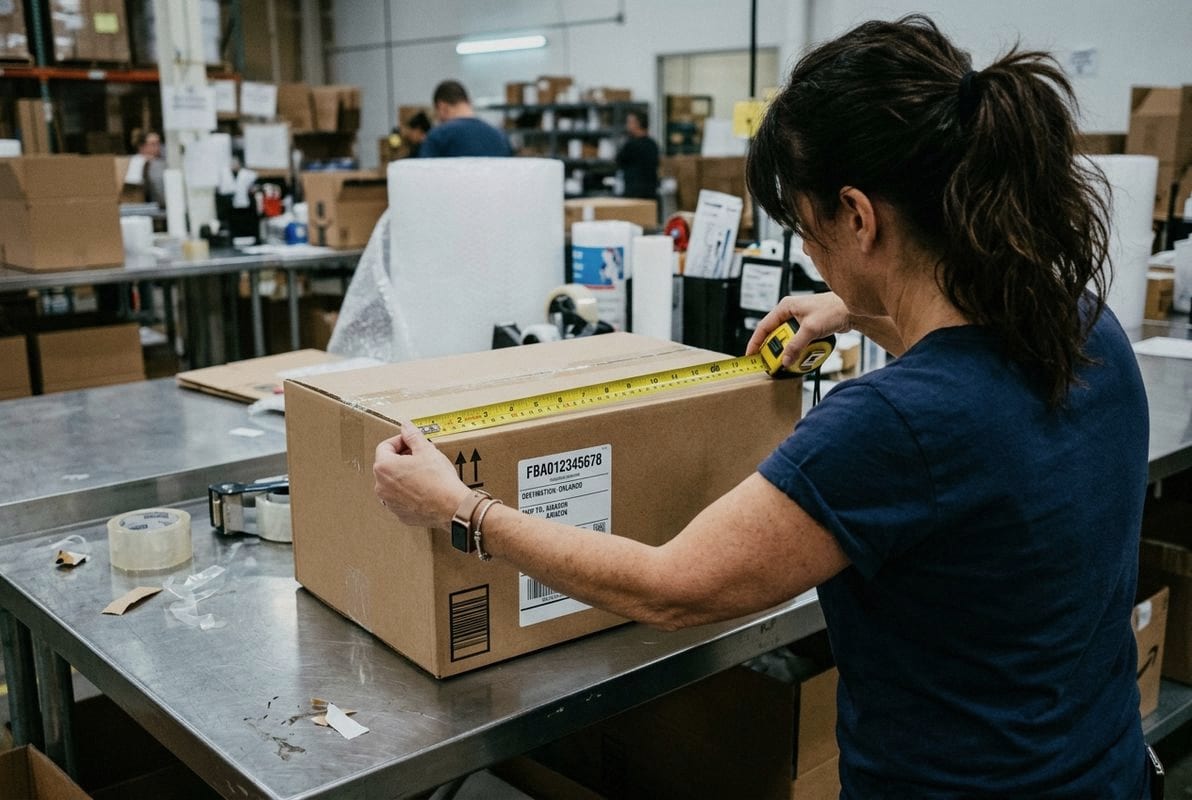
Amazon FBA has strict packaging and labeling rules. If you violate them, your shipment gets rejected or you pay additional prep fees. Here is what you need to know.
Amazon enforces maximum dimensions and weight for inbound shipments. These rules apply to each individual carton you send.
| Requirement | Standard-Size | Oversize |
|---|---|---|
| Max Box Dimensions | 25 × 25 × 25 in (63.5 × 63.5 × 63.5 cm) | Exceeds standard; must follow oversize rules |
| Max Box Weight | 50 lbs (23 kg) | 50 lbs (23 kg) unless single oversize unit |
| Labeling | FNSKU on each unit + shipping label on carton | Same |
| Box Condition | New, undamaged corrugated cardboard | Same |
| Cushioning Materials | Required for fragile goods packaging | Required |
If a single item weighs more than 50 lbs, it must be labeled as "Team Lift" or "Mech Lift." Any box over 50 lbs without a single oversize item will be refused.
Every unit inside the box needs an FNSKU barcode that is scannable. The outer carton needs an Amazon shipment label. Do not cover barcodes with tape. Do not place labels on seams where they might tear.
We handle Amazon FBA prep at our Zhengzhou warehouse. Our team applies FNSKU labels, checks scanability, and ensures each carton meets dimensional requirements before it leaves China. This prevents rejections that cost sellers time and money.
Pick a box size that fits your products snugly with about 2 inches of space on all sides for cushioning materials like bubble wrap or air pillows. Too much empty space allows items to shift. Too little space means no room for protection.
Here are common box sizes we recommend for FBA shipments:
| Product Weight Range | Recommended Box Size (cm) | Recommended Box Size (in) |
|---|---|---|
| Under 10 kg | 35 × 35 × 35 | 14 × 14 × 14 |
| 10–15 kg | 40 × 40 × 40 | 16 × 16 × 16 |
| 15–20 kg | 45 × 45 × 45 | 18 × 18 × 18 |
| 20–23 kg | 50 × 50 × 50 | 20 × 20 × 20 |
These are general guidelines. The actual box size should match the product dimensions. A flat, wide product needs a flat box — not a cube. The goal is to minimize void space while keeping the total weight under 50 lbs.
Use clear pressure-sensitive packing tape at least 2 inches wide. Apply the H-taping method — tape the center seam and both edges on the top and bottom. Avoid masking tape, duct tape, or staples. Amazon may reject boxes sealed improperly.
International shipping regulations also require that boxes hold together through multiple handling points. H-taping with reinforced water-activated tape is the most reliable method for heavy-duty shipping boxes.
A lesson we learned early in our DDP operations: the box itself is part of the shipping cost. Every extra centimeter and every unnecessary gram of cardboard adds to the volumetric weight 5 — and that directly inflates the price our clients pay. Optimizing box selection is one of the easiest ways to save money.
Optimize box selection to reduce DDP shipping costs by choosing the smallest box that fits your product with adequate cushioning, avoiding oversized or overly thick cardboard, and consolidating items efficiently to maximize container space utilization and minimize volumetric weight charges.
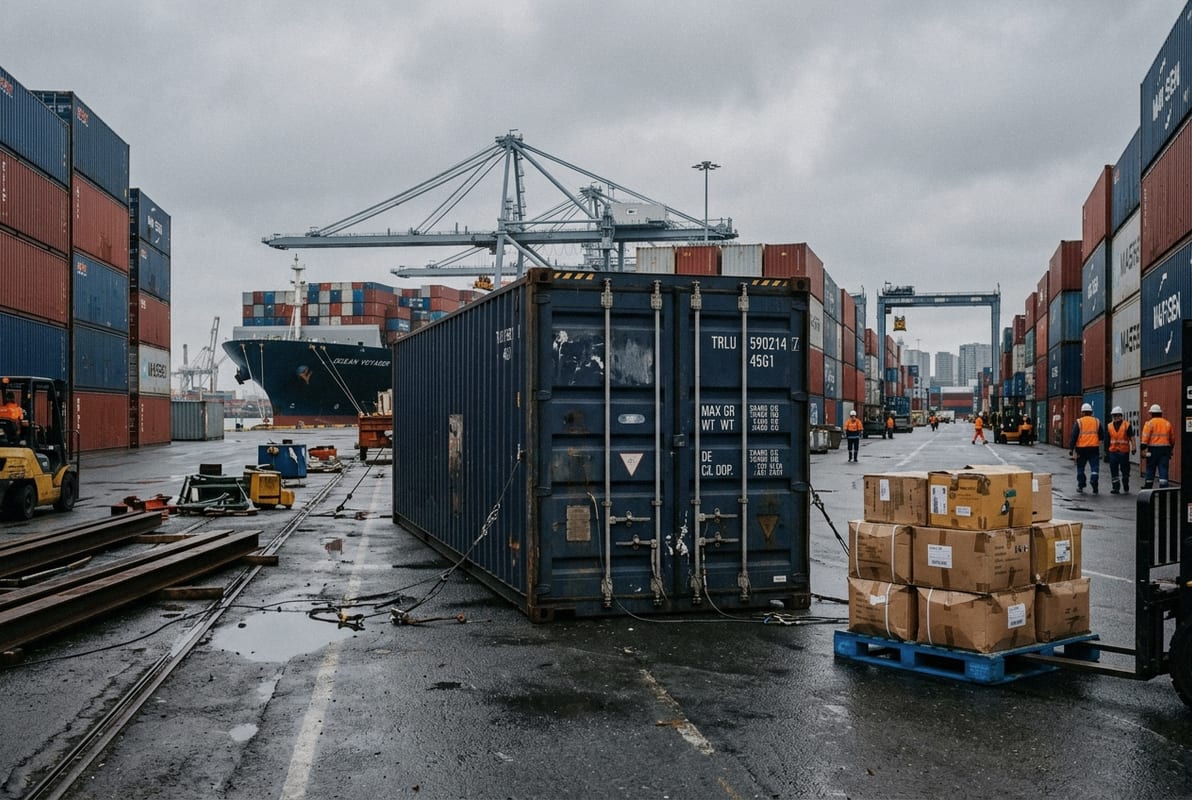
DDP (Delivered Duty Paid) 6 pricing covers everything — freight, customs duties, taxes, and last-mile delivery. But the freight portion is heavily influenced by how you pack. Let me show you where the savings are.
Carriers charge based on whichever is greater: actual weight or volumetric weight. Volumetric weight is calculated from the box dimensions. If your box is too large for its contents, you pay for empty air.
The formula for volumetric weight varies by carrier:
If you ship a 10 kg product in a box that measures 60 × 60 × 60 cm, the volumetric weight for air freight is 36 kg. You pay for 36 kg, not 10 kg. That is a massive cost difference.
Right-sizing means picking a box that leaves only 2 inches of clearance on each side for cushioning materials. Nothing more. This reduces both volumetric weight and the amount of void fill you need.
When our team consolidates shipments at our warehouse, we often repack goods into better-fitting boxes. Some clients send us products in oversized packaging from their suppliers. We trim it down, repack, and save them significant freight costs.
There is a trade-off between using heavy-duty shipping boxes for maximum protection and keeping the box weight low for cost savings. Triple-wall corrugated boxes offer extreme strength, but they weigh more and cost more per unit. For most products under 25 kg shipping to the US, double-wall corrugated boxes hit the sweet spot — strong enough for ocean freight requirements and light enough to keep costs reasonable.
Here is a practical way to think about it: the cost of one damaged shipment almost always exceeds the cost of upgrading from single-wall to double-wall boxes for an entire order. But upgrading from double-wall to triple-wall corrugated boxes is only justified for very heavy or very fragile goods.
For FCL (Full Container Load) shipments, box dimensions matter even more. Standard container interiors have fixed dimensions. If your boxes do not stack efficiently inside a 20-foot or 40-foot container, you waste expensive space.
We work with clients to plan box sizes that tile neatly into container floor plans. Even a 5 cm change in box dimensions can mean fitting an extra row of boxes per container — which translates directly into lower per-unit DDP shipping costs.
The first time I opened a container that had traveled 25 days from Qingdao to Long Beach, I understood why packaging matters so much. The bottom-layer boxes had absorbed moisture from the container floor. Corner boxes were dented from shifting during rough seas. Only the shipments with proper reinforced packaging survived intact.
For sea freight, use 5-layer double-wall corrugated boxes with moisture-resistant coatings, reinforce all edges and corners with cardboard edge protectors, wrap fragile items individually in bubble wrap or foam, and secure boxes on pallets with stretch wrap to prevent shifting during the 18–30 day ocean transit.
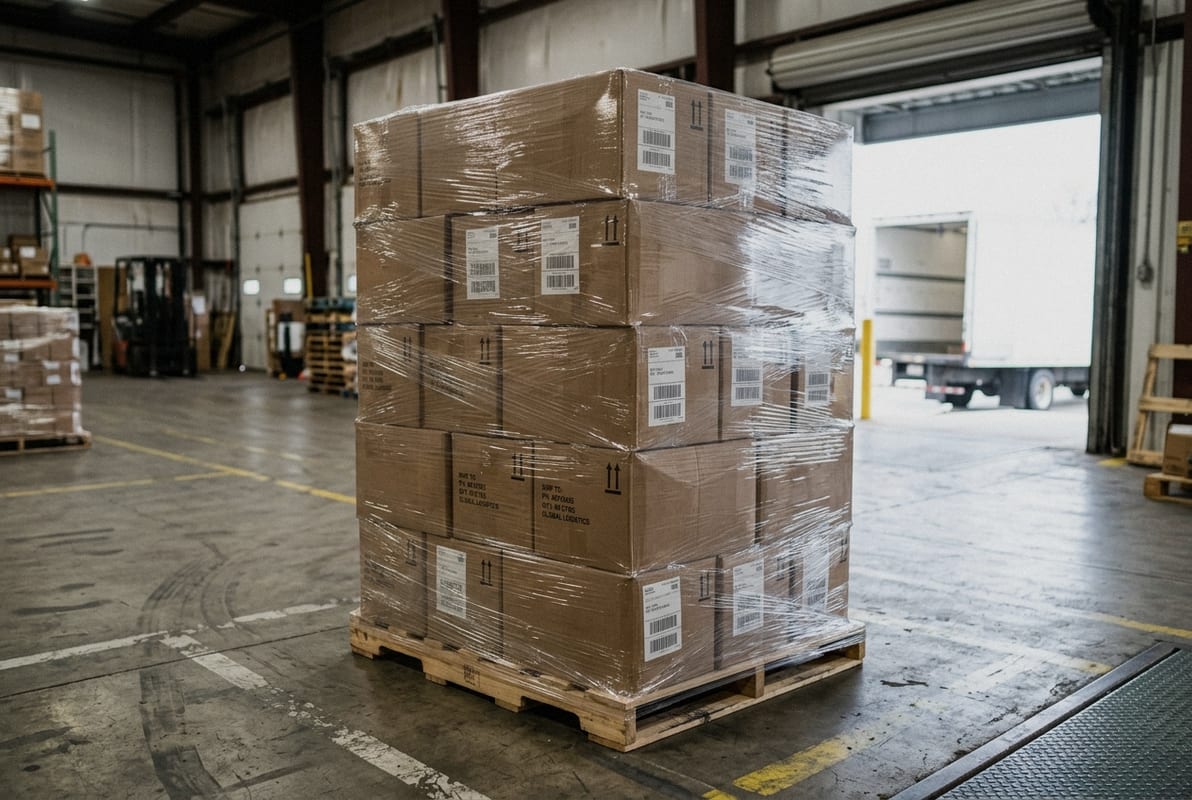
Sea freight is the most demanding shipping method for packaging. The transit time is long. Containers experience vibration, tilting, temperature swings, and high humidity. Every element of your packaging needs to account for these stresses.
Fragile goods packaging requires more than just a strong box. The item inside must not move or touch the box walls. Use cushioning materials like bubble wrap, foam inserts, or molded pulp to create a protective barrier.
For fragile goods packaging, follow this layering approach:
External reinforcement protects the box itself. Here are the methods we recommend based on cargo type:
| Reinforcement Method | Best For | How It Works |
|---|---|---|
| Cardboard edge protectors 7 | All stacked shipments | L-shaped cardboard strips placed on box corners to distribute stacking pressure |
| Stretch wrap on pallets 8 | LCL and FCL shipments | Plastic film wraps around the entire pallet to hold boxes together |
| Strapping bands | Heavy boxes (20+ kg) | Polypropylene or steel bands around individual boxes for burst resistance |
| Moisture barrier bags | Electronics, textiles | Polyethylene bags inside the box to block humidity |
| Desiccant packets | All sea freight | Silica gel packets inside boxes or containers to absorb moisture |
Inside a container, boxes are stacked several layers high. The bottom boxes bear the weight of everything above them. This is why ECT ratings matter so much for ocean freight requirements. Your boxes need to handle not just the weight of their own contents, but the weight of all the boxes stacked on top.
Use pallets when possible. Pallets elevate your boxes off the container floor, protecting them from condensation that collects at the bottom. Make sure boxes are stacked in a brick pattern — offset each layer so the corners do not align directly, which distributes weight more evenly.
If you use wooden pallets or wooden crating for reinforcement, international shipping regulations require ISPM 15 compliance 9. This means the wood must be heat-treated or fumigated to prevent pest spread. Non-compliant wood packaging can be rejected at customs, causing major delays. We always verify that our pallet suppliers provide ISPM 15 certified wood.
One of our clients in China had no prior international logistics experience. They needed to ship products weighing over 20 kg each to the United States. The goods were high-value and could not afford damage. We advised them to use 5-layer double-wall corrugated boxes, add cardboard corner protectors, wrap each unit in foam, and palletize with stretch wrap. The shipment arrived in perfect condition after 22 days at sea. That single packaging decision saved them from potential losses that would have far exceeded the small extra cost of proper reinforced packaging.
Choosing the right cardboard boxes for international shipping protects your products, keeps you compliant with Amazon FBA rules 10, and reduces your DDP costs. Match box strength to cargo weight, right-size every carton, and reinforce for the specific demands of your shipping method. If you need guidance on packaging for China-to-USA shipments, our team at MBMLOG is ready to help.
1. Explains the structure and benefits of double-wall corrugated boxes. ↩︎
2. Defines a key test for measuring box strength and puncture resistance. ↩︎
3. Explains a critical test for measuring a box's stacking strength. ↩︎
4. Describes a common solution for controlling humidity in shipping containers. ↩︎
5. Explains how shipping costs are influenced by the dimensional weight of a package. ↩︎
6. Defines a common international shipping term covering all costs to destination. ↩︎
7. Details a method for reinforcing box corners and distributing stacking pressure. ↩︎
8. Found a comprehensive guide on how to use stretch wrap film and best practices. ↩︎
9. Explains the international standard for wood packaging material to prevent pest spread. ↩︎
10. Provides official guidelines for packaging and labeling for Amazon FBA shipments. ↩︎