- +8618603825129
- [email protected]

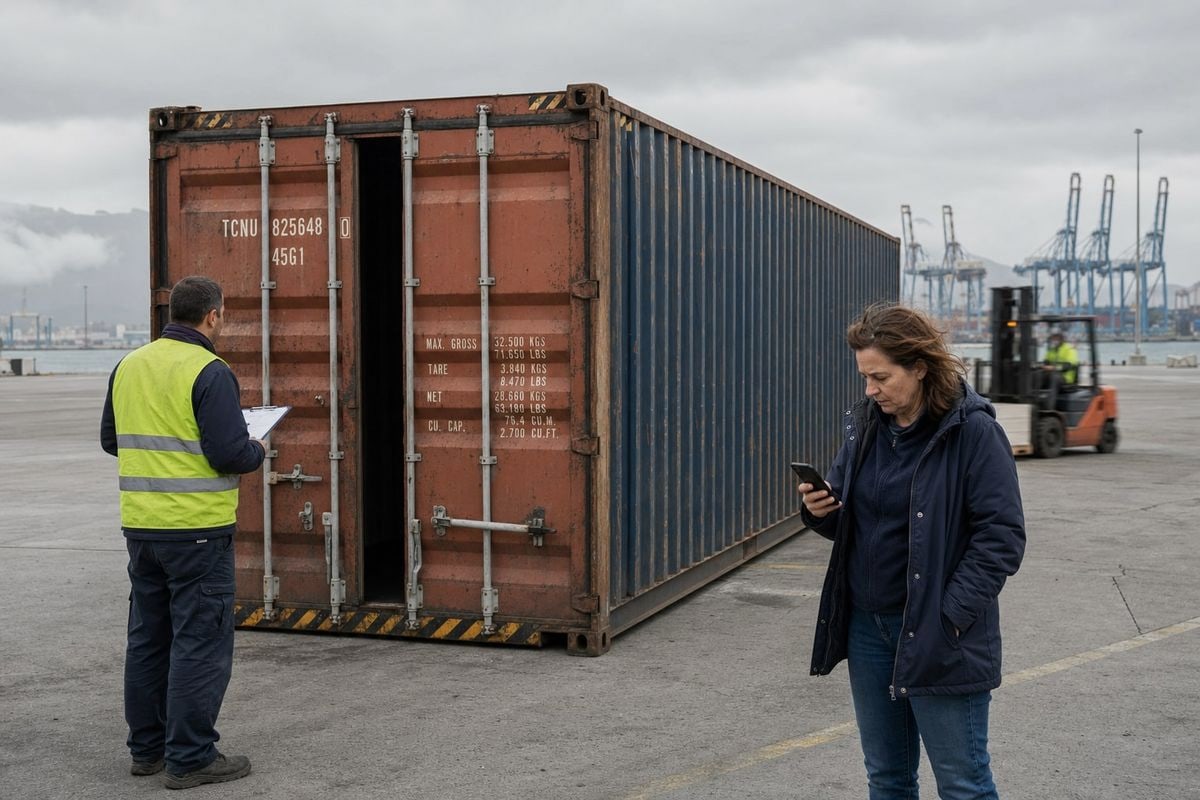
Last quarter, our clearance team watched a client's container sit at Rotterdam for three weeks over one missing document EU directive or regulation 1. CE certification requirements for EU exports are no longer a formality—they can freeze your entire shipment.
CE certification requirements for EU exports are strict on documentation, accuracy, and traceability. Products under harmonized EU rules need full technical files, a valid Declaration of Conformity, and correct testing. From 2026, digital e-DoC filing makes missing or mismatched paperwork grounds for customs detention, return, or fines.
The rules feel confusing because CE is not one certificate. It is a system. Let me walk you through what actually matters, based on shipments we handle every week.
A buyer once asked me why his silicone spatulas were held at Hamburg while his phone cases sailed through. The answer surprised him: not every product needs CE, but the ones that do face hard checks.
CE marking is mandatory only for products covered by harmonized EU Directives and Regulations—electronics, machinery, toys, medical devices, construction products, and similar categories. Products outside these rules must not carry the mark. Food contact materials follow separate FCM regulations instead of CE.

The biggest myth I hear is that "everything entering the EU needs CE." That is false. CE applies only when a specific EU directive or regulation 2 covers your product. In fact, putting a CE mark on a product that is not covered is illegal.
Based on recent logistics data from ports like Rotterdam and Hamburg, customs inspection rates are extremely high for these categories:
| Product Category | Key Requirements Checked | Common Failure Point |
|---|---|---|
| Electrical & electronic goods (small appliances, power tools, LED lights) | LVD (Low Voltage Directive) + EMC test reports | Incomplete or missing test reports |
| Construction & home products (aluminum windows, flooring, mattresses) | Fire resistance, load-bearing, chemical safety (formaldehyde) | Missing Green Deal-related chemical data |
| Food contact materials (cookware, tableware, takeout boxes) | FCM regulation: heavy metal migration, plasticizer testing | No migration report—goods judged a health hazard |
| Battery-containing products | CE plus battery passport, carbon footprint data, UN38.3 | Missing transport safety documentation |
Follow this simple process before you ship:
Note the food contact materials trap. These items do not always carry CE marking, but they must comply with FCM regulations. Missing a heavy metal migration report can get your goods classified as "harmful to human health" and returned at your cost. We have seen this happen with woks and lunch boxes more than once.
Here is a hard lesson from our consolidation warehouse in Zhengzhou: a client's "CE certificate" turned out to be issued by a company that was not a Notified Body at all. The goods were seized on arrival.
Verify the issuing body against the EU's official NANDO database, match certificate details to your exact product model, and demand the full technical file. Low-risk products allow self-declaration, so any third-party document labeled "Certification" for those items is a red flag, not reassurance.

Some exporters will tell you CE is simple—just a self-declaration. Others say it is a heavy burden requiring labs and audits. Both are partly right. The truth is that CE is risk-based. Low-risk products can be self-assessed by the manufacturer. High-risk products, like medical devices or certain machinery, require assessment by a Notified Body. That difference is exactly where fraud lives.
When we pre-screen documents for clients, we look for these warning signs:
| Red Flag | Why It Matters |
|---|---|
| Certificate says "Certification" for a low-risk, self-declared product | Non-Notified Bodies cannot issue misleading certificates; this can trigger fines |
| Issuing body not found in the NANDO database 3 | Only registered Notified Bodies have valid four-digit ID numbers |
| Model number on the certificate differs from the shipped goods | Customs cross-checks certificate data against physical products |
| One "universal CE certificate" covering many unrelated products | CE assessment is product-specific; a blanket certificate is worthless |
| No supporting test reports or risk assessment behind the certificate | A certificate without a technical file fails the new document-driven checks |
There is a subtle failure mode most importers miss. If your factory swaps a key component supplier mid-production—say, a different power adapter vendor—the Declaration of Conformity must be updated. If the DoC data no longer matches the database record at clearance, the certificate number will not verify, and clearance fails. We now ask every client one question before booking: has anything in the bill of materials 4 changed since testing? It takes two minutes and has saved several shipments.
Remember, there is no central EU authority that "issues" CE approval. The manufacturer holds legal responsibility. Your job as an importer is to verify the evidence chain, not just collect a pretty PDF.
The enforcement logic at EU customs has fundamentally changed, and our team sees the results weekly. Inspectors no longer glance at the label on the box. They demand the complete technical construction file behind it.
Non-compliant shipments face immediate customs detention, forced return at the shipper's expense, destruction orders, and fines. Beyond the port, market surveillance authorities can order recalls and sales bans. From 2026, missing electronic Declarations of Conformity will block clearance automatically.
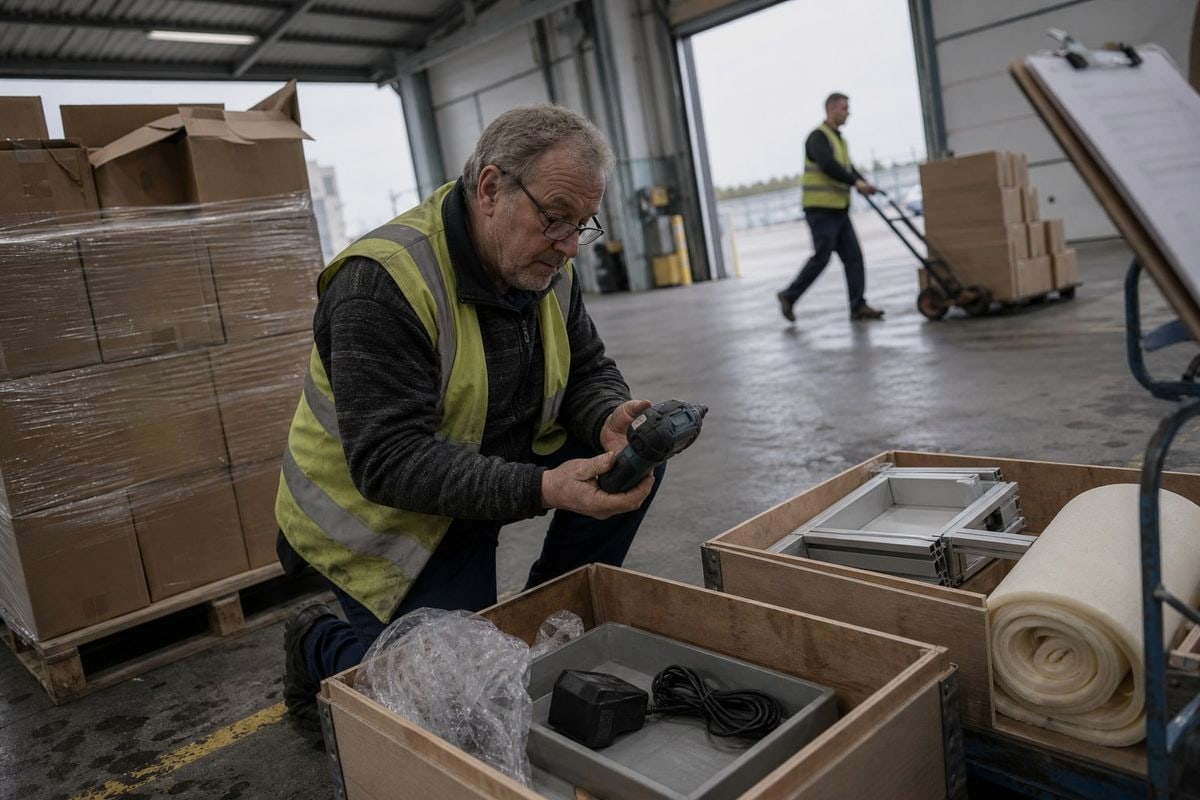
Let me be blunt about the costs, because I have watched clients absorb them. A detained container at Rotterdam generates demurrage fees 5 daily. A returned shipment means paying ocean freight twice, plus losing the sales season. Fines come on top. And the damage compounds: once flagged, your future shipments face higher inspection rates.
Customs checks now follow a clear escalation path:
The 2026 shift makes this stricter. The EU is rolling out the electronic Declaration of Conformity (e-DoC) system. Paper declarations are being phased out. Each declaration must be registered with a unique traceability code. If you show up with a paper DoC printed years ago, expect a hold.
Customs is only the first gate. Market surveillance authorities in EU member states now perform blind retail purchases and independent lab tests. If your product fails after it enters the market, the consequences escalate to mandatory recalls across all 27 member states. Manufacturers must also keep technical documentation for at least ten years after placing a product on the market—authorities can request it at any time. If you sell into the EU without an EU-based entity, appointing an Authorized Representative is often required to hold that file locally.
One more difference worth flagging: if your destination is Great Britain (England, Wales, Scotland), CE marking is being phased out there. You need UKCA certification 6 instead. Do not run a UK shipment on EU paperwork.
Timing is the trade-off we discuss with every e-commerce client. Rush the compliance work and risk detention; over-engineer it and miss your launch window. There is a middle path, and it starts earlier than most sellers think.
Yes, if you start early. Self-declared low-risk products can be tested and documented in two to six weeks with existing harmonized standards. High-risk products needing Notified Body review take several months. Begin conformity assessment during product development, not after production, to avoid delays.

Speed depends almost entirely on which conformity route your product requires. Here is how the timelines typically compare:
| Compliance Route | Typical Products | Realistic Timeline | Main Bottleneck |
|---|---|---|---|
| Self-declaration with harmonized standards | Simple LED lamps, basic small appliances | 2–6 weeks | Lab testing queue for LVD/EMC reports |
| Self-declaration, no harmonized standard fits | Novel gadgets, hybrid products | 6–12 weeks | Risk assessment and standard selection |
| Notified Body assessment required | Medical devices, complex machinery, some PPE | 3–12+ months | Audit scheduling and technical file review |
Certification speed means nothing if clearance fails. Before every EU-bound load leaves our warehouse, we push clients through four actions drawn from hard experience:
The fastest launches we support share one habit: the seller requests test samples and starts the technical file while tooling is still being finalized. Testing runs in parallel with production. By the time goods reach our consolidation warehouse, the e-DoC is registered and the traceability code is ready. That approach costs nothing extra. It just moves the same work earlier.
CE compliance is now the baseline for EU customs clearance, not a bonus. Verify documents, match certificates to goods, and prepare files early—one missing paper can cost you the shipment.
1. Official EU page explains which harmonized directives require CE marking. ↩︎
2. Official EU guidance on the legislative framework governing product directives and regulations. ↩︎
3. The official European Commission database for verifying legitimate Notified Bodies and their certification scopes. ↩︎
4. General definition and importance of a bill of materials in manufacturing and supply chain management. ↩︎
5. Explanation of demurrage fees charged for delayed cargo at ports and terminals.