- +8618603825129
- [email protected]


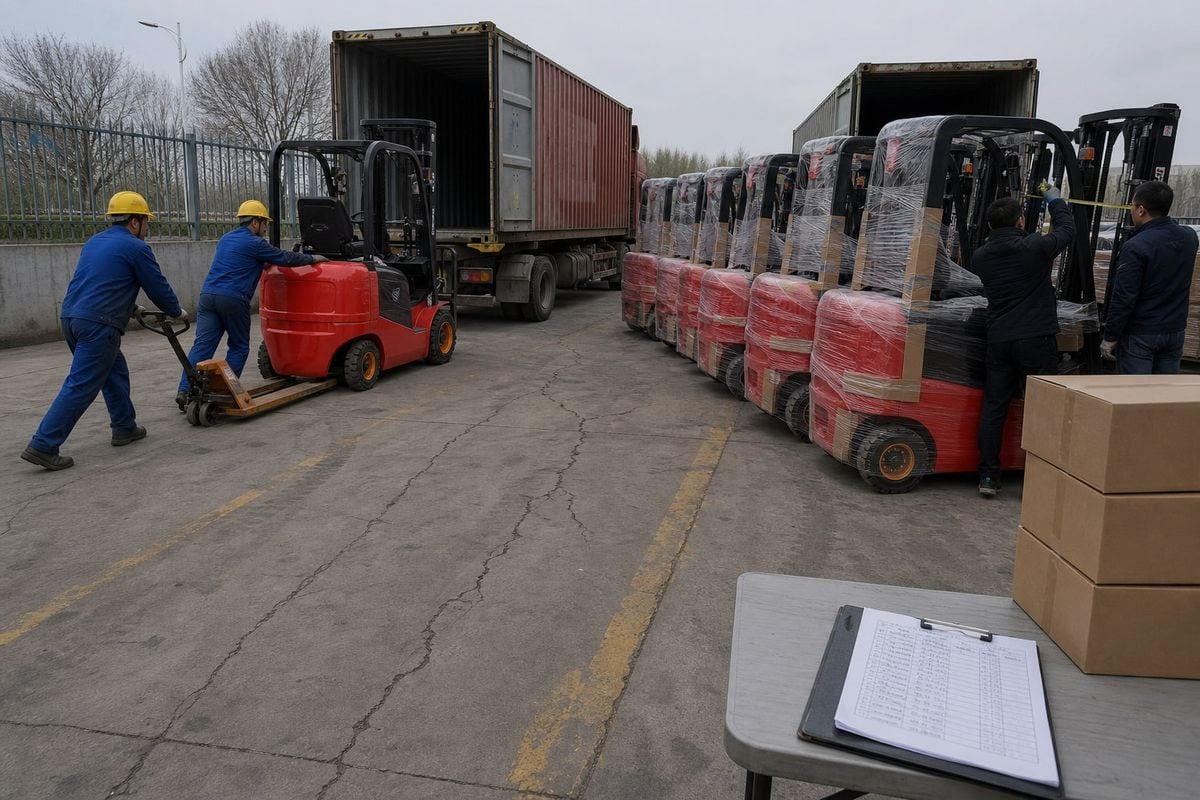
Hidden costs when shipping forklifts from China catch buyers off guard every week. I see it constantly from our Zhengzhou office — a "cheap" quote that quietly doubles by delivery day.
Hidden costs when shipping forklifts from China include inland pickup, terminal handling charges, dangerous-goods surcharges for lithium batteries, customs brokerage, import duties and taxes, demurrage and detention, and final delivery. Uncover them by demanding itemized quotations and calculating full landed cost before ordering.
Below, I break down where these charges hide, stage by stage. I will also show you the exact questions we tell our own clients to ask before they book.
Last year, a forklift dealer in Texas sent me a competitor's quote to review. It looked $600 cheaper than ours. Then I counted six excluded charges buried in the fine print.
Watch for excluded inland trucking, origin Terminal Handling Charges, export documentation fees, dangerous-goods surcharges, destination customs brokerage, port handling, storage, and last-mile delivery. Any quotation that shows only ocean freight is hiding at least five other cost categories.
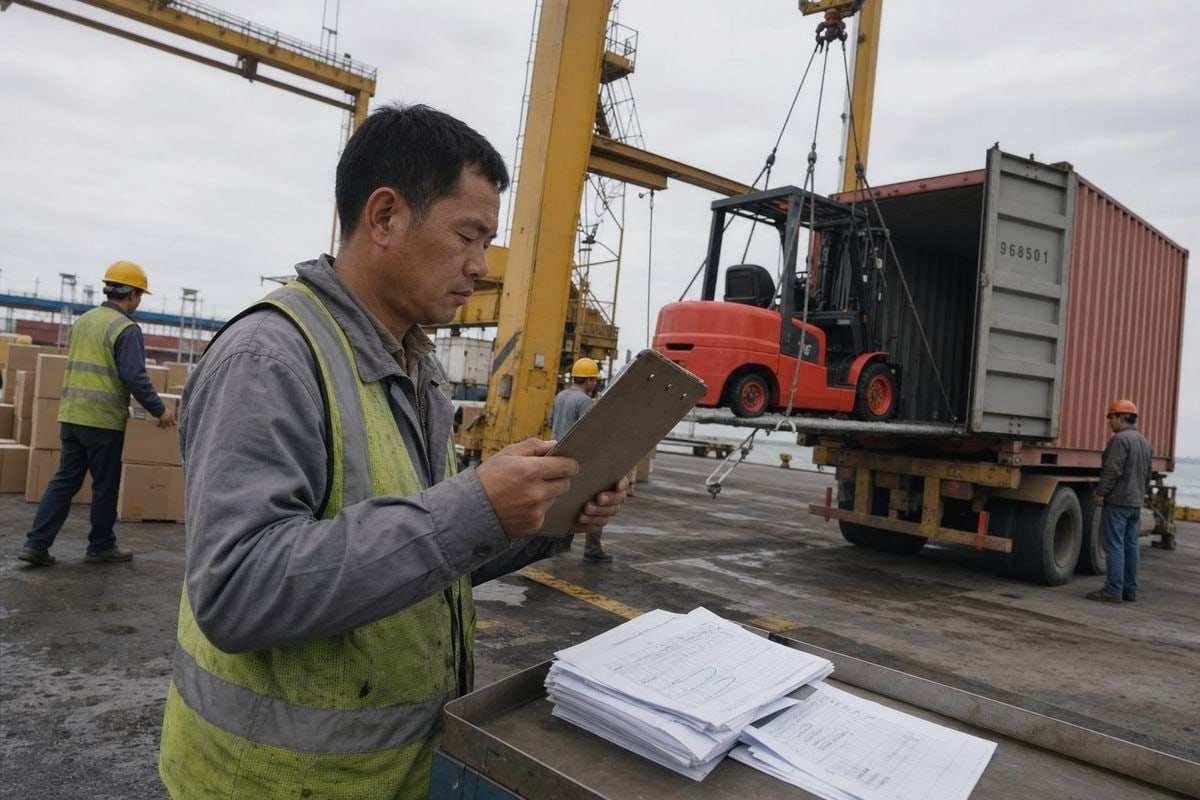
The core problem is simple. A freight quotation is not one price. It is a chain of small charges, and every party in that chain can add a fee. When a forwarder quotes only the ocean leg, the rest of the chain still exists — you just have not seen it yet.
In my experience coordinating forklift shipments from factories across China, costs split into three groups. Visible costs appear on every quote: the ocean freight rate and sometimes export customs. Semi-hidden costs exist on itemized quotes but vanish from "one-price" quotes: pickup, crating, Terminal Handling Charges, documentation. Surprise costs appear only after something goes wrong: storage, customs exams, demurrage and detention.
Here is what the China side of a forklift shipment actually costs, based on the ranges we work with daily:
| Charge | Typical Range | Often Excluded from Quotes? |
|---|---|---|
| Inland pickup (factory to port) | $200–$800 | Yes, under FOB terms it may be bundled; under EXW it is yours |
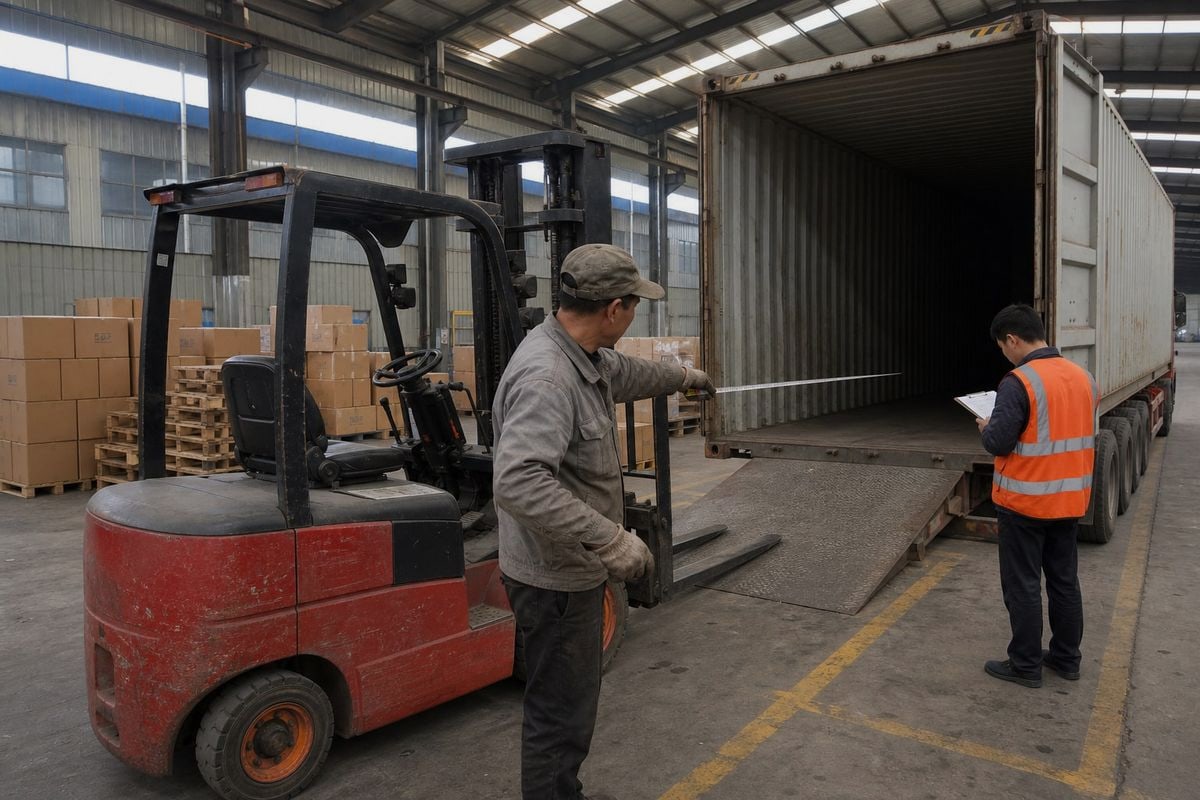
| Loading, blocking, and securing | Varies by unit weight | Frequently |
| China export customs declaration | $80–$200 | Sometimes |
| Origin Terminal Handling Charges | Port-dependent | Frequently |
| DG surcharge (lithium battery units) | $200–$400 per booking | Very often |
Some sourcing guides argue these fees are minor and a flat contingency covers them. I partially agree — the categories are predictable. But the amounts are not. A factory 50 km from Shanghai port and a factory deep in Shandong province produce very different pickup bills. That is why we push itemized quotations instead of blended "one-price" numbers. Blended pricing makes comparison shopping impossible, and that is often the point.
Before you accept any quote, ask one question: "What is NOT included?" The answer tells you more than the price does.
A distributor once told me his budget was "forklift price plus freight." I asked him to add nine more lines to his spreadsheet. His final number rose by nearly a third — before the container even sailed.
Calculate landed cost as: factory price + inland pickup + export fees + ocean freight + insurance + destination port charges + customs brokerage + import duties and taxes + final delivery. General machinery guidance suggests landed cost runs 20%–40% above the machine price itself.
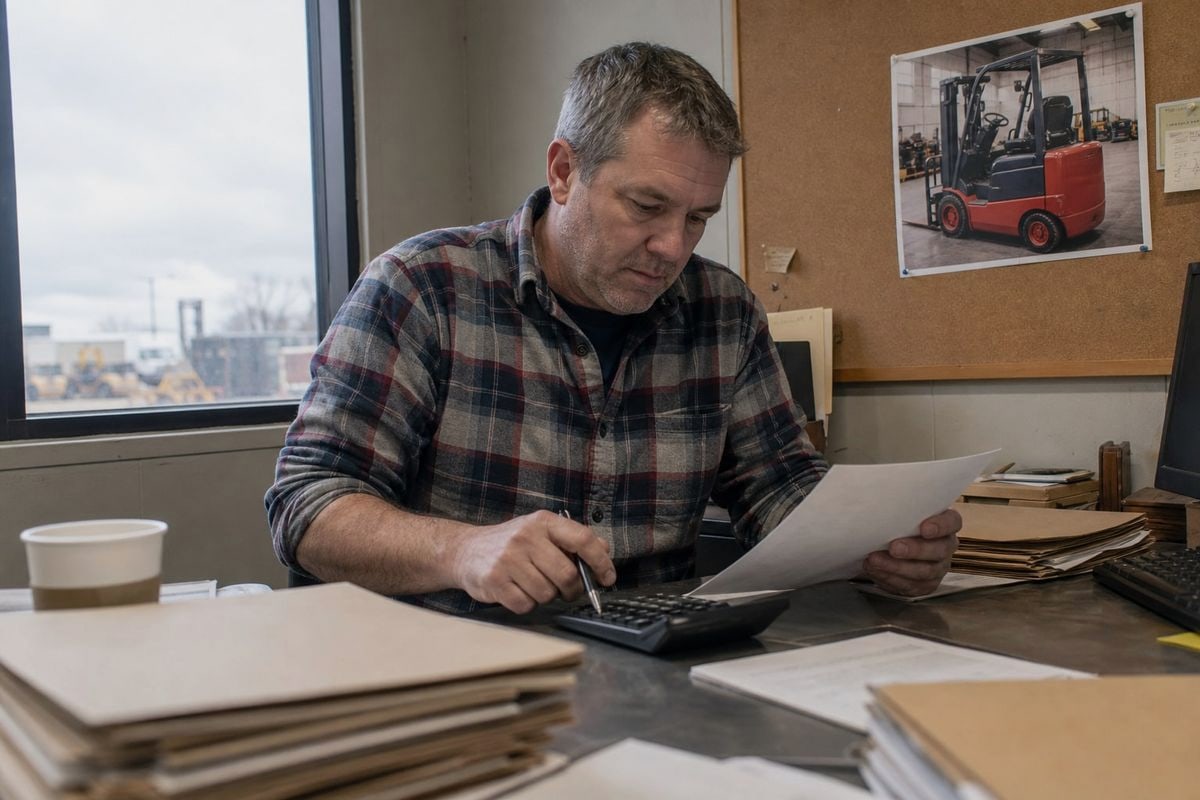
Landed cost is the only number that matters for your resale margin. The FOB price and the ocean rate are just two inputs. When we build shipping plans for forklift importers, we walk through every stage of the journey and assign a cost to each handoff.
Here is a realistic budget model, using published ranges for a single electric forklift shipped to Europe:
| Cost Stage | Range | Notes |
|---|---|---|
| Forklift FOB price | $8,000–$15,000 | Depends on capacity and battery type |
| Ocean freight (20ft) | $1,200–$3,800 | Route and season dependent |
| Ocean freight (40ft/40HQ) | $1,800–$5,800 | Better per-unit cost with multiple units |
| Port handling + trucking | $300–$800 | Destination side |
| Destination customs brokerage | $100–$300 | Per entry |
| Customs duty | 0%–10% of value | Depends on HS Code classification |
| Marine cargo insurance | 0.2%–0.5% of cargo value | Cheap protection for expensive cargo |
| DG surcharge (if lithium) | $200–$400 | Per booking |
Notice what moves the number most. Container choice matters a lot — a 20ft versus a 40HQ changes both the freight rate and how many units share it. When a client asks whether buying three forklifts instead of two makes sense, I run the container utilization math first. Filling unused space with chargers, batteries, and spare parts through multi-supplier consolidation often cuts the per-forklift logistics cost meaningfully.
Confirm these details before any forwarder can give you an honest number: exact model and quantity, dimensions and weight per unit, battery type and specification, HS code if known, Incoterms 2020 1 basis (EXW, FOB, or DDP), destination port, and final delivery address. Vague inputs produce vague quotes. Vague quotes produce surprise invoices.
Also decide early whether you want pre-shipment inspection. It adds a small cost upfront but protects you against receiving damaged or non-conforming equipment that costs far more to fix after arrival.
The trade-off I weigh most often with clients is this: lithium forklifts sell better and charge faster, but they ship as regulated cargo. Diesel units do not carry that burden. The shipping difference is real money.
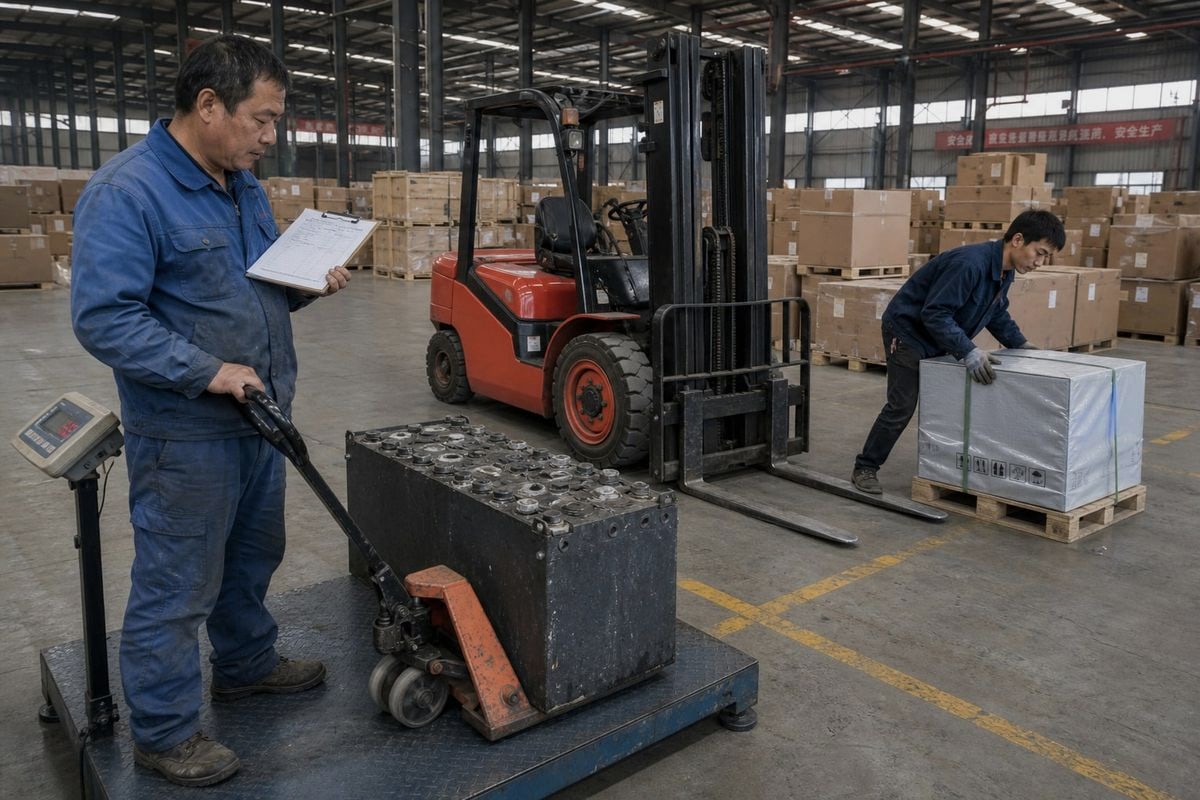
Lithium battery forklifts are frequently classified as Class 9 dangerous goods, which triggers a DG surcharge of roughly $200–$400 per booking, stricter documentation review, special packaging and labeling requirements, and carrier acceptance checks that diesel forklifts never face.
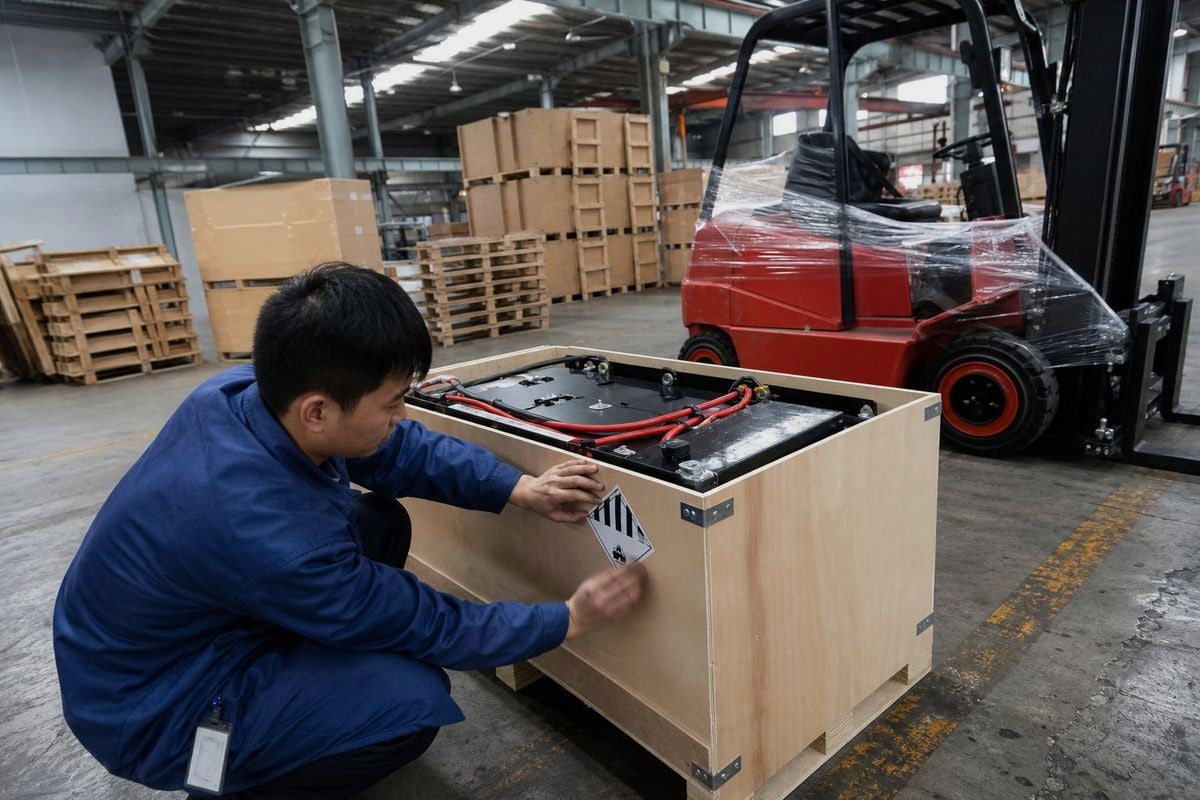
This is the single most overlooked add-on in forklift importing, and it surprises even experienced buyers. The battery inside the forklift changes the cargo's regulatory status, not just its power source.
Here is why. Large lithium batteries 2 fall under dangerous-goods rules for sea transport. That classification sets off a chain of requirements. The carrier must formally accept the DG booking. The battery needs proper test documentation. The container needs correct hazard labeling. The origin port applies DG processing fees on top of standard Terminal Handling Charges. Each step adds cost, and each step can add delay if handled late.
At our Zhengzhou operation, we coordinate lithium battery cargo handling before the forklift ever leaves the factory. The sequence looks like this:
Skip step three, and the worst case is brutal: cargo arrives at the port, the carrier rejects the booking, and the forklift sits in storage while you scramble for another vessel. I have seen buyers lose two weeks and hundreds of dollars this way — all avoidable with early verification.
One tension worth naming: some forwarders quote lithium forklifts at diesel rates to win the booking, then pass the DG surcharge along later as a "carrier charge." Ask directly: "Does this quote include the dangerous-goods surcharge and DG documentation handling?" A forwarder experienced with battery-powered equipment will answer in one sentence. A forwarder who mainly ships general cargo will hesitate. That hesitation is your warning sign.
A hard lesson from early in my forwarding career: destination charges hurt more than origin charges, because by then your cargo is a hostage. You cannot negotiate when your forklift is sitting on a pier accruing fees daily.
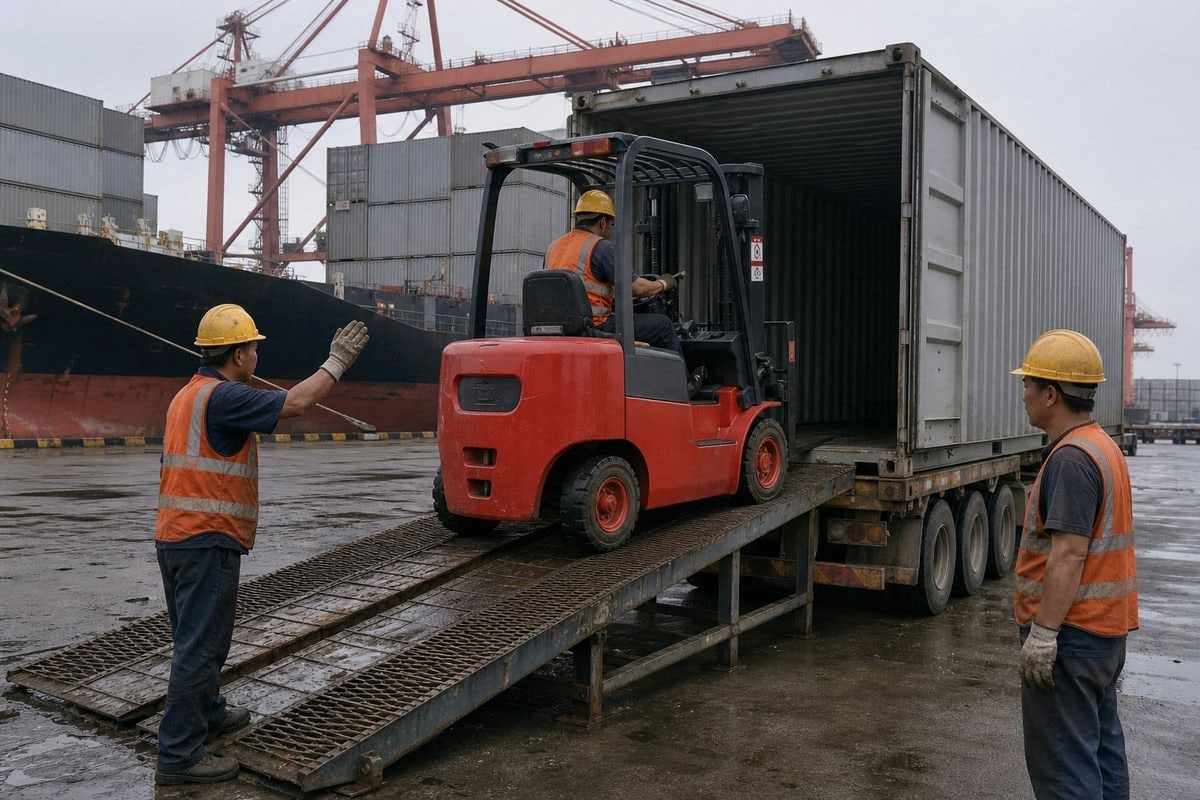
Avoid unexpected destination charges by confirming the correct HS Code classification before departure, pre-clearing documentation, choosing clear Incoterms 2020 terms, pre-booking drayage and unloading, and arranging customs brokerage early. Demurrage and detention penalties accrue daily once free time expires.
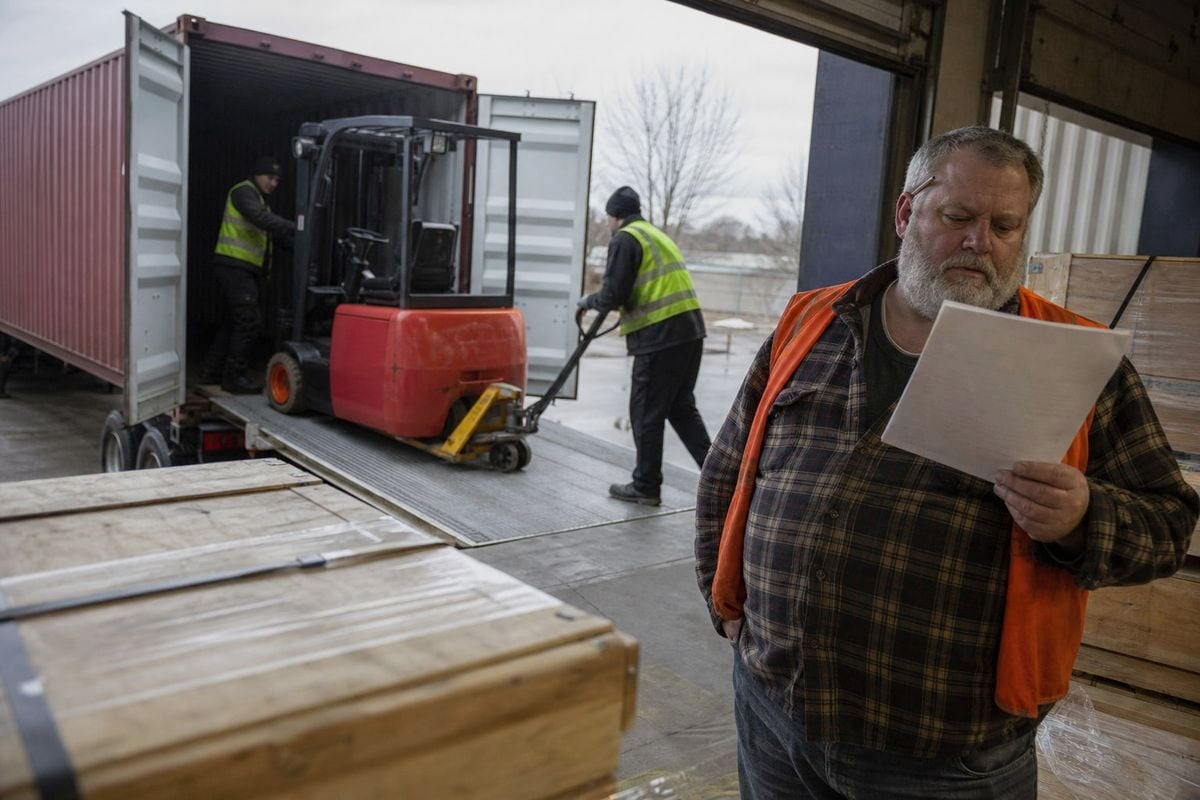
Destination-side surprises fall into two families: charges caused by rules, and charges caused by delays. You prevent them differently.
Customs duty on forklifts varies widely — one European buyer guide cites 0%–10%, and broader machinery guidance notes 0%–5% or more depending on the HS code. The declared HS code, customs valuation, and origin of goods together determine your duty outcome. Misclassification is the number-one destination risk I see. Get the code wrong, and customs can reclassify your cargo, reassess duties, add penalties, and hold the container while it all gets sorted out. For US-bound shipments, buyers must also account for Section 301 tariffs on Chinese-origin machinery, which sit on top of standard duty rates. Removable attachments can even attract separate duty treatment from the forklift itself, so declare them properly rather than hoping they slide through unnoticed.
VAT or GST is another quiet omission. Customs clearance fees and brokerage appear on some quotes, but consumption taxes almost never do — and they can materially change your landed cost. Some destinations also require conformity certificates or pre-shipment approvals for machinery. Check this before the vessel sails, not after.
Every container gets limited free days at the destination port and with the equipment. After that, the meter runs:
| Delay Charge | What Triggers It | How to Prevent It |
|---|---|---|
| Demurrage | Container sits at port past free days | Pre-clear customs documents before arrival |
| Detention | Container not returned to carrier on time | Pre-book drayage and schedule unloading |
| Storage | Cargo arrives before you can receive it | Confirm warehouse readiness before departure |
| Customs exam fees | Inconsistent or incomplete paperwork | Verify all documents match before loading |
| Peak season surcharges | Late-year demand spikes, Chinese holidays | Book early; budget seasonal contingency |
Our door-to-door DDP and DAP clients avoid most of this friction because one team manages the whole chain — export declaration, ocean leg, clearance, and destination delivery charges — instead of five separate providers pointing fingers when free time runs out. Whichever route you choose, the principle stands: destination costs are won or lost before departure, not after arrival.
A cheap forklift quote can quietly become an expensive shipment. Budget for landed cost, demand itemized quotations, verify battery documentation early, and destination surprises mostly disappear.
1. Official International Chamber of Commerce rules defining buyer and seller responsibilities in global trade. ↩︎
2. International Maritime Organization standards for transporting hazardous materials including large-scale lithium batteries. ↩︎