- +8618603825129
- [email protected]


Choosing the wrong container size to ship a forklift wastes money fast. I have watched buyers pay for empty space, or worse, get cargo rejected at our Zhengzhou loading yard.
A 20ft standard container fits one to four compact forklifts, while a 40ft high cube holds six to ten units depending on mast height and weight. Oversized or very heavy forklifts require a flat rack container or roll-on roll-off shipping instead.
The right answer depends on your forklift's exact dimensions, weight, and quantity. Let me walk you through each scenario the way I do with my own clients.
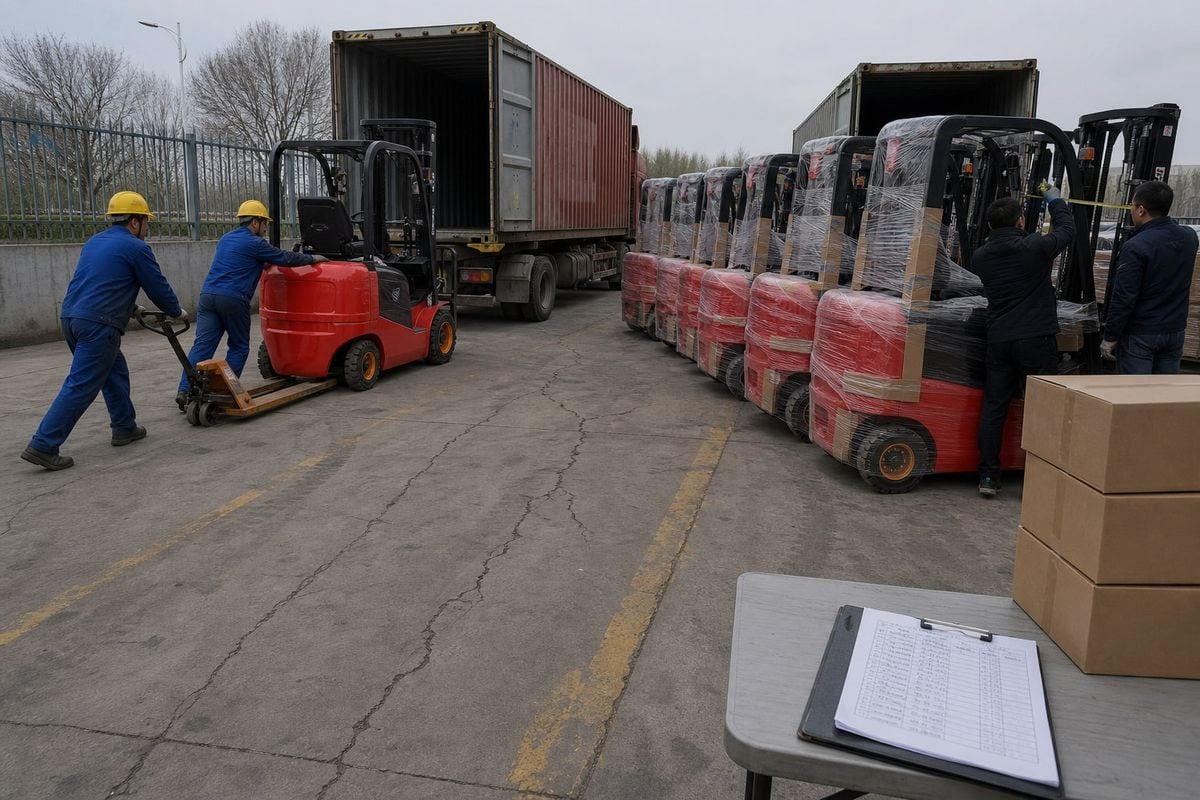
Last month, our loading team fit four 2.5-ton electric forklifts into a single 20GP by removing the masts. The buyer had budgeted for two containers. That is real money saved.
A 20ft standard container typically holds one to four compact electric forklifts, depending on size and disassembly. A 40ft container fits six to ten counterbalance units, or six to seven 3-ton forklifts, when masts are lowered or removed and cargo is positioned carefully.
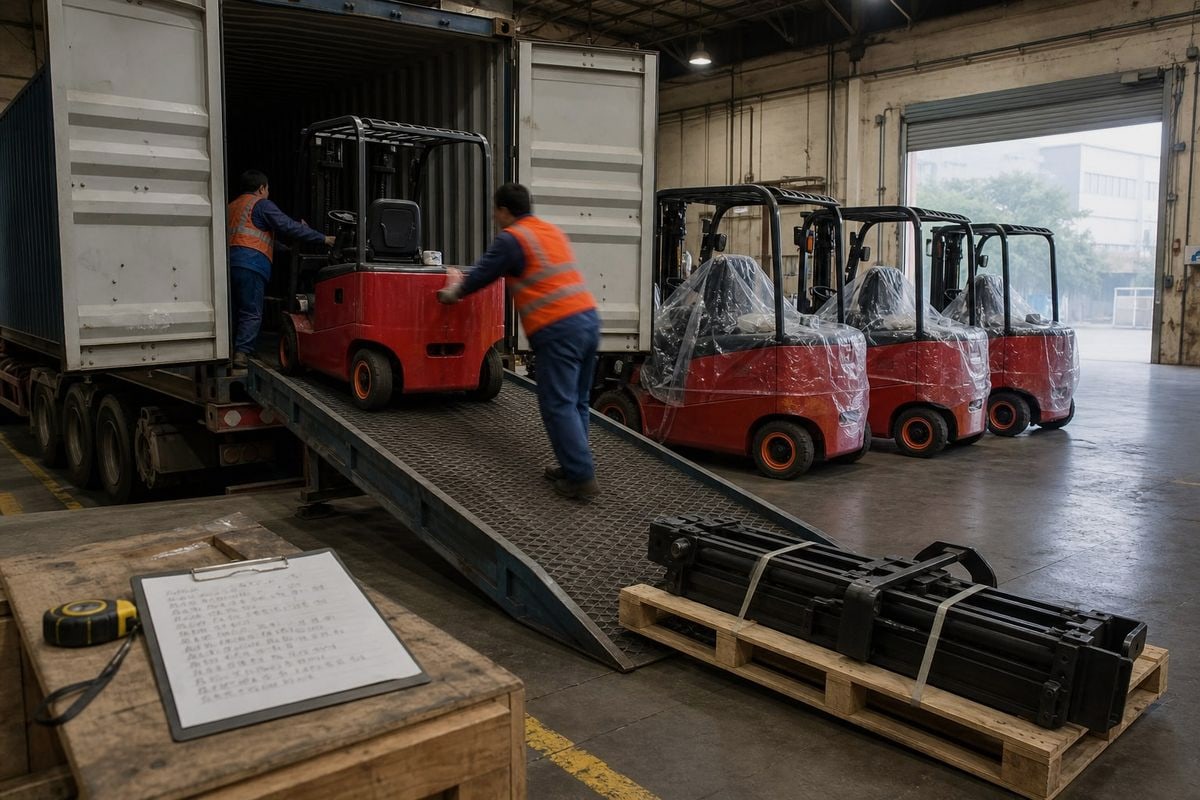
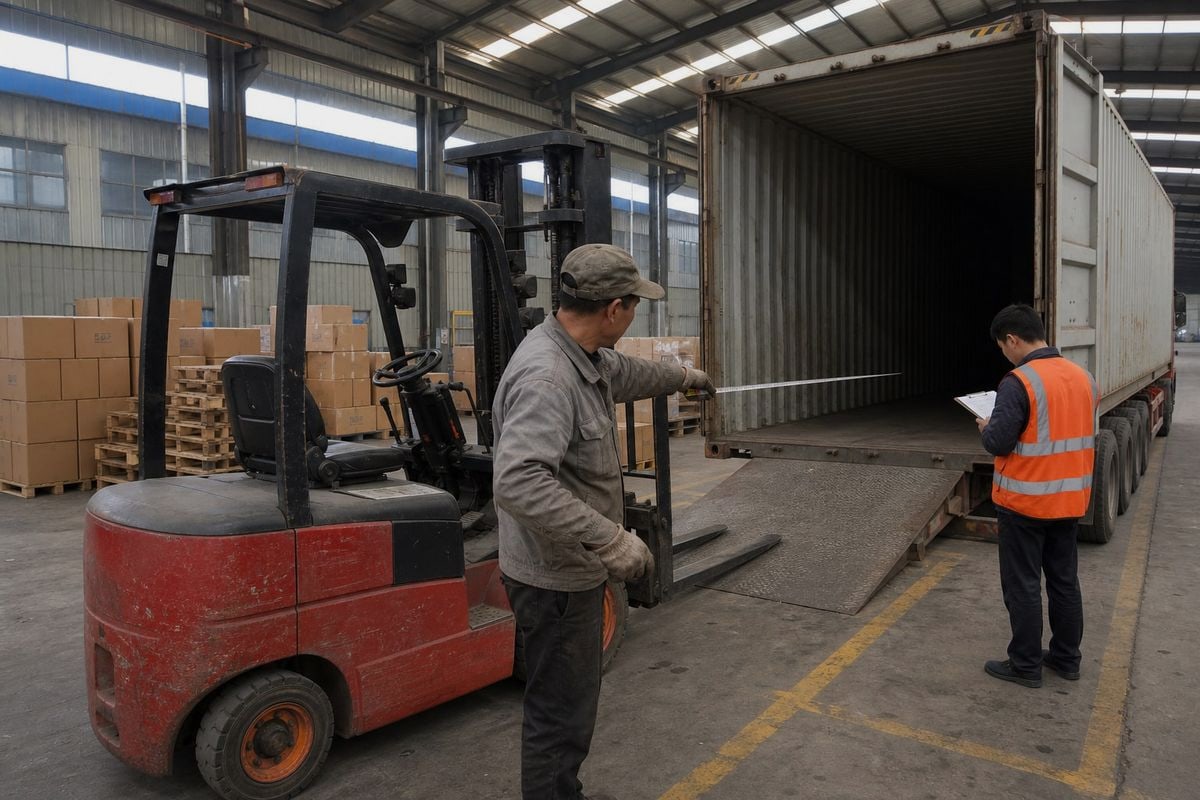
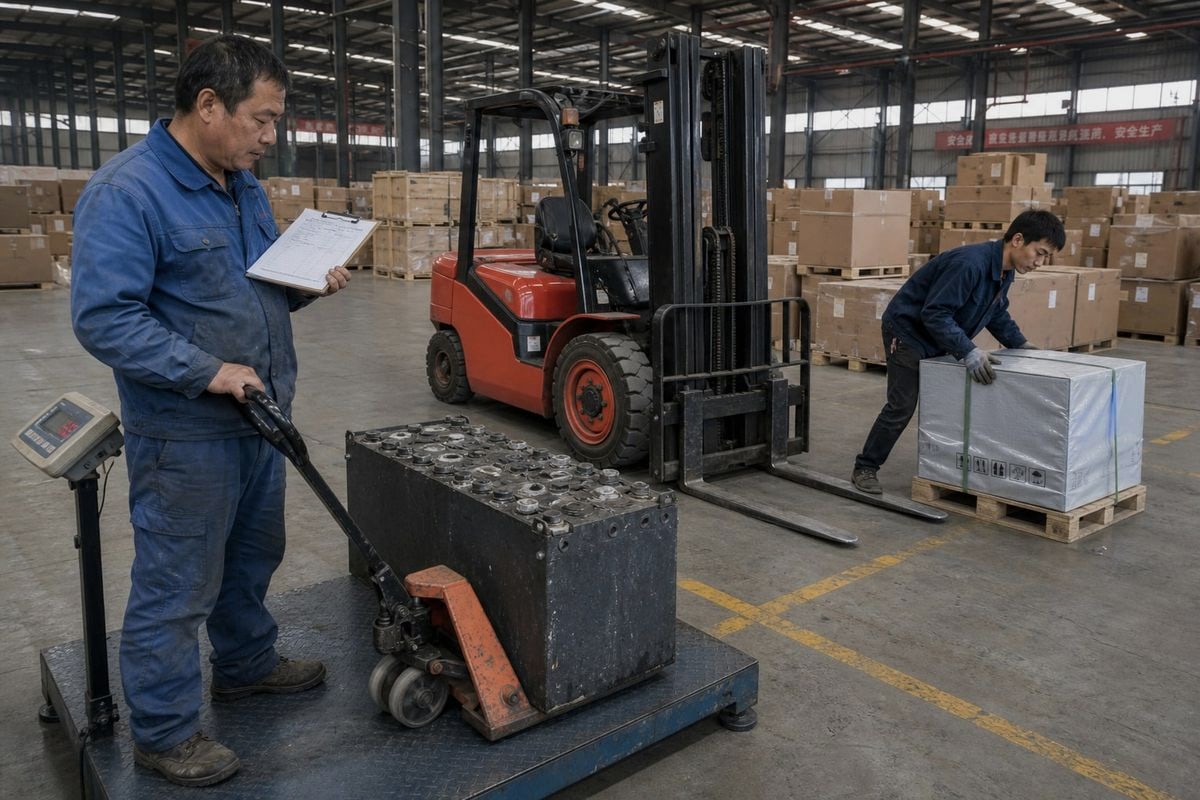
Forklift shipping is a fit-and-weight problem, not just a container-size problem. Before I quote any client, I ask for four numbers: overall length, width, collapsed mast height, and gross weight including the battery. Those four checks decide everything.
Standard containers are about 2.43m wide and 2.59m high externally. Internal container dimensions 1 are smaller, and the door opening is smaller still. A forklift must clear the door, not just the floor space inside.
| Container Type | Internal Length | Internal Width | Internal Height | Typical Forklift Capacity |
|---|---|---|---|---|
| 20ft standard container (20GP) | ~5.9 m | ~2.35 m | ~2.39 m | 1–4 compact units |
| 40ft standard (40GP) | ~12.03 m | ~2.35 m | ~2.39 m | 4–8 units |
| 40ft high cube (40HQ) | ~12.03 m | ~2.35 m | ~2.69 m | 6–10 units |
The numbers above shift based on real-world factors. In our experience loading containers for US buyers, these variables matter most:
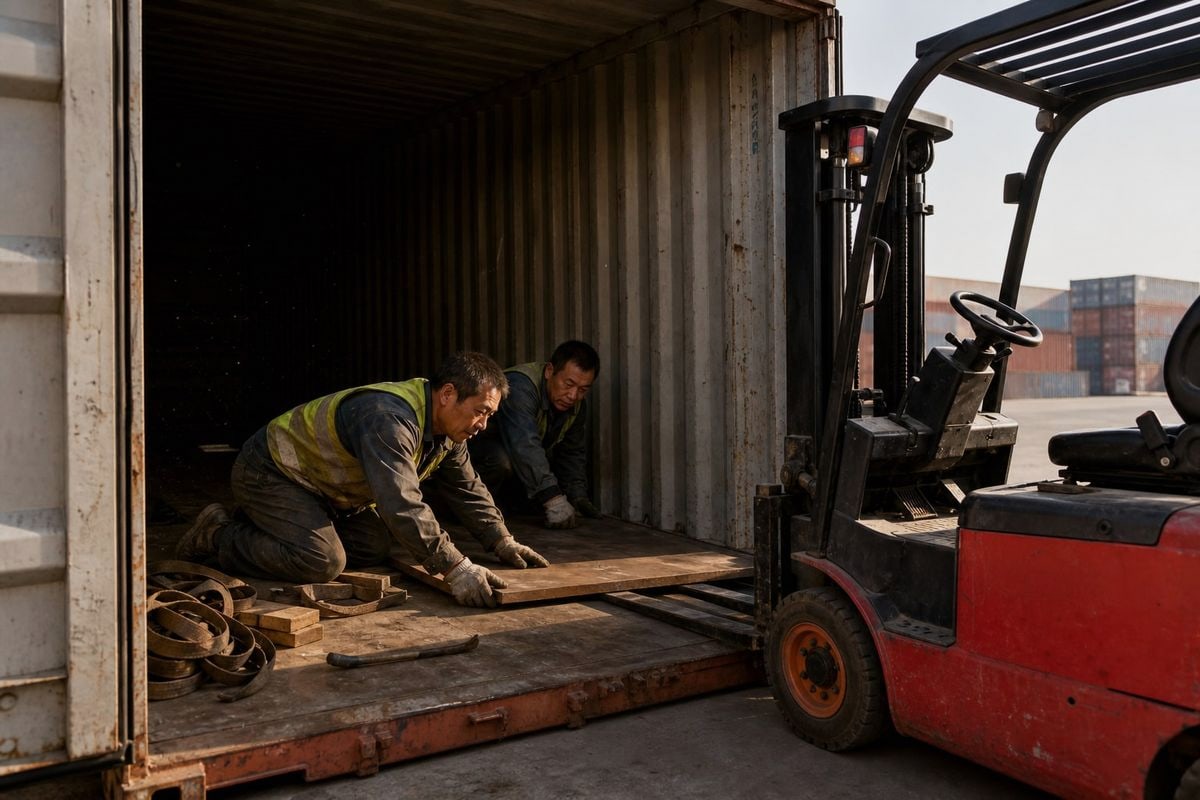
Point load pressure is the hidden constraint. A forklift's small tires concentrate weight onto tiny floor areas. Marine-grade plywood floors have axle-load limits, so for heavier units we lay steel plates or thick plywood to distribute the weight. Skipping this step can crack the container floor, and the shipping line will bill you for the damage.
A distributor in Texas once asked me why I quoted a 40HQ instead of a cheaper 40GP for his lithium forklift order. The answer came down to 30 centimeters of headroom.
Choose a 40HQ when your forklift's collapsed mast height exceeds roughly 2.26 meters, or when shipping multiple units. The extra height gives safe door clearance, and lithium battery forklifts still need IMDG Class 9 compliance regardless of container type.
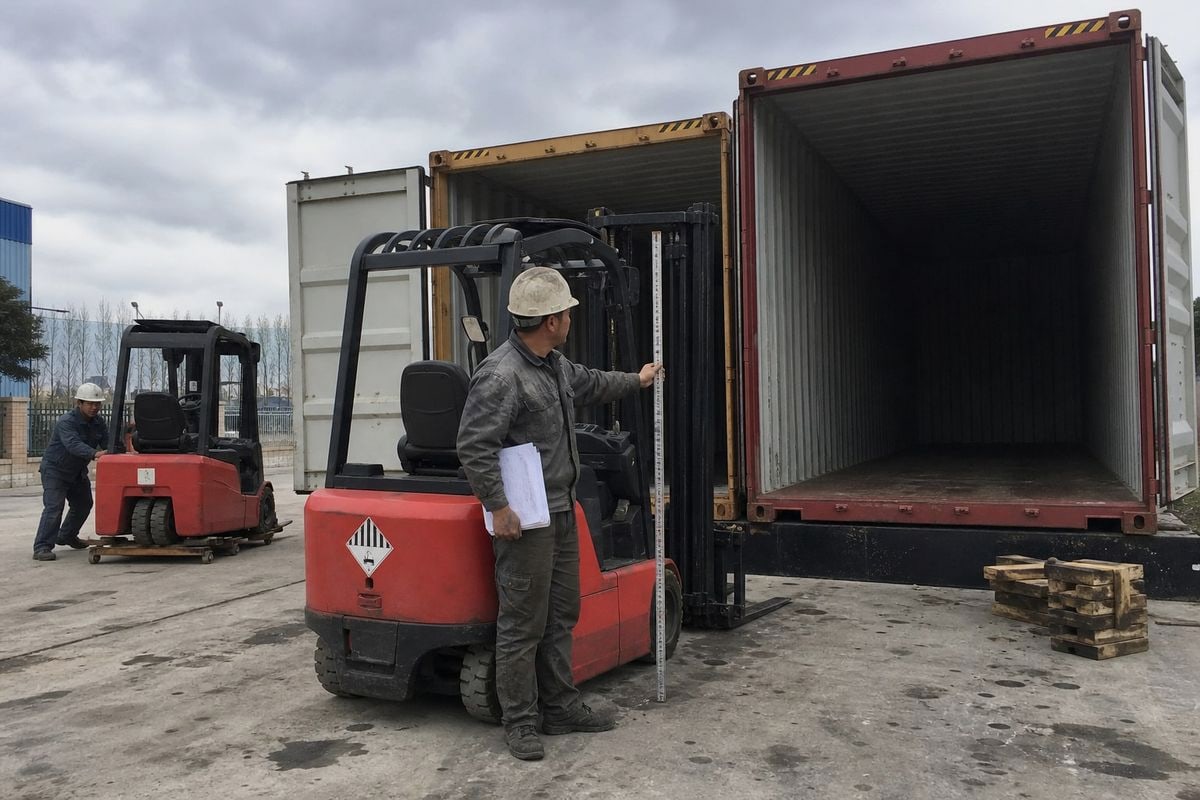
The 40ft high cube gives you about 30cm more internal height than a standard container. That mast height clearance matters more than most buyers realize. High Cube containers become necessary when collapsed mast heights exceed about 7'5", because you need safe door clearance plus interior headroom for loading ramp requirements and lashing work above the cargo.
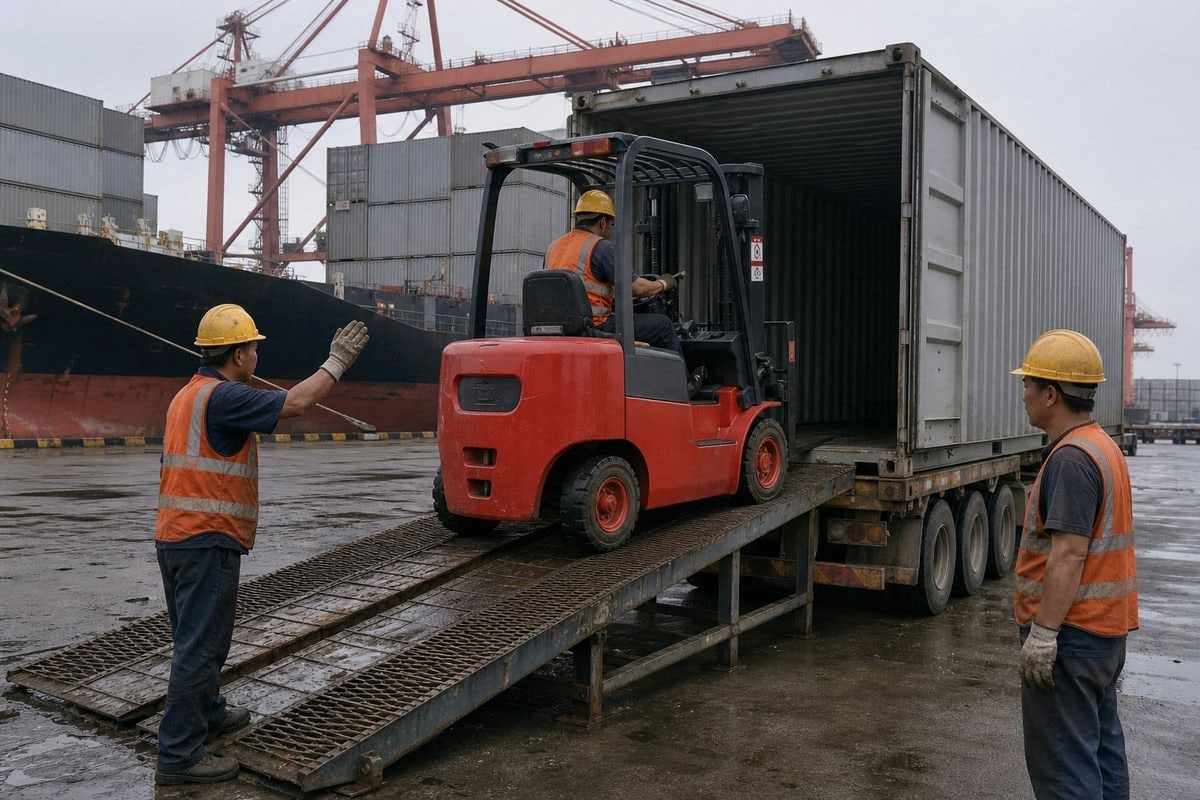
Some Chinese factories build container-spec forklifts with triplex masts and low collapsed heights. These are designed to drive straight into a standard container under their own power. If your model is container-spec, a 40GP may work fine. If not, the 40HQ removes the risk of a rejected loading.
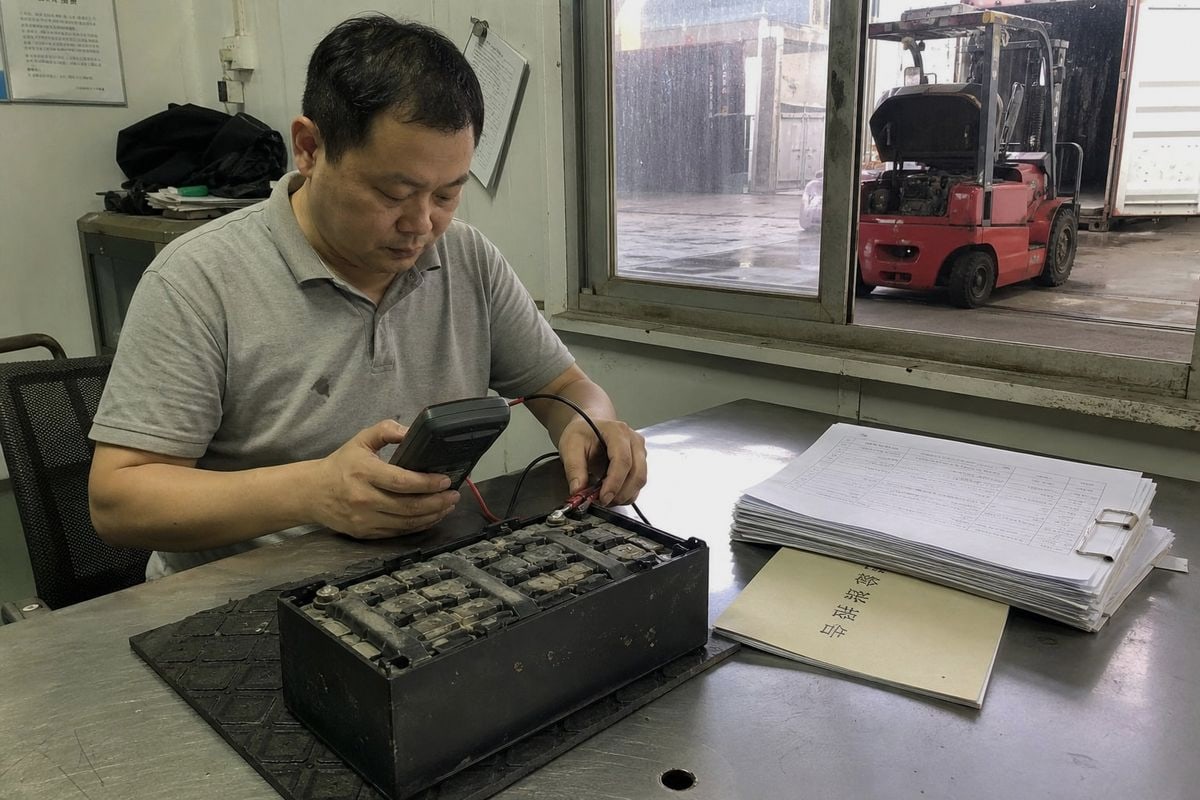
Here is the part many forwarders miss. Shipping lithium-ion powered forklifts falls under IMDG Class 9 hazardous materials 2 regulations. Key requirements include:
We coordinate these battery requirements with the factory before cargo leaves for the port. Fixing a documentation gap in Zhengzhou costs a few days. Fixing it after the container reaches the terminal costs demurrage, storage, and sometimes a missed vessel. For long ocean transits, we also recommend Volatile Corrosion Inhibitor coatings on exposed hydraulic cylinder rods and mast chains to prevent salt-air pitting.
One of my regular US clients buys forklifts from one factory, chargers from another, and spare parts from a third. We pick up from all three and consolidate everything at our warehouse before loading.
Yes, you can combine forklifts, spare batteries, chargers, and parts in one container if hazmat rules are met. Spare lithium batteries need their own dangerous goods declaration, proper packaging, and stacking that keeps heavy items off the forklift itself.
Filling unused container space with spare parts is one of the best ways to cut your average logistics cost per unit. A 20ft container with one forklift inside still has room around the mast, above the counterweight area, and along the walls. But mixing cargo types adds rules you must respect.
| Cargo Item | Can Combine? | Key Requirement |
|---|---|---|
| Spare lithium batteries | Yes, with conditions | Separate DG declaration, UN-approved packaging, SoC limits |
| Battery chargers | Yes | Crated, secured against movement |
| Forks, attachments | Yes | Strapped flat, weight distributed |
| Tires and filters | Yes | Boxed or palletized, no loose items |
| Flammable fluids or aerosols | Usually no | Separate hazmat handling required |
Lashing and securing become critical with mixed loads. Forklifts are rear-heavy because of the counterweight, so we brace the back of each unit to stop tipping or sliding during ocean transit. Then we position spare parts where they cannot shift into the machine. A loose pallet of parts hitting a glossy painted forklift body during a rough sea passage means damage claims and unhappy end customers.
We also check the paperwork side. Multi-supplier cargo needs consistent packing lists, matched HS codes, and one clean export declaration. When batteries from Factory B ship alongside forklifts from Factory A, customs sees one container but multiple commercial invoices. We align those documents before departure so US clearance goes smoothly.
The trade-off I weigh most often for clients is this: a 40HQ costs more than a 20GP, but rarely twice as much. That gap is where your savings live.
Larger containers lower the cost per forklift because ocean freight does not scale linearly with size. A 40HQ often costs only 20–40% more than a 20GP but carries two to three times more units, cutting per-unit landed cost significantly.
International freight rates fluctuate, but the ratio between container sizes stays fairly stable. That means the math almost always favors filling the biggest container you can justify.
Here is a simplified illustration using indicative figures. Actual rates change by season, route, and market conditions, so always request a current quote.
| Scenario | Container | Units Loaded | Illustrative Freight | Cost Per Forklift |
|---|---|---|---|---|
| Single compact unit | 20ft standard container | 1 | $2,500 | $2,500 |
| Small batch, disassembled | 20GP | 4 | $2,500 | $625 |
| Mid-size order | 40HQ | 7 | $3,400 | ~$486 |
| Large order | 40HQ | 10 | $3,400 | $340 |
| Oversized unit | Flat rack container 3 | 1 | $6,000+ | $6,000+ |
Freight is only part of landed cost. Destination handling, customs clearance 4, duties, and final trucking apply per container, so consolidating into fewer containers reduces those charges too. This is why heavy equipment logistics rewards planning: one well-loaded 40HQ beats two half-empty 20GPs on nearly every cost line.
Do not forget the exceptions. Oversized equipment like telehandlers or rough-terrain forklifts typically bypasses enclosed containers in favor of a flat rack container or roll-on roll-off shipping. RoRo can be cheaper for very large machines, but sailings are less frequent and the cargo travels exposed. And whatever the mode, international biosecurity protocols require forklifts to be steam-cleaned and certified free of organic matter. Soil trapped in the mast or undercarriage is a top cause of port-of-entry seizures, and a seized container erases every dollar you saved on freight.
Container size for forklift shipping comes down to dimensions, weight, mast clearance, and quantity. Measure first, choose 20GP, 40HQ, or flat rack second, and consolidate wherever possible to cut landed cost.
1. Authoritative source providing standardized ISO internal dimensions for 20ft, 40ft, and High Cube containers. ↩︎
2. Official IMO page regarding the IMDG Code for shipping dangerous goods like lithium batteries. ↩︎
3. Overview of specialized shipping container types used for oversized industrial equipment. ↩︎
4. Official U.S. Customs and Border Protection trade portal for import regulations and clearance. ↩︎