- +8618603825129
- [email protected]

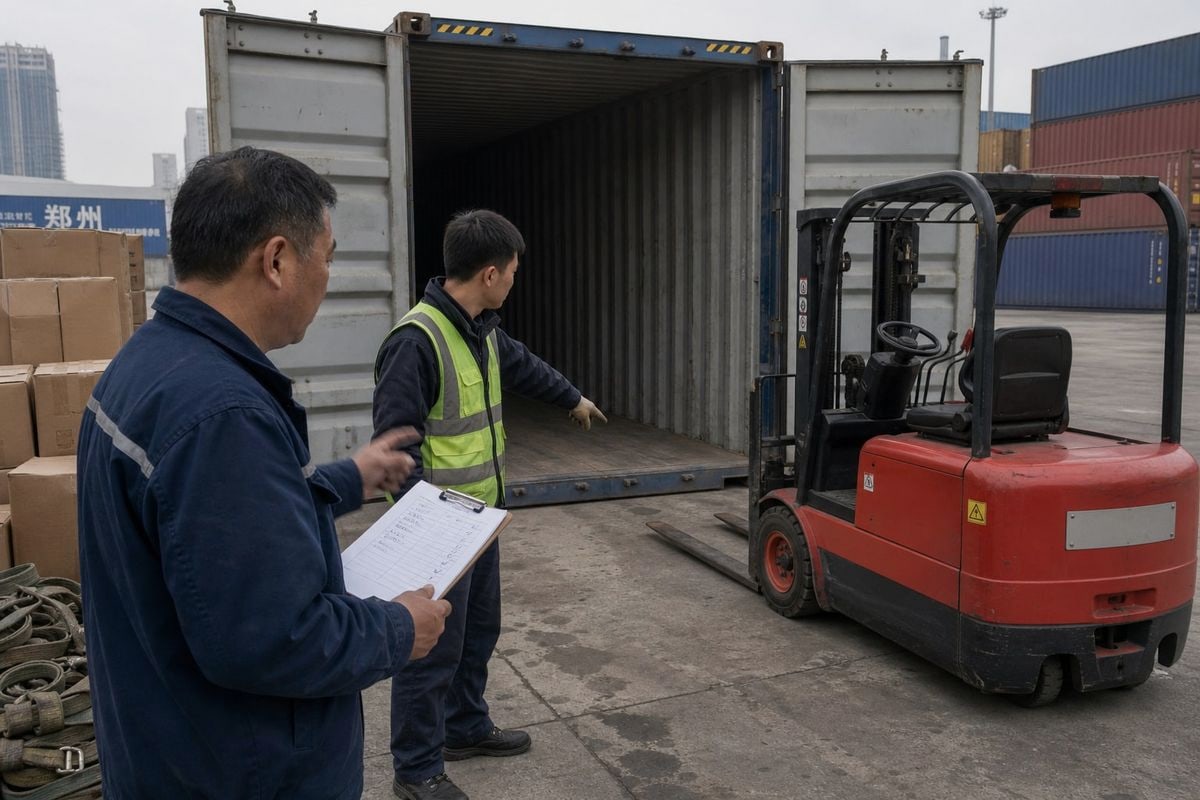
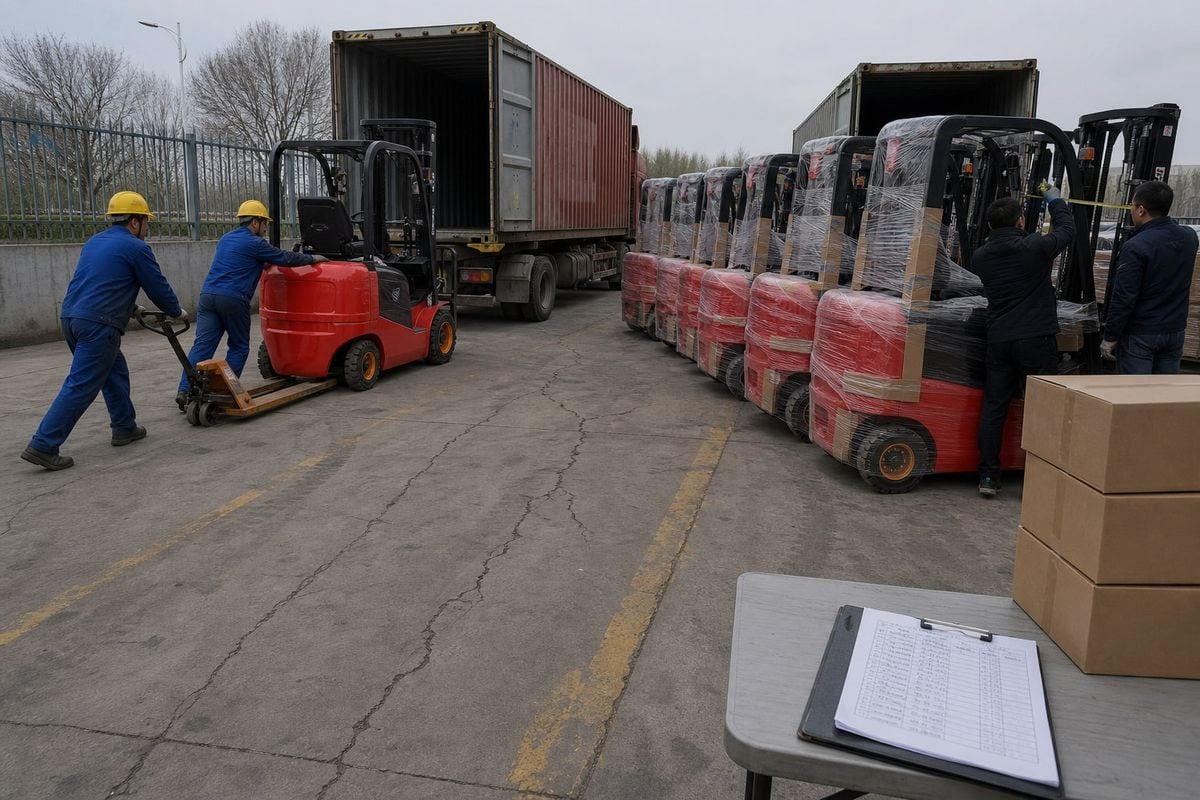
A forklift container loading inspection checklist prevents most shipping disasters I see. Skip it, and a shifted 3-ton forklift can crush cargo, damage the container, and trigger insurance disputes. Our loading teams in Zhengzhou learned this the hard way years ago, so we now inspect everything before a single fork enters the box.
A forklift container loading inspection checklist should cover four areas: the forklift being shipped (weight, dimensions, battery, fluids), the container's condition (floor, walls, doors, CSC plate), securing materials (lashing, blocking and bracing), and final documentation (photos, seal number, sign-off records).
Below, I break each of these four areas into practical steps. You can copy the structure, adapt it to your cargo, and hand it to your loading team today.
A few years back, our team opened a container at a Qingdao warehouse and found a soaked floor. That one check saved a customer's three electric forklifts from rust damage.
Your checklist should include container structural checks (floor, walls, roof, doors, CSC plate), cleanliness verification, forklift cargo verification (model, serial number, battery type), securing material inspection, weight distribution planning, and closeout items including photos, seal application, and inspector sign-off.

Many buyers treat forklift inspection and container inspection as two separate workflows. I understand why — they involve different people and different paperwork. But in my experience coordinating loadings across China, the risks overlap at the exact moment the cargo enters the box. A perfect forklift loaded into a container with a rotten floor is still a claim waiting to happen. So we combine both into one document, and I recommend you do the same.
Think of the checklist in three layers. First, the container itself. Second, the cargo. Third, the process of getting one into the other safely.
| Layer | What to Check | Why It Matters |
|---|---|---|
| Container | Floor boards, walls, roof, door hinges, locking gear, CSC plate validity | A weak floor can fail under a point load from forklift wheels |
| Cargo | Model, serial number, battery type, dimensions, weight, packaging | Wrong or mismatched cargo causes customs and claim problems |
| Process | Loading sequence, weight distribution, blocking and bracing, seal readiness | Poor placement causes transit damage and unstable containers |
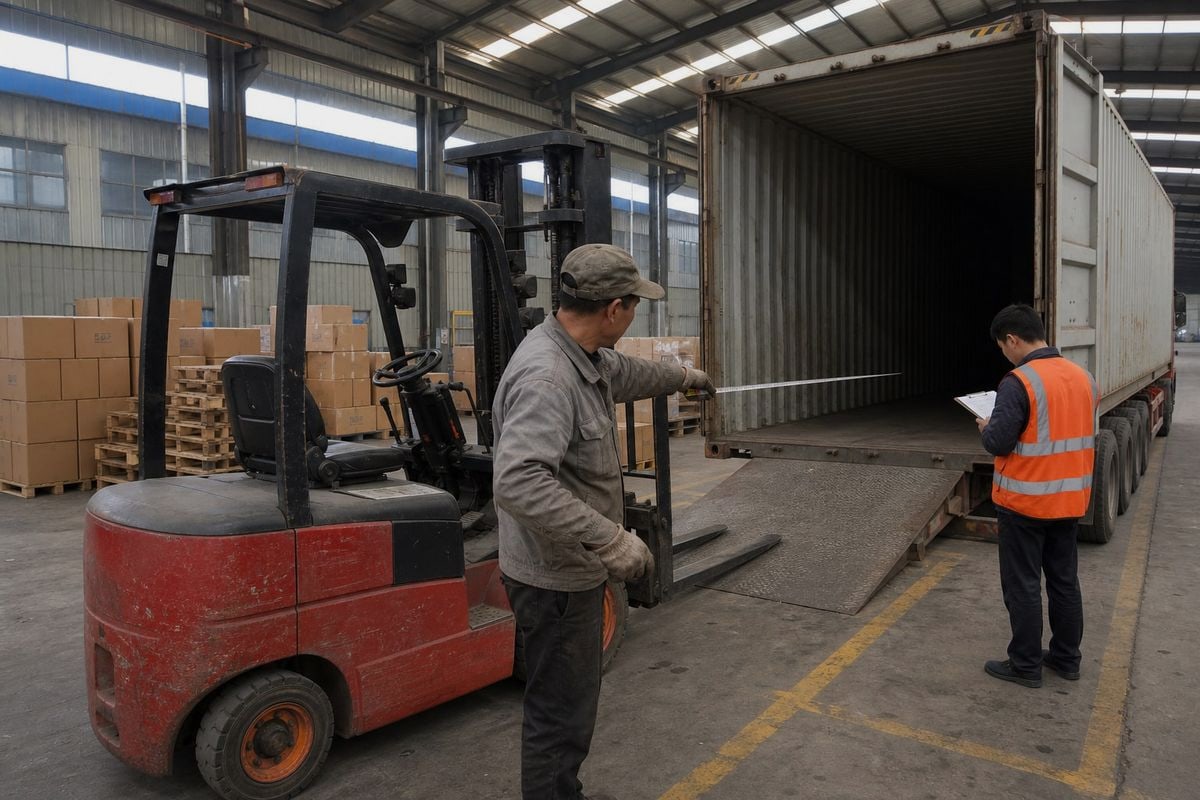
Before loading, our team enters the container and checks for light leaks. If daylight shows through the roof or walls, water will get in too. We check container floor integrity 1 by walking the full length and looking for broken boards, protrusions, and soft spots. We also confirm the container is clean, dry, and odor-free. Residue from a previous chemical shipment can corrode painted steel forklift bodies during a four-week ocean voyage.
We verify the CSC plate validity as well. An expired safety approval plate 2 means the container should not travel internationally, and some terminals will reject it outright. Catching that at the warehouse costs nothing. Catching it at the port costs days.
We photograph each forklift before loading: serial number plate, mast, forks, counterweight, tires, and battery compartment. These photos become evidence if a damage dispute arises later. We also confirm the quantity and model against the packing list, because a mismatch discovered at US customs is far more expensive than one discovered in Zhengzhou.
One trade-off we weigh on nearly every shipment: fit more forklifts per container to cut cost, or leave clearance space to cut damage risk. Accurate dimensions decide that answer.
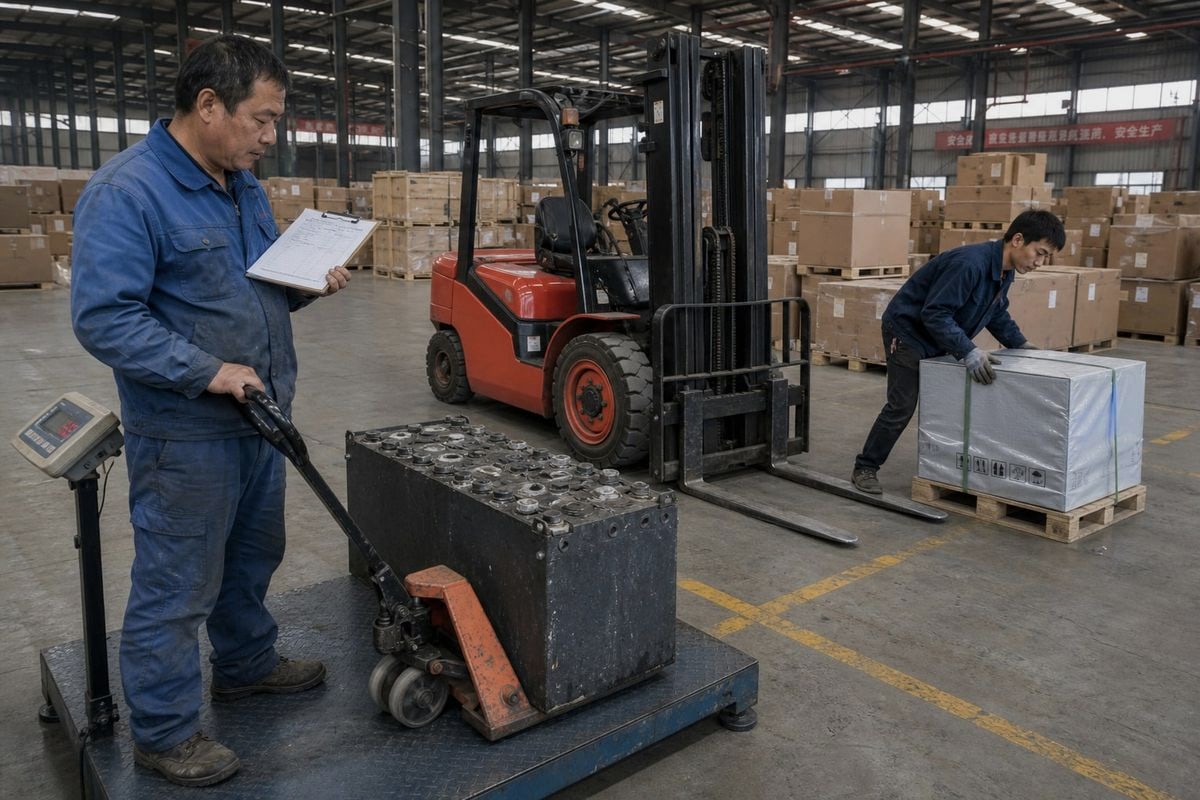
Verify weight and dimensions by requesting the factory's official spec sheet, then physically measuring overall height with mast lowered, width, length including forks, and confirming service weight with battery installed. Compare totals against container payload limits and plan cargo weight distribution before booking.

Factory spec sheets are a starting point, not a final answer. In our years shipping electric forklifts from China, we have seen spec sheets list weight without the battery, height with the overhead guard removed, and length without the forks. Each of those gaps can wreck a loading plan. A lithium battery pack alone can add several hundred kilograms, and that changes both the container payload math and the cargo weight distribution plan.
Here is what we physically confirm at the factory or consolidation warehouse before the container arrives:
| Measurement | How to Verify | Common Mistake |
|---|---|---|
| Overall height | Measure with mast fully lowered | Trusting spec sheets that exclude the overhead guard |
| Overall length | Measure from counterweight to fork tips | Forgetting fork length, which can add over a meter |
| Overall width | Measure at widest point, usually tires | Ignoring attachments wider than the chassis |
| Service weight | Weigh with battery and attachments installed | Using battery-excluded factory figures |
| Load center of gravity | Confirm from nameplate and battery position | Assuming weight sits evenly across the chassis |
A 20FT container door opening is roughly 2.28 meters high and 2.34 meters wide. A standard 40HQ gives you extra height but the same door width. If a forklift's mast height sits within a few centimeters of the door opening, we plan for deflated tire clearance tricks or choose a different container type. We measure twice, because a forklift stuck halfway through a container door is a bad day for everyone.
Weight matters just as much. A 20FT container typically carries a maximum payload around 28,000 kg, but road weight limits in the US are often far lower — frequently around 17,000 to 19,000 kg of cargo for standard trucking. We check the destination trucking limits before deciding how many forklifts go into one box. We also confirm the load center of gravity of each unit, because a rear-heavy counterweight design means the floor under one end of the machine takes far more pressure than the other. That point-load pressure must stay within what the container floor can safely support, which is why we sometimes lay steel plates or timber under the wheels to spread the load.
If the shipment includes attachments — side shifters, clamps, extended forks — we verify forklift attachment compatibility and decide whether to ship them mounted or crated separately. Detached attachments often stow better and reduce the risk of protruding parts damaging adjacent cargo.
A US distributor once asked me why his previous forwarder's container arrived with a forklift tilted against the wall. The answer was simple: nobody checked the lashing before sealing.
Check that lashing points are intact and rated, straps or chains meet the safe working load for the cargo, blocking and bracing timber is nailed or screwed to the floor, wheels are chocked in both directions, and the parking brake is set with the mast lowered and forks down.
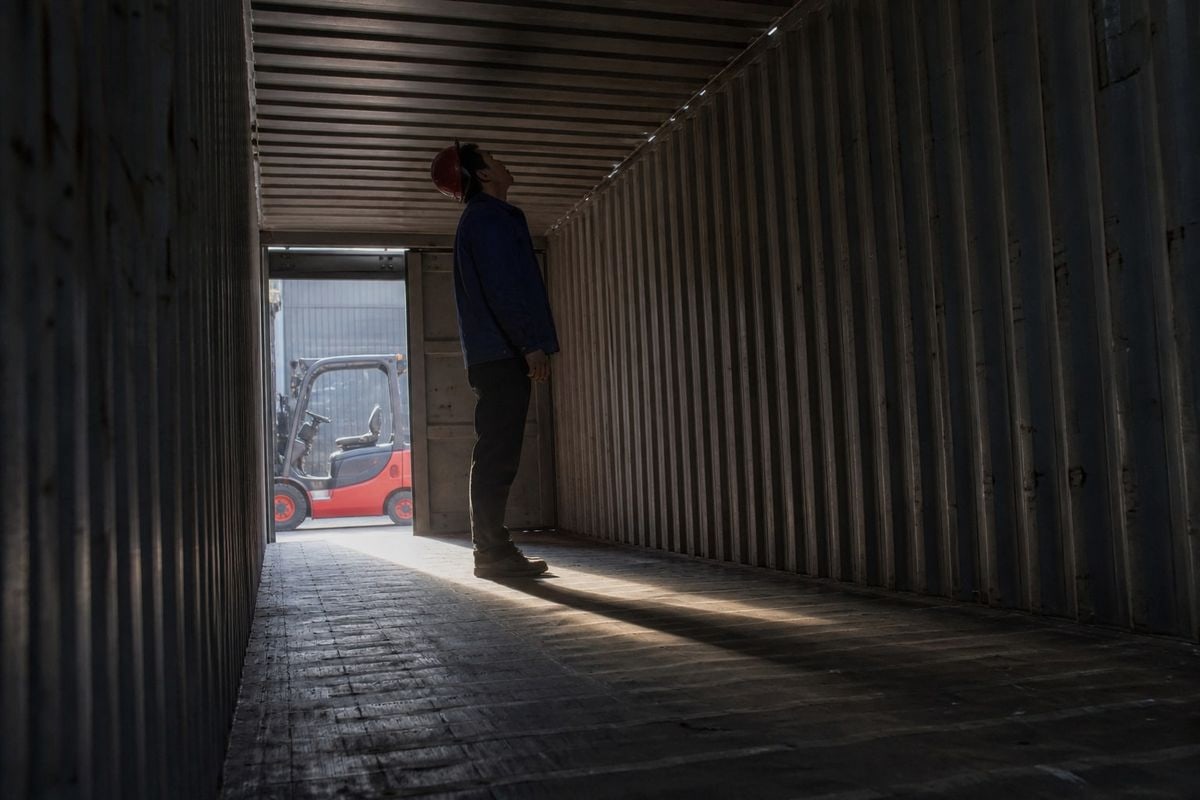
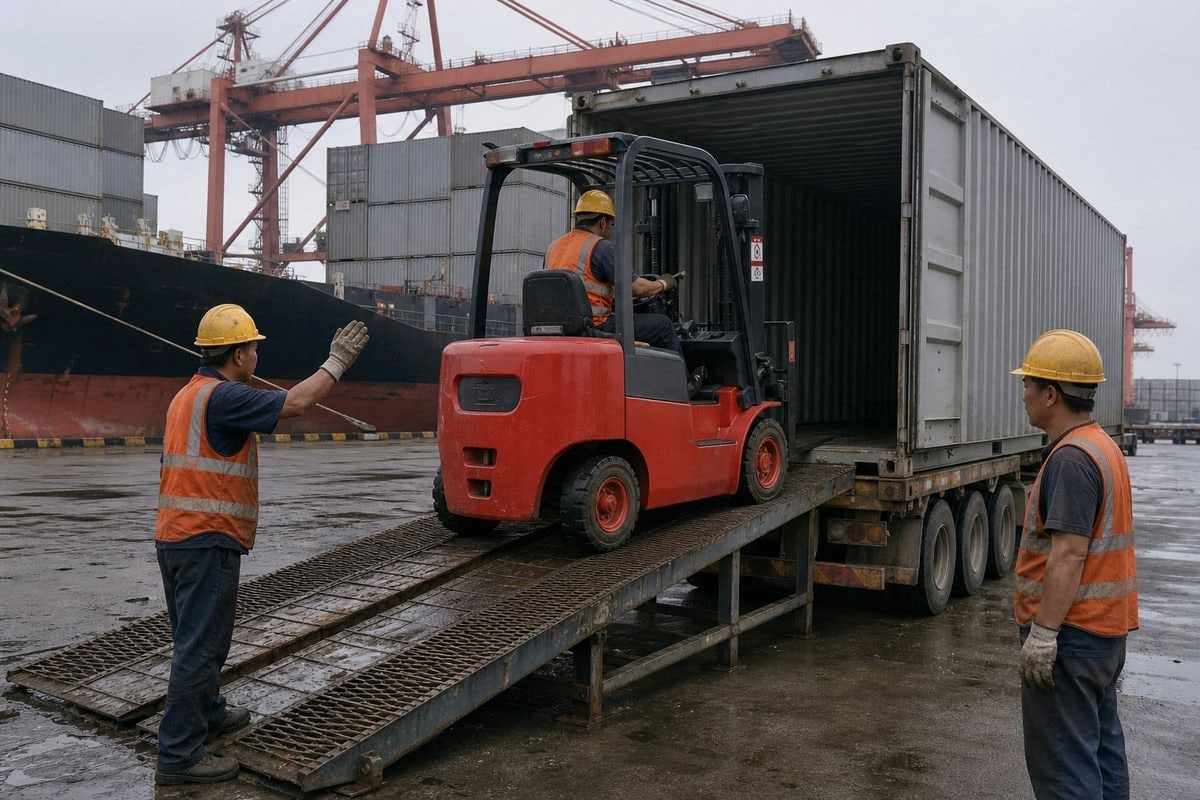
Securing is where most transit damage begins or is prevented. Ocean containers pitch, roll, and slam. A forklift weighing two to four tons generates enormous force when it shifts even a few centimeters. Our loading supervisors follow a fixed sequence, and I will share it here because the order matters as much as the items.
Securing checks start before the cargo enters the box. We verify dock leveler alignment 3 so the loading forklift does not drop or bounce at the container threshold. We confirm the container chassis or trailer is chocked, and that dockboards are rated for the combined weight of the loading machine plus the cargo forklift it may carry. These steps align with OSHA compliance standards for powered industrial truck operations, and following them protects both the cargo and the people doing the work.
The lesson that shaped our battery inspection process came from a shipment that nearly missed its vessel because the carrier questioned the battery documentation at the port. Now we check everything upstream.
Inspect lithium battery packaging by confirming the battery's UN38.3 test summary matches the installed pack, checking terminals are protected against short circuit, verifying the battery is secured against movement, confirming state of charge meets carrier rules, and checking hazard labels and documentation are complete.
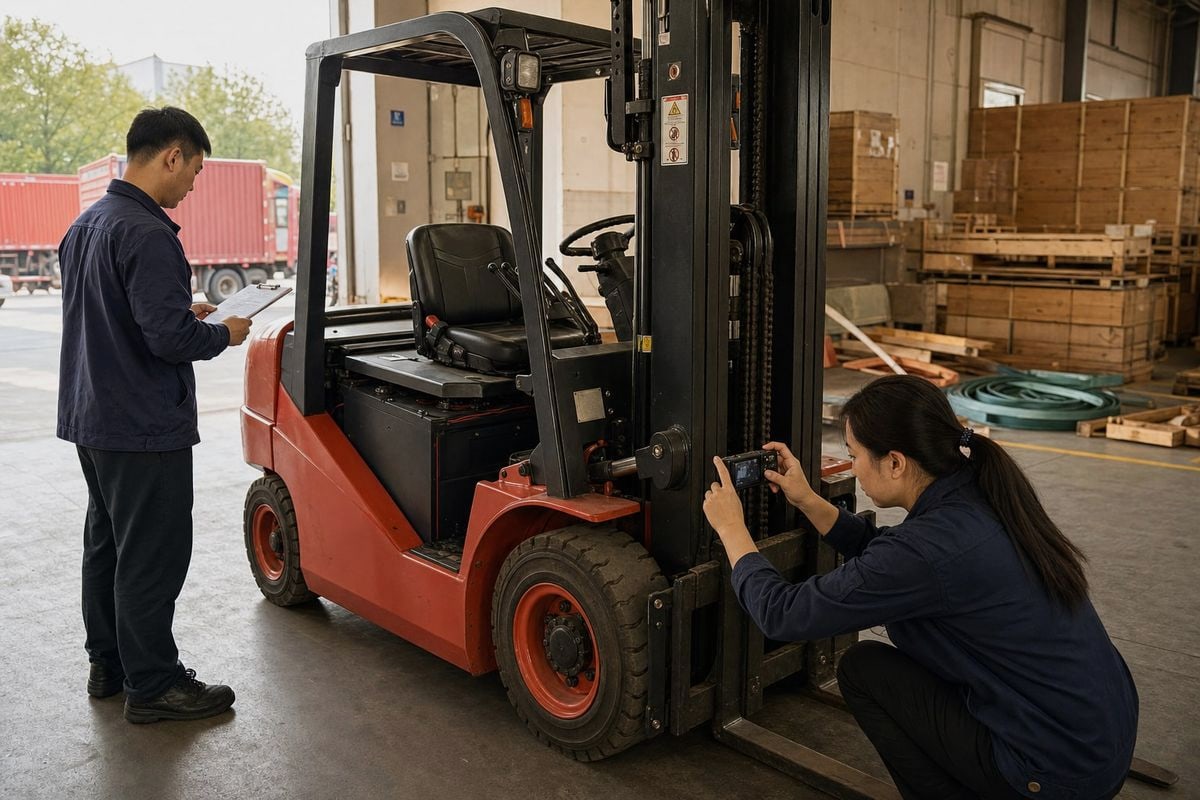
Lithium battery forklifts are the fastest-growing cargo type we handle, and they carry the strictest requirements on any loading checklist. A battery problem discovered at the port means the container may be pulled from the vessel, opened, re-worked, and re-booked. That costs weeks. A battery problem discovered at sea is far worse. So we treat battery inspection as a gate: the container does not close until every item passes.
| Check | What Passes | What Fails |
|---|---|---|
| Documentation | UN38.3 test summary matching the exact battery model and capacity | Missing summary, or paperwork for a different battery model |
| Terminal protection | Terminals insulated, covered, or disconnected per carrier requirement | Exposed terminals near metal parts or tools |
| Physical condition | No dents, swelling, leaks, or cracked casing | Any visible damage — damaged lithium batteries face heavy shipping restrictions |
| Mounting | Battery locked in its compartment with retention hardware engaged | Loose pack that can shift and strike the compartment walls |
| Labels and marks | Required hazard labels applied where the shipping method demands them | Missing, wrong-class, or unreadable labels |
The rules differ depending on how the battery ships. A lithium battery installed in the forklift is generally treated differently from spare batteries 4 packed loose in the same container. When customers buy spare packs or chargers from a second factory, we review the packaging separately: strong outer packaging, inner protection against short circuit, and correct marks on each package. We also confirm the shipper's declaration is consistent across the commercial invoice, packing list, and dangerous goods paperwork, because a mismatch between documents is one of the most common causes of customs and carrier holds.
Before sealing, our supervisor does one last walkthrough: battery isolated, no charger left plugged in, no loose battery cargo touching the forklift bodywork, and photos of every label. Some customers also ask us to record a humidity and temperature baseline 5 inside the container before closing, which gives a useful reference point if condensation damage is ever claimed. Then the seal goes on, the number gets photographed, and the record goes into the shipment file.
A forklift container loading inspection checklist covers four gates: cargo verification, container condition, securing and lashing, and battery compliance. Pass each gate before sealing, and your shipment arrives the way it left.
1. International organization that sets structural and safety standards for freight containers. ↩︎
2. Official body governing the International Convention for Safe Containers (CSC) standards. ↩︎
3. US agency providing safety guidelines for dock equipment and loading operations. ↩︎
4. UN body providing the regulatory framework for the safe transport of lithium battery powered equipment. ↩︎
5. US Customs and Border Protection provides guidelines for container integrity and environmental standards for imported goods. ↩︎