
- +8618603825129
- [email protected]


Comparing freight quotes for electric forklift shipping tripped up one of my earliest US clients. He picked the cheapest number, then paid double at destination. From our logistics base in Zhengzhou, I have watched that same mistake repeat for years. The fix is simple: normalize every quote before you compare a single dollar.
To compare freight quotes for electric forklift shipping, normalize all quotes to the same shipment profile, then compare the all-in landed cost. Break each quote into origin charges, main freight, and destination charges, confirm fuel surcharges and accessorials are included, and match transit time and services before choosing.
That is the short answer. Below, I will walk through each step in detail, using real situations from shipments we have coordinated from Chinese forklift factories to buyers in the US and Europe.
A distributor in Texas once forwarded me three quotes and asked why they differed by 40%. Two of them were simply missing half the journey. Our team sees this weekly.
A complete electric forklift freight quote covers origin charges, main freight, and destination charges in one document. It should list pickup, export handling, ocean or trucking rates, fuel surcharges, customs, terminal fees, and final delivery. If any leg is missing or marked "at cost," the quote is incomplete.
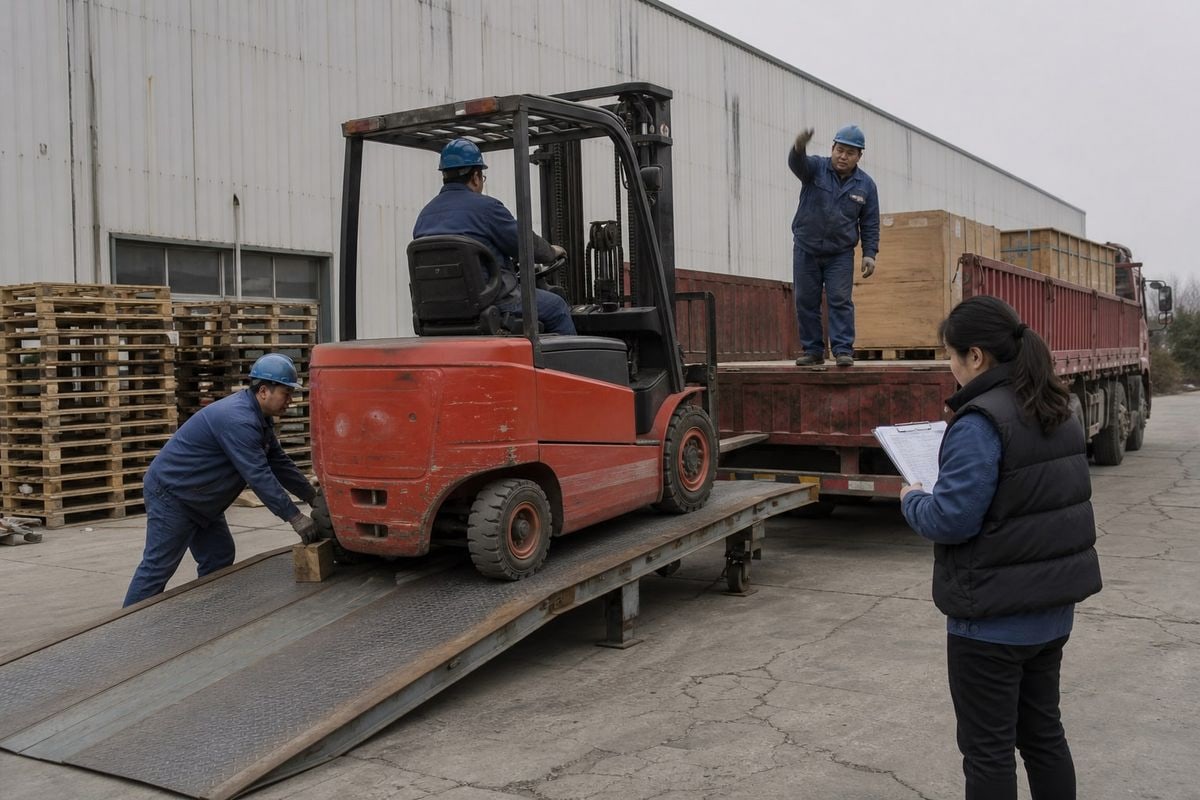
A freight quote is really three quotes stacked together. When we prepare a door-to-door quotation for a forklift shipment from China, we always break it into origin, freight, and destination sections. That structure makes gaps visible immediately. If a competitor's quote looks cheaper, you can lay it against this structure and find the missing pieces in minutes.
| Quote Section | What It Should Include | Common Gaps |
|---|---|---|
| Origin charges | Factory pickup, export customs, terminal handling, container loading, cargo securing | Pickup "not included," loading left to the factory |
| Main freight | Ocean or trucking rate, fuel surcharges, carrier fees | Spot rate with no validity window |
| Destination charges | Import customs, duties handling, terminal fees, final trucking, liftgate service fees | "Destination charges at cost" with no estimate |
Beyond the three sections, check the pricing basis. Some quotes price per container. Others price by weight or by chargeable weight. You cannot compare a per-container FCL rate against a per-cubic-meter LCL rate without converting both to a cost per forklift.
In our experience exporting to the US, a quote that answers all five questions rarely produces surprises. A quote that dodges even one usually does.
The hardest lesson I learned in this business came from a demurrage bill. A container sat at a US port for six days over a documentation issue, and the storage charges erased the client's entire freight savings.
Watch for excluded fuel surcharges, liftgate service fees, residential or inside delivery, detention time, appointment fees, overweight surcharges from heavy batteries, reweigh clauses, chassis fees, demurrage, and low cents-per-pound insurance limits. Any quote silent on these items is hiding cost, not avoiding it.
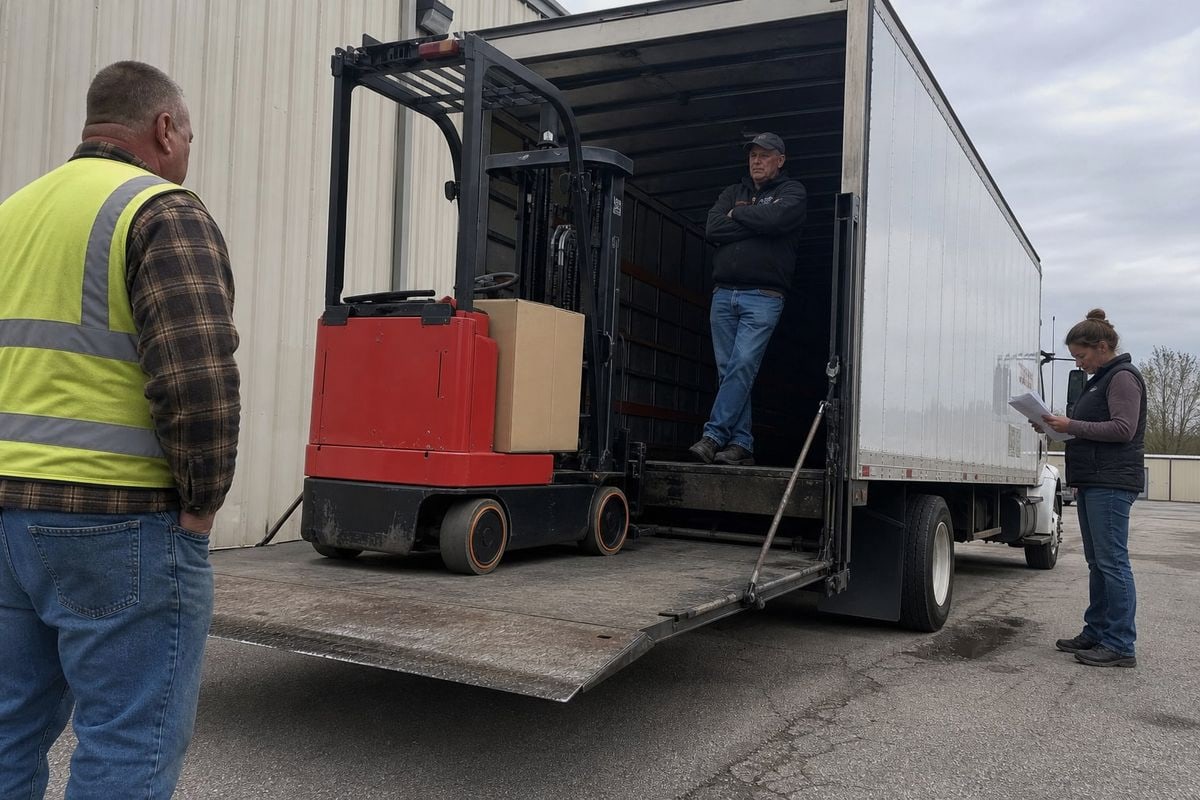
Hidden charges on forklift shipments cluster around one fact: electric forklifts are heavy, dense, and awkward to handle. A lead-acid or lithium battery pack alone can exceed 2,000 lbs, which can trigger overweight surcharges that never appear on standard machinery quotes. Low ground clearance is another trap. Most electric forklifts cannot roll up a standard trailer ramp, so delivery needs a loading dock, a flatbed trailer transport arrangement with a crane, or specialized equipment. If your quote assumes a dock and your warehouse only has ground-level access, you will pay the difference on delivery day.
| Hidden Charge | Why Forklifts Trigger It | Typical Impact |
|---|---|---|
| Liftgate service fees | Machines too heavy for standard liftgates need special equipment | Extra fee, or failed delivery attempt |
| Detention time | Heavy equipment takes longer to unload at warehouse docks | Charged per hour after free time |
| Appointment fees | Many receivers require scheduled delivery windows | Flat fee per appointment |
| Overweight surcharge | Battery weight pushes the unit past standard thresholds | Percentage or flat surcharge |
| Reweigh clauses | Carriers reweigh and rebill if declared weight is low | Retroactive rate increase |
| Demurrage and storage | Customs or document delays hold containers at port | Daily charges that compound fast |
Standard carrier liability often pays out on a cents-per-pound basis. For a dense, high-value machine with expensive electric drive components, that formula pays a fraction of replacement cost. When we arrange التأمين على البضائع 1 for clients, we push for full replacement value coverage. Compare freight insurance coverage terms across quotes, not just the premium. Two quotes with identical freight rates can carry wildly different risk if one leaves you with cents-per-pound protection.
Also read the fine print on "subject to reweigh" language. If one forwarder quotes on your declared weight and another builds in a verified weight, the first quote is not cheaper. It is just less honest about the final number.
Every week, a buyer asks me the same question: one forklift, maybe two — do I really need a whole container? The math is less obvious than it looks.
Compare FCL and LCL by cost per forklift, not total cost. FCL gives a fixed container price, faster handling, and less cargo touching. LCL charges by volume and adds consolidation fees at both ends. For two or more forklifts, FCL usually wins; for one compact unit, LCL often costs less.
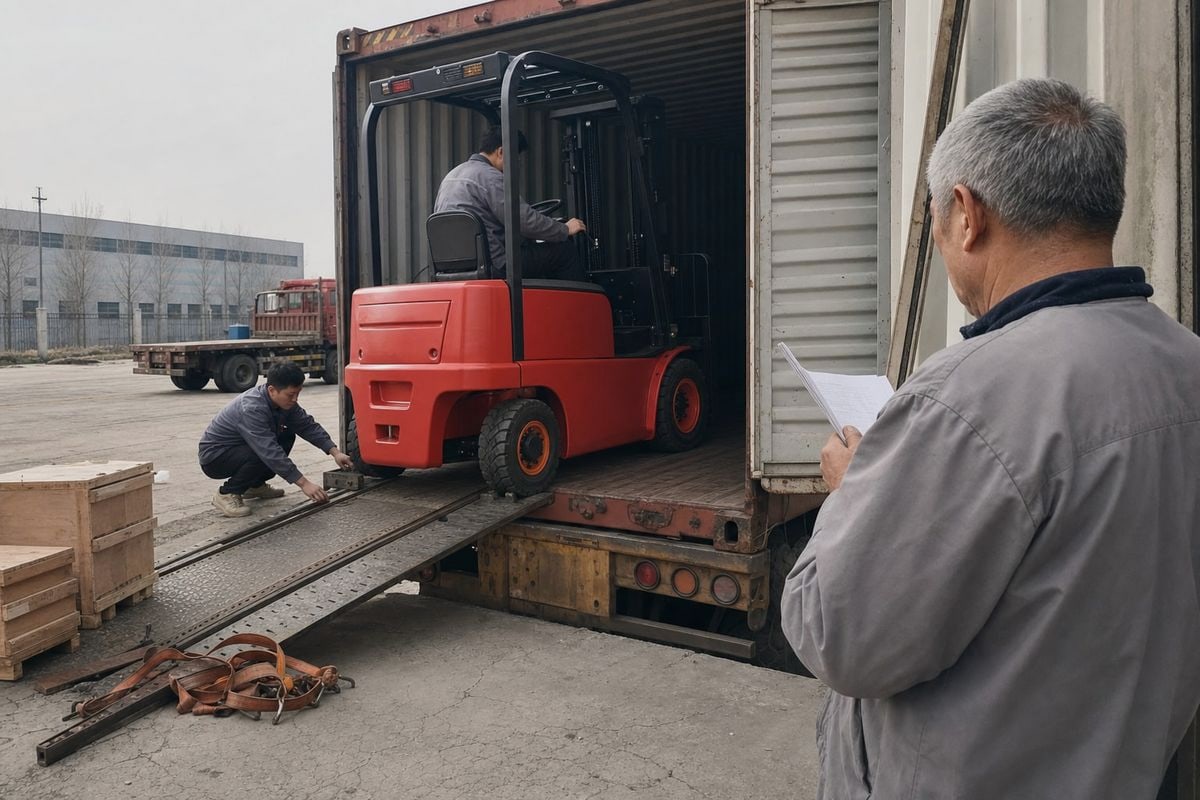
The core trade-off is simple. FCL sells you space you may not fill. LCL sells you only the space you use, but layers on consolidation charges, deconsolidation charges, and extra handling. Extra handling matters more for forklifts than for boxed goods, because every additional lift is a damage opportunity for masts, overhead guards, and control panels.
| العامل | FCL (حاوية كاملة) | LCL (Consolidation) |
|---|---|---|
| Pricing basis | Per container (20FT, 40FT, 40HQ) | Per cubic meter or per ton |
| المناولة | Loaded once, sealed to destination | Loaded, unloaded, and reloaded at CFS |
| Damage risk | Lower, cargo untouched in transit | Higher, shared container and repeated handling |
| Transit time estimates | More predictable | Slower, waits for consolidation |
| Hidden fees | Chassis, demurrage if delayed | CFS fees at both origin and destination |
| الأفضل لـ | 2+ forklifts, or forklifts plus parts | One compact unit, tight budget |
When we plan container loading for clients, we evaluate dimensions, weight, mast height, and attachments before recommending a container size. A 40HQ can often take multiple compact electric forklifts plus chargers and spare parts in the unused space. That consolidation drops the per-unit freight cost sharply. This is why I tell buyers purchasing from multiple factories to consolidate: forklifts from Factory A, batteries from Factory B, chargers from Factory C, all in one container.
For domestic legs at destination, the same logic applies to LTL vs FTL shipping. One forklift moving 200 miles may ride LTL, but its NMFC freight class and density will drive the rate. The 2025 NMFC overhaul moved most electric forklifts toward strictly density-based classification 2, so calculate the precise pounds-per-cubic-foot density of your unit before requesting domestic quotes. Two quotes using different assumed freight classes are not comparable at all. Fix the class first, then compare.
Before we ship any lithium battery forklift, our team requests the battery documentation from the factory first. That habit came from watching a competitor's cargo get rejected at port.
Lithium battery forklift quotes vary because carriers price regulatory risk differently. Lithium-ion batteries are classified as dangerous goods, requiring UN38.3 test summaries, proper documentation, and carrier acceptance. Forwarders experienced with battery cargo quote accurately; inexperienced ones either underquote and fail, or overquote to cover uncertainty.
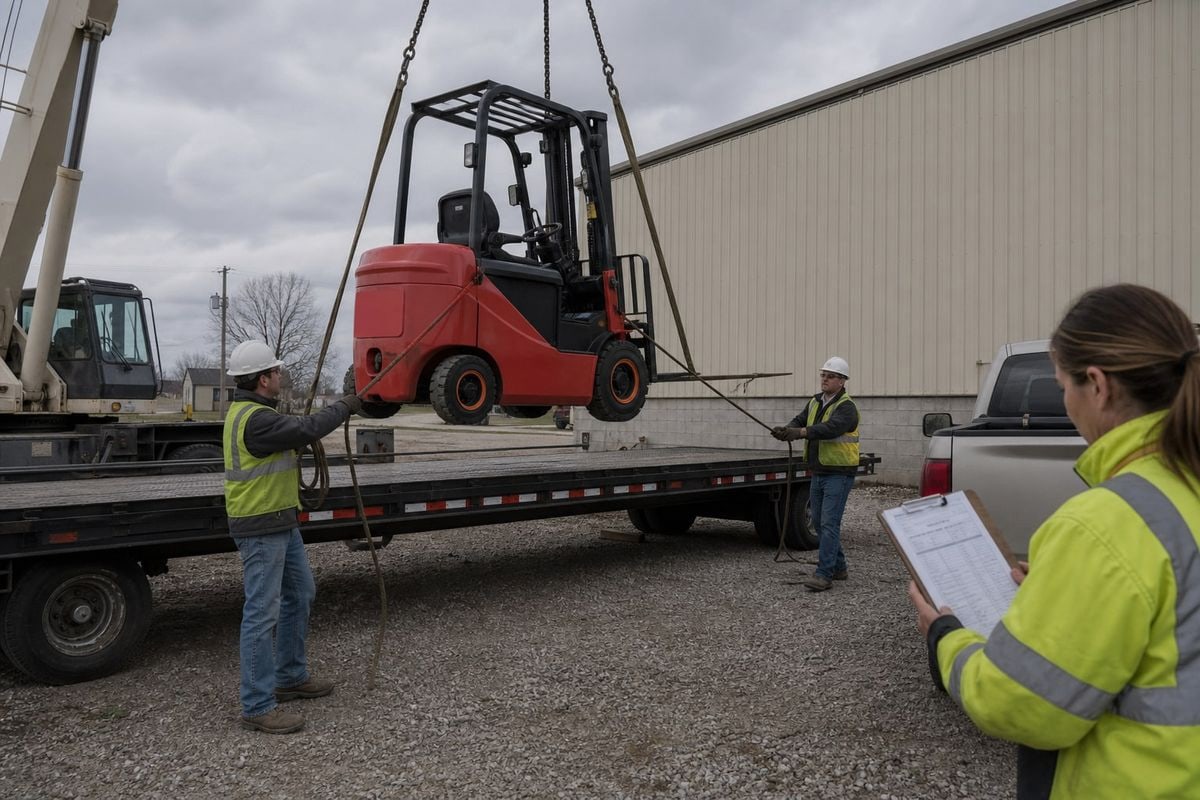
The variance comes down to who actually understands lithium-ion battery regulations. A lithium battery forklift is dangerous goods cargo 3 in the eyes of ocean carriers. Not every carrier accepts it. Not every forwarder knows which carriers accept it. That knowledge gap shows up directly in the quote spread.
Send every forwarder the same battery data sheet: chemistry, watt-hours, whether the battery ships installed, and the UN38.3 summary. Then require each quote to state the DG surcharge, documentation fees, and the named carrier. In our coordination work with Chinese forklift factories, we collect this data before quoting, because a quote built on assumed battery specs is a guess wearing a price tag.
One more variance source is protection level. For long-haul routes with extreme temperature swings, some buyers pay for enclosed transport to shield electronic control modules from thermal cycling. Some newer machines even carry onboard telematics with G-force sensors, which give you objective handling data to support any damage claim. Quotes that include these protections cost more upfront and often less overall.
Cheap-looking quotes hide expensive surprises. Normalize the shipment profile, expose every charge, verify battery compliance, and compare تكلفة الهبوط. Do that, and your forklift arrives without a second invoice.
1. Provides the definitive rules for international commercial terms and insurance responsibilities in global trade. ↩︎
2. Explains trade standards and classifications used in international shipping and logistics. ↩︎
3. International maritime standards governing the safe handling and transport of hazardous materials by sea. ↩︎
4. Official guidelines for the safe transport and testing requirements of lithium batteries in global commerce. ↩︎



