
- +8618603825129
- [email protected]


Choosing a shipping line for electric forklift cargo looks simple until a carrier rejects your booking over battery paperwork. Our team in Zhengzhou has seen containers sit at port for exactly that reason. One missing document can freeze a five-figure machine, rack up storage charges, and blow up your delivery promises to customers. The fix is a structured selection process, and that is what I will walk you through here.
To choose a shipping line for electric forklift cargo, verify the carrier accepts Class 9 dangerous goods under UN3171, serves your exact trade lane, offers suitable equipment such as FCL or flat rack containers, maintains reliable schedules, and provides transparent all-in pricing with cargo insurance options.
Price matters, but it is the last filter, not the first. Below, I break the decision into four questions. Answer them in order and the right carrier becomes obvious.
Last year, a US dealer asked us to move six lithium forklifts on the cheapest carrier he found online. That carrier did not accept battery-powered machinery on his route at all.
Select a shipping line based on five factors: dangerous goods acceptance for battery-powered equipment, route coverage between your origin and destination ports, availability of proper container equipment, sailing frequency and schedule reliability, and documented experience handling heavy machinery cargo safely.
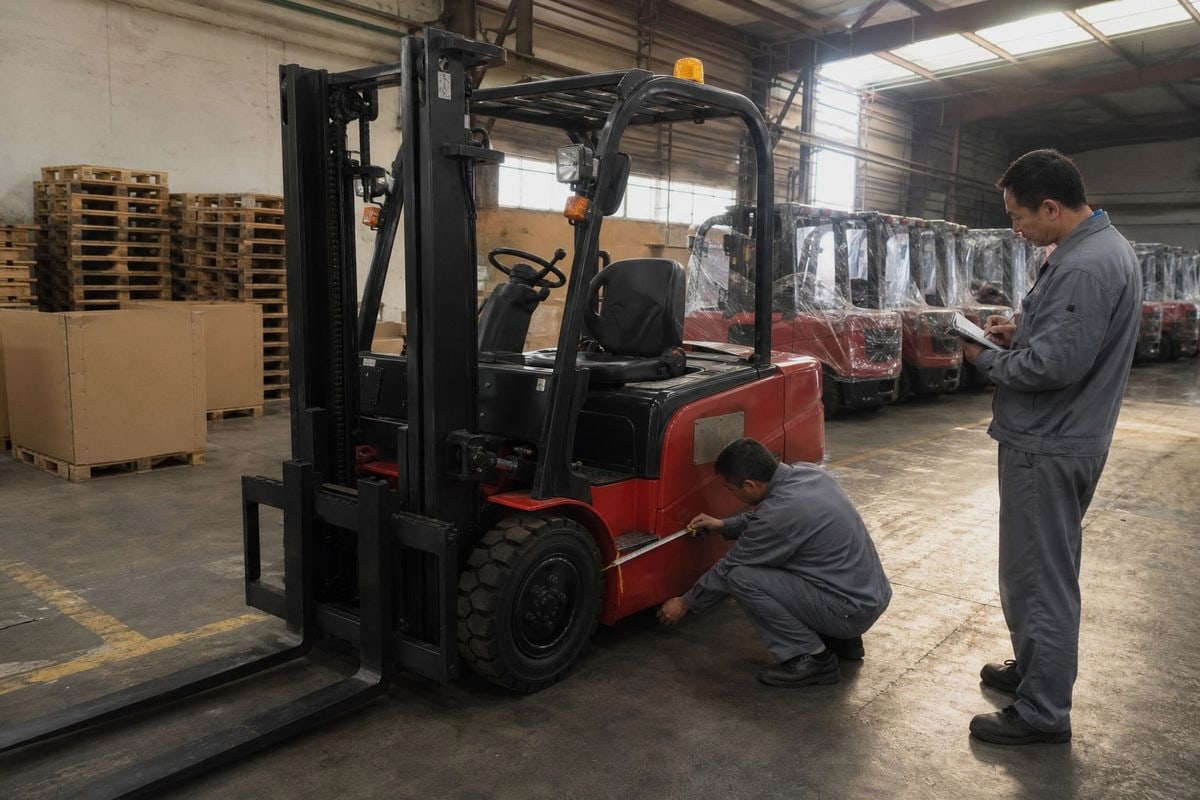
The cargo profile always comes first. Before we even look at carriers, our team collects the forklift's exact dimensions, gross weight, center of gravity, and battery chemistry from the factory. These numbers decide which shipping options exist at all. A compact 2-ton electric forklift fits a standard 20FT container. A reach truck with a tall mast may need the mast lowered or removed. An oversized unit may require flat rack container shipping 1 instead. If you skip this step, every quote you receive is a guess.
Freight forwarder expertise matters here because not every shipping line handles every cargo type well. Some carriers are excellent on Asia–Europe lanes but thin on US routes. Some accept lithium battery cargo readily; others restrict it heavily or refuse it. We keep records of which carriers accept battery-powered forklifts on China–US routes because acceptance policies change and vary by vessel.
| Criterion | Why It Matters for Electric Forklifts |
|---|---|
| Battery/DG acceptance | Lithium battery forklifts may need dangerous goods booking approval before loading |
| Route coverage | The carrier must serve both your origin and destination ports directly or reliably |
| Equipment availability | FCL, flat rack, or open top space must be confirmed, not assumed |
| Schedule frequency | More weekly sailings mean faster recovery if you miss a cutoff |
| Reliability record | Delays cost storage fees and broken customer promises |
| Documentation support | Missing battery or customs papers can stop loading entirely |
Also consider communication. A carrier or forwarder who answers within hours, not days, saves you real money when a problem appears at port. In my experience, responsiveness during booking predicts responsiveness during a crisis.
Before any lithium forklift leaves a factory we work with, we ask the supplier for battery documents first and the price list second. That order exists for a painful reason.
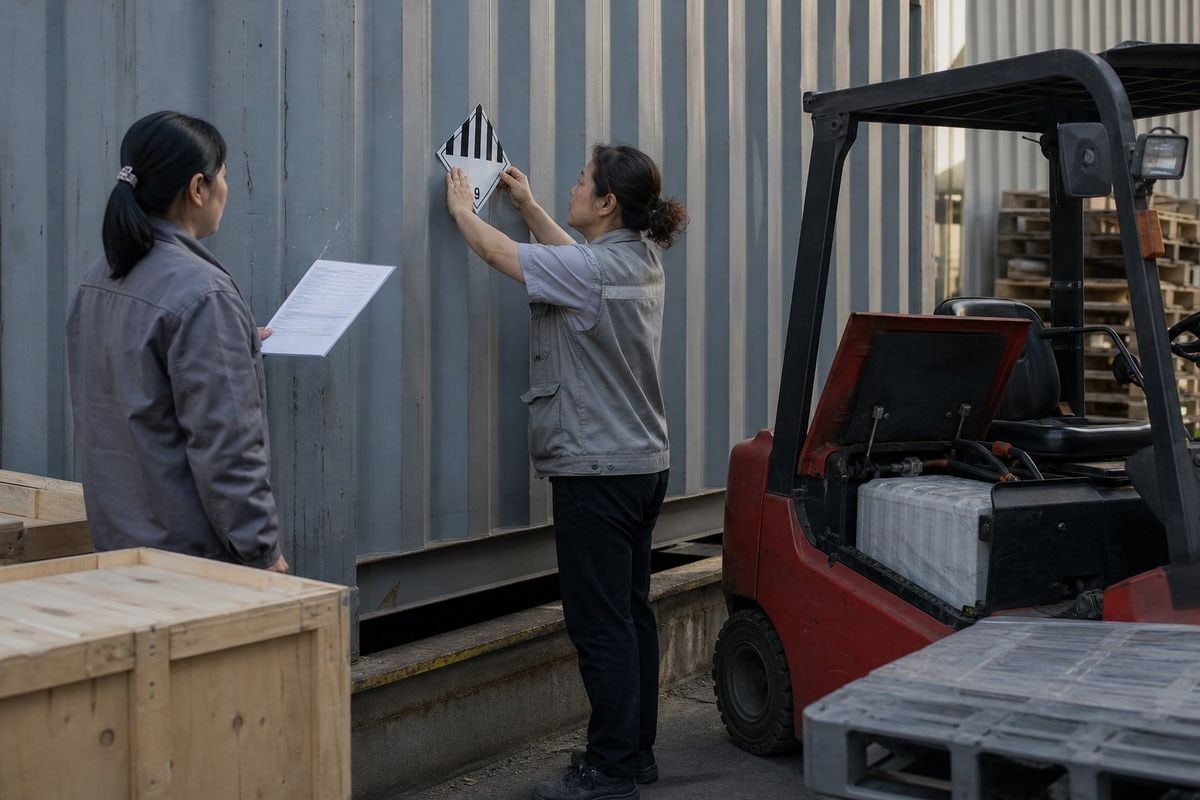
Confirm the carrier accepts Class 9 dangerous goods classified under UN3171 for battery-powered vehicles, requires a valid UN38.3 test summary and MSDS for the battery model, approves your dangerous goods declaration before loading, and complies with IMDG Code rules for ocean transport.
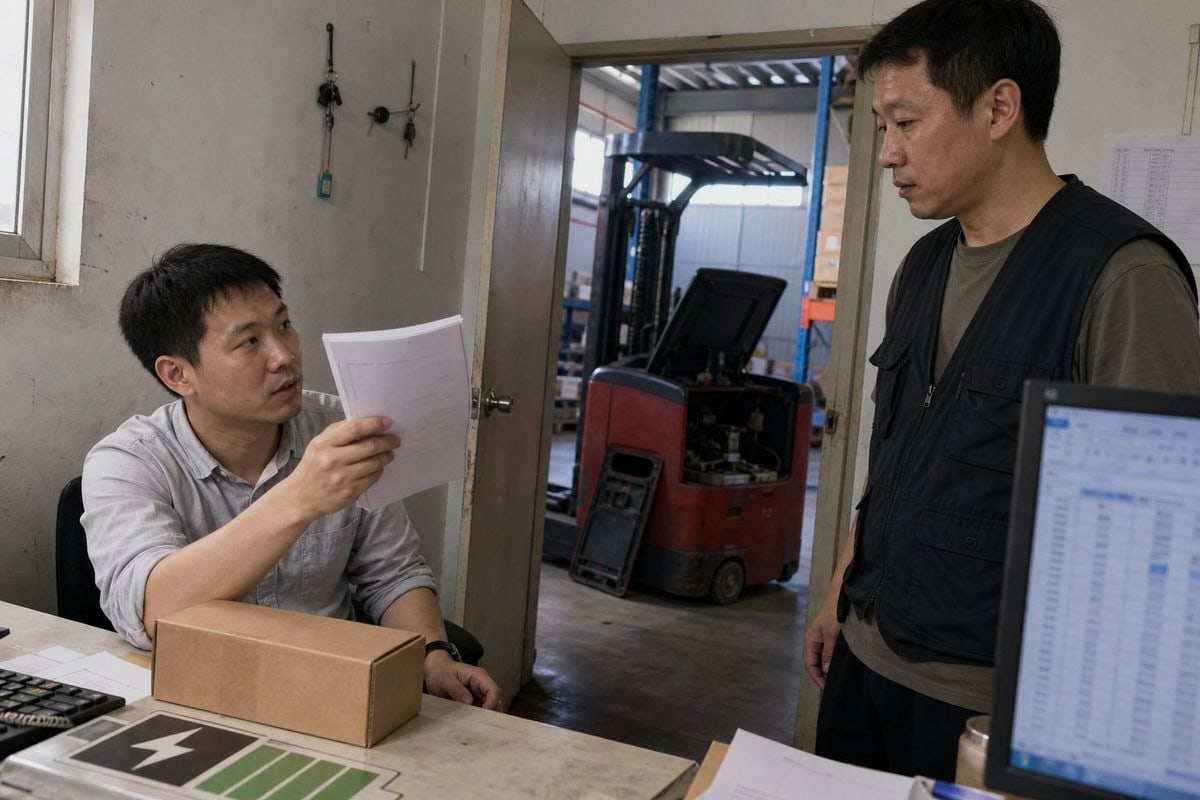
Lithium battery forklifts sit at the intersection of machinery transport and lithium-ion battery regulations. Under the IMDG Code 2, a forklift shipped with its lithium battery installed is generally classified as UN3171, battery-powered vehicle, which falls under Class 9 dangerous goods 3. That classification triggers a specific process, and the carrier must be part of it from the start.
Here is the sequence we follow for every lithium forklift shipment from China:
A carrier that handles this cargo regularly will ask for these documents up front. A carrier that seems confused by the request is telling you something important.
Serious carriers also enforce a state of charge below 30% during transit. This reduces thermal runaway risk if a battery cell fails at sea. It is worth asking about the vessel's maritime fire safety protocols too. Some newer vessels carry fire suppression systems and fire blankets designed for electric vehicle fires, which is a meaningful differentiator as more battery-powered machinery moves by ocean. IMDG Code compliance is the legal floor; a carrier that goes beyond it protects your cargo and everyone else's on the vessel.
A distributor in Texas once told me his previous forwarder quoted a great rate on a routing with two transshipments. His forklifts arrived three weeks late for a warehouse opening.
Choose direct sailings on major trade lanes when possible, since each transshipment adds delay risk. For China–US shipments, ocean FCL typically takes two to five weeks depending on the destination coast. Match the service level to your project deadline, not the lowest rate.
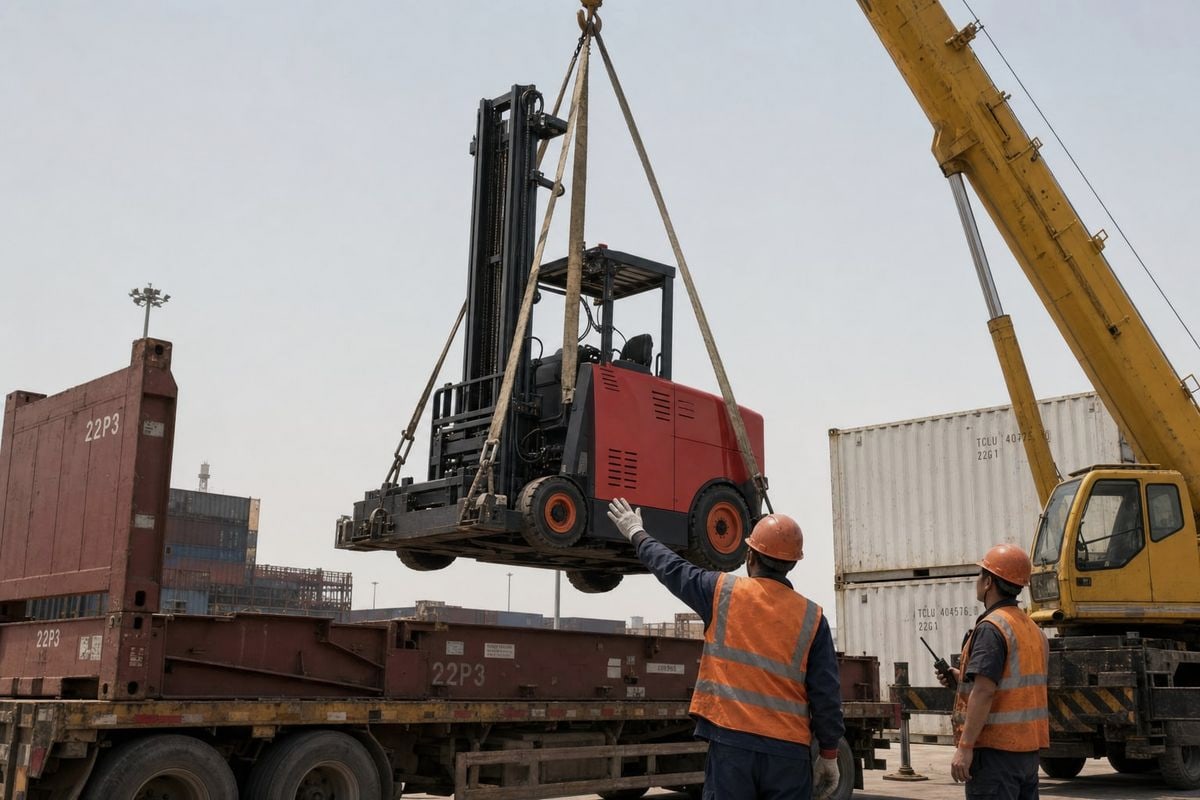
Route selection is a trade-off exercise. Faster is not always better, and cheaper is not always slower. The right answer depends on your deadline, your budget, and your cargo's specifics.
Most electric forklifts we ship move in containers. FCL gives you control over loading, blocking, and bracing, which matters for heavy machinery. Roll-on/Roll-off is an alternative for self-propelled equipment, but Ro-Ro vessel requirements differ: the unit must be drivable, exposure to salt air is higher, and lithium battery acceptance on RoRo services varies widely by operator. Air freight works for spare parts and chargers, but chargeable weight makes it impractical for whole forklifts in almost every case.
| Mode | Най-добро за | Trade-Off |
|---|---|---|
| FCL container | One or more standard forklifts | Requires proper securing inside the container |
| Flat rack / open top | Oversized or tall-mast units | Higher cost, more schedule limitations |
| RoRo | Drivable units on served routes | Salt air exposure, variable battery acceptance |
| LCL | Small units, parts, single pallet trucks | Longer handling chain, not ideal for full forklifts |
| Въздушен товарен транспорт | Urgent spare parts and accessories | Cost-prohibitive for complete machines |
Transit time on a schedule is a promise, not a guarantee. Sailing frequency matters just as much. A carrier with three weekly China–US sailings recovers quickly from a missed cutoff; a carrier with one sailing every ten days does not. Also think about port-to-port reliability: prolonged transit exposes electric components and battery systems to humidity and salt air. Some carriers now offer IoT-enabled smart containers with temperature, humidity, and shock monitoring, plus destination terminals with EV-ready handling zones for post-voyage battery checks. For high-value fleet shipments, these options are worth asking about.
The hardest part of quoting forklift shipments is not calculating our costs. It is explaining why a suspiciously low competing quote will not stay low once the container reaches the destination port.
Compare quotes on total landed cost, not base ocean freight. Demand itemized quotations covering origin charges, ocean freight, dangerous goods fees, destination handling, customs, duties, and delivery. Then verify cargo insurance covers battery-related fire damage before choosing the cheaper option.
The cheapest freight quote is often the most expensive shipment. Low headline rates frequently exclude destination handling, chassis fees, customs brokerage 4, or DG surcharges. When those charges appear later, the "cheap" carrier ends up costing more than the transparent one. That is why total landed cost has replaced base freight price as the real comparison metric for industrial equipment imports.
We give customers a simple template. Put every quote into the same grid and the hidden gaps show themselves.
| Компонент на разходите | Quote A | Quote B | Questions to Ask |
|---|---|---|---|
| Factory pickup in China | Included? | Included? | Who loads at the factory? |
| Origin port and export charges | Are DG documentation fees included? | ||
| Морски превоз на товари | Is a dangerous goods surcharge added later? | ||
| Destination port charges | Terminal handling, chassis, port fees? | ||
| Customs clearance and duties | Who files the entry? Is duty included (DDP)? | ||
| Final delivery | Liftgate or forklift needed at destination? | ||
| Ocean freight insurance | Does coverage include battery fire damage? |
Some savings are safe. Choosing a slower direct sailing over a premium express service usually is. Other savings are not. Skipping proper blocking and bracing inside the container, shipping without ocean freight insurance, or choosing a carrier with a weak claims process are all false economies. A damaged forklift can cost more in repairs and customer disputes than the entire freight bill. Also watch emerging surcharges: green shipping corridor initiatives and carbon-based fees are starting to affect heavy machinery rates on major lanes, so ask whether a quote locks in fuel and environmental surcharges or leaves them floating. Insurance deserves the same scrutiny. Confirm the policy explicitly covers fire and battery-related damage, because some standard cargo policies exclude lithium battery incidents.
Choosing a shipping line for electric forklift cargo means matching cargo profile, battery compliance, route reliability, and total landed cost. Verify DG acceptance first, compare full quotes, and insure properly.
1. Wikipedia entry explaining the technical specifications and use of flat rack containers in shipping. ↩︎
2. Official IMO page regarding the International Maritime Dangerous Goods (IMDG) Code for ocean transport safety. ↩︎
3. UN body responsible for the classification of dangerous goods and transport regulations. ↩︎
4. Official US Customs and Border Protection trade portal for import and brokerage information. ↩︎



