
- +8618603825129
- [email protected]


Figuring out how to ship electric forklifts from China to Savannah stumps many first-time importers. Our team in Zhengzhou coordinates these shipments weekly, and I have seen one missed document strand a container for weeks. That delay means storage fees, angry customers, and lost sales. The good news? A clear plan removes most of that risk.
To ship electric forklifts from China to Savannah, book FCL ocean freight via the all-water Panama Canal route (30–35 days), secure UN38.3 battery certification and a Dangerous Goods Declaration, file ISF 24 hours before departure, then clear U.S. customs under HTS 8427.10 and arrange drayage.
That is the short version. Now let me walk you through the costs, documents, container choices, and timelines in detail, so you can plan your import with confidence.
Last quarter, a Georgia dealer asked me why two quotes for the same forklift differed by $2,000. The answer sat in the hidden destination charges, not the ocean leg.
Shipping an electric forklift from China to Savannah typically costs $1,500–$4,000 for a 40HQ container in ocean freight, plus $300–$800 for port handling and local trucking. Add a 25% Section 301 duty under HTS 8427.10, standard import taxes, and destination fees for your true landed cost.

The ocean freight rate is only one piece of the puzzle. In our experience quoting shipments for U.S. forklift distributors, buyers who focus only on the container price almost always get surprised later. Ocean freight rates from China move with the season, fuel surcharges, and carrier capacity, so a rate quoted in March may not hold in August. That is why I always break the quote into layers.
Here is how I explain landed cost to buyers before they confirm an order:
| Cost Layer | Typical Range | Бележки |
|---|---|---|
| China inland pickup & loading | $200–$600 | Depends on factory distance from port |
| Ocean freight (40HQ, China–Savannah) | $1,500–$4,000 | Varies with market conditions |
| DG documentation & handling | $150–$400 | Applies to lithium battery units |
| U.S. customs entry & bond | $150–$350 | Broker fees included |
| Section 301 duty | 25% of cargo value | On Chinese-origin forklifts, HTS 8427.10 |
| Port handling & drayage | $300–$800 | Port of Savannah drayage plus terminal fees |
| Final trucking | Varies by distance | Cheaper for Southeast consignees |
The 25% Section 301 ad valorem duty is often the single largest cost after the forklift itself. On a $15,000 machine, that is $3,750 before freight. One option worth knowing: Savannah's Foreign Trade Zone #104 1 lets importers defer that tariff until the forklifts formally enter U.S. commerce. For dealers holding inventory, this can meaningfully improve cash flow. Georgia's electric mobility incentives, including state-level tax credits, can also help offset the total landed cost of an imported electric fleet.
Container utilization is the biggest lever you control. Two or three compact electric forklifts often fit in one 40HQ after partial disassembly. We also fill unused space with chargers, batteries, and spare parts from other suppliers through multi-supplier consolidation, which spreads the fixed freight cost across more cargo.
A hard lesson from our early years: a carrier once rejected a booking at the port because the factory's UN38.3 report covered a different battery model. We now verify battery paperwork before pickup, every time.
Lithium battery forklift shipping to Savannah requires a UN38.3 test report, SDS/MSDS, Dangerous Goods Declaration (Class 9), commercial invoice, packing list, bill of lading, certificate of origin, and an ISF filing submitted at least 24 hours before the vessel departs China.
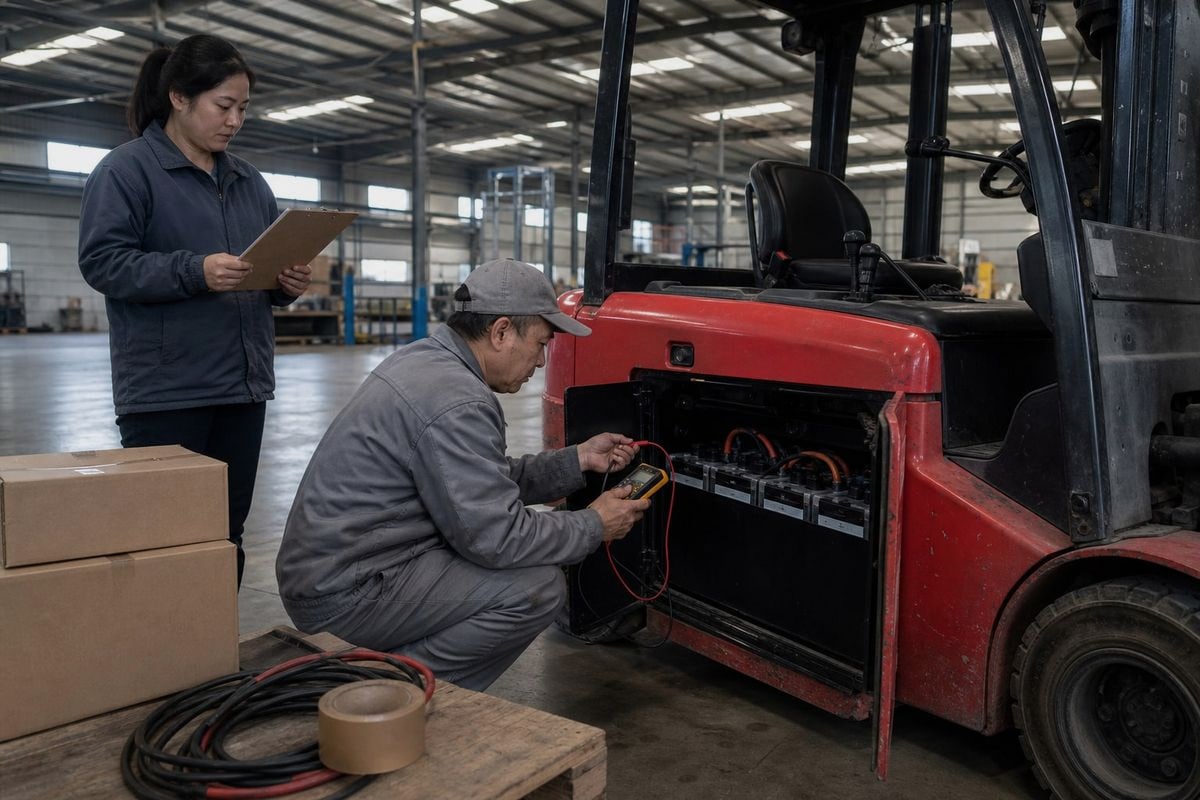
Lithium-ion battery regulations are the number one source of delay in this trade. Lithium-ion powered forklifts are classified as Class 9 Dangerous Goods 2 for ocean transport. That classification triggers a chain of requirements, and every link matters. If one document is missing or inconsistent, the carrier can refuse the booking, or U.S. Customs and Border Protection can hold the container for inspection.
| Документ | Цел | Кой го предоставя |
|---|---|---|
| UN38.3 certification | Proves battery passed transport safety tests | Battery manufacturer |
| SDS/MSDS | Chemical safety data for the battery | Battery manufacturer |
| Dangerous Goods Declaration | Required for Class 9 carrier acceptance | Shipper/forwarder |
| Търговска фактура | Declares value and HTS code (8427.10) | Доставчик |
| Списък за опаковане | Details weight, dimensions, quantities | Доставчик |
| Товарителница | Contract of carriage and title document | Carrier/forwarder |
| Сертификат за произход | Confirms Chinese origin for duty purposes | Supplier/chamber |
| ISF (10+2) filing | U.S. security filing before vessel departure | Importer/forwarder |
ISF filing requirements catch many first-time importers off guard. The Importer Security Filing 3 must reach CBP at least 24 hours before the vessel leaves the Chinese port, not before it arrives in Savannah. Late or missing filings can trigger CBP penalties of up to $5,000 per violation. We build the ISF into our booking workflow so it never becomes an afterthought.
Here is a point most guides skip: carrier acceptance of Class 9 cargo is not automatic. The carrier reviews the Dangerous Goods Declaration and UN38.3 documentation 4 before approving the booking. We submit the DG package for approval before the forklift ever leaves the factory. That sequencing prevents the worst-case scenario, which is loaded cargo sitting at the port with no vessel willing to take it. The customs clearance process on the Savannah side then typically takes 3–7 business days under normal conditions, assuming the paperwork is clean and consistent.
The trade-off I weigh on every quote is simple: FCL gives control and protection, while LCL can save money on a single small unit. Heavy machinery, though, usually tilts the scale one way.
Choose FCL for most electric forklift shipments to Savannah. A dedicated container protects heavy, high-value machinery, simplifies Class 9 handling, and often costs less per unit when shipping two or more forklifts. LCL suits only single compact units like pallet trucks or stackers.
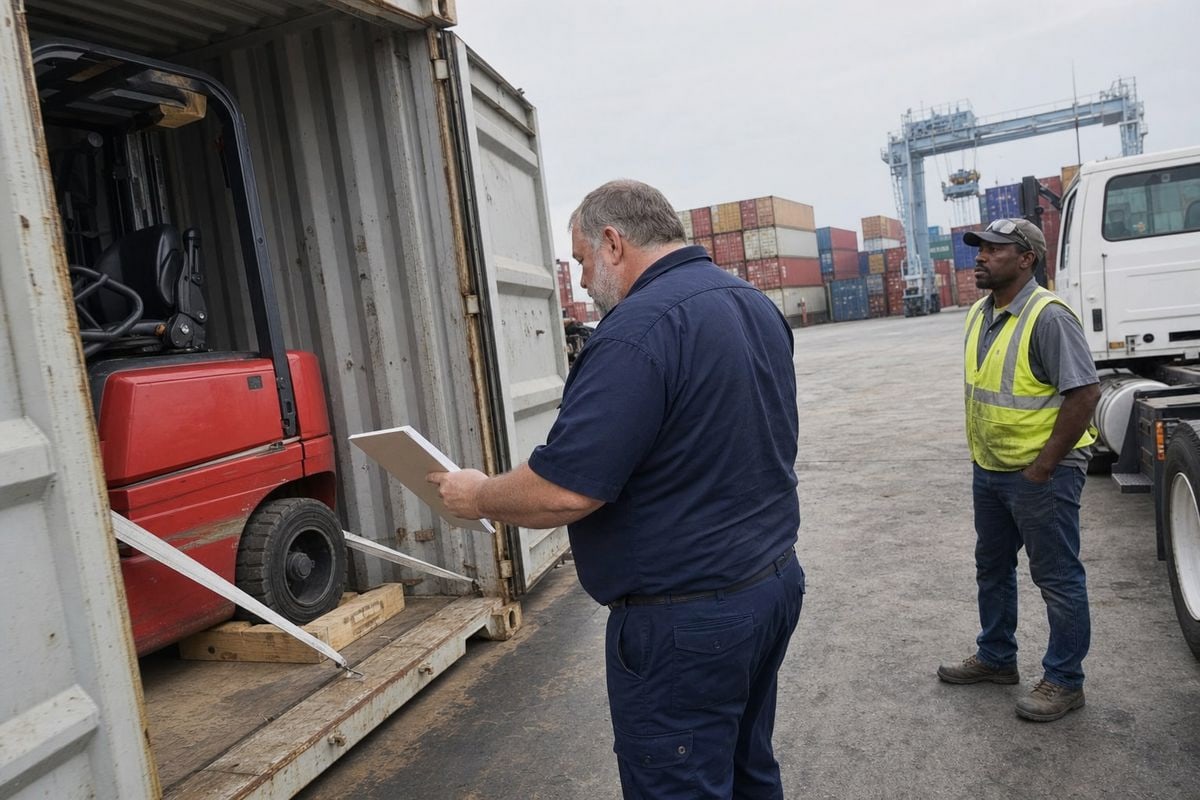
The FCL vs LCL shipping decision shapes your cost, risk, and timeline. Let me break down when each makes sense, and where the alternatives fit.
| Метод | Най-добро за | Protection | Relative Cost | DG Handling |
|---|---|---|---|---|
| FCL (40HQ) | 1–3 standard electric forklifts | Excellent | Low per unit at volume | Straightforward |
| LCL | Single compact pallet truck or stacker | Умерено | Low for small cargo | More complex |
| Flat rack | Oversized or non-disassemblable units | Умерено | Higher | Case by case |
| RoRo | Very large drivable machinery | Умерено | Varies | Limited DG acceptance |
A counterbalance electric forklift like the compact red units we regularly load weighs two to four tons. Inside a shared LCL container, that mass sits beside other people's cargo, gets handled more times, and faces higher damage risk. With FCL, we control the loading plan: partial mast disassembly or tilting, overhead guard folding where needed, then blocking, bracing, chains, and dunnage to lock the machine in place. We also confirm battery state-of-charge and photograph the securing before sealing the container. Proper material handling equipment logistics is really about these details.
Some buyers ask about Ro-Ro shipping services because they avoid disassembly. For very large machines, that is fair, and Savannah is even converting its Ocean Terminal into a dedicated RoRo facility for heavy machinery discharge, bypassing container-berth congestion. But standard warehouse forklifts fit containers fine, and containers offer better weather protection and simpler documentation. I recommend RoRo only when the unit genuinely cannot be containerized economically.
FCL also unlocks consolidation. Forklifts from Factory A, batteries from Factory B, and chargers from Factory C can move in one container after we collect them at our warehouse. That is one booking, one customs entry, and one delivery instead of three.
A distributor in Atlanta once told me he had promised a customer delivery in three weeks based on a supplier's guess. I had to walk him back to reality with a proper door-to-door timeline.
Ocean transit from China to Savannah via the all-water Panama Canal route averages 30–35 days. Add 5–10 days for factory pickup, loading, and export in China, plus 3–7 business days for customs clearance and drayage, giving a realistic door-to-door timeline of 45–55 days.
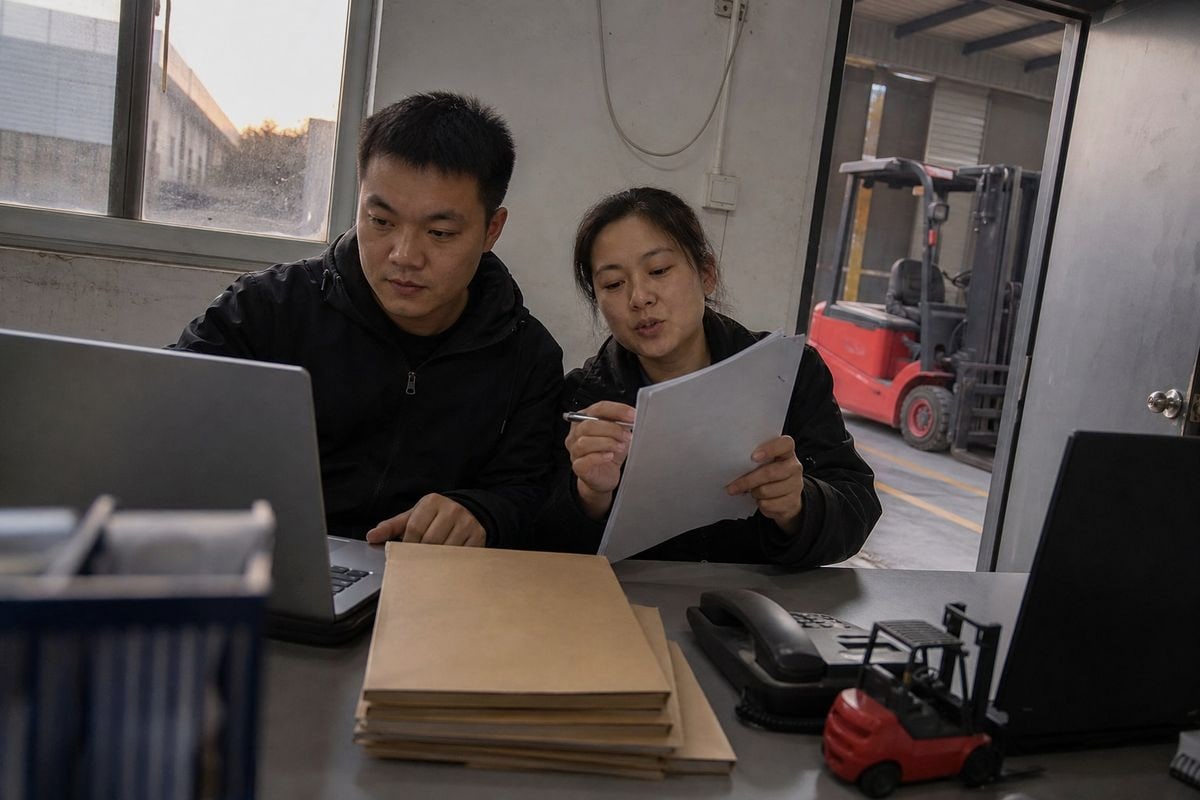
Transit time planning matters because your downstream commitments depend on it. Rental fleets, warehouse projects, and resale customers all schedule around the arrival date. So let me map the full journey stage by stage.
For consignees in Georgia, the Carolinas, Florida, or Tennessee, discharging at Savannah cuts the inland leg dramatically. Garden City Terminal provides direct intermodal access to the major logistics hubs along the I-95 corridor. A Los Angeles discharge might shave days off the ocean leg, but the cross-country trucking or rail move often erases that gain and adds cost and handling risk.
Peak-season vessel rolling, DG booking queues, incomplete battery paperwork, and CBP exams are the usual culprits. Some of our customers now ask about IoT-based telematics inside the shipment, which monitor battery temperature and state of health in real time during the high-humidity Panama Canal transit. It does not speed the vessel up, but it removes the guesswork about cargo condition on arrival. My honest advice: build a two-week buffer into any customer promise, and let clean documentation do the rest.
Shipping electric forklifts from China to Savannah rewards preparation: verify UN38.3 and DG documents early, choose FCL, file ISF on time, budget the 25% duty, and plan 45–55 days door to door. Get the paperwork right, and the rest follows smoothly.
1. Official U.S. government resource explaining the regulations and benefits of Foreign Trade Zones. ↩︎
2. International maritime authority governing the safety protocols and classification for hazardous cargo at sea. ↩︎
3. Official CBP guidance on security filing requirements for ocean cargo entering the United States. ↩︎
4. Official UN body responsible for the transport of dangerous goods standards and battery testing. ↩︎
5. Official website of the Georgia Ports Authority, which operates the main terminal in Savannah. ↩︎



