

Choosing between sea vs rail freight for forklifts from China to Europe confuses many buyers. Pick wrong, and I have watched importers lose weeks, money, and customer trust. Our team at MBMLOG in Zhengzhou solves exactly this problem daily.
Sea freight is better for forklift shipments from China to Europe when cost matters most and delivery dates are flexible. Rail freight is better when speed counts, cutting transit to 15–25 days versus 35–50 days by sea, at roughly 2–3 times the base container cost.
That short answer hides important details. Your order size, battery type, destination city, and urgency all change the math. Let me walk you through each factor, one by one.
How Do Sea and Rail Freight Compare in Cost for Shipping Forklifts to Europe?
Last quarter, our team quoted the same three-forklift shipment two ways for a Polish dealer. The rail quote was nearly double the ocean rate. He still chose rail. Here is why the numbers are not as simple as they look.
Sea freight typically costs $1,500–$4,500 per container to Europe, while rail runs $4,500–$14,000 depending on the lane and season. Sea holds a 30% to 100% door-to-door price advantage, but rail can win on total landed cost for inland European destinations.
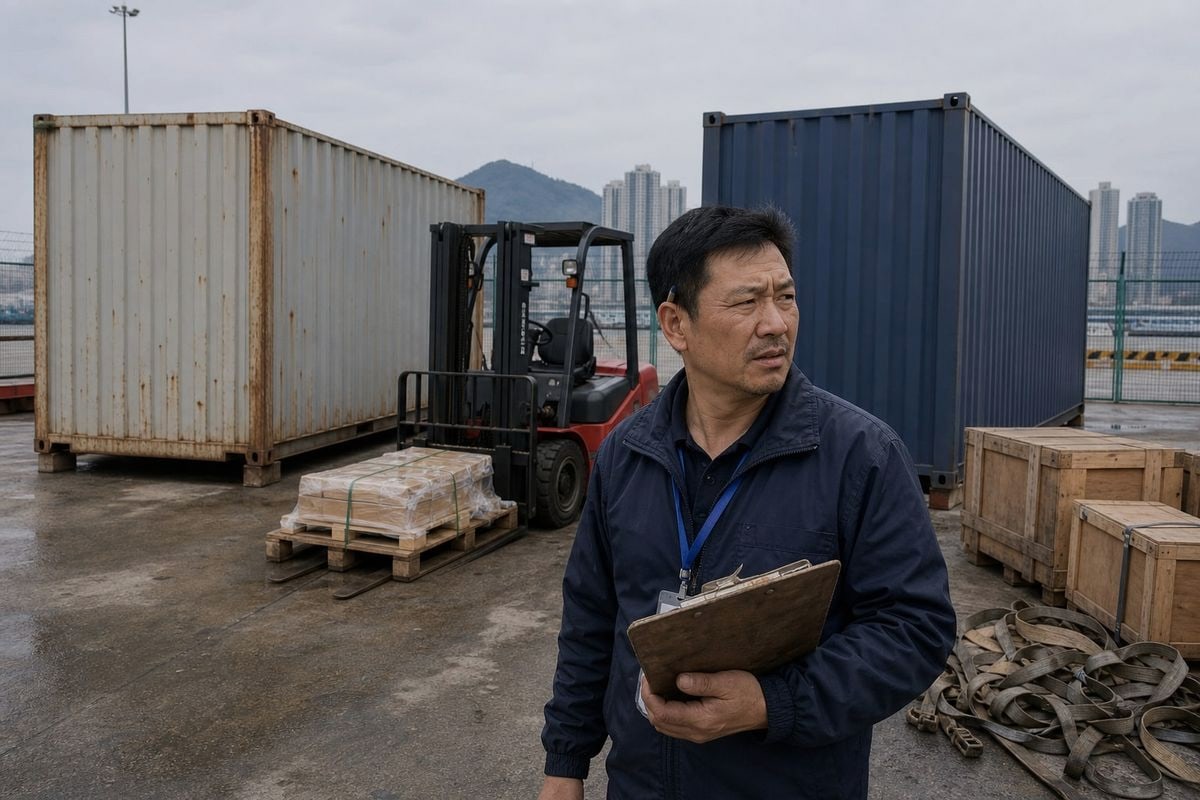
The base freight rate is only the starting point. When we build a quotation for a forklift importer, we look at the full door-to-door delivery cost, not just the port-to-port or terminal-to-terminal number. That is where the picture gets interesting.
Base Rates Side by Side
| Фактор разходи | Морски транспорт | Железопътен товарен превоз |
|---|---|---|
| Typical container rate | $1,500–$4,500 | $4,500–$14,000 |
| Relative base cost | Lowest available | Roughly 2–3x sea |
| Price stability | Volatile, congestion-driven | More stable in recent years |
| Door-to-door advantage | 30–100% cheaper on most lanes | Competitive for inland hubs |
The Inland Delivery Factor
Here is the detail many buyers miss. If your warehouse sits in Prague, Warsaw, or another inland European hub, rail can actually produce a lower total landed cost. Why? Because sea freight lands your container in Rotterdam or Hamburg, and heavy-haul trucking from a coastal port to Central Europe is expensive. Forklifts are heavy machinery transport by definition, so that final trucking leg costs more than it would for light cargo. Rail terminals in Poland, Czechia, and Germany often sit much closer to your final destination.
Freight Rate Is Not Landed Cost
We always remind customers that the cheapest freight option is not always the cheapest business decision. Duties, destination handling, trucking, and storage all stack on top. A transparent quotation covering all of these is the only fair way to compare sea vs rail. In our experience, a rail quote that looks 2x more expensive can shrink to a 20–30% premium once inland trucking is added to the ocean option.
Which Option Offers Faster Transit Time for My Forklift Shipment to Europe?
A German rental company once called us in a panic. Their client's warehouse opening was six weeks away, and ocean transit alone would eat five of them. We rebooked the shipment onto a New Silk Road rail service 1 and saved the project. Speed is where rail truly earns its premium.
Rail freight from China to Europe takes 15–25 days, while sea freight takes 35–50 days on most routes. Rail is roughly twice as fast, and its schedule stability exceeds 92% on-time performance, making it the clear winner for time-sensitive forklift shipments.
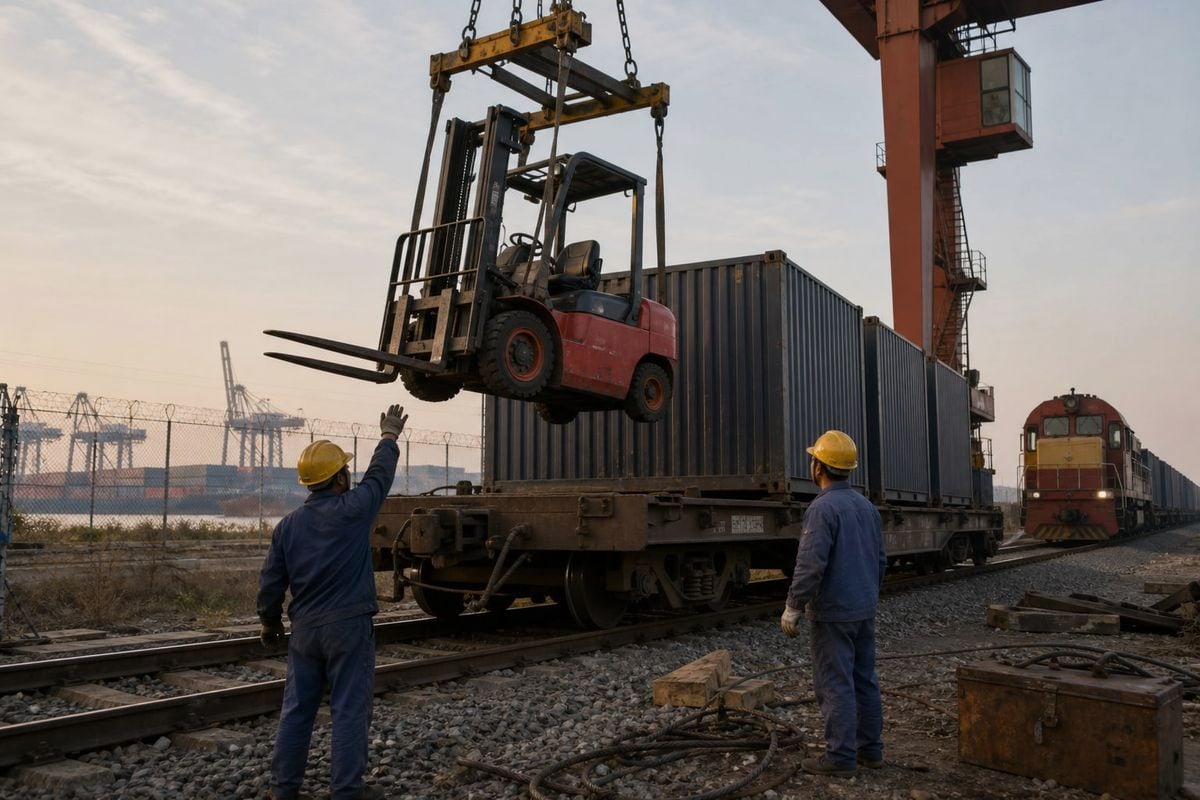
Transit times matter more for forklifts than for most cargo. A forklift is capital equipment. Until it arrives, it earns nothing. Every extra day in transit is a day of delayed revenue, delayed warehouse launches, or delayed rental income. That is the hidden cost most freight comparisons ignore.
Typical Transit Windows
| Route Stage | Морски транспорт | Железопътен товарен превоз |
|---|---|---|
| Main leg transit | 25–45+ days | 15–22 days |
| Longer routings | Up to 35–50+ days | 16–25 days |
| Schedule reliability | Exposed to port congestion and weather | Over 92% on-time on major corridors |
| Disruption risk | Red Sea diversions have stretched windows | Fixed departures, land-based routing |
Why Reliability Matters as Much as Speed
Speed is only half the story. Supply chain reliability is the other half. Ongoing Red Sea disruptions have forced many vessels around the Cape of Good Hope, adding one to two weeks of uncertainty on some sailings. Rail avoids that entirely. Fixed departure schedules on the China–Europe corridor make arrival dates far easier to plan around.
The Downtime Math
Think of it this way. If a forklift is needed to open a facility, fulfill a contract, or replace a broken machine, shaving 10–20 days off transit has real business value. We often help buyers calculate this. If one forklift generates even modest daily rental or operational value, three saved weeks can easily exceed the rail premium. For urgent-but-not-air-freight-urgent shipments, rail is the practical middle ground. Air freight for a multi-ton forklift is rarely economical, so rail fills that gap well.
Is Rail Freight Safer Than Sea Freight for Transporting Lithium Battery Forklifts?
Before any lithium battery forklift leaves a factory we work with, our team checks the battery documentation line by line. One missing Резюме от теста по UN38.3 2 can strand a container at the port. Safety for battery-powered equipment is not just about the journey. It starts with the paperwork.
Neither mode is automatically safer. Both sea and rail must follow Class 9 dangerous goods regulations for lithium battery forklifts. Sea offers steadier transit conditions, while rail exposes batteries to extreme temperature swings and border-crossing shocks, so proper preparation matters more than the mode itself.
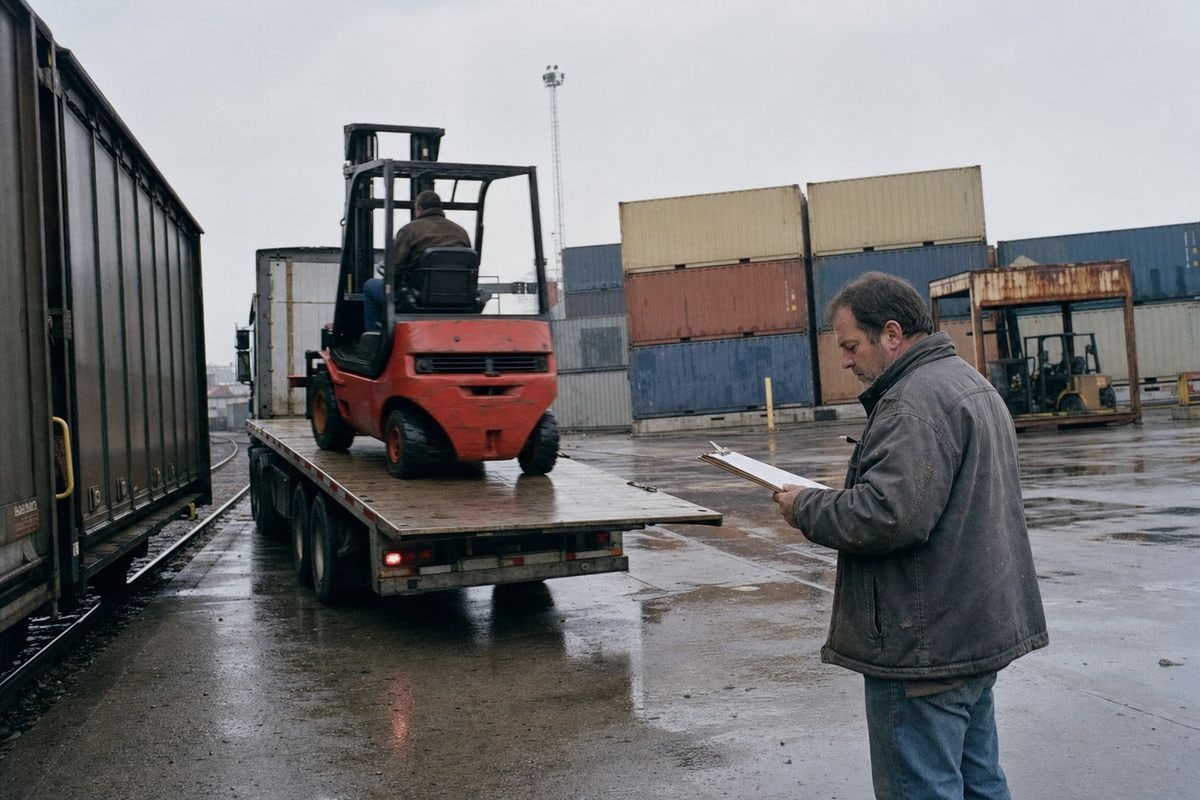
This question deserves a careful answer, because the marketing from both sides oversimplifies it. High-capacity lithium-ion battery packs classify electric forklifts as Class 9 dangerous goods. That classification applies whether your container moves on a vessel or a train. Carrier acceptance, packaging, labeling, and documentation requirements exist on both routes.
The Physical Stress Comparison
The two modes stress cargo differently. Here is what we have learned coordinating heavy equipment loading and securing for both:
- Temperature. The Eurasian land bridge crosses regions ranging from -40°C to +40°C. That thermal stress can affect lithium batteries, and some shipments require specialized insulation that ocean transit typically does not need.
- Vibration and shock. Rail routes involve gauge changes at borders like China–Kazakhstan and Belarus–Poland. Containers are lifted and transferred, subjecting heavy machinery to higher mechanical G-force shocks. Ocean transit produces steady, low-frequency vibration instead.
- Securing requirements. A multi-ton forklift that shifts inside a container is dangerous on either mode. Proper blocking, bracing, and weight distribution protect the mast, hydraulics, and battery pack. We coordinate loading directly with factories for exactly this reason.
Documentation Is the Real Safety Layer
Beyond physical handling, paperwork determines whether your shipment moves at all. Rail offers one genuine advantage here: a unified CIM/SMGS consignment note covers multiple borders with a single legal document. Sea shipments into the EU now face the more complex maritime-specific ICS2 customs filing 3 requirements. Either way, we verify battery specifications, dangerous goods declarations, and carrier acceptance before cargo reaches the terminal. Catching problems in China is cheap. Catching them at a European border is not.
Should I Choose Sea or Rail Freight Based on My Order Volume and Container Needs?
One trade-off we weigh on almost every quotation: does this buyer's volume justify a Full Container Load, and does the timeline justify rail? A dealer ordering eight forklifts thinks differently from a warehouse buying one urgent replacement. Volume and urgency together decide the answer.
Choose sea freight for full container loads of multiple forklifts with flexible timelines, since it minimizes cost per unit. Choose rail for smaller, urgent orders of one to three forklifts where faster replenishment justifies the premium. LCL consolidation works on both modes for partial loads.
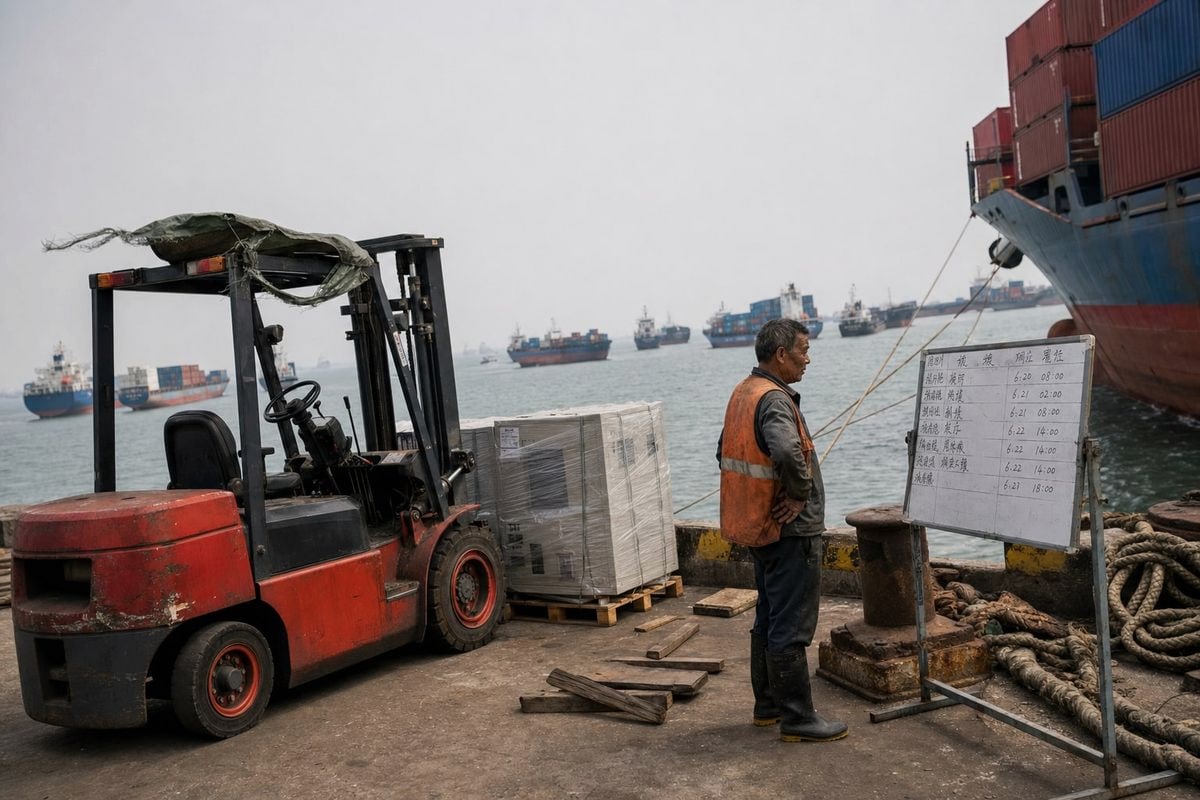
Order profile is the most practical way to make this decision. After handling everything from single-unit shipments to full dealer stock orders, we see clear patterns in what works.
Decision Guide by Shipment Profile
| Your Situation | Recommended Mode | Защо |
|---|---|---|
| Dealer stock order, 4+ forklifts, FCL | Sea | Lowest cost per unit; inventory buffer absorbs transit time |
| Warehouse launch on a deadline | Rail | 15–25 day transit protects the project schedule |
| Urgent replacement for a broken machine | Rail | Downtime cost outweighs the freight premium |
| Forklifts + batteries + chargers + spares | Sea (consolidated FCL) | Multi-supplier consolidation maximizes container utilization |
| Oversized masts or heavy-duty models | Sea | Project cargo infrastructure handles dimensions rail containers cannot |
| Inland delivery to Central Europe | Rail | Shorter final trucking leg improves landed cost |
Container Utilization Changes Everything
A 40HQ container can often carry multiple compact electric forklifts plus spare parts, chargers, and batteries in the remaining space. When we consolidate cargo from several factories into one Full Container Load, the logistics cost per forklift drops sharply. That efficiency favors sea freight, where the per-container rate is lowest. If your order fills a container and your inventory planning allows a 35–50 day window, sea is usually the right call.
When Volume Does Not Decide It
Rail becomes attractive for tighter replenishment cycles. Many European dealers now run an inventory-threshold strategy: sea freight covers baseline stock, and rail handles fast top-ups when demand spikes. This kind of intermodal logistics thinking, rather than loyalty to one mode, is where the market is heading. Rail also carries a smaller carbon footprint per ton-kilometer than sea freight, which matters to buyers with sustainability targets. One caution: oversized forklift masts or heavy-duty models may exceed standard rail container dimensions, so we always confirm equipment dimensions before booking.
Заключение
Sea wins on cost. Rail wins on speed and predictability. Match the mode to your urgency, volume, and destination, and your forklifts arrive on budget and on time.
Бележки
1. Provides context on the infrastructure project facilitating rail freight between China and Europe. ↩︎
2. The United Nations authority on the transport of dangerous goods and battery testing standards. ↩︎
3. Official European Commission page detailing the Import Control System 2 for maritime cargo security. ↩︎




