- +8618603825129
- [email protected]

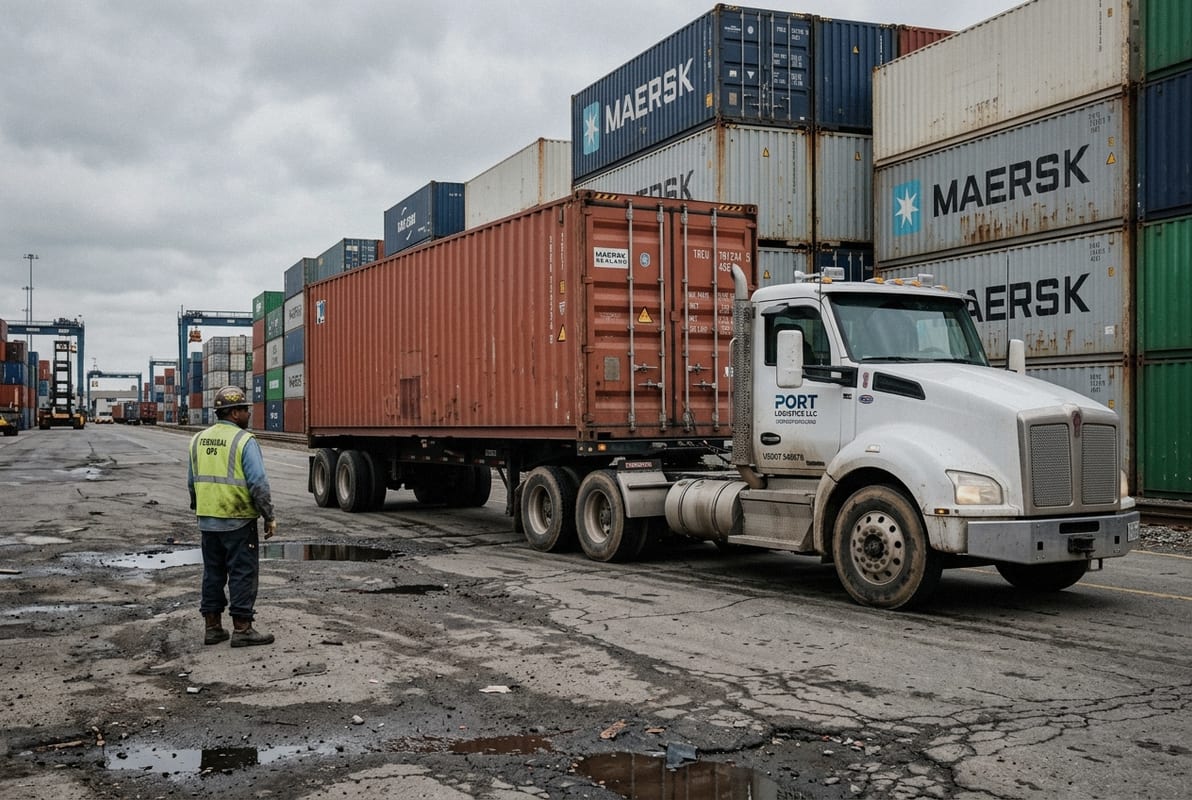
Last month, one of our clients almost lost an entire FCL shipment 1 because nobody flagged the container as overweight before it left Ningbo — the cargo sat stranded at the LA rail yard for nine days, racking up demurrage charges 2 that wiped out the savings from shipping heavier loads.
Yes, shipping overweight containers from China to Salt Lake City requires special requirements including carrier-approved heavy load declarations, tri-axle or special chassis for drayage, railroad weight clearance for the IPI inland point, accurate Verified Gross Mass (VGM) certification, and state-issued overweight permits from Utah DOT for final-mile delivery.
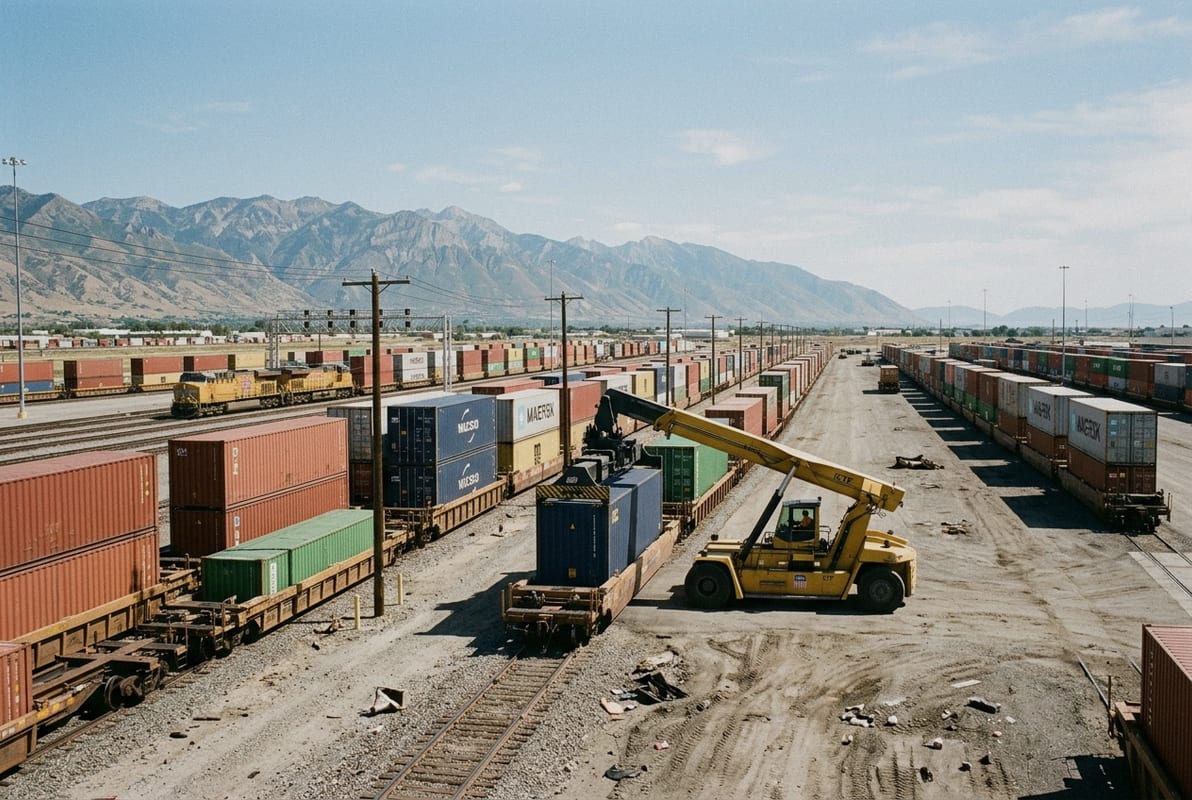
Salt Lake City is a Union Pacific ICTF inland IPI point Rail flatcars 3. Cargo typically moves from a Chinese origin port to LA/Long Beach, then by rail to Salt Lake City. Every link in that chain has its own weight ceiling, and the strictest limit governs ISF (Importer Security Filing) 4. Let me walk you through exactly what you need to know.
A question we hear almost weekly from importers is deceptively simple: "Is my container overweight?" The answer depends on which segment of the journey you are asking about, because ocean carriers, railroads, and US road weight limits each enforce different thresholds.
Your container is considered overweight when its cargo weight exceeds the carrier's standard IPI limit for Salt Lake City — typically 17,236 kg for a 20GP or 19,958 kg for a 40GP/40HQ — triggering mandatory heavy load declarations, higher surcharges, and special equipment requirements for every leg of intermodal transport.
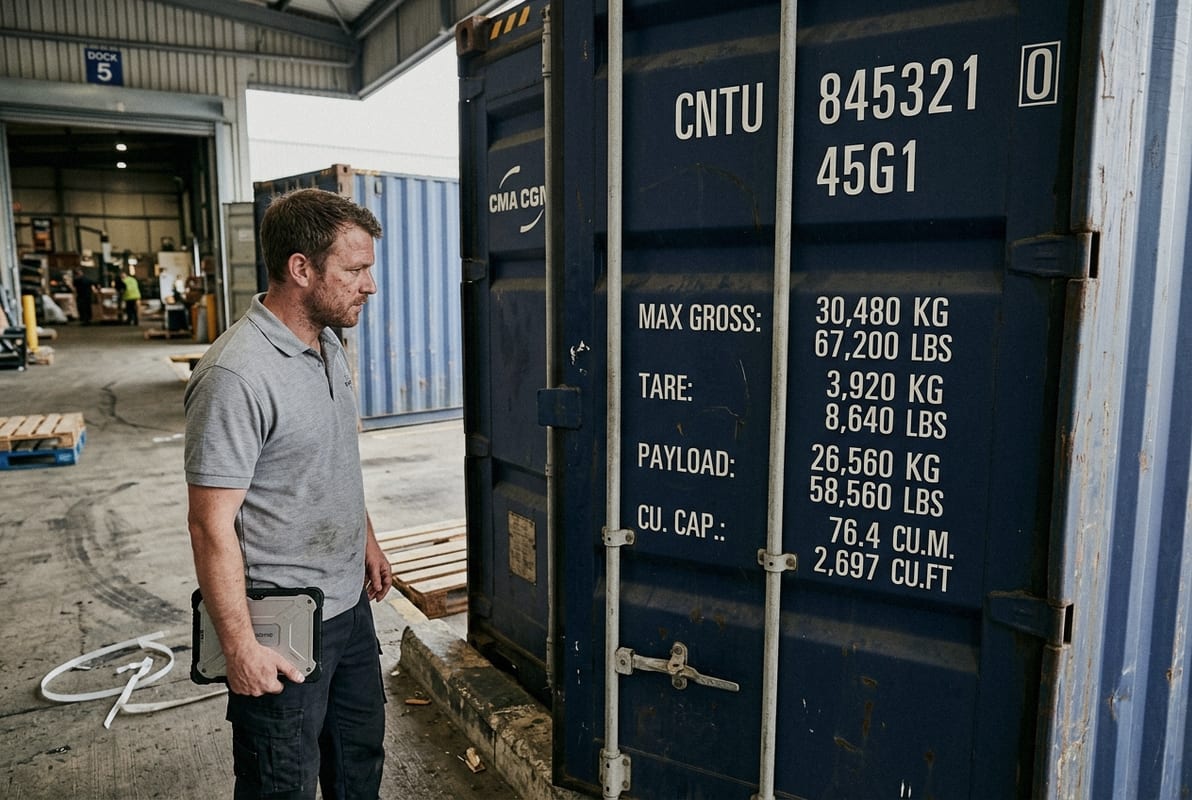
There is no single "overweight" number. You must compare four limits and take the lowest one. Miss any of them and you risk cargo rejection, penalties, or worse.
| Weight Limit | 20GP | 40GP / 40HQ | Who Enforces It |
|---|---|---|---|
| Container Placard MAX GROSS | 30,480 kg (cargo + tare) | 30,480 kg (cargo + tare) | Terminal / carrier — absolute ceiling |
| Carrier Standard IPI (cargo only) | 17,236 kg | 19,958 kg | Ocean carrier at booking |
| Carrier Max Heavy IPI (cargo only) | 20,865 kg (≈46,000 lbs) | 22,226 kg (≈49,000 lbs) | Ocean carrier — above this, IPI rail service refused |
| US Federal Road GVW | 80,000 lbs total (truck + chassis + container + cargo) | 80,000 lbs total | FMCSA / state DOT |
Salt Lake City sits on the Union Pacific network 5. Rail flatcars have a maximum total load of 30,481 kg including the container's tare weight. If your cargo plus the empty container weight exceeds that number, the railroad will refuse the box at the LA intermodal yard. At that point your only option is to transload the cargo — splitting it into two containers or domestic trailers — right there in Los Angeles, at significant extra cost.
If your cargo weight falls between the standard limit and the heavy-load upper limit, the container is classified as a "heavy cabinet." You must declare it as a Heavy Load at the time of booking. Your freight forwarder needs to confirm with the carrier that Salt Lake City can accept the overweight unit on its IPI service. If you skip this step, the carrier may roll your container — it simply does not get loaded.
I once coordinated a shipment of stone countertops. The cargo weighed 21,500 kg in a 40HQ. That exceeded the 19,958 kg standard and was under the 22,226 kg heavy IPI ceiling. We declared heavy load, the carrier confirmed space, and we paid the overweight surcharge. Without that declaration, the container would have been left behind at the origin port.
One trade-off we weigh on nearly every heavy shipment is whether the per-unit ocean savings justify the cascade of surcharges that follow. The short answer: yes, overweight containers change your DDP math significantly.
Shipping an overweight container increases your total DDP cost through origin terminal handling fees, ocean carrier overweight surcharges, IPI rail heavy-load premiums, tri-axle chassis rental, and Utah overweight permits — though customs duties and taxes themselves are unaffected because they are calculated on declared value, not weight.
Your DDP quote assumes standard weight. The moment a container crosses into heavy territory, surcharges stack up at every handoff point. Here is the breakdown.
| Категория на разходите | Where It Occurs | Typical Extra Charge |
|---|---|---|
| Terminal Overweight Handling | Origin port (China) | ¥500–¥1,500 per container |
| OWS (Overweight Surcharge) | Ocean carrier | $150–$400 per container |
| IPI Rail Overweight Surcharge | LA to Salt Lake City rail segment | $200–$600 per container |
| Tri-Axle Chassis Rental | Drayage at LA or Salt Lake City | $75–$200 per day |
| Heavy-Lift / Move Fee | Rail yard or port CY | $100–$300 per lift |
| Utah Single-Trip Overweight Permit | Final-mile truck delivery | $50–$150 per trip |
Customs clearance calculations for import duties, Section 301 tariffs, and merchandise processing fees are all based on declared transaction value (or sometimes unit count), not gross weight. So a heavier container does not raise your duty bill. However, if weight discrepancies trigger a customs exam, the inspection hold itself can generate storage fees and delay your delivery window.
When overweight issues are discovered at the US port rather than at origin, your container may sit while logistics teams scramble for special chassis or permits. Every day past the free-time window, you pay demurrage charges to the terminal and detention fees to the carrier. I have seen cases where a single week of delay added $1,500 to a shipment that was only worth $12,000 in cargo.
Sometimes, yes. Industry data shows that 741 overweight containers can carry the same volume as 1,000 standard-weight containers, translating to roughly 17.9% in ocean freight savings. But that calculation only works if you plan ahead, declare accurately, and budget for every surcharge. For our clients shipping DDP to Salt Lake City, we build all these extras into the quote upfront so there are no surprises at delivery.
An overweight container that gets flagged at the rail yard can delay your goods by 5–10 business days. If you sell on Amazon FBA and your inventory forecast depends on a tight delivery window, those days can cost more in lost sales than the surcharges themselves. Factor that into your total landed cost.
A lesson we learned early in our Salt Lake City service is that the drayage leg is where most overweight shipments break down — not on the ocean, not on the rail, but on the last 20 miles from the UP ramp to the warehouse door.
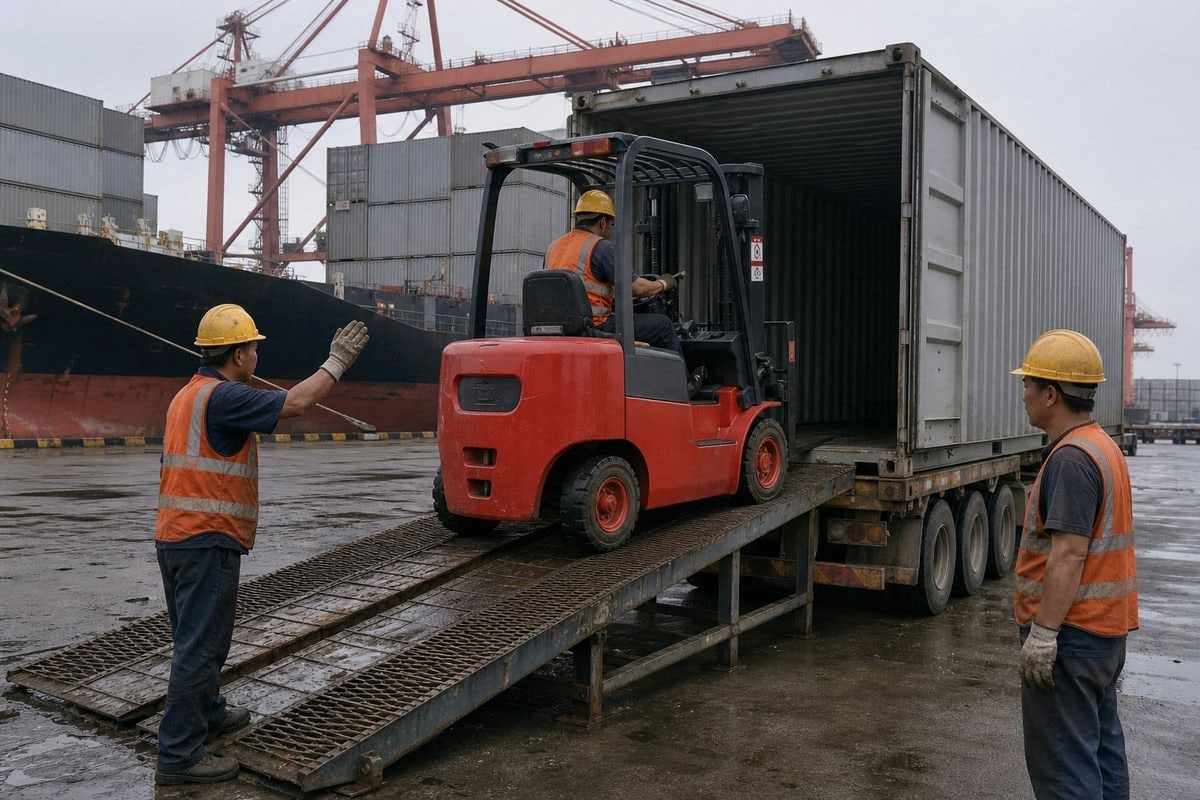
Yes, you almost certainly need a tri-axle chassis and a Utah overweight permit for final delivery. Standard two-axle chassis cannot legally carry overweight containers on US roads, and Utah DOT requires a single-trip overweight permit for any non-divisible sealed container that pushes the truck's gross vehicle weight above 80,000 lbs.
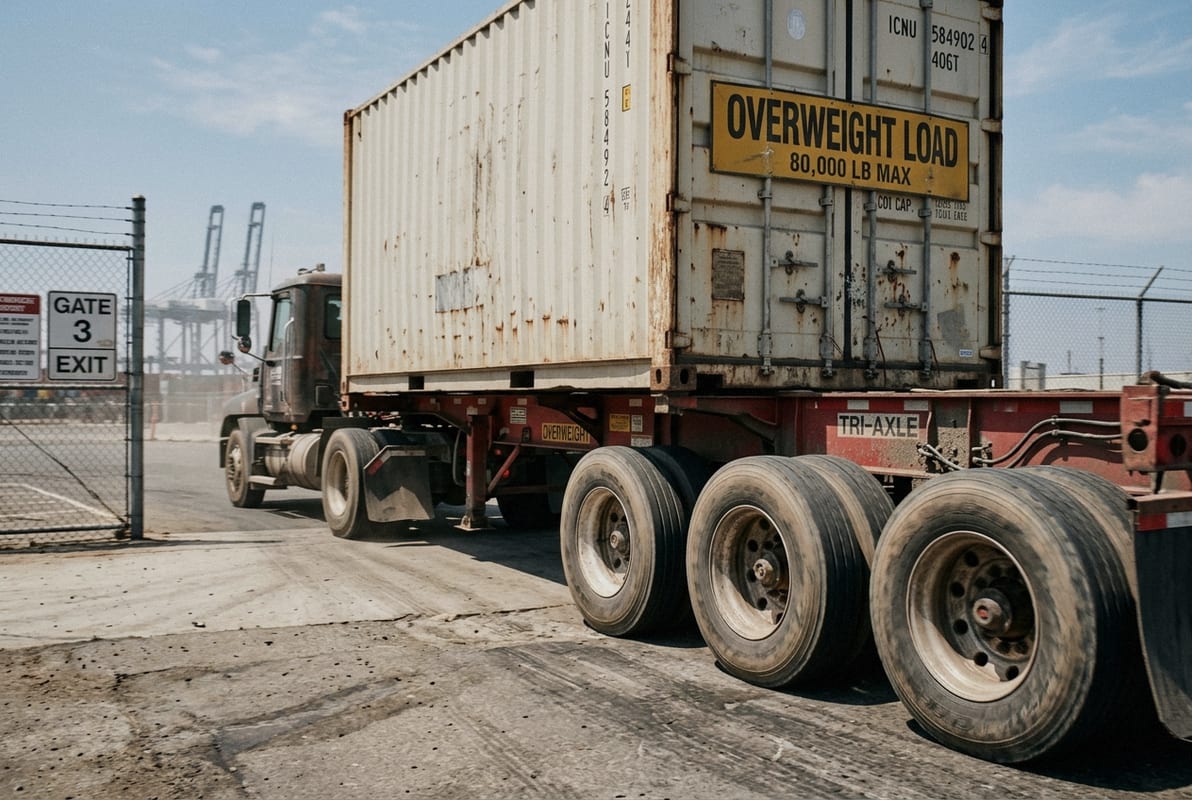
US road weight limits follow the Federal Bridge Formula 7. This formula ties the maximum allowable weight to the number of axles and the distance between them. A standard two-axle chassis combined with a tractor gives you roughly five axle groups. For gross vehicle weights approaching 90,000 lbs or more, you need the extra axle that a tri-axle chassis provides to spread the load and meet per-axle limits.
| Chassis Type | Axle Count | Typical Max GVW Supported | Availability in SLC |
|---|---|---|---|
| Standard Chassis | 2 axles | Up to ~80,000 lbs GVW | Readily available |
| Tri-Axle Chassis | 3 axles | Up to ~95,000 lbs GVW | Must be pre-reserved |
| Six-Axle Rig (Tractor + Tri-Axle) | 6 total axles | Up to ~97,000 lbs GVW | Specialty request only |
Utah allows overweight loads with a state-issued single-trip overweight permit 8. The permit specifies the route, the axle configuration, and the maximum allowed weight. You cannot simply drive anywhere — the route must avoid restricted bridges and roads that cannot handle the load.
Key permit facts:
If your container is drayed from the port of Long Beach to a rail ramp in Los Angeles before going on the train, it may also need to travel through California's Overweight Corridor. California requires special permits, vehicle placarding, and driver training for overweight sealed international containers. Your freight forwarder or drayage services provider must handle this before the container leaves the port.
Tri-axle chassis are not sitting idle at every rail yard. In Salt Lake City, supply is limited. If you wait until the container arrives to request one, you may face a multi-day wait. We always confirm chassis availability at the time of booking, not after the ship sails.
A buyer interaction last quarter brought this into sharp focus: a client's shipment of ceramic tiles was held at the LA terminal for 11 days because the ISF filing showed 19,000 kg while the bill of lading listed 21,400 kg. That mismatch triggered a customs exam and a DOT flag simultaneously.
To avoid customs delays and DOT penalties, ensure your ISF, manifest, and bill of lading all show the same accurate gross weight; submit a valid Verified Gross Mass (VGM) certificate at origin; declare heavy load status at booking; and confirm that your inland drayage company has pre-arranged the correct chassis and overweight permits before the container reaches US soil.
The single biggest cause of customs delays on heavy shipments is weight discrepancy across documents. US Customs compares three filings:
If the gross weight on these three documents does not match, Customs can flag the shipment for exam. An exam means your container gets pulled off the normal flow, inspected, and sometimes weighed at the terminal. That process can take 5–15 business days and costs $500–$3,000 in exam fees alone.
Under SOLAS regulations, every loaded container must have a Verified Gross Mass certificate 9 before it can be loaded onto a vessel. The VGM must reflect the actual total weight — cargo plus container tare. Terminals in China will not release a container to the vessel without a valid VGM. And on the US side, rail yards and drayage operators verify VGM data before allowing pickup. No valid VGM means no pickup — your container stays parked, and demurrage charges start accruing.
Proper load distribution is not just a safety issue. It is a compliance requirement. Railroads and port terminals can refuse to handle a container that is improperly loaded.
Here are the hard rules:
Once your container clears customs and lands on a truck, DOT enforcement takes over. Here is what can go wrong and how to prevent it.
| Риск | Consequence | Превенция |
|---|---|---|
| No overweight permit | Fine up to $1,000+, possible load impoundment | Pre-arrange Utah DOT permit |
| Wrong chassis (2-axle instead of 3-axle) | Axle overload citation at weigh station | Specify tri-axle on dispatch order |
| Weight mismatch on dispatch | Driver cited, trucker can lien your cargo | Ensure dispatch weight matches VGM |
| Driving on a restricted route | Permit violation, bridge damage liability | Use only the route specified on the permit |
Federal law requires that any container with gross cargo weight exceeding 29,000 lbs moving by truck on US highways must be certified. That certification document must be passed to the trucking carrier before they accept the load. If a driver gets fined at a weigh station because the certification was wrong or missing, the trucker has a legal right to lien your cargo to recover the fine amount. This is not a theoretical risk — it happens regularly.
Before your heavy container ships from China, confirm the following:
Skip any one of these steps and you risk delays, fines, or cargo damage. In our experience coordinating DDP shipments to Salt Lake City, the clients who provide accurate weights upfront and trust the process have zero issues. The ones who guess or underreport are the ones calling us in a panic from their warehouse wondering where their inventory is.
Shipping overweight containers from China to Salt Lake City demands precise weight declarations, carrier-approved heavy load bookings, valid VGM certificates, tri-axle chassis, Utah overweight permits, and consistent documentation across every touchpoint — plan early with your logistics partner to avoid costly surprises.
1. Defines Full Container Load (FCL) in shipping. ↩︎
2. Explains demurrage fees in shipping and their purpose. ↩︎
3. Describes specifications and uses of rail flatcars. ↩︎
4. Provides the official US Customs regulation for Importer Security Filing. ↩︎
5. Provides information about the Union Pacific Railroad. ↩︎
6. Defines tare weight for shipping containers. ↩︎
7. Details the federal regulation for vehicle weight limits. ↩︎
8. Outlines Utah's requirements for overweight permits. ↩︎
9. Explains the SOLAS requirement for Verified Gross Mass. ↩︎
10. Describes the use of ratchet straps for cargo securing. ↩︎