
- +8618603825129
- [email protected]


Choosing the best sailing schedule for a forklift shipment sounds simple until a missed cutoff strands your cargo at a Chinese port for another week. I have watched it happen from our Zhengzhou office more times than I can count. One rolled container means demurrage fees, an angry end customer, and a delivery date that slips from your control. The good news is that a bad schedule choice is almost always avoidable if you know what to check before you book.
The best sailing schedule for a forklift shipment is the one that matches your cargo readiness date, leaves at least two days between supplier readiness and the port cutoff, uses a direct route where possible, and includes buffer time for customs, trucking, and port congestion.
That answer covers the core rule. But each part of it deserves a closer look. Below, I break down transit time comparison, timing factors, peak season strategy, and routing choices one by one.
Last quarter, our team quoted the same Ningbo-to-Los Angeles lane across four carriers for a forklift dealer. The published transit times ranged from 14 to 31 days. Same route, wildly different clocks.
Compare carriers by total door-to-door time, not published port-to-port days. Add origin dwell, transshipment stops, destination dwell, and customs clearance to the sailing time. Then weigh vessel departure frequency and each carrier's on-time reliability record before choosing the fastest option on paper.

Published transit times are marketing numbers. Real ocean freight transit time is a chain of stages, and the vessel is only one link in it. When we help a customer compare carriers, we build the full timeline first.
A proper transit-time calculation adds four things to the sailing itself: origin dwell at the terminal, any transshipment layover 1, destination dwell, and customs clearance. Industry door-to-door guides put realistic sea freight ranges at 19–47 days for FCL and 22–50 days for LCL. Those wide ranges exist because the non-sailing stages vary so much between ports and carriers.
Here is how I frame the comparison for our forklift customers:
| Comparison Factor | Why It Matters for Forklifts | What to Ask the Carrier or Forwarder |
|---|---|---|
| Port-to-port days | Baseline speed | Is this a direct service or transshipment? |
| Departure frequency | Recovery time if your container is rolled | Weekly, twice weekly, or biweekly sailings? |
| On-time performance | Budget-tier lines delay far more often | What is the historical reliability on this lane? |
| Transshipment count | Each hub adds handling and delay risk | Where does the box change vessels? |
| Vessel age and speed | CII slow-steaming rules add days | Is this an older, slower vessel? |
That last row surprises many buyers. Carbon Intensity Indicator regulations push older, less efficient vessels into slow steaming 2, which can add several days to actual transit even when the published schedule looks competitive. We flag this whenever a suspiciously cheap quote sits on an aging vessel string.
One more objection I hear often: "The fastest schedule is obviously the best one." Not always. A carrier with weekly vessel departure frequency and 90% reliability will usually beat a slightly faster carrier that sails every two weeks. If your forklift misses the fast sailing, you wait fourteen days for the next one. Frequency is insurance.
A buyer in Texas once asked us to book the earliest vessel for two lithium battery forklifts. We had to pull the booking back three days — the battery documentation was not carrier-approved yet.
Time an electric forklift shipment around five factors: confirmed factory readiness, lithium battery documentation approval, terminal cargo and documentation cutoffs, inland trucking time to the port, and a closing day that falls at least two days after supplier readiness to allow loading and customs approval.
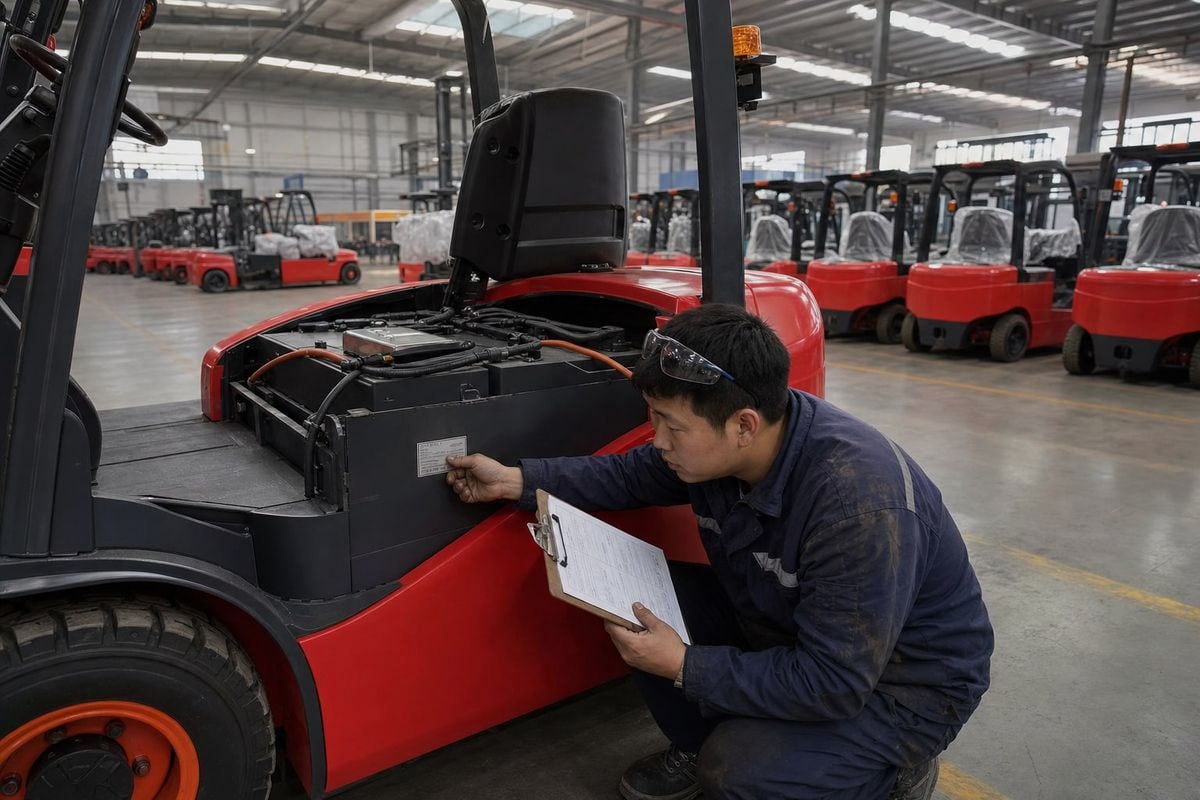
Electric forklifts are not generic cargo. Their weight, dimensions, and above all their battery type change the booking timeline. In our experience coordinating lithium battery cargo handling from Chinese factories, the paperwork often takes longer than the trucking.
The single most useful timing rule we apply: choose a sailing whose closing day is at least two days after the supplier's confirmed readiness date. That gap covers container loading requirements, weighing, export declaration 3, and customs approval. A schedule with zero slack between factory readiness and cutoff looks efficient on a spreadsheet and fails constantly in practice.
Lithium battery forklifts need carrier acceptance before booking. That means battery specifications, test summaries, and dangerous goods declarations must be reviewed early. If the carrier rejects the documentation after you have picked a sailing, you lose that vessel entirely. We collect battery specs from the factory during the quotation stage, not after pickup, precisely so the sailing choice stays flexible. Lead-acid units are simpler, but weight distribution during container loading still needs planning.
Also remember shipping cost estimation shifts with timing. Booking three to four weeks ahead usually secures better rates and space than booking one week out, especially on China–US lanes.
Every August, our booking desk sees the same pattern: space on China–US lanes tightens, rates jump, and marginal cutoffs turn into rolled containers. Peak season punishes late planners hardest.
Avoid peak season delays by booking three to four weeks early, choosing high-frequency weekly services for fast recovery if rolled, avoiding sailings where your readiness date sits tight against the cutoff, and monitoring port congestion updates at both origin and destination before committing.
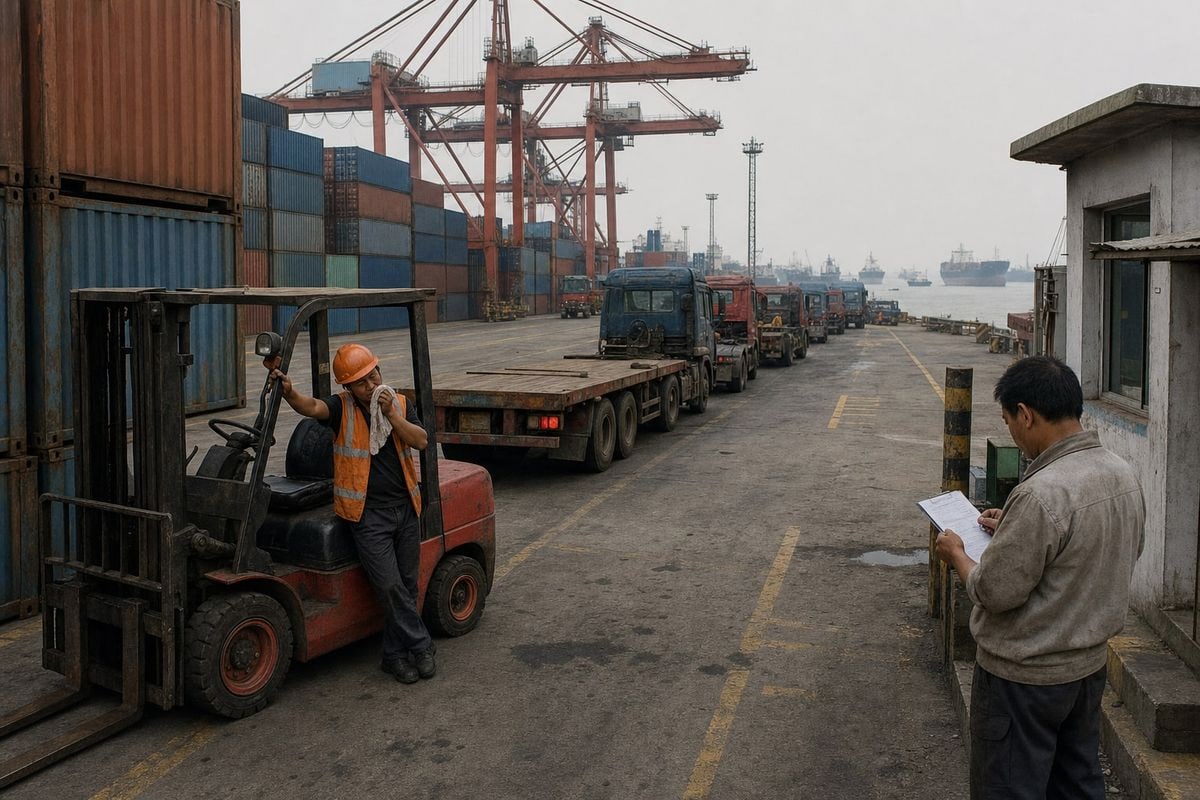
Peak season stress-tests every weak point in a schedule. The strategies below come directly from what we adjust in our own operations between July and October, and again before Chinese New Year.
During peak months, carriers overbook and roll cargo more aggressively. Early booking protects your space allocation. Just as important, avoid schedules where your forklift's readiness date lands right at the cutoff. In peak season, terminals sometimes advance cutoffs with little notice, and a one-day slip becomes a one-week delay.
Port congestion updates matter on both sides of the ocean. A busy origin port delays gate-in and loading. A congested port of discharge can hold a vessel at anchor for days, erasing any advantage from an earlier departure. Before we confirm a peak-season booking, we check current conditions at both terminals, not just the schedule screen. Real-time congestion monitoring at the destination helps you avoid vessels likely to sit offshore.
| Normal Season Practice | Peak Season Adjustment |
|---|---|
| Book 1–2 weeks ahead | Book 3–4 weeks ahead |
| Any reliable service works | Prefer weekly or twice-weekly frequency |
| Cutoff one day after readiness acceptable | Demand two or more days of slack |
| Check congestion at booking | Monitor congestion until gate-in |
| Standard rate expectations | Budget for peak surcharges in landed cost |
One counterintuitive point: during severe congestion, RoRo shipping services 4 can beat containers on timing. RoRo vessels often hold berthing priority and bypass the anchorage queues that trap standard container ships. For a large fleet order of forklifts during a congested peak, we sometimes compare RoRo timing against container timing rather than assuming containers win. For most single-unit or small-batch electric forklift shipments, though, containerized freight with a proper buffer remains the practical choice.
The trade-off we weigh most often at booking time is this one: a direct sailing that costs more, or a cheaper transshipment routing that adds a hub, a layover, and risk.
Choose a direct sailing for urgent, high-value, or oversized forklift cargo because it cuts transit time, eliminates missed-connection risk, and reduces handling damage. Choose transshipment only when the cost saving is significant and your delivery deadline can absorb one to two extra weeks of risk.
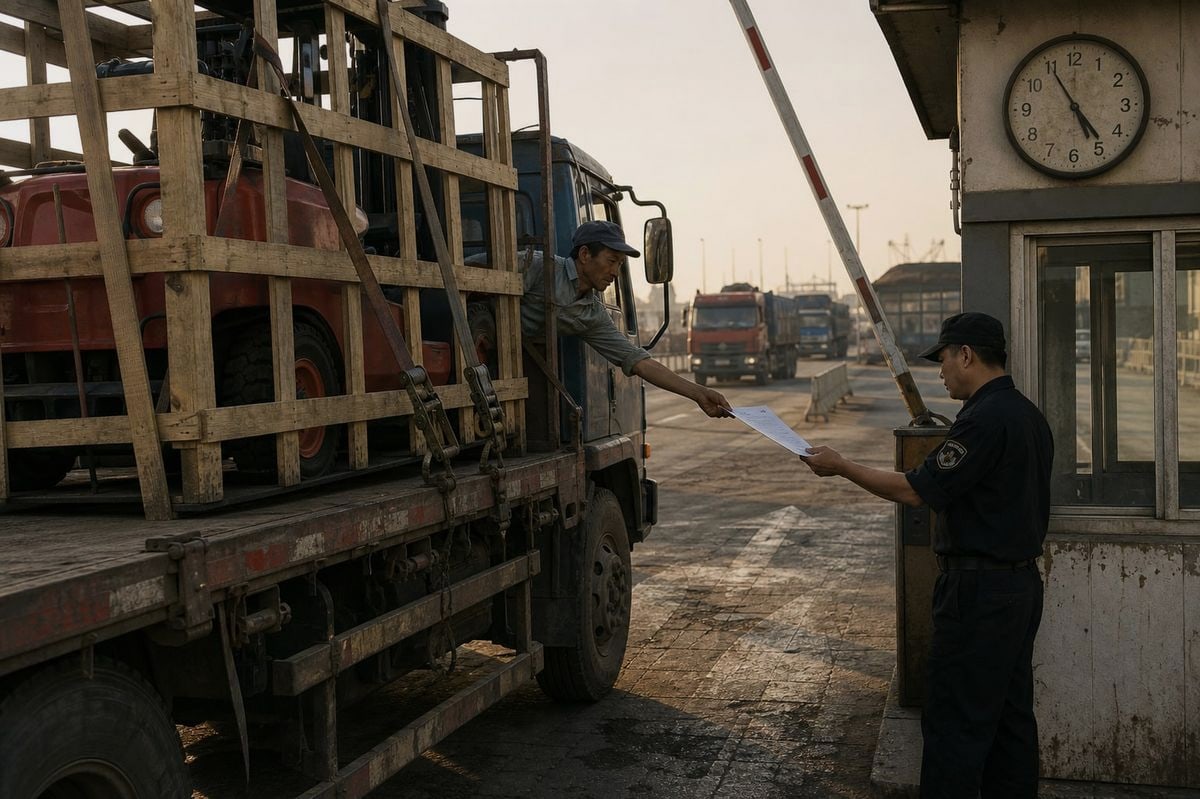
The transshipment vs direct route decision is where shipping cost estimation and risk management collide. Cheaper routings save freight cost but raise the likelihood of delay and extra handling. For heavy machinery logistics, that extra handling is not trivial — every crane lift at a hub port is another chance for damage to an expensive machine.
| Faktor | Direct Sailing | Transshipment Route |
|---|---|---|
| Transit time | Shorter and more predictable | Longer, with layover variability |
| Missed connection risk | None | Real — cargo can miss the second vessel |
| Handling events | Load once, discharge once | Extra lifts at the hub port |
| Damage exposure | Lower | Higher for heavy equipment |
| Freight cost | Usually higher | Often lower |
| Schedule frequency | Sometimes less frequent | Often more routing options |
I will not pretend direct is always right. If your destination is a smaller port of discharge with no direct China service, transshipment is the only option. If your shipment is cost-sensitive spare parts riding LCL alongside a forklift, the extra days may cost you nothing. And a transshipment service with high frequency can sometimes outperform an infrequent direct service, because recovery from any hiccup is faster.
Oversized forklifts on flat racks or open tops need extra planning. This equipment frequently requires repositioning from other regional hubs before loading, so we build a 10-to-14-day scheduling buffer into any flat rack booking. Heavy-lift moves into draft-restricted ports add another wrinkle: arrival must synchronize with tidal windows, or the vessel waits offshore 12–24 hours for sufficient water depth. For these shipments, we also strongly recommend cargo insurance coverage, because the handling exposure is simply higher. Good freight forwarder coordination — validating the routing with the carrier rather than trusting the schedule screen — is what keeps these complex moves on time.
The best sailing schedule aligns vessel timing with cargo readiness, cutoffs, routing reliability, and buffer time — not the earliest or cheapest departure. Plan those four things, and your forklift arrives on schedule.
1. UN body providing expertise on global transport and trade logistics. ↩︎
2. Official IMO page on environmental regulations affecting vessel speed and transit times. ↩︎
3. Authoritative US government source for import and export documentation requirements. ↩︎
4. Explains the roll-on/roll-off shipping method mentioned as an alternative to containers. ↩︎



