

Every month, our team in Zhengzhou helps importers ship electric order pickers from China — and every month, someone calls us after a carrier has rejected their lithium battery cargo at the port. The machine sits there. Storage fees pile up. The buyer's warehouse project stalls. It is a painful, expensive mistake, and it is almost always avoidable with the right preparation before the cargo ever leaves the factory.
To ship electric order pickers from China, confirm the battery type first, prepare UN38.3 and MSDS documents for lithium units, choose FCL sea freight for most shipments, secure the machines with blocking and bracing, and clear customs under HS Code 842710 with a complete document set.
That is the short answer. But each of those steps hides details that can save you thousands of dollars or cost you weeks of delay. Let me walk you through them one by one.
How much does it cost to ship electric order pickers from China?
A buyer in Texas once told me his factory quote looked great — until destination charges, duties, and trucking nearly doubled his landed cost. In our forwarding work, that story repeats constantly.
Shipping electric order pickers from China typically costs $1,500–$4,500 per container by sea freight, depending on route, container size, and season. Add import duties under HS Code 842710, destination handling, and inland trucking to calculate the true landed cost per machine.
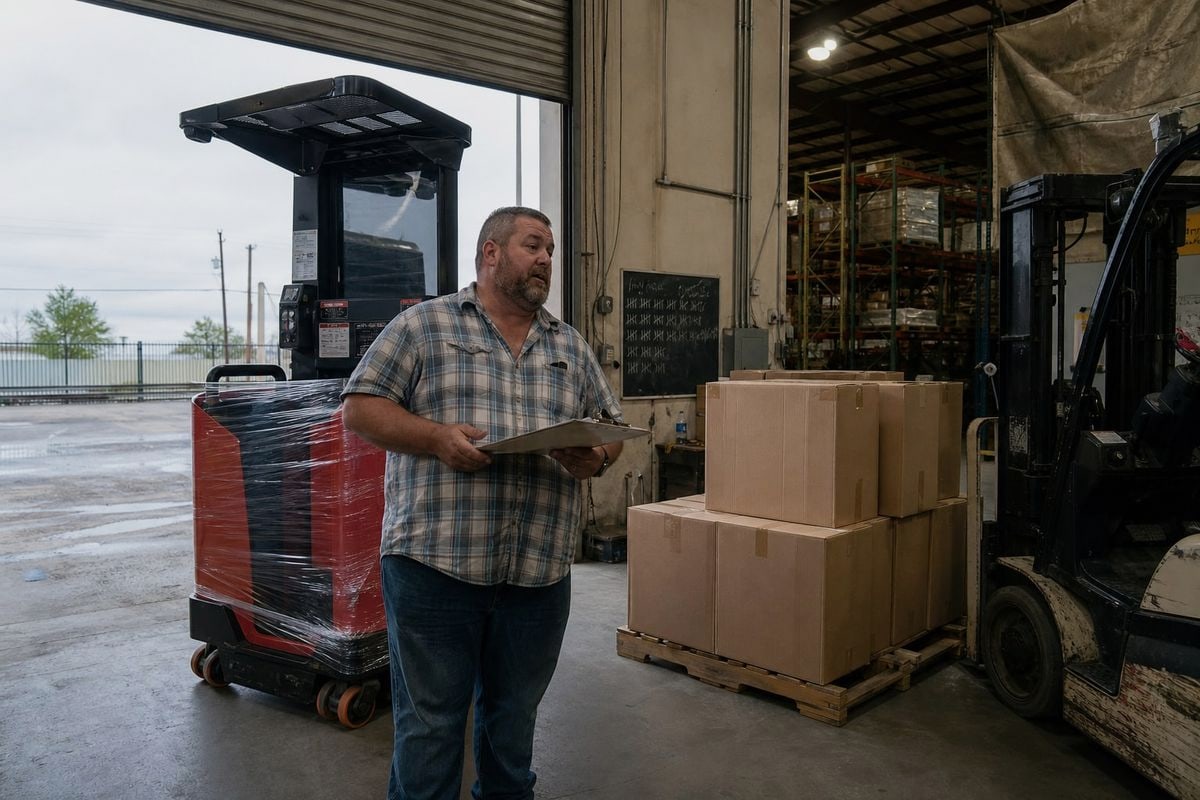
The biggest mistake I see is comparing freight quotes instead of comparing landed costs. Ocean freight rates change with the season and the lane, but the ocean leg is only one piece of your total spend. When we quote a shipment from Shanghai or Qingdao to Los Angeles or Rotterdam, we always break the cost into stages so the buyer can see where the money actually goes.
The cost components you must count
Here is how the cost of shipping order pickers usually breaks down:
| Kostenkomponente | Wer typischerweise zahlt | Anmerkungen |
|---|---|---|
| Abholung und Transport im Werk in China | Buyer (under FOB/EXW) | Hängt vom Standort der Fabrik ab |
| Export clearance in China | Seller (FOB) or forwarder | Handled with export declaration |
| Seefracht | Buyer (FOB) or seller (CIF/DDP) | Varies by lane and season |
| Seehypothekenversicherung 1 | Negotiable | Strongly recommended for high-value machines |
| Einfuhrzölle und Steuern | Käufer | Based on HS Code 842710 classification |
| Destination port charges | Käufer | Often excluded from cheap quotes |
| Endlieferungs-Transport | Käufer | Needs unloading capability at destination |
Why the cheapest quote is rarely the cheapest outcome
A low origin quote often excludes destination handling, customs brokerage, and local delivery. For US buyers, Tarif nach Abschnitt 301 2 implications on Chinese machinery can also add a significant percentage to the invoice value. So before you confirm any order, ask your freight forwarder in China for a full landed-cost estimate. We do this for our clients before they even pay a factory deposit. It changes purchasing decisions more often than you would think.
Air freight, for comparison, is faster but far more expensive for industrial equipment. We only recommend it for urgent spare parts or chargers, never for complete machines.
What should I know about shipping lithium batteries with my order pickers?
Battery paperwork is where most shipments go wrong. Our team once rescued a booking that a carrier had refused simply because the battery details on the invoice did not match the MSDS.
Lithium-powered order pickers ship as Class 9 Dangerous Goods by sea. You need a valid UN38.3 test report, MSDS/SDS documentation, proper hazard labeling, and a dangerous-goods declaration. Battery details must match exactly across the invoice, packing list, and DG paperwork.

The very first question we ask any client shipping electric order pickers from China is simple: what powers the machine? Lead-acid units ship as ordinary heavy machinery. Lithium units trigger lithium battery regulations 3, dangerous-goods booking procedures, and stricter carrier acceptance rules. Getting this classification wrong is the fastest way to have a container rolled off a vessel schedule.
The documents carriers will demand
For a lithium-powered order picker, collect these documents from the factory before pickup — not after the cargo reaches the port:
- UN38.3 Testbericht — proves the battery passed transport safety testing.
- MSDS documentation (or SDS) — the safety data sheet for the battery chemistry.
- Dangerous-goods declaration — required by the carrier for Class 9 cargo.
- Consistent commercial paperwork — battery model, watt-hours, and quantity must match across the invoice and packing list.
We verify all of this during factory coordination, because Chinese suppliers do not always volunteer these documents unless asked.
Battery condition during the voyage
One detail many buyers miss: ask the manufacturer to activate a BMS shipping mode that holds the battery at roughly 30% state of charge. A 30-to-60-day ocean transit at full charge or near-zero charge can degrade lithium cells and cause voltage drop before the machine ever reaches your warehouse. This is a small request that protects an expensive component.
Also confirm charger compliance for your market. European buyers may need CE marking, and US buyers should check UL-related requirements for chargers before shipment — not after the container lands.
How many electric order pickers can I fit into one container?
Before we book any container, our loading team asks the factory for exact mast-down dimensions. Two order pickers that look identical in photos can differ by 20 centimeters — enough to change the whole loading plan.
A 20FT container typically holds 2–3 electric order pickers, a 40FT holds 4–6, and a 40HQ holds 4–6 with extra height clearance for taller masts. Exact capacity depends on machine dimensions, mast configuration, and whether units ship assembled or semi-knocked down.
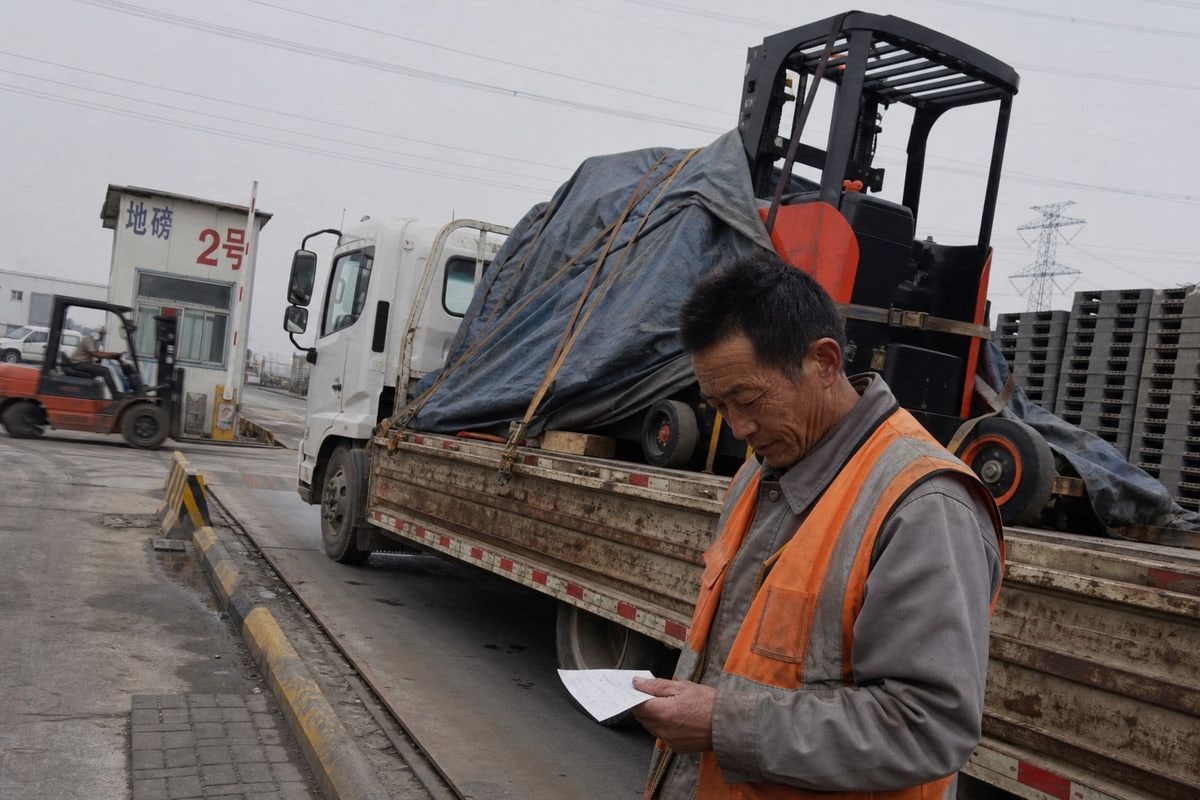
Container utilization directly drives your logistics cost per machine. If you ship three units in a 40FT container that could hold five, you are paying roughly 40% more freight per machine than necessary. That is why we evaluate dimensions, weight, and quantity before recommending a container size.
Typical container capacity guide
| Container-Typ | Internal Dimensions (approx.) | Typical Order Picker Capacity | Am besten für |
|---|---|---|---|
| 20FT | 5.9m × 2.35m × 2.39m | 2–3 units | Small orders, heavy compact units |
| 40FT | 12.03m × 2.35m × 2.39m | 4–6 units | Standard fleet orders |
| 40HQ | 12.03m × 2.35m × 2.69m | 4–6 units, taller masts | High-mast configurations plus accessories |
Ways to squeeze more value from the container
There are three tactics we use regularly for material handling equipment logistics:
- Ship with the mast lowered or detached. Many order pickers ship semi-knocked down (SKD), which reduces height and can, in some jurisdictions, affect how the cargo is classified for duty purposes.
- Fill dead space with spare parts. Chargers, forks, spare batteries, and consumables can ride in the gaps around the machines at little extra freight cost.
- Consolidate multiple suppliers. If you buy machines from Factory A and chargers from Factory B, we pick up from both and load one container at our warehouse.
For machines too tall or too heavy for a standard container, Ro-Ro shipping 4 is an alternative worth discussing — self-propelled units can be driven aboard. But for most electric order pickers, a well-planned FCL container is safer and more economical.
Always confirm your destination can unload heavy machinery. A container of order pickers arriving at a warehouse with no ramp or forklift is a problem we have seen more than once.
How do I choose between FCL and LCL for shipping order pickers from China?
A dealer in Europe once insisted on LCL to save money on a single unit. The machine arrived with a bent overhead guard from shared-container handling. The repair erased his savings twice over.
Choose FCL when shipping two or more order pickers or any high-value unit, because a dedicated container allows proper blocking and bracing. Choose LCL only for a single machine on a tight budget, and accept the higher handling and damage risk that comes with shared containers.

Die FCL vs LCL shipping decision is really a trade-off between cost per shipment and control over cargo safety. Here is how we frame it for clients:
| Faktor | FCL (volle Containerladung) | LCL (Less than Container Load) |
|---|---|---|
| Cargo handling | Loaded once, sealed until destination | Handled multiple times at consolidation warehouses |
| Damage risk | Low, with proper blocking and bracing | Higher, especially for tall machines |
| Cost for 1 unit | Higher per shipment | Lower per shipment |
| Cost for 3+ units | Lower per machine | Rarely competitive |
| Transit predictability | More direct | Extra consolidation time possible |
Why FCL wins for most order picker shipments
Order pickers are vulnerable in transit because of their height, uneven weight distribution, exposed forks and platforms, and battery components. In a dedicated container, we block and brace each machine against the container walls and floor, so nothing shifts during a rough crossing. We also recommend VCI shrink-wrapping on the chassis and electrical components to prevent salt-air corrosion and moisture damage during the 30-to-60-day ocean voyage. In an LCL shipment, your machine shares space with unknown cargo and gets handled at every consolidation point — you lose that control.
Incoterms shape the decision too
Your shipping terms matter as much as the container choice. Under FOB, you control carrier selection and the ocean leg, which suits experienced importers. Under CIF, the seller arranges freight and marine insurance to your port. DDP simplifies everything for first-time buyers by shifting the logistics burden to the seller or forwarder — but it can reduce transparency over carrier quality and line-haul routing. When we run DDP shipments for US clients, we keep the cost breakdown visible precisely so buyers do not lose that transparency. Whichever Incoterm you choose, insist on a pre-shipment inspection covering hydraulic systems, battery health, and safety certifications before you pay the final balance.
Schlussfolgerung
Shipping electric order pickers from China rewards preparation: confirm battery type, secure lithium documents, plan container loading, choose FCL wisely, and calculate landed cost before ordering. Get these right, and your machines arrive safely, on schedule, and on budget.
Fußnoten
1. The International Chamber of Commerce's official rules for the use of domestic and international trade terms. ↩︎
2. Official information from the U.S. Trade Representative regarding Section 301 tariff actions on Chinese goods. ↩︎
3. Official UN regulations governing the international transport of lithium batteries and hazardous materials. ↩︎
4. IMO safety standards and definitions for Ro-Ro shipping vessels used for transporting self-propelled industrial machinery. ↩︎




