

[Shipping forklift attachments from China](https://mbmlog.com/?p=11762) looks simple until a re-quote lands. At our Zhengzhou consolidation warehouse, I see buyers underestimate attachment volume weekly, and that mistake delays entire containers.
To ship forklift attachments from China, confirm exact dimensions and gross weight, classify the cargo under HS Code 8431.20, crate it to ISPM 15 standards with anti-rust protection, choose LCL, FCL, or flat rack based on size, then clear customs with an itemized commercial invoice.
That is the short version. Below, I will walk you through documents, consolidation, shipping methods, and total cost, step by step.
What Documents Do I Need to Ship Forklift Attachments from China?
A buyer in Texas once asked me why his side shifters sat at the port for nine days. The answer was one missing line on his Handelsrechnung 1. Our team now checks every document before departure.
You need a commercial invoice, packing list, bill of lading, certificate of origin, and China export declaration. Add region-specific paperwork such as CE marking for Europe or EPA compliance for engine-related components, and always itemize bundled attachments separately to avoid customs undervaluation flags.
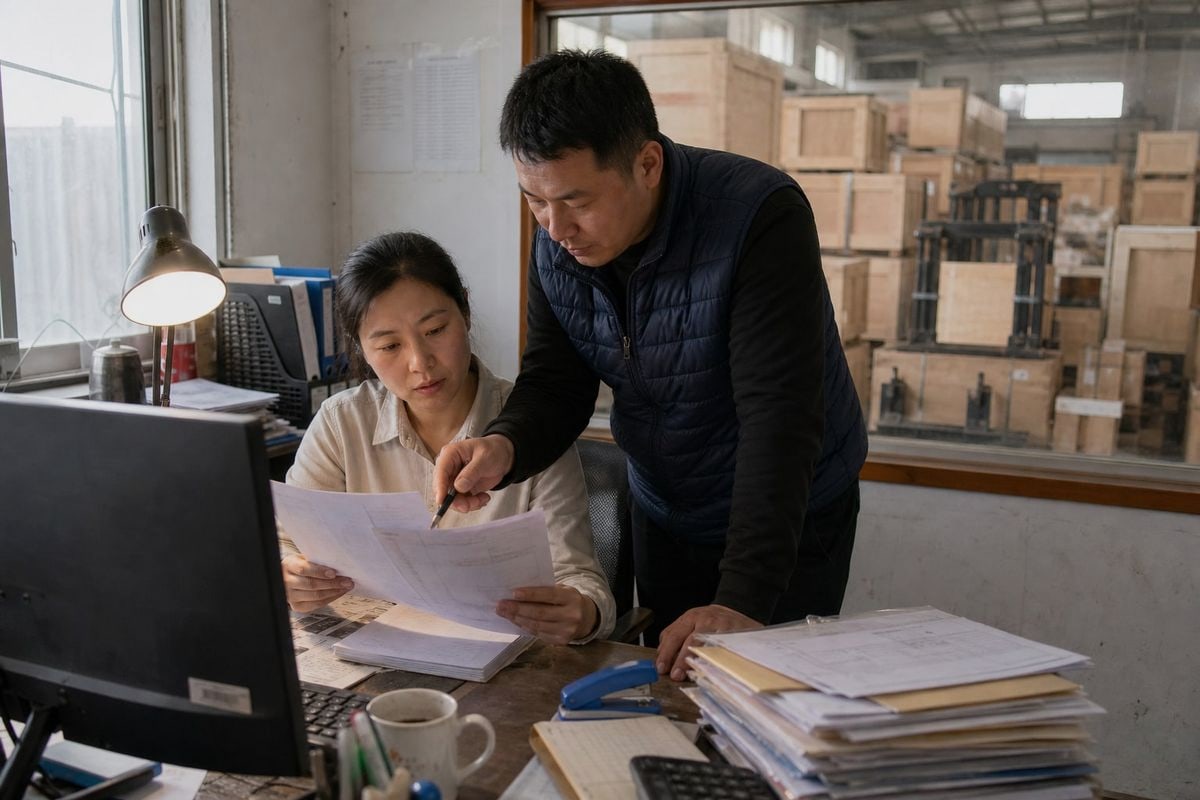
The customs clearance process for forklift attachments is document-driven. If the paperwork is clean, cargo moves. If it is not, you pay storage and demurrage while officers ask questions. In my experience coordinating machinery exports from China, three document issues cause almost all delays.
Das Kern-Dokumentenset
Here is what every shipment needs, and who normally prepares each item:
| Dokumentieren | Zweck | Usually Prepared By |
|---|---|---|
| Handelsrechnung | Declares value for duty calculation | Anbieter |
| Packliste | Details pieces, dimensions, gross/net weight | Anbieter |
| Konnossement | Contract of carriage and cargo receipt | Spediteur |
| Ursprungszeugnis | Confirms Chinese origin for duty treatment | Supplier or chamber of commerce |
| Export Declaration | Legal export filing in China | Freight forwarder China side |
| CE / EPA Compliance | Market-specific safety certification | Supplier, verified by buyer |
The HS Code Question
Most forklift attachments — side shifters, clamps, rotators, fork extensions — classify under HS Code 8431.20 2, the heading for forklift parts. Getting the HS code for forklift parts right matters because it drives duty rates and trade remedies. For U.S. imports, Section 301 surcharges apply to this classification, so your landed cost calculation must include them.
The Undervaluation Trap
Suppliers often bundle attachments "free" with a forklift order. Do not let the invoice show them as gifts. Customs treats zero-value machinery as a red flag. I always ask suppliers to itemize the value of every bundled attachment separately on the commercial invoice, even when the total price already includes them. This one habit prevents most valuation disputes at destination.
How Can I Consolidate Forklift Attachments with Other Equipment in One Container?
Multi-supplier consolidation is the request I hear most often. A dealer buys forklifts from Factory A, batteries from Factory B, and rotator attachments from Factory D, then wants one container and one bill of lading.
Consolidate by routing all suppliers to one bonded or export warehouse in China, providing each item's exact dimensions and weight in advance, planning the container load around the heaviest pieces first, and shipping under a single bill of lading with one itemized packing list.
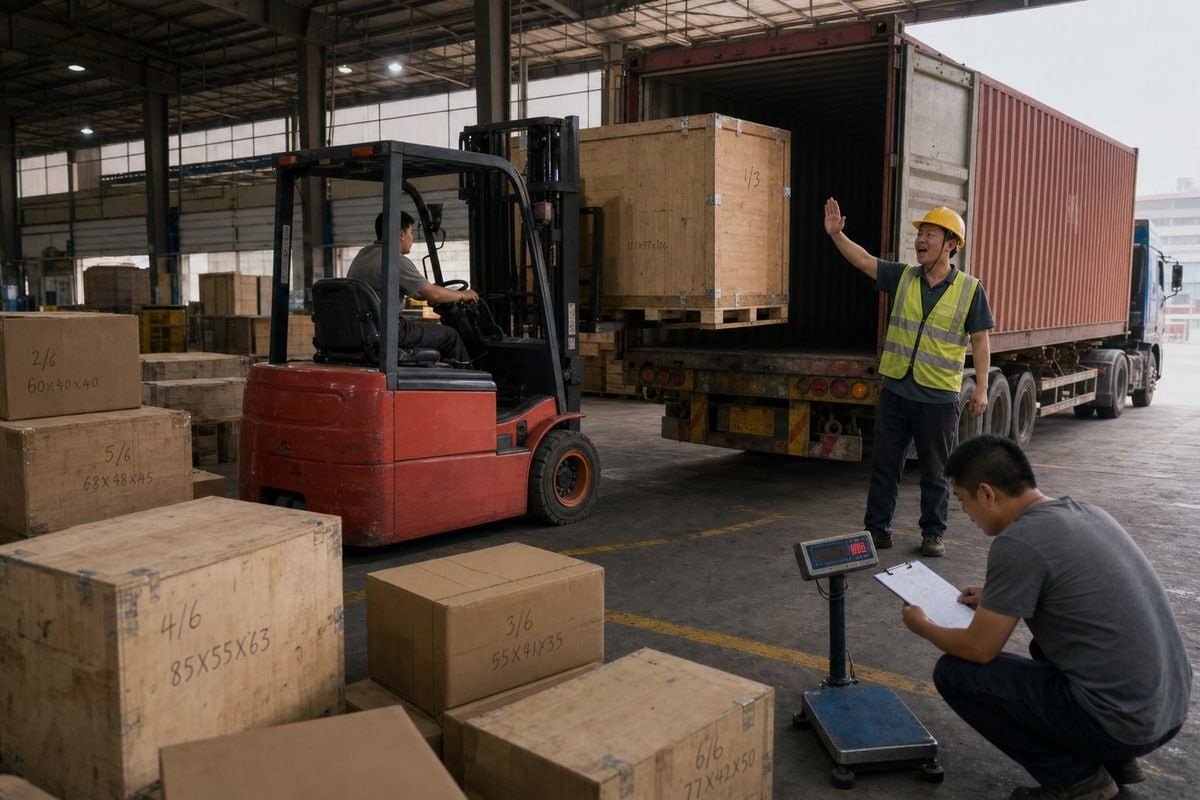
Consolidation is where good load planning pays for itself. At our warehouse consolidation facility, we receive cargo from multiple Chinese factories, verify it against the packing lists, and build one load plan before anything enters a container. Here is the process I recommend.
The Consolidation Process, Step by Step
- Collect specs from every supplier. Dimensions, gross weight, packaging type, and photos. Underestimating attachment volume is the single most common consolidation error, because quotes must be built from the combined CBM and weight of every piece, not just the main machine.
- Set a delivery window. All suppliers deliver to one warehouse within an agreed period. One late factory delays the whole container, so we chase cargo readiness directly with each supplier.
- Inspect on arrival. Basic quality inspection services at this stage — counting pieces, checking crates, photographing condition — catch problems while they can still be fixed in China.
- Plan the load. Heavy attachments like clamps and rotators go on the container floor, spread across the length for weight distribution. Boxed spare parts and chargers fill the space above and around them.
- Secure everything. Steel attachments shift in ocean transit. We lash, block, and brace each heavy piece before sealing the container.
One Practical Warning
Verify hydraulic attachment specifications before consolidation, especially fitting standards. Chinese factories often use Metric or BSPP fittings, while many Western markets expect JIC. Discovering this after arrival means sourcing expensive adapters and losing weeks. I ask suppliers to confirm fitting types in writing before pickup.
What Are the Best Shipping Methods for Heavy or Oversized Forklift Attachments?
The trade-off I weigh on almost every quote is handling risk versus freight cost. LCL is cheaper for one small clamp, but every extra handling point is a chance for damage to precision equipment.
Use LCL ocean freight for small shipments under roughly 3 tons, FCL for multiple attachments or high-value orders, flat rack or open-top containers for oversized items like long booms, and air freight only for urgent, light, high-value parts.
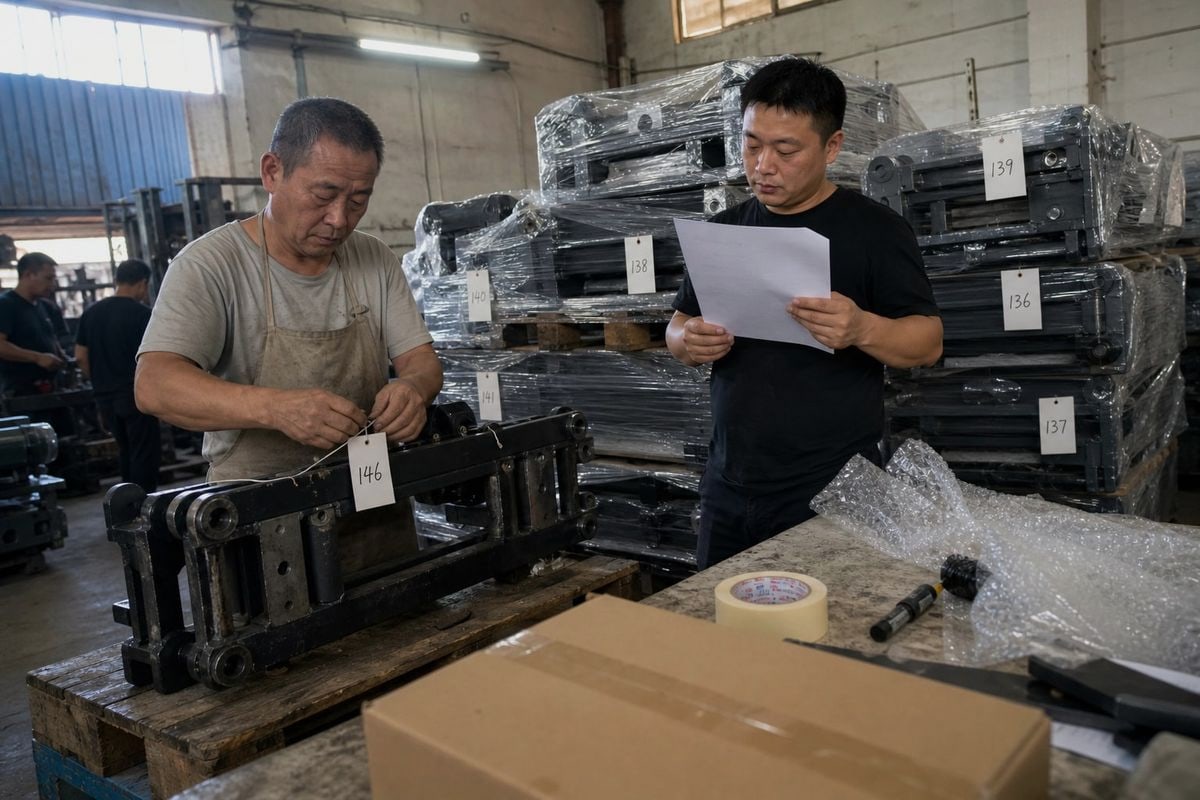
Forklift attachments are not one shipping category. A boxed fork extension ships like general cargo. A 2.5-ton paper roll clamp needs a completely different plan. Matching the method to the cargo profile is the core decision.
Method Comparison at a Glance
| Methode | Am besten für | Key Risk | Relative Cost |
|---|---|---|---|
| LCL | Single attachments under ~3 tons | Damage from neighboring cargo, multiple handling points | Niedrig |
| FCL (20FT/40FT/40HQ) | Multiple attachments, mixed loads, high value | Wasted space if underfilled | Mittel |
| Flat rack / open-top | Oversized booms, jibs, out-of-gauge pieces | Weather exposure, special lashing needed | Hoch |
| Ro-Ro | Attachments moving with a drivable machine | Rarely available for attachments alone | Mittel |
| Luftfracht | Urgent, light, high-value parts | Cost is disproportionate for steel items | Sehr hoch |
LCL vs FCL Shipping in Practice
Die LCL vs FCL shipping decision usually comes down to volume and risk tolerance. LCL cargo is handled at origin CFS, transshipment points, and destination CFS. Each touch is a damage opportunity, and heavy steel neighbors in a shared container do not treat crates gently. Once your order approaches several attachments, or when you consolidate attachments with forklifts and spare parts, FCL almost always wins on both cost per unit and cargo safety.
Packaging Protects the Method You Choose
Whatever mode you pick, sea freight demands corrosion control. We specify Vapor Corrosion Inhibitor (VCI) film or rust-preventative wax on hydraulic cylinders and exposed steel. Wooden crate packaging must carry a visible ISPM 15 heat-treatment stamp 3, or destination customs can reject the crates or order costly fumigation. For precision attachments like rotators or integrated scales, I add impact indicator stickers such as ShockWatch to the crate exterior. They create a visual audit trail if port handlers get rough. Finally, purge residual hydraulic fluid and replace plastic caps with steel plugs to satisfy leak-free transit rules and avoid dangerous goods surcharges.
How Do I Calculate the Total Cost of Shipping Forklift Attachments from China?
The hardest lesson our customers learn is that the ocean freight rate is only one line of the landed cost. A dealer once compared two quotes and picked the cheaper one, then paid more overall in hidden destination charges.
Total cost equals China-side charges (pickup, export declaration, loading) plus ocean freight based on combined CBM and weight, plus destination charges, customs brokerage, import duties and taxes including any Section 301 surcharge, plus cargo insurance and final delivery.
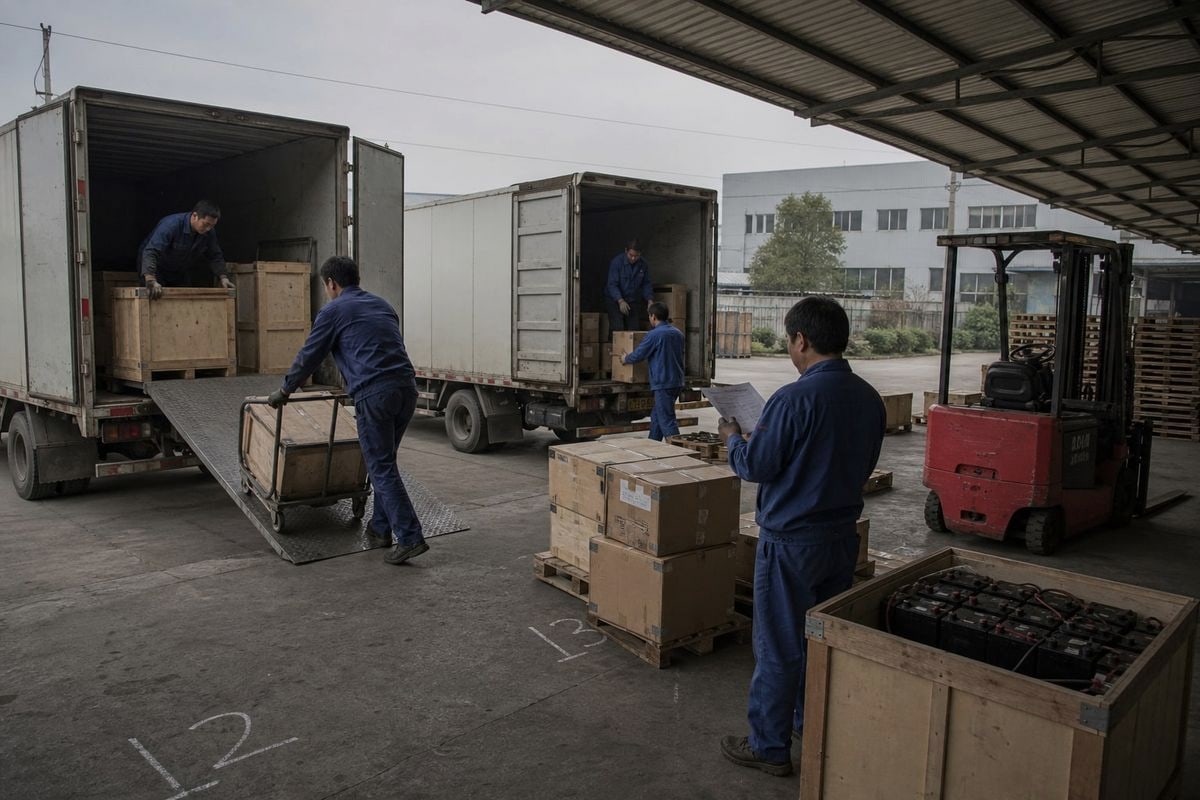
Landed cost is a chain, and every link has a price. When I build quotations for material handling equipment, I break the total into three blocks so the buyer sees exactly where money goes.
The Full Cost Breakdown
| Cost Block | Typical Line Items | Common Surprise |
|---|---|---|
| Ursprung China | Factory pickup, warehouse handling, crating, export declaration, container loading | Crating and ISPM 15 treatment often excluded from supplier quotes |
| International freight | Ocean freight, fuel surcharges, cargo insurance | LCL minimum charges make tiny shipments expensive per CBM |
| Reiseziel | Port handling, customs brokerage, import duties and taxes, Section 301 for U.S. imports, trucking | Low headline freight rates that exclude destination handling |
Incoterms Decide Who Pays What
Ihr Incoterms FOB CIF 4 choice shapes the whole calculation. I generally recommend FOB over CIF for machinery buyers, because FOB keeps you in direct control of the international carrier and insurance coverage — critical for heavy cargo. CIF hands that control to the supplier, who optimizes for their cost, not your risk. For first-time importers without a customs broker, DDP through one forwarder simplifies everything into a single number, and that is a service we provide door to door.
Two Cost-Control Habits
First, quote early and quote accurately. Sea freight transit time from China to the U.S. runs several weeks, so a re-quote at origin can wreck a delivery schedule. Give your freight forwarder China contact the exact dimensions, gross weight, packaging method, and piece count for every attachment before booking. Second, confirm your destination can unload. If your dock lacks a forklift or crane for heavy crates, budget for liftgate or crane service before the truck arrives, not after.
Schlussfolgerung
Shipping forklift attachments from China rewards preparation. Accurate specs, clean documents, ISPM 15 crating, the right mode, and one coordinated forwarder turn a risky shipment into a predictable one.
Fußnoten
1. The International Trade Administration provides official guidance on essential export documentation for international shipping. ↩︎
2. Official site of the World Customs Organization, which maintains the Harmonized System nomenclature. ↩︎
3. The International Plant Protection Convention sets the global standards for wood packaging in trade. ↩︎
4. The International Chamber of Commerce is the official authority for Incoterms rules used in global trade. ↩︎




