- +8618603825129
- [email protected]

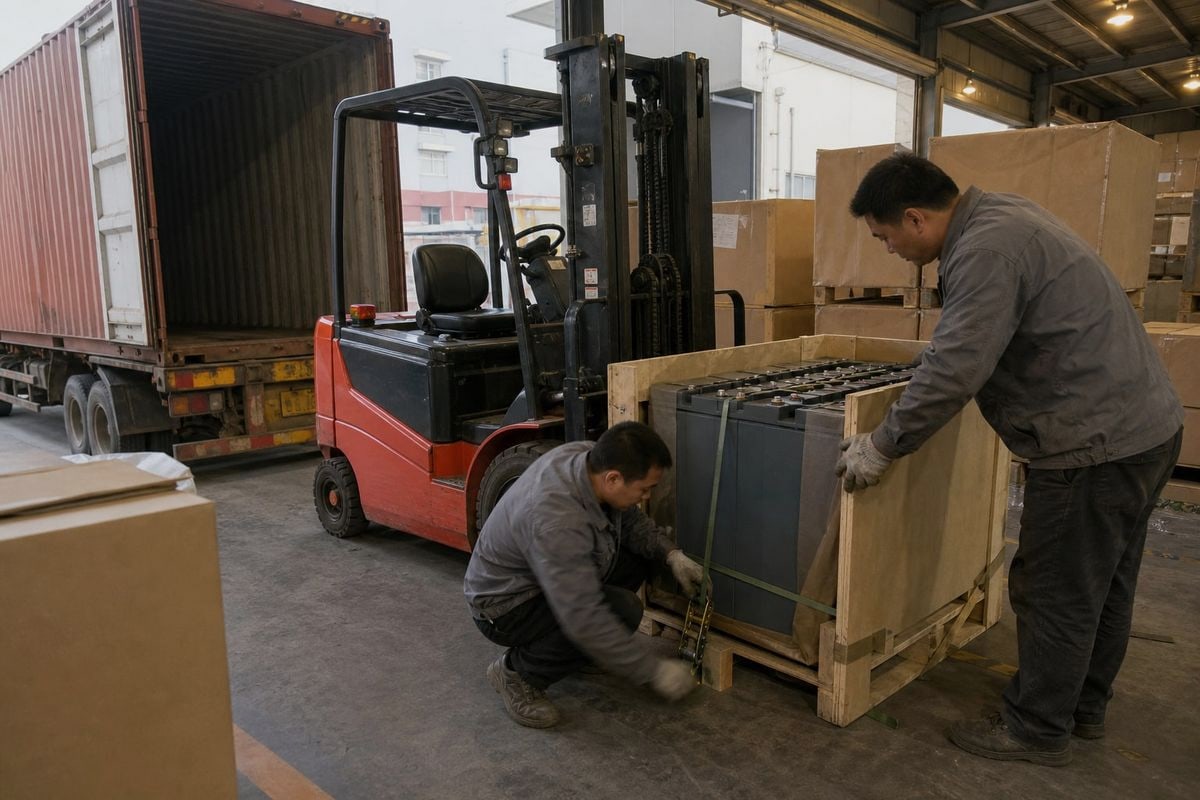
Shipping lead-acid battery forklifts internationally trips up many importers. Our team in Zhengzhou has seen containers rejected at port because one battery detail was missed on the paperwork.
To ship lead-acid battery forklifts internationally, classify wet batteries as UN2794, Class 8 corrosive goods, pack them upright with protected terminals, prepare a Dangerous Goods Declaration and SDS, and book with a carrier that accepts hazardous cargo—usually by ocean freight, not passenger air.
That is the short version. The details decide whether your forklift sails on schedule or sits at the port. Let me walk you through each step below.
A few years back, one of our US forklift dealer clients almost booked a shipment under the wrong UN number. We caught it during our pre-shipment document check, and it saved him weeks of delay.
Wet-filled lead-acid forklift batteries are classified as UN2794, Class 8, Packing Group III. Sealed nonspillable batteries may qualify as UN2800 with lighter requirements. Documentation must include a Dangerous Goods Declaration, a current Safety Data Sheet SDS, and a bill of lading showing the UN number and proper shipping name.

Classification comes first because everything else depends on it. The rules follow the battery chemistry and construction, not the forklift model. Two forklifts that look identical can require completely different paperwork if one uses a wet-filled battery and the other uses a sealed unit.
Here is the core distinction every shipper must understand before booking freight:
| Artikel | Wet-Filled Battery | Nonspillable Sealed Battery |
|---|---|---|
| UN Number | UN2794 | UN2800 |
| Proper Shipping Name | Batteries, wet, filled with acid | Batteries, wet, non-spillable |
| Hazard Class | Class 8 (Corrosive) | Class 8, with possible exceptions |
| Packing Group | III | III |
| Passenger Aircraft | Forbidden | Sometimes allowed if tested and marked |
| Typical Restrictions | Full dangerous goods handling | Simplified if testing and marking requirements are met |
The nonspillable exception is useful but limited. The battery must pass specific vibration and pressure tests, and the case must carry the "NONSPILLABLE" marking. If your supplier cannot provide test evidence, we always treat the battery as UN2794. Guessing is how shipments get stopped.
Every hazardous materials shipping file we prepare includes three core documents. First, the Dangerous Goods Declaration, signed by the shipper. Second, the Safety Data Sheet SDS 1 from the battery manufacturer, current and in English. Third, a bill of lading that shows the UN number and the exact proper shipping name. For US ground legs, DOT rules under 49 CFR 2 also require emergency response information and a 24-hour emergency contact such as CHEMTREC. We check all three documents against each other before cargo leaves the factory, because one mismatch between the SDS and the declaration is enough for a carrier to refuse the booking.
One more point importers often miss. Used batteries moving across borders can fall under the Basel Convention. If customs classifies the battery as "waste" rather than equipment for refurbishment, you need Prior Informed Consent between governments before departure. That process takes months, so verify the battery's status early.
The hardest trade-off we weigh at our loading warehouse is container space versus bracing space. Squeezing in one more forklift is tempting, but a shifted battery mid-ocean can destroy the whole load.
Pack lead-acid forklift batteries upright with non-conductive terminal caps, acid-proof liners, and spill containment beneath each unit. Secure forklifts and batteries in the container with dunnage, bracing, and lashing so nothing tips, shifts, or short-circuits during a multi-week sea voyage.
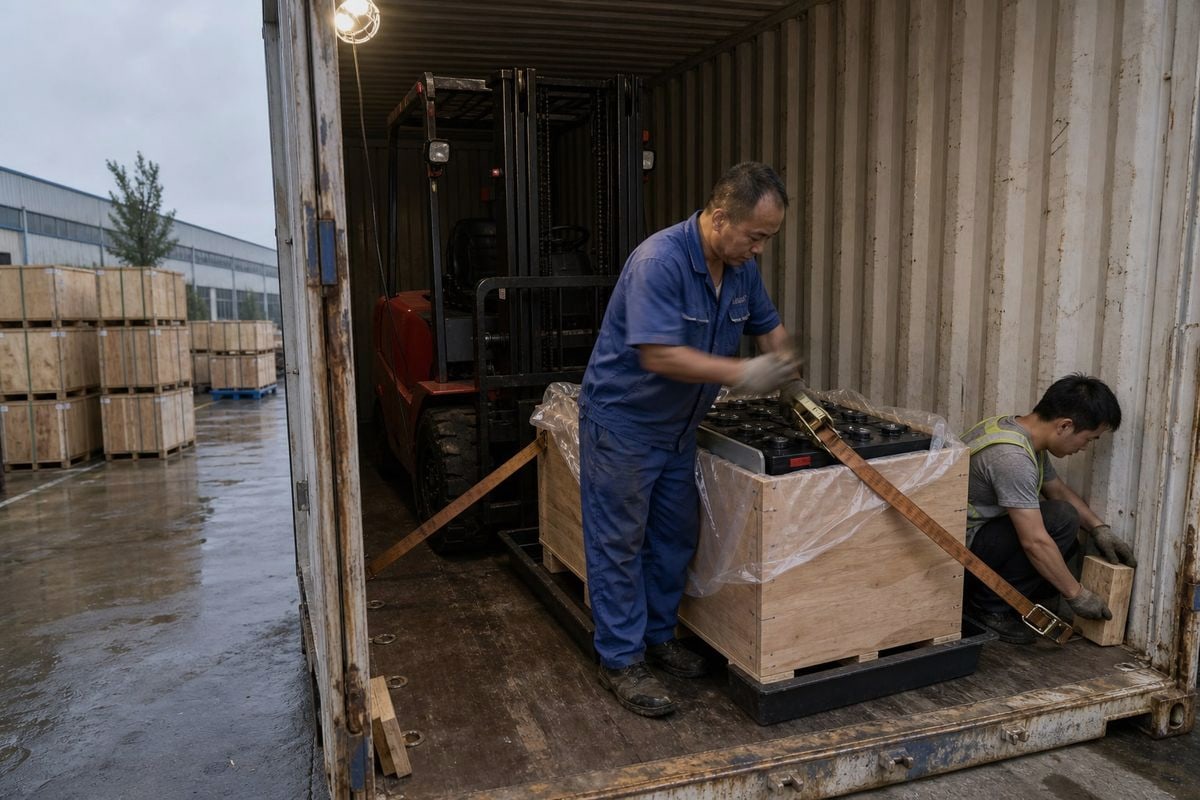
Packaging errors are the most common reason battery shipments get rejected or damaged. The goal is simple: no tipping, no shorting, no battery electrolyte leakage, even if a case cracks or a package is dropped.
I recommend running through this list with your supplier before pickup:
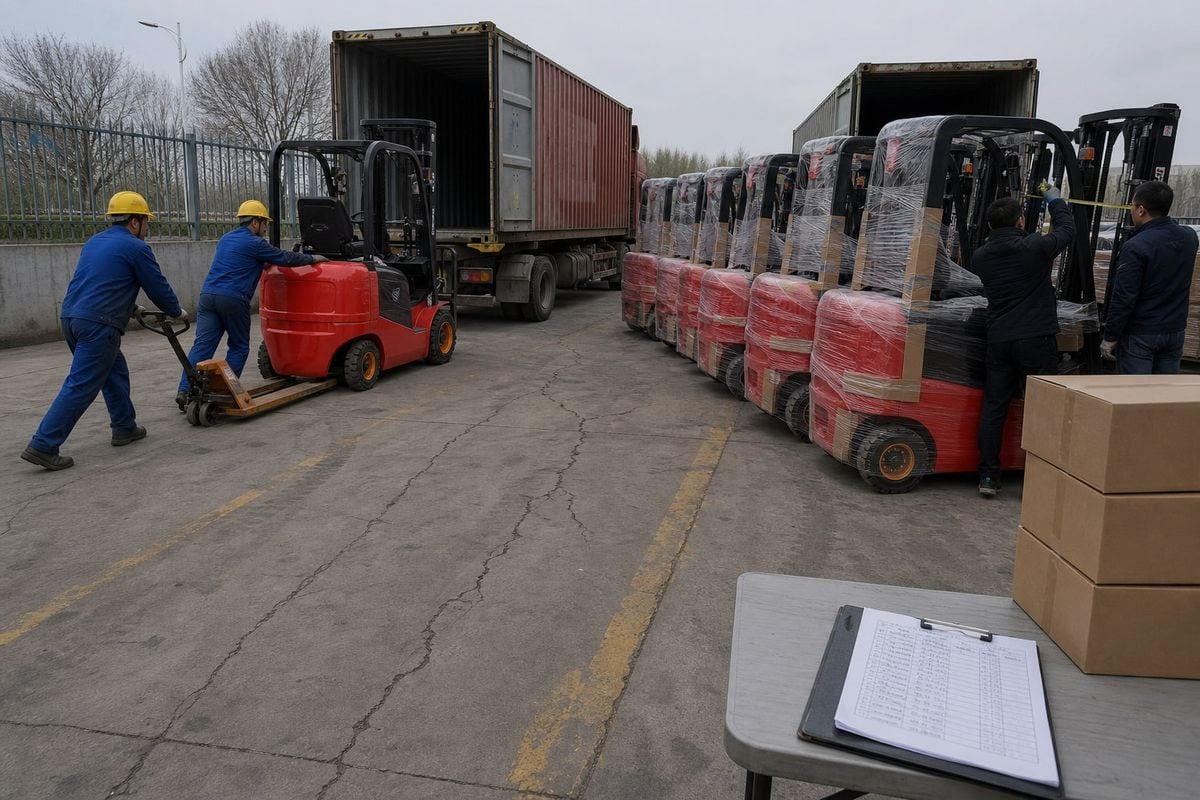
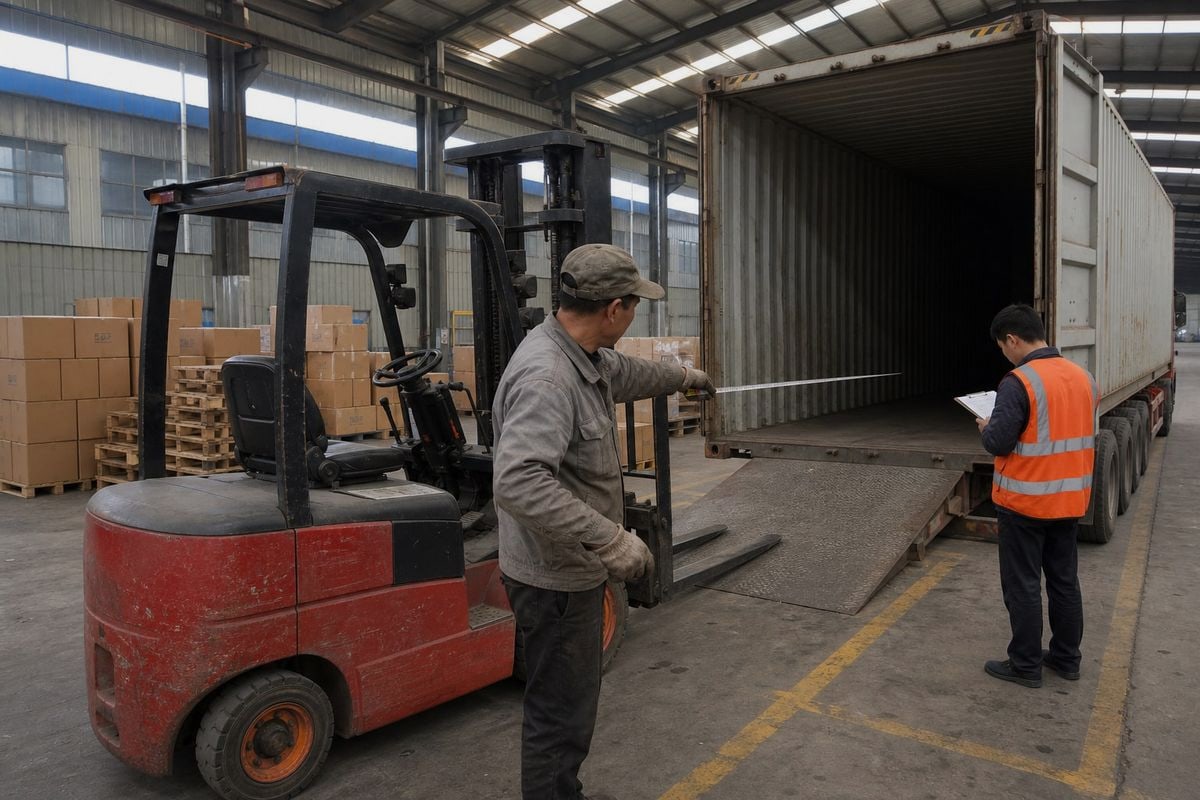
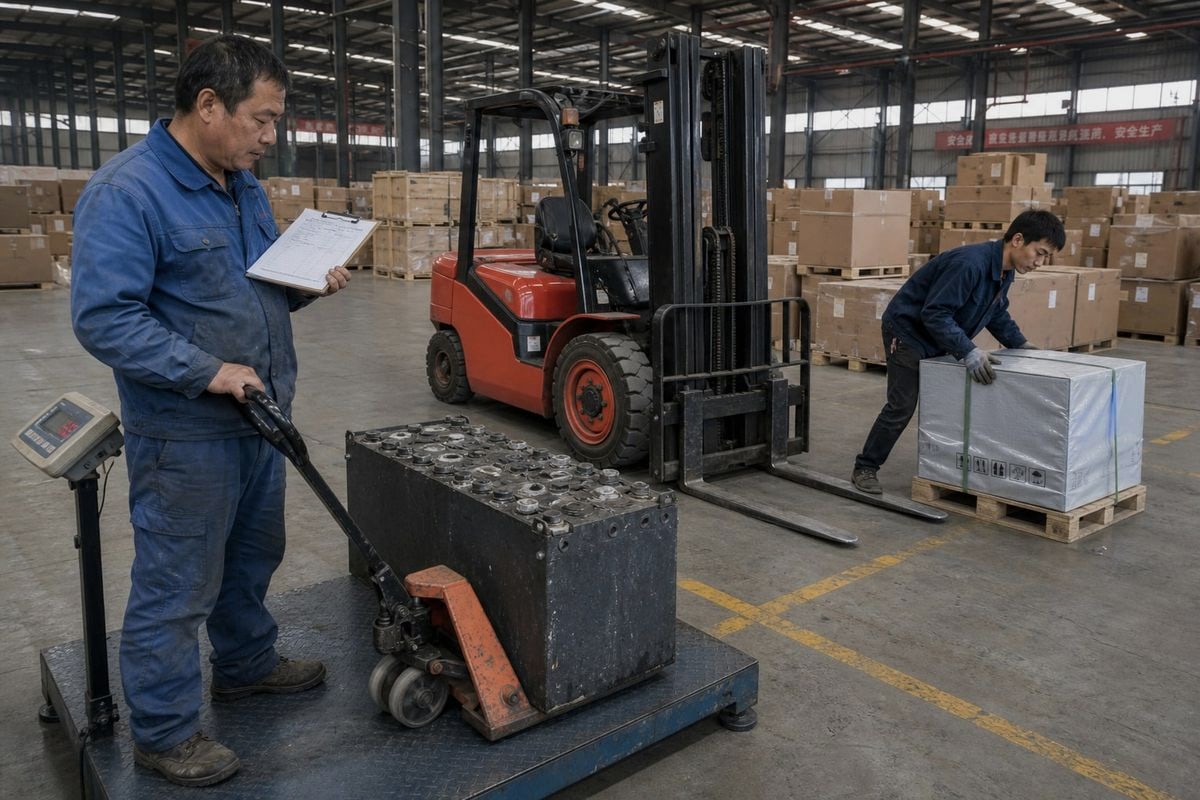
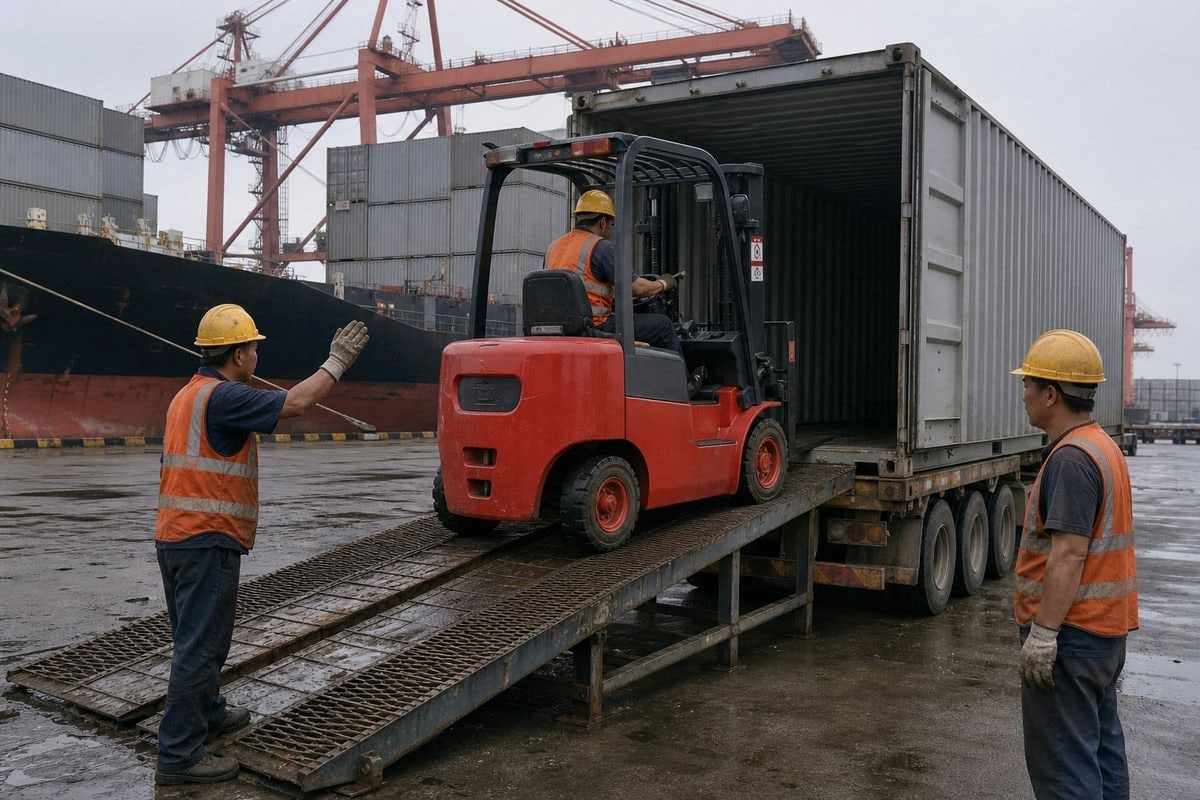
Shipping a forklift with the battery installed is different from shipping spare batteries separately. Installed batteries still must be secure, upright, and protected against shorts and leakage, but the forklift itself becomes the packaging. At our loading operations, we chock the wheels, lash the chassis to container lashing points, lower the mast and forks, and disconnect the battery. Forklift batteries often weigh over a ton, so we plan lifting equipment and floor loading in advance. Weight distribution across the container floor matters too, especially with two or three units in one 20FT box. For spare batteries, we use custom crating with dunnage packed tight around each crate. We photograph every stage of loading and send the photos to the customer before the container seals, so there are no surprises on arrival.
One lesson our team learned early: an international forklift shipment is really three or four shipments stitched together, and the strictest rule on any leg governs the whole plan.
Wet lead-acid batteries are forbidden on passenger aircraft and restricted to cargo-only air under IATA rules. Ocean shipments follow IMDG Code regulations, including stowage plans and ventilated placement. US ground legs follow DOT 49 CFR. Parcel carriers refuse wet forklift batteries entirely.

Most importers only think about the ocean leg. But your forklift also moves by truck in China, sits at a port, crosses an ocean, clears customs, and moves by truck again. Each leg has its own rulebook.
| Mode | Governing Rules | Key Restrictions for UN2794 |
|---|---|---|
| Air | IATA DGR | Forbidden on passenger aircraft; cargo-only with UN-rated packaging and acid-proof liners |
| Ocean | IMDG Code regulations | Class 8 stowage plan filed with vessel operator; Stowage Category A often means on-deck or ventilated under-deck placement |
| US Road/Rail | DOT 49 CFR | Batteries secure, upright, protected against shorts and leakage; shipping papers and emergency contact required |
| EU Road | ADR | Standard Class 8 handling; Special Provision 598 may simplify shipments for recycling if casings are intact |
A few practical consequences follow from this table. Stowage Category A requirements limit where the vessel can place your container, and hazardous cargo slots on vessels are limited. That means booking lead time for dangerous goods ocean freight runs longer than for general cargo. We tell customers to add one to two weeks of planning buffer.
Some shippers ask about draining the electrolyte to ship the battery "dry" and bypass the strictest air freight rules. It can work, but it requires supplier cooperation, proper drainage, and refilling at destination, so we rarely recommend it for complete forklifts. In practice, most wet forklift batteries move by ocean, either in containers or occasionally via RoRo shipping for drivable units. Carriers and forwarders have also tightened pre-shipment compliance checks in recent years, so involving DG-experienced freight forwarding staff early is no longer optional. A newer trend worth noting: some high-value shipments now use IoT tilt and temperature sensors on battery packs, giving real-time compliance data and early warning of thermal events during multi-week voyages.
A US distributor once told me his previous quote looked cheap until destination charges doubled his bill. That conversation shaped how we structure every quotation at MBMLOG today.
Provide your forwarder with the forklift dimensions, weight, battery type and UN classification, quantity, pickup city, destination port or address, and desired Incoterms. An accurate quote covers pickup, DG handling, ocean freight, customs clearance, duties, and final delivery—not just the port-to-port rate.
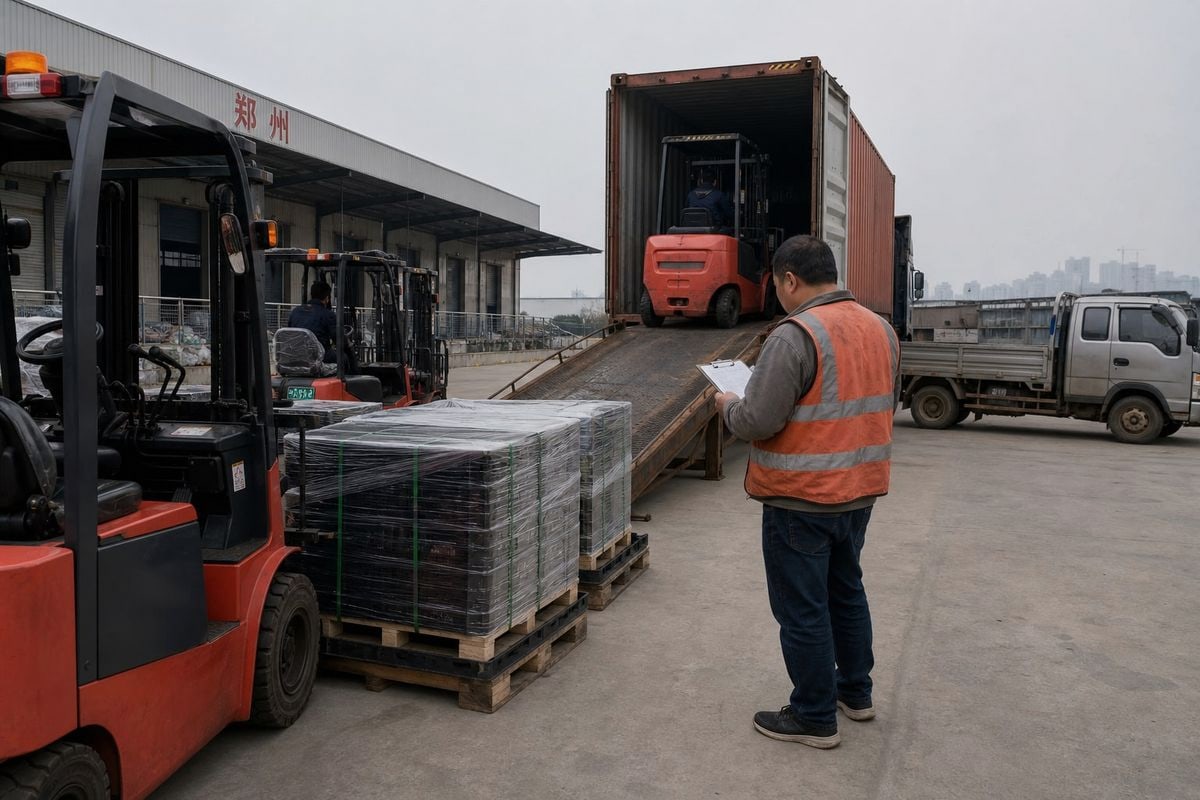
Forklifts are heavy and bulky, so freight is a major slice of landed cost. A vague quote leads to vague budgeting, and vague budgeting leads to painful surprises. Here is how I recommend getting a number you can actually trust.
Gather these details from your supplier before requesting a quote. Missing any one of them forces the forwarder to guess, and guesses become surcharges later.
| Einzelheiten | Why It Matters |
|---|---|
| Dimensions and weight per unit | Determines 20FT, 40FT, or 40HQ container choice and loading plan |
| Battery type (wet UN2794 or nonspillable UN2800) | Drives DG surcharges, carrier acceptance, and documentation cost |
| Quantity of forklifts and spare batteries | Affects FCL vs LCL decision and per-unit freight cost |
| Factory location in China | Sets pickup trucking cost and consolidation options |
| Destination port or door address | Determines destination handling, Zollabfertigung 4, and delivery legs |
| Incoterms (FOB, CIF, DDP, DAP) | Defines exactly which costs sit in your quote |
When you compare forwarders, do not compare ocean rates alone. Ask each one to itemize DG documentation fees, hazardous cargo surcharges, destination terminal handling, customs clearance, duties and taxes, and final trucking. A DDP quote removes most of that uncertainty because one party owns the whole chain. On our China-to-US routes, we also look at consolidation. If you buy forklifts from Factory A and spare batteries or chargers from Factory B, combining them into one container usually cuts the average logistics cost per unit, provided the DG cargo is declared and loaded correctly. Finally, ask whether the forwarder has actually moved Class 8 battery equipment before. A forwarder who mainly ships small parcels will learn the rules on your shipment, at your expense. Our team coordinates factory pickup, battery paperwork checks, container loading, and clearance as one process, which is exactly what keeps quotes accurate and final invoices boring.
Shipping lead-acid battery forklifts internationally means correct UN2794 classification, leak-proof upright packing, mode-specific compliance, and a transparent all-in quote. Get those four right, and your forklifts arrive safely and on schedule.
1. The original OSHA Hazard Communication URL is now a 404; the updated authoritative landing page for SDS regulations is /hazcom. ↩︎
2. US federal agency providing regulations and safety oversight for the transportation of hazardous materials. ↩︎
3. Official international standards for the safe maritime transport of dangerous goods and hazardous materials. ↩︎
4. Official US Customs and Border Protection guide for international trade and customs clearance procedures. ↩︎