- +8618603825129
- [email protected]


Last month, a container of electric forklifts sat at Qingdao port for nine days. The forwarder before us never asked about the UN38.3 test report. Our team at MBMLOG sees this constantly, and it always costs the importer money. The fix is knowing exactly which documents your battery needs before the cargo leaves the factory.
Electric forklifts do not need a UN38.3 test report as vehicles. However, if the forklift uses a lithium-ion battery, that battery must pass UN38.3 testing, and the shipper must be able to provide the test summary. Lead-acid forklifts follow different, simpler documentation rules.
So the real question is not about the forklift. It is about the battery inside it. Let me walk you through how to check your own situation, what happens when the paperwork is missing, and how to get it fixed before shipping day.
A buyer in Texas once sent me his forklift spec sheet and asked one simple question: "Does this thing need battery paperwork?" We check this for clients every week, and the answer always starts with battery chemistry.
Check the battery type first. If your electric forklift uses a lithium-ion or lithium iron phosphate battery, the battery requires UN38.3 testing before international transport. This applies whether the battery ships installed in the forklift (UN3481) or as a standalone unit (UN3480). Lead-acid batteries do not need UN38.3.
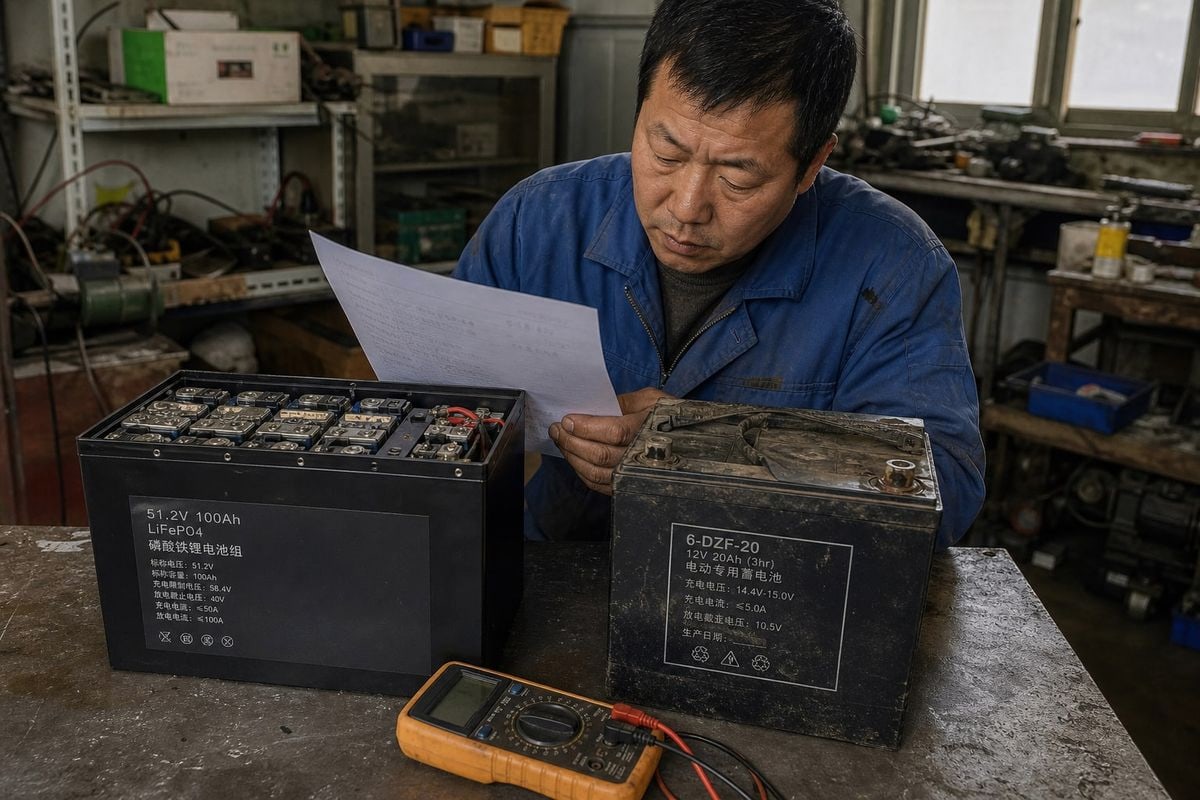
The UN38.3 standard comes from the UN Manual of Tests and Criteria. It applies to lithium cells and batteries, not to vehicles as a product category. That is why the phrase "all electric forklifts need UN38.3" is imprecise. The compliance trigger is the battery pack, not the forklift body.
Ask your supplier for the battery specification sheet. Look for these terms:
| Battery Type | UN38.3 Required? | Common Labels on Spec Sheet |
|---|---|---|
| Lithium-ion (Li-ion) | Yes | Li-ion, NMC, NCM, ternary lithium |
| Lithium iron phosphate | Yes | LiFePO4, LFP |
| Sodium-ion | Yes (since Revision 8) | Na-ion, sodium battery |
| Lead-acid | No | AGM, flooded, VRLA, gel |
Note the sodium-ion row. Some budget forklift makers now market sodium-ion batteries as a "safer, simpler" alternative. That marketing does not change the paperwork. Sodium-ion batteries were officially added to the UN38.3 framework in Revision 8, and they require the same testing as lithium-ion.
The shipping configuration changes the UN number and the handling rules, but not the testing requirement:
In our experience shipping battery-powered industrial trucks from China, buyers often assume an installed battery is "part of the machine" and therefore exempt. It is not. Batteries installed in equipment fall squarely under the UN38.3 documentation expectations, and both the IMDG Code for sea freight and the IATA Dangerous Goods Regulations for air freight treat them as Class 9 hazardous materials.
One more nuance we flag for clients: the UN38.3 report covers a specific battery design 1. If the factory changed the cell supplier, the pack structure, or the battery mass since testing, the old report may no longer cover the battery you are buying. Even a significant BMS firmware update that changes safety thresholds, such as overcharge protection, can count as a design change that requires re-certification. Ask your supplier to confirm the report matches the exact battery model shipping in your forklifts.
The most expensive lesson I have watched a client learn involved two lithium forklifts booked as "general machinery." The carrier found out at the port. What followed was not pretty, and it is worth spelling out.
Shipping a lithium battery forklift without valid UN38.3 documentation can result in carrier rejection, shipment impoundment, port storage and demurrage fees, fines from transport authorities, and voided cargo or marine insurance. Customs at destination can also hold or refuse the cargo.
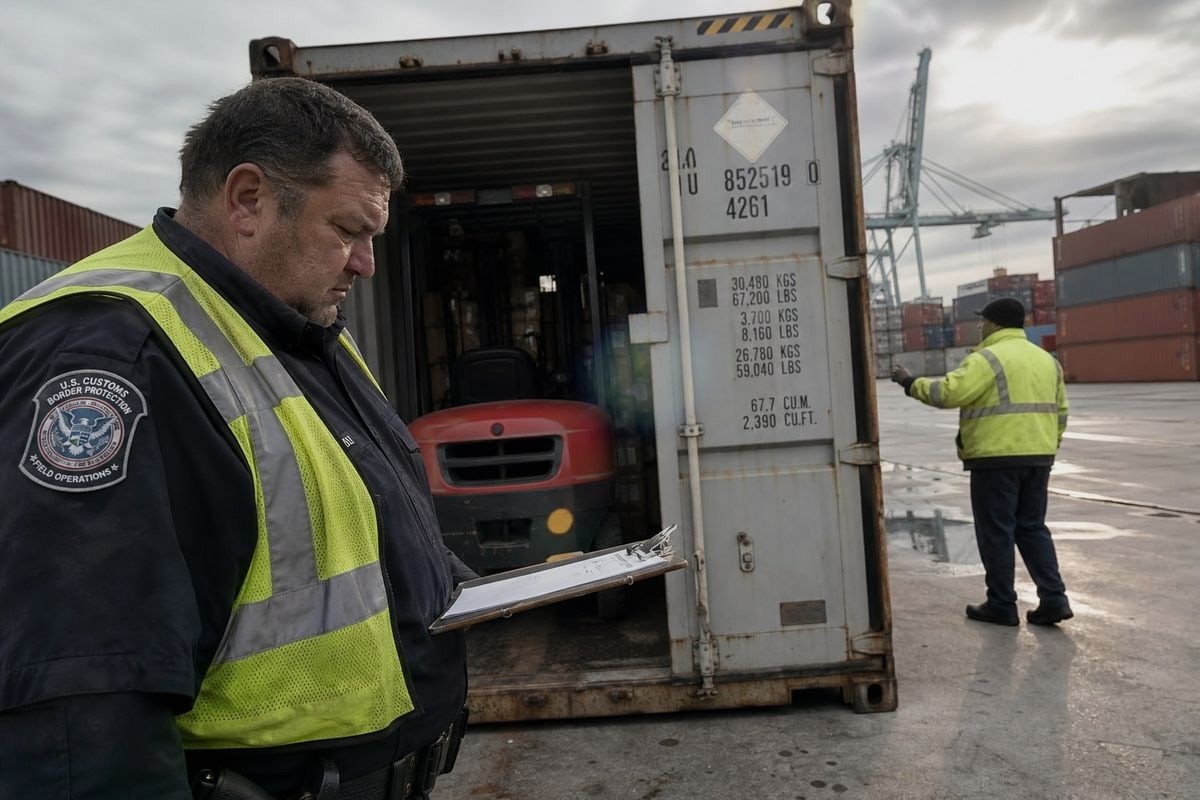
The consequences fall into layers, and each layer costs more than the last. Here is how the risk typically escalates for the transport of dangerous goods without proper paperwork:
| Stage | What Can Go Wrong | Typical Cost Impact |
|---|---|---|
| Booking | Carrier refuses the dangerous goods declaration | Delay, rebooking fees |
| Port of loading | Cargo pulled from the vessel, container held | Storage, handling, missed vessel |
| At sea | Misdeclared cargo discovered | Heavy carrier penalties, blacklisting |
| Destination customs | Documentation check fails | Impoundment, demurrage, possible return |
| Insurance claim | Misdeclaration voids the policy | Full loss on damaged cargo |
The insurance point deserves emphasis. Lithium-ion forklifts are internationally classified as Class 9 hazardous materials. If a shipper declares them as ordinary machinery 2 and something goes wrong at sea, the marine insurance policy can be voided entirely. A forklift is a five-figure asset. Multiply that across a full container, and the exposure is severe.
There is also an operational reality that surprises many importers. A battery can be fully compliant, meaning it genuinely passed all eight UN38.3 tests, and the shipment can still be delayed simply because nobody can produce the test summary 3 when the carrier or forwarder asks for it. Compliance and documentation readiness are two different things. Carriers set their own acceptance rules, and some are stricter than the baseline regulation. A few will also request supporting documents such as a Safety Data Sheet or a product information sheet before accepting the booking.
One special case to know: if you are returning a forklift with a suspected faulty or damaged battery for repair, the standard UN38.3 pathway does not apply. Damaged or defective batteries fall under Special Provision 376, which requires specialized packaging with fire-suppressant properties and carrier pre-approval. Never ship a damaged lithium battery as normal cargo.
Before we book any lithium forklift shipment at MBMLOG, we verify the battery paperwork against the carrier's acceptance policy. Doing that check in China costs a few days of emails. Skipping it can cost weeks at a port.
Chasing battery documents from Chinese factories is a routine part of our week in Zhengzhou. Some suppliers send the full file in an hour. Others need a structured push. Here is the process that works.
Request the UN38.3 test summary directly from your forklift manufacturer or battery supplier. Since January 1, 2020, lithium battery manufacturers and distributors have been legally required to make this standardized document available to anyone in the supply chain. Reputable factories provide it free on request.
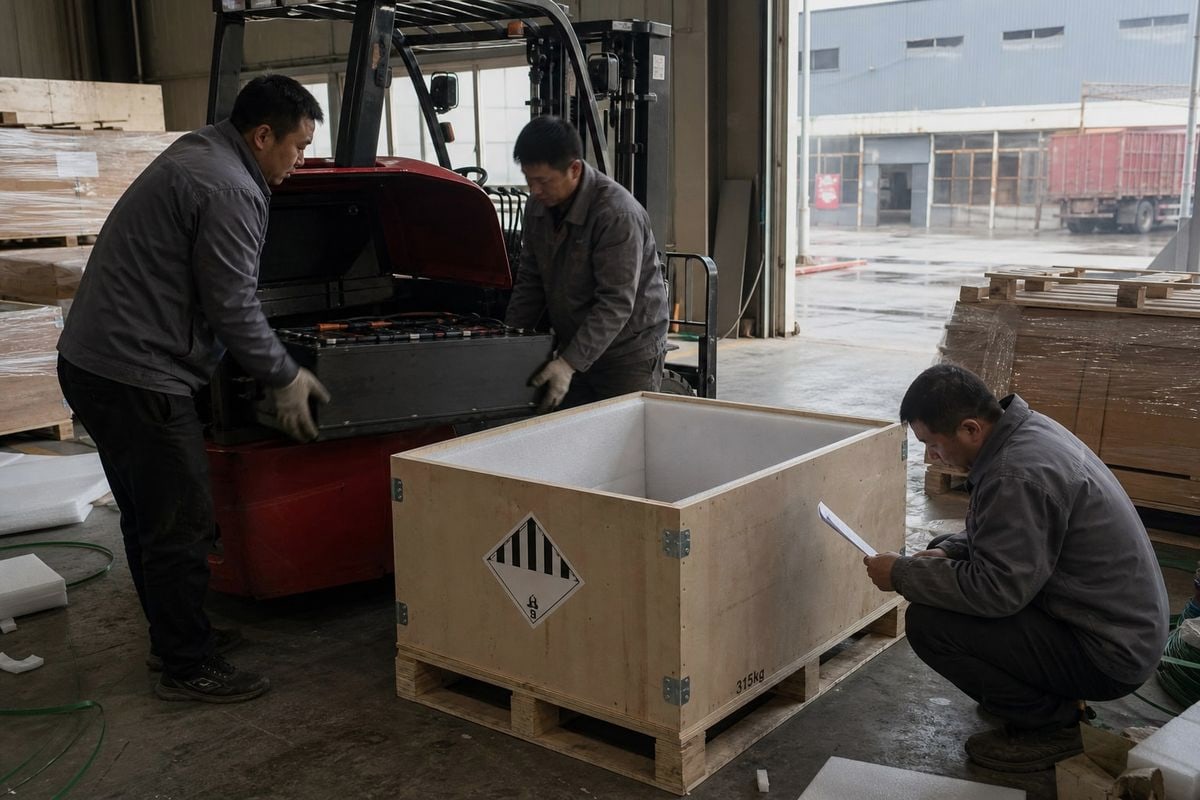
First, understand the difference between two documents, because suppliers often confuse them:
A valid test summary should identify the battery manufacturer 4, the testing laboratory, the report number, the test date, the battery description with model and specifications, and the pass result for each test. If a supplier sends you a one-line "certificate" with no lab name or report number, treat it as a red flag.
The UN38.3 framework, part of the lithium-ion battery certification pathway under the UN Manual of Tests and Criteria, consists of eight tests:
| Test | Name | What It Simulates |
|---|---|---|
| T1 | Altitude simulation | Low-pressure air transport conditions |
| T2 | Thermal test | Extreme temperature cycling |
| T3 | Vibration | Road, rail, and sea transit vibration |
| T4 | Shock | Mechanical impacts during handling |
| T5 | External short circuit | Electrical fault during transport |
| T6 | Impact / crush | Physical crushing of cells |
| T7 | Overcharge | Charging system failure |
| T8 | Forced discharge | Deep discharge abuse |
When we handle factory coordination for clients, we collect these documents during the production stage, not at booking time. That buffer matters. If a supplier cannot produce a valid summary, you want to know while there is still time to arrange third-party testing or switch battery suppliers.
Here is the trade-off we walk buyers through when a supplier admits the paperwork does not exist: fix the documentation, change the cargo, or change the battery. There is no fourth option that a legitimate carrier will accept.
No document substitutes for UN38.3 compliance on a lithium battery. An SDS, MSDS, CE certificate, or factory declaration cannot replace it. Your real alternatives are commissioning third-party UN38.3 testing, shipping the forklift with the battery removed, or switching to a lead-acid battery configuration.
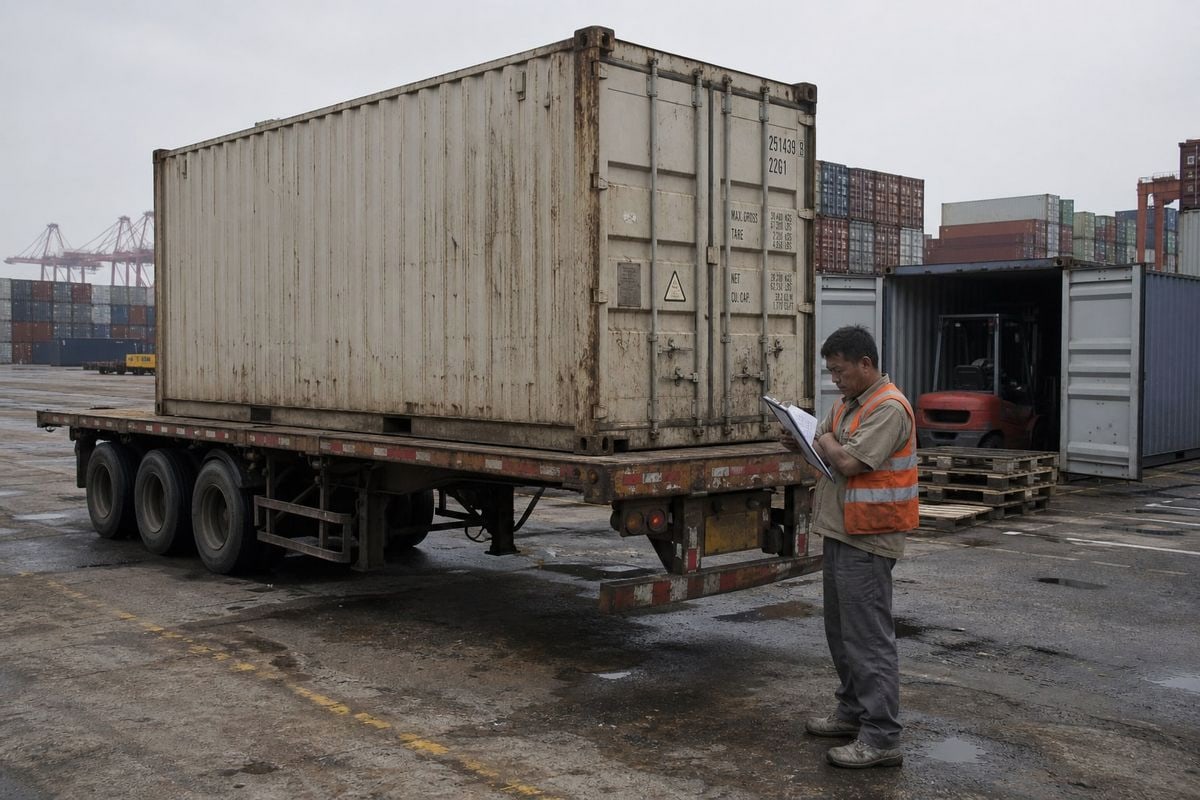
Buyers sometimes hope a Safety Data Sheet or a CE mark will get the cargo through. It will not. Those documents serve different purposes. The SDS describes chemical hazards and handling. CE addresses product safety for the EU market. Neither proves the battery survived the eight transport tests, and carriers know the difference. Supporting documents like the SDS and product data sheets complement the test summary; they do not replace it.
If the battery design is sound but was never tested, an accredited laboratory in China can run the full UN38.3 sequence. Plan for several weeks and factor the lab fee into your landed cost. For a distributor placing repeat orders, this is often the best long-term fix, because the report then covers every future shipment of that battery model. Sea freight under the IMDG Code is generally more workable during this process than air freight, since air transport under the IATA Dangerous Goods Regulations is the strictest regime in practice.
The forklift itself is just machinery once the lithium pack is out. Some clients ship the trucks by sea as general cargo and source compliant batteries separately, either from a tested Chinese battery supplier or locally at destination. This adds assembly work but removes the dangerous goods classification 5 from the main shipment. The packaging and labeling requirements for the machinery-only container are far simpler.
Lead-acid traction batteries do not fall under UN38.3. For price-sensitive orders where the supplier's lithium paperwork is shaky, some importers simply spec the lead-acid version. The trade-off is real: lead-acid packs are heavier, slower to charge, and shorter-lived than lithium iron phosphate batteries. But the shipping documentation is more forgiving.
One warning on shortcuts. We have seen suppliers offer "borrowed" test summaries from a different battery model. Do not accept this. If the summary does not match the battery in the container, you are effectively shipping misdeclared dangerous goods, with every penalty that implies. The same logic applies to refurbished or second-life packs: if the module configuration or protection circuitry was modified, the original report no longer covers the battery and fresh testing is required.
Electric forklifts do not need UN38.3 as vehicles, but their lithium batteries do. Verify the test summary before booking, or the port will verify it for you — expensively.
1. Authoritative technical organization for electrical engineering and battery design standards. ↩︎
2. The original trade.gov/shipping-logistics URL is broken (404). This is the official replacement hub for shipping and logistics guidance. ↩︎
3. Official IATA resource for dangerous goods regulations and lithium battery documentation requirements. ↩︎
4. The UN body responsible for the Manual of Tests and Criteria governing lithium battery safety. ↩︎
5. International Maritime Organization standards for the classification and transport of hazardous materials by sea. ↩︎