

Cada semana, nuestro equipo de operaciones recibe llamadas urgentes de vendedores cuyo cargamento está atrapado en puertos de EE. UU. bajo retenciones de inspección.
Sí, podemos ayudar con el despacho de aduanas de EE. UU. y la entrega puerta a puerta incluso en medio de altas tasas de inspección. La clave es una entrada formal con credenciales de importador reales, declaraciones precisas, documentación adecuada y un socio logístico experimentado en la respuesta a exámenes de CBP y coordinación de última milla.
Las altas tasas de inspección en los puertos de EE. UU. han cambiado las reglas del juego para los importadores. Los retrasos que antes duraban de tres a cinco días ahora se extienden a diez o quince. Se acumulan tarifas ocultas. Los planes de inventario se desmoronan. Pero el problema no es que el envío puerta a puerta ya no funcione. El problema es que ahora exige más precisión, más transparencia y un socio que sepa cómo navegar la escrutinio de CBP desde el origen hasta la entrega final. A continuación, desglosamos exactamente cómo manejamos cada etapa de este proceso y lo que necesita saber para mantener su carga en movimiento.
¿Cómo manejará mi despacho de aduanas de EE. UU. si mi envío es señalado para una inspección intensiva?
Nuestros equipos de almacén en Zhengzhou ven el impacto de la supervisión de los puertos de EE. UU. cada día al preparar la documentación de exportación para los clientes.
Cuando su envío es señalado para una inspección intensiva, coordinamos con nuestro corredor de aduanas en EE. UU. para responder de inmediato, proporcionar todos los documentos requeridos a CBP, organizar la logística de la inspección, pagar cualquier tarifa de inspección y programar la entrega en el momento en que su carga sea liberada.
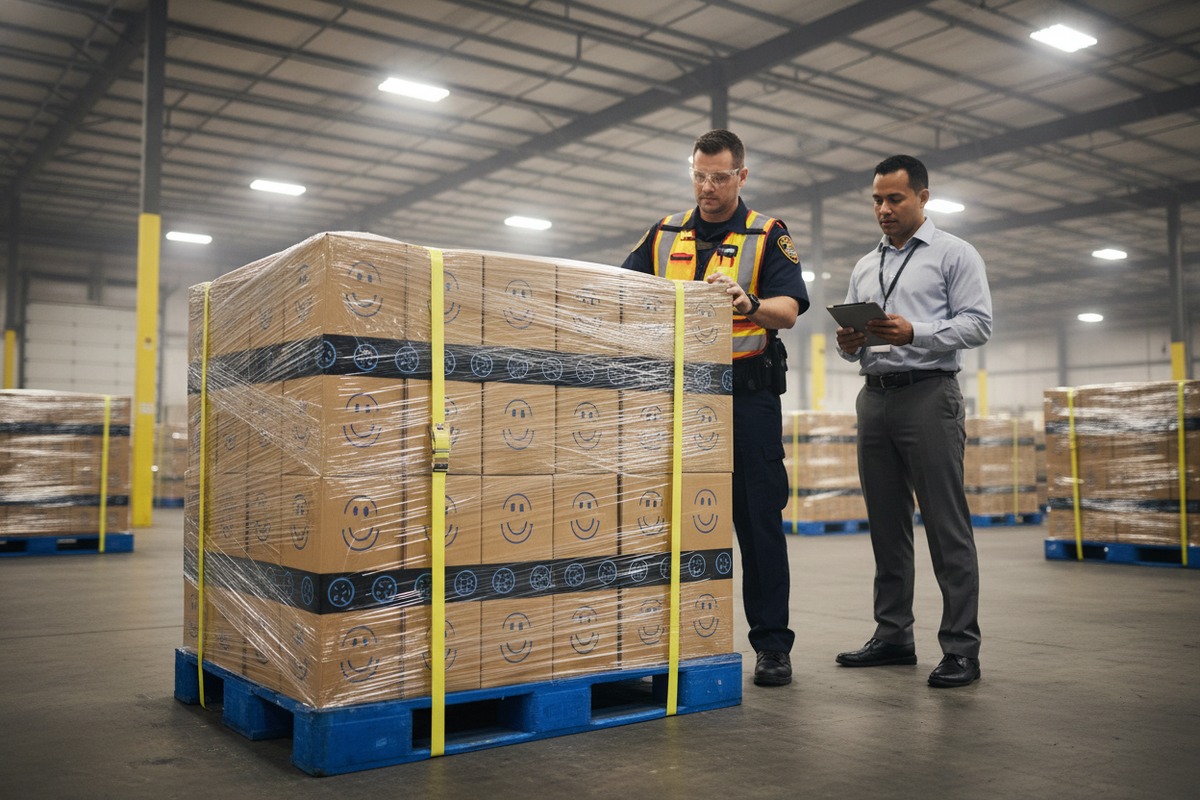
Ser señalado por un inspección intensiva 1 no significa que su envío esté perdido o incautado. Significa que CBP quiere echar un vistazo más de cerca. La pregunta es qué tan rápido y qué tan eficazmente puede responder su proveedor de logística. Así es como lo manejamos paso a paso.
Por qué se señalan los envíos
CBP utiliza un sistema de selección basado en riesgo 2. Algunos envíos son elegidos al azar. Otros son señalados debido a documentos inconsistentes, categorías de productos de alto riesgo, preocupaciones de valoración o problemas de propiedad intelectual sospechosos. Productos como electrónicos, juguetes, calzado, textiles y artículos alimentarios enfrentan un escrutinio desproporcionado. La metodología exacta de selección no es completamente pública, pero sabemos por experiencia que la documentación limpia y consistente reduce drásticamente tus posibilidades de ser retenido.
Nuestro Protocolo de Respuesta
En el momento en que CBP coloca una retención en tu envío, nuestro agente en EE. UU. recibe una alerta. Inmediatamente reunimos todos los documentos de apoyo: la factura comercial, la lista de empaque, el conocimiento de embarque, la presentación de ISF, los certificados de origen y cualquier registro de cumplimiento del producto. Si CBP solicita información adicional, respondemos en cuestión de horas, no de días. La velocidad importa porque cada día que tu carga permanece en el puerto agrega tarifas de almacenamiento y retrasa tu fecha de entrega.
Tipos de Inspecciones y Cuánto Cuestan
| Tipo de Inspección | Duración Típica | Costo Estimado |
|---|---|---|
| Revisión de Documentos (En espera) | 1-3 días | Mínimo (solo tarifas de corredor) |
| Examen de Rayos X | 3-5 días | ~$300 |
| Examen Intensivo / de Entrada | 5–15 días | $1,000+ |
| Revisión de USDA / FDA / CPSC | 3–10 días | Varía según la agencia |
Los costos anteriores son además de sus tarifas estándar de envío y despacho. Siempre recomendamos incluir un margen de siete a diez días adicionales en su cronograma al enviar mercancías de alto riesgo a EE. UU.
Lo que necesitamos de usted
Su tarea es proporcionar información precisa y veraz antes de que la carga salga de China. Necesitamos el verdadero nombre del producto, correcto código HS 3, valor real de la carga, composición del material y país de origen. No subvalúe. No utilice descripciones vagas. No oculte nada. Según nuestra experiencia, los envíos que se despejan más rápido son los que tienen la documentación más transparente. Si su producto requiere certificados de cumplimiento de agencias como CPSC, FCC o EPA, tenga esos listos antes de que enviemos.
Cuando cotizamos una tarifa DDP desde nuestro almacén de consolidación en Zhengzhou, la construimos para incluir todo, desde la recogida hasta la puerta de su casa en EE. UU.
Sí, nuestra tarifa DDP cubre la recogida en origen, los trámites de aduana de exportación, el flete marítimo o aéreo, el despacho aduanero en EE. UU., los derechos, los impuestos y la entrega final. Utilizamos entrada formal con cálculos fiscales reales para que vea cada cargo por adelantado, y no ocultamos tarifas en letra pequeña.

El término "DDP" significa Entregado con Derechos Pagados 4. Significa que el vendedor, o en este caso su proveedor de logística, maneja cada costo y responsabilidad hasta que las mercancías lleguen a su puerta. Pero no todas las cotizaciones DDP son iguales. Algunos proveedores cotizan bajo y luego le sorprenden con cargos inesperados por exámenes aduaneros, almacenamiento o ajustes de derechos. Nosotros adoptamos un enfoque diferente.
Qué Incluye Nuestra Tarifa DDP
| Componente de costo | ¿Qué Incluye Nuestro Presupuesto DDP? | Notas |
|---|---|---|
| Recogida de Origen / Consolidación de Almacén | Sí | De su proveedor en China |
| Presentación de Aduanas de Exportación | Sí | Chinese export declaration |
| Ocean / Air Freight | Sí | Based on shipment volume and mode |
| US Customs Brokerage | Sí | Formal Entry 5 filing by our US agent |
| Import Duties (Tariff) | Sí | Based on accurate HS code and value |
| Tarifa de procesamiento de mercancías (MPF) | Sí | Charged on most formal entries |
| Tarifa de mantenimiento del puerto (HMF) | Sí | Applies to ocean cargo |
| Final-Mile Delivery | Sí | To your warehouse, Amazon FBA, or door |
| Inspection / Exam Fees | Quoted Separately | These are unpredictable and CBP-imposed |
We are transparent about one thing: inspection fees are the one cost no provider can guarantee upfront. If CBP orders a tailgate exam, the port charges a fee. We cannot absorb a $1,000 exam fee into every quote because most shipments are not examined. What we do is tell you the risk level for your commodity and help you budget for it.
Why We Recommend Formal Entry (正规清关)
Given the current high inspection rates at US ports, we strongly recommend formal customs clearance. This means your goods enter the US under a real importer's name with a valid EIN and customs bond. The declaration is truthful. The duties are paid in full. CBP issues a formal tax receipt that can be used for accounting, tax deductions, and audits. This approach leaves a clean record in CBP's system and reduces future scrutiny on your shipments. We call this "正清" in Chinese — it means clearing customs the right way, with full transparency and traceability.
The Risk of Cutting Corners
Some importers try to save money by undervaluing goods, using vague product descriptions, or clearing under a freight forwarder's name instead of their own company. This might work once or twice. But CBP's systems learn. If your shipment profile looks suspicious, you will face more inspections, not fewer. Worse, you could face penalties, duty reassessments, or even seizure. The short-term savings are never worth the long-term risk.
What You Need to Provide for Accurate DDP Pricing
Before we can give you a solid DDP quote, we need your product details: HS code, unit value, quantity, weight, dimensions, material, and country of origin. We also need to know whether your product is subject to any Partner Government Agency requirements 6. The more accurate your data, the more accurate our quote. That is the only way to prevent hidden fees.
¿Cómo aseguran que mi inventario de Amazon FBA llegue a tiempo a pesar del aumento de la supervisión en los puertos de EE. UU.?
Our team ships hundreds of FBA-bound pallets every month, so we have learned exactly where the bottlenecks form and how to plan around them.
We ensure on-time FBA delivery by building buffer time into transit plans, filing ISF at least 24 hours before loading, pre-validating all Amazon labeling requirements, and using formal entry to minimize the chance of document-triggered holds at US ports.

For Amazon sellers, a delayed shipment is not just an inconvenience. It means stockouts, lost Buy Box positions, and declining search rankings. Under current conditions at US ports, the old approach of cutting every timeline to the minimum no longer works. Here is how we adapt.
Planning With Realistic Timelines
Standard ocean freight from China to the US West Coast takes about 14 to 18 days of sailing time. Add customs clearance, drayage, and final delivery, and you are looking at 18 to 25 days door to door under normal conditions. With elevated inspection rates, we now recommend planning for 25 to 35 days. That extra buffer accounts for potential holds, exams, and port congestion.
| Shipping Stage | Normal Timeline | With Inspection Buffer |
|---|---|---|
| Origin Pickup + Export | 2-3 días | 2-3 días |
| Ocean Freight (West Coast) | 14–18 days | 14–18 days |
| US Customs Clearance 7 | 1-3 días | 3–10 días |
| Drayage + Final Delivery to FBA | 2-5 días | 3-7 días |
| Total | 19–29 days | 22–38 days |
ISF Filing Discipline
For ocean cargo, the Archivo de Seguridad del Importador 8 (also called 10+2) must be submitted at least 24 hours before the vessel loads in China. Late or inaccurate ISF filings are one of the most common triggers for holds at the US port. We collect all required ISF data during the booking process so we never miss the deadline. This includes the manufacturer name and address, seller name, buyer name, ship-to party, HS codes, and container stuffing location.
Amazon-Specific Compliance
Beyond customs, Amazon has its own set of requirements. Every carton must have the correct FNSKU label 9, the shipment must match the FBA shipping plan, and pallets must meet Amazon's dimension and weight standards. If any of these are wrong, Amazon will reject the delivery or charge you penalty fees. We verify all FBA labeling at our Zhengzhou warehouse before the cargo leaves China. Fixing a labeling error in China costs almost nothing. Fixing it after it arrives in the US costs time and money you cannot afford.
Splitting Shipments for Risk Management
For sellers with large orders, we sometimes recommend splitting the shipment across two containers or two sailing dates. If one container gets pulled for inspection, the other still arrives on schedule. This strategy costs slightly more in freight but protects your inventory levels and sales velocity. It is especially useful during Q4 peak season when stockouts are most damaging.
Comunicación proactiva
We track every shipment from departure to delivery. If a hold or delay occurs, we notify you within hours, explain the situation, and give you an updated delivery estimate. This gives you time to adjust your Amazon inventory settings, run promotions to slow sales velocity, or arrange an emergency air shipment for critical SKUs.
¿Qué apoyo específico proporcionan para ayudar a que mi carga pase por la Aduana de EE. UU. sin retrasos?
From our export operations in Zhengzhou to our partner brokers at US ports, every step in our process is designed to keep your cargo moving.
We provide pre-shipment document review, accurate HS code classification, ISF filing, formal entry with real importer credentials, CBP exam coordination, PGA compliance checks, and final-mile delivery scheduling — all managed by a single point of contact throughout the process.

Customs clearance is not a single event. It is a chain of steps where one weak link can hold up everything. Our job is to strengthen every link before the cargo even leaves China. Here is the specific support we offer at each phase.
Pre-Shipment: Getting It Right Before It Ships
This is where most delays are actually prevented. Before your goods leave the factory, we review your commercial invoice, packing list, and product details. We check that the HS codes match the actual product. We verify that the declared value is consistent with market prices. We confirm that any PGA requirements are met. For example, children's products need CPSC compliance. Electronics may need FCC documentation. Food items require FDA prior notice. We identify these requirements early and collect the necessary certificates so they are ready when the cargo arrives in the US.
In Transit: ISF and AMS Filing
Once the cargo is booked on a vessel, we file the ISF with CBP within the required timeframe. We also ensure that the Automated Manifest System 10 (AMS) data matches the bill of lading and ISF exactly. Mismatches between these filings are a common trigger for holds. Our team double-checks every field: shipper name, consignee name, notify party, HS codes, and container number.
At the US Port: Formal Entry and Exam Management
When the vessel arrives, our US customs broker files the formal entry using the importer's EIN and customs bond. CBP reviews the entry, calculates duties and fees, and either releases the cargo or places it on hold. If released, we arrange drayage and delivery immediately. If held, we follow our inspection response protocol: gather documents, respond to CBP queries, coordinate exam logistics, and pay any fees required for release.
After Clearance: Final-Mile Delivery
Once CBP releases your cargo, we schedule delivery to your warehouse, Amazon FBA center, or any other US address. For FBA shipments, we coordinate delivery appointments with the receiving warehouse. For commercial deliveries, we arrange liftgate service or dock delivery based on your facility. The shipment is tracked from port release to final signature.
The Formal Entry Process (正清) in Detail
We believe formal entry is the safest path for US importers right now. Here is the flow:
- The bill of lading names the real US importer as consignee.
- Our US agent files a Formal Entry with CBP using the importer's EIN and bond.
- CBP reviews the entry, verifies the documentation, and calculates duties.
- Duties, MPF, and HMF are paid in full.
- CBP issues an Entry Summary (tax receipt).
- Cargo is released.
- We arrange delivery to your door.
This process creates a clean, traceable record in CBP's system. It supports your company's accounting and tax compliance. And it builds a positive import history that can reduce your inspection risk over time.
Why Document Consistency Matters
Let me be direct: the number one cause of preventable customs delays is inconsistent documentation. If your commercial invoice says "plastic storage bins" but the bill of lading says "household goods," CBP will have questions. If the ISF lists one HS code and the entry uses another, that is a red flag. Every document in the chain must tell the same story. Our team reviews every document for consistency before filing. It is a simple step, but it prevents a huge percentage of holds.
Conclusión
Door-to-door delivery to the US still works, but it now requires formal entry, truthful declarations, consistent documents, and realistic timelines to succeed.
Notas al pie
1. Defines the comprehensive process of inspection by U.S. Customs and Border Protection. ↩︎
2. Explains CBP's Automated Targeting System used for risk assessment of cargo and travelers. ↩︎
3. Describes the Harmonized System for classifying traded products internationally. ↩︎
4. Provides information on Incoterms 2020 rules, including Delivered Duty Paid (DDP). ↩︎
5. Outlines the requirements and process for filing a formal entry with CBP for imported goods. ↩︎
6. Explains the role of Partner Government Agencies in regulating imported goods. ↩︎
7. Provides an overview of the process for importing goods into the United States. ↩︎
8. Details the 10+2 rule for advance electronic submission of cargo information to CBP. ↩︎
9. Provides Amazon's requirements for FBA product barcodes, including FNSKU labels. ↩︎
10. Describes the electronic system used by CBP for cargo manifest data submission and processing. ↩︎




