
- +8618603825129
- [email protected]


Choosing port-to-port vs door-to-door shipping for forklifts confuses many buyers I work with. Our Zhengzhou team sees importers pick the wrong option, then face surprise fees and stranded machines.
Choose port-to-port shipping for forklifts if you already have your own customs broker, inland trucking, and port pickup arranged. Choose door-to-door if you want one provider to handle factory pickup, ocean freight, customs clearance, and final delivery under a single quote and invoice.
That is the short answer. But forklifts are not parcel freight. The real decision depends on your total landed cost 1, your customs experience, and how far your warehouse sits from the port. Let me walk you through each factor.
Last month, a US dealer asked me why his "cheap" port-to-port quote doubled after arrival. Our team traced it to excluded drayage and terminal fees. The definitions matter.
Port-to-port shipping covers only the ocean leg between two named ports, leaving inland transportation, customs clearance, and pickup to you. Door-to-door shipping covers the full chain, from factory pickup in China through export declaration, ocean freight, import clearance, and last-mile delivery to your facility.
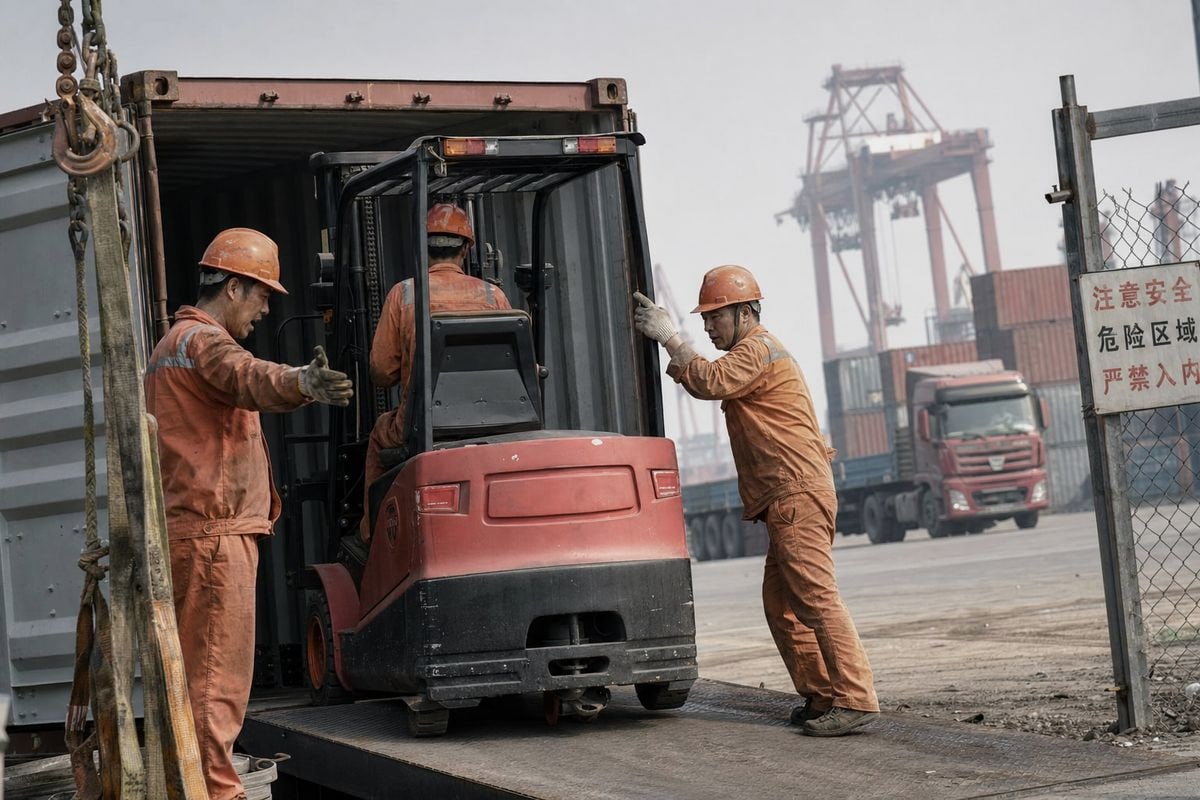
The key point is that these terms describe the scope of service, not the transport mode. A door-to-door forklift shipment can move by ocean, rail, and flatbed trucking combined. What changes is who coordinates each leg and who takes responsibility when something goes wrong.
Here is how the two service scopes compare for a typical electric forklift shipment from China to the United States:
| Service Leg | Port-to-Port | Door-to-Door |
|---|---|---|
| Factory pickup in China | You arrange | Included |
| Export customs declaration | Usually you arrange | Included |
| Transporte marítimo | Included | Included |
| Destination terminal handling charges | Often excluded | Included |
| Import customs clearance | You arrange | Included |
| Duties and taxes | You pay separately | Included under DDP |
| Drayage services from port | You arrange | Included |
| Final delivery to warehouse | You arrange | Included |
| Points of accountability | Multiple | One |
A forklift is a heavy industrial asset. It needs loading equipment, proper securing inside the container, and unloading gear at the destination. Mast height matters too. In my experience, forklifts with masts over 2.5 meters often need partial disassembly for containerization, or flat-rack shipping instead. Ro-Ro shipping is another option, since a forklift can be driven directly onto the vessel, which simplifies port-to-port handling at major ports.
With port-to-port, you must coordinate every one of these handoffs yourself. With door-to-door, our team manages them under one bill of lading and one plan. For small boxed cargo, the difference is minor. For a 3-ton electric forklift, the difference shapes your entire import experience.
One trade-off I weigh on every quote is headline rate versus total landed cost. A narrow quote looks cheap. A bundled quote looks expensive. The math often surprises buyers.
Compare total landed cost, not the freight rate alone. Port-to-port saves money only if your separately arranged trucking, brokerage, and terminal fees stay below the door-to-door bundle. For buyers without established local partners, door-to-door usually costs less overall despite the higher headline price.

The "cheapest quote versus cheapest total shipment" trap catches first-time importers constantly. A port-to-port rate looks attractive because it only prices the ocean leg. Everything else gets billed later, by different companies, at rates you never negotiated. When we prepare door-to-door quotes at MBMLOG, we bundle those legs upfront so the number you see is closer to the number you actually pay.
Here is an illustrative cost structure. Exact figures vary by route, forklift size, and season, so treat these as directional, not universal:
| Cost Item | Port-to-Port Quote | Door-to-Door Quote |
|---|---|---|
| Transporte marítimo | Quoted | Bundled |
| Origin trucking and export fees | Extra bill | Bundled |
| Destination terminal handling charges | Extra bill | Bundled |
| Customs brokerage | Extra bill | Bundled |
| Duties and taxes | Extra bill | Bundled under DDP |
| Port drayage and flatbed trucking | Extra bill | Bundled |
| Demurrage risk if pickup is slow | Alta | Bajo |
First, distance from the port. If your warehouse sits 500 miles inland, inland transportation 2 becomes a major cost, and coordinating it yourself across time zones adds real risk. Second, container utilization. We regularly help dealers fit spare parts, chargers, and batteries into unused container space, which lowers cost per forklift under either model. Third, attachments. Shipping specialized attachments like rotators or clamps as separate LTL freight can sometimes beat bundling them into a single heavy-haul quote, and a good forwarder will run both numbers for you.
The honest answer is that port-to-port can win on cost. But it only wins when you have pre-negotiated rates with truckers and brokers at both ends. Without those, the separate bills stack up fast, and demurrage from a slow port pickup can erase any savings in a single week.
A hard lesson from our early years: an electric forklift sat at a US port for eleven days because the consignee's broker missed a battery document. Control means different things to different buyers.
Port-to-port gives experienced importers more control, since they pick their own brokers and truckers. Door-to-door gives better timing control for everyone else, because one provider synchronizes the sea leg with pre-booked inland transport and handles clearance before problems become demurrage.
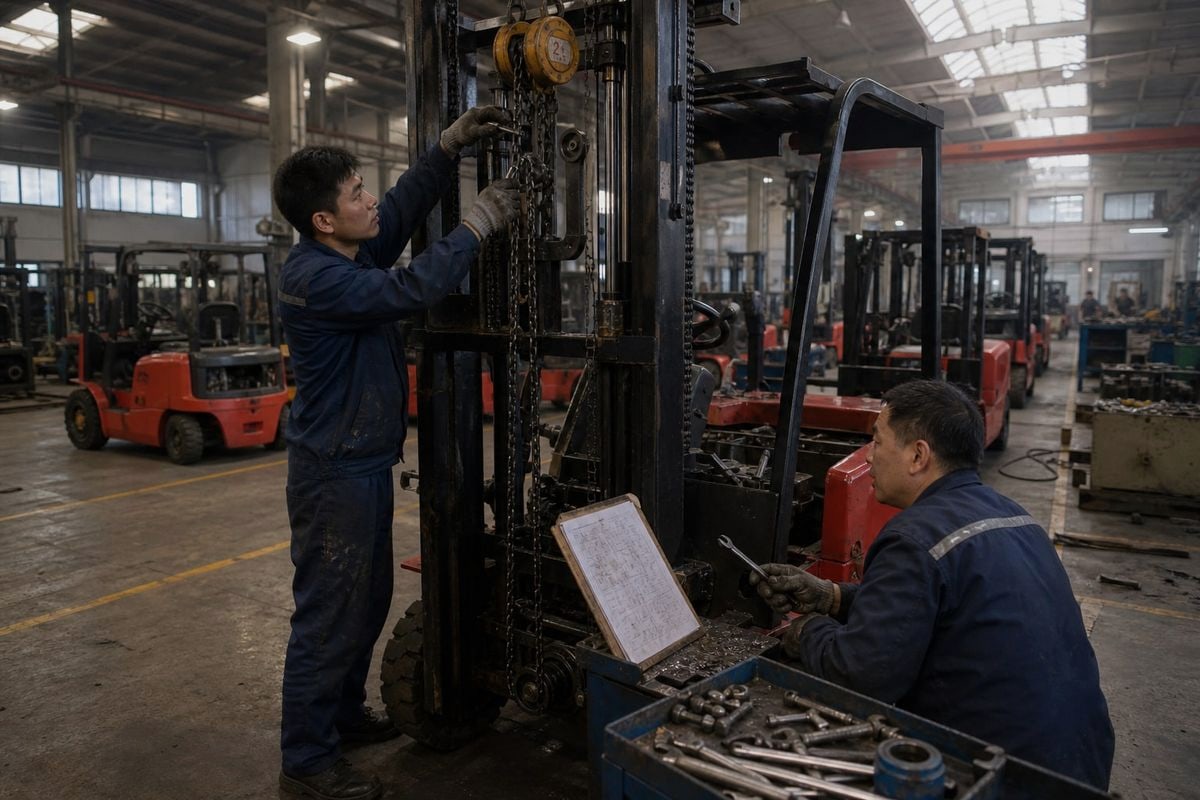
Control is the strongest argument for port-to-port, so let me give it a fair hearing. If you import forklifts every month, you likely have a customs broker who knows your HS codes, a drayage company with your port credentials, and flatbed trucking on standing rates. In that case, port-to-port lets you optimize each leg and keep your existing relationships. Several of our long-term dealer clients run exactly this way, and we simply handle the China side and ocean booking for them.
But control cuts both ways. With port-to-port, you also own every gap between legs. If the vessel arrives Friday and your trucker comes Wednesday, you pay storage. If your broker files late, you pay demurrage. Nobody owns the whole timeline except you.
Forklifts carry compliance requirements that ordinary cargo does not:
With door-to-door, one team checks all of this before departure. Timing also becomes more predictable, because the same provider that books the vessel pre-books the drayage and final delivery. There is no gap between port arrival and inland pickup, which is exactly where storage and demurrage charges are born.
A purchasing manager in Texas once told me he almost skipped importing entirely because customs paperwork scared him. His story is common among first-time forklift buyers we serve.
Yes, door-to-door is usually worth it without your own customs broker. Import clearance for forklifts involves HS codes, battery declarations, and emission documentation that first-time importers rarely handle well alone. A DDP door-to-door service bundles brokerage into one accountable provider and one invoice.
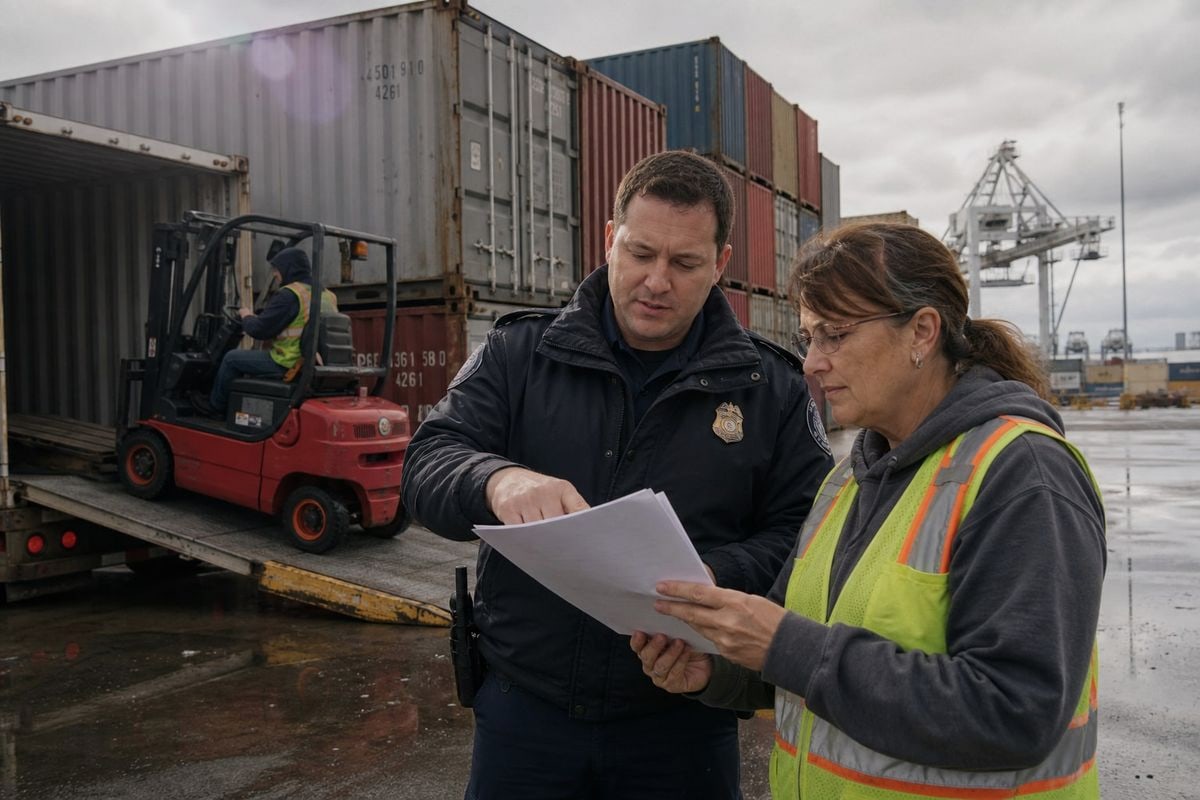
If you lack a broker, port-to-port forces you to find one anyway. You will search for a brokerage, negotiate a one-off fee, and hope they understand electric forklift classifications and lithium battery paperwork. Meanwhile your container is already on the water. That timeline pressure is where mistakes happen, and mistakes at the port cost real money daily.
Door-to-door removes that scramble. Under DDP terms, our team handles export declaration in China, import clearance at destination, and duty payment, then delivers to your dock. You receive one invoice instead of five. There is another advantage buyers often miss: cargo insurance. With a single provider maintaining liability from origin to final destination, coverage tends to be cleaner. With port-to-port, liability fragments across the trucker, the carrier, and the drayage company, and claims can turn into finger-pointing between parties.
| Your Situation | Better Fit |
|---|---|
| First forklift import, no broker | Door-to-door (DDP) |
| Regular importer with broker and truckers | Port-to-port |
| Warehouse far inland from port | Door-to-door |
| Buying from multiple Chinese factories | Door-to-door with consolidation |
| Strong destination logistics team | Port-to-port |
| Lithium battery forklifts, first shipment | Door-to-door |
There is one honest exception. If you are buying near a major port and a local freight forwarding services partner at destination already offers you clearance plus pickup as a package, you have effectively built your own door-to-door chain. That works. Just make sure someone owns the handoff between the ocean carrier and your local partner, in writing, before the vessel sails.
Cheap quotes hide expensive gaps. Compare service scope, not rates. Pick port-to-port with established partners; pick door-to-door for one accountable provider. Contact me at [email protected] for a landed-cost quote.
1. Official International Trade Administration guide on calculating total landed costs, including duties, taxes, and shipping fees. ↩︎
2. Official U.S. Department of Transportation site for information on domestic transport infrastructure and regulations. ↩︎
3. The International Maritime Organization's official guidance on IMDG regulations for shipping lithium-ion batteries. ↩︎
4. U.S. Customs and Border Protection guidance on required import documentation including the commercial invoice. ↩︎



