- +8618603825129
- [email protected]


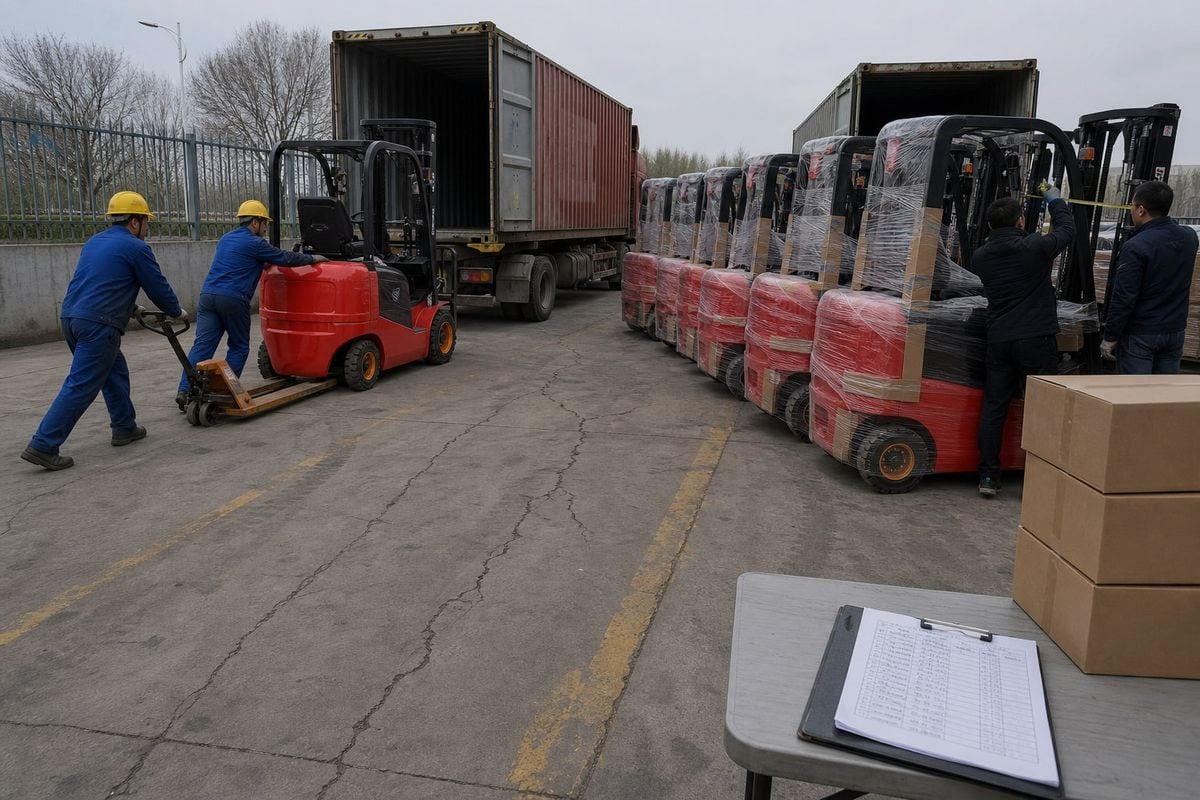
Deciding how to ship forklifts — batteries installed or removed — trips up many importers. I have watched containers sit at Chinese ports for weeks because someone guessed wrong on this one question.
Ship forklifts with batteries installed whenever the battery can be fully disconnected, terminals insulated, and the unit secured against movement. Remove batteries only when hazmat rules, carrier restrictions, or wet lead-acid electrolyte risks make the installed configuration non-compliant or unsafe for your route.
That short answer hides real trade-offs. The right choice depends on battery chemistry, regulations, cost, customs, and damage risk. Let me walk you through each factor, one by one.
A shipment we coordinated out of Zhengzhou last year almost got rejected at the port because the factory forgot one document: the battery's UN38.3 test summary. That single page decides whether lithium forklifts sail on time.
Lithium forklift batteries are Class 9 dangerous goods under IMDG and IATA rules. They may stay installed if the forklift is powered off, terminals are insulated, accidental activation is prevented, and the battery is secured. Shipments still require hazmat papers, UN labeling, and carrier acceptance.
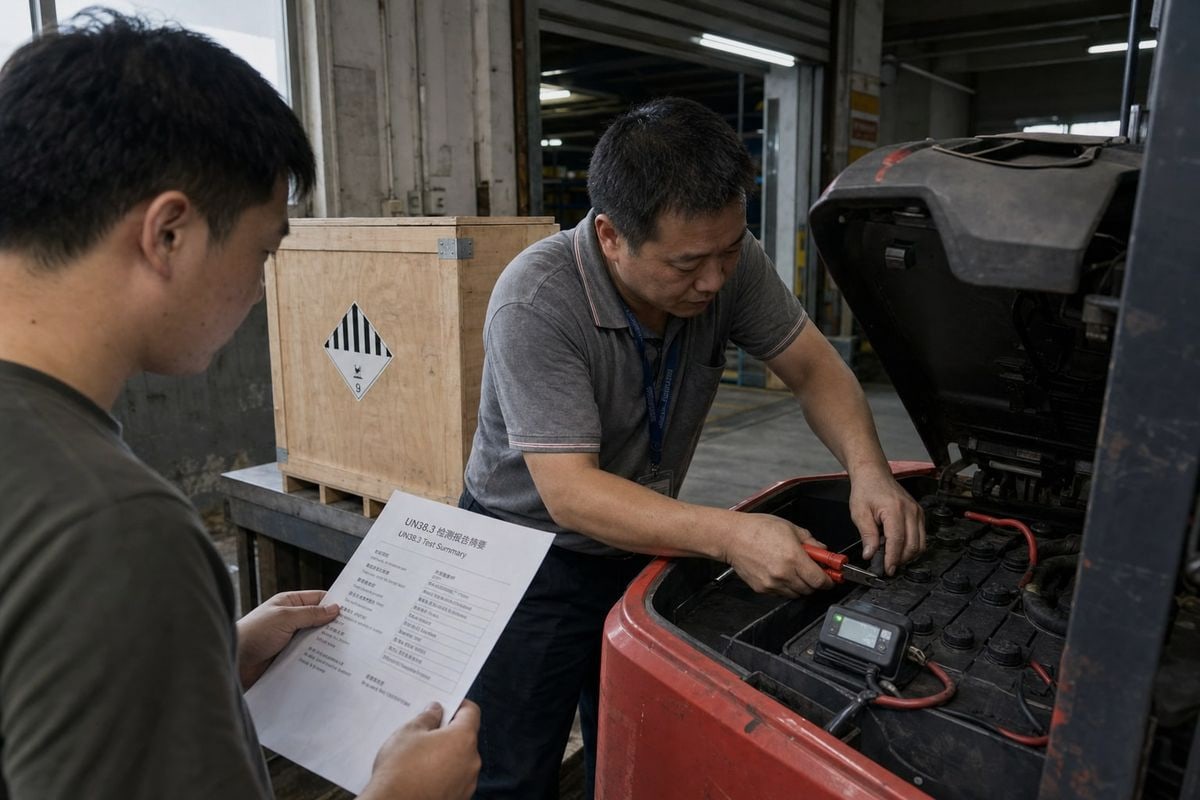
Both lead-acid and lithium-ion batteries are legally classified as hazardous materials, falling under Class 8 or Class 9. This means UN-certified labeling and HAZMAT shipping papers apply to virtually all commercial transport, whether the battery is inside the forklift or crated separately. In our daily work handling lithium-ion battery shipping from China, we prepare these documents before the cargo ever leaves the factory.
International ocean freight 1 follows the IMDG Code, and air freight follows IATA rules. Both are far more restrictive than domestic road transport, especially regarding wet battery placement and venting. In the United States, DOT hazardous materials rules 2 take over once the container hits the road. PHMSA's guidance on wet batteries is the strongest regulatory anchor here. To use the wet battery exception, you must disconnect the batteries while they remain in the forklift, uninstall them entirely, or ship batteries and forklifts on separate vehicles. If you uninstall them, they must be repackaged under the applicable hazmat packaging rules.
| Requisito | Installed Battery | Removed Battery |
|---|---|---|
| Terminal insulation | Tape, caps, or covers required | Required, plus non-conductive packaging |
| Documentación | DG declaration, UN38.3 (lithium) | Full hazmat papers, UN-certified packaging |
| Activation prevention | Forklift off, key removed, breaker open | No aplicable |
| Securing | Battery locked to chassis | Crated, braced, segregated |
Para lithium units 3, we also ask factories to activate the BMS "Shipping Mode" or hibernation setting. This stops parasitic power drain during a 30-to-45-day ocean transit. For air shipments of spare lithium batteries, IATA packing instructions limit state of charge to 30% or less — another reason ocean freight with the battery installed is usually simpler.
One trade-off we weigh on almost every quotation: a forklift with its battery installed is one lift, one lashing plan, one customs line. Split them apart, and you often double the handling cost.
Shipping with batteries installed usually lowers total freight cost because it eliminates separate hazmat packaging, extra crating, and duplicate handling fees. The forklift occupies the same container footprint either way, so removal rarely saves space — it just adds a second cargo item to pay for.
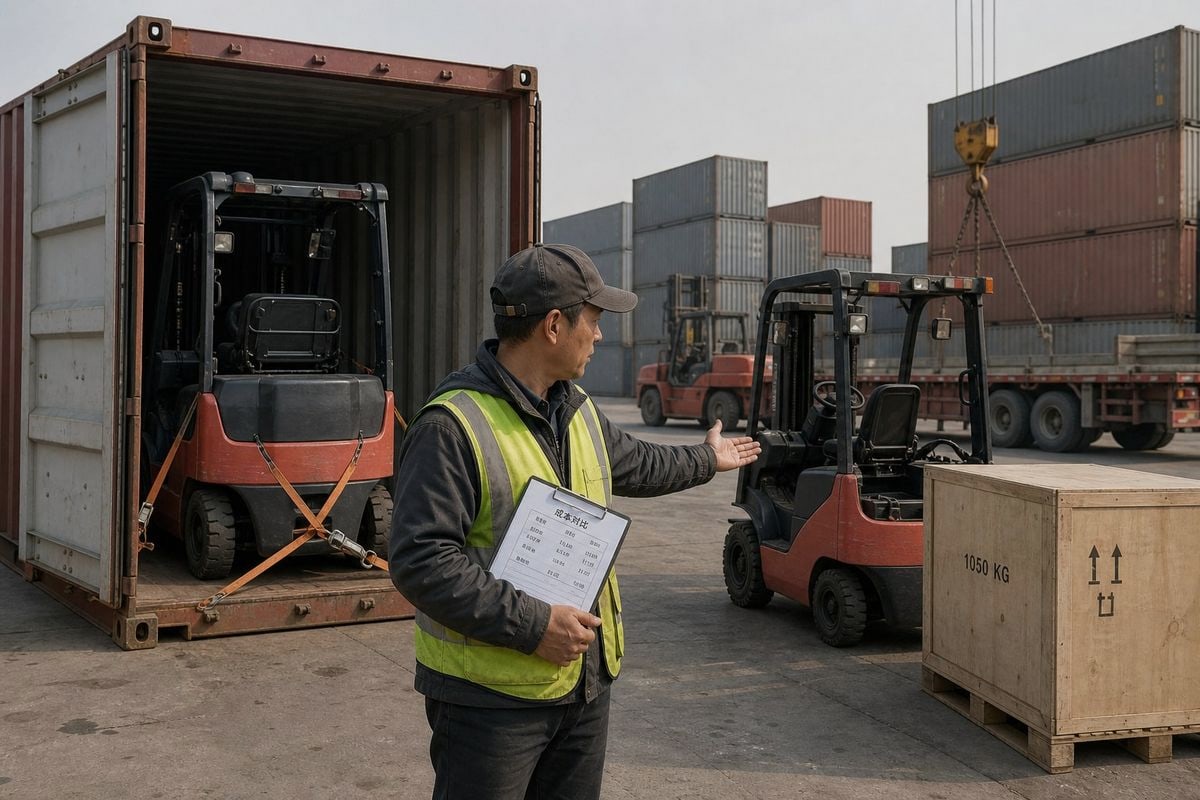
Heavy equipment transport pricing is driven by weight, footprint, and handling complexity. A counterbalance forklift with its battery inside does not shrink when you pull the battery out. The chassis still needs the same floor space in a 20FT or 40FT container. Meanwhile, the removed battery — often 500 to 1,500 kilograms of industrial cell pack — now needs its own UN-certified crate, its own lashing points, and its own line on the dangerous goods manifest.
| Cost Factor | Battery Installed | Battery Removed |
|---|---|---|
| Crating and packaging | Standard blocking and bracing | Extra UN-certified crate or 4G box |
| Handling at origin | Single lift | Two lifts, specialized battery handling |
| Container space | Forklift footprint only | Forklift plus crate footprint |
| Hazmat documentation | One DG entry | Separate DG shipment, higher surcharge |
| Labor at destination | Drive or tow off | Reinstallation labor and equipment |
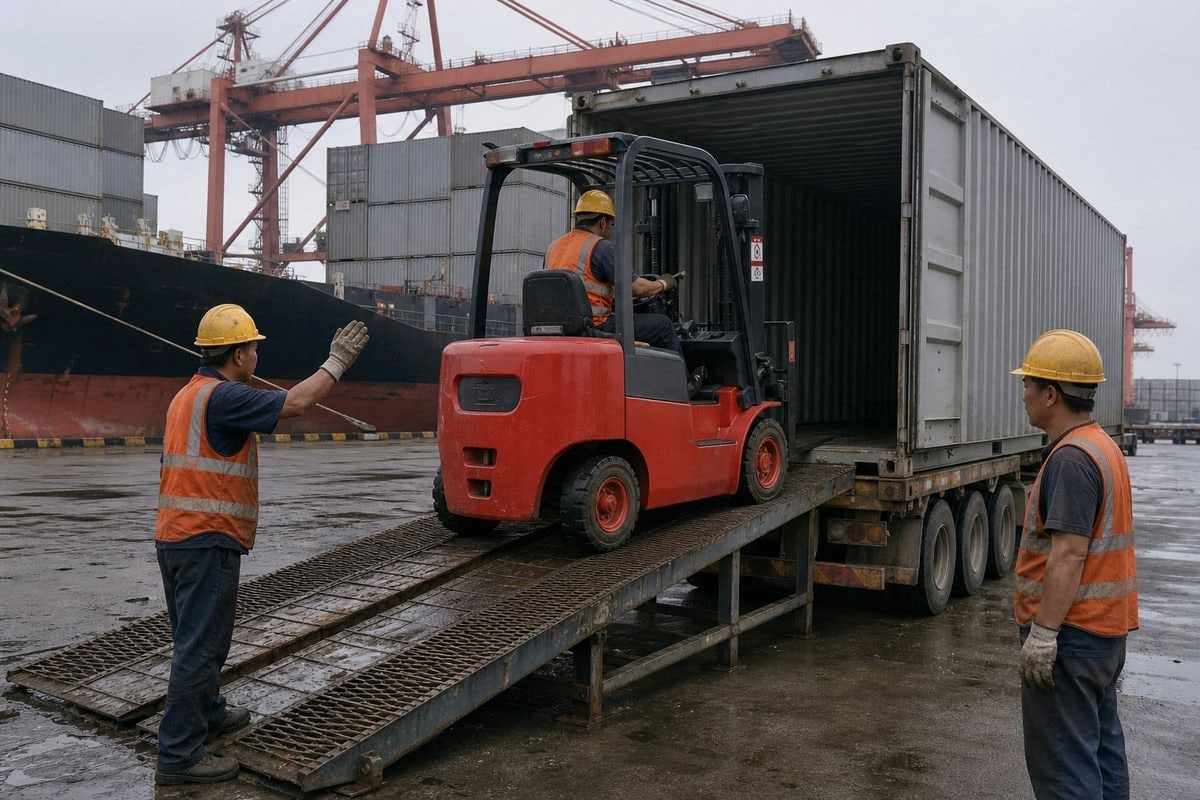
There is a hidden safety cost too. On lead-acid forklifts, the battery provides essential counterweight. Remove it, and the forklift weight distribution shifts dramatically. The chassis becomes unstable during flatbed trailer loading and container loading, which raises tip-over risk and slows the whole operation. Our loading teams in China plan lashing and chocking around the machine's designed center of gravity — a battery-less chassis breaks that plan.
For freight class purposes on the U.S. side, a complete forklift also classifies more cleanly than a machine plus a loose hazmat battery. When customers ask us how many forklifts fit in a 40HQ, the answer almost never improves by removing batteries. It usually gets worse.
A U.S. distributor once told me he removed batteries "to keep customs simple." His forklifts cleared fine — but his battery crates got flagged as a separate hazmat consignment and sat in exam for eleven days.
No — removing batteries rarely speeds up customs and often creates a second, more scrutinized hazmat shipment. Installed batteries clear as part of the forklift when documentation is complete. Focus on accurate HS codes, UN38.3 certificates, MSDS sheets, and consistent paperwork instead of physical removal.
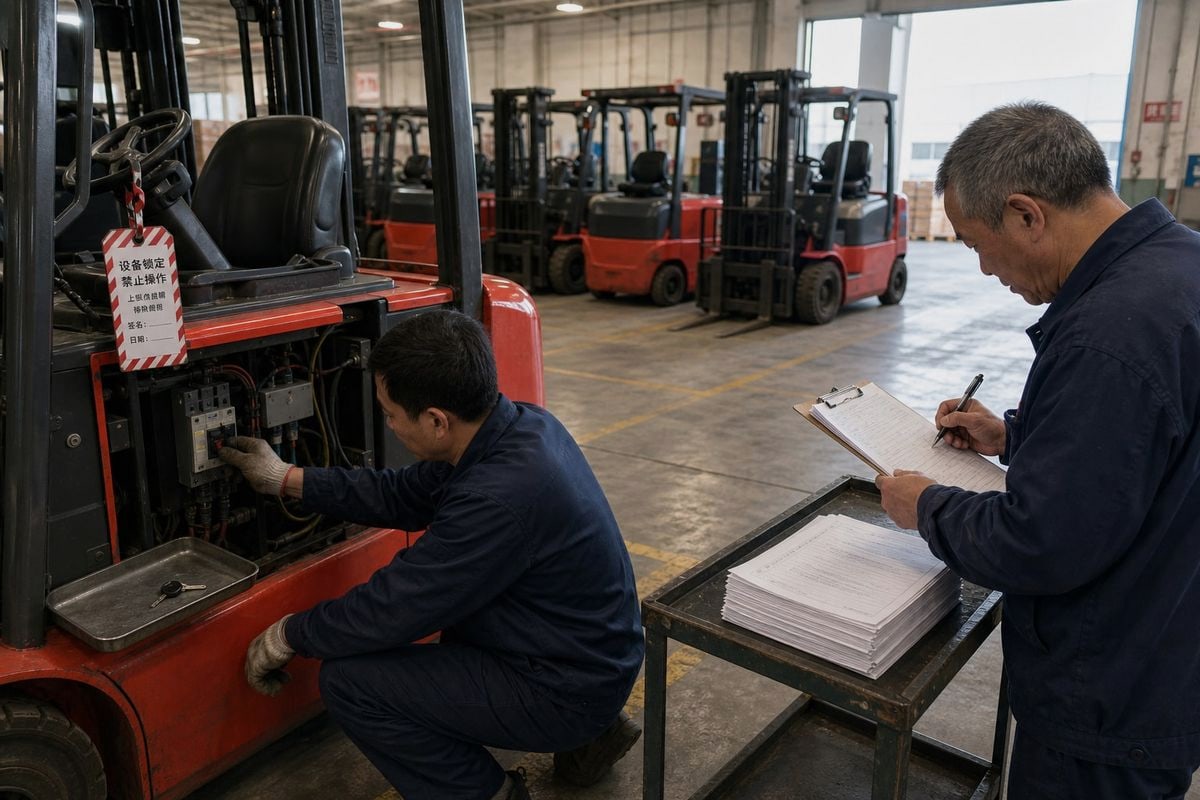
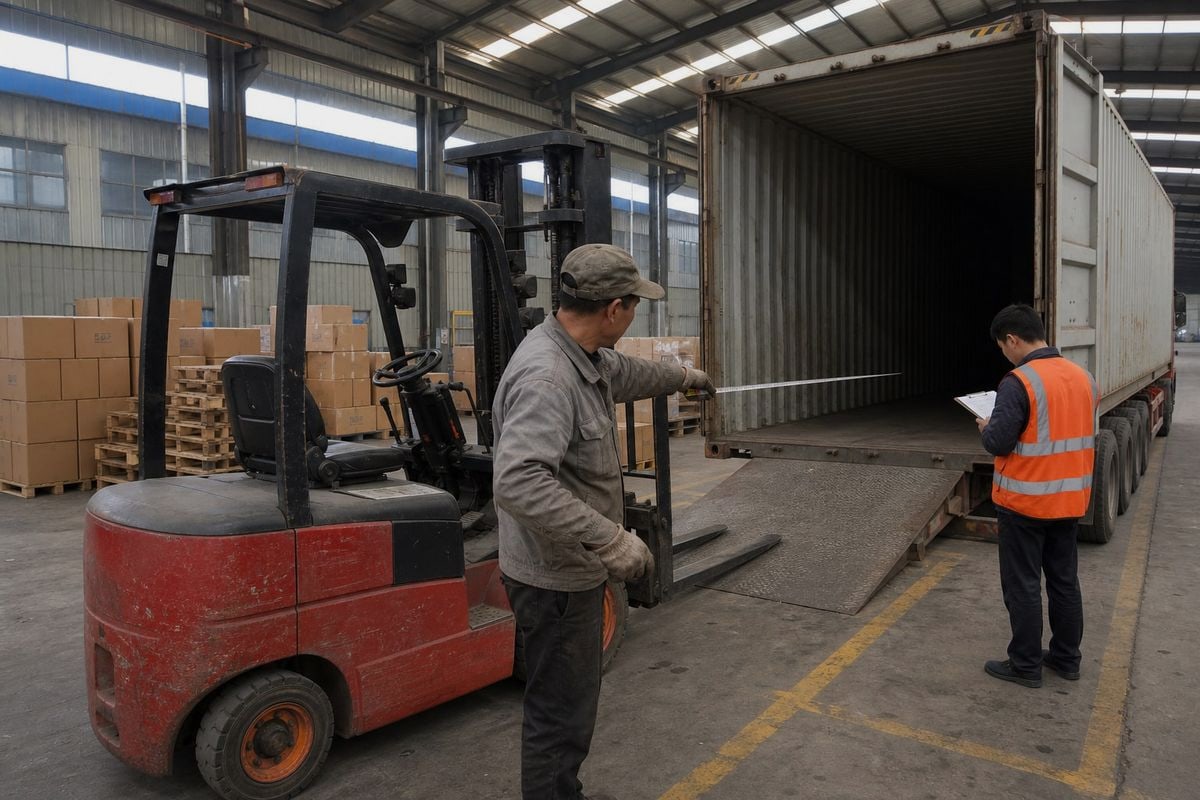
Customs delays almost never come from where the battery physically sits. They come from paperwork gaps. In our experience clearing forklifts into the United States and Europe, the documents below decide whether a shipment moves or stalls:
When you remove the battery, you create two customs entries where there was one. The loose battery is now a standalone hazmat article. It may require its own UN-certified packaging inspection, its own classification review, and stricter segregation from conductive materials in the container. Hazmat freight regulations treat a bare industrial battery with more suspicion than a battery contained in equipment. That is the opposite of "simpler."
There is a legitimate removal scenario: wet lead-acid batteries. Their liquid electrolyte can trigger spill-proof battery requirements and stricter IMDG handling. Shipping lead-acid batteries dry — without electrolyte — lets them classify as non-hazardous, which cuts freight cost and removes many regulatory hurdles. Some suppliers also apply a freshening charge and attach a tag showing charge date and electrolyte specific gravity, because wet batteries are often expected to enter service within roughly 90 days of shipment. If your route or timeline cannot meet those conditions, a dry-shipped or removed battery may genuinely be the cleaner path.
The worst damage claim I ever handled involved a battery that shifted six inches inside a poorly braced crate. The forklift arrived perfect. The removed battery arrived dead. That lesson shaped how we brief every factory before loading.
Keeping the battery installed generally protects both assets better, because the battery rides in its engineered compartment with factory mounts. Removed batteries face more handling events, each one a damage opportunity. Either way, terminal protection, immobilization, and shock cushioning determine the outcome more than the configuration itself.
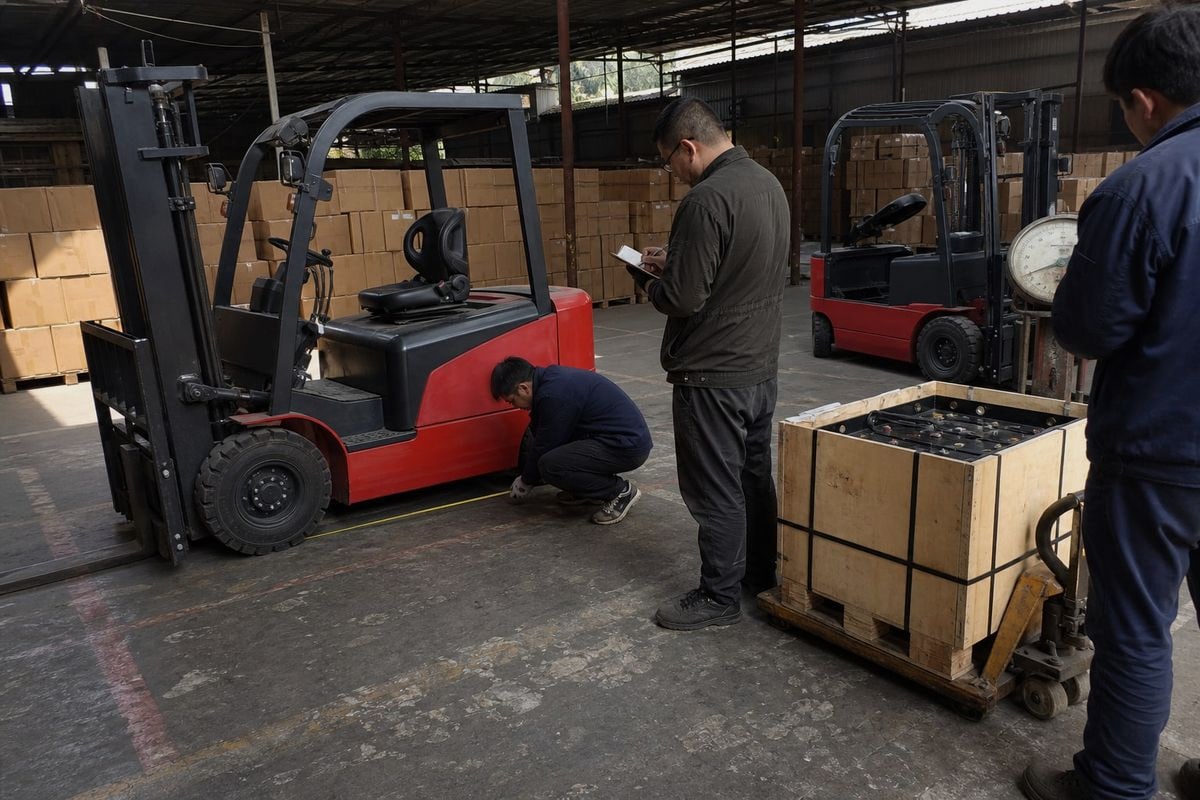
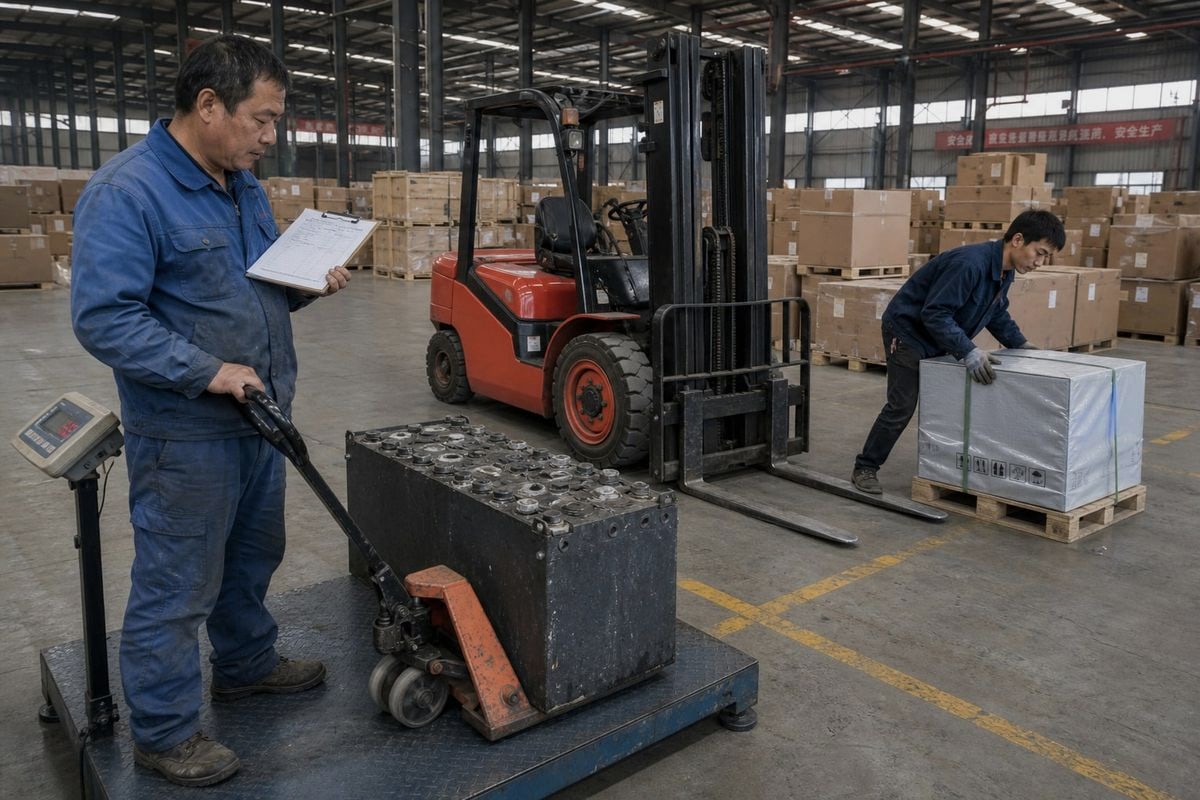
Damage risk is a function of handling events. Every time a battery is lifted, rolled, or repositioned, something can go wrong. Industrial battery handling is genuinely hard work — some workshops still move forklift batteries on steel pipes used as rollers, which tells you how awkward and injury-prone the removal process can be. Every extra touch point is a chance for a dropped pack, a cracked case, or a shorted terminal.
When the battery stays in the machine, we ask factories and loading teams to confirm five things:
| Protection Measure | What It Does | When We Recommend It |
|---|---|---|
| BMS shipping mode | Prevents power drain and accidental activation | All lithium forklifts on ocean routes |
| Fire-suppressant blankets (Lith-Ex type) | Isolates the battery during a thermal event | High-value lithium fleets, mixed cargo |
| IoT shock and temperature sensors | Creates a digital chain of custody for insurance and warranty | Premium equipment, first-time suppliers |
| Pressure-equalizing vent caps | Prevents electrolyte leakage from pressure changes | Wet-cell batteries on air or high-altitude routes |
Lead-acid battery safety adds one more wrinkle: in high-altitude transit, pressure differentials can push electrolyte out of standard vents. Pressure-equalizing caps solve this cheaply before departure. For removed batteries, the bar is higher — 4G fiberboard boxes or heavy-duty crates that resist acid corrosion and mechanical impact, with strict segregation from anything conductive. It can be done well. But in our loading records, the installed configuration simply gives damage fewer chances.
There is no universal rule — only the right fit for your battery chemistry, route, and regulations. Get that fit wrong, and delays and damage follow. Get it right, and shipping forklifts becomes predictable.
For most electric forklift shipments from China, installed and properly secured is the simpler, cheaper, and safer path. Wet lead-acid batteries are the main exception, where disconnection, dry shipping, or removal may be required to stay compliant. Whichever configuration you choose, insulate the terminals, immobilize the cargo, power everything off, and get the documentation right before the container leaves the factory. If you want help planning a compliant shipment — installed or removed — our team at MBMLOG coordinates the whole process from factory pickup to your warehouse door.
1. IMO's regulatory framework for the safe transport of dangerous goods via ocean freight. ↩︎
2. Official PHMSA portal for US federal hazardous materials rules and safety compliance. ↩︎
3. Official IATA guidelines for the international transport of lithium battery units. ↩︎