- +8618603825129
- [email protected]


Documents required for shipping electric forklifts as dangerous goods confuse many buyers. Our Zhengzhou team has seen paid-for forklifts sit at Chinese ports for weeks over one missing paper.
Shipping electric forklifts as dangerous goods requires a Dangerous Goods Declaration, a UN 38.3 Test Summary for lithium batteries, a Safety Data Sheet (SDS), a bill of lading with UN 3171 details, plus the commercial invoice, packing list, and certificate of origin.
That is the short answer. Now let me break down each document, explain which ones apply to the battery versus the forklift itself, and show you how to prepare them correctly.
Last year, a US distributor came to us after another forwarder booked his lithium forklifts as general cargo. The carrier rejected the container at Qingdao. The fix took three weeks.
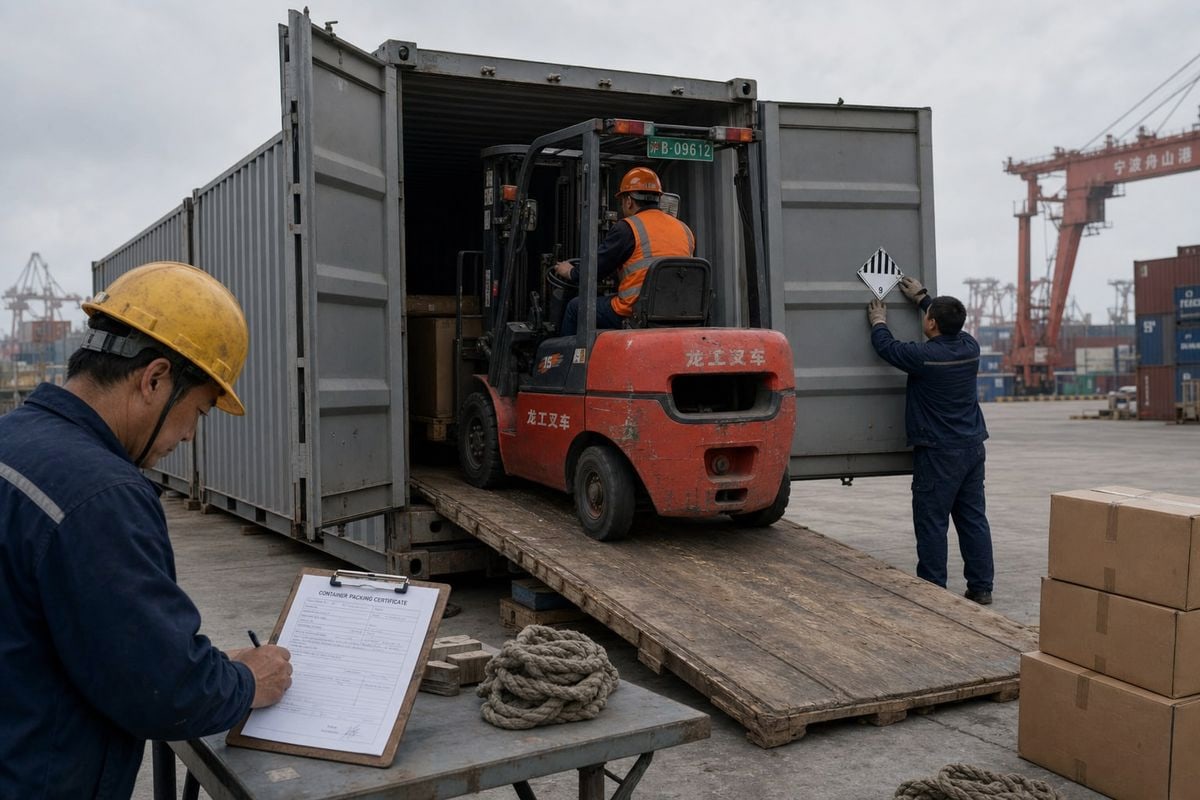
Lithium battery forklift shipments need a signed Dangerous Goods Declaration, a UN 38.3 Test Summary, a Safety Data Sheet (SDS), a transport document showing UN 3171 with Class 9 hazard details, a 24-hour emergency contact, and a container packing certificate for ocean freight.
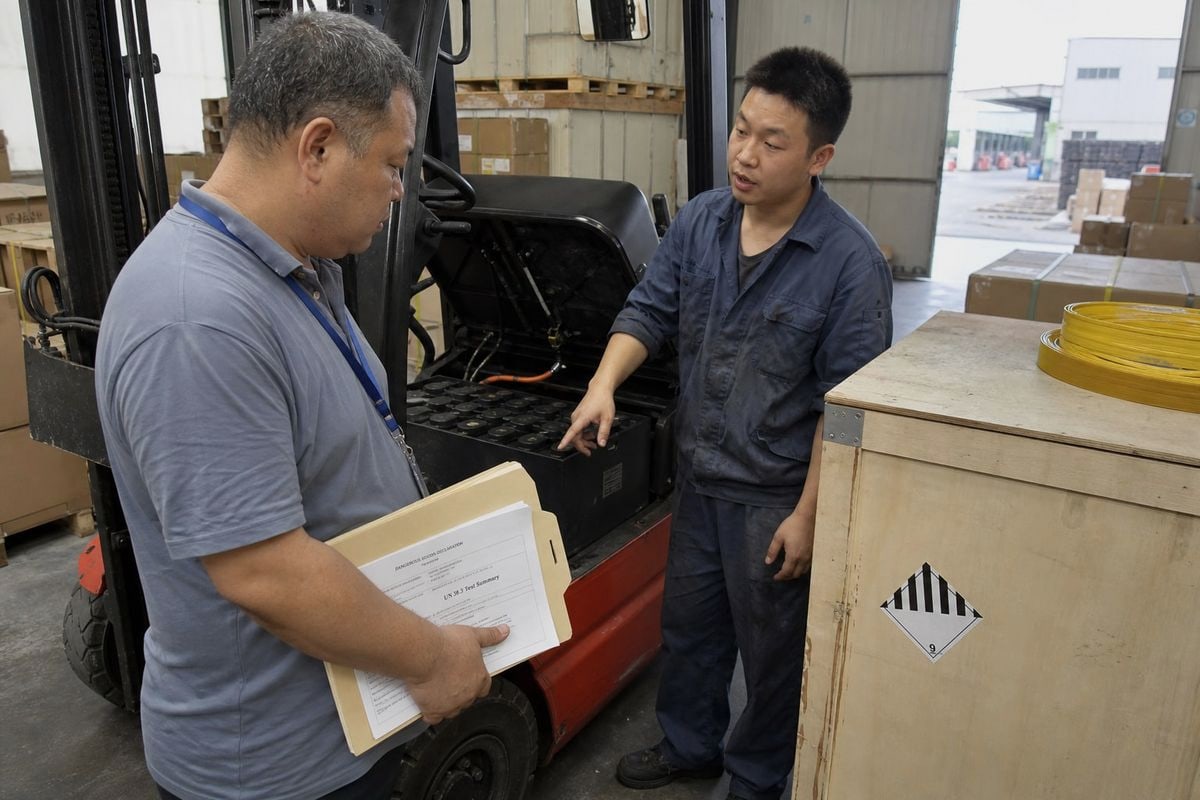
Here is the key concept I explain to every new client. The forklift frame itself is ordinary machinery. The lithium battery inside it is what triggers dangerous goods rules. When the battery stays installed, the whole unit is usually declared under UN 3171, battery-powered vehicle, Class 9 Miscellaneous Dangerous Goods. So most of the paperwork centers on the battery, not the steel body.
| Documento | What It Proves | ¿Quién lo proporciona? |
|---|---|---|
| Dangerous Goods Declaration | Legal declaration of the hazard, signed by a certified party | Shipper / forwarder |
| UN 38.3 Test Summary | Battery passed eight safety tests, including altitude simulation and vibration | Battery manufacturer |
| Safety Data Sheet (SDS) | Battery chemistry, hazards, firefighting measures | Battery manufacturer |
| Bill of Lading with DG details | UN 3171, proper shipping name, Class 9 | Carrier, based on shipper data |
| Container Packing Certificate | Forklift is braced and the container is placarded per IMDG Code 1 | Loading party |
| Emergency Response Information | 24-hour contact for a leak or thermal event | Shipper |
En UN 38.3 Test Summary confirms the battery passed eight specific safety tests. Carriers will not accept lithium-ion cargo without it. We always ask the forklift factory for this document before we even quote ocean freight. If the battery supplier cannot produce it, that is a red flag about the battery itself, not just the paperwork.
For ocean shipments, the IMDG Code governs the declaration wording. The transport document must carry the shipper's declaration language and the packing certificate wording from the IMDG model form. For air shipments of batteries or spare parts, the IATA DGR 2 applies instead, and the Shipper's Declaration format is far stricter, with original signed copies required. Road legs in Europe fall under ADR regulations, which your destination agent handles.
Before any lithium forklift leaves a Chinese factory we work with, my team collects the battery datasheet and cross-checks it against the SDS line by line. Mismatches happen more often than buyers expect.
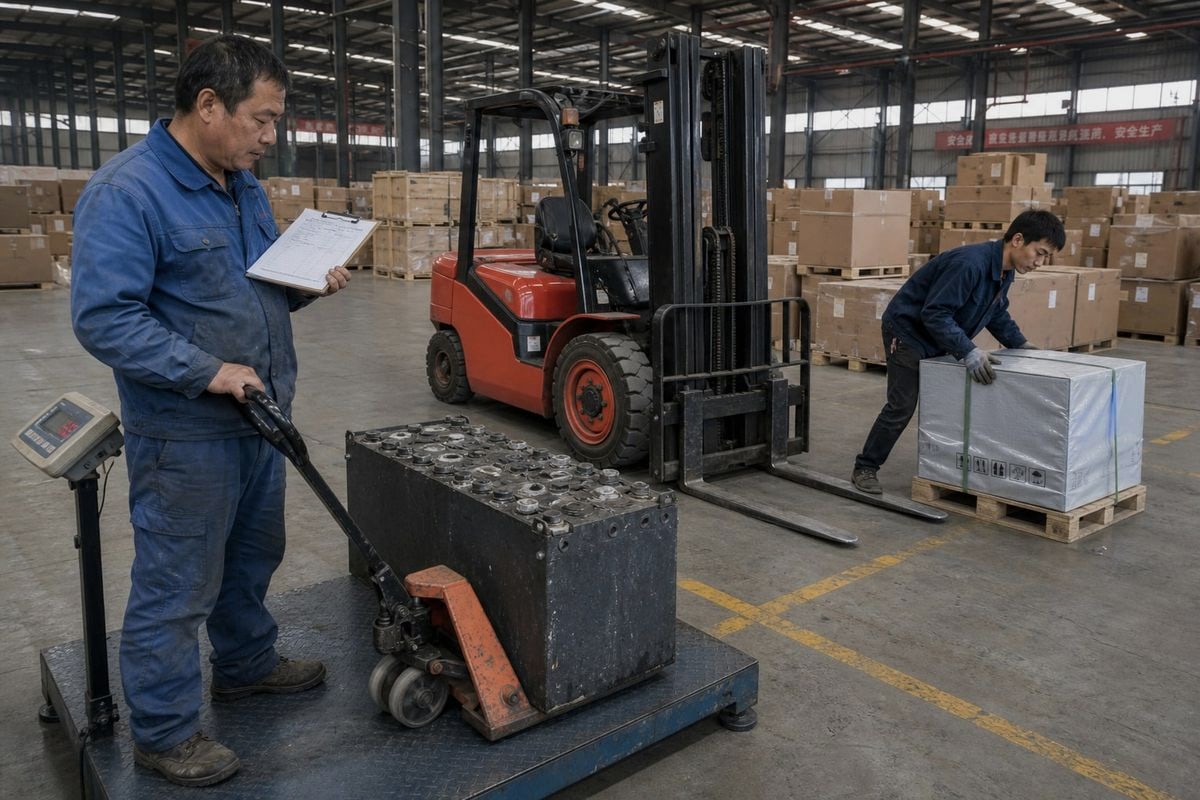
Request the SDS, UN 38.3 Test Summary, and full battery specifications directly from the battery manufacturer. Verify chemistry, watt-hour rating, voltage, and model number match across all documents, confirm the state of charge is at or below 30%, and document terminal insulation.
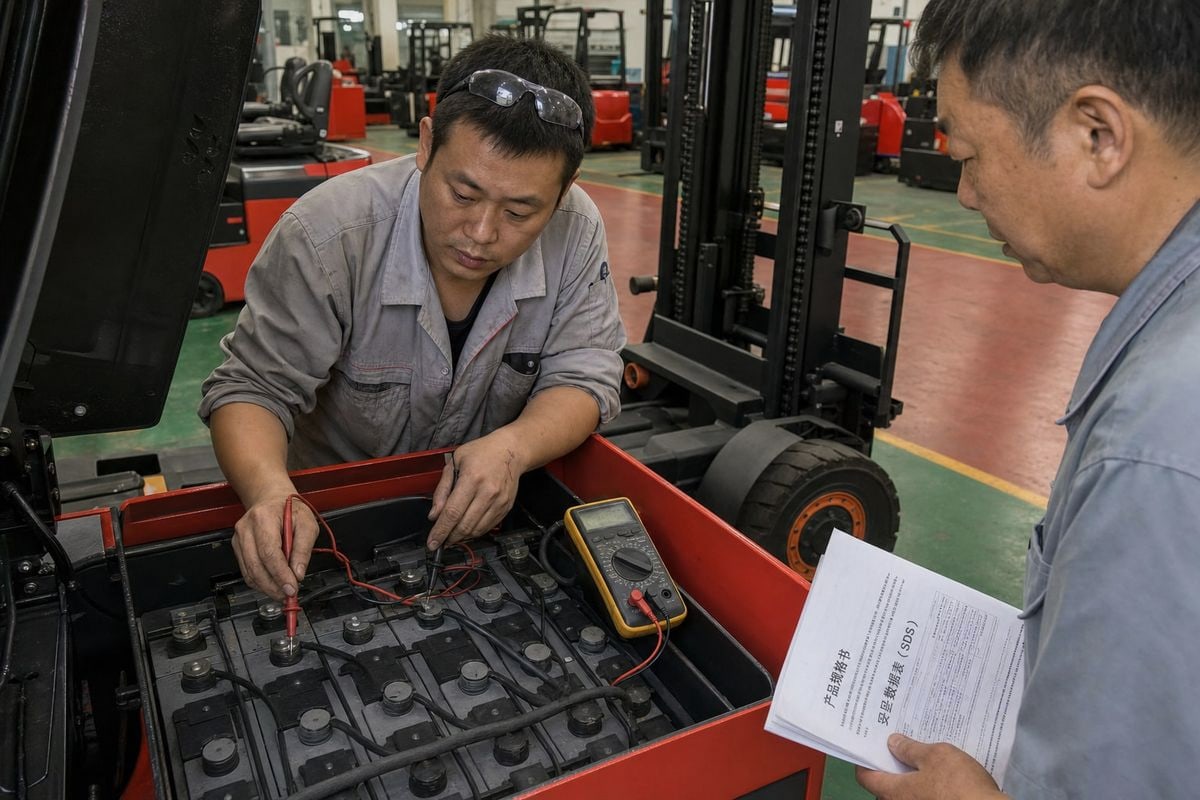
The SDS, still commonly called an MSDS, is not a formality. Carriers, port authorities, and destination customs all read it. It must describe the actual battery in your forklift, not a similar model. Here is the practical checklist I run through with every factory before cargo pickup.
If the invoice says one battery model and the UN 38.3 Test Summary says another, expect questions. Aligning descriptions across the invoice, packing list, SDS, and Dangerous Goods Declaration is the single cheapest way to avoid a hold.
For lithium-ion batteries, industry practice increasingly requires the state of charge at or below 30%, documented with a signed SOC verification statement. This started as an air transport rule under lithium-ion battery regulations and is now an emerging standard for sea freight. We ask factories to record the SOC reading before loading.
Two newer requirements are also worth preparing for. For used or refurbished forklifts, a recent BMS diagnostic stability log proves the battery is not damaged or defective, which would otherwise prohibit transport. And many carriers now request a photographic record showing battery terminals disconnected and insulated to prevent short circuits. We photograph this at loading as standard practice, because it costs nothing and answers carrier questions instantly.
If you ship to Europe, keep an eye on the emerging digital battery passport, a lifecycle record of chemistry and recycled content that is becoming relevant for customs clearance under new EU rules.
One trade-off we weigh on every booking is speed versus accuracy. Rushing export declaration by a day is never worth an HS code error that stalls a container at the destination port for a week.
Beyond dangerous goods paperwork, you need a commercial invoice, packing list, bill of lading, certificate of origin, and China export declaration. The goods description, battery details, and HS code must be consistent across every document to clear customs without delay.
The customs side and the dangerous goods side are two separate document streams, but they must tell one story. Customs officers in the US compare your invoice against the bill of lading and the DG paperwork. Any contradiction invites inspection.
| Documento | Objetivo | Error común |
|---|---|---|
| Factura comercial | Declares value for duty calculation | Description omits the lithium battery |
| Lista de embalaje | Lists weights, dimensions, contents | Battery weight missing or inconsistent |
| Conocimiento de embarque | Contract of carriage, carries DG data | UN 3171 details left off |
| Certificado de origen | Supports duty treatment at destination | Issued after vessel departure |
| Export Declaration | China customs export record | HS code mismatch with invoice |
Think of it as one shipment, two audiences. The carrier and port care about the Dangerous Goods Declaration, IMDG Code compliance, placarding, and the container packing certificate. Destination customs cares about value, HS classification 3, origin, and whether the declared goods match the physical cargo. The battery sits in both streams, so its description must be identical everywhere.
For US-bound shipments, we also prepare the ISF filing 4 data before vessel loading, and for DDP terms we handle duty and tax on arrival. Note that document retention matters too. Under Canadian TDG rules, for example, the consignor, carrier, and importer must each keep copies of the shipping document for at least two years, and the carrier must keep a copy in the vehicle during road transport. The US DOT framework differs, and domestic Class 9 moves may not require placards in every case. This is exactly why there is no universal document pack: battery chemistry, transport mode, and destination country each change the required set. Our job is to confirm the exact combination before your forklift leaves the factory.
A lesson I learned early in this business: paperwork problems discovered at the port cost ten times more than the same problems caught at the factory. Storage, demurrage, and rebooking fees pile up fast.
Pre-port document checks catch missing UN 38.3 summaries, mismatched battery descriptions, and incomplete DG declarations while they are still cheap to fix. Once cargo reaches the port, errors trigger carrier rejection, storage fees, demurrage, rebooking costs, and weeks of delay.
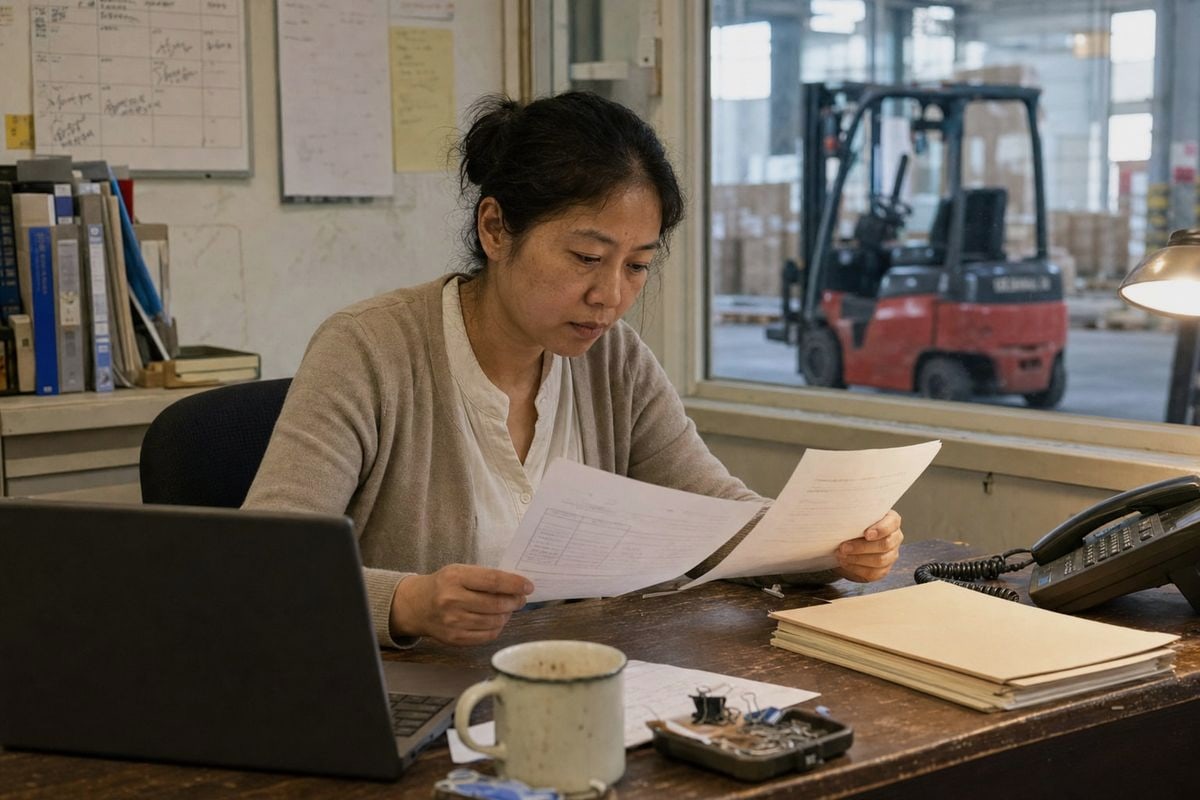
Some buyers push back here. They tell me the factory says the paperwork is fine, or that their previous general-cargo forwarder never asked for these documents. I understand the objection, but forklift factories are experts at building forklifts, not at IMDG Code declarations. And a forwarder who mainly ships ordinary goods often does not know what a carrier's DG desk will reject.
| Problem | Caught at Factory | Caught at Port |
|---|---|---|
| Missing UN 38.3 Test Summary | Request from battery maker, 1–3 days | Container held, booking may be cancelled |
| Wrong battery model on SDS | Reissue document, no cost | Carrier rejection, re-declaration fees |
| No SOC verification statement | Measure and sign before loading | Cargo may need unpacking and retesting |
| Invoice and DG form mismatch | Simple revision | Customs inspection and demurrage |
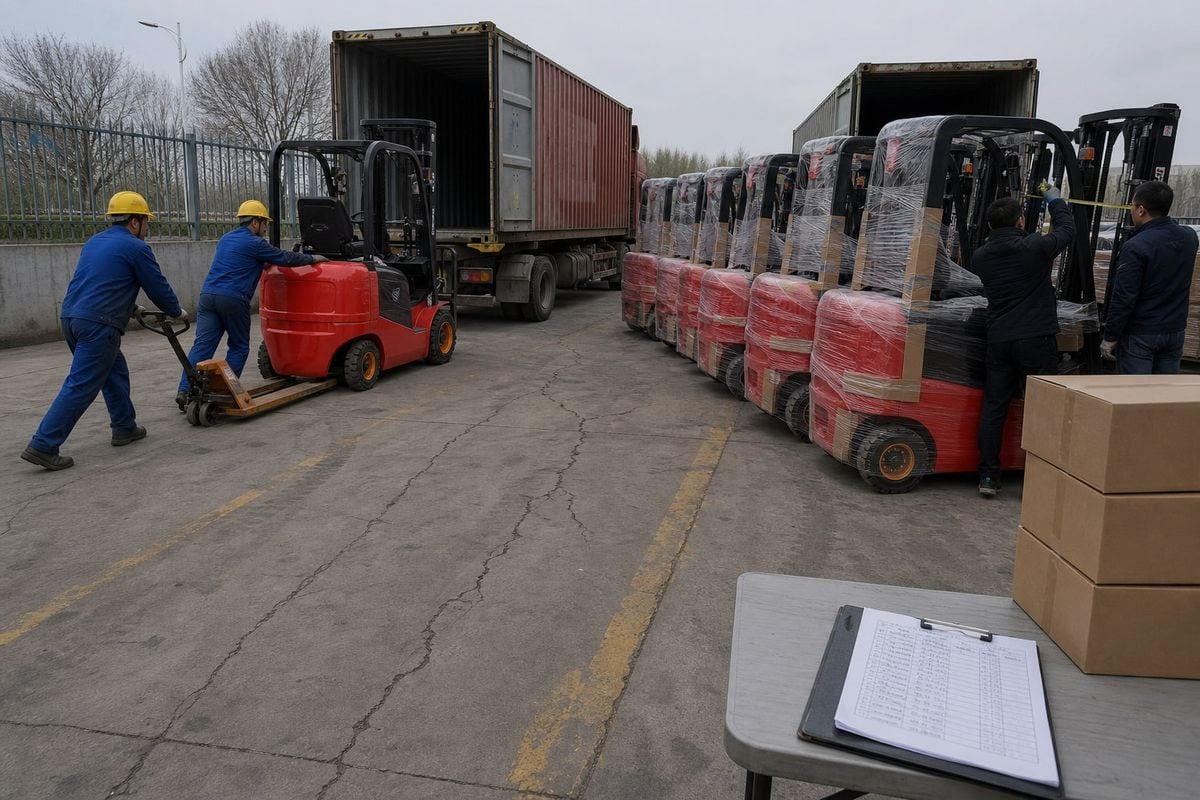
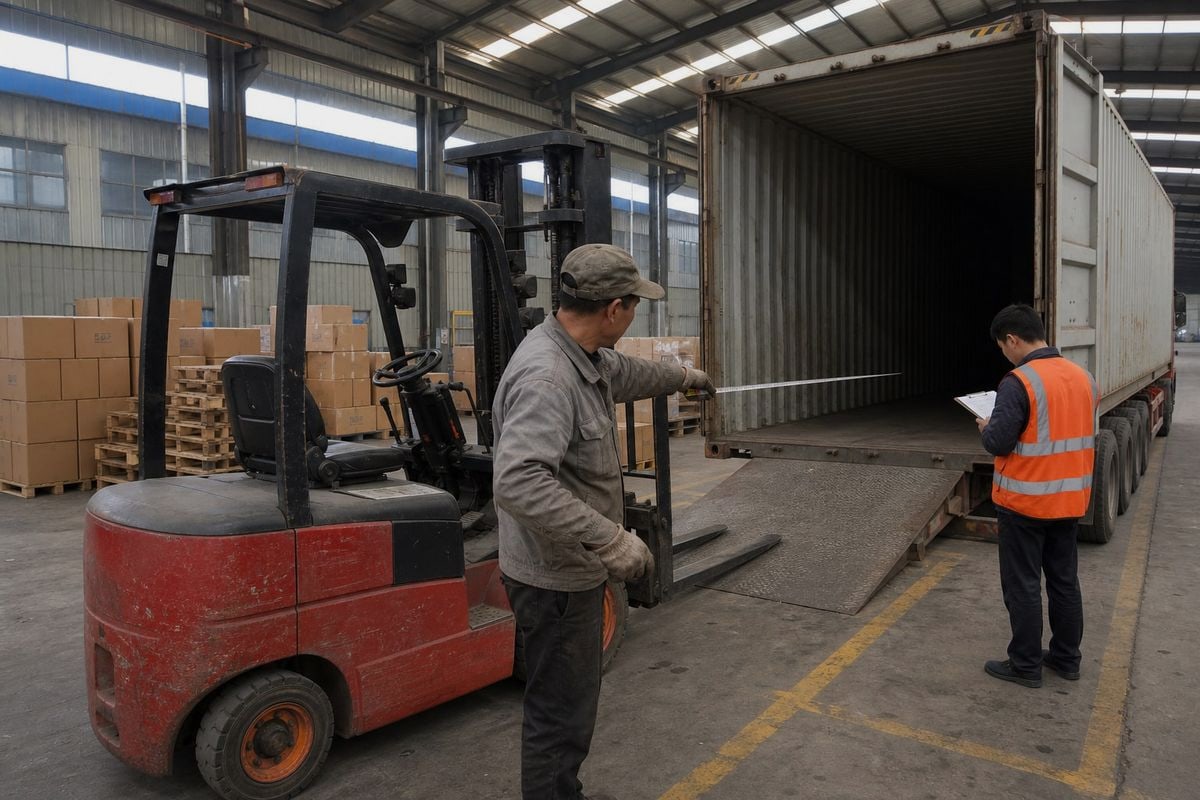
Before any electric forklift shipment we handle leaves the supplier, we run a fixed sequence. First, we collect the battery documents and confirm the UN 38.3 Test Summary, SDS, and specifications describe the same battery. Second, we verify the Dangerous Goods Declaration wording matches carrier and IMDG requirements, including the 24-hour emergency contact. Third, we check the commercial documents against the DG set for consistency. Fourth, we supervise loading evidence: terminal insulation photos, bracing, and the container packing certificate. Only then does the container move to port.
This is not extra bureaucracy. It is the difference between a forklift arriving on schedule at your warehouse and a forklift generating storage invoices at a terminal.
Missing one battery document can strand your forklift and drain your margin. Prepare the DG declaration, UN 38.3, SDS, and aligned customs papers early, and your shipment moves smoothly.
1. Official IMO page for the International Maritime Dangerous Goods Code governing sea transport. ↩︎
2. Official IATA resource for the Dangerous Goods Regulations used in air transport. ↩︎
3. World Customs Organization overview of the Harmonized System for global product classification. ↩︎
4. Official U.S. Customs and Border Protection guidance on Importer Security Filing requirements. ↩︎