

Cada semana, nuestro equipo de logística en Zhengzhou maneja envíos donde compradores y proveedores discuten quién paga qué, quién asume el riesgo y dónde termina la responsabilidad.
FCA (Free Carrier) es un Incoterm donde el vendedor entrega bienes despachados para exportación a un transportista nombrado por el comprador en un lugar específico. A partir de ese momento, todos los costos, riesgos y responsabilidades se transfieren al comprador. FCA funciona para cualquier modo de transporte, lo que lo hace ideal para la adquisición internacional con contenedores y multimodal.
Entender correctamente el FCA puede ahorrarte miles de dólares y semanas de frustración. aduanas chinas 1. Desglosemos esto pieza por pieza para que sepas exactamente a qué estás accediendo en tu próximo pedido de compra.
¿Cómo definen los términos Incoterms FCA mis responsabilidades al abastecer productos de China?
Cuando coordinamos envíos desde fábricas chinas a destinos en EE. UU., la fuente de confusión más grande es quién hace qué y cuándo aranceles e impuestos 2. FCA traza una línea clara en la arena.
Bajo los Incoterms FCA, el vendedor se encarga del despacho de exportación y entrega las mercancías a su transportista designado en un lugar especificado en China. Después de esa entrega, usted —el comprador— es responsable del transporte principal, los costos de flete, el seguro, el despacho de aduanas de importación, los aranceles y todos los riesgos hasta que las mercancías lleguen a su puerta.

El Lado del Vendedor del Acuerdo
Su proveedor chino tiene un conjunto definido de obligaciones bajo FCA. Debe preparar los bienes, empaquetarlos para el transporte internacional y proporcionar todos los documentos comerciales como la factura comercial, la lista de empaque y cualquier certificado de origen. También debe manejar la autorización de exportación 3 , esto significa realizar los trámites con la aduana china, pagar los impuestos de exportación y obtener licencias de exportación si es necesario.
El vendedor entrega los bienes al transportista que usted designe, en el lugar que ambos hayan acordado. Esto podría ser la propia fábrica del proveedor, un almacén de un transitario o un terminal portuario. El vendedor asume todos los costos y riesgos hasta este punto de entrega.
El lado del comprador en el acuerdo
Una vez que las mercancías se entregan a su transportista, todo pasa a ser su responsabilidad. Usted paga el flete principal, organiza el seguro si lo desea, y maneja las aduanas de importación 4 en los Estados Unidos, paga aranceles e impuestos, y asume el riesgo de pérdida o daño a partir de ese momento.
Aquí hay un desglose claro:
| Responsabilidad | Vendedor (Proveedor) | Comprador (Tú) |
|---|---|---|
| Embalaje y etiquetado | ✔ | |
| Desaduanaje | ✔ | |
| Entrega en lugar designado | ✔ | |
| Carga en las instalaciones del vendedor | ✔ | |
| Transporte principal (mar/aire/ferroviario) | ✔ | |
| Seguro de carga | ✔ | |
| Desaduanización de importación | ✔ | |
| Derechos e impuestos | ✔ | |
| Entrega al destino final | ✔ |
Dos variantes de entrega que debes conocer
FCA tiene dos escenarios distintos dependiendo de dónde se encuentre el lugar nombrado. Si el lugar nombrado es las propias instalaciones del vendedor —su fábrica o almacén— el vendedor es responsable de cargar los bienes en el vehículo que envíes. Ellos cargan el contenedor o camión, y la entrega se considera completa una vez que los bienes están en tu vehículo.
Si el lugar nombrado es en cualquier otro sitio —un almacén de un transitario, un puerto o un aeropuerto— el vendedor solo necesita entregar los bienes allí. No tienen que descargar de su camión. Los bienes se consideran entregados una vez que llegan a esa ubicación, listos para que el transportista asuma el control.
Esta distinción es importante porque determina quién maneja la carga física y quién paga por ello. Muchos compradores pasan por alto esto y terminan en disputas sobre los cargos de manejo en terminales o las tarifas de recepción en almacenes.
Por qué la Precisión del Lugar Nombrado es Importante
Nunca escribas "FCA China" en un contrato. Eso es demasiado vago. Especifica la dirección exacta. Por ejemplo, "FCA Centro Logístico Internacional de Yiwu, Puerta 3, Yiwu, Zhejiang, China" no deja lugar para la discusión. Los términos vagos conducen a disputas sobre las tarifas de carga, los costos de transporte local y quién asume el riesgo durante la última milla antes de la entrega.
¿Por qué debería elegir FCA en lugar de FOB para mis envíos de Amazon FBA?
Nuestro equipo envía cientos de pedidos FBA cada mes, y hemos visto a vendedores de Amazon perder dinero simplemente porque usaron el Incoterm incorrecto. FOB suena familiar, pero no siempre es la opción correcta.
FCA a menudo es mejor que FOB para envíos de Amazon FBA porque FCA funciona para cualquier modo de transporte — aire, ferrocarril, camión o mar — mientras que FOB está limitado solo al transporte marítimo. FCA también te da un control más temprano sobre la logística, permitiéndote gestionar la selección de transportistas, la planificación de rutas y el cumplimiento de los estrictos requisitos de recepción de Amazon.

El problema de FOB para las cadenas de suministro modernas
FOB — Libre a Bordo 5 — fue diseñado para el transporte marítimo tradicional. Bajo FOB, el riesgo se transfiere cuando las mercancías cruzan físicamente la borda del barco en el puerto de salida. Pero aquí está el problema: la mayoría de los envíos de Amazon FBA 6 today involve containerized cargo. The goods are stuffed into a container at the factory or a consolidation warehouse, not at the port. By the time the container reaches the vessel, it has already traveled through inland trucks, been handled at a container yard, and sat at a terminal. Under FOB, the risk during all of that early movement is still on the seller, even though the buyer's freight forwarder may already be managing the cargo.
This creates a gray zone. Who is responsible if the container is damaged at the container yard before it's loaded on the vessel? FOB says the seller. But the buyer's agent may already have the container in their system.
FCA Solves the Gap
FCA lets you pick the exact point where you want to take over. You can set the handoff at the factory gate, at your freight forwarder's warehouse in Shenzhen, or at any consolidation point. This means there is no ambiguity about the gray zone between the factory and the vessel.
For Amazon FBA sellers, this is especially valuable. You can instruct your freight forwarder to pick up from the supplier's door, inspect the goods, confirm labeling and packaging compliance, and then route the shipment however you need — by sea, air, or rail.
FCA vs FOB: A Side-by-Side Comparison
| Factor | FCA (Free Carrier) 7 | FOB (franco a bordo) |
|---|---|---|
| Transport modes | All modes (sea, air, rail, truck, multimodal) | Sea and inland waterway only |
| Risk transfer point | Named place (factory, warehouse, terminal) | Ship's rail at port of loading |
| Buyer's control over logistics | High — buyer controls from named place onward | Moderate — buyer controls after vessel loading |
| Suitability for containers | Excellent — designed for containerized cargo | Poor fit — risk transfer at ship's rail is outdated for containers |
| Desaduanaje | Seller handles | Seller handles |
| Amazon FBA flexibility | High — buyer can manage FBA compliance early | Lower — buyer gets control later in the chain |
When FOB Still Makes Sense
FOB can still work if you are shipping loose cargo on a bulk vessel and the risk transfer at the port makes logistical sense. But for most Amazon FBA sellers sourcing from China, FCA gives you more control, cleaner risk allocation, and better flexibility to route shipments through the fastest or cheapest path.
From what we see daily at MBMLOG, sellers who switch from FOB to FCA report fewer disputes with suppliers, better cost visibility, and faster resolution when things go wrong during transit.
¿Cómo gestiono la entrega entre mi proveedor y mi agente de carga bajo FCA?
We've helped hundreds of importers coordinate the exact moment when their supplier's job ends and their freight forwarder's job begins. This handoff is the most critical step in any FCA transaction.
To manage the FCA handoff, you must nominate your carrier or freight forwarder in writing, specify the exact named place and time for delivery, and ensure your supplier has clear contact details for your logistics partner. Your freight forwarder then takes physical custody of the goods, and from that moment, all risk and cost belong to you.
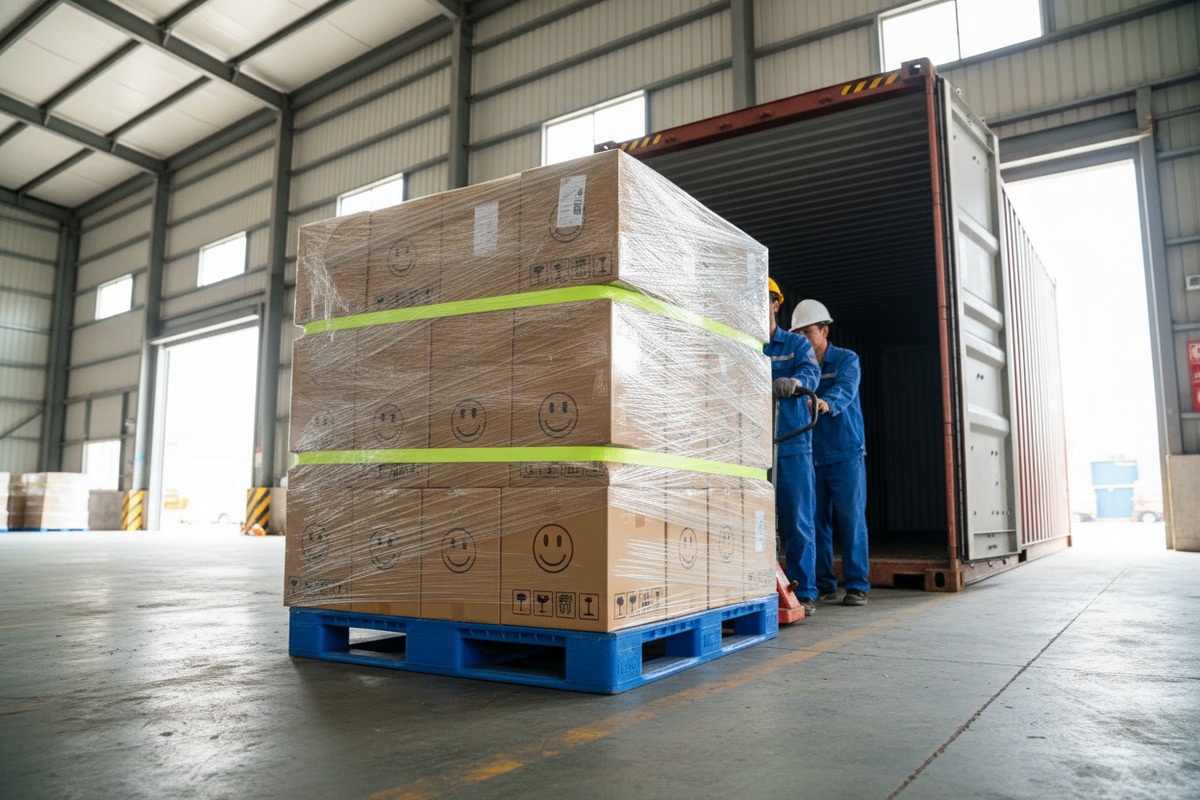
Step 1: Nominate Your Carrier Early
As soon as your purchase order is confirmed, tell your supplier who your freight forwarder is. Provide the full company name, a contact person, phone number, email, and the exact address where goods should be delivered. Delays in nomination cause the most common FCA problems we see. If the supplier doesn't know who to call, goods sit at the factory, storage fees accumulate, and your shipping schedule falls apart.
Step 2: Agree on the Named Place
The named place should be written into your purchase contract or proforma invoice. Be specific. Instead of "FCA Shenzhen," write "FCA MBMLOG Warehouse, Building 7, Qianhai Free Trade Zone, Shenzhen, Guangdong, China." This eliminates any confusion about where the seller's responsibility ends.
Step 3: Coordinate the Pickup Window
Your freight forwarder needs to know the cargo-ready date. Your supplier needs to know when the carrier will arrive. These two parties must communicate directly. In our experience, the most efficient approach is a three-way WeChat or WhatsApp group where you, the supplier, and the freight forwarder can share updates in real time.
Step 4: Confirm Documentation at Handoff
When the goods are physically delivered to the carrier, the seller should provide a delivery receipt or a Forwarder's Cargo Receipt (FCR) 9. This document proves that the seller completed delivery. Without it, you have no evidence of when risk transferred, and disputes become very difficult to resolve.
The Handoff Checklist
Here's a practical checklist we recommend to every client:
| Step | Action | Who Does It |
|---|---|---|
| 1 | Nominate carrier and provide contact details | Comprador |
| 2 | Confirm named place in writing | Buyer + Seller |
| 3 | Communicate cargo-ready date | Vendedor |
| 4 | Schedule pickup or delivery appointment | Transitario |
| 5 | Complete export clearance | Vendedor |
| 6 | Deliver goods to named place | Vendedor |
| 7 | Issue delivery receipt or FCR | Seller + Freight forwarder |
| 8 | Inspect and accept goods | Freight forwarder (on buyer's behalf) |
| 9 | Arrange main carriage | Buyer / Freight forwarder |
What Happens If Things Go Wrong at the Handoff
If goods arrive damaged at the named place, the seller is still responsible because the delivery is not yet complete. But once the freight forwarder signs the receipt and accepts the cargo, risk shifts to you. This is why it is critical to have your freight forwarder inspect the goods — check the carton count, look for visible damage, confirm labels — before signing anything.
If your freight forwarder accepts damaged goods without noting the damage, you may have no claim against the seller. A simple note on the delivery receipt like "3 cartons dented, contents unchecked" protects your interests.
The Bill of Lading Issue
One important detail under FCA: if you're using a Letter of Credit for payment, your bank may require an "on-board" Conocimiento de embarque 10. Under FCA, the seller delivers goods to the carrier, not onto the vessel. So by default, the seller may not receive an on-board B/L. The 2020 revision of Incoterms addresses this — it allows the buyer to instruct the carrier to issue an on-board B/L to the seller. But this must be explicitly agreed in the contract. Don't assume it will happen automatically.
When we quote FCA-based shipments, we always remind buyers that the sticker price is just the starting point. The real cost of FCA goes beyond the freight rate your forwarder gives you.
Hidden costs under FCA include inland trucking from the named place to the port, terminal handling charges, container yard fees, demurrage, detention, warehousing at destination, import duties, customs broker fees, and insurance. Risks include cargo damage after the handoff, carrier delays, and port congestion — all of which fall entirely on you as the buyer.

Costs That Buyers Often Overlook
Many buyers see "FCA Supplier's Factory" and think the freight quote covers everything from factory to Amazon warehouse. It doesn't. Here's what often gets missed:
Inland transport from the named place to the port or airport. If the named place is the factory, your freight forwarder needs to arrange a truck to move the goods to the departure port. This could be a short drive or a 12-hour haul depending on the factory location. Either way, you pay.
Terminal handling charges (THC). At the origin port, there are fees for receiving the container, storing it, and loading it onto the vessel. Under FCA, these are usually the buyer's responsibility since they occur after the delivery point.
Container yard storage fees. If your container arrives at the port before the vessel is ready, it sits in the yard. After a free period (usually a few days), storage charges kick in. These can add up quickly during peak shipping seasons.
Demurrage and detention. Demurrage is the charge for keeping a container at the port or terminal beyond the free time. Detention is the charge for holding the container itself beyond the allowed period. Both are the buyer's cost under FCA.
Insurance. FCA does not include cargo insurance. If your goods are damaged or lost during the main carriage, you absorb the loss unless you purchased a separate marine cargo insurance policy.
Import-side costs. U.S. customs broker fees, import duties, merchandise processing fees, harbor maintenance fees, and last-mile delivery to your Amazon FBA warehouse — all of these are on you.
Risks That Shift to You at the Named Place
The moment your carrier takes custody, you carry the risk. This includes:
- Cargo damage during ocean transit (storms, container falls, water ingress)
- Theft during inland transport at origin or destination
- Delays caused by port congestion, vessel rollovers, or equipment shortages
- Customs holds at the U.S. border due to documentation errors
- Amazon FBA rejection due to labeling or packaging non-compliance
How to Mitigate These Risks
Buy comprehensive cargo insurance. A standard All-Risk marine cargo policy costs roughly 0.3% to 0.5% of the cargo value. For a $20,000 shipment, that's $60 to $100. It is not worth skipping.
Work with an experienced freight forwarder. A good forwarder manages the chain from the FCA named place all the way to your Amazon warehouse. They handle bookings, documentation, tracking, and problem resolution. At MBMLOG, we build these services into our DDP offerings so our clients don't have to manage each piece separately.
Build buffer time into your inventory plan. Ocean freight from China to the U.S. West Coast takes 18 to 25 days. Add 5 to 10 days for customs clearance and last-mile delivery. Then add another week as a buffer for unexpected delays. If your Amazon listings depend on consistent inventory, planning ahead is non-negotiable.
Get your documents right before the goods leave China. Incorrect HS codes, missing certificates of conformity, or incomplete commercial invoices cause customs holds. A hold means storage fees, demurrage, and delayed sales. Review every document before the shipment departs.
Cost Comparison: FCA vs EXW vs DDP
To put FCA costs in context, here's how the total cost burden compares across three common Incoterms:
| Cost Element | EXW (Ex Works) | FCA (Free Carrier) | DDP (Entregado derechos pagados) |
|---|---|---|---|
| Export packaging | Vendedor | Vendedor | Vendedor |
| Desaduanaje | Comprador | Vendedor | Vendedor |
| Inland transport (origin) | Comprador | Depends on named place | Vendedor |
| Main carriage | Comprador | Comprador | Vendedor |
| Seguro de carga | Comprador | Comprador | Vendedor |
| Import clearance | Comprador | Comprador | Vendedor |
| Derechos e impuestos | Comprador | Comprador | Vendedor |
| Entrega de última milla | Comprador | Comprador | Vendedor |
As you can see, FCA sits in the middle. The seller handles export clearance and delivery to the named place, but everything else is on the buyer. DDP shifts nearly everything to the seller. EXW puts almost everything on the buyer, including export clearance — which can be problematic if you're a foreign buyer without an export license in China.
For Amazon sellers who want a balance between control and simplicity, FCA paired with a reliable freight forwarder like MBMLOG often provides the best outcome. You control the routing and carrier selection while your logistics partner handles the complexity from the named place to the FBA warehouse door.
Conclusión
FCA Incoterms give you a clean, flexible framework for sourcing from China — clear responsibilities, a precise risk transfer point, and compatibility with any transport mode. Nail down the named place, nominate your carrier early, budget for the full chain of costs, and partner with a freight forwarder who understands your Amazon FBA requirements. That combination turns FCA from a confusing trade term into a powerful sourcing advantage.
Notas al pie
1. Replaced with the official website of the General Administration of Customs of the People's Republic of China. ↩︎
2. Clarifies the nature, calculation, and impact of import duties and taxes on international shipments. ↩︎
3. Replaced with an authoritative government regulation from the Electronic Code of Federal Regulations (eCFR). ↩︎
4. Details the process and requirements for clearing goods through U.S. Customs and Border Protection. ↩︎
5. Defines FOB Incoterms, explaining seller and buyer responsibilities and risk transfer for sea transport. ↩︎
6. Provides official Amazon policies and requirements for Fulfillment by Amazon (FBA) services. ↩︎
7. Defines FCA Incoterms, outlining seller and buyer responsibilities and risk transfer. ↩︎
8. Official source for Incoterms rules, defining responsibilities in international trade transactions. ↩︎
9. Explains the purpose of an FCR as proof of goods receipt by a freight forwarder. ↩︎
10. Comprehensive overview of Bill of Lading as a legal document, receipt, and title of goods. ↩︎




